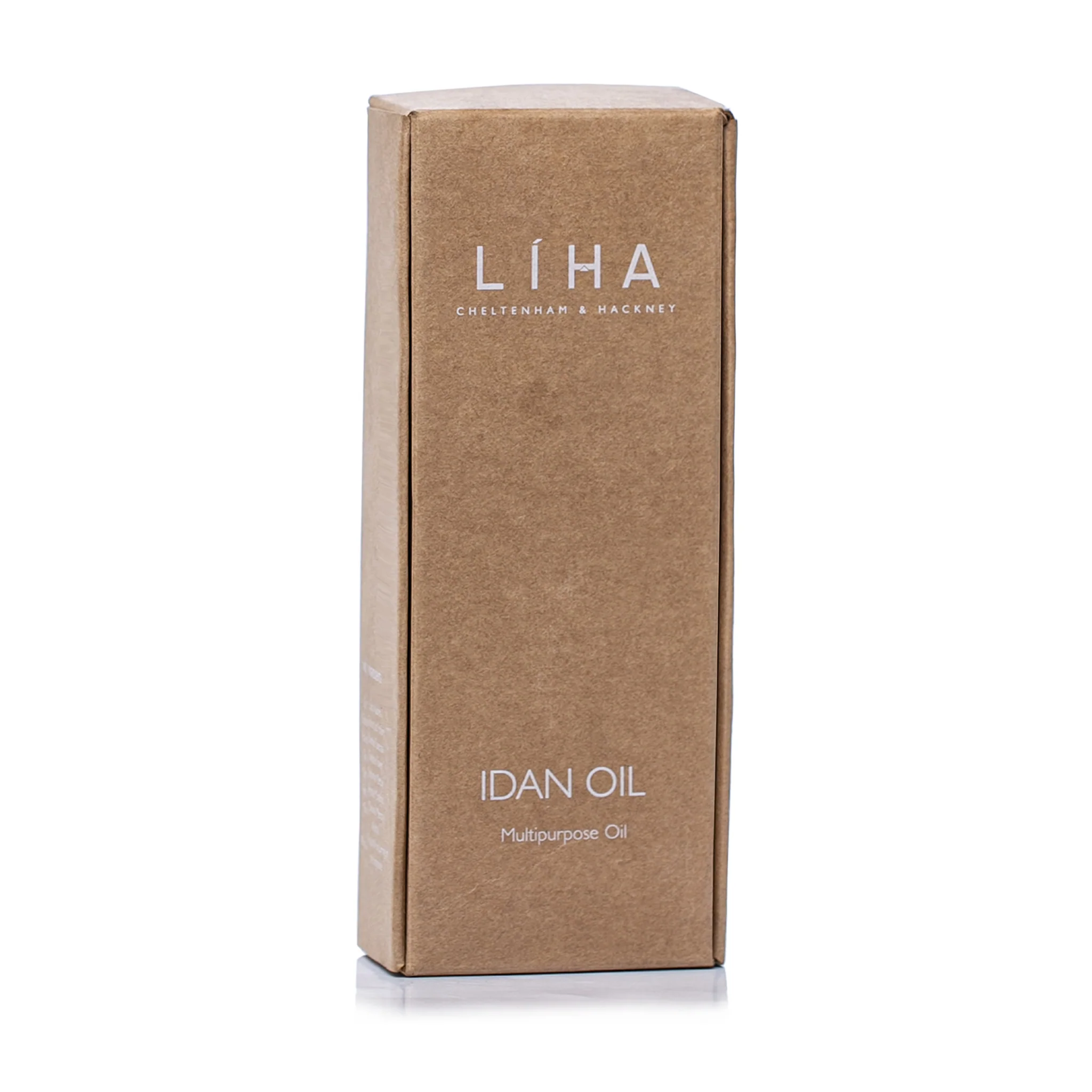
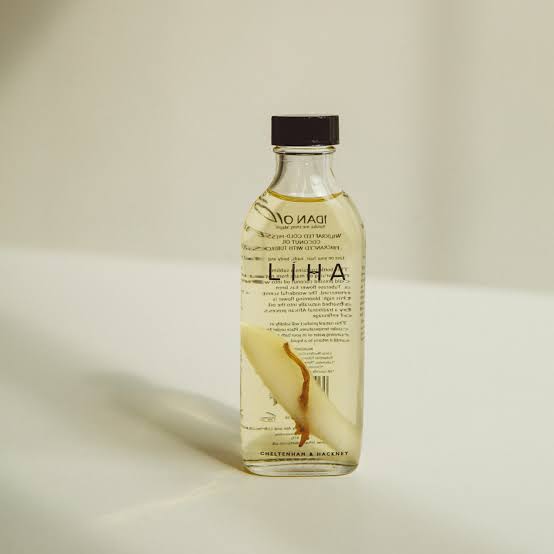
LIHA presents Idan Oil through scent, ritual and connection. Its instructions offer a more precise starting point: a fragranced body oil, advice to apply it to damp skin and a clear restriction on facial use. These details do not compete with the product’s story. They answer a different question: not why someone might be drawn to the bottle, but what they’re invited to do with its contents.
The distinction matters because Idan Oil’s appeal is deliberately sensory. LIHA describes cold-pressed coconut oil infused with tuberose, a lingering floral fragrance, and a routine intended to turn moisturising into something more considered. Its name is drawn from the Yoruba word for “magic”. The brand’s founders have also described LIHA as bringing African roots together with a British sensibility, a position we place in context in our look at the global rise of Black-owned beauty.
Those references give the product context. They do not need to establish a medical effect to be meaningful. A reader can appreciate the story, enjoy the idea of a scented body ritual and still ask practical questions about ingredients, application and compatibility. Product literacy begins by allowing each kind of information to do its own job.
Explore the Omiren Selection: Some links in this article are affiliate links. Omiren Styles may earn a small commission at no extra cost to you.
Understand LIHA’s Idan Oil through its ingredients, intended uses and handling instructions, and distinguish brand claims from independent evidence.
First, establish what the product is for.
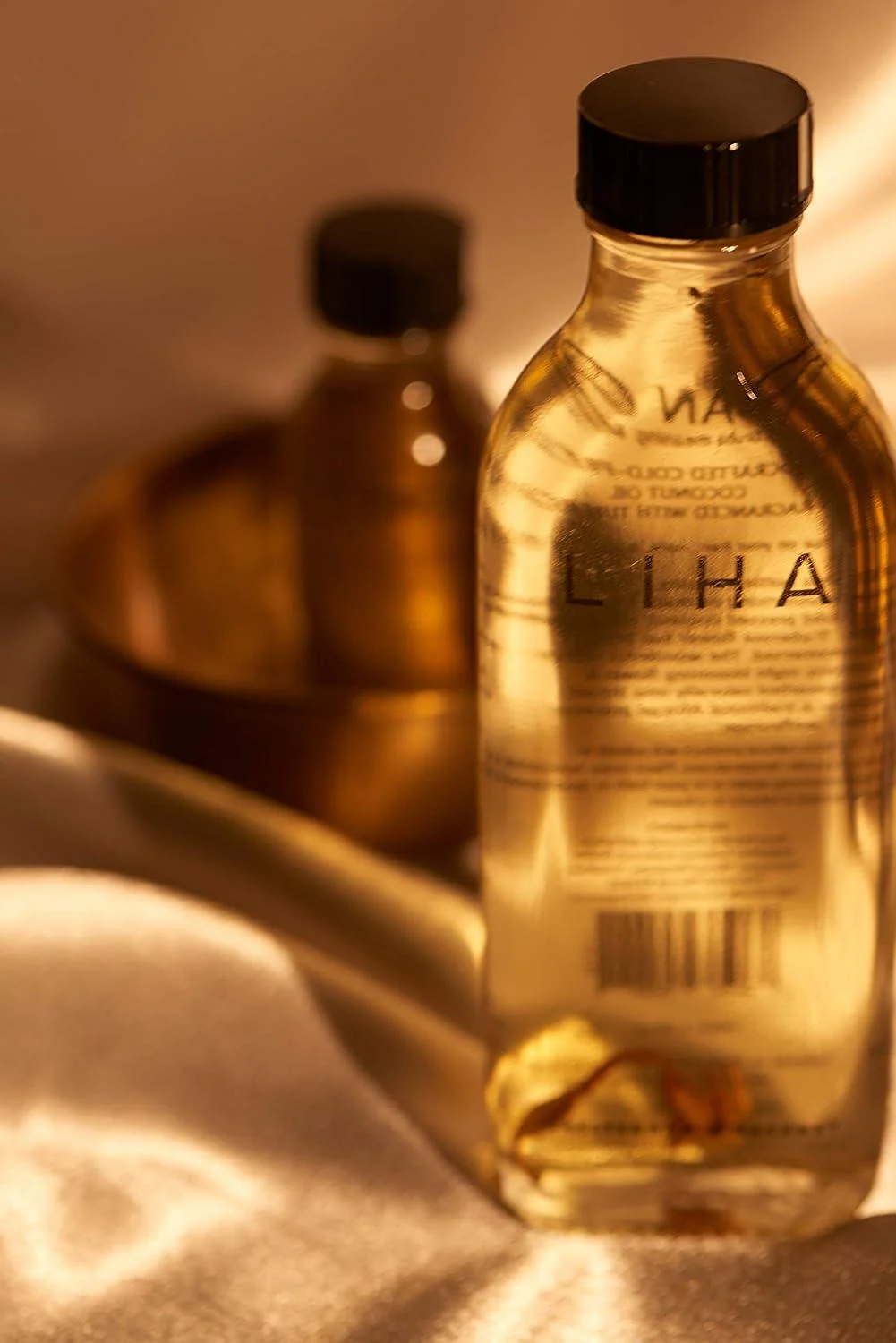
Idan Oil is presented as an all-over body oil. LIHA’s application sequence says to warm the bottle, massage the oil onto damp skin and allow the skin to air-dry if possible. Alongside that guidance, the page states, “Not recommended for facial use.” It also suggests using a few drops on hair ends and flyaways, or before shampooing. The facial-use restriction matters because “all-over” can sound broader than the detailed instructions intend.
The product page’s own FAQ acknowledges customers who use the oil on their faces, but LIHA does not recommend that application. Its general FAQ particularly cautions people prone to congestion or acne and attributes the advice to the coconut-oil base. Customer experiences are not equivalent to a change in the published recommendation.
The reader does not need to resolve every debate about coconut oil to understand that boundary. The immediate decision is product-specific: someone seeking a facial oil should not overlook the manufacturer’s stated limitation because another customer says they like it.
“A story can explain why you want the bottle. Only the instructions tell you what to do with it.” Omiren Styles Editorial Intelligence
The additional hair, cuticle, and bath uses listed across LIHA’s pages should be read the same way: as proposed applications. They do not, by themselves, establish that the formula repairs hair, treats scalp conditions or has therapeutic effects. Knowing where a brand says a product can be applied is useful; it is not the same as knowing that every suggested application has been independently tested.
Read the formula beyond the word “natural”
LIHA publishes the following ingredient list: Cocos Nucifera Oil, Flower Parfum, Polianthes Tuberosa Flower, Benzyl Benzoate, Linalool, Cinnamal and Benzyl Alcohol. The product is marketed as 98.6% naturally derived. That information establishes a distinction: this is not being sold as unscented, single-ingredient coconut oil. Fragrance is part of the formulation and part of the experience. A short list should therefore be read for what it contains, rather than treated as automatic evidence that the product will suit everyone.
LIHA’s general FAQ says the brand does not use synthetic fragrance and describes declared fragrance components as naturally occurring constituents of essential oils. That explains the brand’s formulation position, but it does not make Idan Oil fragrance-free. “Naturally derived” and “fragrance-free” answer different questions.
For someone who enjoys scented body products, the fragrance may be central to the appeal. For someone with a known fragrance sensitivity, it is relevant information to assess before purchase. The American Academy of Dermatology lists fragrance among the common causes of allergic contact dermatitis and notes that even “natural” or “clean” skin care products can cause a reaction. Its guidance on testing skin care products adds that products labelled “unscented” or built on plant-based botanical ingredients may still contain fragrance-related ingredients. Natural origin does not remove the possibility of a reaction.
This is not a reason to treat every unfamiliar ingredient name as a warning. The list is more practical: it helps readers identify a known concern, discuss the full formula with an appropriate professional, and distinguish the product from an unscented alternative.
Readers who prefer to keep their routines simple may also want to explore fragrance-free body moisturisers when comparing products for everyday use.
Handling instructions are part of the purchase.
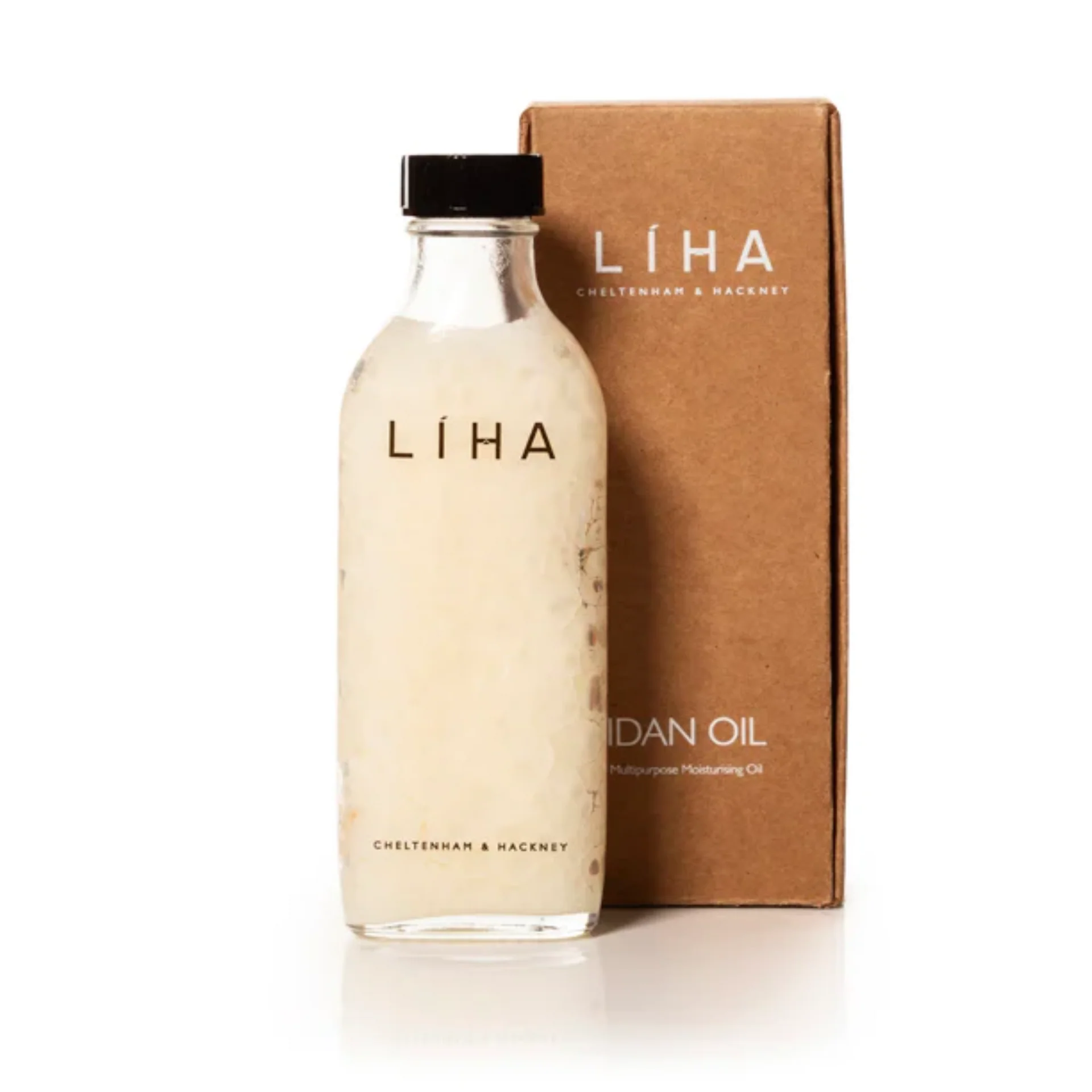
Idan Oil also asks the customer to understand its changing physical state. LIHA explains that its coconut-oil base may arrive solid or semi-solid in cooler conditions. The general FAQ describes this as an expected characteristic rather than a fault. That information affects ownership. Someone expecting to pour oil directly from the bottle may instead need to warm it before use. The instruction is not a minor detail beneath the campaign; it helps establish whether the product fits the routine the customer has in mind.
The two official pages use different wording. The product page says to warm the bottle in “hot water until oil melts.” The general FAQ specifies warm running water for 20–30 seconds and says not to melt the entire bottle fully. A later answer in that FAQ again describes partially melting the oil under warm running water for about 30 seconds. The difference is visible, but its significance should not be exaggerated. The general FAQ provides more detailed guidance; it also uses a different temperature term and adds a restriction absent from the shorter product-page instruction. This article cannot establish which wording LIHA intends to govern every circumstance. Customers faced with inconsistent directions should check the instructions supplied with their bottle and seek clarification from LIHA rather than combine the passages into a new procedure.
For anyone building a simple body-care routine, a soft cotton body towel or washcloth can be a useful everyday addition.
Texture change and quality claims are different information.
LIHA says melting and solidifying do not affect the product’s integrity. It also describes solidification as a sign of purity and says partial melting helps preserve longevity. These are brand statements, not independent findings established by the sources reviewed here. The useful distinction is between explaining expected behaviour and offering broader assurance. Knowing the oil can solidify helps a customer interpret its appearance. It does not establish that every possible change in a bottle’s condition is harmless, nor does the word “pure” establish individual skin compatibility. For storage planning, LIHA’s general FAQ lists Idan Oil’s shelf life as 24 months unopened and 12 months after opening. That is another practical specification worth checking against the packaging supplied with the product.
What the independent evidence supports
Coconut oil has been studied as a moisturiser. One small randomised, double-blind trial, published in Dermatitis in 2004, compared virgin coconut oil with mineral oil in 34 people with mild-to-moderate xerosis, or dry skin. Over two weeks of application to the legs, both groups showed improved skin hydration, with comparable effects. Participants had negative patch-test reactions to the test products before entering the trial. The study gives relevant context for coconut oil’s moisturising use. It does not test Idan Oil, its fragrance or the complete formula. Nor is one short study the whole evidence base for coconut oil. The conclusion should remain proportionate: ingredient-level research can help explain a formulation without becoming a clinical endorsement of every product containing that ingredient.
That boundary also applies to LIHA’s broader language. The product page describes tuberose as promoting calm and connection and coconut oil as restoring elasticity. Those are the brand’s claims. The research discussed here does not establish those outcomes for Idan Oil. A person may find the scent pleasurable or the routine calming. That experience has value on its own terms; it should not be confused with evidence that the formula treats anxiety or produces a predictable psychological effect. For more on how oils are marketed, see our look at baobab oil’s supply chain.
Tolerance checks need clear terminology.
A home tolerance check is not the same as clinical patch testing used to investigate an allergy. Keeping the terms distinct helps readers understand what each can establish. LIHA recommends applying a small amount to the inside of the wrist or elbow and waiting 24 hours before applying it more widely. The American Academy of Dermatology describes a different home-testing approach: using a small test area twice daily for seven to ten days, following the product’s normal intended contact time. These are different recommendations, not identical procedures. Neither should be described as a permanent guarantee against a future reaction. The Academy advises washing off a product and not using it again if a reaction develops, and says a severe reaction that does not improve with simple home care should be seen by a dermatologist.
The same care is needed with pregnancy, breastfeeding and diagnosed conditions. LIHA’s FAQ offers general pregnancy assurances based partly on formulation simplicity, while also advising consultation with a healthcare professional. That brand statement does not establish the finished product’s suitability for every pregnancy or individual circumstance. The sources reviewed here likewise do not establish Idan Oil as an infant product or a treatment for eczema, psoriasis or rosacea. The absence of product-specific evidence should not be presented as proof of harm, but it should not be taken as an assurance of safety.
Cultural meaning does not need to become a medical promise.
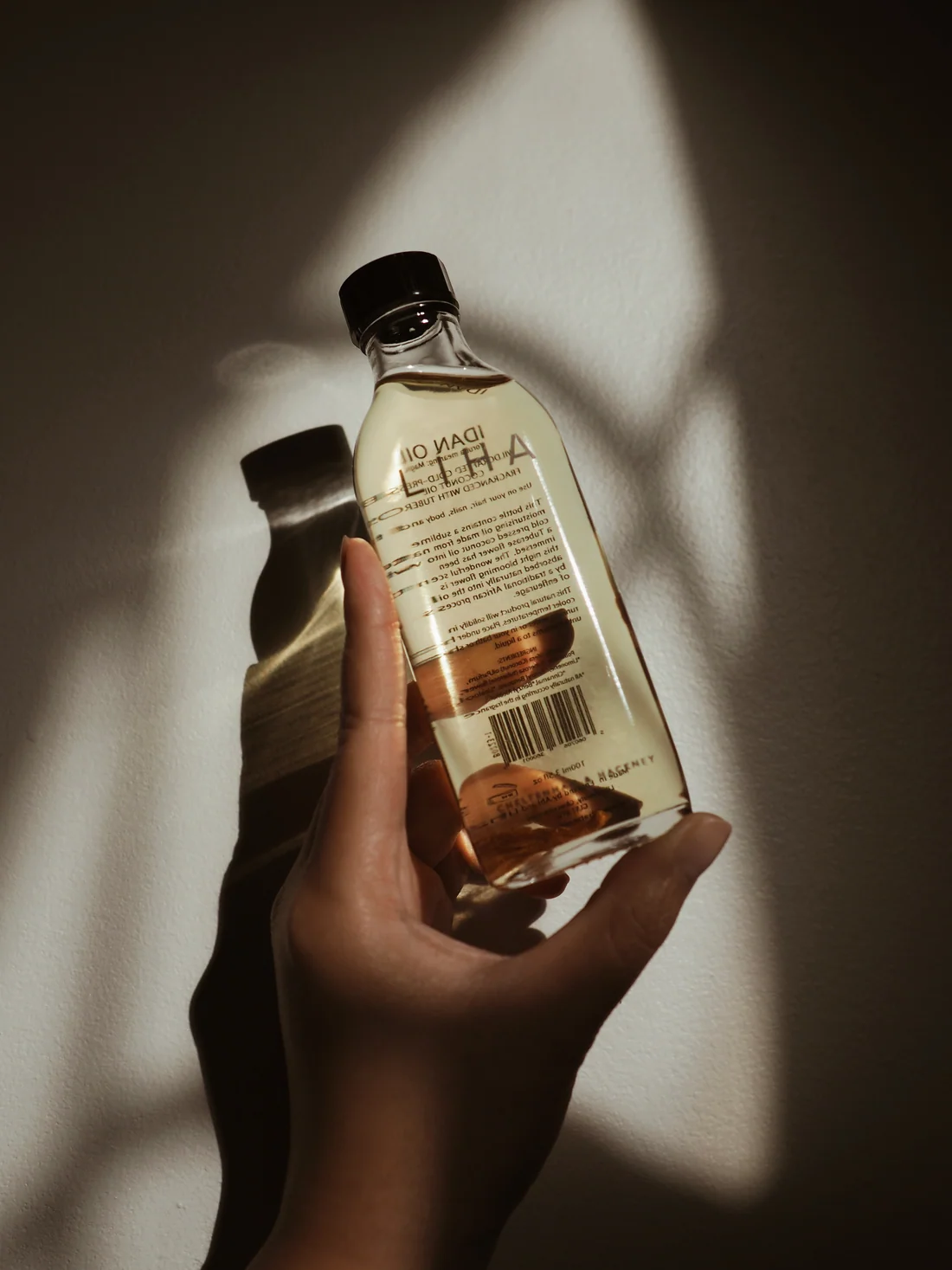
LIHA’s British–West African identity helps explain its language and references. The founders’ published account connects the brand with family, African heritage and a British sensibility; the Idan Oil page makes the Yoruba meaning of its name part of the product’s presentation. The strongest reading preserves that specificity without asking it to prove more than it does. Cultural storytelling can explain a name, an aesthetic or the place of a routine in someone’s life. It does not establish a formulation’s effectiveness for every user.
This allows a less reductive choice. A customer can value the brand’s perspective while deciding against fragrance, prefer the body application while avoiding facial use, or appreciate the ritual while needing clearer handling directions. Informed choice is not the opposite of pleasure. It makes room for a purchase based on the product as it is described, rather than on everything its atmosphere might suggest.
The Omiren Argument
The essential principle is clarity: a beauty brand’s story can explain the attraction, but its formulation, instructions and limitations should support the decision. Idan Oil makes that distinction tangible. Fragrance is part of its appeal and part of its ingredient information. Its body-use recommendation sits alongside a facial-use restriction. Its temperature-sensitive handling requires a practical explanation, not simply a description of magic.
None of this requires beauty to become joyless or cultural meaning to be stripped from a product. It requires different kinds of information to remain legible. A sensory experience, a brand instruction and an independently supported finding can coexist without being treated as interchangeable. The informed reader should be able to recognise each, and decide which matters most to their own purchase. More beauty coverage is at Omiren Styles.
Also Read:
- Moringa, Marula, and Mongongo: The African Oils That No One Told You Were the Best in the World
- Baobab Oil and the Next Generation of African Botanical Skincare Brands Defining the Market
- Eczema, Heat Rash & Fungal Acne: Care for African Climates
- Shea Butter Reimagined: How African Beauty Brands Are Competing With European Luxury Houses
Frequently Asked Questions
Is Idan Oil fragrance-free?
No. LIHA lists flower perfume and fragrance components and describes a floral scent. Its statement that it avoids synthetic fragrance does not mean the product is fragrance-free.
Can it be used as a facial oil?
LIHA does not recommend facial use and particularly cautions people prone to acne or congestion. Customer anecdotes should not override that published instruction.
Why might the oil arrive solid?
LIHA attributes this to the coconut-oil base and cooler conditions. Its product page and general FAQ give different warming directions, so follow the supplied instructions and ask the brand to clarify any inconsistency.
How should I check whether it suits my skin?
LIHA suggests a small test on the wrist or elbow for 24 hours. The American Academy of Dermatology describes a longer home test of seven to ten days. Neither guarantees you will never react.