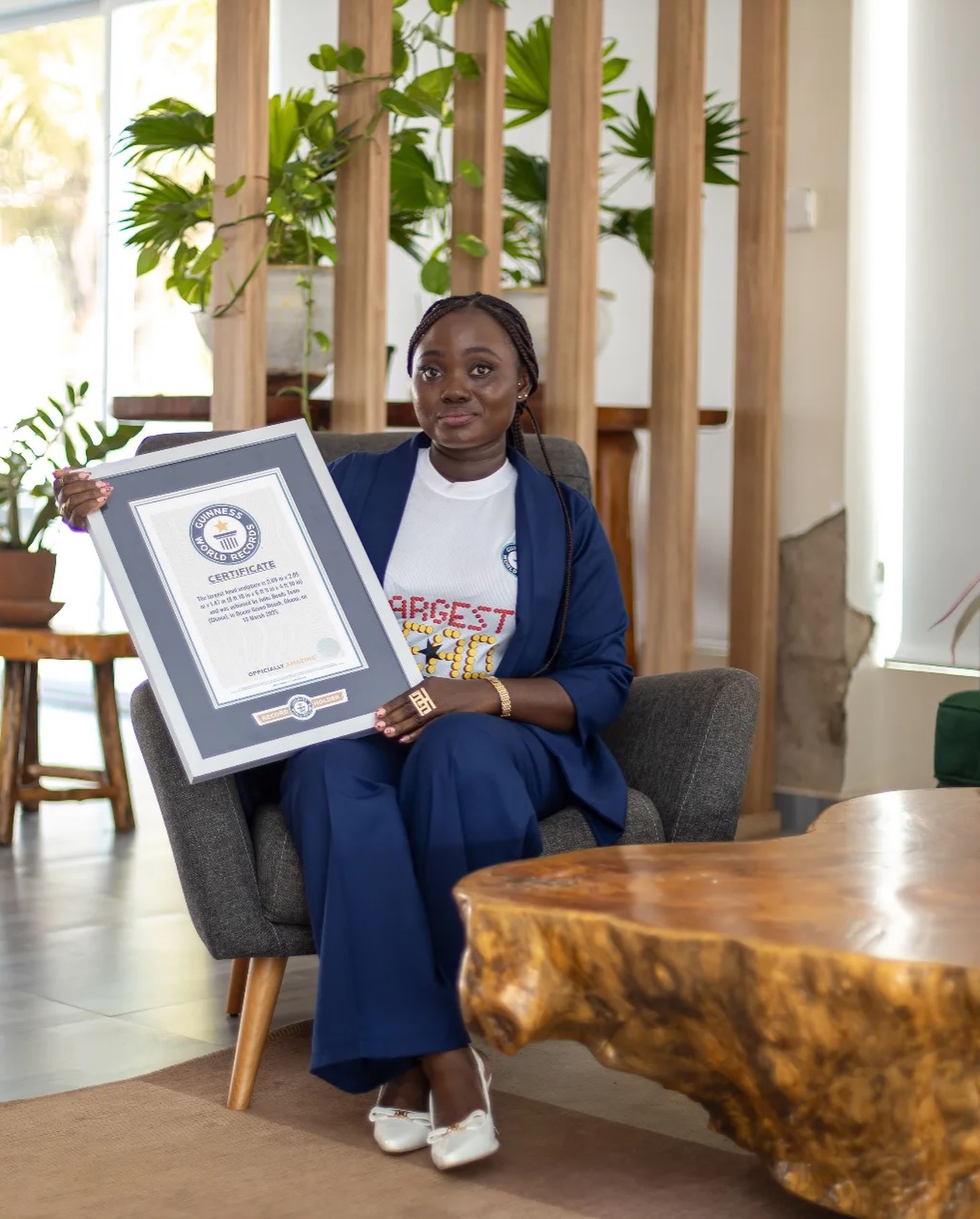
Juliana Gharbin did not set a Guinness World Record to prove that she could make beads. She already knew she could make beads. She had been doing it for years, building Jules Beads and Jules Resin Arts from a personal passion into a business that reaches customers across Africa and into international markets. She set the record to make a different argument: that Ghanaian craftsmanship deserves global recognition, that African artisans produce world-class work, and that a single focused act of public endurance can shift the frame through which the world sees what Ghana makes.
The argument had been building for some time. Ghana has a documented bead tradition dating back centuries, most visible in the Krobo bead culture of the Eastern Region, where powdered glass beads are made using techniques passed down through generations and where beads function as currency of identity, ceremony, and status. Juliana Gharbin grew up in that heritage, as she describes in her interview: “Beads are an important part of our culture and are used to tell stories, mark special occasions, and express identity.” What she built with Jules Beads is a contemporary extension of that tradition: a self-taught woman using beads, fishing line, resin, and her own creative intelligence to produce accessories that blend traditional Ghanaian craftsmanship with modern fashion design.
Juliana Gharbin of Jules Beads holds a Guinness World Record and trains the next generation of Ghanaian craft entrepreneurs. This is her full story.
The Omiren Argument:
Juliana Gharbin did not need a Guinness World Record to validate her craft. But she understood something that many designers in this field do not: that international recognition is not just a reward for excellence. It is a tool for changing what audiences believe is possible. The record is the method of delivery. The argument that Africa’s creative output is exceptional, innovative, and worthy of global investment is the content.
The Formation: Theatre Arts, Self-Teaching, and the Making of Jules Beads

Juliana Gharbin holds a bachelor’s degree in theatre arts from the University of Cape Coast and a master’s degree in communication and international marketing from Accra Business School. She is not, by formal training, a designer. She is an actress with a graduate degree in communication. This background matters because it explains both the clarity of her public argument and the strategic intelligence behind her brand-building. She understands storytelling as a professional discipline. The narrative she has built around Jules Beads – the craftsmanship, the cultural heritage, the training programme, and the world record – is not incidental. It is a deliberately constructed communication strategy built by someone who studied how narratives work. Her craft practice itself is entirely self-taught. As she states directly: “I did not have any formal mentors or direct influences when I started my bead-making journey. Most of what I know today came from personal research, experimentation, and a willingness to learn through practice.” This is significant in the context of Ghanaian fashion and accessories design, where formal training institutions are limited and self-taught practice underpins a large share of the creative ecosystem.
She describes her signature style as bold, detailed, and innovative. The attention to detail she cites as the distinguishing quality of her work is a direct product of the practice-based learning she describes: someone who learns through experimentation develops precision not from institutional instruction but from accumulated observation of what works and what does not. Her specialisation in beaded bags is a design decision that reflects the same logic: bags are functional objects that require structural thinking, not just surface decoration. A beaded bag must hold its form under load, maintain its pattern under movement, and survive the daily conditions of use. These are construction requirements that push a craft beyond decoration into design.
The Guinness World Record: What the Challenge Actually Required
The Guinness World Record attempt was, by Juliana Gharbin’s own account, one of the most demanding things she has done. The challenges she describes are specific and worth holding precisely: financial constraints so severe that personal loans partially funded the attempt; limited public support, driven by scepticism about whether a previous record could be exceeded; and the physical and mental endurance required to sustain focused beadwork throughout the attempt. As she states: “We relied on the support of family and friends, invested our own resources, and even took out loans to fund the attempt. We chose to focus on the vision rather than the obstacles.” The use of “we” throughout her account is notable. The Guinness attempt was a collective effort. The record belongs to Juliana Gharbin, but the attempt belonged to a community that committed to an outcome that most external observers refused to believe in advance.
The scepticism she describes is a specific kind of systemic obstacle: the accumulated history of failed attempts created an environment in which rational actors chose not to invest. This is the same dynamic that constrains investment in African fashion more broadly. When the track record of external observers is failure, the incentive to support new attempts is low, regardless of the quality of the attempt. Juliana Gharbin’s response was to fund it herself, accept the risk personally, and prove the sceptics wrong through completion rather than argument. The record is its own rebuttal.
What she says she hopes the milestone communicates is direct and precise: “Ghanaian and African craftsmanship are exceptional, innovative, and worthy of global recognition. Africa is home to incredibly talented artisans whose creativity, skill, and dedication produce world-class work.” This is not a personal triumph statement. It is a positioning argument for an entire creative geography. The individual world record is the vehicle for a collective claim about what Ghana produces.
The Training Programme: Craft as Entrepreneurship Infrastructure
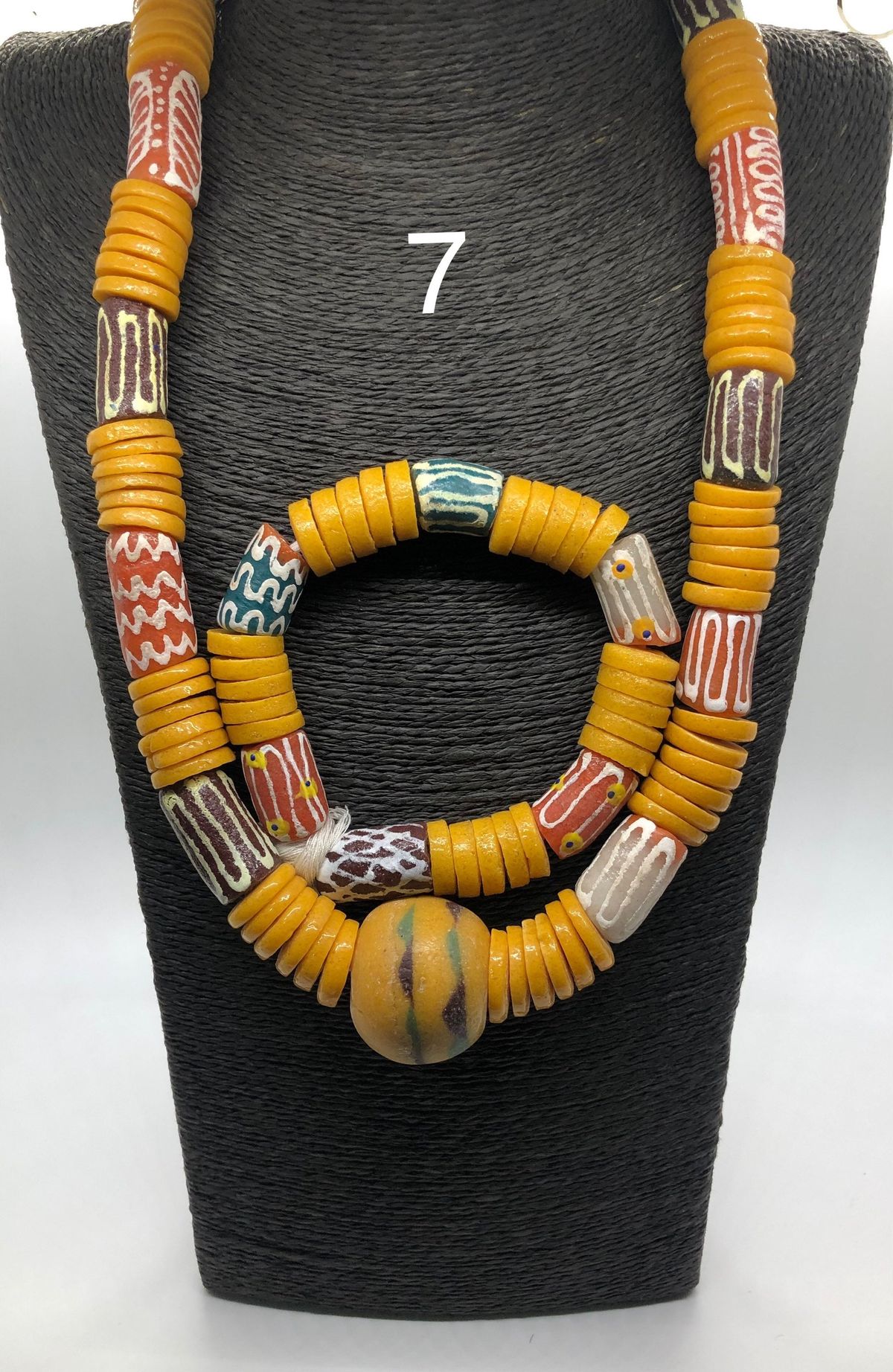
The Jules Beads training programme is the dimension of Juliana Gharbin’s practice that has the most sustained community impact. It exists because she identified a gap: many people wanted to learn beadwork but lacked access to proper training and mentorship. The programme she built serves young people, women, men, students, and people seeking employment – anyone interested in a creative and income-generating skill. The framing is specific: bead-making is for everyone, regardless of age or gender, and the programme teaches not only the technical craft but also creativity, discipline, and business-mindedness. The goal is not to produce artisans. It is to produce entrepreneurs. This distinction is the most significant design decision in the programme. A craft course that teaches technique produces skilled practitioners. A craft course that teaches technique alongside business development produces people who can sustain themselves through the skill. Juliana Gharbin is building the second category.
The transformations she documents in programme graduates are specific. Participants arrive uncertain of their abilities and leave with confidence, creativity, and a reoriented relationship to work and opportunity. She describes a mindset shift in which bead-making transitions from a perceived hobby to a viable business: “This realisation often changes how they approach life and opportunities.” The shift from dependency to self-reliance is the outcome she identifies as most significant. For young Ghanaians entering an economy where formal employment is scarce and entrepreneurial infrastructure is limited, acquiring a craft skill with direct market demand is a genuinely transformative intervention.
In five years, she intends to expand the training initiative into a structured, accessible academy that trains people across regions, extending beyond physical training sessions to include broader outreach and mentorship. The academy model – rather than a workshop series – implies institutional permanence, a scalable curriculum, and a documented record of impact that attracts partnerships and investment. What Juliana Gharbin is building is not just a training programme. It is the infrastructure of a craft education sector that Ghana’s accessories industry currently lacks.
ALSO READ:
- Top Ghanaian Fashion Designers Shaping Africa’s Global Fashion Narrative
- Traditional Clothing in Ghana: Beyond Kente, Batakari, and Cultural Identity
- How African Craft Traditions Carry Cultural Intelligence
Jules Beads: The Business, the Materials, and the Market

Jules Beads and Jules Resin Arts are the commercial expressions of the same creative intelligence that drives the training programme: locally rooted, internationally ambitious, and built on the conviction that handmade Ghanaian accessories can compete in global markets. The materials Gharbin works with, beads, fishing line, resin, and other accessory-making supplies, reflect the same logic as her self-teaching philosophy: she works with what she can master through experimentation rather than what institutional training would have prescribed. The beaded bags that define her signature output require both the decorative knowledge of traditional beadwork and the structural knowledge of bag construction. In combining these, Jules Beads occupies a specific niche: premium handcrafted accessories that carry the cultural signature of Ghanaian bead heritage in a contemporary commercial form.
Social media has been the primary driver of the brand’s visibility, and Gharbin is direct about this: the publicly documented Guinness World Records journey built a community of supporters both locally and across Africa. The strategic alignment between the record attempt and the brand’s visibility goals reflects the communication training behind the brand’s management. A Guinness World Record is as much a social media event as a craft achievement. Juliana Gharbin understood both dimensions simultaneously.
The market she currently reaches includes individuals interested in handmade jewellery, customers who value unique handcrafted pieces, and an audience connected to African-inspired fashion culture. She is expanding beyond Ghana to other parts of Africa and into international markets. The trajectory is consistent with the broader pattern documented across this platform: Ghanaian creative practitioners building from a local base outward into continental and global markets, using cultural specificity rather than generic appeal as their competitive position.
What Juliana Gharbin Represents in Ghana’s Creative Economy
Ghana’s accessories design sector is not well documented in the international fashion press. The designers who receive consistent international coverage are primarily in garment production – Christie Brown, Duaba Serwa, Pistis – while accessories practitioners working in beads, resin, and traditional craft materials operate in a less visible tier of the ecosystem. Juliana Gharbin’s Guinness World Record changed her visibility without changing her practice. She was doing the same work before the record; the record made it legible to audiences who needed institutional validation to pay attention. This is not a criticism of those audiences. It is an observation about how creative economies work: attention follows demonstrated achievement, and Guinness is one of the most universally legible forms of such achievement available to a practitioner without access to major fashion-week platforms.
Her five-year vision positions Jules Beads as a well-established African bead and craft enterprise with a strong international presence, described as a symbol of quality, creativity, and authentic African craftsmanship. This is not a modest ambition. It is a brand positioning statement for a company that does not yet have the institutional infrastructure it aims to build. The confidence of that positioning is earned: it comes from a practitioner who funded her own world record attempt, trained a generation of Ghanaian craft entrepreneurs, and built a brand from a personal hobby into an internationally reaching business without formal design training, institutional backing, or the kind of media coverage that accelerates brand recognition for designers with more conventional access.
What Juliana Gharbin demonstrates, more precisely than any institutional argument can, is that the constraint on Ghanaian accessories design is not talent or craft quality. It is a visibility infrastructure. When that infrastructure exists – whether through a Guinness World Record, a training programme that amplifies community knowledge, or an international market strategy built on cultural authenticity – the work speaks for itself. Jules Beads is the evidence.
“Juliana Gharbin did not need a Guinness World Record to validate her craft. She used it to change what audiences believe is possible. The record is the method of delivery. The argument – that Ghanaian craftsmanship is exceptional, innovative, and worthy of global recognition – is the content.”
Frequently Asked Questions
Who is Juliana Gharbin?
Juliana Gharbin is the creative director and founder of Jules Beads and Jules Resin Arts, a Ghanaian accessories brand specialising in handmade bead products. She holds a bachelor’s degree in theatre arts from the University of Cape Coast and a master’s degree in communication and international marketing from Accra Business School. She is a self-taught bead artist who began with personal experimentation and developed her craft into a business that reaches customers locally and internationally. She holds a Guinness World Record for bead-making, which she describes as an effort to demonstrate that Ghanaian craftsmanship deserves global recognition. She also runs a training programme that teaches bead making as an entrepreneurial skill to young people, women, men, and students across Ghana.
What is Jules Beads, and what does the brand produce?
Jules Beads and Jules Resin Arts are handmade accessory brands founded by Juliana Gharbin in Ghana. The brand specialises in beaded bags, jewellery, and accessories crafted from beads, fishing line, resin materials, and related supplies. Gharbin describes her signature style as bold, detailed, and innovative, with a particular emphasis on beaded bags that combine elegance with structural craftsmanship. The brand’s products are designed to be both functional and artistic, with attention to detail and originality as the defining qualities. Jules Beads markets to individuals interested in handmade jewellery, customers who value unique handcrafted accessories, and those connected to African-inspired fashion culture. The brand is expanding from its Ghanaian base into broader African and international markets.
What Guinness World Record did Juliana Gharbin set?
Juliana Gharbin set a Guinness World Record for bead-making, an achievement she undertook to showcase Ghanaian and African craftsmanship on a global stage and to inspire young people, particularly women and aspiring entrepreneurs. The attempt required months of preparation, discipline, and endurance. It was funded in part through personal loans after external sponsorship proved difficult to secure due to scepticism stemming from previous unsuccessful attempts. Gharbin describes the experience as challenging and rewarding and states that its purpose was to communicate to the world that African craftsmanship is exceptional, innovative, and worthy of global recognition and that African-made products can compete on the global stage.
How does Juliana Gharbin’s training programme work?
Juliana Gharbin’s bead-making training programme was founded to share skills she had acquired and create entrepreneurial opportunities for others. It serves a diverse group, including young people, women, men, students, and anyone interested in learning a creative and income-generating skill. The programme teaches both the technical aspects of bead-making and broader entrepreneurial skills, including creativity, discipline, and business development, helping participants move from a craft skill to a sustainable livelihood. Gharbin documents a significant transformation among participants: graduates move from uncertainty about their abilities to confidence and from viewing bead-making as a hobby to recognising it as a viable business. Her five-year vision is to expand the programme into a structured academy serving people across multiple regions of Ghana and beyond.
Explore more Ghanaian designer profiles and African accessories design coverage in our Africa and Designers sections.