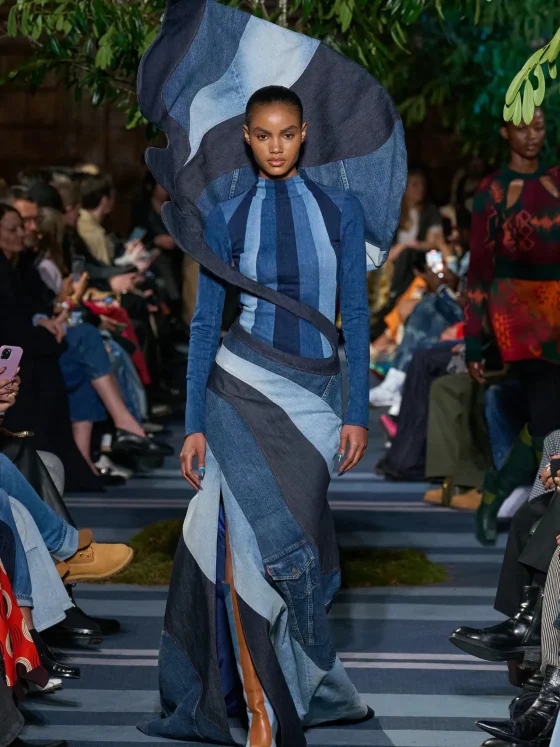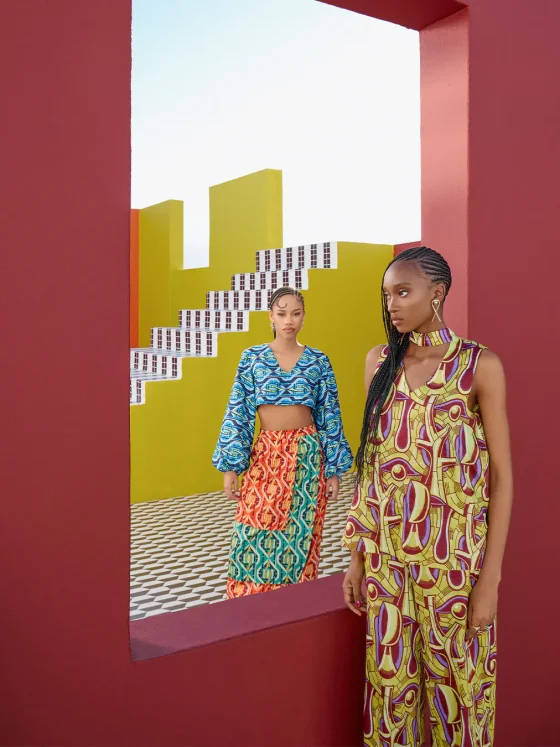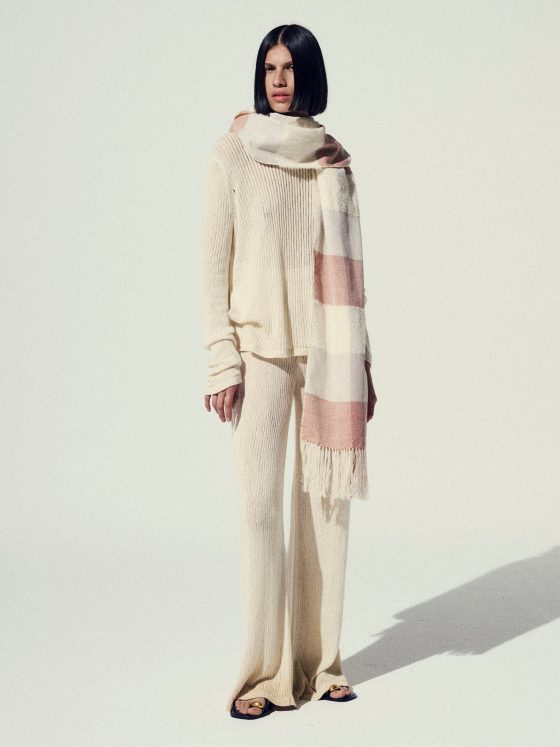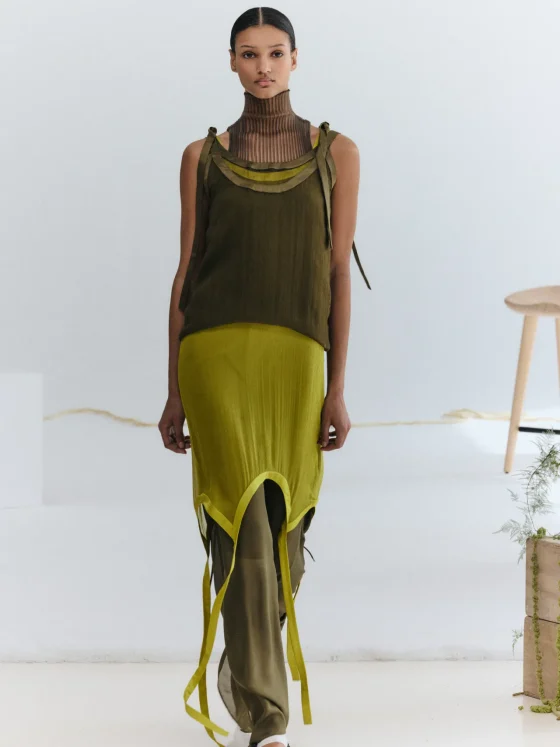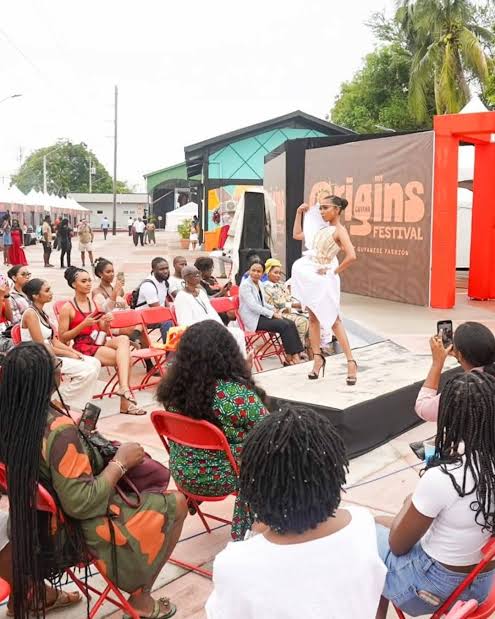
While living and working in Anguilla, Isaiah Luther stepped back from fashion. In a 2023 interview, he described the pause as a chance to consider his choices and the “importance of the way we consume”; for someone whose professional life already included designing, styling, and performing, the question wasn’t simply what to make next. It was how he wanted to make it, what materials he hoped to use, and what he could explain about their origins. That period of reflection became central to the direction he described for BuckedBead.
His ambitions were both creative and practical. He wanted greater transparency around fabrics, a bigger role for recycled materials and natural dyes, and, eventually, local textile production, a store, and international sales. In the same interview, he discussed the less glamorous conditions those plans would require: funding, space and an audience. Read together, those concerns give Luther’s story its particular shape, because building a fashion practice meant developing an approach to clothes while also trying to establish the circumstances in which the work could continue.
The pause in Anguilla did not begin that effort. He first presented a collection in Georgetown a decade earlier, and fashion developed alongside his sustained involvement in dance. The available record shows neither a simple progression from one profession to another nor an uninterrupted sequence of launches. It shows a practitioner moving between disciplines, taking breaks and returning with different questions.
Isaiah Luther’s documented career connects fashion, dance and BuckedBead. Omiren Styles traces his development and ambitions for materials and local production.
An early fashion record in Georgetown
From a debut to further presentations
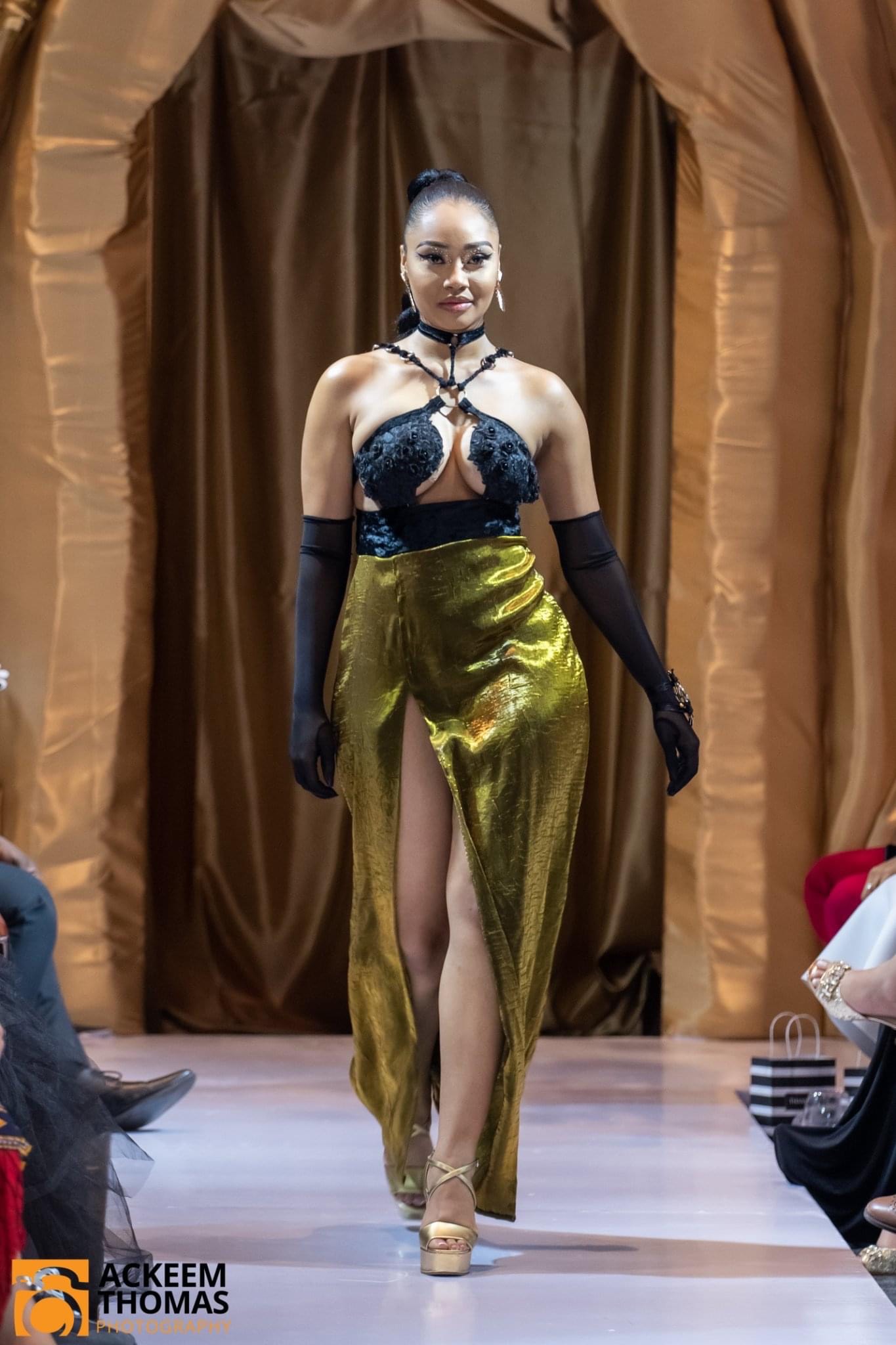
Luther dates his first collection to December 2013 at the Break the Runway Living the Arts showcase. An earlier profile, originally published in the Trinidad Express in April 2016 and reproduced by the Trinidad and Tobago Performing Arts Network, also records a 2013 Break the Runway presentation in Georgetown. The agreement between the two accounts makes that debut a useful anchor for his fashion chronology. At the time, his creative work already extended beyond clothing, as the earlier profile identifies him as artistic director of Let’s Dance Dance Studio.
The 2016 profile describes Luther as a self-employed fashion designer and stylist, as well as a dancer, model and visual merchandiser. These were not presented as successive identities that neatly replaced one another; they formed a group of activities through which he was developing a professional life. That distinction matters because a multidisciplinary career can be misread as a series of diversions from a single destination. In contrast, Luther’s documented account shows fashion as one sustained strand within a broader creative practice.
“A career is not always a ladder. Sometimes it is a workshop with several benches.” Omiren Styles Editorial Intelligence
By the time of his 2023 interview, he could also point to Red, a collection he recalled launching in Guyana and presenting during a fashion week in Suriname. The interview does not provide a date or a detailed garment record, but it establishes a second presentation beyond the debut and an appearance outside Guyana. These early collections precede the account of BuckedBead documented in 2023, and the available sources do not fully resolve when that name was adopted or which earlier presentations belonged to it. Keeping that boundary clear avoids turning a developing practice into an artificially seamless brand history.
Dance as a parallel discipline
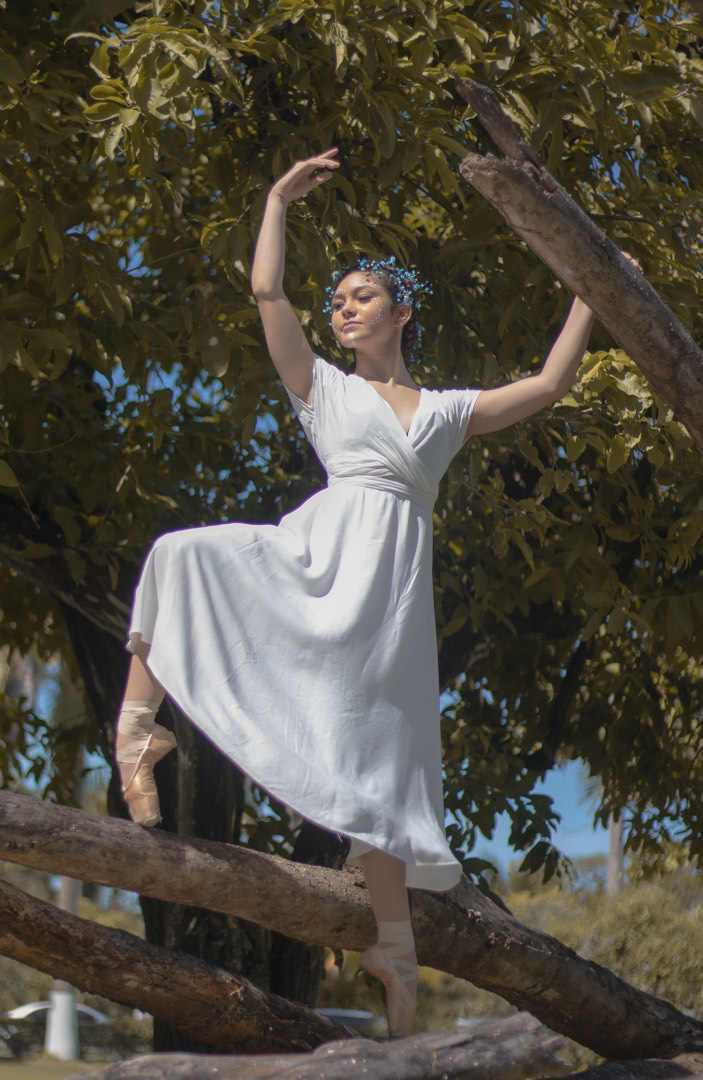
Luther’s dance experience was substantial, not a brief biographical flourish attached to his fashion work. The 2016 account traces his beginnings to dancing in his parents’ church at ten and entering ballet school at thirteen. It records his involvement in Arise, the Metamorphosis Dance Company’s twenty-first season at Queen’s Hall in Trinidad, and describes the experience through training, choreography and collaboration. His comments emphasised what he learned and what he expected to carry into his work elsewhere.
That history helps explain the breadth of his professional commitments without supplying an automatic theory of his clothes. It would be tempting to claim that a dancer necessarily designs for movement, or that choreography determines a designer’s silhouettes, but the published record does not establish either proposition for Luther. A more grounded connection is that both disciplines required sustained practice and collaboration, since dance placed him in environments where creative ideas had to be learned, rehearsed, and delivered, not merely conceived.
Teaching and organisation became part of that work. In the 2023 interview, Luther said he founded New Generation Dance Studio in 2018, offering classical ballet, contemporary dance and hip-hop to different ages and skill levels. According to the account, the studio closed in 2020 when he left Guyana to become artistic director of Klassique Academy of Dance in Anguilla, then reopened before the interview. The studio therefore adds another dimension to the profile: alongside producing his own work, Luther tried to maintain a setting where others could develop theirs.
Anguilla and a change in direction
Reconsidering what making requires
The Anguilla period put those professional strands in a new relationship. Luther was working in dance while taking a break from fashion, and his later account identifies that distance as productive. He described it as a time to reconsider consumption and become more conscious of how he created pieces. The April 2023 interview with Guyana Standard connects that reassessment with rebranding and a desire to learn more sustainable practices.
The significance lies in the change of emphasis. An early career can be described through public milestones, such as a first collection, another presentation, or an appearance abroad, but Luther’s account of the pause asks different questions about the process behind those appearances. Materials and their origins became part of the ambition, rather than concerns confined to how a finished look would be presented.
It is important not to turn this into a conversion story with a completed destination. Luther described a direction of travel, and his interest in learning and changing his methods was part of the account. Preserving that sense of development makes the profile more revealing than announcing that a responsible production system had already been achieved. A separate HGPTV report from March 2023 describes the line, which it spells Bucked Bead, as a sustainable fashion line focusing on upcycling, shown at events in Guyana and beyond.
BuckedBead and the ambition for transparency
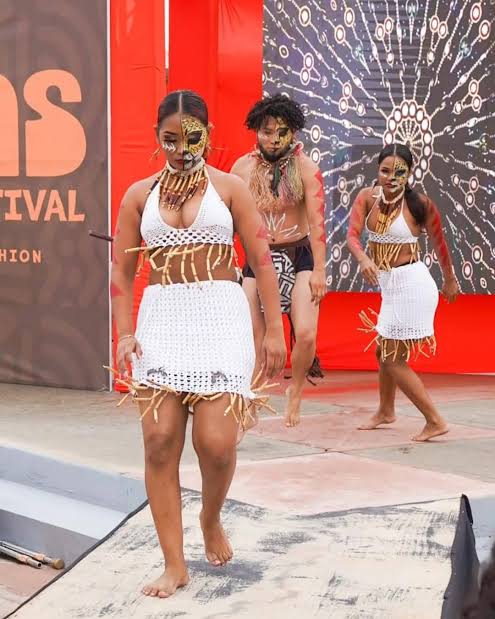
Luther’s clearest statement about BuckedBead concerned openness. “It puts transparency at the centre of everything,” he told Guyana Standard, explaining that he wanted the label to be candid about the origins of its products and fabrics. He then described the intended material direction: “Our brand intends to be able to use 100 per cent recycled fabrics, natural dyes and natural fibres.” The wording identifies an ambition in 2023, not verified specifications for every garment, a distinction we apply in our guide to verifying a fashion brand’s fabric claims.
That distinction keeps the aspiration meaningful while staying accurate. Transparency is not simply a visual quality communicated through an earthy palette or a handmade appearance; in Luther’s stated approach, it concerned information about inputs. His emphasis was therefore as much on what a label should explain as on what it should make.
The available garment record does not support defining a complete BuckedBead aesthetic. The name Red cannot establish a palette or silhouette, and the material goals cannot stand in for an assessment of construction. The interview does establish a shift in priorities: Luther wanted the decisions behind a piece to become more deliberate and legible. That is a useful account of his intended development, even without a technical review of the resulting clothes.
Space, funding and a wider audience

Luther’s production ambitions came with a direct account of practical constraints. He identified funding for dance outreach and artistic exploration as a challenge and described the difficulty of reaching a wider audience for BuckedBead, both in Guyana and internationally. He acknowledged government efforts such as grants for creatives but argued that more support was needed. “We need places to create, to express within the community and more funding,” he said.
The specificity of those concerns is important. “Support for creativity” can become a vague appeal, but Luther named space, finance and access to an audience. Those needs connect the clothing label with the teaching organisation without making them identical enterprises, because both required more than an individual’s ability to generate ideas. They required continuity: a place to work, resources to develop the work, and people able to encounter it.
His longer-term goals for BuckedBead, producing textiles locally, opening a store and selling internationally, extended that concern into the organisation of fashion itself. These were objectives recorded in 2023, not completed milestones, and their interest is that they reached beyond another collection launch. Luther was imagining changes in production and access as well as creative direction, and the label’s future, in his account, depended on building a setting for the clothes as much as designing the clothes. Our piece on protecting the cloth makers behind provenance claims shows why local production matters to that story.
The Omiren Styles Argument
The clothes and the conditions of making
The strongest thread in Luther’s documented career is infrastructure: the relationship between creative choices and the resources needed to realise them. His collection debut marks an early public step into fashion; his dance work shows a parallel commitment to training, collaboration, and teaching, and his later account of BuckedBead adds a wish for more control over materials, clearer communication, and a wider route to customers.
These strands should not be compressed into a claim that multidisciplinary experience automatically produces better design. Their value is more specific, because they show why “building a practice” describes Luther’s ambitions more accurately than simply “building a brand”. A label needs an identity, but his account also concerns a place to work, a means of production, financial support, and an audience.
The unresolved tension is therefore not only between an aspiration and a finished garment. It is between the degree of control Luther wanted over making, and the conditions he said were available to him. In the published record, he wanted to change both, and that is the clearest basis for understanding his fashion development: an effort to make the choices behind the clothes more deliberate while building the practical foundations that would allow those choices to last. For further designer profiles, explore Omiren Styles.
Also Read:
- Eco-Luxury: Designers Bringing Style to Sustainable Fashion
- Waina Chancy and Atelier Ndigo: Haitian Elegance on a Global Stage
- The Rise of Caribbean Luxury Fashion Brands
- The Afro Carib Fashion Show: Two Women, One Runway, and the Diaspora Platform Nobody Else Is Building
Frequently Asked Questions
Who founded BuckedBead?
The 2023 Guyana Standard interview identifies Isaiah Luther as BuckedBead’s founder, designer and creative director.
When did Luther present his first collection?
He dates his debut to December 2013 at the Break the Runway Living the Arts showcase in Georgetown. The earlier 2016 profile also records a 2013 presentation at that event.
What period does this profile cover?
It draws on accounts published in 2016 and 2023, including recollections of earlier milestones. It does not confirm BuckedBead’s current trading status or subsequent professional developments.
What did Luther say he wanted BuckedBead to become?
In 2023 he described an ambition to use recycled fabrics, natural dyes and natural fibres, with transparency about origins, and later to produce textiles locally, open a store and sell internationally. These were stated goals, not verified specifications.