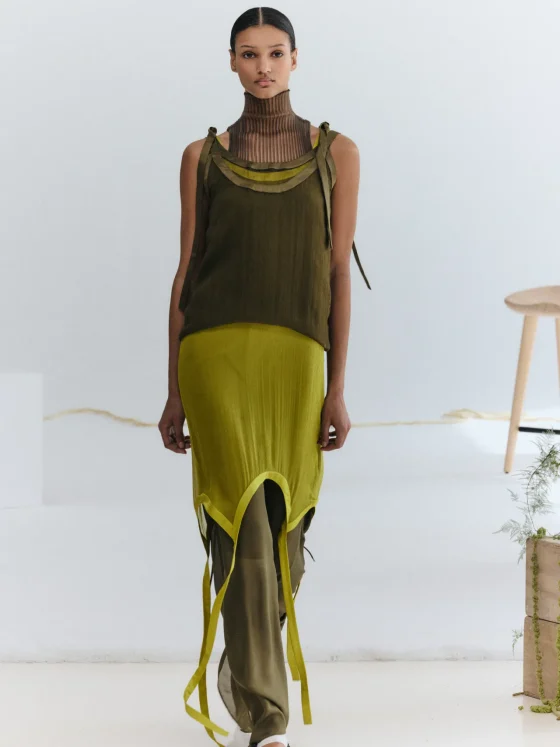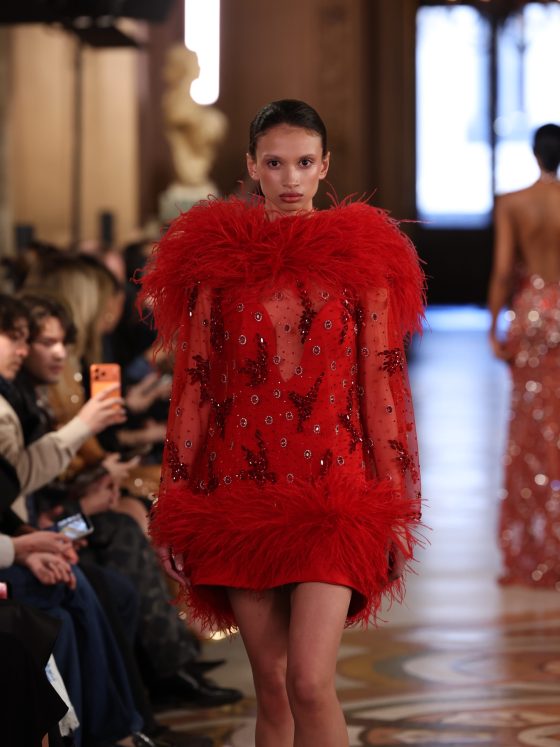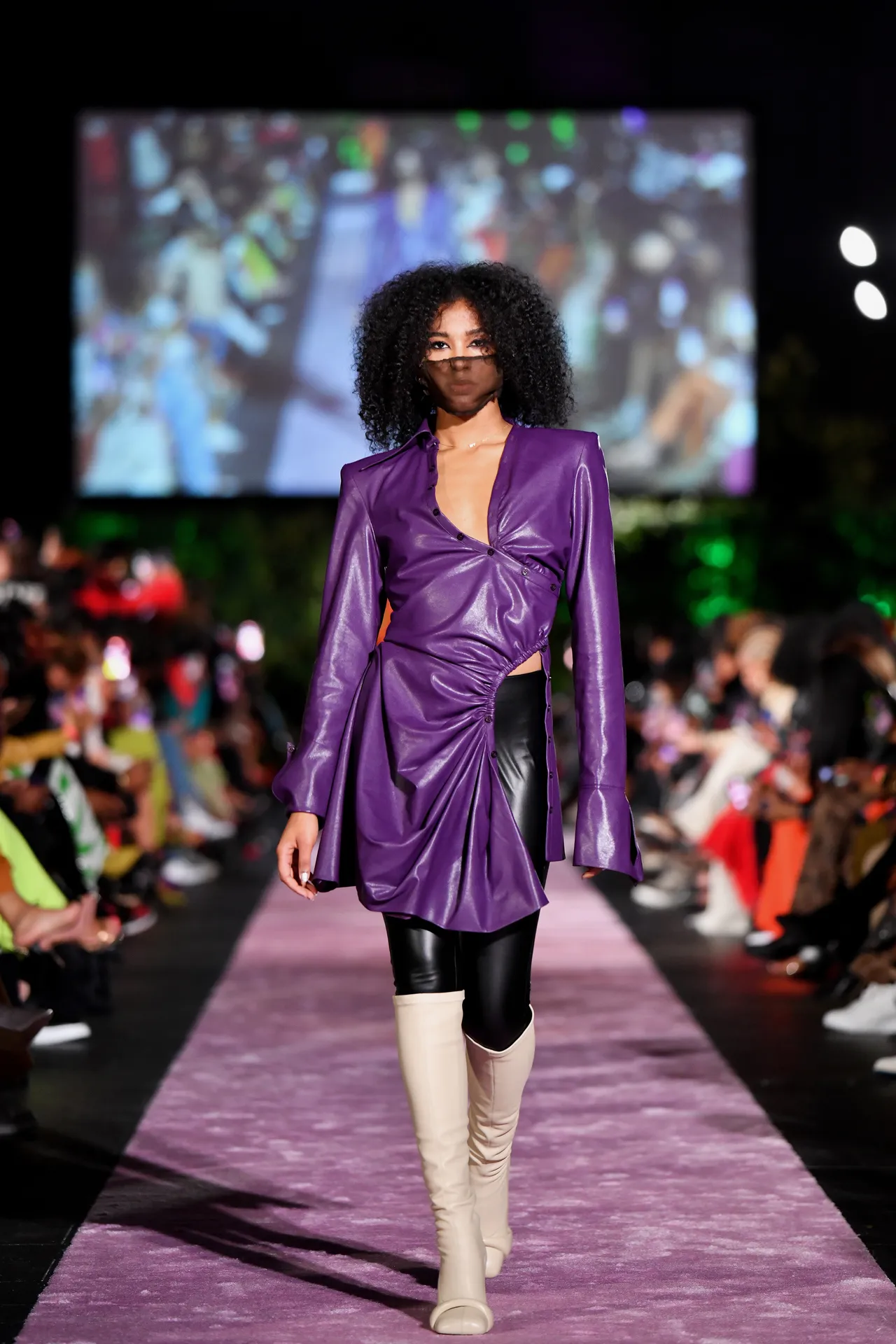
Hanifa’s Niyah Maxi Dress and Scarlett Scarf Dress offer two different propositions beneath familiar size labels. Niyah is a form-fitting knit with fringe that emphasises the hips, a stretch rating of 3/3, and an invitation to size down for a snug fit.
Scarlett is lined, fastens with an invisible zipper and carries a stretch rating of 0/3. Its instruction is “true to size”.
Both reviewed charts run from XS to 3XL, but the shared labels don’t make the dresses’ fit decisions equivalent.
More revealing information sits beside those labels: how a garment is intended to follow the body, whether its material stretches, where its hem falls, and whether the photographed sample matches the production version.
Across Hanifa’s reviewed product pages, these details are sometimes unusually useful. A skirt set notes that it adjusted its photographed sample to the model’s height, and a pair of flared trousers lists a fixed inseam across its sizes.
Elsewhere, a dress page gives conflicting length figures.
Together, the examples show why size range, information quality and fit performance need separate judgements. A label can publish an extended chart without every garment sharing that range, and a detailed table can still require clarification.
Even a well-explained product page remains guidance rather than proof of how the garment will perform on an individual wearer.
The Scarlett Scarf Dress is a recent addition to the range; Particl’s archive of Hanifa’s emails records its launch announcement on 28 April 2025.
Hanifa’s stretch guidance, measurements and sample disclosures reveal more than size labels alone. We examine what shoppers can and cannot infer about fit.
Before comparing numbers, establish what was measured.
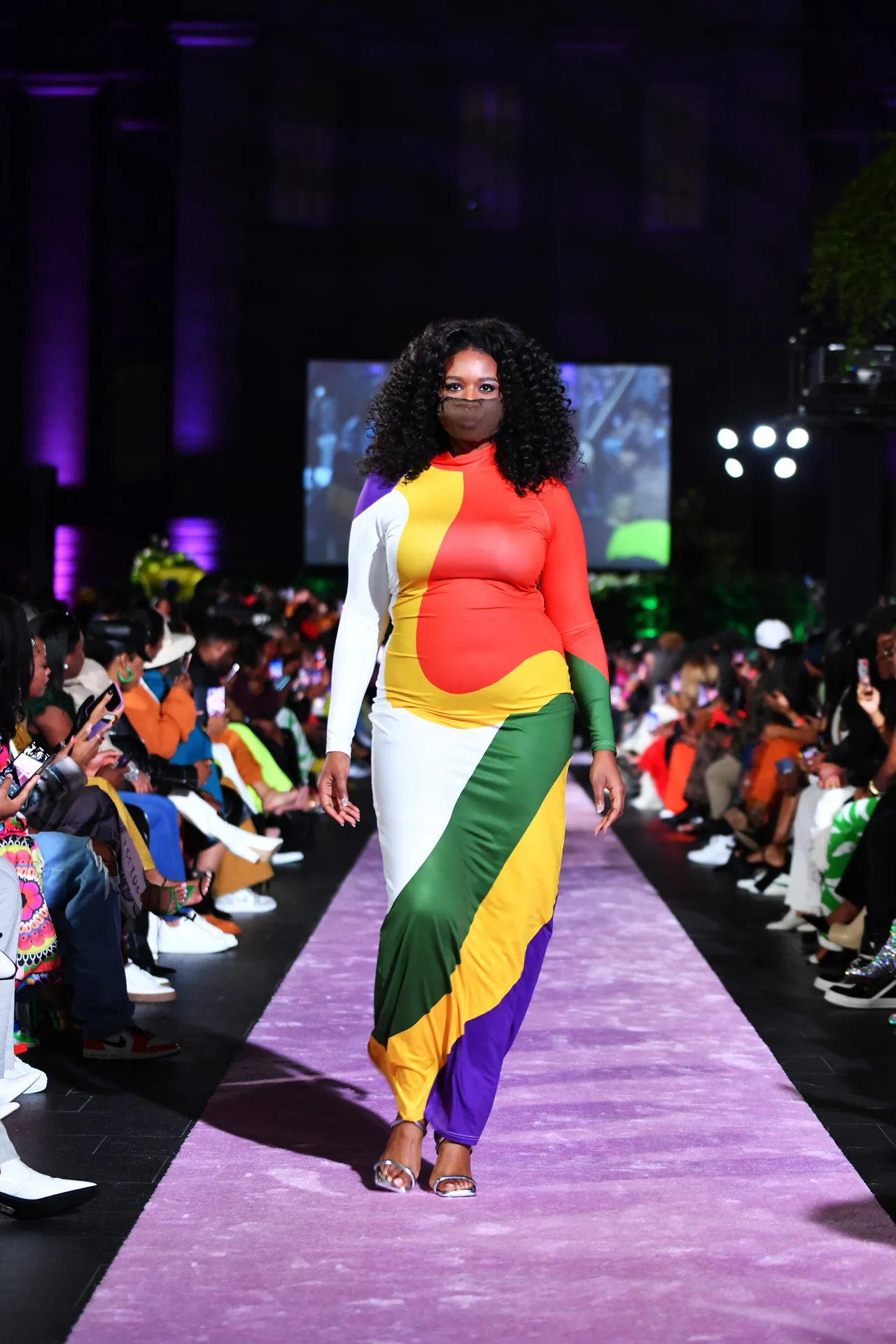
Hanifa’s general fit guide lists XS through 3X, with corresponding US dress-size groupings and bust, waist and hip figures. For medium, it gives a 36-inch bust, 30-inch waist and 40-inch hips.
Individual product tables contain different values. Niyah’s medium lists 34 inches at the bust, 28 at the waist, and 36 at the hip, while Scarlett’s medium lists 37, 30½, and 41 inches, respectively.
Those differences are not sufficient evidence of an error. The dresses have different constructions and stated stretch properties.
More importantly, the reviewed tables do not consistently explain whether their entries describe body targets, relaxed garment circumferences, flat widths or another measurement convention. Without that explanation, a reader cannot safely subtract one figure from another and declare how much room the garment will provide.
“A measurement without a method is a number looking for a meaning.” Omiren Styles Editorial Intelligence
The general guide supplies a reference framework. The product page supplies more specific information, but its figures become fully interpretable only when the measurement basis is clear.
When that basis remains unstated, the uncertainty lies in the information, not automatically in the garment.
This distinction matters throughout the review. The analysis below evaluates published descriptions, measurements and disclosures; it is not a physical wear test and does not assess comfort, seam performance, stretch recovery or long-term shape retention.
Niyah: sizing choice within a shaped silhouette
Niyah makes fit part of its visual argument.
Hanifa describes a textured, heavy stretch knit with a deep neckline, front cutout and fringe at the peplum and hem. The fringe at the hips is intended to produce an exaggerated hourglass effect; the front hem is slightly shorter than the back, and the listed composition is 61% acrylic and 39% nylon.
The dress therefore depends on a relationship between a close-fitting body and an expanded visual emphasis at the hips. Its fit information should help a shopper understand that relationship, not just identify a letter size.
The page takes a useful step by offering a choice: “Size down for snug fit.” Alongside its 3/3 stretch rating, that wording acknowledges that the degree of closeness is part of the decision, and it does not present the snugger result as the only legitimate way to wear the garment.
The chart also records length changes across the range, from 56½ inches in XS to 60 inches in 3XL. The model is identified as 5 feet 11 inches tall and wearing a large.
These details help distinguish three questions that might otherwise collapse into one: which size to select, how close the dress is intended to sit and how long it is listed to be.
The remaining limitation is technical specificity. A stretch factor of 3/3 doesn’t tell the reader how far the knit stretches under a given force or how it recovers after wear, and the sizing instruction doesn’t produce the same outcome for every body.
Niyah’s page is most persuasive when it describes an intended relationship between body and silhouette. It becomes less conclusive when shoppers need a measurable account of the fabric’s behaviour.
Scarlett: why “true to size” is not the whole answer
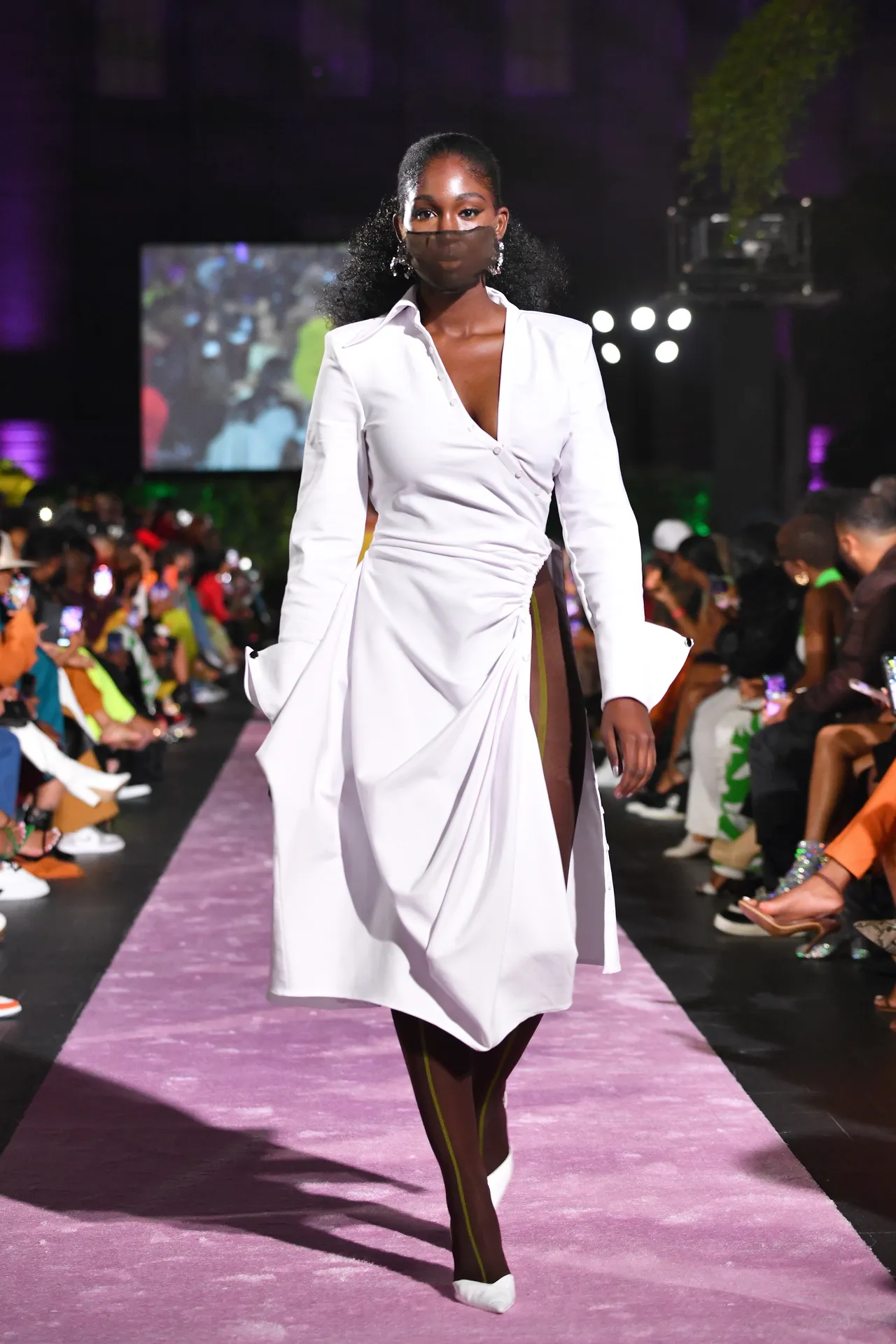
Scarlett provides a useful counterpoint without requiring a separate verdict on the entire brand.
The dress has a draped back, a floor-length scarf detail secured at the neck, full lining and an invisible zipper at the side back. Its stretch rating is 0/3, and the model is listed as 5 feet 9 inches tall and wearing a small.
Those features establish a different fit proposition from Niyah’s stretch knit. The page’s “true to size” instruction cannot simply be read as the opposite of Niyah’s optional size-down advice, since it needs to be considered alongside Scarlett’s own table and construction.
The fabric description also requires precision. “100% Cotton Lining” identifies the stated lining composition; it does not establish that the outer fabric is entirely cotton, a point we make more broadly in our guide to verifying a fashion brand’s fabric claims.
This is a small but consequential example of reading the page at its actual level of specificity. The listing provides evidence about a component, not permission to extend that description to the whole dress.
Elara: the photograph is not the production specification
The Elara Knit Skirt Set II offers the most revealing disclosure in the reviewed group.
Its sleeveless top combines a fitted body with a voluminous cowl neckline and fold-over collar. The matching skirt has an elastic waistband and a high side slit, and the Raspberry/Multi version is listed as 100% acrylic, with a stretch factor of 2/3.
As a set, it creates two related fit decisions. The top’s relationship to the torso and the skirt’s relationship to the waist and lower body both matter to the complete silhouette.
Hanifa provides separate tables for the top and bottom, which helps the shopper examine those relationships individually. The listing still presents a single set-size selection, and the separate tables don’t make it clear that shoppers can order different sizes for each component.
The page also warns that Raspberry/Multi has less stretch than the Magenta version. That detail prevents the style name from doing too much work, because familiarity with another colour version is not presented as a guarantee of the same material response.
Most significantly, Hanifa states that the model’s XS sample was made to fit her height. It directs the reader to the chart for the production garment’s maxi length, listed from 43 inches in XS to 46½ inches in 3XL.
This disclosure makes the image more useful by defining its limits. The photograph shows the garment’s presentation on that model, the chart supplies the stated production length, and the two are not silently treated as identical.
There is still a measurement-method question. In the reviewed table, the top’s XS bust entry is 12½ inches, and its waist entry is 19 inches, without an accompanying explanation sufficient to establish how those values should be compared.
That supports a request for clarification, not a declaration that the table is wrong. Unexplained information and contradictory information are different findings.
Elara’s page demonstrates both sides of the issue. Its sample and colour disclosures reduce assumptions, while its measurement convention still needs to be made easier to interpret.
Courtni: the flare depends on length
The Courtni Flare Sweatpants II shift attention from circumference to proportion.
Hanifa describes a ribbed drawstring waistband, pockets and a flared hem, with the trousers intended to sit at the waist. The fabric is listed as 100% cotton, the stretch factor as 2/3 and the model as 5 feet 8 inches tall wearing a small.
The chart provides waist, hip, overall length, and inseam measurements, and the inseam remains 34¾ inches across every size.
That consistency gives shoppers information the label cannot. Selecting a different size does not, according to this table, select a different inseam.
For a design defined by its flare, that is a significant proportional detail. The hem is part of the silhouette, not an incidental endpoint, and you need to consider the stated waist position and inseam together when interpreting the photographed length.
The drawstring is another concrete feature. It establishes an adjustment mechanism at the waistband, but it doesn’t indicate how the rise, seat, or thigh will fit every wearer.
Courtni’s page is useful because it identifies dimensions relevant to the design’s intended shape. A clear measurement method would make those figures easier to compare with a shopper’s existing trousers.
Clarise: when two length accounts conflict
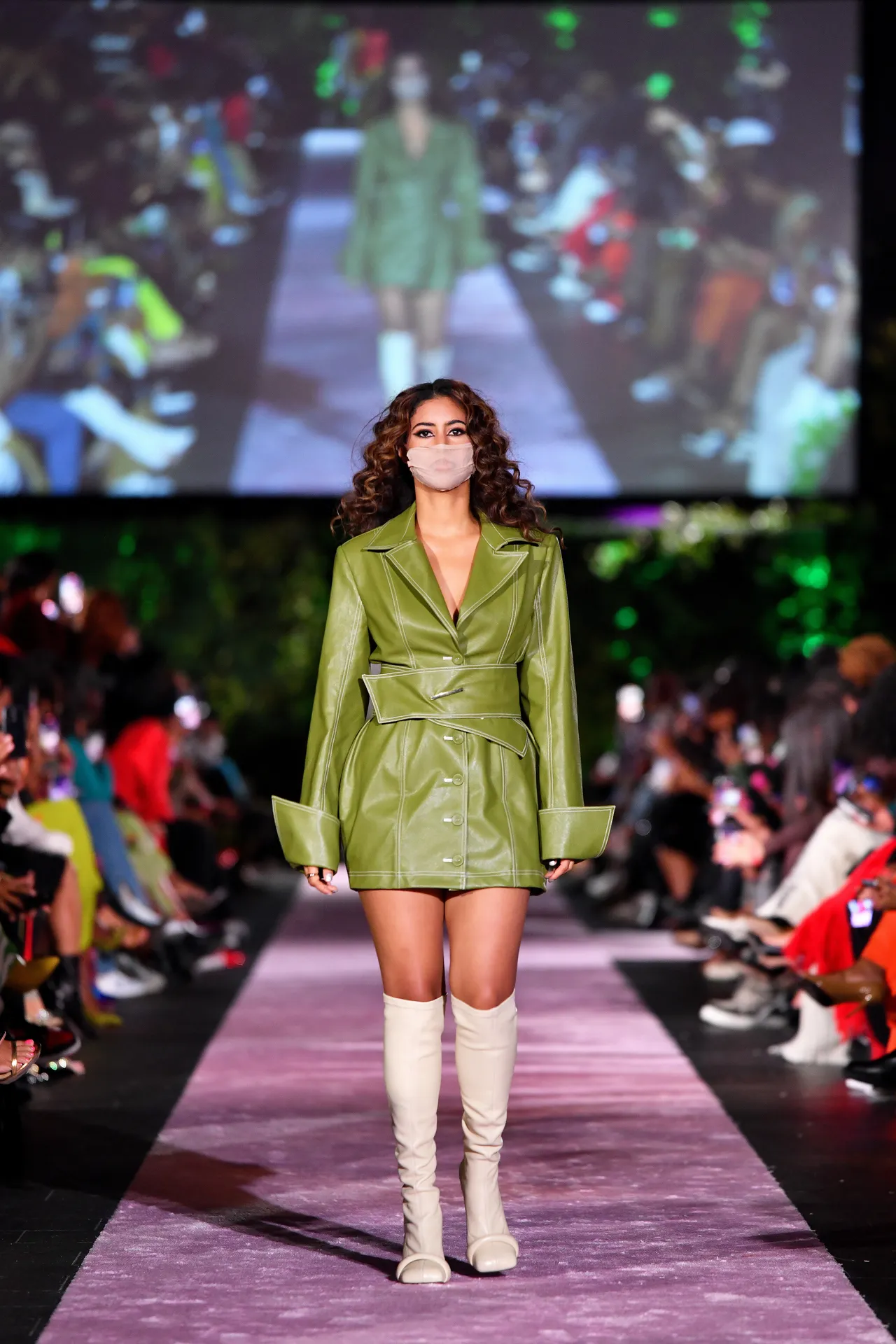
The Clarise Knit Maxi Dress II presents a narrower but clearer information problem.
Hanifa describes a figure-hugging, wave-ribbed knit dress with a side cutout and neck strap. The composition is listed as 75% viscose and 25% nylon, with a 3/3 stretch rating; the model is 5 feet 10 inches tall and wears a small.
The fit text gives a length of 62 inches. The chart lists 60 inches for XS and small, and 60½ inches for medium through 1XL.
Unlike an unexplained measurement convention, this is a conflict between published length accounts. Neither figure should be selected as definitive without confirmation.
The finding should remain proportionate. It identifies a problem on the reviewed page, not proof that the garment fits badly or that every Hanifa listing is unreliable.
Clarise also illustrates why a general size guide cannot establish each product’s range. Its reviewed table stops at 1XL, while the general guide extends through 3X.
Range, stock and purchase conditions
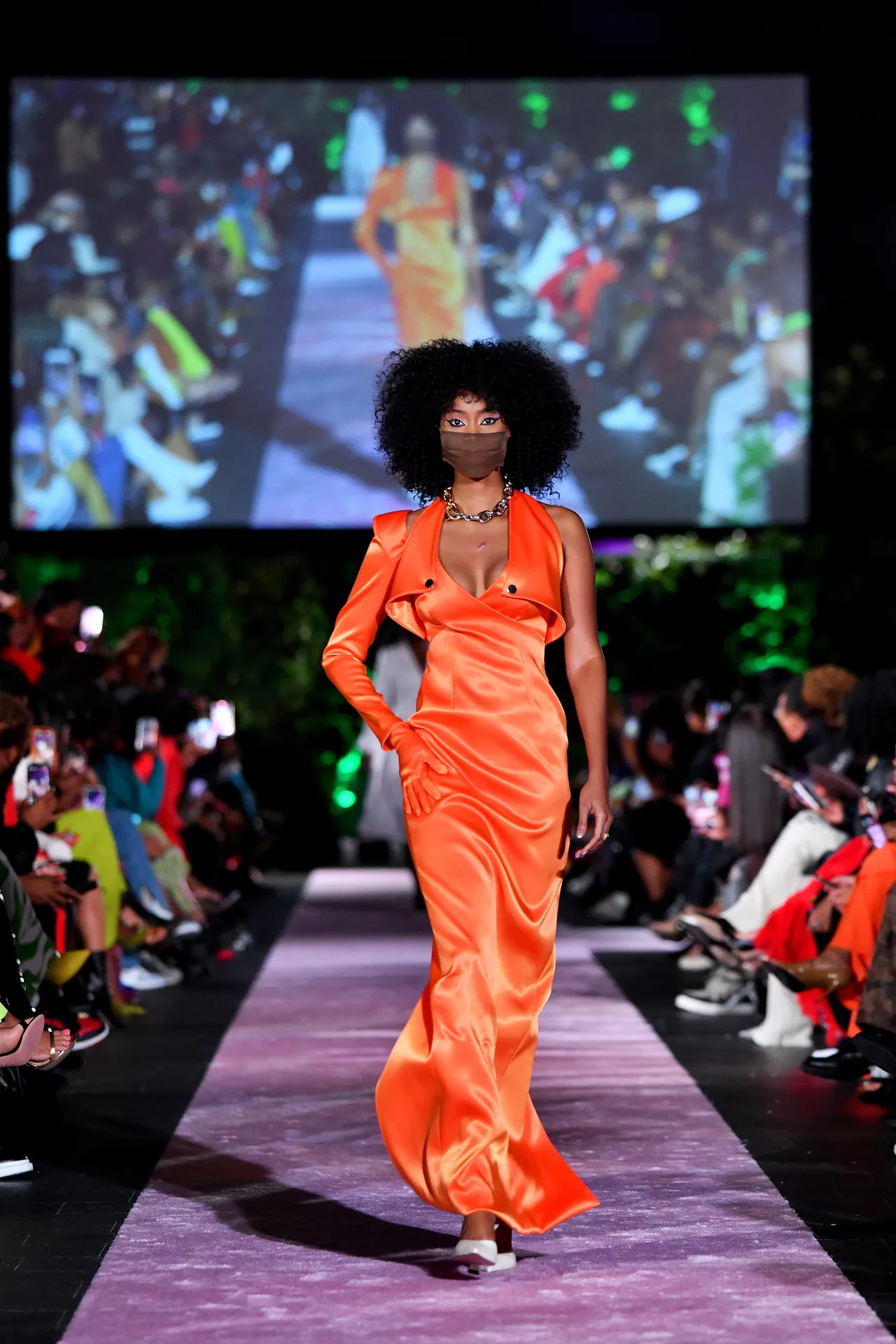
A listed size range describes one aspect of a product. Availability describes another.
During the review, Niyah’s Flamingo page showed some listed sizes out of stock and others available. Scarlett’s Bright Lime page also showed a mixture of available and unavailable variants, while Elara’s Raspberry/Multi listing marked all eight sizes ready to ship.
These are snapshots of the reviewed pages, not permanent stock findings. They don’t establish quantities, replenishment plans, sales velocity, or why a variant is unavailable, and those statuses alone don’t support any sales or demand conclusions.
They also say nothing definitive about fit quality. Availability indicates access to a listed variant at a given moment, but it does not indicate how it performs in wear.
Purchase conditions add another relevant layer. Scarlett, Elara, Courtni and Clarise carry final-sale designations on the reviewed listings, which are reported here at page level and are not a complete interpretation of applicable terms or exceptions.
The practical editorial point is straightforward: when a purchase offers fewer options afterwards, clear, internally consistent information before purchase becomes especially important. For readers who want the vocabulary, our African textile glossary is a good reference.
The Omiren Argument
Hanifa’s strongest fit communication explains a departure from the shopper’s likely assumption.
Elara says that another colour version stretches differently and that the photographed sample has been adjusted. Courtni shows that its listed inseam does not change across sizes, and Niyah distinguishes an optional snug fit from a single blanket sizing instruction.
These disclosures provide specificity. They move beyond the existence of a chart and explain something consequential about an individual design.
Weaker information leaves the measurement basis unstated or provides conflicting dimensions. Those are communication findings, and they should not be inflated into a verdict on physical fit, just as an extended range should not be inflated into proof of successful performance across bodies.
The most useful question is therefore not simply, “Does Hanifa offer my size?” It is whether the selected product supplies enough clearly defined information to understand its intended shape, dimensions and wearing options.
Across these examples, the answer is mixed but substantive. The pages offer valuable garment-level guidance, and the next improvement isn’t another general assurance about fit, but greater consistency in explaining exactly what the numbers mean.
More of our fashion coverage is at Omiren Styles.
Also Read:
- Body, Fitness and Silhouette: Reimagining the Male Form in Contemporary African Menswear looks at how cut responds to the body.
- Maternity Fashion in Africa: Celebrating the Changing Body, Challenging the Invisible considers clothing designed for a changing fit.
- Top 5 Culturally Inclusive Fashion Pieces That Have Made Global Statements highlights inclusive design in practice.
- The Structured Blazer for Women: Power Dressing with Clarity and Authority shows how construction shapes the way clothes sit.
Frequently Asked Questions
Should shoppers use the general guide or the product chart?
Read both, but do not assume they measure the same thing. If the product table’s measurement convention is unclear, clarify it before comparing its figures directly with body measurements.
Does a 3/3 stretch rating always mean sizing down?
No. Niyah offers sizing down for a snug fit, while Clarise carries the same rating and says “true to size”. The garment-specific instruction matters.
Does this article establish that Hanifa’s garments fit well?
No. It evaluates published fit information. It does not replace a physical fit assessment or establish how any garment will fit an individual wearer.
Why do the product tables differ from the general size guide?
Dresses have different constructions and stretch properties, and the tables don’t always state their measurement basis. The difference alone does not prove an error, so check with the brand before relying on it.