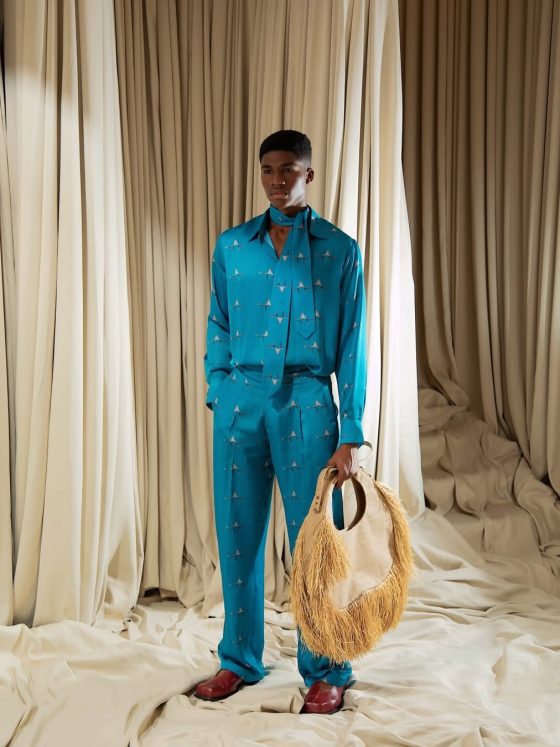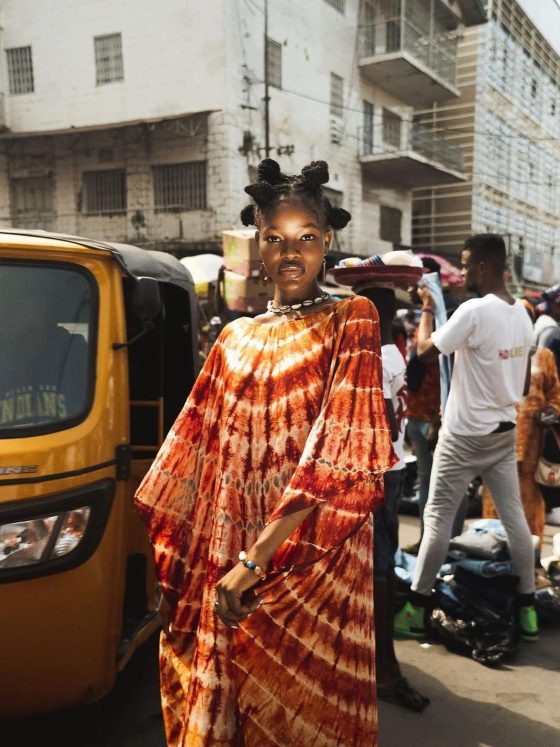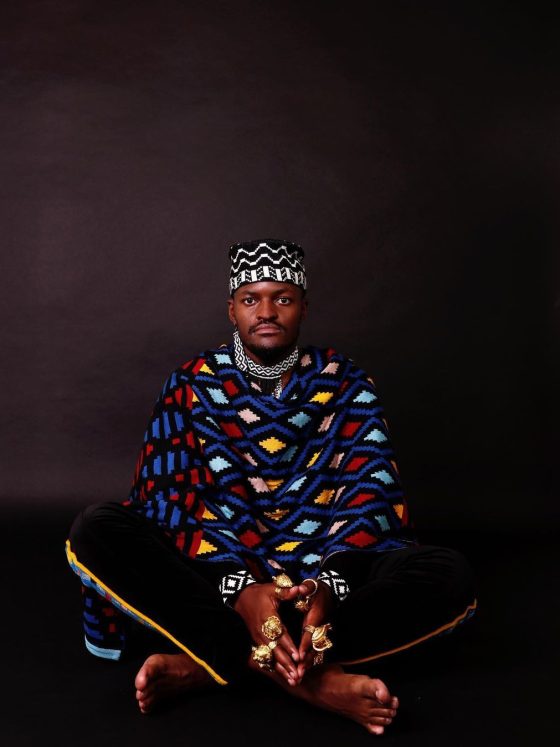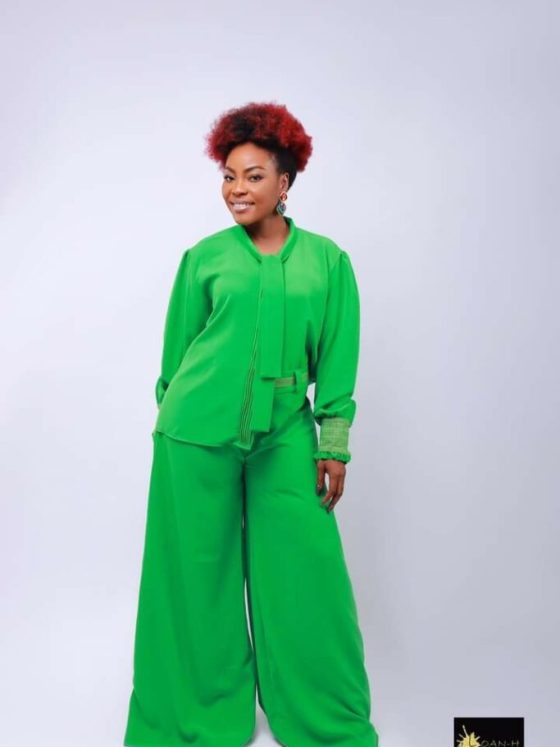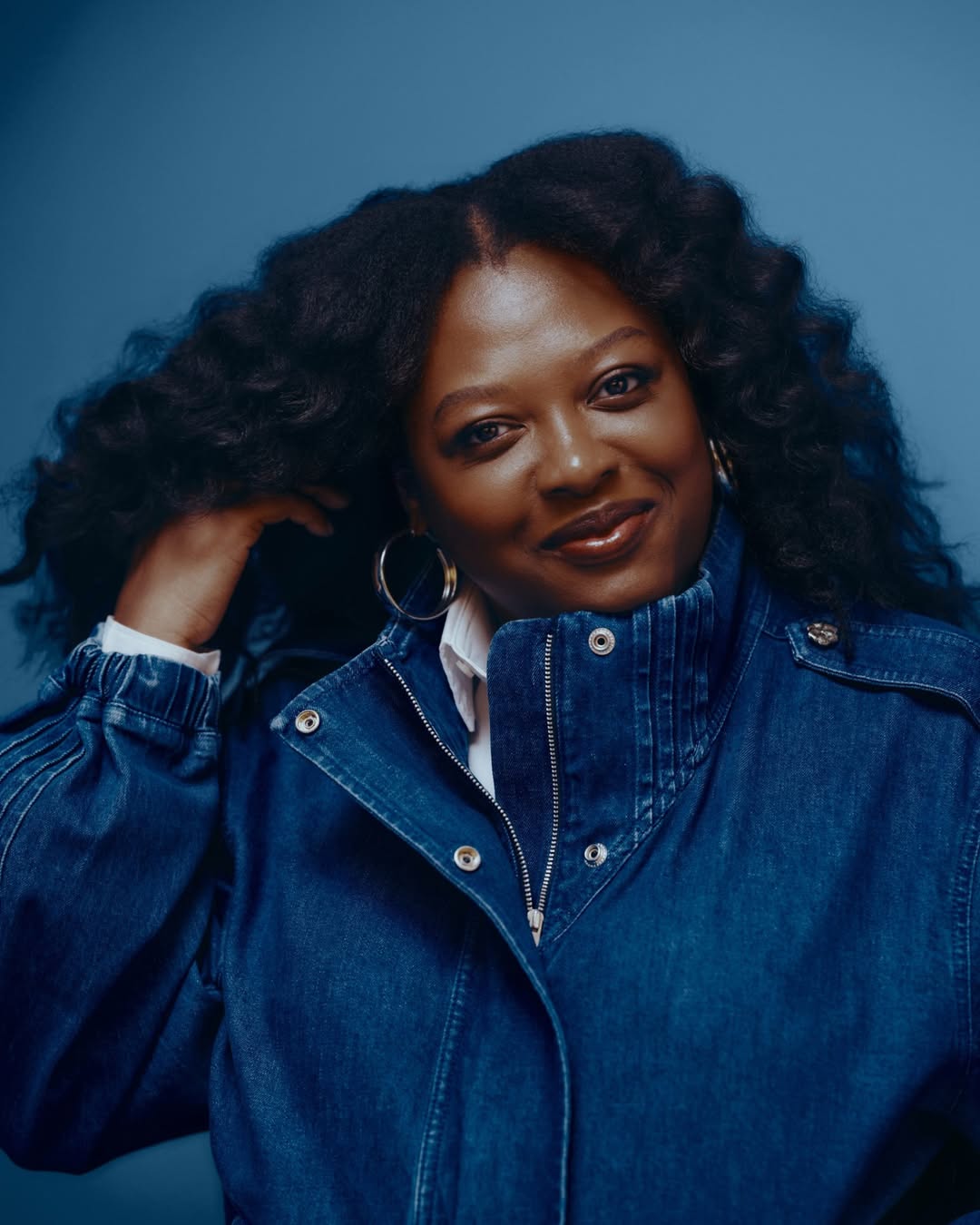
The collection that opened Harlem’s Fashion Row’s 18th annual runway on 9 September 2025 began with florals. Waina Chancy’s geometric tops drew their structure from natural forms: cell patterns, petal logic, the architecture of organic growth translated into fabric and cut. The palette moved from those opening notes into cherry red, then deep blue, then black, before the collection closed in Barbie pink with gold accents running throughout. Traditional Haitian headpieces sat on low, braided buns. New trim work appeared on the coats and blazers for the first time. Backstage, Chancy told Essence: ‘This time around, we really wanted to show we’re diverse. I think we achieved that.’
Waina Chancy’s Atelier Ndigo opened the Harlem’s Fashion Row runway in September 2025. Haitian tailoring did not need reinvention. It needed a stage, and Chancy built one.
Atelier Ndigo: What the Name Carries
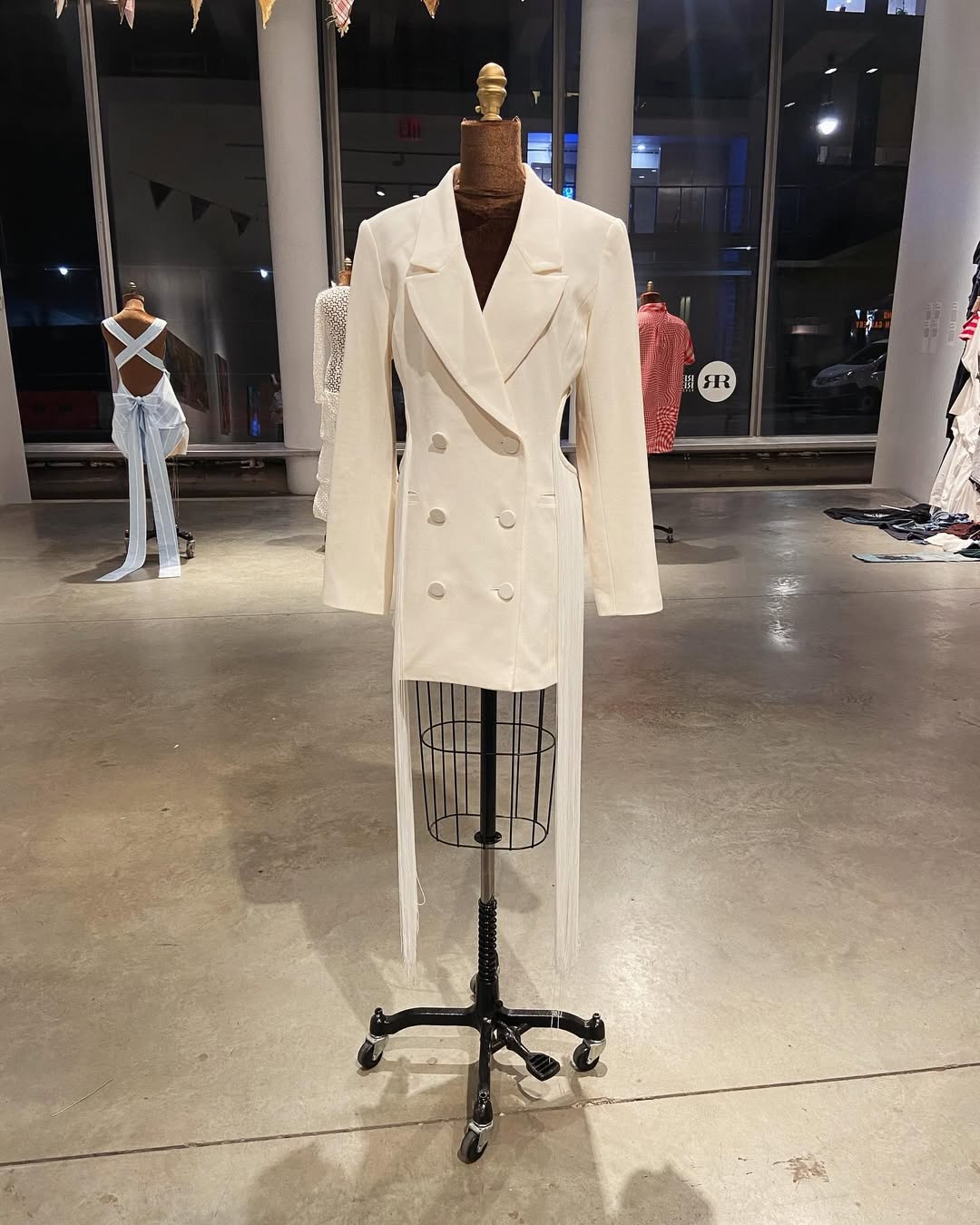
Atelier Ndigo takes its name from the French and Creole rendering of indigo. Indigo was one of the primary cash crops that drove the plantation economy of Saint-Domingue before the Haitian Revolution of 1791. The dye that financed colonial extraction becomes the defining colour of a luxury fashion label built on Haitian creative authority. The choice is not decorative. It is a statement about who owns the material’s history and what that ownership means when exercised in a commercial context.
The label is known for masterful tailoring, feminine strength, and modern sophistication. Those descriptors, applied to Atelier Ndigo, carry a specific meaning. Chancy’s tailoring is built from a Haitian material intelligence: the relationship between structure and ornament that runs through Haitian craft tradition, from Vodou ceremonial dress through to the elaborate civic dressmaking culture of Port-au-Prince. Haitian women have always constructed commanding garments. Atelier Ndigo builds from that knowledge rather than importing it from European tailoring conventions.
The SS26 Collection: New Territory
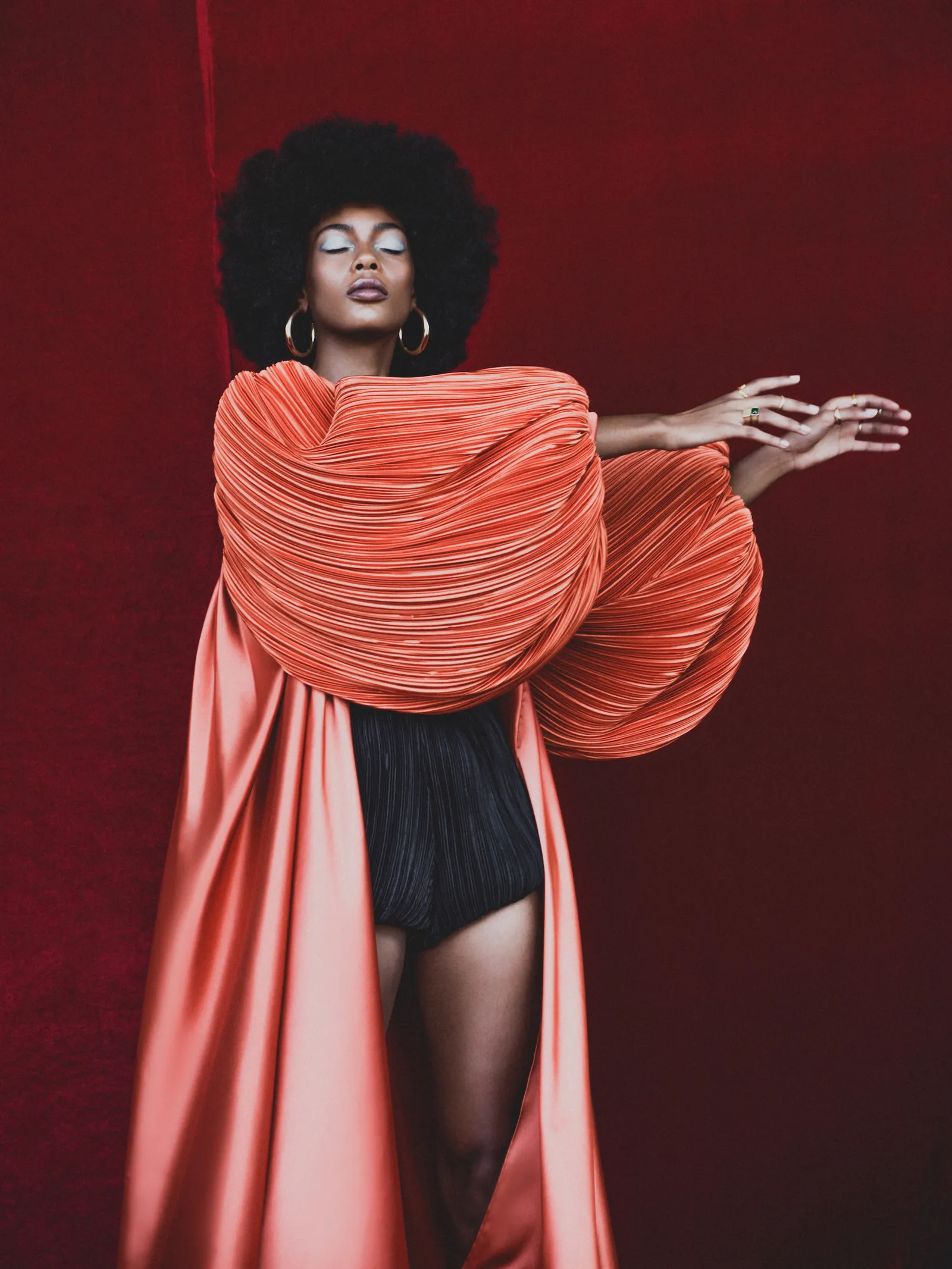
The SS26 collection at HFR 2025 moved through several distinct registers. The opening florals, with their geometric tops drawn from natural forms, established the collection’s relationship with organic structure. The mid-collection shift into cherry red and deep blue introduced the palette’s emotional range. The closing sequence in Barbie pink with gold accents throughout made the strongest visual argument of the evening.
The new trim work on the coats and blazers represented a technical extension Chancy had not attempted publicly before. Traditional Haitian headpieces worn with low braided buns connected the collection’s contemporary silhouettes to a specific cultural inheritance. The makeup brief, described backstage to Essence, was natural with warm blush and lips: a deliberate refusal of artifice that allowed the construction to speak.
Harlem’s Fashion Row 2025: The Context and the Statement
Harlem’s Fashion Row, founded by Brandice Daniel in 2007, has spent eighteen years building the most important platform for multicultural designers running alongside the official New York Fashion Week calendar. The 18th annual show, themed “This Is the Table,” opened with three consecutive presentations by designers of Haitian origin: Atelier Ndigo, LaTouche, and Daveed Baptiste.
Daniel waved a Haitian flag from the stage before the runway began. She told the room: ‘To feature three Haitian designers at once is a groundbreaking moment, a testament to the global impact of Caribbean creativity and to our belief that culture is fashion’s greatest innovator.’ Coverage ran in Essence, WWD, and the karibbean Kollective.
For Chancy, the opening position was not incidental. It placed Atelier Ndigo’s tailoring as the first visual argument of the evening, the standard against which the two collections that followed would be understood. The choice was HFR’s. The execution was entirely Chancy’s.
Also Read:
- Haiti Fashion: The Designers Reshaping Global Style from the Inside Out
- LaTouche: Jacmel, Haiti and the Architecture of Identity
- Daveed Baptiste: Diaspora, Denim, and the Haitian Body in Motion
The Caribbean Fashion Market and the Broader Argument
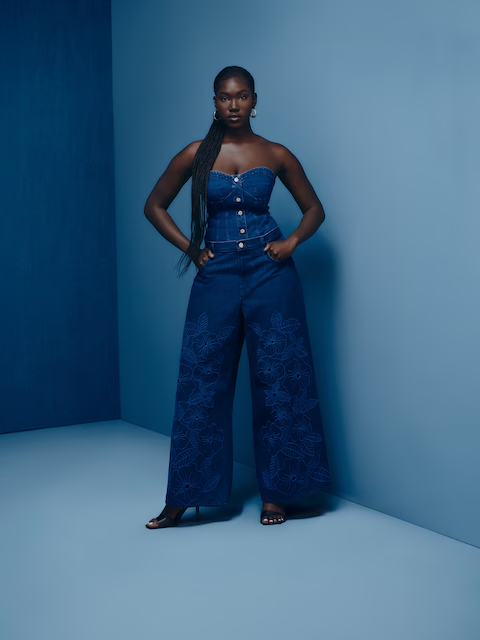
The African fashion market is valued at $31 billion and continues to expand. The Caribbean sits within the same broader creative economy, connected through diaspora networks, shared material traditions, and the sustained presence of Black Atlantic design intelligence in cities from London to New York. African Caribbean fashion in the UK represents a significant and growing consumer segment, with purchasing power increasingly aligned with designers whose work carries the specific cultural authority of their formation.
Atelier Ndigo is positioned within this economy as a label that rejects the mainstream industry’s coded framing of Caribbean fashion. The collection is not colourful and expressive. It is tailored and structurally rigorous. The colour and the ornament are the surface through which a deeper argument about craft authority and cultural specificity is delivered.
Waina Chancy’s Practice and What Comes Next
Chancy has described her approach to design as rooted in the desire to show diversity within a single collection: not as an external requirement but as the natural expression of a practice formed in Haiti, developed internationally, and presented to rooms that include Haitian diaspora communities alongside buyers and editors encountering the work for the first time.
The SS26 collection’s new technical moves, the trim work and the extended layering vocabulary signal a designer in the act of expanding her range from a position of confidence rather than ambition. The foundation was always there. The stage at Cipriani Wall Street simply made it visible to a larger room.
The Omiren Argument
Thesis: Haitian tailoring did not need reinvention. It needed a stage. Waina Chancy built one at Cipriani Wall Street, and the work it held was already complete.
Context: The international fashion press codes Caribbean fashion as expressive and decorative while reserving technical and intellectual authority for European traditions. This framing is applied consistently, regardless of what the work actually demonstrates.
Disruption: Atelier Ndigo refuses to code at the level of construction. The SS26 collection introduced new pattern work on coats and blazers. The silhouettes were built from structure, not from surface. The florals were a geometric argument about natural form, not a tropical reference. The HFR audience responded to the opening position as the technical standard-setter for the evening.
Cultural insight: The name Atelier Ndigo reclaims indigo from its colonial history. The headpieces connect the contemporary silhouettes to specific Haitian cultural inheritance. The trim work builds on a tradition of precise ornament in Haitian dressmaking. Every element carries a meaning that the mainstream framing of Caribbean fashion as ‘vibrant’ systematically erases.
Conclusion: Atelier Ndigo is not a Caribbean label making its way to the international stage. It is a Haitian fashion label that took the opening position at the most visible pre-NYFW event in New York and held it with complete authority. The stage was built for exactly this kind of work. It took a designer who already knew what she was doing to prove it.
Frequently Asked Questions
Who is Waina Chancy?
Waina Chancy is the founder and creative director of Atelier Ndigo, a Haitian luxury womenswear label known for structured tailoring and collections rooted in Haitian craft tradition. She opened Harlem’s Fashion Row 18th annual runway show in September 2025, the first of three consecutive presentations by designers of Haitian origin.
What is Atelier Ndigo?
Atelier Ndigo is a Haitian luxury fashion label founded by Waina Chancy. Its name derives from the French and Creole word for indigo, reclaiming a material historically associated with the Saint-Domingue plantation economy. The label is known for masterful tailoring, geometric structure, and collections that blend contemporary sophistication with Haitian material heritage.
What did Atelier Ndigo show at Harlem’s Fashion Row 2025?
Atelier Ndigo opened the Harlem Fashion Row’s 18th annual runway show at Cipriani Wall Street on 9 September 2025. The SS26 collection moved through geometric florals, cherry red, deep blue, and Barbie pink with gold accents. New trim work on coats and blazers appeared for the first time. Traditional Haitian headpieces were worn with low braided buns.
What Caribbean fashion designers should I follow in 2025?
The Caribbean designers with the strongest international profiles in 2025 include Waina Chancy (Atelier Ndigo), Jimmy Latouche (LaTouche), and Daveed Baptiste, all of whom showed at Harlem’s Fashion Row in September 2025, alongside Stella Jean, the first Black Italian designer, and Azede Jean-Pierre, the Forbes 30 Under 30 alumna and Gucci collaborator.
Is Haitian fashion part of the African fashion market?
Yes. Haiti’s creative tradition is rooted in African diaspora material culture, originating in West and Central Africa, carried across the Atlantic slave trade, and reshaped by post-independence Creole culture. Caribbean designers are connected to the same creative economy as the $31 billion African fashion market through shared history, material practice, and diaspora networks.
What is African Caribbean fashion UK?
African Caribbean fashion UK refers to the design, retail, and consumer ecosystem built around Black British communities of African and Caribbean heritage in the United Kingdom. The UK has one of the largest Caribbean diaspora populations outside the Caribbean. Designers from Haiti, Jamaica, Trinidad and Tobago, and Barbados are increasingly developing collections and commercial strategies that directly address this market.