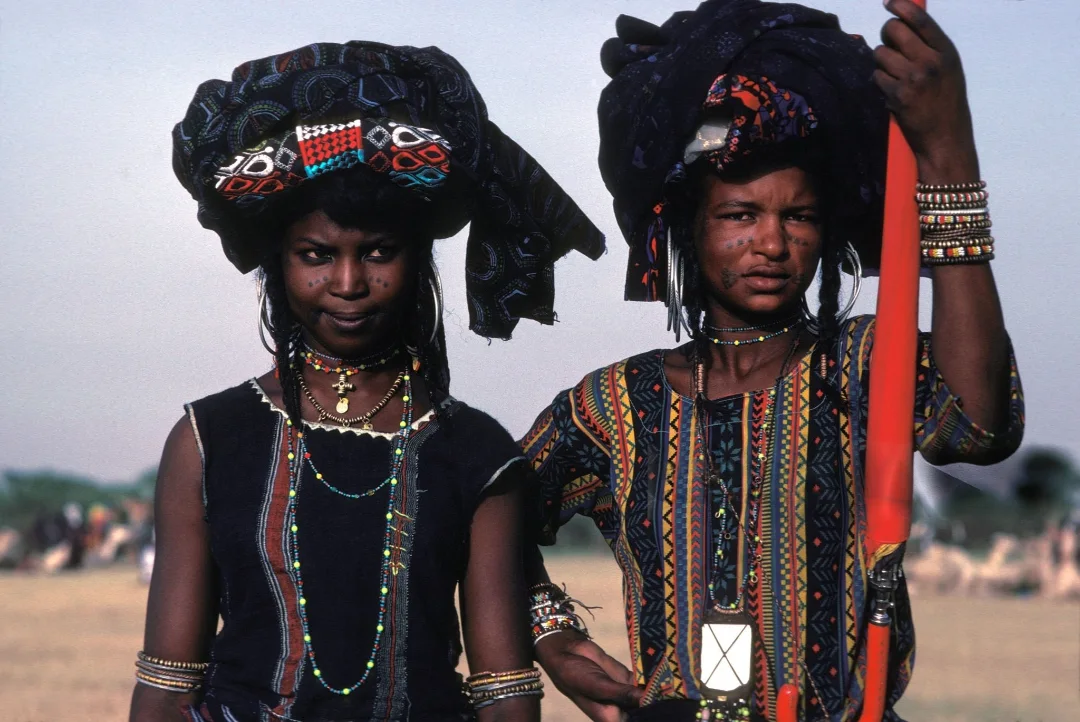
Somewhere in the Sahel, in the weeks after the rains end in September and October, a man has been preparing his costume for months. The tunic is hand-embroidered with patterns specific to his clan. The pigments he will apply to his face, red ochre sourced from Niger, yellow powder acquired through journeys across hundreds of kilometres of semi-arid terrain, have been assembled with the same care a luxury house applies to sourcing its season’s materials. He will apply kohl around his eyes, dark pigment to his lips, and a careful line down the ridge of his nose. He will fix ostrich feathers to his hair. He will stand in a line with the other men of his clan and dance the Yaake for hours in the desert sun, rolling his eyes and baring his teeth, moving with the controlled stamina that the Wodaabe code of beauty demands. Three women eligible for marriage will watch, assess, and choose. The man who is judged most beautiful wins.
This is the Gerewol. It is not remarkable because it is unusual. It is remarkable because it is complete. The Wodaabe Fulani, the only remaining fully nomadic subgroup of the Fulani people, have built a male beauty culture so philosophically coherent and so technically developed that it governs every dimension of how Wodaabe men understand themselves: their bodies, their adornment, their social standing, their relationship to cattle, and their obligations to the community that gathers once a year to assess what they have become. The global fashion industry’s current debate about whether men can wear makeup, whether male beauty is a legitimate commercial category, and whether gender and dress are separable — the Wodaabe had those conversations centuries ago and moved on.
At Gerewol, Wodaabe men spend months preparing costumes and hours applying makeup for judging by women. The fashion industry’s gender assumptions were never their assumptions.
Gerewol Festival Fashion: The Structure of the Competition
The Gerewol takes place at the end of the rainy season, when the Wodaabe’s seasonal nomadic movements bring dispersed clans together before they scatter south to their dry season pastures. The most famous gathering is at In-Gall in northwest Niger, held as part of the larger Cure Salée festival that brings together Wodaabe and Tuareg nomadic groups. In Chad, the annual Gerewol is centred on Dourbali and Massenya in the Chari-Baguirmi region, approximately 200 kilometres from N’Djamena, where the two main Wodaabe clans of Chad, the Soudousoukaia and the N’Djapto, gather. The festival lasts one week. As Wikipedia’s documentation confirms, the actual dance event is called the Yaake; the broader week-long Gerewol includes cattle trading, dowry negotiations, camel races, clan meetings, and marriage arrangements. The beauty competition is the centrepiece, but it is embedded in a complete social, economic, and governance event.
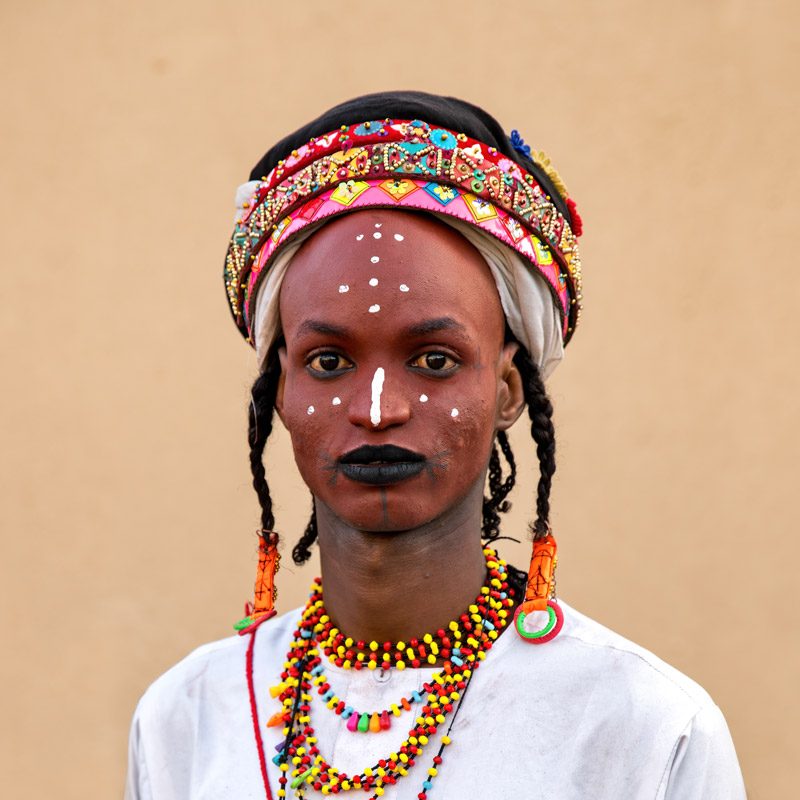
The preparation for the Yaake begins months before the festival. Wodaabe men embroider their tunics by hand, developing patterns specific to their clan’s visual vocabulary. The two main Chadian clans distinguish themselves through their makeup styles: the Soudousoukaia paint their faces in deep hues of red and orange; the N’Djapto decorate theirs with patterns of white dots and wear ostrich feathers. On the day of the competition, men put their full preparation into practice. Red and yellow ochre on the skin. Kohl around the eyes to intensify the gaze. Dark lipstick on the lips to increase the apparent whiteness of the teeth. A line drawn carefully down the nose to make it appear finer and more elongated. Ostrich feathers were attached to the hair to add height. Every element of the preparation is directed at one objective: amplifying the specific features the Wodaabe beauty standard identifies as ideal.
The dance itself is a test of both beauty and endurance. The men stand in a line and perform the Yaake for hours, swaying in a controlled, hypnotic rhythm while chanting in the polyphonic style characteristic of Fula musical traditions. The eyes roll. The teeth are bared. The men display the two features the Wodaabe consider the highest markers of beauty, brilliant white eyes and teeth, as deliberately and continuously as possible throughout the performance. The dance lasts all night. A fermented bark tea helps the dancers maintain their stamina throughout the hours. Three designated judges, young women eligible for marriage, assess the competitors and choose their favourites. Their choices are respected. Relationships initiated at Gerewol carry social weight.
The Wodaabe Beauty Philosophy: What the Standard Actually Encodes
The Wodaabe beauty standard is not arbitrary. It is specific and rational within the Wodaabe understanding of what beauty signals. Tall, slim build. White teeth and eyes. Long straight nose. Elongated, narrow face. Symmetrical features. These characteristics are understood to signal vitality, fertility, and good health in the conditions of Sahelian pastoral life. A man who is physically strong enough to sustain a nomadic lifestyle in one of the world’s most demanding environments, whose teeth and eyes are undamaged by the diseases and nutritional deficiencies that affect communities under resource pressure, is demonstrating his capacity to protect and provide for a family. As the Ecofin Agency’s analysis of the Gerewol tradition confirms, these traits symbolise vitality, fertility, and good fortune in the Wodaabe cultural framework. The beauty standard is a health and fitness assessment expressed in aesthetic terms.
The investment in amplifying these features through makeup and costume preparation is equally rational. Ochre applied to the skin enhances the appearance of complexion health. Kohl around the eyes makes them appear more intense and alert. The careful line down the nose directs attention to its length and fineness. Ostrich feathers add to apparent height. Every element of the preparation is a deliberate amplification of the features that the beauty standard recognises as valuable. This is not different in principle from the logic of any beauty system: identify the characteristics considered desirable, develop techniques to enhance them. The Wodaabe identified their desirable characteristics from within a framework built on centuries of pastoral nomadic life, not from a European luxury brand’s product development cycle.
The preparation for Gerewol also operates as a trade network. Natural pigments are not available everywhere the Wodaabe travel. Red ochre comes from Niger. Yellow powder, from a source called Jongooria, requires journeys of hundreds of kilometres. The acquisition of these materials is an economic activity as significant as the competition itself. The men who arrive at Gerewol with the finest pigments and the most precisely applied makeup have invested not only skill but resources. The beauty competition is downstream of a supply chain. The fashion industry has always operated this way. The Wodaabe understood it first.
The Wodaabe built a male beauty culture so complete and so ancient that it predates every debate the Western fashion industry is currently having about gender and dress. The conversation is not new. The Sahel had it first.
The Pulaaku Code: The Philosophy That Makes the Beauty Possible
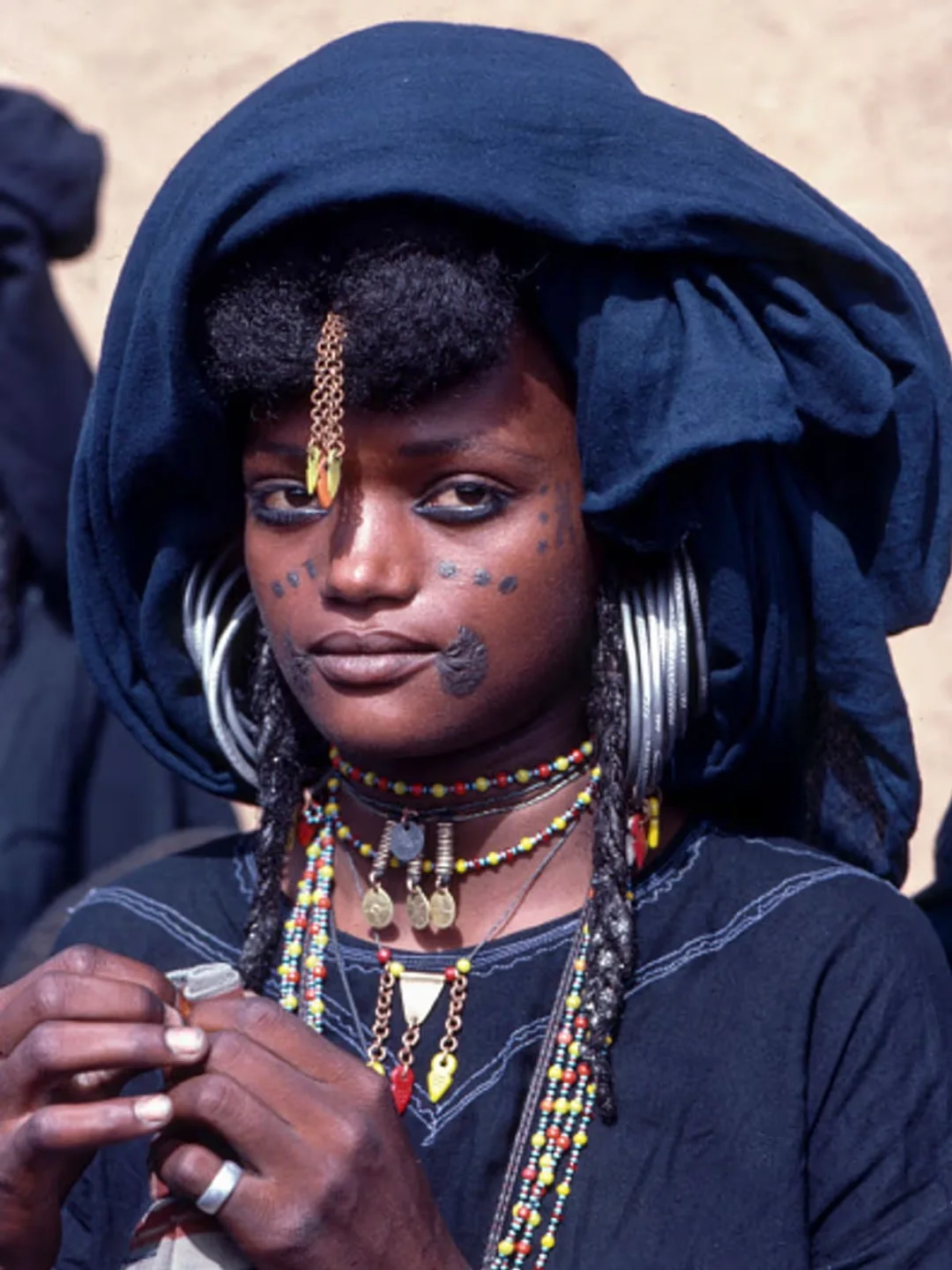
The Gerewol does not exist in a cultural vacuum. It is the annual expression of a value system called Pulaaku, the code of honour that governs Wodaabe life across all its dimensions. Pulaaku has three central values: semteende, meaning modesty and reserve; munyal, meaning patience and fortitude; and amana, meaning loyalty and responsibility. These are not the values one would expect to produce an elaborate beauty competition. The Wodaabe understand the apparent contradiction and built it into the festival’s design: Gerewol temporarily suspends some of Pulaaku’s restrictions, creating what scholars of ritual call a liminal period, when different behaviours are permitted. As documented analysis of Wodaabe culture confirms, the festival creates a structured opportunity for analysis, romantic display, and the pursuit of connections outside normal social restrictions, specifically because Pulaaku’s daily demands are so strict. The beauty competition is the release valve of a code of honour so demanding that it requires a formal annual exception.
The relationship between Pulaaku’s modesty and the Gerewol’s display is not a contradiction. It is a designed tension. A society that values restraint so highly that it builds a weeklong annual festival to abandon it temporarily is a society that takes restraint seriously enough to know it needs release. The men who spend months preparing their Gerewol costumes are not departing from Pulaaku. They are expressing one of their deeper commitments: that excellence is worth the investment of sustained preparation. The embroidery on a Wodaabe tunic prepared over months for the Yaake represents the same devotion to craft that Pulaaku demands in cattle herding, in nomadic navigation, and in the maintenance of clan relationships across the vast distances of the Sahel.
The cattle dimension of the Gerewol is inseparable from the beauty competition. Cattle are the primary measure of Wodaabe wealth and status. At Gerewol, cattle are traded, displayed, and assessed alongside the men who own them. A man’s beauty and his herd’s health are parallel expressions of the same underlying quality: the capacity to sustain and develop excellence in the conditions the Sahel imposes. To display beautiful cattle and a beautiful self at the same event is not a coincidence of festival programming. It is a statement that the two are expressions of the same virtue.
Also Read:
- The Dipo Ceremony and What Krobo Beadwork Communicates About Womanhood in Ghana
- Sande Society Initiation Dress: How Sierra Leone’s Most Powerful Women’s Institution Uses Fashion as a Rite of Passage
- The Egungun Masquerade: What the Yoruba Ancestral Festival Tells Us About Fashion and the Spirit World
- The Silence Around African Luxury: Why the Continent’s Most Expensive Fashion Is Almost Never Discussed
What the Fashion Industry Has Not Learned from This
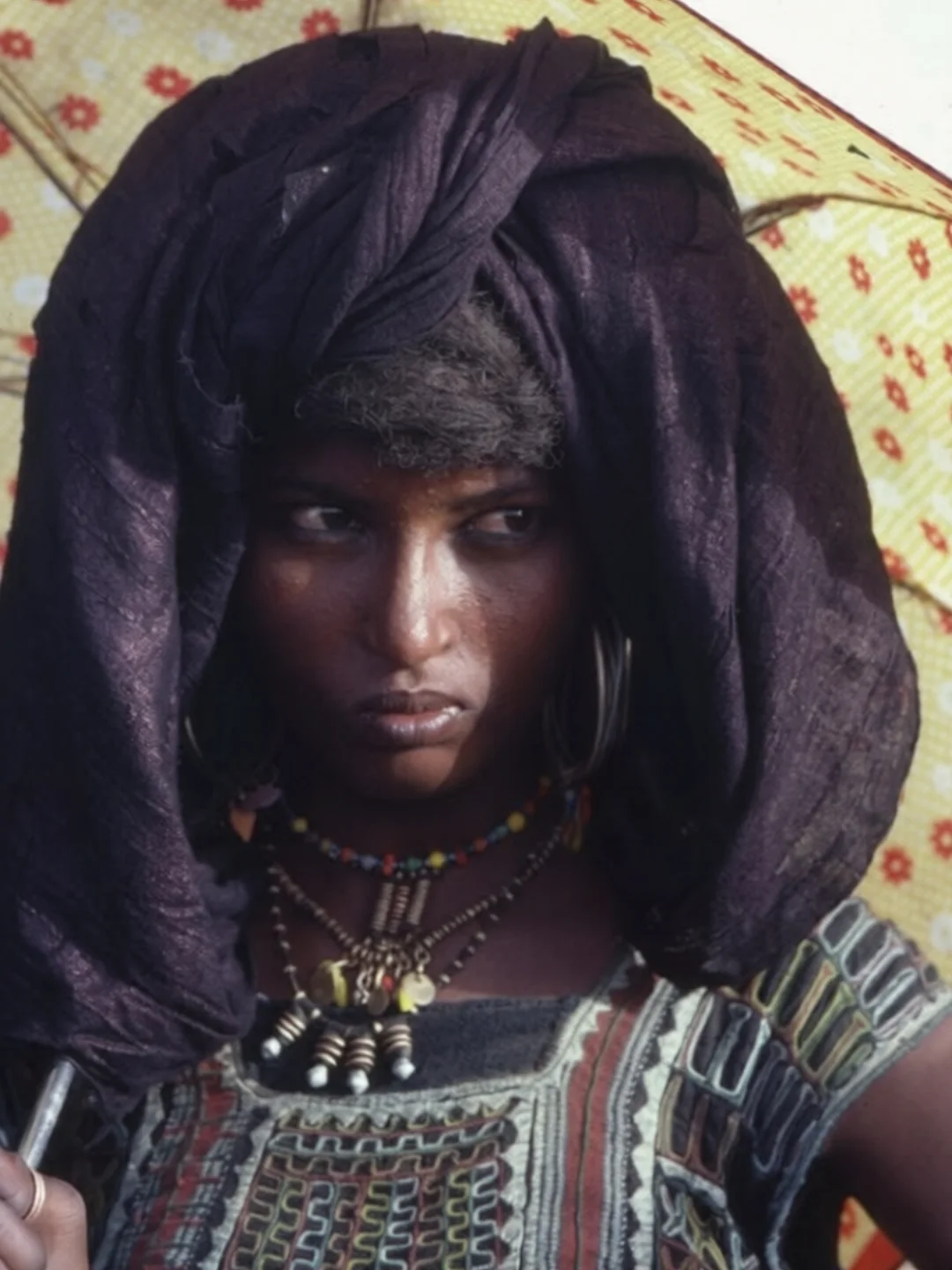
The global fashion industry’s engagement with the Gerewol has been primarily photographic. National Geographic’s coverage in the 1980s introduced the Yaake to international audiences as a spectacle. The images that circulate, men in elaborate ochre makeup and ostrich feathers dancing in the desert, are among the most reproduced photographs in the documentation of African ceremonial life. The photographic engagement has consistently framed the Gerewol as an inversion of Western norms: men in makeup, women as judges, the reversal of expected gender roles. That framing is not wrong. It is insufficient.
The Gerewol is not an inversion of anything. It is an original. The Wodaabe did not develop their male beauty culture in response to Western fashion’s gender assumptions and then reverse them. They developed it within a philosophical framework that never organised beauty around gender as Western fashion has assumed. In the Pulaaku framework, beauty is a virtue, like modesty and patience, and virtues are not gendered. A man who is beautiful is demonstrating the same kind of excellence as a man who is paA beautiful manloyal. The fact that Western fashion arrived at the idea that male beauty might be a legitimate commercial category in the early twenty-first century, after decades of treating it as either a niche or a transgression, does not make the idea new. It makes the Western fashion industry late.
The Omiren Argument
The Wodaabe Gerewol is one of the most complete male fashion systems ever documented. It has a codified beauty standard built on centuries of pastoral nomadic philosophy. It has a preparation economy involving pigment trade routes spanning hundreds of kilometres. It has a performance methodology, the Yaake, governed by specific movement vocabulary and costume requirements developed over generations. It has a competitive structure in which female judges hold final authority. And it has a philosophical framework, Pulaaku, that provides the ethical context within which all of this makes sense. The fashion industry’s current investment in men’s beauty as a commercial category, its recent discovery that men will spend on grooming, adornment, and presentation, is not an innovation. It is a recognition of something the Wodaabe built into their culture centuries before any brand found a way to monetise it.
Omiren Styles documents the Gerewol as the same kind of global fashion authority that it documents in Yoruba Aso-Oke weaving, in Krobo beadwork, in Sande Society masquerade. Not as a curiosity. Not as evidence that Africa inverts Western norms. As a complete creative system that built its own standards, its own production infrastructure, its own judgment frameworks, and its own philosophical justification, and that has been doing so continuously for longer than the global fashion industry has existed. The Gerewol is not remarkable for reversing the Western gaze. It is remarkable because it never needed that gaze to know what it was.
Frequently Asked Questions
What is the Gerewol festival, and where does it take place?
The Gerewol is the annual beauty and courtship festival of the Wodaabe people, a nomadic subgroup of the Fulani ethnic group found across Niger, Chad, Nigeria, Cameroon, and other West and Central African countries. There are approximately 150,000 Wodaabe remaining, making them the only fully nomadic people. The most famous gathering is at In-Gall in northwest Niger, held as part of the Cure Salée festival. In Chad, the Gerewol concentrates around Dourbali and Massenya in the Chari-Baguirmi region, where the Soudousoukaia and N’Djapto clans gather.
What are the Wodaabe beauty standards, and how do men prepare for Gerewol?
The Wodaabe male beauty standard emphasises a tall, slim build; white teeth and eyes; a long, straight nose; an elongated, narrow face; and symmetrical features. These characteristics are understood to signal vitality, fertility, and good health in the conditions of Sahelian pastoral life. Men prepare their Gerewol costumes for months, hand-embroidering tunics with clan-specific patterns. On the day of the competition, they apply red and yellow ochre to the skin, kohl around the eyes, dark pigment to the lips, a line down the nose, and fix ostrich feathers to their hair. Each element amplifies the features the beauty standard identifies as ideal. Natural pigments are acquired through trade journeys covering hundreds of kilometres.
What is the Yaake, and how does the competition work?
The Yaake is the specific dance competition within the broader Gerewol festival week. Young men stand in a line and perform a hypnotic, polyphonic choral dance for hours, swaying rhythmically while rolling their eyes and baring their teeth to emphasise the two primary Wodaabe beauty markers of white eyes and brilliant teeth. The dance lasts all night, sustained in part by a fermented bark tea that reportedly has a hallucinogenic effect. Three designated judges, young women eligible for marriage, assess the competitors and choose their favourites. The Soudousoukaia clan performs in deep red and orange makeup; the N’Djapto in white dot patterns with ostrich feathers.
What is Pulaaku, and how does it relate to the Gerewol?
Pulaaku is the Wodaabe code of honour governing daily life. Its three central values are semteende (modesty and reserve), munyal (patience and fortitude), and amana (loyalty and responsibility). These values make the elaborate public display of beauty in Gerewol appear contradictory. The Wodaabe designed this contradiction intentionally: Gerewol creates a formal, week-long suspension of Pulaaku’s strictest restrictions, a liminal period in which flirtation, romantic displays, and the pursuit of connections beyond normal social limitations are permitted. The beauty competition is the release valve of a code of honour so demanding that it requires a structured annual exception.
How has the Gerewol been received by the global fashion industry?
The Gerewol has been portrayed in the global fashion industry as a Gerewolotographic subject, most notably through National Geographic’s coverage in the 1980s, which introduced the Yaake to international audiences. The images of men in elaborate ochre makeup and ostrich feathers are among the most reproduced photographs of African ceremonial life. The framing has consistently positioned the Gerewol as an inversion of Western gender norms. Omiren Styles argues that this framing misreads the tradition: the Gerewol is not a reversal of Western assumptions but an independent system that has built its own philosophy of male beauty from within the Pulaaku ethical framework, without Western fashion’s gender assumptions as a reference point.
Explore More
Read the full Culture > Ceremony & Ritual section for Omiren Styles’ documentation of the ceremony dress systems that African cultures built on their own terms, for their own communities, centuries before the global fashion industry existed to notice them.