Luxury fashion has spent the past few years rediscovering restraint. Logos have become smaller. Palettes have become quieter. Tailoring, linen, wool, and silk have returned as shorthand for discernment. But quiet luxury can easily become an empty visual formula: a neutral jacket, an unbranded handbag, a familiar European reference, and a price high enough to imply importance. For a young label, restraint alone is not a point of view.
Fora Leonara is a New York luxury house founded by Rafael Zard that is attempting to build a different kind of proposition around the idea. Its current collection, The Wall Street Reserve, presents menswear and womenswear through tailored jackets, linen suiting, dresses, shirting, and polished separates. The brand’s language centres on timelessness, European craftsmanship, and designs intended to outlast the cycle of trend-led fashion. The African fashion market is worth $ 31 billion, and the global luxury sector, in which Fora Leonara is positioning itself, is the most competitive in fashion. The question is not whether the brand can make neutral clothing look expensive. It is whether a digitally native luxury label can give quiet luxury enough substance to become a lasting design position.
Fora Leonara launched in 2024 without a heritage archive. Rafael Zard is building one in public. Here is what the brand has to prove and how it plans to prove it.
Fora Leonara: A Founder Shaped by Movement

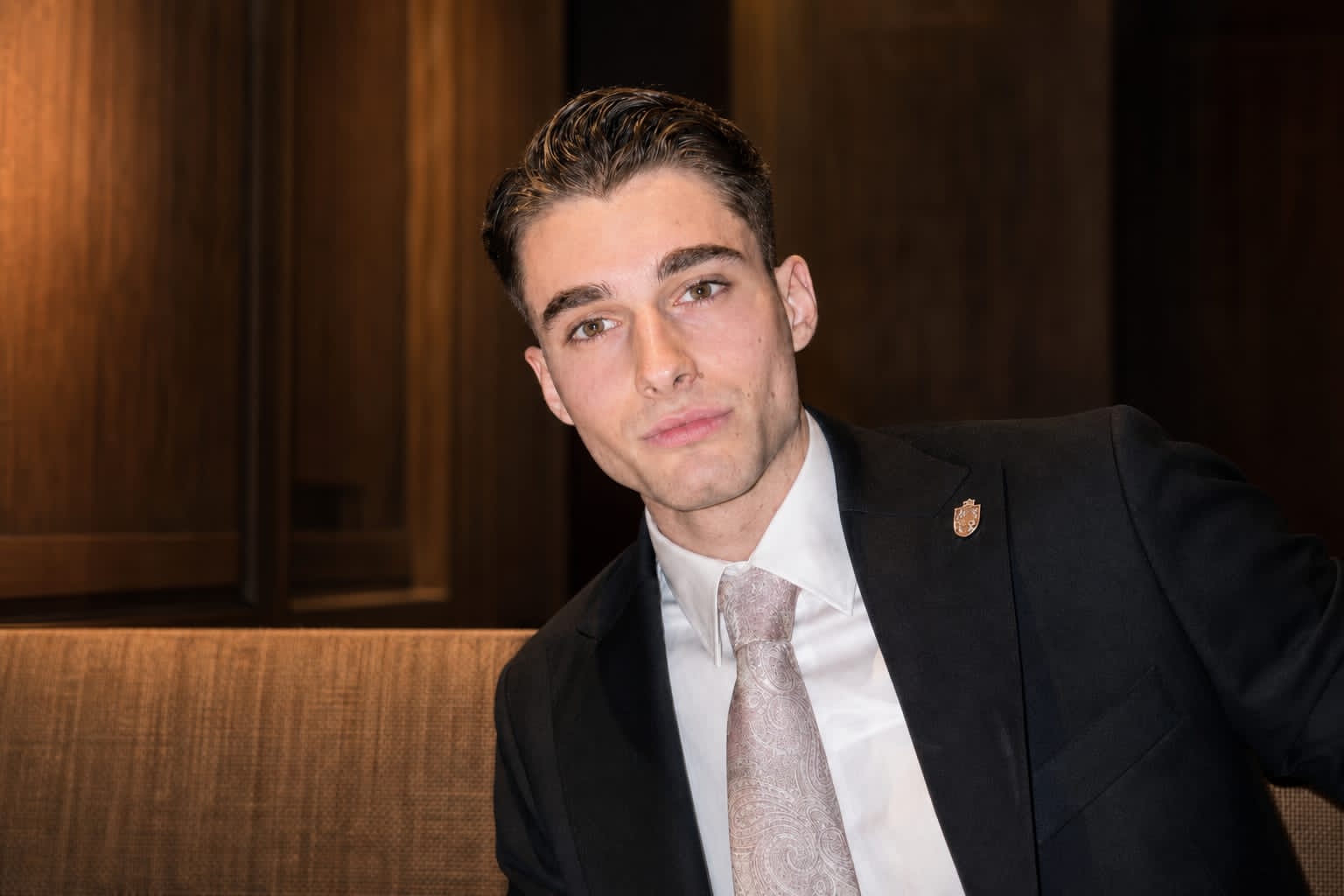
Rafael Zard’s background gives Fora Leonara a more specific context than the generic language of global luxury would suggest. Zard comes from a Bulgarian-Lebanese family, grew up in Bulgaria, and moved to Marbella, Spain, at 15 before later continuing his education at New York University’s Stern School of Business. He identifies himself as the founder and chief executive of Fora Leonara. That movement between Bulgaria, Spain, and New York does not automatically create a design language. But it gives the founder a relationship to luxury shaped by different cultural environments rather than one inherited from a fashion capital.
Fora Leonara does not market itself through overt national symbolism. The collection does not rely on heritage prints, flags, or direct cultural motifs. Instead, the brand’s identity sits in proportion, fabric, tailoring, and visual restraint. This is an important distinction. The strongest emerging luxury labels do not need to turn personal history into decoration. They need to understand how personal history informs decision-making: which materials feel valuable, what silhouettes communicate confidence, how clothing moves between formal and everyday settings, and what kind of customer the brand believes it is dressing. For Fora Leonara, the answer appears to be a customer interested in polish without spectacle.
Rafael Zard does not have a century-old archive, an inherited atelier, or a logo recognised before the garment is seen. He has to build authority through the work itself. That means every decision matters more. The fibre content must be clear. The construction must justify the price. The European-production claim must become traceable. This is the real test for Fora Leonara.
What Fora Leonara Is Selling
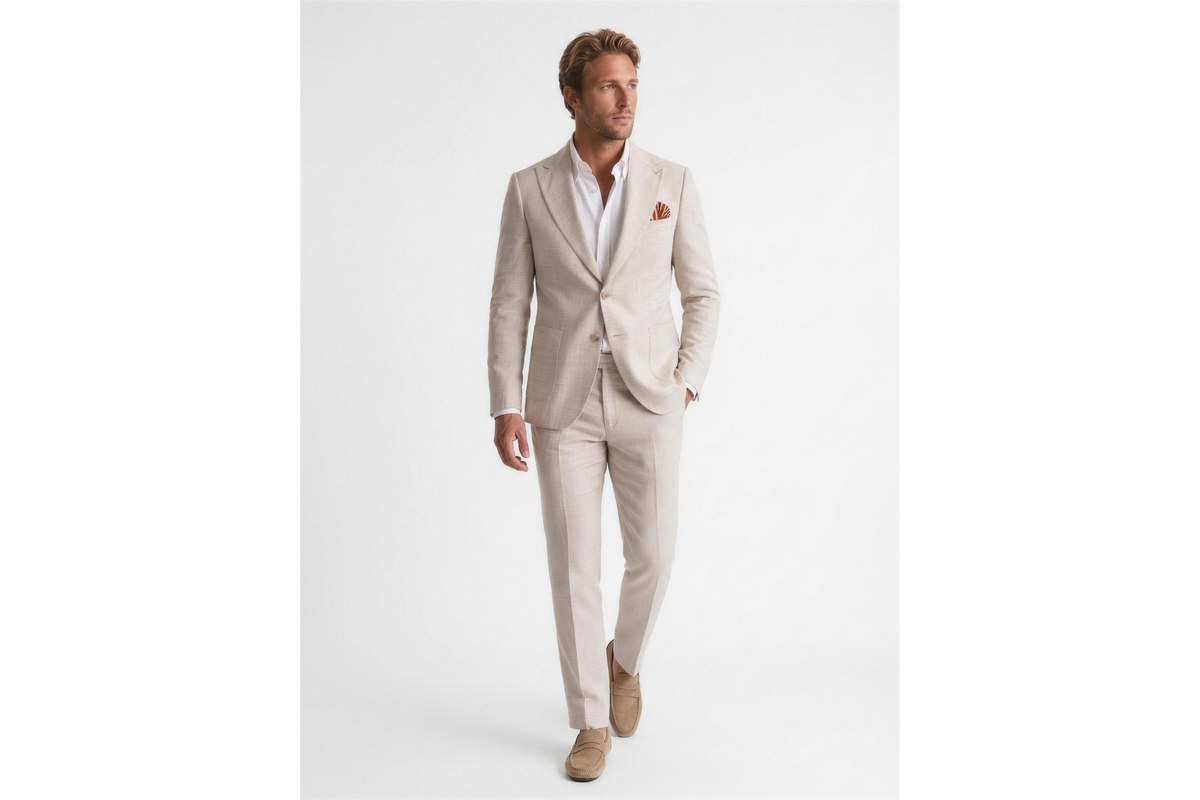
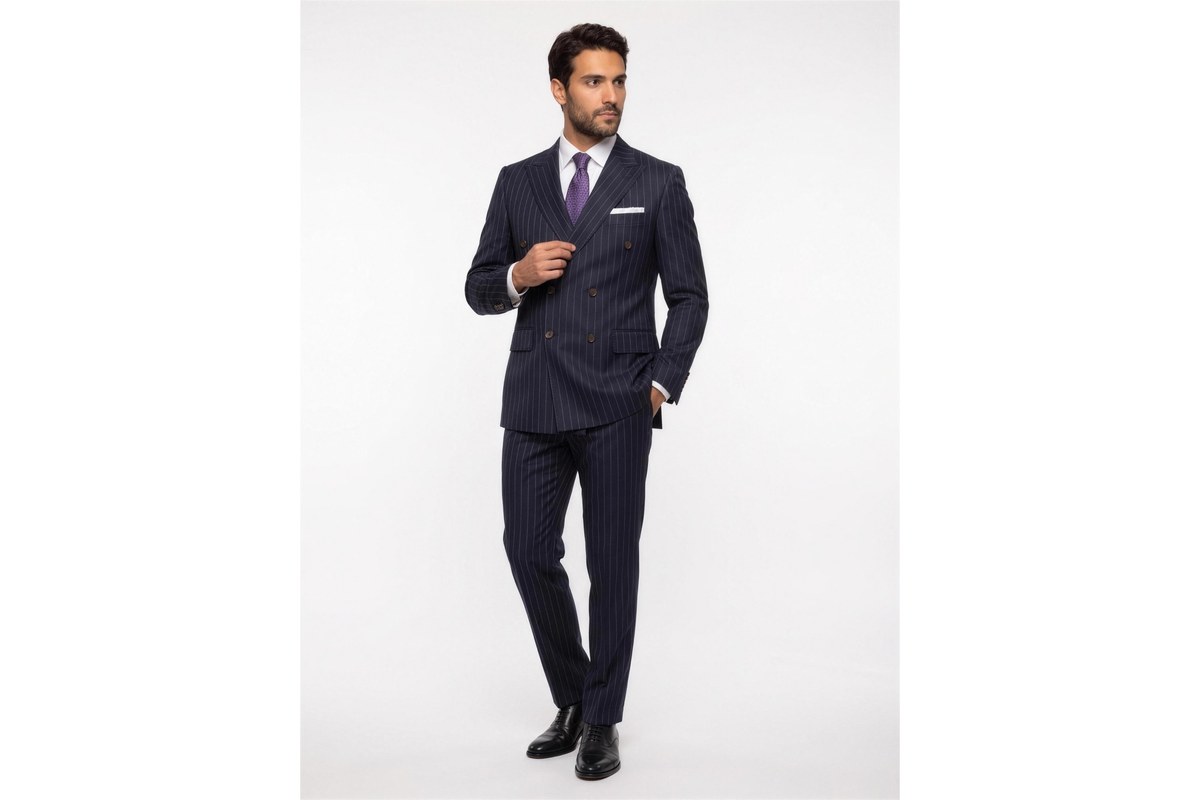
Fora Leonara presents itself as a luxury apparel house built around timeless design, exceptional materials, and refined European craftsmanship. Its current summer collection, The Wall Street Reserve, is split across menswear and womenswear. The visible offering includes ready-to-wear shirts, polos, T-shirts, jackets, dresses, jumpsuits, trousers, and linen suiting. Pricing across the collection spans a natural-beige linen suit at $399, a dark-navy wool-flannel jacket at $279, the Dune Veil Dress at $149, and the Celestial Glow Jumpsuit at $199.
These prices place Fora Leonara in an interesting market position. The brand speaks in the language of luxury, European craftsmanship, and enduring design, but its visible ready-to-wear pricing remains more accessible than that of established heritage houses. That does not make the brand less ambitious. It makes the challenge clearer. Luxury is not proven by price alone. It is proven through material quality, construction, fit, service, provenance, consistency, and the degree to which a customer believes a garment will remain valuable after the first season. For a new label, these elements must be demonstrated rather than assumed.
The Problem With Quiet Luxury
The phrase “quiet luxury” has become useful because it gives consumers a way to describe clothing that appears understated, expensive, and relatively free of obvious branding. It has also become overused. A quiet palette is not automatically a luxury proposition. Beige linen is not inherently sophisticated. A minimal website does not prove exceptional construction. As Omiren Styles’ documentation of the relationship between eco-luxury and sustainable fashion and quiet luxury confirms, buyers are increasingly investing in timeless, high-quality goods rather than short-lived microtrends, with minimalism synonymous with intelligent style. But that consumer intent requires a brand to earn the association through material evidence, not simply declare it through photography and positioning copy.
Fora Leonara’s opportunity lies in taking this category more seriously than the trend cycle does. The brand publishes educational material explaining the difference between full-canvas and half-canvas suit construction, presenting full canvas as a more durable and refined tailoring method. This shows a genuine interest in the technical language of menswear. But a strong luxury brand must connect that education directly to its own garments. If a customer is buying the brand’s linen suit or wool-flannel jacket, they should be able to understand the garment’s fibre composition, the country and workshop where it was made, whether the jacket construction is fused, half-canvas, or full-canvas, how the fabric is expected to wear over time, and why the garment is priced as it is. That level of detail is not a threat to luxury. It is what makes luxury credible.
European Craft and New York Ambition
Fora Leonara is presented as a New York luxury house, but its production narrative points toward Europe. Zard states that the brand works with its own factory in the European Union and sources fabrics from European suppliers. This combination, New York commercial ambition and European manufacturing language, is familiar in contemporary luxury. New York offers access to global customers, fashion editorial culture, and entrepreneurial energy. European production offers associations with tailoring expertise, established mills, and high-end garment construction.
But associations are not enough. For Fora Leonara, the next stage of brand development should involve greater material transparency. The more clearly the company can identify its production partners, workshop standards, fabric origins, and construction choices, the more convincingly it can separate itself from the many digital labels that use European craftsmanship as a mood rather than a verifiable practice. This is especially important because the brand is still young. Founded in 2024, it has not yet had decades to establish a heritage archive, a recognisable house code, or a reputation for long-term garment quality. Its credibility must be built in public, one collection at a time.
What Building Authority Through Work Actually Means
The strongest counterargument to the opacity problem is the work. A garment that fits precisely, holds its shape across multiple seasons, and travels well between formal and everyday settings makes its own case without requiring a brand history. As Omiren Styles’ documentation of how KikoRomeo built heritage through material integrity confirms, fashion built on genuine material relationships, fair employment, and cultural knowledge does not go out of style. It becomes the standard by which other fashion is eventually judged. Fora Leonara is not building with artisan cloth or cultural heritage in the same sense as KikoRomeo. But the structural lesson applies: authority is built collection by collection, through the specific decisions that make each garment worth its stated price.
Restraint is not the same as conservatism. The best quiet luxury has tension. It understands that a garment can be pared back while still carrying a clear attitude. A jacket’s shoulder, a trouser’s break, a shirt’s collar, a dress’s drape, or a fabric’s texture can all communicate character without visual noise. For Leonara, the task is to make that character more legible. The brand should not depend only on the language of timelessness, because almost every emerging luxury label makes that promise. It should show what makes its version of timelessness distinct: a specific relationship to tailoring, the cultural memory of movement between Bulgaria, Spain, and New York, European fabric culture, or the changing needs of an internationally mobile urban customer. The more specific that answer becomes, the stronger the brand becomes.
The Business of Building a Young Luxury House
Fora Leonara is not an established fashion institution. Its LinkedIn profile lists the company as privately held, with between 1 and 10 employees. That scale should not be treated as a weakness. Many serious fashion labels begin as small teams. The more relevant question is whether the brand is building durable systems around its point of view. Zard’s professional profile states that Fora Leonara secured a $90,000 wholesale agreement with a London boutique. This is a founder-reported achievement and has not been independently verified by Omiren Styles. If the agreement is active, it signals a potentially important development: a move from direct-to-consumer storytelling toward external retail validation. As Omiren Styles’ analysis of investor blindness to emerging fashion brands confirms, the standard model for luxury-brand investment requires patient capital deployed behind brands with long-term potential for brand equity. The $90,000 wholesale agreement, if active, is the kind of external validation that signals a brand is ready to meet the commercial demands that retail imposes: production consistency, delivery schedules, pricing discipline, and retailer confidence.
Wholesale requires a brand to meet different demands from direct-to-consumer storytelling. Production consistency, delivery schedules, pricing discipline, sizing, customer service, and retailer confidence are all tested through a wholesale relationship in ways that a brand’s own e-commerce never fully surfaces. That transition is where many emerging labels discover whether their aesthetic can become a business. For Fora Leonara, commercial growth should not come at the expense of its central proposition. A brand built around restraint must maintain discipline in its supply chain, product range, and communication.
The Wearable Technology Claim
Fora Leonara’s company profile describes an interest in wearable technology, including sensing systems, biometric monitoring, and adaptive protection. This is an intriguing ambition, but it remains a future-facing claim rather than a visible product category. That distinction matters. Wearable technology has the potential to make luxury clothing more functional, responsive, and durable. But it can also become a marketing device if the technology is not explained through actual garments, user needs, and evidence of development.
For Fora Leonara, the most credible path is not to rush this language into the collection. It is to build a clear bridge between the brand’s current tailoring proposition and any future technical innovation. A suit that fits better because of intelligent measurement is one possibility. A travel garment that protects delicate fabric or adapts to changing conditions is another. But the technology should serve the clothing, not distract from it. The brand’s credibility as a luxury house depends first on mastering the garment itself. Innovation earns its place in a collection after the foundation is solid.
The Omiren Argument
Fora Leonara’s opportunity is not to convince customers that it has always been a luxury house. It has not. The opportunity is to demonstrate what luxury can look like before heritage has become mythology. The African fashion market is worth 31 billion dollars, and the global luxury sector in which Fora Leonara is competing is built on brands whose authority was originally derived from exactly this kind of work-by-work credential-building. Every major heritage house was once a young label without a century of archive to point to. What separated the ones that lasted from the ones that did not was not a logo or a fashion capital address. It was the discipline of the decisions made when no institutional reputation was available to absorb the consequences of a poor one.
Rafael Zard’s task is clear. The fibre content must be stated precisely. The construction choice must be explained and visible in the garment. The European-production claim must become traceable to a named workshop, a material origin, and a labour standard. The silhouettes must become recognisable across collections, not just within one. The customer experience must create the trust that old houses often receive automatically by virtue of their history. And the wearable technology claim must either become a garment or be set aside until it can do so. None of this is unusual for a young luxury house. All of it is essential. Omiren Styles documents Fora Leonara at this stage because the moment when a brand decides what it will actually be is the most consequential in its history. The brands that get those early decisions right are the ones whose later collections make sense. The language is already in place. The question is whether the work will follow it.
Also Read:
- Dakar Is Building Its Own Luxury Fashion System
- Nigeria’s Streetwear Revolution: Culture, Craft and Afrofuturism
- The African Cities That Will Define Global Fashion by 2030
- Lagos Fashion Market Report 2026: Retail, Price Points and Growth Categories
Frequently Asked Questions
What is Fora Leonara?
Fora Leonara is a New York-based premium ready-to-wear label founded by Rafael Zard in 2024. The brand offers menswear and womenswear and describes its approach as timeless, material-focused, and rooted in refined European craftsmanship. Its current collection, The Wall Street Reserve, includes tailored jackets, linen suiting, dresses, jumpsuits, shirts, polos, and trousers positioned within the quiet luxury aesthetic of restrained, considered dressing.
Who founded Fora Leonara?
Fora Leonara was founded by Rafael Zard, a Bulgarian-Lebanese entrepreneur who grew up in Bulgaria, moved to Marbella, Spain, as a teenager, and later pursued his education at New York University’s Stern School of Business in the United States. His background across multiple cultural environments informs the brand’s positioning around a globally minded, internationally mobile customer rather than a single national luxury tradition.
What does Fora Leonara sell?
The brand currently sells ready-to-wear menswear and womenswear on its website, foraleonara.com. The current collection includes shirts, polos, T-shirts, tailored jackets, dresses, jumpsuits, trousers, and linen suits. Pricing across the collection ranges from $149 for the Dune Veil Dress to $399 for a natural-beige linen suit. The Wall Street Reserve is the collection name.
Where are Fora Leonara garments made?
Fora Leonara states that it works with a factory in the European Union and sources materials from European suppliers. Omiren Styles has not independently verified the precise factory location, ownership structure, labour conditions, or fabric origins. The brand’s transparency on these production details will be an important factor in establishing its luxury credentials as it grows.
Is Fora Leonara a heritage luxury house?
No. Fora Leonara was founded in 2024 and is an emerging luxury label rather than an established heritage house. Its long-term credibility will depend on product quality, material transparency, construction discipline, customer service, and the development of a distinct design identity that becomes recognisable across successive collections. The brand’s wearable technology ambitions are stated as a future direction and are not yet present in its current product offering.
Explore More
Read the full Fashion > Industry section for Omiren Styles’ documentation of emerging luxury labels, brand-building strategy, and the fashion industry arguments that matter for designers and entrepreneurs building the next generation of fashion houses.