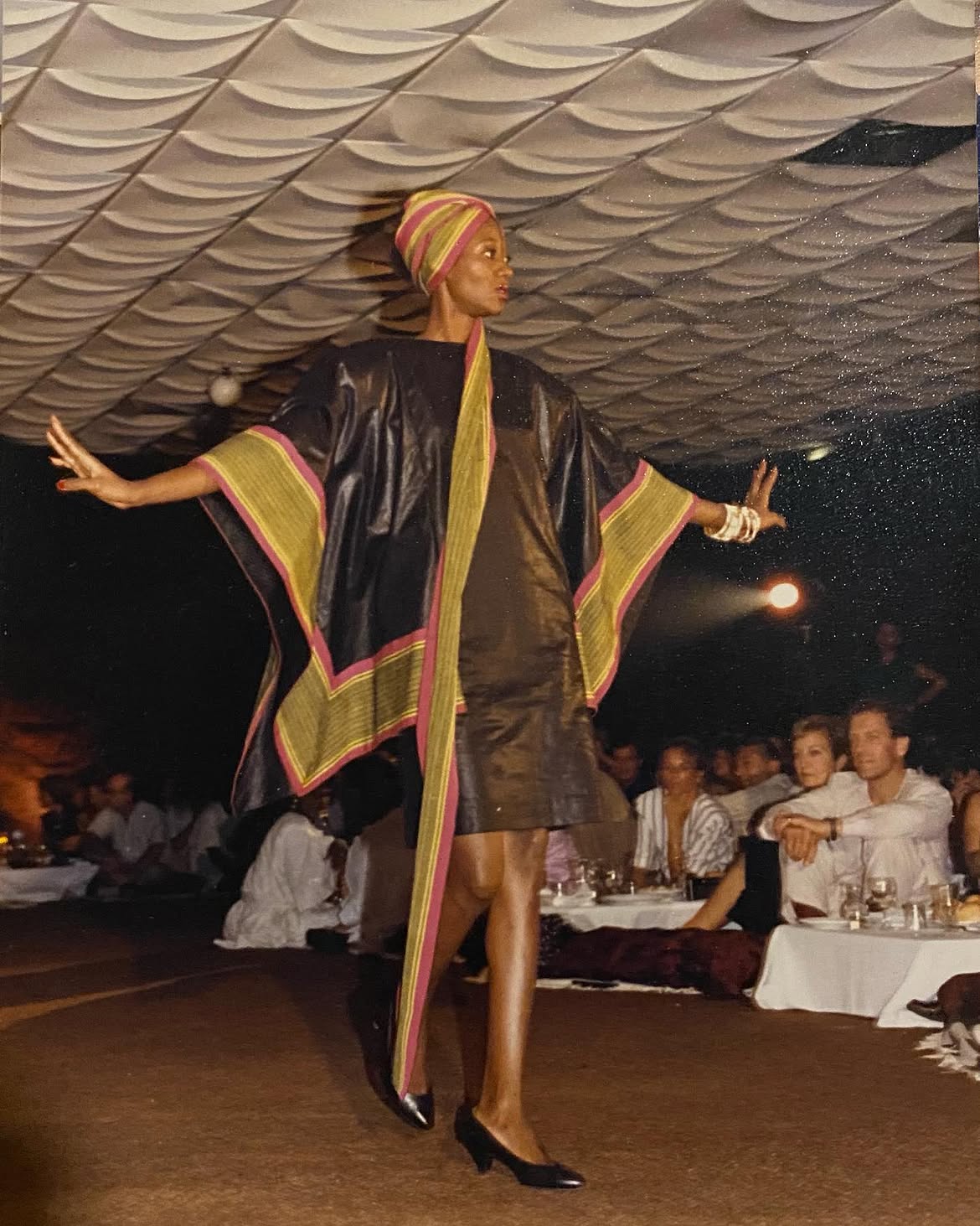
In the early 1980s, a Malian designer named Seydou Nourou Doumbia walked into the Paris fashion system carrying a textile that the system had never seen on a runway. He had trained there at the École de la Chambre Syndicale de la Couture Parisienne, then worked at Yves Saint Laurent and Pierre Cardin before returning to West Africa and building a practice in Abidjan, then in Bamako. He was working under the name Chris Seydou. The textile was bogolanfini. The fashion world would later call it mud cloth and sell it as an aesthetic. Seydou understood it as something else entirely.
Chris Seydou took bogolan to Paris in the 1980s. Here is what that moment built, who carried it forward, and what Awa Meité is doing with it now.
Who Chris Seydou Was
Chris Seydou, born Seydou Nourou Doumbia in 1949 in Mali, trained at the École de la Chambre Syndicale de la Couture Parisienne and subsequently worked as an assistant to Yves Saint Laurent and Pierre Cardin, gaining fluency in the technical and commercial infrastructure of the global fashion system before returning to Africa. He died in 1994, aged 44, of AIDS-related complications, the same year he was awarded the Grand Prix Awa de la Mode Africaine, which he accepted as the senior figure in a generation of designers who had spent the preceding decade arguing that African fashion did not need European validation to be taken seriously. He was widely described as the first African fashion designer to show at Paris Fashion Week. However, the precise claim has been complicated by the number of West and North African designers who had been working in the French system since the 1960s, and the Fashion History Timeline situates his significance specifically in his use of bogolanfini in international fashion contexts rather than in being categorically “first.”
What is not contested is the effect. When Chris Seydou incorporated bogolanfini into cropped jackets, mini skirts, tailored coats, and accessories for international audiences, he was doing something structurally significant: he was placing a Malian textile whose visual grammar encodes Bambara cultural memory into a commercial fashion context, and in doing so, he was extending the cloth’s credibility into a system that would subsequently use that credibility without the cultural knowledge he had brought to it. As Omiren Styles has documented, his work was the catalyst for the subsequent expansion of bogolan into commercial fashion production. He gave the cloth a runway address. The consequence was that the address then attracted designers who wanted the aesthetic but not the argument.
“He showed that African fashion was not a derivative of European fashion, but a parallel tradition with its own authority.” — Fashion History Timeline, FIT New York, on Chris Seydou’s legacy.
What Bogolan Is and Why It Matters
Bogolanfini, from the Bambara words bogo (earth or mud), lan (with), and fini (cloth), is a hand-dyed textile produced by Bambara and other Malian communities using a process that alternates between fermented mud and plant-derived dyes applied to handspun cotton cloth. The process is not simply decorative. Each motif references a specific cultural vocabulary: battles, proverbs, rites of passage, ecological knowledge, and social identity encoded as pattern rather than text. The cloth is a language. What gets called “mud cloth” in global fashion markets is the visual surface of that language stripped of its grammar.
As Omiren Styles has established in its analysis of the bogolan naming question, the simplification of “bogolanfini” to “mud cloth” is not merely a translation convenience. It is a reframing that transfers the cloth’s perceived authority from the Bambara knowledge system to whoever is currently selling it. When Riccardo Tisci used bogolan-inspired patterns for Givenchy’s Spring 2007 collection, and when Oscar de la Renta used them in Spring 2008, neither credited Mali, the Bambara people, or the women whose knowledge system produced the visual grammar being referenced. The Groupe Bogolan Kasobané, six Malian artists who have been collaborating since 1978 and represent the fine-art parallel tradition of bogolanfini, using vegetable dyes and traditional mud with contemporary motifs, received no credit either. Chris Seydou, who at least understood what he was working with, had been dead for over a decade before those collections appeared.
XULY.Bët and the Paris Generation
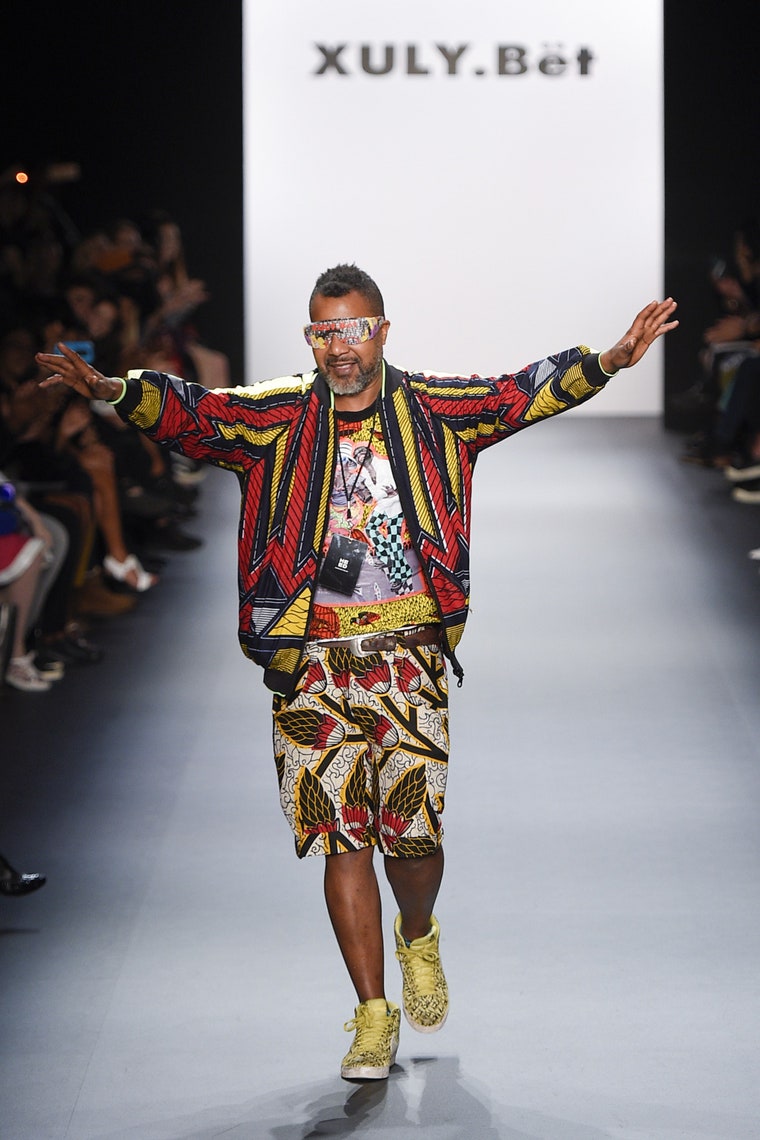
The designer who most directly continued what Chris Seydou had started in the Paris system was Lamine Badian Kouyaté, whose label XULY.Bët arrived at Paris Fashion Week in 1991 from a fundamentally different angle. Where Seydou had trained inside the French couture system before turning it toward African textiles, Kouyaté built his practice from the outside in: a Malian designer working from a converted Parisian laundry, making upcycled and deconstructed garments from second-hand clothing, then incorporating African textiles and diaspora aesthetic references into an approach that shared more with the anti-establishment end of French fashion than with the luxury tier Chris Seydou had navigated. As Vogue documented in its overview of XULY.Bët’s return to the Paris runway in 2023, Kouyaté was described as a pioneer who had been overlooked by mainstream fashion history for decades before his work was rediscovered and reassessed. His Spring 2023 comeback collection, shown at Paris Fashion Week after a gap of more than twenty years, was received as a correction of a longstanding critical blind spot.
XULY.Bët’s significance to the bogolan story is indirect but real. Kouyaté’s practice demonstrated that Malian designers in the Paris system could build from political and aesthetic positions that the European fashion establishment had not anticipated, and that those positions could generate durable creative authority even without continuous commercial support. His rediscovery in 2023, when his original 1990s garments were referenced across several international fashion conversations, confirms what the Omiren argument about African fashion has always held: the work was there before the attention. The attention is just catching up. XULY.Bët’s Spring/Summer 2024 collection, shown at Paris Fashion Week in September 2023, was reviewed in Vogue Runway as a return to the deconstructive instinct that had made the label foundational, with upcycled materials and African textile references woven through garments that felt contemporary precisely because they had never been designed to accommodate the fashion calendar in the first place.
Awa Meité and the Continuation
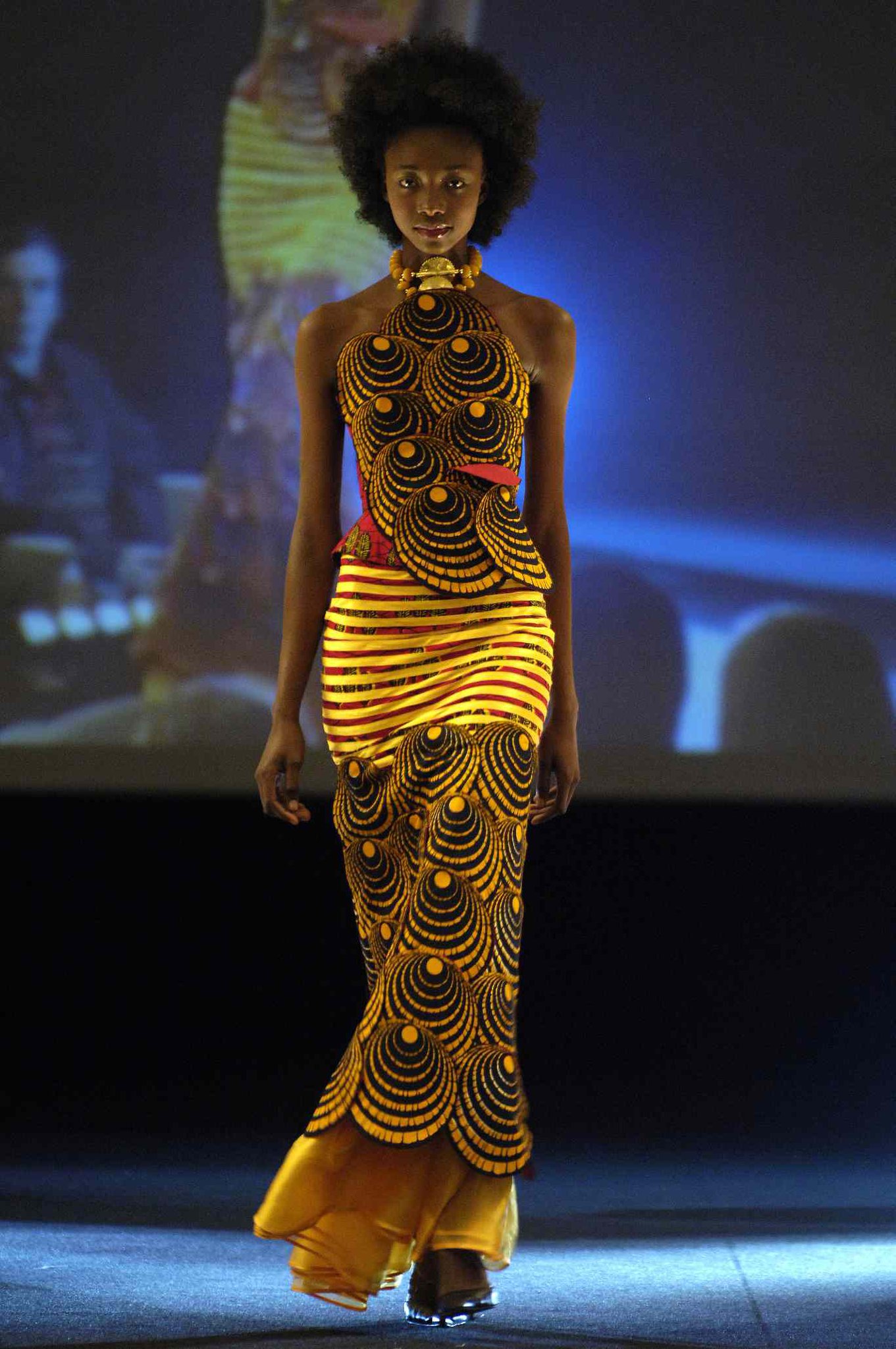
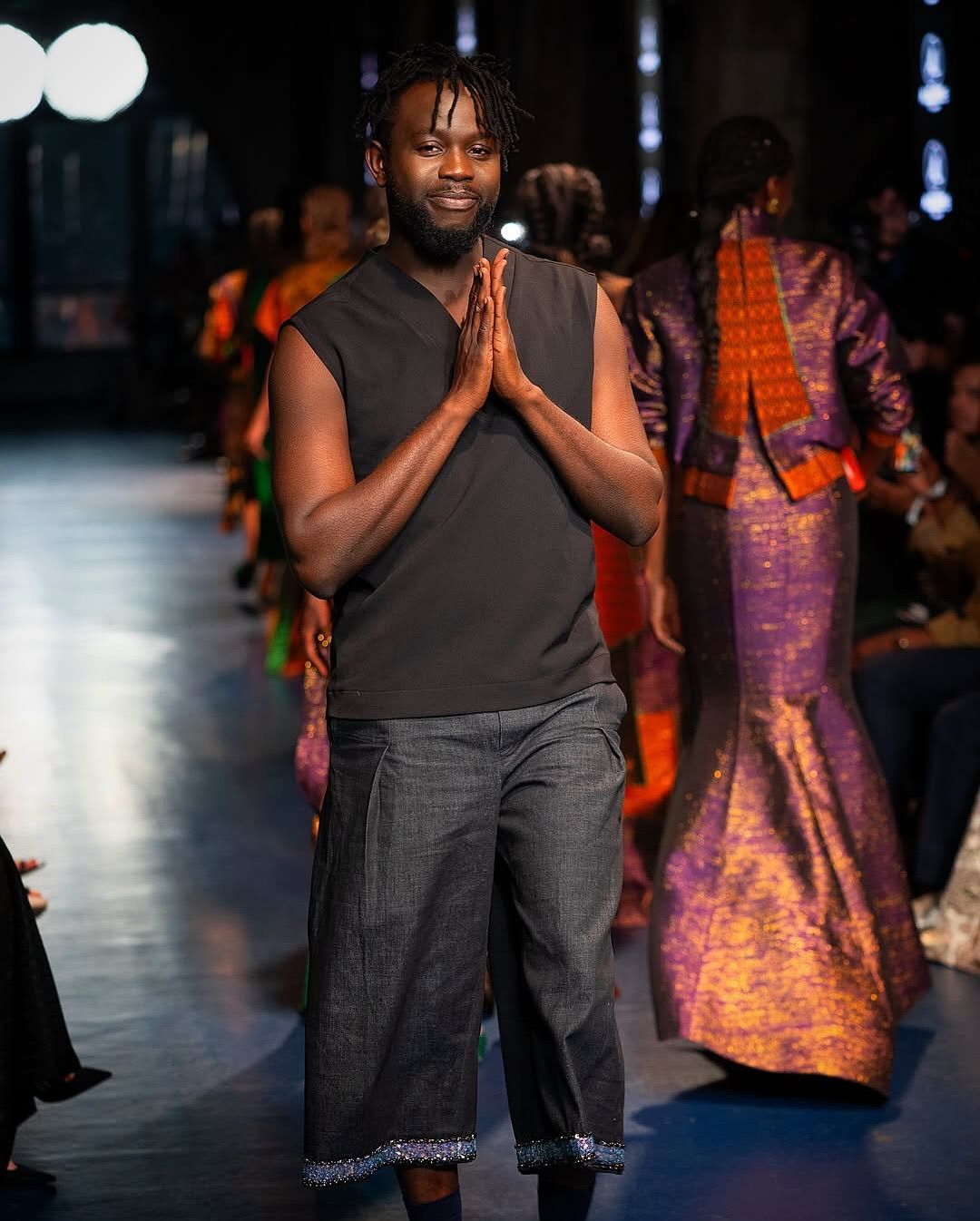
The clearest contemporary continuation of what Chris Seydou began with bogolan comes from Awa Meité, a Malian textile and fashion designer whose practice does what Seydou’s did at its most serious: works from inside the knowledge system rather than abstracting from outside it. As Omiren Styles has documented in its profile of Meité and bogolanfini, her work involves local production, artisanal collaboration, and a genuine engagement with the cloth’s ancestral meaning, ensuring that bogolanfini remains a lived cultural resource rather than an aesthetic export. Her debut runway appearances, including Lagos Fashion Week shows from the late 2010s onwards, were lauded for presenting couture that feels materially rooted and ideologically intentional. Her S/S 2020 bogolan and indigo collection was described in African and international press as “atypical” and praised as a means of preserving culture through sustainable fashion. Her presence at Shanghai Fashion Week in 2025 extended the argument globally.
The difference between Meité’s relationship to bogolan and the relationship maintained by Givenchy or Oscar de la Renta in the mid-2000s is not one of quality. It is one of the authors. Meité holds the cultural knowledge, the community relationships, and the design intelligence to understand what the cloth is saying. She is continuing a conversation that the cloth has been having for generations. The European houses were quoted without reading.
The Legacy and Its Complications
Chris Seydou’s place in this history is genuinely complex. He introduced bogolanfini to an international fashion audience at a time when no other designer was positioned to do so. His Paris runway work gave the cloth a credibility it has retained, even as that credibility has been detached from the cultural knowledge he brought to it. He was also, in making simplified adaptations of bogolanfini patterns for Western-cut garments, participating in exactly the reduction process that makes the cloth’s post-Seydou commercial history so contested.
That complexity is not a reason to diminish his work. It is a reason to understand it accurately. He was a Malian designer working in the Paris system in the 1980s, navigating commercial and cultural forces that his successors are still negotiating forty years later. What he built was both imperfect and foundational. The designers who came after him, including XULY.Bët and Awa Meité, are not building on his legacy. They are building with it and against it at the same time. That is precisely what a legacy that matters looks like.
Bogolan did not need Paris to validate it. Paris needed a designer who understood bogolan well enough to make that introduction without reducing it. Chris Seydou was that designer. The cloth is still negotiating the consequences.
ALSO READ
- Bogolan Is Not Mud Cloth: Why the Name Matters and Who Benefits from Getting It Wrong
- Awa Meité and Bogolanfini: Mud Cloth as a Living Archive of West African Memory
- African Fashion Is Not Emerging. It Has Always Been Here.
- Why European Luxury Houses Invest in Afrobeats Stars but Not African Fashion Infrastructure
Frequently Asked Questions
Who was Chris Seydou, and why is he called the father of African fashion?
Chris Seydou, born Seydou Nourou Doumbia in 1949 in Mali, trained at the École de la Chambre Syndicale de la Couture Parisienne and worked as an assistant to Yves Saint Laurent and Pierre Cardin before returning to West Africa. He built a design practice in Abidjan and Bamako, incorporating bogolanfini into contemporary fashion silhouettes for international audiences. He was widely described as the first African designer to show at Paris Fashion Week. However, the Fashion History Timeline situates his significance specifically in his use of bogolanfini in international contexts rather than in any categorical claim of being first. He died in 1994, aged 44.
What is bogolan, and how does it differ from mud cloth?
“Bogolan” is the short form of “bogolanfini,” from the Bambara words for earth, with, and cloth. It is a hand-dyed textile produced using a process that alternates between fermented mud and plant-derived dyes applied to handspun cotton, with each motif encoding Bambara cultural memory. “Mud cloth” is an English translation that strips the cloth of its cultural name and the knowledge system the name carries. As Omiren Styles has documented, the simplification transfers the cloth’s perceived authority from its Bambara origin to whoever is selling it at a given moment. Calling it mud cloth is not a translation. It is a repositioning.
Who is XULY.Bët, and how does the label connect to this history?
XULY.Bët is the label of Malian designer Lamine Badian Kouyaté, which showed at Paris Fashion Week from 1991 through the mid-2000s and returned to the runway in 2023 after more than 20 years away. Working from a deconstructive, upcycled aesthetic influenced by both African textiles and the anti-establishment end of French fashion, Kouyaté built a practice that demonstrated Malian designers in the Paris system could work from creative positions the European fashion establishment had not anticipated. His Spring/Summer 2024 collection, reviewed in Vogue Runway, was received as a return to the deconstructive instinct that had made the label foundational.
How is Awa Meité different from designers who have used bogolan commercially?
The difference is authorship. Awa Meité works from inside the knowledge system: she works with local Malian artisans, maintains genuine engagement with the cloth’s cultural grammar, and produces garments in which bogolanfini remains a lived cultural resource rather than an aesthetic export. Designers like Givenchy (Spring 2007) and Oscar de la Renta (Spring 2008) used bogolan-inspired patterns without crediting Mali, the Bambara people, or the women whose knowledge produced the visual grammar. Meité’s practice is structurally different because the same person holds the cultural knowledge and the design authority.
Why did Bogolan become commercially simplified after Chris Seydou?
Fashion markets require reproducibility, and reproducibility often entails simplification. Chris Seydou introduced bogolanfini to the international fashion system in simplified adaptations of traditional patterns on Western-cut garments. That work gave Bogolan a commercial address. Once the address was established, designers who wanted the aesthetic could use it without the cultural knowledge Seydou had brought to the work. The Groupe Bogolan Kasobané, six Malian fine-art practitioners who have worked since 1978 and represent the tradition from within its knowledge system, continued to produce complex, symbolically precise work throughout this period. Still, their practice circulates in gallery and museum contexts rather than in fashion markets.