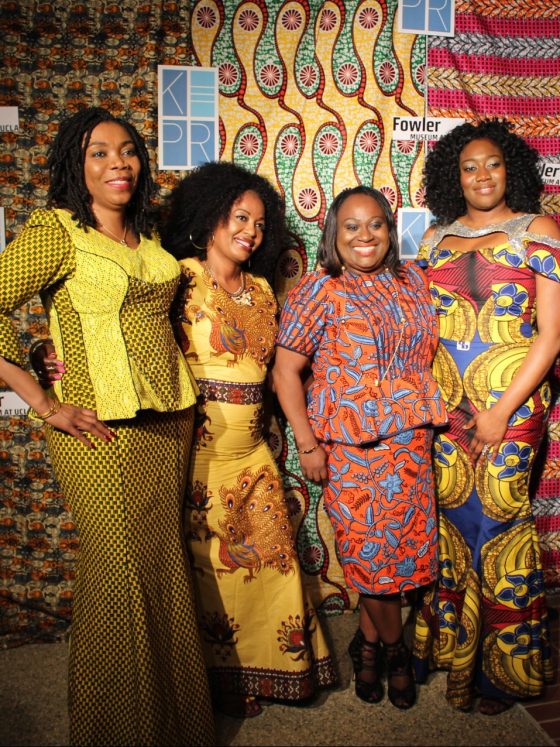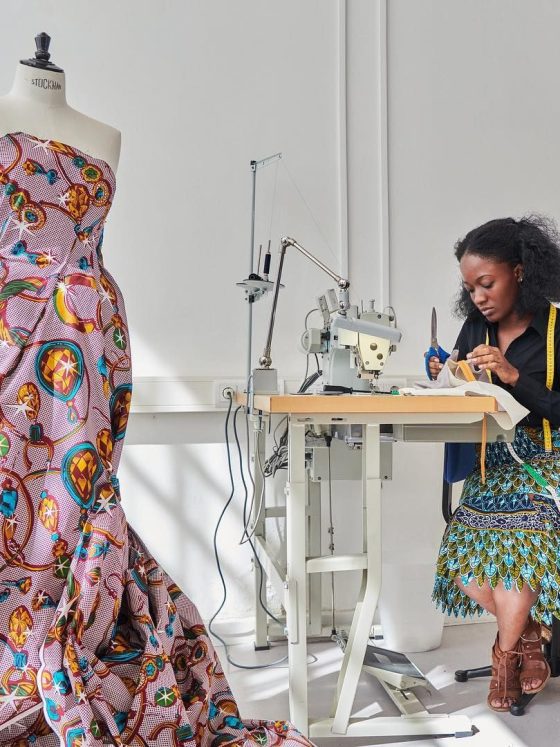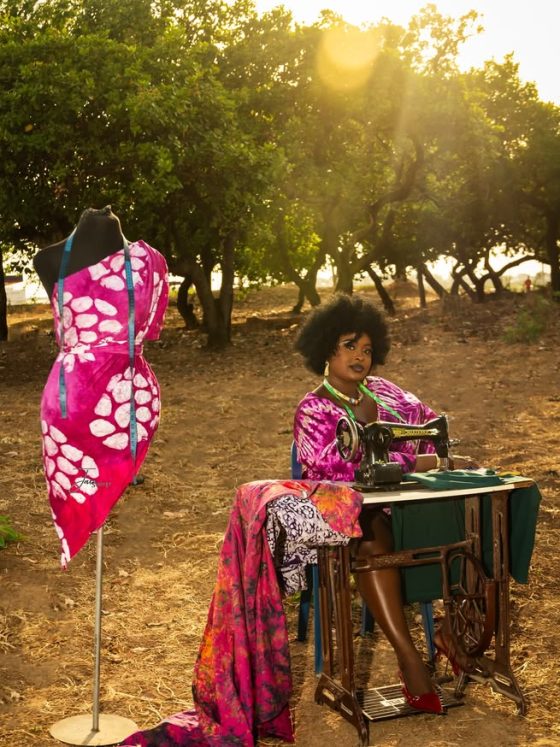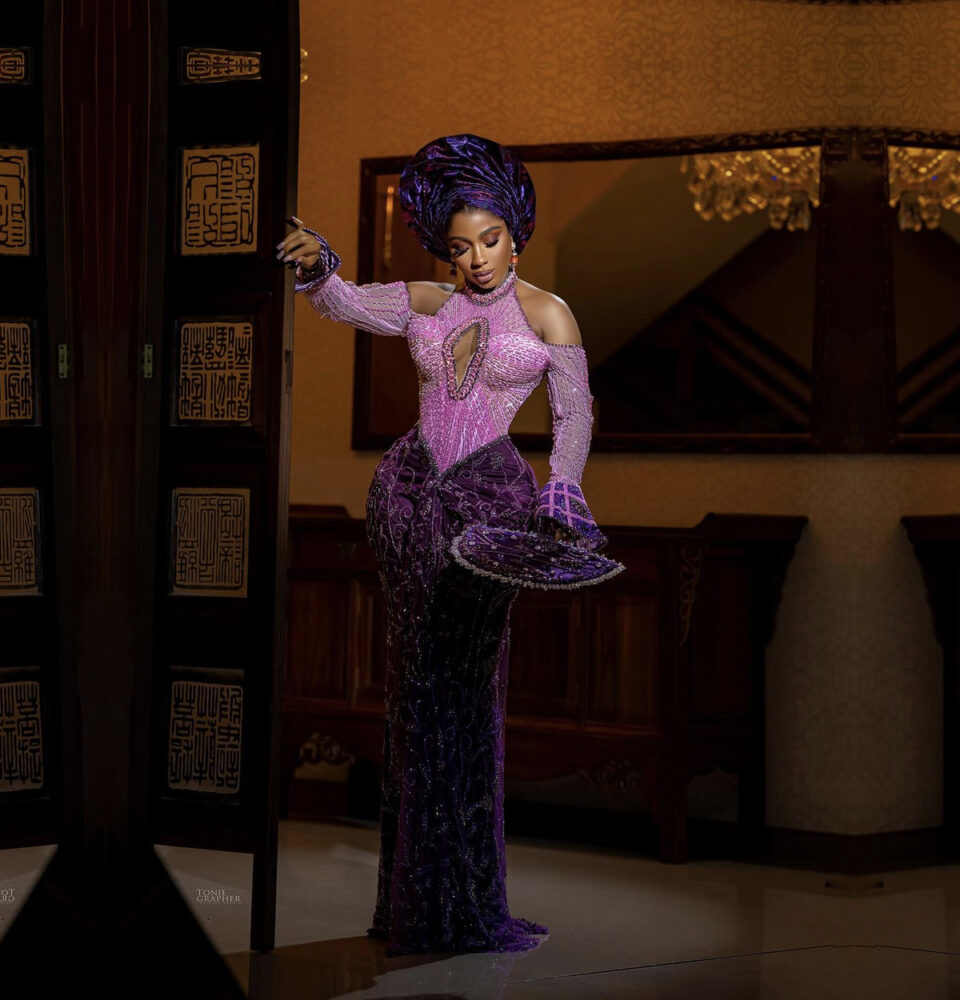
The fashion industry has noticed àṣọ-ẹbí. It has photographed the colour-blocked crowds at Nigerian weddings, featured the fabric-coordinated celebrations in editorials, and used the visual spectacle of hundreds of guests in matching fabric to illustrate stories about Nigerian style. What the coverage has largely failed to understand is what àṣọ-ẹbí is doing. It is not a dress code. It is not a styling tradition. It is not a fashion phenomenon. It is a social technology for organising relationships, obligations, and economic activity through the medium of cloth.
The African fashion market is worth 31 billion dollars. Within that market, the àṣọ-ẹbí system is one of the most commercially significant and most misunderstood fabric distribution mechanisms in existence. As Omiren Styles’ authoritative documentation of the Yoruba naming ceremony dress system confirms, the àṣọ-ẹbí is not worn for the camera. It is worn by the community that will shape the new child’s life, at the ceremony that introduces that child to that community. The fashion editorial system has consistently under-read this purpose. Fashion coverage of àṣọ-ẹbí produces excellent photography. It has not produced adequate understanding of what the fabric is doing.
Àṣọ-Ẹbí is not a dress code. It is a system for organising intimacy through cloth, turning family networks into fashion distribution channels and obligation into commercial transaction.
Àṣọ-Ẹbí as Celebration Economy: The Social Technology Explained
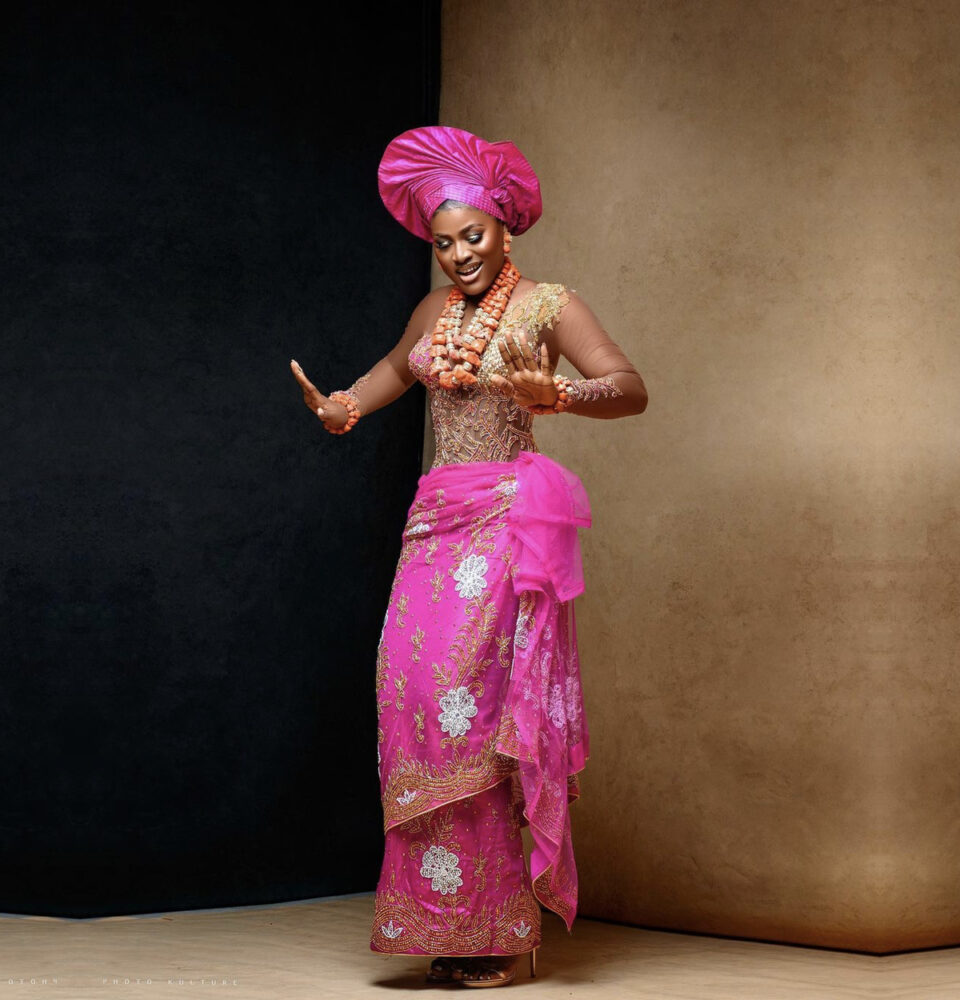
Àṣọ and Ẹbí: cloth and family group. The etymology is the argument. In its foundational Yoruba logic, àṣọ-ẹbí is the fabric that constitutes the family for a specific occasion. It makes the social unit visible. It creates a public record of who is present and how they are present. It differentiates tiers of relationship: the immediate family in one fabric, the close friends in another, the wider circle in a third. The visual map produced by a room in full àṣọ-ẹbí is a social map. Every tier, every seating arrangement, every distribution of food and favours corresponds to the fabric tier the guest is wearing.
This social technology has been documented in academic scholarship with precision that fashion editorial rarely matches. As Nwafor’s 2013 study in African Studies confirms, àṣọ-ẹbí serves as a specific social currency that mediates two contradictory logics: gift-giving and commodification. A guest does not simply wear àṣọ-ẹbí. They purchase it, usually from the host family at a price set by the host family. The purchase is simultaneously a financial transaction and a social declaration. The money pays for the fabric. Wearing the fabric declares the relationship. Both are required. A guest who attends in their own fabric has attended but has not declared.
Àṣọ-Ẹbí does what no editorial system can replicate: it turns the act of buying and wearing fabric into a public declaration of relationship. The garment does not represent solidarity. It is the solidarity, made visible and worn.
The Moral Economy Behind the Purchase
The decision to buy àṣọ-ẹbí is not a consumer decision in the conventional sense. It is a social obligation with financial consequences. As Tade and Aiyebo’s 2014 study on the commodification of àṣọ-ẹbí confirms, the intended functions of àṣọ-ẹbí remain a show of love, identification, solidarity, and social bonding. Still, its commodification has a significant effect on social relations. The unfulfilled obligation of solidarity leads to conflict due to non-attendance at social events and the unequal treatment of party attendees. Those lacking the financial means to purchase àṣọ-ẹbí are excluded from receiving souvenirs.
This dimension of the practice is the one that fashion coverage rarely addresses, because it is not photogenic. A guest who cannot afford the àṣọ-ẹbí price set by the host family is not present in the beautiful photographs of coordinated colour. They may not be present at the event at all. The social pain of exclusion from a ceremony to which one’s presence was obligated by relationship is one of àṣọ-ẹbí’s documented unintended consequences: the system designed to declare solidarity can become the mechanism of its fracture.
Scholars have identified the key tension: àṣọ-ẹbí operates within a moral economy in which the expectation of solidarity is real, but the cost of demonstrating it is variable. A family that sets àṣọ-ẹbí prices beyond what some friends or relatives can afford has, perhaps unintentionally, used the solidarity system to perform a social differentiation that the practice’s original logic was designed to overcome. The host family’s right to select and price the fabric is also their power to define who is close enough to belong.
The Commercial System It Sustains
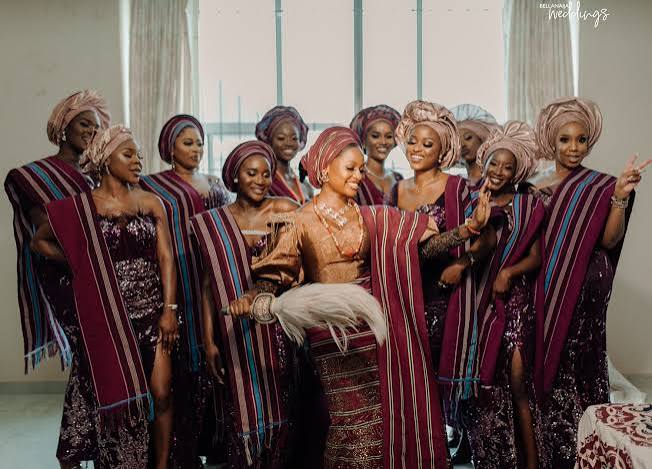
Behind every àṣọ-ẹbí ceremony is a supply chain. A host family selects a fabric. They source it from vendors, typically wholesale fabric markets in Lagos, Ibadan, Abuja, or Onitsha. They coordinate the distribution of goods to guests across multiple cities, sometimes internationally. Guests take the fabric to tailors. Tailors produce the garments. Makeup artists, gele tiers, photographers, and decorators fill in around the guests who are dressed. As Omiren Styles’ Lagos Fashion Market Report confirms, coordinating àṣọ-ẹbí for a major naming ceremony or wedding in Lagos can involve dozens of fabric suppliers, hundreds of metres of cloth, and the labour of tailors working for weeks. The practice is one of Nigeria’s most commercially significant creative economies.
The vendors who specialise in àṣọ-ẹbí supply operate within the informal credit system that underpins Nigeria’s fabric markets. A trusted family may purchase fabric on credit, collecting payment from guests and remitting to the vendor. The àṣọ-ẹbí vendor who specialises in high-volume event supply has effectively become a short-term textile financier. The coordination of colour, fabric quality, quantity, and delivery timeline across a network of guests who may be in Lagos, London, Houston, and Accra simultaneously is a logistical operation whose complexity is invisible in the editorial photographs.
The National Adoption
Àṣọ-ẹbí originated in Yoruba ceremonial culture but has become a Nigerian national practice and, increasingly, a diaspora practice. As RSIS International’s analysis of àṣọ-ẹbí fashion dynamics confirms, the practice has expanded to include a broader range of people, including friends, associates, club members, groups, and well-wishers, and even transcends the Yoruba ethnic group, extending to nearly all tribes in Nigeria. It has become an integral part of Nigerian culture. It has gradually metamorphosed into a phenomenon that is unavoidable at nearly all social and festive events in Nigeria and among Nigerians in the diaspora. Nigerian politicians have adopted the practice of distributing fabrics to party members to create visible solidarity in public settings.
The political adoption is the most revealing extension of àṣọ-ẹbí’s social logic. A politician who distributes fabric to their supporters and appears at a public event surrounded by hundreds of people in coordinated dress is using the àṣọ-ẹbí system’s most precise mechanism: the conversion of fabric into a public declaration of affiliation that every observer in the space can read. Politicians now use the system that families used to declare kinship at a naming ceremony to declare constituency at a rally. The social technology is the same. The scale and the stakes have changed.
The Ojude Oba System: Àṣọ-Ẹbí at Maximum Scale
The Ojude Oba festival in Ijebu-Ode is the closest thing to àṣọ-ẹbí in its most architecturally complete form. As Omiren Styles’ documentation of the Ojude Oba Festival 2026 confirms, around 90 Regberegbe age-grade groups arrive in carefully curated àṣọ-ẹbí, the shared fabrics and silhouettes that define each group’s identity for the year. Fabric selection begins months in advance. The result is not a crowd in matching fabric. It is a city composed of 90 separate declarations of group identity, each group occupying its own visual register while sharing the festival’s social space. The àṣọ-ẹbí system at Ojude Oba demonstrates what the practice can do when its full social logic is engaged: it transforms a public space into a legible social map.
For fashion editorial purposes, Ojude Oba produces some of the most technically sophisticated colour and fabric combinations in contemporary African dress. The Regberegbe groups compete in their àṣọ-ẹbí selections, which means each group’s fabric choice is both an aesthetic and a social argument: the group must distinguish itself from the 89 other groups while operating within the festival’s visual grammar. The competition is about both beauty and belonging.
What the Fashion Industry Keeps Missing

Fashion coverage of àṣọ-ẹbí consistently treats it as a visual phenomenon rather than a social one. It photographs the colour. It describes the fabric. It identifies the designer of the host’s outfit. What it does not explain is the obligation structure that produced the image. Every person in those photographs made a decision: to purchase the fabric, to have it sewn, to attend in it, to perform the social solidarity that the fabric declares. That decision was not purely aesthetic. As Omiren Styles’ documentation of how African fashion ritual shapes style practices confirms, unlike much of global fashion, which emphasises self-expression in isolation, African ceremonial dressing is deeply collective and narrative-driven. Àṣọ-ẹbí is the clearest expression of that collective, narrative structure in contemporary Nigerian dress culture.
The industry that wants to engage with àṣọ-ẹbí seriously needs to understand it as an economic system, a social obligation structure, and a visual communication technology simultaneously. The fabric is only the surface. What moves through it is relationship, obligation, status, and solidarity. Fashion editorial that treats àṣọ-ẹbí as a colour-blocking trend or a crowd-coordination aesthetic has not yet understood what it is looking at.
The Omiren Argument
Àṣọ-ẹbí is a celebration economy in which intimacy is organised through cloth, turning family networks into fashion distribution systems, social obligation into commercial transaction, and shared fabric into a public declaration of belonging. The African fashion market is worth 31 billion dollars. The àṣọ-ẹbí system, which sustains vendors, tailors, makeup artists, gele tiers, photographers, and decorators across Nigeria and the diaspora, is one of the most commercially significant fabric distribution mechanisms in that market. Scholars have documented its logic with precision: a social currency that mediates gift-giving and commodification simultaneously, in which the decision to purchase fabric is a social obligation with financial consequences, and the failure to purchase carries documented social costs including exclusion from souvenirs, social pain, conflict, and the rupture of exactly the solidarity the practice was designed to express.
Fashion editorial that treats àṣọ-ẹbí as spectacle has not engaged with any of this. It has photographed the output and missed the system that produced it. The system is more interesting than the photograph. It demonstrates that African dress culture has developed sophisticated mechanisms for coordinating social identity, commercial activity, and collective expression simultaneously, without the institutional infrastructure that the global fashion industry normally requires to produce coordinated visual events at scale. Àṣọ-ẹbí does not need a trend forecaster, a brand director, or a fashion week to produce a room of four hundred people in coordinated fabric. It needs a family, an occasion, and a shared understanding of what the fabric means when it is worn. That is the knowledge the fashion industry needs to understand before it can engage seriously with Nigerian dress culture.
Also Read:
- Agbada, Boubou, Grand Boubou: One Silhouette, Four Countries, Four Arguments About Power
- What to Wear to a Yoruba Naming Ceremony: Àṣọ-Ẹbí, Family Customs and Respect
- Top 5 Àṣọ-Oke Styles for Yoruba Women in 2026
- Nigeria’s Fabric Middlemen Are Not Just Markups. They Are Financing Fashion’s Supply Chain.
Frequently Asked Questions
What is àṣọ-ẹbí in Nigeria?
Àṣọ-ẹbí is a Yoruba practice in which family members, close friends, and guests wear the same fabric to ceremonies such as weddings, naming ceremonies, funerals, and birthday celebrations. The word means family cloth: àṣọ (cloth) and ẹbí (family group). It is not a dress code in the conventional sense. It is a social obligation structure in which purchasing and wearing the selected fabric constitutes a public declaration of relationship and solidarity with the hosting family. The host family typically selects the fabric and sells it to guests at a set price.
Why do people buy àṣọ-ẹbí?
Purchasing àṣọ-ẹbí is both a financial transaction and a social declaration. The money pays for the fabric. Wearing the fabric at the ceremony publicly declares the buyer’s relationship with the host family. Academic scholarship has documented àṣọ-ẹbí as a moral economy in which the expectation of solidarity is real and the obligation to demonstrate it through the purchase of fabric is understood by all participants. Guests who attend without the fabric have attended but have not declared their solidarity in the system’s terms.
What happens if you don’t buy àṣọ-ẹbí?
Documented research by Tade and Aiyebo (2014) confirms that guests who cannot afford or choose not to purchase àṣọ-ẹbí face social consequences. Those lacking the financial power to purchase are excluded from the distribution of souvenirs. Among the documented unintended consequences of non-participation are social exclusion, embarrassment, withdrawal from group participation, conflict, and other forms of social pain. The system designed to declare solidarity can become the mechanism of its fracture when àṣọ-ẹbí prices are set beyond what some guests can afford.
How did àṣọ-ẹbí spread beyond the Yoruba?
Àṣọ-ẹbí originated in Yoruba ceremonial culture but has spread to nearly all ethnic groups in Nigeria and to the Nigerian diaspora in the United Kingdom, the United States, and Canada. Scholars have attributed this expansion to Nigerian urban culture’s positive attitude towards associational life, the perceived need to build social identity and social relations in urban environments, and the thriving urban life that facilitated the culture’s growth beyond Yoruba land. Nigerian politicians have further extended the practice by distributing coordinated fabrics to political party members at public events, using the àṣọ-ẹbí system’s social logic to declare political affiliation.
What is the moral economy of àṣọ-ẹbí?
Nwafor’s 2013 study in African Studies describes àṣọ-ẹbí as a social currency that mediates two contradictory logics: gift-giving and commodification. As a gift economy, it is governed by norms of solidarity, reciprocity, and social bonding. As a commodity economy, it involves a market transaction in which the host family sets a price and guests either pay it or do not participate. These two logics run simultaneously in every àṣọ-ẹbí transaction. The guest buys a product. They also perform a social relationship. The tension between these two logics produces both àṣọ-ẹbí’s social power and its documented social costs.
Explore More
Read the full Fashion > Opinion section for Omiren Styles’ documented positions on Nigerian dress culture, the àṣọ-ẹbí economy, and the social systems that make African fashion more complex and more interesting than fashion editorial has yet acknowledged.