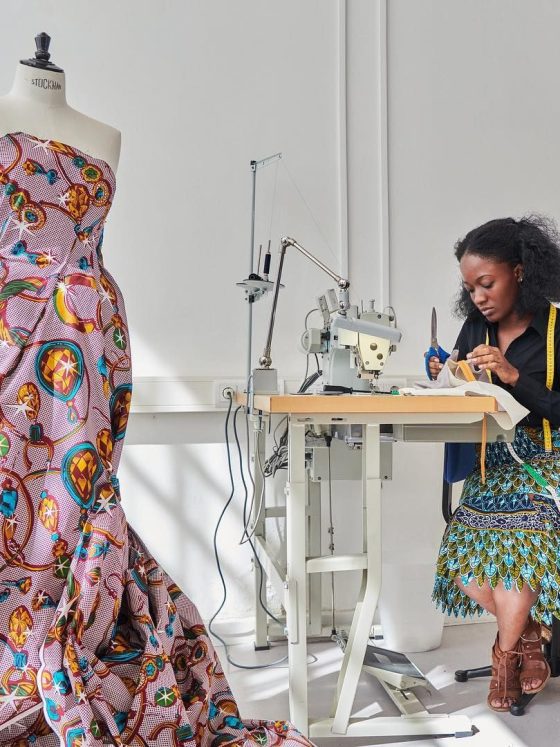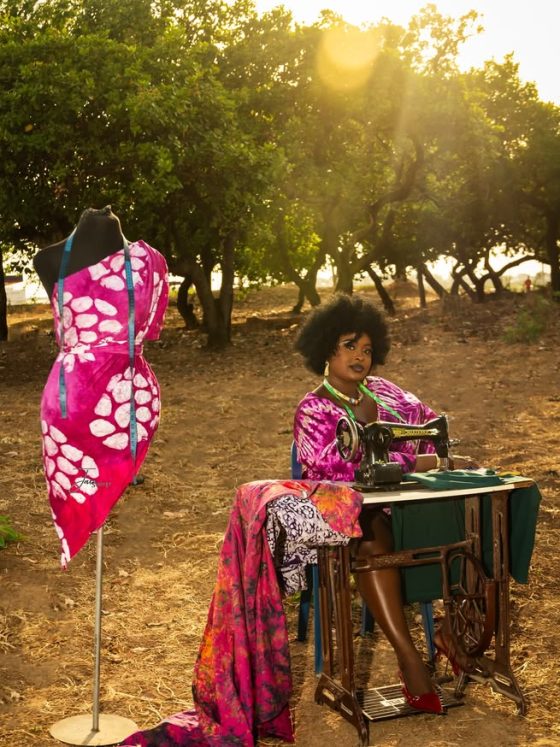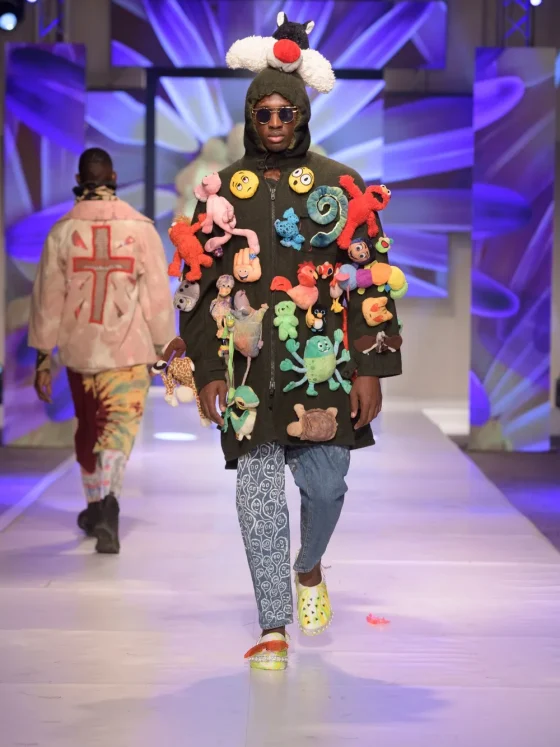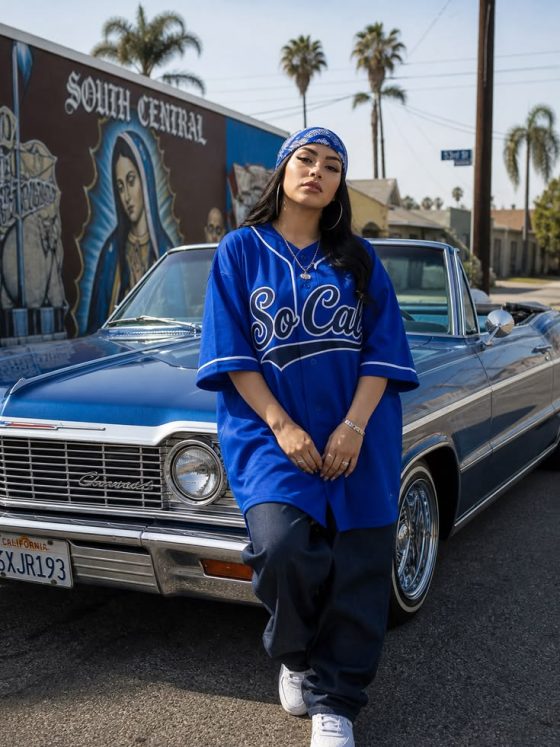
There is a dress in a trunk somewhere.
Perhaps in Lagos, or in Lomé, or in Kingston, or in a flat in Peckham, or in a house in East London bought by a grandmother who arrived from somewhere in West Africa fifty years ago. The dress has not been worn recently. It may not be worn again, or it may be taken out for a specific occasion the owner is planning for. Around it in the trunk, there may be photographs. A cloth. A pair of shoes from a ceremony. An earring from a wedding.
That trunk is a fashion archive. It is also a family record, a cultural document and a commercial object: the things in it were purchased, made, gifted and inherited through transactions that involved money, labour, time and the specific knowledge of what to make or buy for a specific occasion in a specific community.
African fashion has always moved through three channels simultaneously. The fashion coverage that treats it primarily as a commercial phenomenon, something that enters the market through brands and leaves it through purchases, documents the most visible while missing the two channels through which most of the actual movement happens.
Family is the first channel. Cultural practice is the second. Commerce is the third. None of them is the only one that matters, and none of them works without the other two.
African fashion travels through family, culture and commerce simultaneously. Coverage that documents only the commercial channel is missing most of the story. This is how African fashion actually moves.
The Family Channel
As Omiren Styles has documented in its analysis of African women’s wardrobes as fashion history, African women have always been fashion’s most important archivists. Their wardrobes, trunks and photographs hold histories no museum has fully collected. The fashion histories that have shaped daily life across Africa and its diaspora are more often held in private hands than in public collections. Mothers who wrapped their daughters in the cloth they wore at their own weddings. Grandmothers who kept the photographs from ceremonies no written record would have thought to document. An undocumented gele from a funeral because the colour and the fold were part of how the family grieved.
acadfamily’s way of grieving is now beginning to confirm what those families already knew. Creating African Fashion Histories, published by Johns Hopkins University Press in 2023, identifies family wardrobes and personal archives as primary sources for a fashion history that institutions have systematically excluded from their records. A 2026 study published in Fashion Theory confirms that Black women’s archival practices challenge and extend the conventions of institutional documentation.
The family channel transmits more than garments. It transmits the knowledge of what to wear and when: the specific vocabulary of occasion dress that tells a child which cloth is for celebration and which is for mourning, which style is for Friday prayer and which is for Sunday service, which combination of colour and accessory communicates respect for an elder and which communicates joy at a birth. That knowledge is not written down in most families. It is transmitted by watching, by being dressed, by dressing others, by the accumulation of occasions at which the vocabulary is practised until it becomes fluent.
This is the most durable channel of African fashion transmission, because it is the most intimate. A commercial platform can shut down. A cultural event can be cancelled. A market can move. The grandmother who knows which wrapper to fold for a naming ceremony and teaches her granddaughter to do the same has transmitted something that depends on no infrastructure other than their relationship.
Tolu Coker, the British-Nigerian designer who showed her AW26 collection Survivor’s Remorse to King Charles III at 180 Strand in February 2026, describes clothes as ‘archives of memory, carriers of culture, and markers of identity.’ Her practice, which draws on her West London family memory and Yoruba heritage simultaneously, is one of the clearest available examples of the family channel operating in contemporary fashion: the archive is family knowledge, and the design practice is the translation of that knowledge into something new without erasing where it came from.
The its originsChannel
The second channel through which African fashion travels is cultural practice: the ceremony, the occasion, the community event that makes a specific form of dress not merely appropriate but obligatory.
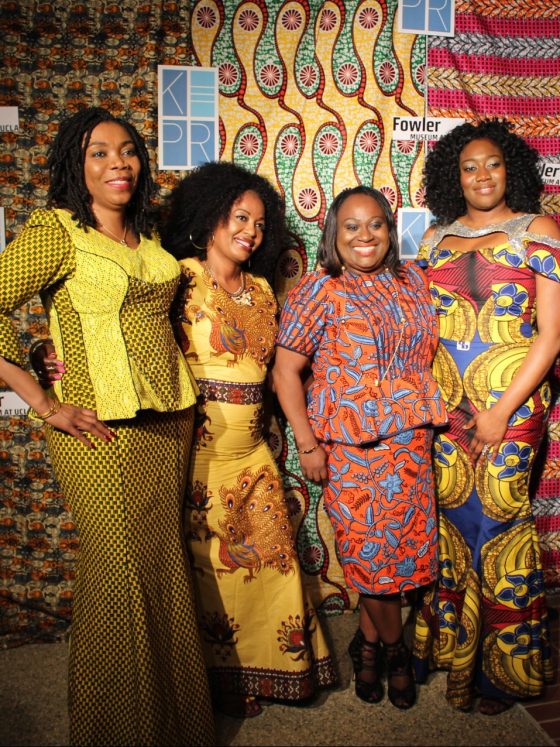
The Somali dirac is not worn every day. It is worn at weddings, Eid celebrations, naming ceremonies and national occasions. Its specific occasion-worthiness is part of its identity: a dirac ensemble assembled with a coordinated gorgorad, garbasaar and jewellery communicates not only the wearer’s taste but the significance they assign to the occasion. The cultural practice, the ceremony, is the mechanism through which the dress tradition is sustained. Without the occasion, the dress has no context. Without the dress, the occasion lacks one of the things that marks it as significant.
The red of the Maasai Shuka is worn by warriors during the Adumu, the traditional jumping dance. The Wollo tiftif dress is worn at weddings and Timket. The aso-oke worn at Nigerian ceremonies carries specific colour combinations that mark the occasion and the community. The kente worn at Ghanaian cultural events and diaspora celebrations communicates through a specific colour vocabulary. In each case, the cultural practice is the environment in which the dress tradition reproduces itself: the occasion teaches the next generation what to wear, and the dress teaches the occasion what it looks like.
Cultural practice is also the most resistant channel to external disruption. A community that maintains its ceremonies maintains the dress knowledge that the ceremonies require. The fashion industry that attempts to extract the aesthetic of a cultural practice without understanding the occasion structure that gives it meaning has taken the surface and left the context: the result is a garment that looks like the original and carries none of what made the original what it was.
As Omiren Styles has documented in its 2026 analysis of how clothing functions as cultural identity, within the diaspora, clothing continues to serve as a declaration; in cities such as London, Atlanta, and Toronto, second-generation Africans navigate layered identities through dress. A head wrap paired with contemporary tailoring is not a contradiction. Clothing has always carried the weight of cultural identity, encoding lineage, signalling belonging and negotiating power. When dressing becomes a declaration, it is not performance. It is presence.
The Commerce Channel
Commerce is the most visible channel for African fashion transmission and receives almost all the coverage. The brand, the market, the trade route, the supplier, the retailer, the online platform, the diaspora buyer: these are the actors who appear in the commercial press.
Commerce matters. The Nana Benz of Lomé did not build their wax-print empire through family transmission and cultural practice alone: they built it through specific commercial intelligence, exclusive distribution relationships with Dutch manufacturers, market knowledge their competitors lacked, and the ability to manage a trading network across West Africa. The commercial channel is where fashion becomes an economy rather than only a culture.
As Omiren Styles has documented in their analysis of the Nana Benz and the wax-print empire they built in Lomé, the commercial authority of the Nana Benz derived from their knowledge of the market, their control over distribution, and their pattern expertise: a form of material intelligence that was simultaneously cultural and commercial. Their business was built on knowing which patterns would sell in which markets, how to manage exclusive access to premium designs, and how to build relationships with manufacturers that gave them the commercial advantage their community retained for generations.
The commerce channel in 2026 operates across a wider geographic area than before. The African diaspora fashion market is estimated at £4.2 billion in the UK and the United States combined, driven by 2.3 million Black British consumers and 44 million African Americans. Kente cloth, Adinkra symbols, and Maasai patterns are the three most searched African heritage fashion terms in the UK and the United States, with a combined monthly search volume exceeding 50,000 searches.
As the Africae Fashion Report 2026 documents, museum gift shops have become the fastest-growing channel for African heritage fashion, with the Smithsonian’s National Museum of African American History and Culture, Tate Modern and the V&A all reporting increased demand for culturally authentic products. The V&A’s Africa Fashion exhibition, organised with Dr Christine Checinska as lead curator, toured internationally in 2025 and 2026 to London, Brooklyn, Portland, Melbourne, Chicago, and the McCord Stewart Museum in Montreal, where it ran from September 2025 to February 2026. It featured approximately one hundred garments and accessories, illustrating how African fashion has drawn international attention and become a powerful force for post-colonial self-expression.
The commercial channel’s growth is significant and real. Its problem is not its size but its partiality: when commercial coverage of African fashion increases without corresponding investment in understanding the family and cultural channels through which that fashion travels, the commercial growth generates value for platforms, retailers and international buyers without necessarily generating equivalent value for the communities whose family knowledge and cultural practice made the fashion commercially interesting in the first place.
How the Three Channels Interact
The three channels are not independent. They depend on each other, and they shape each other.
Commerce funds the production of garments that cultural practice demands and family transmission teaches. A ceremony requires specific dress: someone must produce that dress and provide it. The commerce channel is the mechanism through which the cultural practice generates economic activity and produces the resources needed to maintain it.
Cultural practice gives commerce its occasions and its market. A community that maintains its ceremonial life generates sustained demand for occasion dress, craft knowledge, specific materials, and the specific suppliers who understand what those occasions require. The Eid market, the wedding market, the graduation market, the diaspora celebration market: each is sustained by a cultural practice that creates the occasion for which the dress is needed.
Family transmission maintains the knowledge that neither commerce nor cultural practice can sustain on its own. The specific knowledge of how to fold a headwrap, how to coordinate a dirac ensemble, which colour combination marks a specific occasion, how the tiftif embroidery is worked from waist to hem: this knowledge lives in families before it lives anywhere else. When a family loses the knowledge, the ceremony may continue, but the dress loses the specificity that made it what it was. When the dress loses the specificity, the commerce that depended on it gradually shifts toward something more generic.
As Omiren Styles has established in its analysis of African and diaspora fashion in London, the independent retail infrastructure in Peckham, Brixton, Hackney, and East London fabric markets includes businesses that have supplied fabric for African occasionwear, bridal markets, and diaspora dress traditions for decades. That infrastructure was built through the intersection of all three channels: families who brought their dress knowledge to London, cultural practices that created the demand for specific fabrics and garments, and commercial operations that understood how to supply that demand. The fabric market in Brixton is not a node in the fashion industry. Instead, it is a family and cultural practice node that looks like commerce.
What Gets Lost When Commerce Dominates

The fashion industry’s relationship with African fashion has, for much of its history, operated primarily through the commerce channel: taking what is commercially valuable from African fashion traditions without engaging with the family and cultural channels through which those traditions are maintained.
A kente-inspired print can be produced by an industrial printer who has never been to Ghana. A shuka-check pattern can be adopted by a luxury house whose designers have never spoken to a Maasai weaver. A tiftif-inspired embroidery can be described as ‘East African-influenced’ by a brand whose supply chain has no connection to any Wollo community. In each case, the commerce channel has extracted the visual content from the cultural and family channels that gave that content its meaning, its fashion that looks like African fashion and carries none of what African fashion actually is. The check pattern without the colour vocabulary. The embroidery without the knowledge tradition. The wrapper without the occasion system. The garment without the grandmother who knows what it means.
As Omiren Styles has argued in its analysis of why heritage textiles cannot scale without losing their meaning, the form of scaling that preserves meaning is the one that builds more knowledge, relationships, and structures that fashion depends on. form that loses meaning is the one that reproduces the visual while disconnecting it from the systems that produced it. That distinction is the difference between authentic expansion and unacknowledged substitution, and it determines whether the commercial growth in African heritage fashion in 2026 generates lasting value for African communities or simply represents the latest iteration of a long pattern of extraction.
What Fashion Coverage Should Document
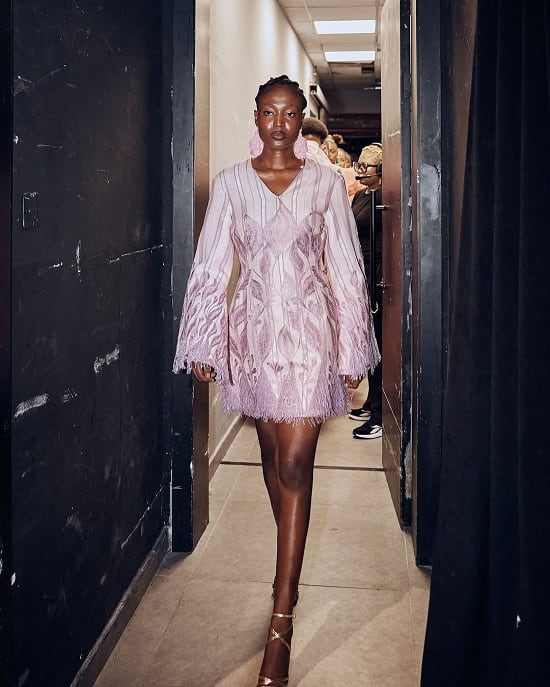
If fashion coverage of African fashion were to document all three channels rather than only the commercial one, it would produce a substantially different picture of what African fashion is and how it works.
It would document the trunks and the wardrobes alongside the runways and the retailers. It would name the grandmothers who taught the fabric vocabulary alongside the designers who translated it into collections. It would cover the naming ceremony alongside the fashion week, because the naming ceremony is the occasion that generates the demand that makes the fashion week commercially viable.
It would recognise that Wales Bonner’s methodology begins in archives rather than trend forecasts, not because archival research is an interesting design choice, but because the family and cultural channels carry information that the commercial channel does not, and that fashion built from that information carries something that fashion built from trend analysis alone cannot produce.
As the Guzangs Report on trends defining African fashion in 2026 documents, craft has evolved from an artistic gesture into a high-fashion language, and minimalism is rooted in culture rather than neutrality. Cotton yarns and earth textures have become luxury materials. Tailoring in 2026 redefines power dressing on the continent: less corporate mimicry, more cultural authority, rooted in climate, culture and identity rather than Western corporate templates. That shift is the commercial channel beginning to recognise what the family and cultural channels have always known.
The Omiren Argument
African fashion travels through family, culture and commerce simultaneously. It has always done this. The grandmother who teaches her granddaughter to wrap a garment, the ceremony that makes a specific dress obligatory, and the market that supplies the fabric for that ceremony are not three separate phenomena. They are the same phenomenon operating through three different but interdependent mechanisms.
The fashion coverage that documents only the commercial channel, the brand launch, the retail moment, the diaspora market size, is not wrong. It is incomplete. And the incompleteness matters commercially as well as culturally: a brand that enters African fashion through the commerce channel without engaging with the family and cultural channels it depends on is building on a foundation it does not fully understand, and the commercial advantage it derives from a cultural vocabulary it has not engaged with is a form of subsidy it has not earned.
The 140th anniversary of the Maasai Shuka was celebrated with a festival of 10,000 people. The kente GI was registered in August 2025. Tolu Coker’s family archive became a fashion collection that was shown to King Charles III. Wales Bonner became Creative Director of Men’s Ready-to-Wear at Hermès. The V&A’s Africa Fashion exhibition is touring six cities across three continents. The commercial channel in 202 finally began to understand that what it is selling within the family channel is sustained in the cultural channel. The question is what it does with that understanding.
As Omiren Styles has argued throughout this series, the Global South made fashion and never got credit. The three-channel analysis is the most specific available description of how that happened: the family and cultural channels built the fashion, the commercial channel extracted it, and the documentation that would have made the building visible was left in the trunk. The trunk is still there. It still contains the dress. What is being built now, in Peckham and Lagos and Lomé and Montreal and the fashion archives and the GI registrations and the curator’s notes from the V&A touring exhibition, is the record that names who built what and where it came from. That record is where the credit begins.
ALSO READ
- When Dressing Becomes Declaration: Clothing as Cultural Identity
- African and Diaspora Fashion in London: Designers, Institutions and Community Style
- Diaspora Fashion Is a Supply Chain Story, Not Only a Style Story
- Can Heritage Textiles Scale Without Losing Their Meaning?
- The Global South Made Fashion. It Just Never Got Credit.
Frequently Asked Questions
What are the three channels through which African fashion travels?
African fashion travels through family transmission, cultural practice and commerce simultaneously, and each channel depends on the other two. Family transmission is the knowledge passed between generations through dressing, observing and participating in occasions: the vocabulary of what to wear and when, held in wardrobes and trunks and the specific embodied knowledge of mothers and grandmothers. Cultural practice is the ceremony, the occasion, and the community event that makes specific dress obligatory and teaches the next generation what the dress means by placing it in the context in which it operates. Common within the market, the trader, the supplier, the brand, and the commercial infrastructure that produce and distribute the garments that family and cultural practice demand. None of the three channels is sufficient on its own.
Why is family transmission important in African fashion?
As Omiren Styles has documented in its analysis of African women’s wardrobes as fashion history, family wardrobes and personal archives are primary sources for a fashion history that institutions have systematically excluded from their records. The knowledge of what to wear and when, which colour combination marks which occasion, how to fold a wrapper or coordinate an ensemble: this knowledge lives in families before it lives anywhere else. Creating African Fashion Histories, published by Johns Hopkins University Press in 2023, confirms that family wardrobes hold fashion histories no museum has fully collected. When a family loses this knowledge, the ceremony may continue, but the dress loses the specificity that made it what it was.
How large is the African diaspora fashion market in 2026?
According to the African Heritage Fashion Report 2026, the African fashion market is estimated at £4.2 billion across the UK and the United States, driven by 2.3 million Black British consumers and 44 million African Americans. Kente cloth, Adinkra symbols, and Maasai patterns are the three most-searched African heritage fashion terms in the UK and the United States, with a combined monthly search volume exceeding 50,000. Museum gifts have become the fastest-growing channel for African heritage fashion. Black History Month drives a 340% spike in searches for African heritage gifts.
What is the relationship between cultural practice and African fashion?
Cultural practice is the second channel through which African fashion travels, and it is the environment in which dress traditions reproduce themselves. The ceremony teaches the next generation what to wear, and the dress teaches the occasion what it looks like. The Somali dirac is worn at weddings and Eid. The Maasai Shuka’s red is worn at the Adumu. The Wollo tiftif dress marks weddings, and Timkeis worn at Aso-Oke Nigerian ceremonies carry colour combinations that mark the occasion and the community. Without the occasion, the dress has no context. Without the dress, the occasion loses one of the things that marks it as significant.
What happens when commerce dominates African fashion without engaging with family and cultural channels?
When the commercial channel extracts visual content from African fashion without engaging with the family and cultural channels that give that content its meaning, the result is fashion that looks like African fashion but carries none of what African fashion actually is. The check pattern without the colour vocabulary. The embroidery without the knowledge tradition. The wrapper without the occasion system. A brand that enters African fashion through the commercial channel without engaging with the family and cultural channels it depends on is building on a foundation it does not understand. The commercial advantage it derives from a cultural vocabulary it has not engaged with is a form of subsidy it has not earned.
EXPLORE MORE
Read the full Opinion and The Omiren Argument sections at Omiren Styles for ongoing analysis of how African fashion travels through family, culture and commerce, and what each channel owes the others. Discover travel and heritage intelligence across Africa, the Caribbean and Latin America at Rex Clarke Adventures.