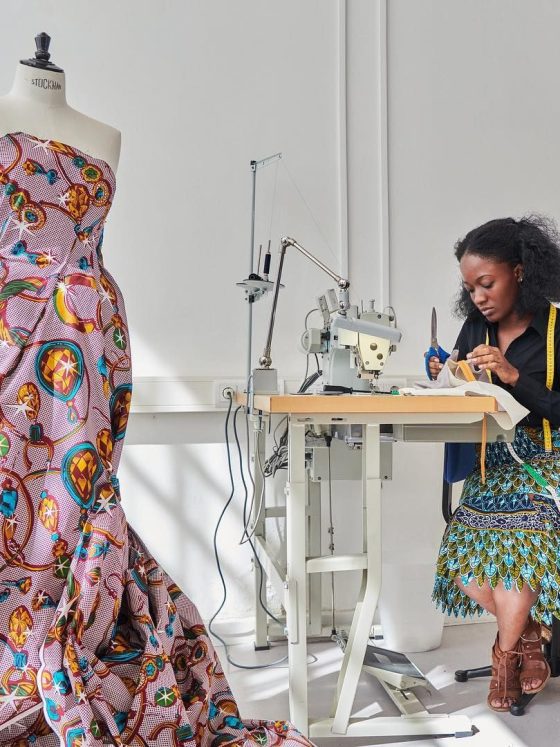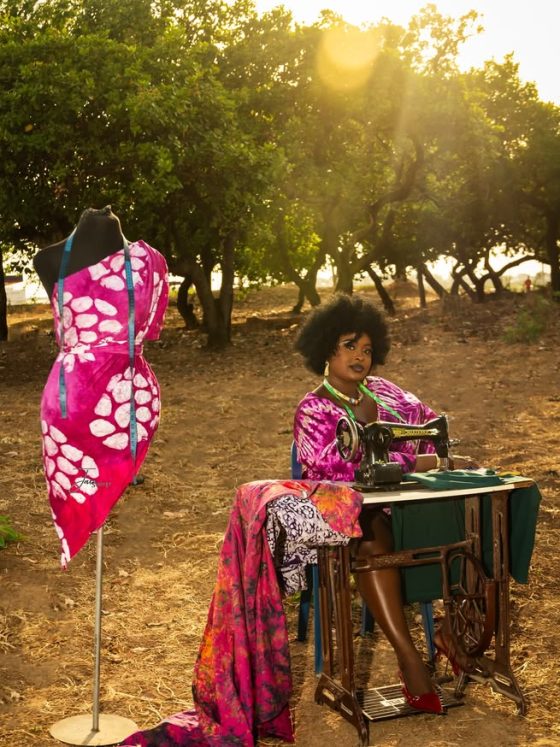
The purchase order is signed. The delivery date is confirmed. The price is agreed. The buyer turns to the next item on their sourcing list.
In most fashion buying operations, this is the moment of completion: the commercial commitment is made, the supplier is engaged, and the production side of the relationship takes responsibility for what happens next. The buyer checks in when delivery is due. They will review the goods when they arrive. They will pay on the agreed terms. Everything in between – the production conditions under which the goods are being made, the financial assurance the payment timeline creates for the supplier, the amount of communication when problems emerge, the planning infrastructure the supplier needs to manage their production schedule – is the supplier’s problem.
This is the most consistent and most consequential misunderstanding in fashion supply chain relationships. The purchase order is not the end of the buyer’s responsibility to the producer. It is the beginning of a period in which every decision the buyer makes – or fails to make – about forecasting, communication, payment, quality feedback and reorder behaviour has direct consequences for the producer’s operating conditions, labour practices, financial stability and ability to sustain the commercial relationship the buyer claims to value.
“There was absolutely no visibility or production forecasting by the buyer … they place last-minute orders and last-minute accommodations.” This is not a comment from a sub-standard supplier about an abusive relationship. It is anonymised supplier feedback collected by the Better Buying Purchasing Practices Index in 2025, describing the standard experience of dealing with a fashion brand. The supplier is not unusual. The buyer behaviour being described is not exceptional. It is the documented norm.
The purchase order is where most fashion buyers think their responsibility ends. It is where their responsibility to the producer begins. This article documents what buyers owe after the order is placed, drawing on the Better Buying Purchasing Practices Index and the full accountability argument this series has built.
What the Data Says About Buyer Behaviour

As Cascale’s April 2026 analysis of the Better Buying Purchasing Practices Index 2025 documents, the BBPPI captures anonymised supplier feedback on buyer purchasing practices and consistently identifies weaknesses in planning, forecasting, payment and communication across the fashion and apparel industry. In 2025, only 43.2% of soft goods suppliers reported that buyers were covering the cost of compliant production. Only 34.5% of soft goods suppliers were receiving forecasts 120 days in advance. The BBPPI data makes clear that shifting sourcing strategies and rising commercial pressure can increase the risk of unintended impacts on workers, suppliers and environmental performance – not because of supplier failure but because of buyer purchasing decisions.
The specific buyer behaviours that the BBPPI data identifies as most damaging to supplier stability are: late order placements that force last-minute production scheduling; insufficient planning horizons that prevent suppliers from managing raw material procurement efficiently; payment terms that do not reflect the supplier’s working capital needs; and mid-season order changes and cancellations that leave suppliers holding committed materials and labour with no commercial recourse.
As WIEGO’s analysis of purchasing practices in the garment industry documents, when buyers overestimate the popularity of a fashion trend and have excess inventory, they typically cancel orders already in production, expecting the supplier to absorb the loss. Financial penalties are often levelled against suppliers for late orders, even when the delay largely stems from the buying company. When an order must be shipped urgently because of buyer-caused delays, the supplier is often charged the cost of air freight. The commercial pressure flows consistently from the buyer to the supplier: the buyer’s poor planning becomes the supplier’s operational crisis, and the supplier is then penalised for the consequences.
These are not practices of the most egregious buyers. BBPPI benchmarks these practices across the industry and finds them in purchasing relationships with brands that simultaneously publish ethical supply chain commitments and sustainable fashion credentials. The gap between purchasing commitments and purchasing practice is one of the most specific and consequential forms of the gap between ethical label and ethical practice this series has documented.
What the Buyer’s Responsibility Actually Includes
The purchase order establishes the commercial terms of the transaction. The buyer’s responsibility extends to the conditions under which the supplier can fairly fulfil those terms.
Planning and Forecasting
A buyer who places last-minute orders is not exercising poor fashion business judgement. They create a production emergency for the supplier, whose material procurement, labour scheduling, and production planning all depend on the lead time the buyer provides. A supplier who receives a seasonal order without adequate planning horizon must either decline the order, over-commit their production, scramble for materials at higher cost, or subcontract to a facility the buyer has not approved – each of which has downstream consequences for quality, cost and production conditions.
The buyer who plans and forecasts communicates that they understand the production system they are sourcing from. The buyer who places orders last-minute communicates that the production system is a service that should accommodate their commercial calendar, regardless of what the production system requires. The BBPPI found that only 34.5% of suppliers receive adequate advance forecasting and that 65.5% indicate that they are treated as production accommodators rather than production partners.
Payment Terms That Reflect Production Economics
The payment terms a buyer sets for a supplier are not only a commercial arrangement between two parties. They determine the supplier’s ability to pay its workers, material suppliers, and operating costs in the period between production completion and payment receipt.
A supplier producing a seasonal collection for a buyer on net-60 or net-90 payment terms has made goods whose full cost they will not recover for two to three months after delivery. In that period, they must fund their next production cycle, pay their workers, service their premises and meet maintenance supply obligations, all based on working capital that the buyer has not yet provided. For a small artisan producer or workshop in Lagos or Accra, that working capital gap is not an accounting inconvenience. It is an existential commercial pressure that determines whether the producer can sustain their operation.
As Omiren Styles has shown in its analysis, a fair fashion contract should protect the producer before the first sample is made; a payment schedule should tie each payment to a verifiable production milestone rather than the passage of time. A buyer agrees to a milestone-based payment schedule and pays at each milestone; this provides more working capital support at each stage of production, allowing the supplier to operate without the financial strain that undermines the production quality the buyer claims to require.
Communication Quality
The quality of a buyer’s communication during the production period is a production condition. A buyer who goes quiet after the purchase order is placed, responds slowly to quality queries, provides unclear or contradictory feedback on samples, or changes specifications mid-production without formal documentation creates quality problems, rework costs, and deadline pressure, whose costs are entirely borne by the supplier.
Clear, specific, timely buyer communication after the purchase order is placed reduces rework, deadline pressure, the cost of quality failures, and the likelihood of a dispute at delivery. The buyer who communicates well is not doing the supplier a courtesy. They are managing their own supply chain risk by reducing the probability that the goods they receive will not meet the specification they failed to communicate clearly.
Order Stability
A buyer who cancels or significantly reduces orders after production has begun is not exercising commercial judgement, and they do so at their own cost. They are imposing that cost on the supplier: the materials purchased, the labour committed, the production time allocated, and the other orders declined to accommodate the cancelled volume.
As WWD documented in its April 2026 analysis of the Better Buying Purchasing Practices Index, fair lead times, predictable payment terms and coordinated communications contribute to measurable, sustained performance that directly influences supplier outcomes. The buyer who provides order stability – who places orders they intend to fulfil, communicates changes early when they must be made, and shares the commercial cost of any change that imposes a production cost on the supplier – is a buyer whose supplier relationships are more durable, more productive and more aligned with the ethical supply chain standards the buyer claims to maintain.
The Reorder Decision
The reorder decision is where the buyer’s post-purchase-order responsibility has its most direct commercial consequence for the supplier. A supplier who has invested in a sample relationship, a production relationship and a quality relationship with a buyer who then sources the same product category from another supplier at a lower price has absorbed the full relationship investment cost while receiving only the one-time transactional benefit.
This pattern is the commercial expression of the extraction dynamic this series has documented in the cultural sphere: the buyer takes the supplier’s investment in the relationship and extracts the value at the point where the supplier’s leverage is highest (the first order) rather than building a relationship that allows the supplier’s investment to be recovered over multiple orders. For a small Global South producer, the reorder decision is existential: a relationship whose buyer does not return is a relationship whose economics did not work, regardless of the quality delivered.
Torder’s quality-responsible Purchasing Framework
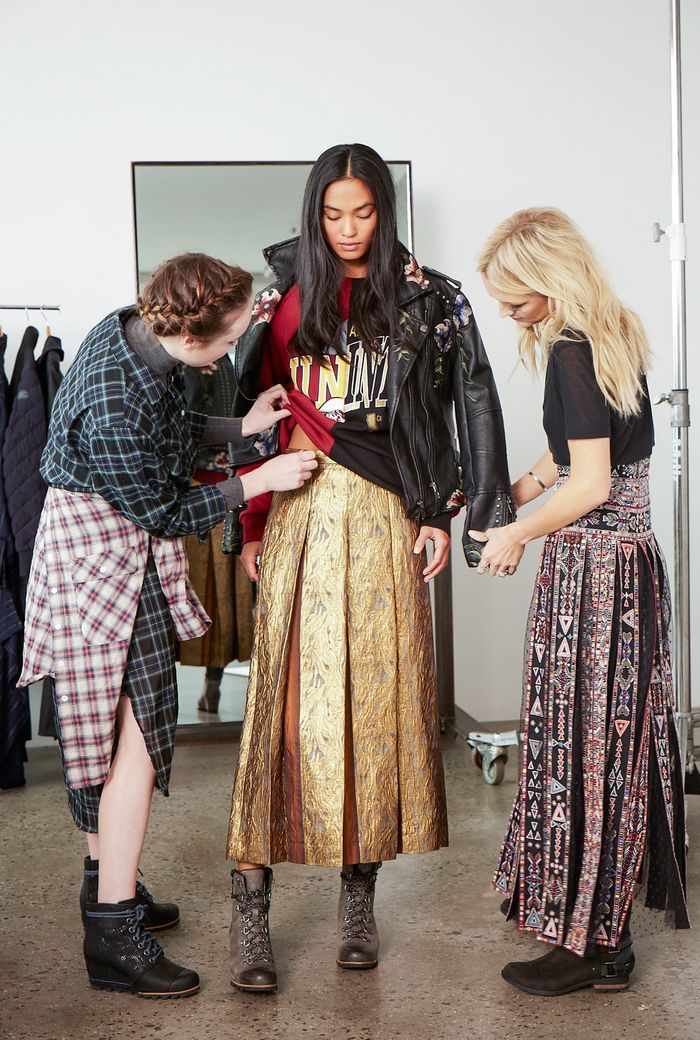
The responsible purchasing conversation in the global fashion industry has been led primarily by the Better Buying Institute, ACT (Action, Collaboration and Transformation) and the Cascale BBPPI framework, which have built the evidence base, the benchmarking system and the industry vocabulary for what responsible purchasing practices look like and how they can be measured.
The core commitments of responsible purchasing frameworks across these bodies share a consistent set of principles: forecasting that provides suppliers with adequate planning horizons; payment terms that reflect supplier working capital needs rather than buyer cash flow preferences; order changes and cancellations handled with transparent process and fair cost-sharing; quality feedback that is specific, timely and consistent; and reorder behaviour that signals a genuine commitment to the supplier relationship rather than an opportunistic extraction of first-order value.
For buyers sourcing from African and Global South makers specifically, the responsible purchasing framework requires one additional dimension: recognition that the power asymmetry in these relationships is greater, the supplier’s ability to absorb buyer-caused costs is lower, and the documentary and institutional protections available to the supplier when buyer practices fall short are fewer. The buyer in London, New York, or Paris places a last-minute order, creating the same operational challenge for a manufacturer in Portugal. The scale of the disruption is proportional to Portugal’s operational margin, and the maker in Lagos has fewer buyers.
Before placing a production order, a buyer owes:
- A planning horizon that is adequate for the supplier’s material procurement and production scheduling, communicated before the purchase order is placed.
- A complete, accurate specification the supplier can act on without clarification.
- A payment schedule that reflects the supplier’s production milestones rather than the buyer’s payment processing preferences.
- A written agreement that establishes the kill fee for cancellation, the revision round terms, and IP ownership of the auction.
During the production period, a buyer owes:
- Timely responses to supplier queries – within a commercially reasonable period that does not create pressure; production deadlines; consistent, documented quality feedback that allows the supplier to correct problems without rework cost.
- Advance notification of any order change, with a transparent process for sharing the cost of any change that imposes a production cost on the supplier.
- Payment on the agreed milestone terms, without delay.
After delivery, a buyer owes:
- Timely confirmation of delivery receipt and quality assessment.
- Specific, documented quality feedback if goods are rejected, with a fair dispute process.
- A reorder decision communicated so the supplier can plan capacity.
- Honest feedback about the commercial relationship, so the supplier understands whether the relationship is like it and plans accordingly
Omiren Argument

Every article in this series has addressed a specific actor in the fashion supply chain whose choices determine whether the accountability frameworks this series has argued for have any commercial effect.
The maker who documents, the community that protects its designs, the creator who discloses, the brand that earns its ethical label: all depend on the buyer’s post-purchase-order behaviour to remain commercially viable. A maker with a documented proof-of-work record and a written contract is still commercially exposed if the buyer cancels without a kill fee, pays late without acknowledgement, or sources the same product elsewhere next season without communication. The buyer’s post-purchase-order behaviour is the commercial environment in which all the other accountability arguments either succeed or fail.
As Omiren Styles has documented, in its analysis of where a maker can go when a brand does not pay, credit or deliver, the structural power asymmetry between international fashion brands and Global South makers means the maker’s practical recourse when buyer behaviour falls short is narrower than the legal theory of commercial relationships implies. The buyer who understands this understands that their post-purchase-order behaviour carries consequences for the maker that the maker cannot absorb as easily as the buyer can. The responsible purchasing framework is not a restriction on buyer freedom. It is the commercial behaviour that makes the supplier relationship worth having.
As Omiren Styles has argued throughout this series, the Global South made fashion and never got credit. The buyer’s post-purchase-order responsibility is the most direct commercial mechanism for providing or withholding credit: payment on agreed terms is credit, planning that allows sustainable production is credit, and reorder behaviour that recognises the supplier’s investment in the relationship is credit. The purchase order is not the end of the buyer’s responsibility. It is the last moment the buyer can believe responsibility lies with someone else.
ALSO READ
- Where Can a Maker Go When a Brand Does Not Pay, Credit or Deliver?
- What a Fair Fashion Contract Should Protect Before the First Sample Is Made
- The ‘Ethical’ Label Is Not a Business Model
- The Price of Craft: How Fashion Brands Can Cost Handmade Work Without Erasing Labour
- The Global South Made Fashion. It Just Never Got Credit.
Frequently Asked Questions
What does responsible purchasing mean for a fashion buyer after the purchase order is placed?
As the Better Buying Purchasing Practices Index documents, responsible purchasing practices after the purchase order is placed include providing adequate planning horizons so that suppliers can manage material procurement and production scheduling; paying on terms that reflect supplier working capital needs rather than buyer cash flow preferences; communicating quality feedback that is specific, timely and consistent; handling order changes and cancellations with a transparent process and fair cost-sharing; and making reorder decisions that signal a genuine commitment to the supplier relationship. Only 43.2% of soft goods suppliers in 2025 reported that buyers were covering the cost of compliant production. Only 34.5% were receiving adequate advance forecasting. These figures describe the gap between responsible purchasing principles and common purchasing practice.
Why does forecasting matter so much to fashion suppliers?
As WIEGO’s analysis of purchasing practices in the garment industry documents, buyers who underestimate or overestimate popularity create consequences that flow directly to suppliers and workers. Underestimating leads to subcontracting to facilitate working conditions, often without buyer knowledge or authorisation. Overestimating leads to order cancellations mid-production, with suppliers expected to absorb the loss. Without an adequate planning horizon, suppliers cannot manage material procurement efficiently, schedule labour responsibly, hold commitments with their own suppliers, or meet the production conditions the buyer’s ethical purchasing practices require.
What is the Being Purchasing Practices Index?
The BBPPI is an anonymised benchmarking tool that captures supplier feedback on buyer purchasing practices across planning, forecasting, payment terms, order stability and communication. The Better Buying Institute administers it and benchmarks it against Cascale members, with fewer than half of soft goods suppliers reporting that buyers covered the cost of compliant production and fewer than 35% receiving adequate advance forecasting. The BBPPI data make it clear that responsible purchasing practices are not separate from ethical supply chain standards. They are a primary mechanism for upholding or undermining those standards.
How does payment timing affect fashion supplier operations?
A supplier producing goods on net-60 terms completes production and is paid in two to three months. During that period, they must fund the next production cycle, pay their workers, service their promises, and meet their own supply obligations with working capital the buyer has not yet released. For small artisan producers in African and Global South markets, this working capital gap is often more severe than for industrial manufacturers because small cooperatives lack access to the formal credit infrastructure large manufacturers can use. A buyer who agrees to milestone-based payment terms to release working capital at production stages rather than at delivery provides a concrete, measurable supply chain benefit for the supplier’s operations.
What should a buyer do when they need to cancel or change an order after production has begun?
The responsible approach to a mid-production order change or cancellation requires three things: early communication as soon as the buyer knows the change is likely, rather than waiting until the change is certain; a transparent process for calculating and sharing the costs the supplier has already incurred as a result of the original order commitment; and a written agreement that documents the change, the cost-sharing arrangement and any impact on future order commitments. A buyer who communicates a cancellation after production is complete, contests liability for the costs incurred, or delays the cost-sharing conversation until the supplier has absorbed the full loss is not exercising commercial judgement at their own cost. They are imposing that cost on the party least able to absorb it.
EXPLORE MORE
Read the full Opinion and The Omiren Argument sections at Omiren Styles for ongoing editorial analysis of buyer accountability, responsible purchasing practices and the commercial behaviour that makes ethical supply chain claims verifiable rather than aspirational. Discover travel and heritage intelligence across Africa, the Caribbean and Latin America at Rex Clarke Adventures.