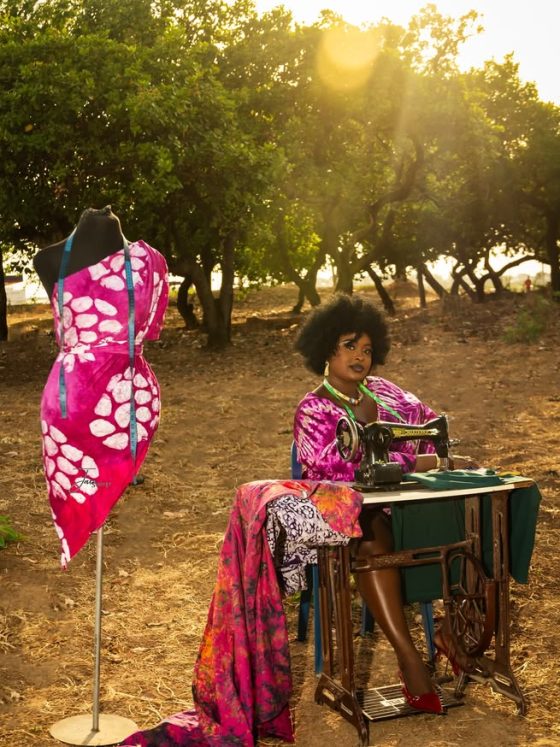
The Kolhapuri chappal has been produced in the Kolhapur and Sangli districts of Maharashtra for centuries. In 2019, it received a Geographical Indication tag in India. In 2025, Prada incorporated Kolhapuri-style footwear into a collection without acknowledging the source.
The GI did not prevent this. The community’s knowledge, documented in the GI registration and in the production tradition itself, was not absent from the legal record. The brand simply acted as though it were not there.
This is the most important thing to understand about community protection of cultural designs in fashion: documentation and legal protection create leverage, not certainty. They make extraction visible, harder to disguise and more commercially costly when it occurs. They do not make extraction impossible. And they are substantially more useful before the design enters global fashion circulation than after, because in the before phase the community holds a commercial advantage that disappears once the design is used without them.
This article is a practical guide to three things communities can do in the window before their designs become fashion content: document what they hold, decide how it may be used, and protect what can be protected through existing legal instruments.
Before the design is on a runway, in a creator’s TikTok caption or on an international retail platform, the community that produced it holds everything: the knowledge, the process, the practitioners’ names, the cultural authority, the specific terminology that distinguishes the real thing from an approximation. That window of total authority is the window for action. Once circulation begins, the community enters reactive mode. Proactive documentation, decision and protection must happen before that moment.
Before a cultural design enters global fashion circulation, the community that produced it holds the most leverage. This guide documents what can be recorded, decided, and legally protected in the window that still exists.
Why ‘After’ Is Too Late
Most community advocacy around cultural design protection happens reactively: after a luxury brand has used a design without attribution, after a fashion creator has built an audience on cultural content without credit, after a garment whose name and technique the community holds has entered international retail as something unnamed and generically aesthetic.
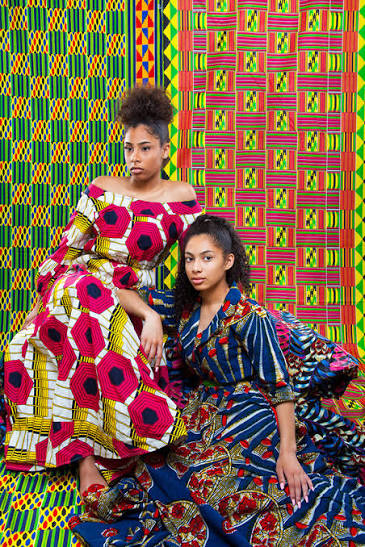
Reactive advocacy is important and is achieving results. The kente GI registration in Ghana in August 2025, following the UNESCO Intangible Cultural Heritage inscription in December 2024, is a response to decades of concern about handwoven kente designs being copied and reproduced without adequate benefits reaching the original artisans. It changes the legal landscape. But it does not undo the decades of value capture that happened before the GI was in place.
The proactive case is different: if the documentation, the decision-making structure and the legal protection are in place before the design achieves the international visibility that makes it a commercial target, the community negotiates from a position of documented authority rather than from a position of retrospective claim.
The practical difference is substantial. A community that has documented its design tradition, established an internal governance structure for decisions about external use, and registered what can be registered can respond to a fashion brand’s approach with: here is the documentation of what this design is and what it means; here is the structure that makes decisions about its commercial use; here is the legal protection it already holds. A community without these tools responds with: ” This belongs to us. “The first position is commercially negotiable. The second, while morally correct, is practically weaker.
Part One: Document

Documentation of traditional knowledge and traditional cultural expressions has emerged as one of the most widely discussed tools for protecting communities’ social, cultural and economic interests in their design traditions. The purpose of documentation is threefold: to maintain the knowledge over time; to create a verifiable record that establishes what the tradition is, where it comes from and who holds it; and to provide the evidence base that legal protection and commercial negotiations require.
As WIPO’s framework on traditional knowledge documentation establishes, identifying, collecting, and organising traditional knowledge and traditional cultural expressions has become a widely discussed approach to safeguard indigenous peoples’ and local communities’ social, cultural, and economic interests. Documenting these expressions is one of the tools that may help impede further loss of knowledge, maintain traditions over time, support benefit-sharing, and, ultimately, protect communities from unwanted uses of their cultural heritage.
What to Document
Effective documentation of a design tradition for the purposes of cultural protection needs to capture six categories of information that correspond broadly to the six categories of the Omiren Index: the people who hold the knowledge, the places where the tradition lives, the materials and techniques it uses, the cultural meanings and occasion structures it serves, the institutions that maintain it, and the system of commercial and cultural relationships through which it currently operates.
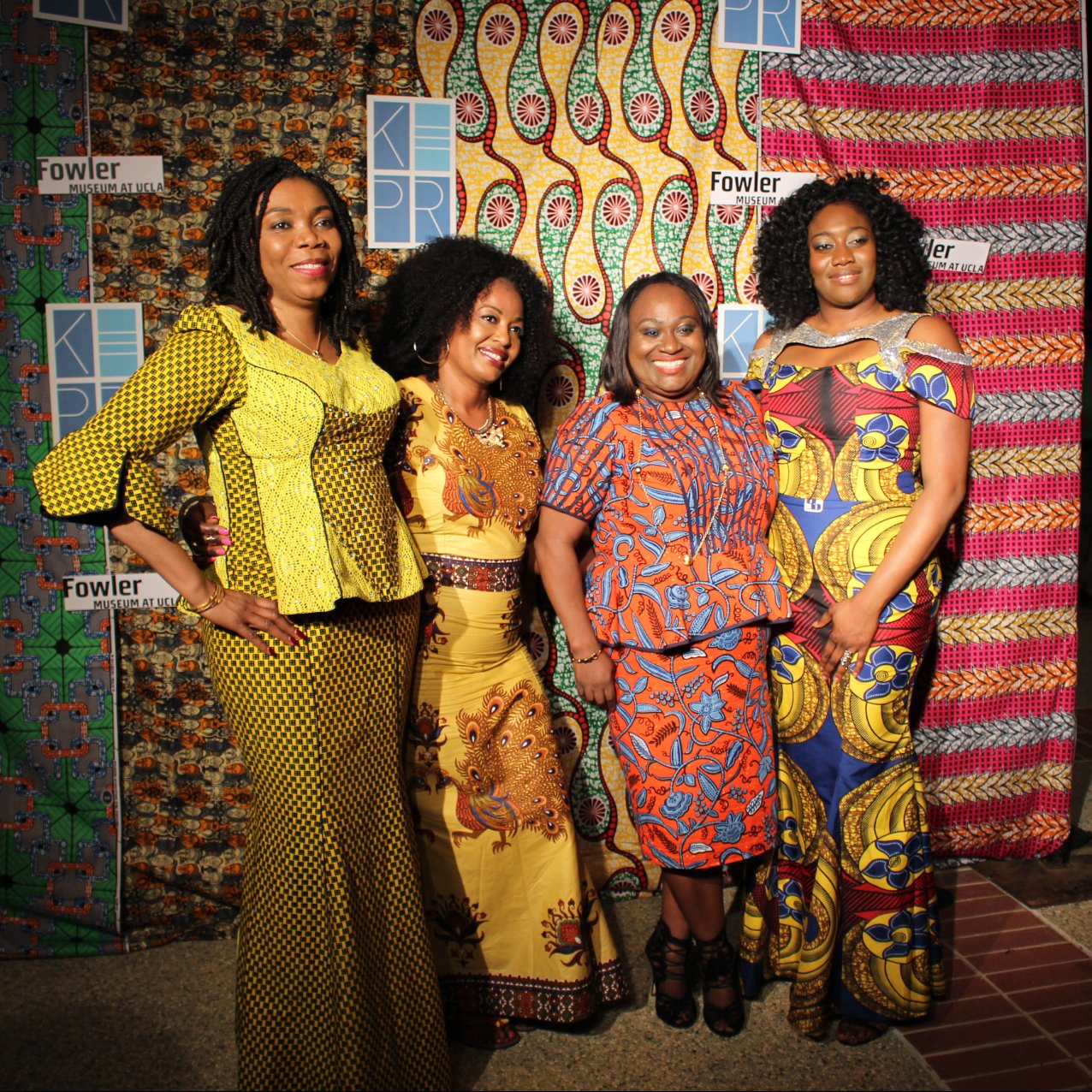
The people dimension: the specific practitioners who hold the design knowledge, including their names, their community position, the generation of practice they represent, and the specific aspects of the tradition for which they are responsible. Kente weaving in Ghana is documented through Emmanuel Kofi Atsisey, a weaver from Ziope, Agotime-Kpetoe District, with 21 years of practice. That level of documentation is the difference between ‘a Ghanaian textile tradition’ and a specific community with specific practitioners whose names are in the record.
The places dimension: the geographic origin of the tradition, including the specific region, town, district or community where the practice is maintained, the environmental conditions that shape the materials used, and the boundaries within which the term ‘authentic’ has meaning. Kente is woven in Bonwire in the Ashanti Region and in Agotime-Kpetoe in the Volta Region. Those are specific places whose specificity is part of what the GI protects.
The materials and technique dimension: what the design is made from, how it is made, the skills required to make it, and the production time, material sourcing, and process stages. A kente strip is woven on a specific type of loom, using specific thread combinations, in a process that takes weeks to months per piece. A Wollo tiftif embroidery is worked on white cotton cloth with needle and thread by a practitioner whose skill took years to develop, covering the lower back panel densely and taking many hours for a single garment. These specifics are what distinguish the authentic from the approximation, and they need to be documented in sufficient detail for the distinction to be clear.
The cultural meaning dimension: what specific colour combinations, patterns, symbols, and construction choices communicate within the tradition, and which occasions, social positions, and cultural protocols they are associated with. The kente colour vocabulary assigns specific meanings to specific colours. The Maasai Shuka’s six-colour system communicates specific social information that is not readable from the visual surface alone. The Wollo tiftif’s placement on the back panel specifically identifies the garment as Wollo rather than from another Amhara zone. These meanings need to be recorded with enough specificity to distinguish cultural authority from aesthetic approximation.
The institutions dimension: the community bodies, cultural organisations, craft associations, trade groups and governance structures that currently maintain and regulate the tradition. The Kente GI is administered by Ghana’s Registrar-General’s Department and its partners. Future protection of the Maasai Shuka would require equivalent institutional infrastructure. Documentation of what currently exists, and what needs to be built, is the institutional map that protection frameworks depend on.
The systems dimension: how the tradition currently operates commercially, including what it costs to produce, who currently benefits from its commercial use, what intermediary chains exist between the producer and the international market, and what value is currently captured by communities versus by outside actors. This documentation is the baseline against which any commercial protection framework is measured.
How to Document
WIPO’s training programme for indigenous peoples and local communities on Traditional Cultural Expressions teaches communities how to create IP rights for their cultural heritage through digital photographs, audiovisual material, sound recordings, and databases, and how to exercise control and make informed decisions about access and use by third parties. The training has been developed with the American Folklife Centre at the Library of Congress and offered to communities across multiple countries, including a specific Maasai Pilot that engaged directly with the Maasai community on documentation methodology.
The documentation format matters. A written description in a document held by a community leader is better than nothing, but less durable than a digitised, timestamped, multi-format record stored in multiple locations. The most defensible documentation combines written descriptions with photographic evidence, video records of the production process, oral testimony from practitioners, and collection samples held in accessible archives. The timestamp and geographic metadata on a digital photograph of a production process are evidence that the technique was in use at that place and time. Over time, a collection of such records becomes a verifiable documentary tradition.
The Omiren Index methodology, developed to document people, brands, places, materials, institutions and systems in the African fashion supply chain, provides a practical documentation framework adapted to the specific evidence requirements of fashion heritage. Its evidence hierarchy, distinguishing between self-reported, documented, researched and independently verified claims, is directly applicable to community documentation: the community that can provide independently verified evidence of a design tradition’s origin, technique and cultural meaning is in a substantially stronger position than one whose claims are based on oral tradition alone, however accurate that tradition may be.
Part Two: Decide

Documentation without a decision-making structure is an archive without a gate. It records what the community holds but does not establish who speaks for the community in negotiations with external parties, what uses of the design are permitted and which require consultation, or how the commercial proceeds from licensed use are distributed within the community.
The decision-making structure that gives documentation commercial force is the governance question that most communities have not yet resolved, because it requires internal agreement on genuinely difficult questions: who represents the tradition in external negotiations, what the community’s position is on uses it will and will not permit, and how the commercial returns from permitted use are shared among the practitioners and knowledge holders who maintain the tradition.
Who Speaks for the Tradition
A community’s cultural design tradition may be held collectively: no single person owns it, and the knowledge is distributed across practitioners, elders, families and community structures. When a fashion brand expresses interest in licensing or sourcing, the question of who has the authority to say yes or no on behalf of the community remains unresolved due to the lack of a designated structure.
The Kente GI in Ghana is administered by a named institution: Ghana’s Registrar-General’s Department in partnership with the Ghana Standards Authority and associated bodies. That institutional structure is what gives the GI legal force: when a question arises about whether a product meets the GI criteria, there is a body mandated to answer it. A community without a named institution must either construct one or work through an existing body whose mandate covers this function before the governance question can be answered in commercial contexts.
Different communities will find different solutions appropriate to their structure. A weavers’ cooperative whose members include all practitioners of the tradition provides a natural institutional home for decisions about external licensing. A cultural association whose mandate includes safeguarding the tradition’s integrity may be better positioned to represent the community’s interests in brand negotiations. A national body with a mandate to protect cultural heritage provides a different kind of authority. What matters is that the solution is documented, that it reflects genuine community consent rather than a single individual’s decision, and that it is known to external parties who want to engage with the tradition commercially.
What Uses Are and Are Not Permitted
Before the first brand arrives with a licensing proposal, the community benefits from having discussed and documented its position on the range of uses that might be proposed.
Some communities will permit certain uses freely: for example, non-commercial educational use of design imagery or reproduction of a pattern in a context that acknowledges the community’s ownership. Others will require consultation before any external use. Some will prohibit certain categories entirely: ceremonial designs whose cultural protocols restrict their representation, or techniques whose knowledge is held within specific families or groups rather than by the community at large.
The position does not need to be fully codified in advance of every conceivable scenario. It needs to be specific enough that the community’s representatives can respond to a concrete proposal with one of the following: this is in the category we permit under the following conditions; this is in the category we do not permit; or this requires community consultation before we can respond.
As Omiren Styles has established, in its analysis of who owns the pattern and why cultural credit rarely becomes licensing revenue, a responsible licensing agreement for a heritage technique or design would identify the authorised parties, describe the specific cultural expression involved, set out uses and limits, establish payment terms, require attribution, define approval rights, protect against misleading representation and create a mechanism for the relationship to continue beyond a single commercial transaction. For a community negotiating such an agreement for the first time, having discussed its elements internally before negotiations begin is a substantial advantage.
How Commercial Returns Are Distributed
If a community receives licensing fees, royalties or other commercial returns from the external use of its design tradition, the question of how those returns are distributed within the community requires the same internal governance clarity as the question of who speaks for the tradition.
A return that flows to a community institution, which spends it on craft training, equipment for practitioners, and documentation infrastructure, creates a different incentive structure than a return that flows to a single designated representative. Both are better than no return at all. The community that has worked out its distribution model before commercial returns arrive is better positioned to manage them sustainably than the community for which the first licensing payment creates an internal dispute about who is entitled to benefit.
Part Three: Protect
The legal protection mechanisms currently available to communities for their design traditions are imperfect, geographically uneven in their reach, and not yet adequate to the scale of the extraction problem. They are also substantially better than no legal protection, and the communities that have used them have achieved results that communities without them have not.
Geographical Indication
As documented in Omiren Styles’ analysis of whether heritage textiles can scale without losing their meaning, kente received Ghana’s first Geographical Indication registration in August 2025, following its inscription on the UNESCO ICH in December 2024. The GI designation requires products bearing the name to originate from designated Ghanaian production regions using specified techniques. It addresses the longstanding concern that handwoven kente designs are copied and reproduced commercially without adequate benefits reaching the original artisans. The GI for kente creates the legal architecture to distinguish authenticated kente from industrial approximations and to build the commercial infrastructure around that distinction.
The GI model is the most specific and most commercially powerful protection mechanism currently available for heritage textile and design traditions. Its limitations are real: it requires institutional infrastructure to administer it, is enforced nationally and requires bilateral or multilateral trade agreements to have international reach, and protects the name and the designated origin but does not prevent brands from using the aesthetic vocabulary of the tradition under a different name.
The GI question for the Maasai Shuka is unresolved. The community has the commercial justification for GI protection: an internationally recognised design vocabulary that generates significant commercial value for brands that use it without attribution or return to the community. The administrative infrastructure that would support a GI application, the named institutional body with the mandate to apply and the capacity to administer, is the gap between the commercial case and the legal protection.
WIPO Frameworks and Traditional Cultural Expressions
The WIPO Intergovernmental Committee on Intellectual Property and Genetic Resources, Traditional Knowledge and Folklore has been conducting text-based negotiations toward an international legal instrument for the protection of traditional knowledge and traditional cultural expressions since its establishment. Sessions 50 and 51 of the IGC took place in March and May to June 2025, with the 2026 to 2027 mandate under negotiation at the WIPO General Assembly. The eventual instrument would provide an international framework for protecting TCEs, including design traditions, against unauthorised use by parties in other countries.
As IWGIA documented in its April 2025 analysis of WIPO’s work on indigenous peoples’ rights, Article 31 of the UN Declaration on the Rights of Indigenous Peoples recognises that indigenous peoples have rights over their traditional knowledge, traditional cultural expressions and genetic resources, including associated intellectual property rights. Conventional intellectual property laws remain woefully inadequate in protecting these rights. Intangible cultural heritage, ranging from textile designs to traditional songs, is often treated as public domain under conventional IP systems. The WIPO training programme for communities on documenting and protecting TCEs represents the most accessible current entry point for African communities seeking to build the documentation and institutional infrastructure that eventual international protection would require.
Defensive Documentation
Defensive documentation is the use of timestamped, publicly accessible documentation of a design tradition to establish prior art: evidence that a design existed in a specific community before any commercial party claims to have invented or developed it. In the patent and trademark system, prior art prevents a later party from claiming rights over something that already existed. For traditional design, the same logic applies: if a fashion brand attempts to trademark or register a design element that the community’s documentation shows predates the brand’s claim, the documentation provides the evidence to challenge the claim.
The defensive purpose is distinct from the affirmative purpose. Affirmative protection, such as a GI or a community trademark, creates a right the community can enforce. Defensive documentation prevents others from claiming a right against the community. Both are useful, and the documentation required for defensive protection is the same as that required for affirmative protection: specific, dated, geographically located evidence of the tradition’s existence and the community’s relationship to it.
Community Trademarks and Certification Marks
In jurisdictions where the institutional infrastructure exists, communities can register collective trademarks or certification marks that allow them to control the use of specific terms, symbols or quality standards associated with their design tradition. The Harris Tweed Authority in the United Kingdom is a long-standing example: the Harris Tweed trademark can only be applied to fabric produced and finished in the Outer Hebrides, and the authority verifies compliance. Any fabric carrying the Harris Tweed label is, by definition, woven by islanders in the Outer Hebrides.
For African design traditions, the institutional development required to register and administer a community trademark or certification mark is the same as that required by the GI model: a named institution, a defined standard, and an enforcement mechanism. Where communities have the institutional capacity, collective trademarks provide an additional layer of protection that covers commercial uses the GI may not reach.
The Omiren Index as Community Documentation Framework

As Omiren Styles has established in its analysis of the documentation gap in fashion supply chains, the things the fashion supply chain fails to record are precisely the things whose documentation would make extraction harder to disguise. The Omiren Index, in its commitment to documenting materials, people, places and institutions in African fashion with specific evidence labels distinguishing researched from documented from independently verified claims, is designed to produce the reference record that makes specific naming possible: the kind of public documentation that puts community knowledge into an accessible, authoritative, dated record.
A community that contributes its design tradition to the Omiren Index is creating a public, editorial, independently maintained record that names the tradition, names the community, names the practitioners, describes the technique and places the evidence on record. That record does not have the legal force of a GI or a trademark, but it is a form of public documentation that creates accountability: once the record exists, the brand that uses the tradition without attribution is acting with knowledge of a public record that names the source. The ethical and reputational cost of that action is higher when the record exists than when it does not.
The Omiren Argument
The leverage window is real and finite.
Before kente had a GI, before the Maasai Shuka had a resolved protection framework, before the Wollo tiftif embroidery tradition had been documented in a peer-reviewed academic record, before the Kolhapuri chappal had a GI tag: in each case, there was a period during which the community’s documentation and protection work would have changed the terms on which the design entered global fashion. In some cases that work happened before the commercial moment arrived. In others it happened after, and the retrospective advocacy has been harder and less complete.
The communities whose design traditions are currently attracting international fashion interest have a window to do the documentation, governance, and protection work that changes those terms. The window is not unlimited. The pace at which social media converts cultural heritage into content, and at which fashion brands identify and incorporate new design sources, means that the period between a design tradition being ‘interesting’ and being ‘circulating at scale without attribution’ is shorter now than at any point in fashion history.
The three actions this article describes – documenting what the community holds in specific, evidence-based, multi-format form; establishing the governance structure that makes decisions about external use; and pursuing the legal protections whose mechanisms are currently available – are not academic exercises. They are the practical steps that determine whether, when the first brand arrives with a proposal, the community is negotiating from a position of documented authority or a position of retrospective claim.
As Omiren Styles has argued throughout this series, the Global South made fashion and never got credit. The documentation, decision and protection work described in this article is the most direct available mechanism for changing those terms: not after the extraction has happened, but before it does, in the window where the community still holds the advantage that circulation removes. The knowledge is there. The community is there. The design is there. What is required is institutional investment to make all three visible in a form the commercial world cannot ignore.
ALSO READ
- Can Heritage Textiles Scale Without Losing Their Meaning?
- When Heritage Becomes Content, Who Approves the Caption?
- Who Owns the Pattern? Why Cultural Credit Still Rarely Becomes Licensing Revenue
- The Global South Made Fashion. It Just Never Got Credit.
Frequently Asked Questions
What is defensive documentation for cultural design protection?
Defensive documentation is the use of timestamped, publicly accessible records of a design tradition to establish that the tradition existed in a specific community before any commercial party claims to have developed it. In the patent and trademark system, prior art prevents a later party from claiming rights over something that already existed. For traditional design, the same logic applies: if a fashion brand attempts to trademark or register a design element that the community’s documentation shows predates the brand’s claim, that documentation can be used to challenge the registration. Defensive documentation does not create an affirmative right the community can enforce, but it prevents others from claiming a right against the community.
What is a Geographical Indication and why is it useful for African design traditions?
A Geographical Indication is a legal designation that requires products bearing a protected name to originate from a designated geographic area and meet specified process criteria. Kente received Ghana’s first GI registration in August 2025, following its inscription on the UNESCO ICH in December 2024. It addresses the concern that handwoven kente designs were being copied and reproduced commercially without adequate benefits reaching the original artisans. The GI means that products using the name ‘kente’ must originate from designated Ghanaian production regions and meet the specified technique criteria. Its limitations include the need for institutional infrastructure to administer it, national rather than automatically international enforcement reach, and the inability to prevent brands from using a design’s aesthetic vocabulary under a different name.
What is the WIPO IGC and how does it relate to community design protection?
The WIPO Intergovernmental Committee on Intellectual Property and Genetic Resources, Traditional Knowledge and Folklore has been conducting text-based negotiations toward an international legal instrument to protect traditional knowledge and traditional cultural expressions. Sessions of the IGC took place in March and May to June 2025, with the 2026 to 2027 mandate under negotiation at the WIPO General Assembly. The eventual instrument would provide an international framework protecting TCEs, including design traditions, against unauthorised use by parties in other countries. Currently, conventional IP laws remain inadequate for protecting traditional knowledge, and the IGC process is the primary international mechanism working to change this.
What should a community document about its design tradition?
Effective documentation captures six categories: the people who hold the knowledge (specific names, community positions, generations of practice); the places where the tradition lives (specific regions, towns, geographic contexts); the materials and techniques used (what the design is made from, how it is made, how long it takes, what skills it requires); the cultural meanings it carries (what colours, patterns and constructions communicate within the tradition and on which occasions); the institutions that maintain it (community bodies, craft associations, cultural organisations); and the commercial systems in which it currently operates (production costs, who benefits, what intermediary chains exist). Documentation is most defensible when it combines written descriptions with photographic and video records, oral testimony from practitioners and archived samples.
What governance structure does a community need before negotiating with fashion brands?
A community needs to resolve three governance questions before entering any commercial negotiation about its design tradition: who has the authority to speak for the community in negotiations (a named institution or body whose mandate covers this function, reflecting genuine community consent rather than a single individual’s decision); what uses are and are not permitted (a documented internal position on the categories of use the community will consider, require consultation for, or prohibit); and how commercial returns are distributed within the community (an agreed mechanism for distributing licensing fees or royalties among practitioners and knowledge holders). These questions are genuinely difficult, but resolving them internally before the first brand arrives is substantially advantageous compared to resolving them under the commercial pressure of a live negotiation.
EXPLORE MORE
Read the full Opinion and The Omiren Argument sections at Omiren Styles for ongoing editorial analysis of community cultural protection, the legal frameworks available to African design traditions, and the documentation and governance work that changes the terms on which heritage enters global fashion. Discover travel and heritage intelligence across Africa, the Caribbean and Latin America at Rex Clarke Adventures.