How was a cloth made? Who wore it, and in what setting? What can its pattern, inscription or construction tell us? Omiren’s Textiles & Craft coverage follows those questions through the work of weavers, dyers, wearers and the people who document their knowledge. Start with the question that brought you here.
Explore African and diaspora textiles through Omiren’s glossary, its guide to Kente, Kanga and Adire, and features on weaving, dyeing and dress.
How cloth is made: Inside an Adire lesson
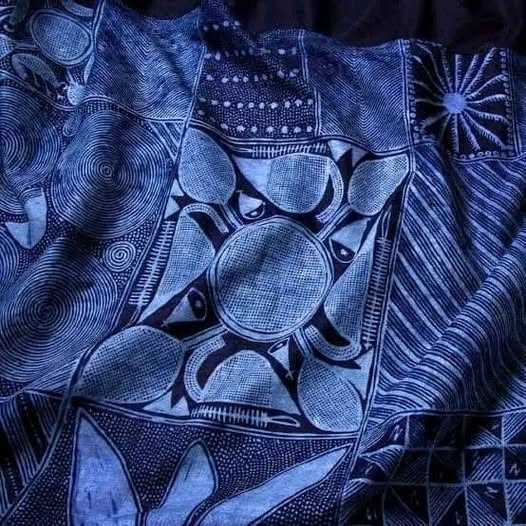
A finished piece of Adire lets you see the design. It doesn’t necessarily tell you what the dyer did to achieve it, or what someone else would need to learn to repeat the process. That is where Inside an Adire Lesson: How a Practitioner Teaches the Process begins. Drawing on a recorded lesson, the feature puts the practitioner’s explanation alongside the finished result. Its subject is not simply the pattern but the work of making the process understandable to someone else.
The distinction is useful if you have ever looked at a cloth and wondered whether the design was woven in, printed on or produced by keeping dye away from parts of the fabric. In resist dyeing, the resist prevents dye from reaching selected areas. But naming the method is only the beginning. A technique guide can explain what the resist does; a teaching account can show what the practitioner chooses to explain and in what order. The two pieces answer different questions. One helps you identify a process. The other brings you closer to learning it.
Explore the archive by question.
What does a textile label tell you?
A shop description, exhibition caption and collection note can use the same word for different purposes. One may tell you what the seller calls a fabric; another may identify a process or describe where an object was collected. None necessarily answers every question about the cloth. If a label says “African print”, for instance, that phrase does not identify who designed the pattern, where this length was made or how it acquired its name. Start with the label, then ask what it actually establishes.
That is the practical reason to keep the glossary separate from Omiren’s reporting on Ankara, ownership and trade. A definition helps you recognise when terms are being used as though they mean the same thing. It cannot settle a dispute about ownership or reconstruct the route by which a fabric reached a market. African Print Made in Kyoto: The Textile Trade Behind the Archive is a route into the second kind of question. Read it for a specific trade history, not as a definition of African print or a stand-in for every wax-print supply chain.
Where does a cloth’s meaning come from?
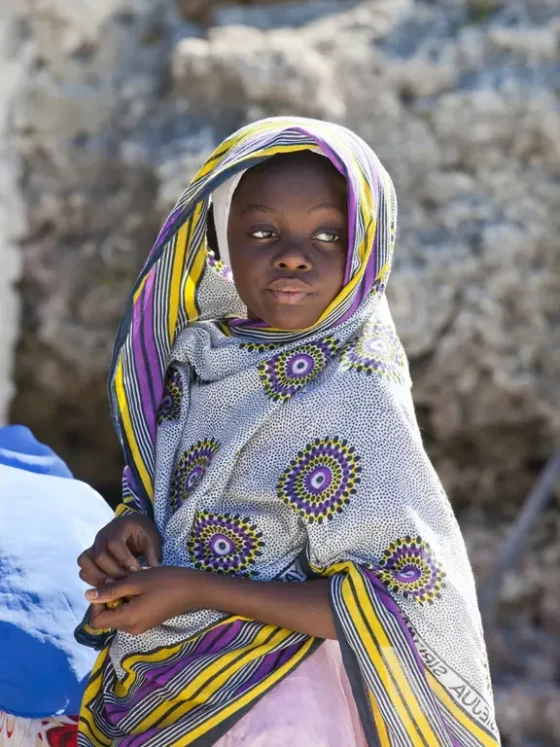
Put Kente, Kanga and Adire next to one another and a useful difference becomes visible: the evidence you need depends on what you are trying to understand. A Kanga inscription gives you words to read, but the words alone do not tell you how a particular wearer used them. A pattern in a woven cloth invites you to study its construction, but construction alone does not establish what that cloth meant to the people who wore it. With Adire, an account of the dyeing process can explain how a design was produced without claiming to explain every use.
That is why the comparative guide and the Kente essay belong on the same page, even though they do different jobs. The guide helps you notice differences among three traditions. The essay asks how far one interpretation can take us when the subject narrows to Kente. And West African Dress as a Living Record offers a separate route into the archive: what can wearers, makers and other people with knowledge of a garment tell us that looking at the object alone cannot?
What changes when you follow the cloth into the dress?
Caribbean Madras: From Colonial Textile to Contemporary Creole Fashion takes the reader from a textile to the ways it has been worn. That shift changes the editorial question. Instead of asking what madras means in the abstract, the useful questions are about the ensemble: which garment or headwrap is being described, who wore it, and where and in what context? Read the feature for the relationship between the textile and Creole dress, not for a single code presumed to apply across the Caribbean.
In Bahia, Beyond the Recipe: The Working Life of a Baiana de Acarajé starts elsewhere: with the person doing the work. It is not a textile history, which is precisely why it belongs on this reading path. Where a cloth guide helps you identify a material, a working-life feature gives you a reason to ask what a garment belongs to. The reader moves from recognising a look to understanding something about the labour and setting in which it appears. The two kinds of reporting complement each other without making Caribbean madras and Afro-Brazilian dress versions of the same story.
What can a museum record establish?
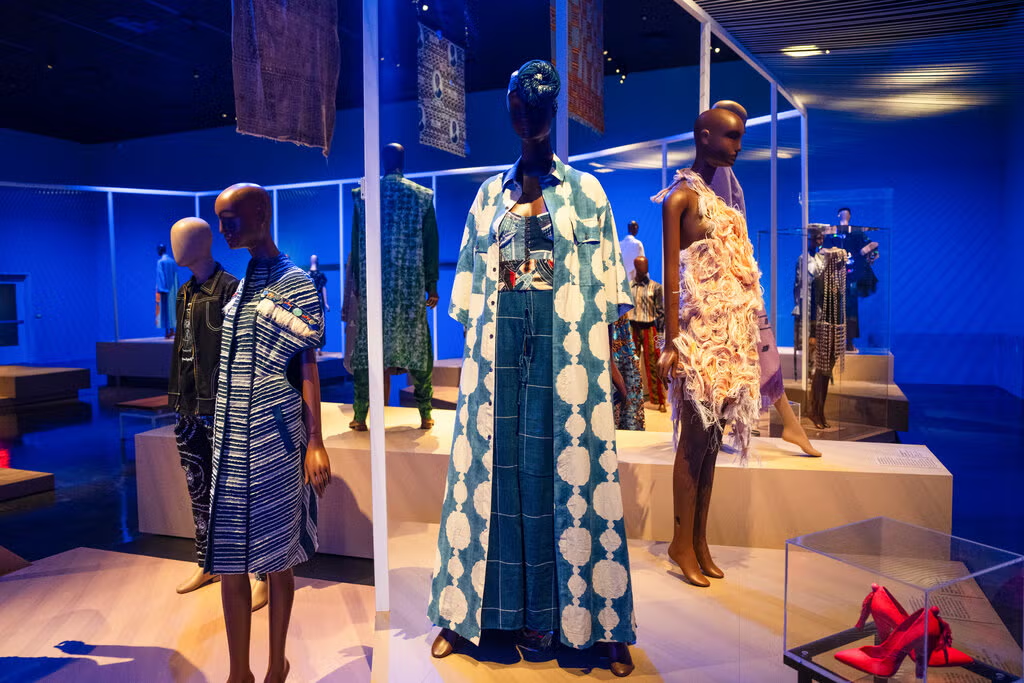
A museum entry gives you a place to begin. It can identify an object, describe its materials, record an acquisition or offer an estimated date. Those are not all the same kind of evidence. An acquisition date is not a production date. An estimated date does not tell you how long someone wore an object. And a record that does not name the maker does not tell you that the maker was unknown to the people who commissioned, used or passed on the garment. The difference matters whenever an article builds a historical claim around a catalogue entry.
Read What a Museum Record Can, and Cannot, Tell Us About Dress when an object caption raises as many questions as it answers. Pair it with the oral-history feature when you want to see why testimony matters alongside written records. Neither route makes the other redundant. An object can retain physical evidence that an account does not mention; a person can describe a use or association that the object cannot disclose on its own. Together, these pieces make it easier to judge what a writer knows, how they know it and where interpretation begins.
Also Read:
- Look up a textile term: African Textile Glossary: 20 Terms Fashion Keeps Getting Wrong.
- Compare three textile traditions: The African Textiles Guide: Kente, Kanga, and Adire Decoded.
- Read a focused argument: What Kente Encodes: Cloth as Constitutional Record:
Frequently Asked Questions
What does a textile label tell you?
A shop description, exhibition caption or collection note can use the same word for different purposes. One may give what a seller calls a fabric; another may identify a process or say where an object was collected. A phrase such as “African print” does not identify who designed the pattern, where it was made, or how it acquired its name.
How does the glossary differ from the trade reporting?
A definition helps you recognise when terms are used as though they mean the same thing. It cannot settle a dispute about ownership or reconstruct the route by which a fabric reached a market. The Kyoto feature is a specific trade history, not a definition of African print or a stand-in for every wax-print supply chain.
What can a museum record establish?
A museum entry can identify an object, describe its materials, record an acquisition or offer an estimated date. Those are different kinds of evidence. An acquisition date is not a production date, and an estimated date does not say how long someone wore an object. A record that does not name the maker does not show the maker was unknown.
How do Kente, Kanga and Adire differ as evidence?
The evidence you need depends on what you are trying to understand. A Kanga inscription gives words to read, but not how a wearer used them. A woven pattern invites study of its construction, which does not establish what the cloth meant to its wearers. An account of Adire dyeing can explain how a design was produced without explaining every use.