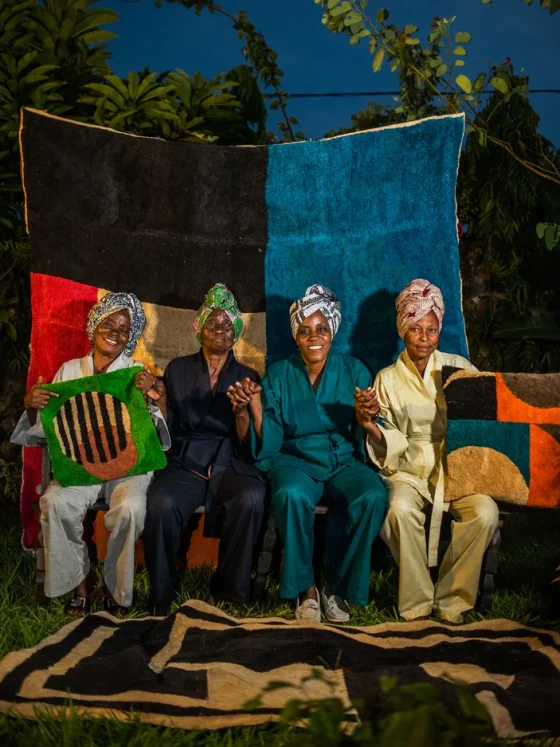
A textile brief should begin with the designer’s work, not an instruction to make something look African. For Bonolo Chepape, founder of Lulasclan, pattern is a way of exploring memory, cultural relationships and contemporary life. In a VISI interview, she explains that the business emerged partly from her difficulty finding homeware that reflected her experience of African contemporary aesthetics. She wanted an alternative to the beige, grey and safari imagery she encountered. Her response was to develop functional objects from her own drawings and patterns.
That account makes the first commissioning question clear: why this designer? The answer should identify something about their practice, not simply their location or an assumed cultural vocabulary. The questions that follow are practical, but no less connected to authorship. What is the artwork intended to do? Who will turn it into a repeat? Which colourways are included? Who approves the sample? What uses have the parties agreed? A strong brief gives those decisions a structure without attempting to dictate every creative answer.
African designers’ published practices reveal what to agree on before commissioning a textile print: use, repeats, colourways, deliverables and permissions.
Start with the practice you are commissioning.
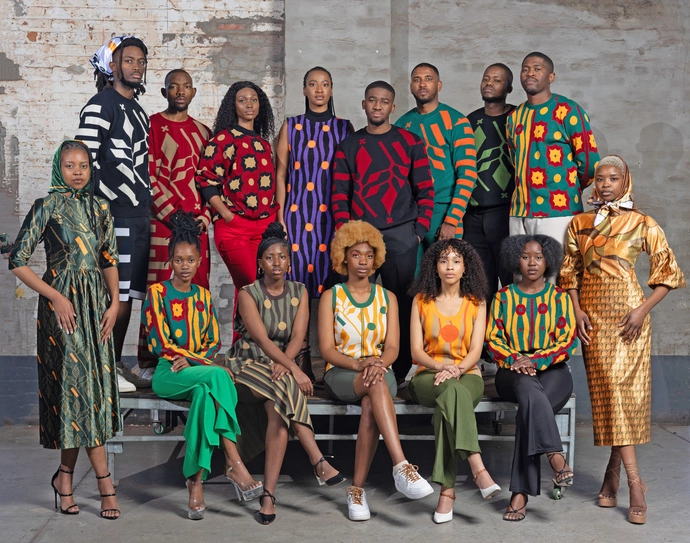
Chepape describes Lulasclan’s development process as beginning with a collection’s story and feeling. Reading, writing, drawing and daily pattern-making help her clarify an idea before she moves into a more structured phase. Once designs are finalised, she considers the application, materials, suppliers, makers and suitable production techniques. That is her account of developing collections, not a published client-commissioning procedure. It nevertheless provides a useful basis for a conversation: a designer’s process may not begin with a fixed product and proceed in the order a client expects.
Explain which decisions are already settled and which are open. If the product, material and manufacturer are fixed, supply that information. If you are asking the designer to help determine the application, make that part of the proposed scope. References should clarify the intention, so describe what interests you in them: the density of the composition, the handling of colour, the scale or the relationship between imagery and space. The designer needs a direction to interpret, not an unexplained collection of images. Our piece on what designers need to know before referencing Kuba cloth shows what goes wrong when references arrive without that context.
Are you commissioning, collaborating or licensing?
Joy Ezeka’s Cape Town-based studio, ZURI and IMANI, offers a useful starting distinction. A profile by the Cape Clothing and Textile Cluster describes its work across textile, leather, paper, wood and ceramic surfaces, and identifies bespoke commissions, collaborations and licensing among its activities. Ezeka, who comes from Nigeria, founded the studio in 2016. The profile establishes the range of her practice, not the terms of a particular contract. For a prospective client, however, it raises an essential question: are you requesting new work, proposing a collaboration or seeking permission to use an existing design?
Do not assume that these labels settle the arrangement. Ask the designer what their proposal includes. A collaboration may involve substantial new development, and licensing an existing work may still require adaptation. The written scope should identify the actual work and intended use rather than depend on a label alone.
A concrete example: from botanical images to textile patterns
Shakil Solanki and Sindiso Khumalo
Latitudes’ account of artistic collaboration in South African fashion describes Shakil Solanki developing cotton-flower imagery from botanical drawings for a Sindiso Khumalo collection. Khumalo then translated those images into patterns. Solanki connects the collection’s inspiration with Harriet Tubman and her legacy. The example matters because it identifies separate creative contributions. Originating imagery and developing its textile arrangement are connected, but they are not automatically the same task.
“‘Creating the print’ can hide three or four different jobs. A good brief names each one.” Omiren Styles Editorial Intelligence
For a new commission, ask who is responsible for each. Is the artist supplying illustrations for another designer to develop? Is one studio producing the motifs, repeat and final files? Who approves changes made during that translation? The published account does not disclose the complete commercial agreement or production specifications, and it should not be used to invent them. What it does establish is a practical reason to name contributions precisely: “creating the print” can conceal several kinds of work.
What will the print be used for?
The intended product should be explicit. Identify the application, proposed material, relevant dimensions and production partner where these are known. If the design might later be used elsewhere, disclose that intention rather than treating it as an automatic extension. Chepape explains that collaboration allowed her textile designs to move across different surfaces and media through other makers’ skills. It let focus on working with people experienced in other forms of product design.
That is not evidence that one artwork transfers unchanged between applications. It is evidence that translation can require another person’s expertise. Ask whether the commission includes that adaptation. A design developed for one product may prompt new decisions when the surface, dimensions or production method changes, and those decisions need an owner and space in the scope.
Do you need motifs, a repeat or a placement?
A repeat arranges elements so the design recurs across an area. A placement is composed for a defined position or surface. Before work begins, establish which arrangement the product requires and who will prepare it. The Solanki and Khumalo example makes the scope question tangible: the published account attributes the imagery to Solanki and its translation into patterns to Khumalo. It does not suggest that supplying an image automatically includes every subsequent design task.
Ask to review the proposed arrangement at an agreed physical scale, not only fitted to a screen. Discuss whether the design has a required direction and whether particular elements must remain visible within the intended application. These are recommended briefing questions, not claims that the named practitioners follow one standard workflow. They aim to prevent a client and designer from approving different understandings of the same image.
What is included in each colourway?
Chepape’s account places colour at the centre of her creative identity. She describes encountering concerns that her work might be too bold for interiors, then recognising an audience seeking pieces that expressed personality and lived experience rather than following trends. For a client, the lesson is to discuss colour as a design decision before reducing it to a count of deliverables. Explain the palette’s intended role: whether it should connect with an existing collection, establish a different direction or respond to a particular material. Then agree how many alternatives will be explored and how many finished colourways will be supplied. These are different commitments, because reviewing several options does not necessarily mean developing every option for production.
Also establish how the physical colour result will be assessed. Chepape identifies product development and sampling as crucial to testing her products, including quality, durability and raw-material supply. Her account supports treating sampling as a substantive stage rather than an administrative formality.
What will be delivered, and who approves it?
“Print-ready” needs a shared meaning. Ask the designer to describe the final handover in relation to the chosen production method and supplier. The discussion should cover the approved composition, scale, colourways and required file formats. Establish separately whether editable source files, individual motifs, mock-ups or supporting specifications are included. If the printer has not been selected, ask which deliverables can be finalised now and what further adaptation may be required. Do not assume the designer is also managing manufacturing unless that service has been agreed.
A compact responsibility record can help:
- Creative direction: who approves the interpretation of the brief?
- Artwork: which composition, scale and colourways are approved?
- Technical preparation: who obtains and checks the supplier’s specifications?
- Sampling: who orders, reviews and communicates changes?
- Production: who authorises manufacture?
This is a suggested planning tool, not an industry-mandated process. The distinction between artwork approval and sample approval is particularly important. Chepape’s own account moves from design into application, development, sampling, testing and inspection. It demonstrates that completing the design and evaluating the product are related but distinct activities.
How will feedback, timing and payment work?
Ask for a project-specific sequence of review points. Establish when feedback is needed, who consolidates it and how changes after approval will be handled. A request to refine an agreed composition and a request to replace the concept should not remain indistinguishable in the brief. Likewise, changing the product or production partner may introduce work not included initially. There is no basis here for proposing a standard fee, revision allowance or turnaround time. The quotation should reflect the defined services and the proposed arrangement.
What one transparent agreement looked like
Artist Io Makandal describes her silk-scarf collaboration with L’MAD in Latitudes’ article: “They had a clear agreement where they pay you for your work, and then you receive a percentage from each sale.” That is an attributable example, not a recommended rate structure for every textile commission, and the account does not disclose the percentage or the complete contract. Its value is the clarity Makandal identifies. The participants understood both payment for the work and the sales-linked component. For another project, ask the same underlying question: can both parties explain what is being paid for and how any continuing payment will be calculated?
What uses and rights are being agreed?
Keep three questions separate: who owns the relevant rights, what the client may do with the work and which files the client receives. For the South African context, the Companies and Intellectual Property Commission’s reference guide explains that creators generally own copyright, subject to exceptions. It specifically distinguishes categories of commissioned work and stresses written assignment where ownership is intended to pass. It also treats employment-related work separately. Payment should therefore not be used as a substitute for examining the applicable arrangement. That guidance is not a continent-wide rule, so obtain advice appropriate to the transaction, particularly where parties, manufacturers or sales involve different countries.
In the agreement, address the intended products, territory, duration and any exclusivity. Ask what “exclusive” covers rather than assuming the word explains itself. Discuss alterations, additional applications, access by manufacturers and portfolio display. Credit deserves a place in that conversation too. The Solanki and Khumalo account shows why identifying who originated imagery and who developed patterns can be editorially meaningful. Agree how the participants will be named without assuming that public recognition resolves contractual rights. For a related rights question in another market, see the Capulana piece under Also Read.
The Omiren Argument
A clear textile brief makes authorship visible. The practices discussed here resist the idea of an interchangeable “African print”. Chepape describes a particular relationship with memory, culture and contemporary homeware. Ezeka’s studio works across surfaces and commercial arrangements. The Solanki and Khumalo example identifies imagery being translated into patterns through separate creative contributions.
Commissioning should engage those distinctions rather than flatten them into a visual category. The client needs to understand what they are requesting; the practitioner needs a scope that makes their contribution legible. The strongest brief is not the most controlling one. It gives the designer a clear purpose, names responsibilities, and sets the terms under which the work will circulate, while leaving room for an answer the client could not have designed alone. More from the industry desk is at Omiren Styles.
Also Read:
- Emerging African Designers to Watch at AFWL 2026
- The Geometry of Heritage: Why Shweshwe Still Defines South African Fashion
- Visual Arts and the African Fashion Conversation: When the Gallery and the Runway Share a Language
- Capulana Is Culturally Mozambican. Its Production and Pattern Rights Are Much More Complicated.
Frequently Asked Questions
Can a published collaboration show me what fee to offer?
Not reliably without its scope and terms. Makandal’s account identifies a payment structure but does not disclose a rate or full agreement. Use it to inform questions, not to invent a benchmark.
Does one designer’s process apply across Africa?
No. The examples here concern specific practitioners working in South Africa. Chepape’s collection development, Ezeka’s studio services and the collaborations discussed by Latitudes are distinct practices.
Should production management be included automatically?
Make it explicit. Chepape’s account identifies suppliers, makers, manufacturing techniques and sampling as substantive parts of development. Ask which of those responsibilities your commission includes.
Does paying for a design mean I own the copyright?
Not automatically. South Africa’s CIPC guide says the author generally remains the owner of commissioned work unless copyright is assigned in writing, with listed exceptions. Get advice suited to your transaction.