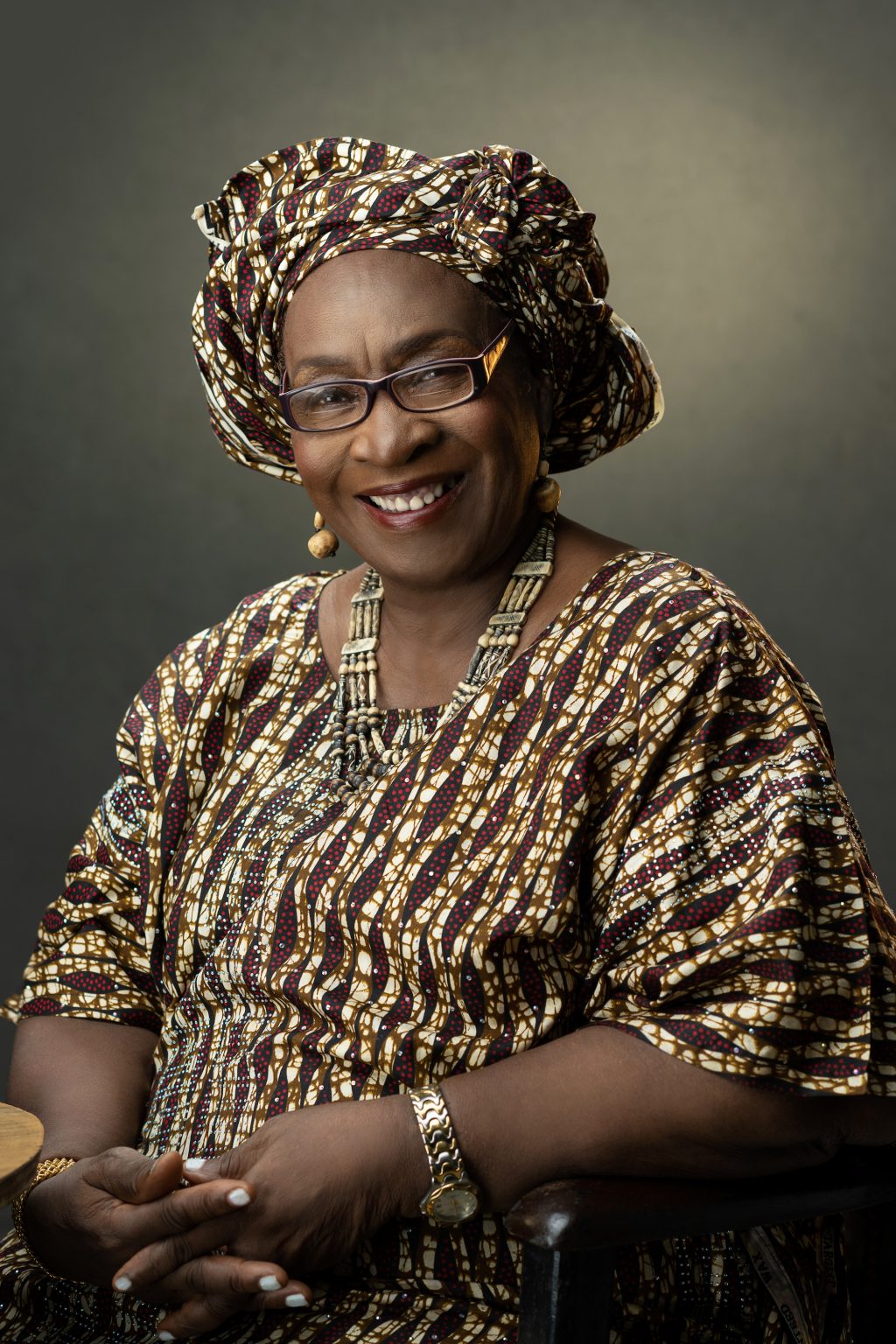
The bùbá has a wide, open neckline and broad, cropped sleeves. Its cotton cloth is woven with Lurex stripes and embroidered in two colours. It belongs to “Bjay,” a four-part ensemble by Shade Thomas-Fahm in the Victoria and Albert Museum’s collection, dated to the 1970s. A matching ìró wrapper, ìpèlé shawl and gèlè headwrap complete the outfit. These details offer a material starting point for understanding the designer’s practice. The blouse is not an isolated shape experiment. Its textile connects it to three other components, while its place within the ensemble preserves a recognisable relationship between upper garment, wrapper, shawl and headwrap.
Elsewhere, an embroidered tie-dye bùbá in Brighton & Hove Museums carries the label “Shade’s Boutique of Lagos.” Purchased in Brighton, it supplies different evidence: another textile treatment, a commercial identity and one documented point in the garment’s circulation. It is a separate object, not another component of “Bjay.” Read together, the garments help explain a practice built through related decisions: what to retain from established forms, what to adapt, which textiles to use and how to organise production and retail around the resulting clothes.
A V&A-held bùbá and a separate Brighton blouse reveal how Shade Thomas-Fahm connected Nigerian textiles, design adaptation and boutique production.
The Objects and Their Separate Histories
The two museum holdings should remain distinct throughout that discussion.
| Object | Documented identification | Provenance |
|---|---|---|
| V&A “Bjay” ensemble | Nigeria, 1970s; bùbá, ìró, ìpèlé and gèlè in embroidered aṣọ-òkè incorporating cotton and Lurex | Given by Shade Thomas-Fahm; accession T.2438:1 to 4-2021. |
| Brighton blouse | Embroidered tie-dye bùbá labelled “Shade’s Boutique of Lagos”; production date not supplied in the museum article | Purchased in Brighton; held by Brighton & Hove Museums. |
The V&A’s “Bjay” catalogue record provides the fuller construction description. Brighton’s “Fashioning the Nation” article, written by curator Helen Mears, places its blouse within a broader account of Thomas-Fahm’s textiles and business. One object therefore anchors the close reading; the other extends it. Neither should inherit the other’s date, materials or ownership history.
The Bùbá as Part of a Coordinated Outfit
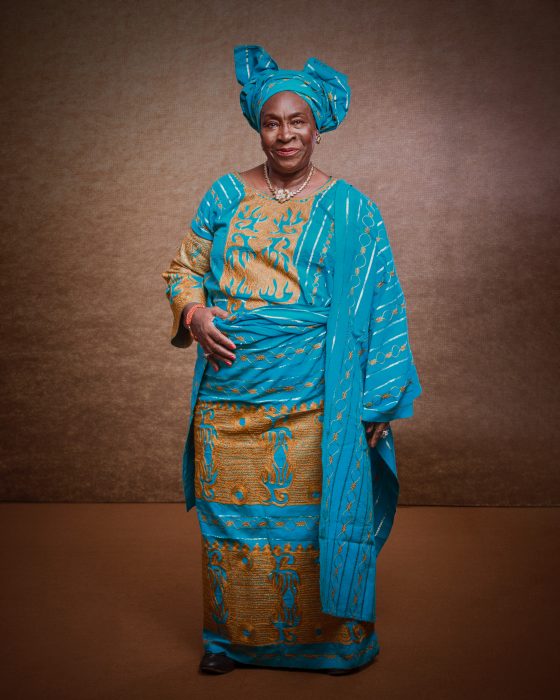
In “Bjay,” the bùbá’s open neckline and wide, cropped sleeves establish the upper garment’s documented shape. The matching textile then links it to the rest of the ensemble. The V&A describes the ìró as a large embroidered rectangle wrapped around the lower body and tied at the waist, accompanied by the shawl and headwrap. That relationship matters. Examining the blouse alone would leave out how the outfit is organised across the body. Here, coordination comes through cloth shared between differently shaped components: a constructed upper garment, a wrapped lower garment, a shawl and a headwrap.
The ensemble does not need an unfamiliar silhouette to demonstrate design judgment. Selection, proportion, textile combination and decoration are already decisions. Its continued use of recognisable garment forms is not evidence of an absence of invention. The museum’s description also establishes a useful boundary. It records neckline, sleeves, materials and components, but does not provide a complete account of seams, internal finishing or fastening construction. Those details require closer examination of the object rather than inference from the ensemble’s appearance.
What the Cloth Contributes
The V&A identifies the textile as an embroidered aṣọ-òkè of sányán and àlàárì type, incorporating woven cotton and Lurex. That wording is more informative than a general reference to “local fabric”: it names a textile tradition while recording the materials in this particular ensemble. Cotton, metallic yarn and embroidery are not interchangeable elements. The catalogue describes the Lurex as woven stripes and the embroidery as an additional feature worked in two colours. Together, they establish more than one layer of surface design. The record also prevents a fixed opposition between a supposedly unchanging traditional textile and modern design. This aṣọ-òkè incorporates Lurex. Its documented material composition belongs within the account of Thomas-Fahm’s choices, rather than being treated as an exception to the textile’s identity.
Across her wider practice, Brighton’s museum article identifies Yoruba handwoven aṣọ-òkè, Yoruba hand-dyed àdìrẹ, Igbo handwoven akwete and Nigerian-produced cotton prints. These were different textile resources, not a single aesthetic category. The surviving records name Thomas-Fahm as designer but do not identify every person responsible for weaving, dyeing, embroidery or assembly. Designer attribution therefore does not provide a complete workshop history.
Adaptation Did Not Always Mean Replacement
Thomas-Fahm’s own explanation offers a clear way to understand her approach. In testimony dated 2021 and published by the V&A, she described mentally comparing a European skirt with a Yoruba ìró: both clothed the lower body, but their differences offered possibilities. “Both styles had something to learn from the other,” she said. That is a reciprocal account of design. It does not position Nigerian clothing solely as a source of fabric or European clothing solely as a source of construction. It describes looking at how garments work and deciding which characteristics to bring into another form.
The V&A documents practical adaptations within her wider output, including a pre-tied gèlè and the addition of a zipper to the ìró. The museum interprets these changes as responses to the needs of cosmopolitan, working women. “Bjay,” however, should not automatically be described as an example of the zippered wrapper. Its physical catalogue description says the ìró is wrapped and tied. The distinction reveals something useful: Thomas-Fahm’s practice accommodated both retained forms and altered methods of dressing. Adaptation was not one intervention repeated across every garment. It was a set of choices made within a wider body of work.
Another Bùbá, Another Textile Treatment
The Brighton blouse introduces tie-dye and embroidery rather than the woven cotton-and-Lurex combination documented in “Bjay.” Its museum description does not establish the fibre, precise dyeing process or production date, so those details should remain unassigned. It does establish the boutique label. “Shade’s Boutique of Lagos” connects the garment to a named business and locates that business within the city where Thomas-Fahm worked. The Brighton purchase supplies one later point in the object’s history. It does not identify an original wearer or explain how the blouse reached Britain. The garment’s circulation is documented only in part.
Even so, the comparison broadens the material picture. These two holdings show different textile treatments associated with the same designer, while the label connects one surviving blouse to the retail structure through which her work reached customers.
The Boutique Required a Production System
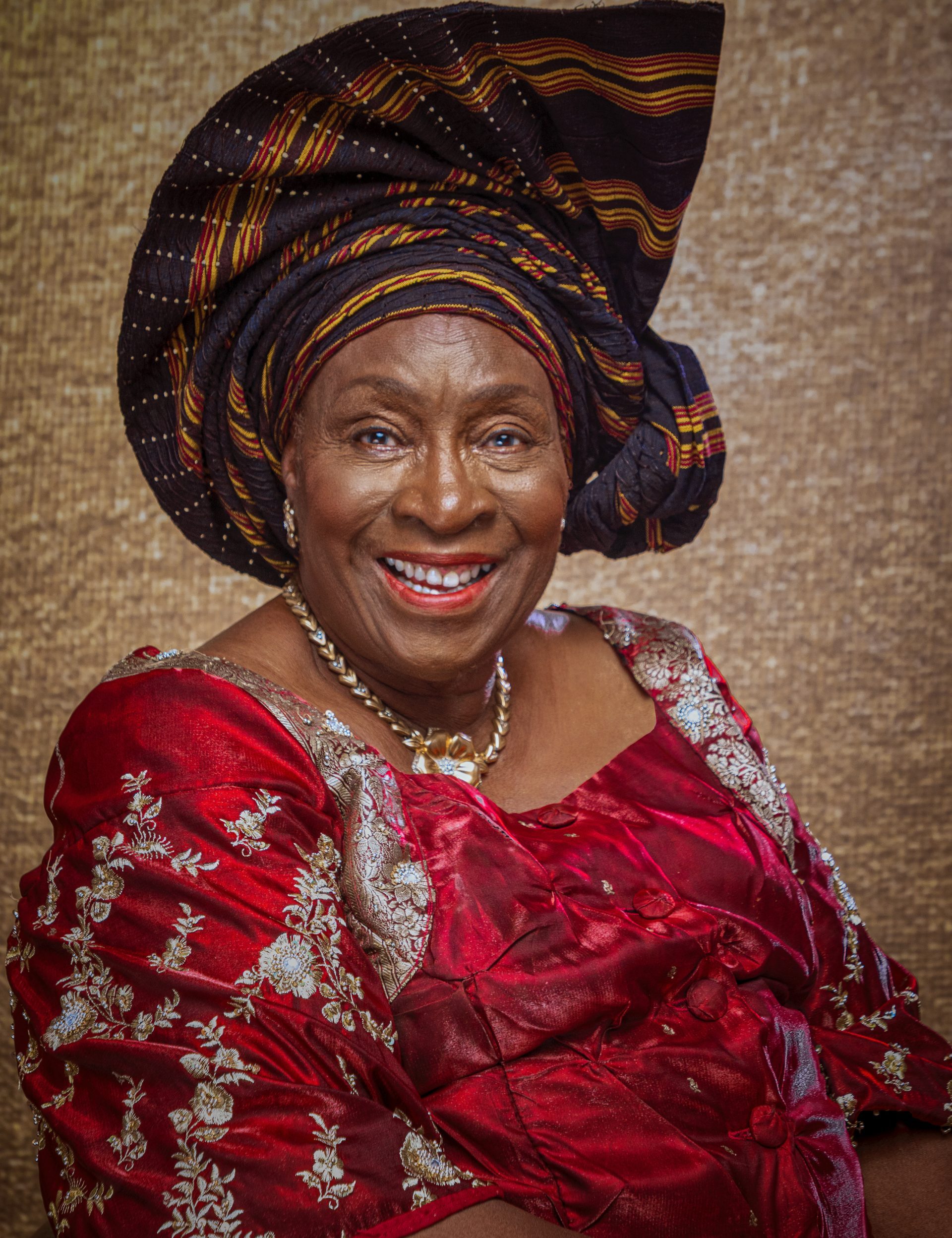
Thomas-Fahm returned to Nigeria in 1960 after studying fashion in Britain. Brighton & Hove Museums places the opening of a boutique and factory, Maison Shade, on an industrial estate in Yaba. It records the boutique’s subsequent move to the Federal Palace Hotel and then Falomo Shopping Centre, while the factory remained in Yaba. The V&A’s summary emphasises the boutique at the Federal Palace Hotel and the factory on the Yaba Industrial Estate. Read with Brighton’s more detailed sequence, the accounts establish the importance of separate retail and production premises. This infrastructure belongs inside the design story. It concerns how a garment moved from an idea into a form that could be made and offered to customers.
According to the V&A, Thomas-Fahm produced bespoke, made-to-measure clothing alongside ready-to-wear lines. She sold those lines through her boutiques and other retailers, including Kingsway Stores in Lagos. The business therefore accommodated more than one route to purchase. That does not make every surviving garment ready-to-wear: “Bjay” is classified by the V&A as a unique production, while the Brighton’s blouse production category remains unspecified. Distinguishing individual objects from broader output is essential. A factory, a boutique and a ready-to-wear line describe an organisation; they do not establish the production quantity or making process of every garment bearing its label.
Nigerian Textiles and the Question of Prestige
The timing of Thomas-Fahm’s return also matters. She returned in the year of Nigerian independence, and Brighton’s account links her ambitions to the wider project of creating a modern national fashion identity. That ambition encountered preferences shaped by colonial experience. The museum reproduces her recollections from a 2018 interview in which she described the difficulty of persuading Nigerian customers to embrace local fabrics. She recalled European women adopting her designs before Nigerian women followed. This is retrospective testimony about her experience, not a comprehensive account of Nigerian taste. Nevertheless, it identifies a specific challenge: making Nigerian cloth desirable within a market where imported goods could carry greater prestige.
Textile selection alone could not resolve that challenge. The clothes also required persuasive design and settings in which customers could encounter them. The boutique was one such setting; department-store distribution and overseas promotional events extended the business’s reach. The V&A records Thomas-Fahm holding promotional Christmas events in New York in December 1972. The Brighton blouse’s later presence in Britain belongs within this broader history of circulation, without proving a connection to any particular export or promotional event.
Read the Garment Before Repeating the Reputation.
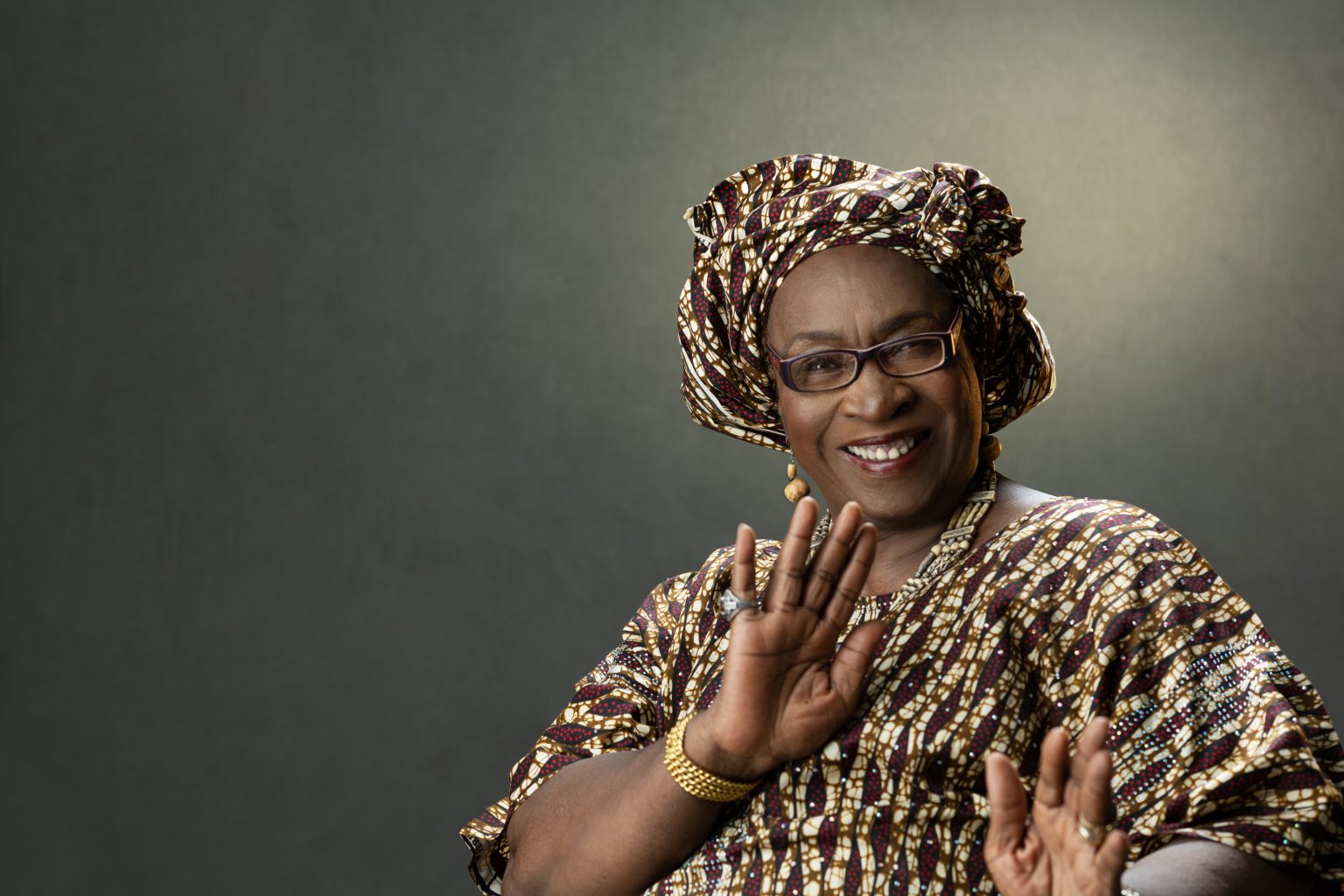
Museum holdings let claims about a designer be tested against specific evidence. “Bjay” supplies identifiable components, materials and construction features. The Brighton blouse supplies another textile treatment and a surviving business label. Published testimony explains how Thomas-Fahm understood comparison and adaptation. These sources do not answer every question about labour, wear or production. They do, however, provide a stronger foundation than an accumulation of priority claims. The same distinction between objects and their presentation underpins Omiren’s guide to reading collections and campaigns: a garment, its promotional account and its later interpretation are related sources, not interchangeable evidence.
Here, the object-led approach makes Thomas-Fahm’s work more specific. It reveals decisions about coordinated dressing, textile treatment, fastening and access to customers, rather than asking a single superlative to explain an entire career.
The Omiren Argument
Thomas-Fahm’s modernity did not depend on abandoning Nigerian garment forms. Her documented practice involved deciding what to retain, what to alter and how to organise production and retail around those choices.
“Bjay” makes continuity visible through its coordinated bùbá, wrapper, shawl and headwrap. Her wider practice supplies documented changes to fastening and preparation. The Brighton blouse connects textile treatment to a named Lagos business.
Together, these records place design in the relationship between cloth, dressing and commerce. The achievement is not adequately explained by saying that Thomas-Fahm mixed influences. It lies in the specific decisions that turned those relationships into clothes, and in the business structure that brought the clothes to customers.
Also Read:
- Kenneth Ize: The Man Who Made Aso-Oke a Global Conversation
- Lagos Fashion Designers Who Stay Are Not Compromising. They Are Winning.
- Trade Show Timeline: African Fashion at Global Markets, 1997–2026
- The Lagos Fashion Week Effect: What a Decade of Runway Has Actually Done for Nigerian Designer Revenue
Frequently Asked Questions
What is the “Bjay” ensemble?
It is a Nigerian ensemble by Shade Thomas-Fahm, dated by the V&A to the 1970s. It includes a bùbá blouse, ìró wrapper, ìpèlé shawl and gèlè headwrap in matching textile, catalogued as accession T.2438:1 to 4-2021. The designer gave it to the museum.
What is it made from?
The V&A records embroidered aṣọ-òkè of sányán and àlàárì type, incorporating cotton and Lurex. Its physical description identifies a bùbá of cotton woven with Lurex stripes and embroidered in two colours. The record does not give a complete account of seams, internal finishing or fastening construction.
Is the Brighton blouse part of “Bjay”?
No. It is a separate embroidered tie-dye bùbá labelled “Shade’s Boutique of Lagos,” purchased in Brighton and held by Brighton & Hove Museums. The museum article does not provide its exact production date, so the two objects should not share dates, materials or ownership history.
Did Thomas-Fahm make only bespoke clothing?
No. The V&A documents made-to-measure pieces and ready-to-wear lines sold through her boutiques and other retailers, including Kingsway Stores in Lagos. Individual garments still require their own production classifications: “Bjay” is classed as a unique production, while the Brighton blouse’s category is unspecified.