

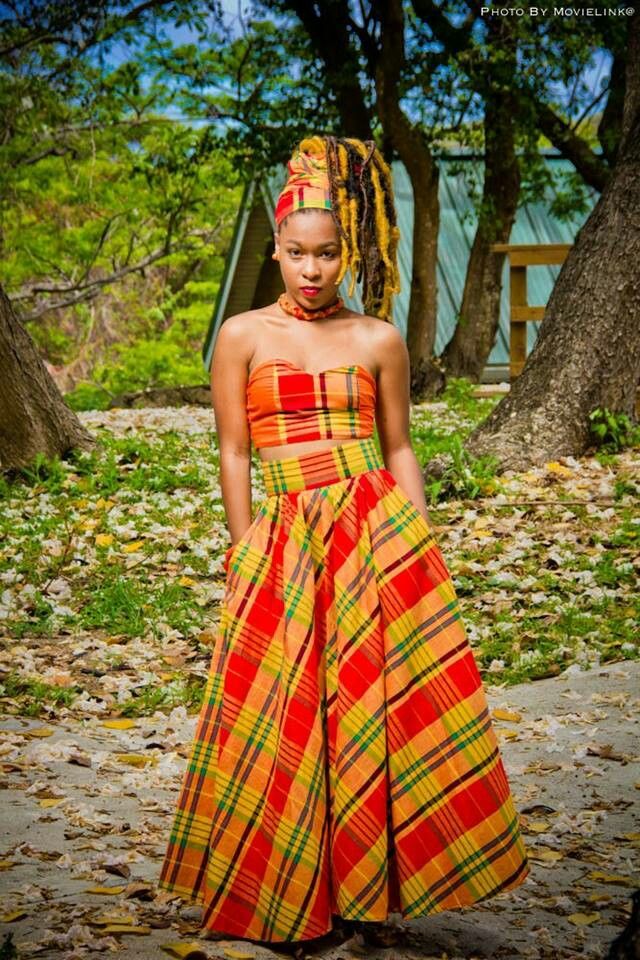
“Few fabrics are as deeply woven into the cultural identity of the Caribbean as madras.”
That is the assessment of Guyanese designer Sonia Noel, and it is accurate in two distinct senses. The first is literal: madras, a lightweight cotton or cotton-silk blend characterised by its check and plaid patterns, appears in the national dress of Saint Lucia, Dominica, Martinique, Guadeloupe and across the wider Caribbean from Jamaica to Grenada to the US Virgin Islands and Suriname. It is present at Jounen Kwéyòl celebrations in the French Antilles, at the Fêtes des Cuisinières in Guadeloupe, at Creole Heritage Month events in Saint Lucia and Dominica, in the Winti ceremonies of Suriname’s Maroon communities and in the quadrille dances of the US Virgin Islands. There is almost no significant Creole ceremonial occasion at which madras does not appear.
The second sense is more important. The cultural identity into which Madras is woven is not colonial. It is Creole. What Caribbean communities did with a textile that arrived through colonial trade routes is one of the most documented acts of material transformation in the history of dress: they took an imported cloth and built a complete system of social communication, ceremonial identity and cultural resistance out of it, without asking the colonial power’s permission to do so and often in direct defiance of laws designed to prevent exactly that kind of self-expression.
What began as a humble handwoven fabric from India, transported across oceans through the complex and often brutal realities of colonial trade and slavery, was ultimately transformed by the ingenuity and spirit of Caribbean people. They reclaimed it, infusing it with new meaning and turning it into an enduring symbol of heritage, defiance, and the vibrant tapestry of Caribbean identity.
As Omiren Styles has established in its analysis of how Caribbean women turned the Madras headwrap into a declaration, Madras arrived in the Caribbean as a colonial trade cloth, and what Caribbean women did with it is one of the most extraordinary acts of creative transformation in the history of dress. The number of points tied into the madras headwrap became a precise social code, readable by any woman who understood the system. Utility cloth became a language. That transformation did not happen by accident. It happened because the women who built it refused to let a colonial object stay colonial.
Caribbean Madras is not a colonial relic. It is a textile that Creole communities transformed, through wrapping codes, ceremonial dress, and cultural politics, into something entirely their own. This is the full history.
Origins: South India to the Caribbean Plantation Zone
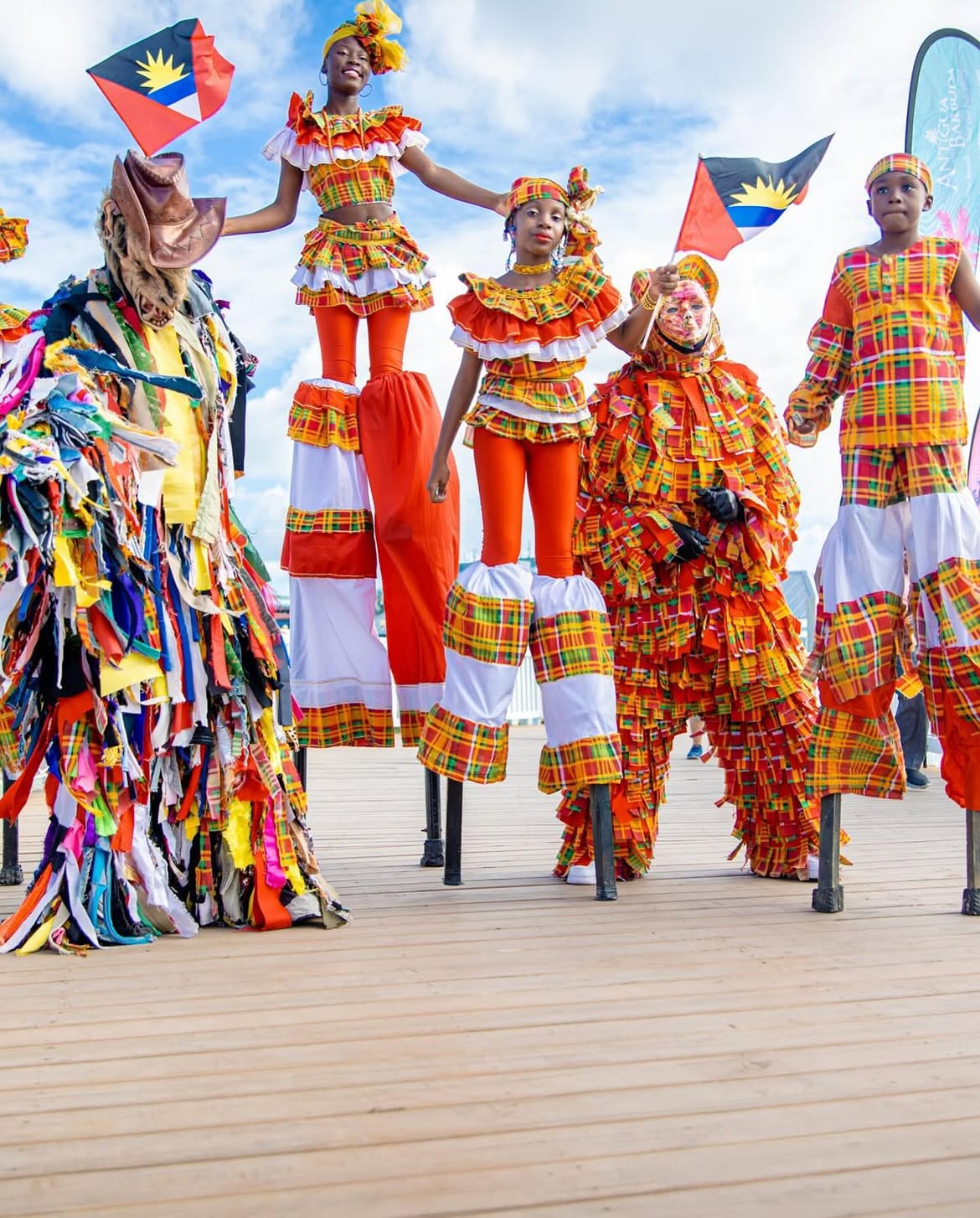
As the Connecting Threads research project has documented, led by faculty at the University of Edinburgh and George Mason University with the Victoria and Albert Museum as primary partner institution, Madras handkerchiefs were traded to and worn in different parts of the Caribbean. The research identifies extensive use of Madras textiles across Antigua and Barbuda, Cuba, Demerara, Dominica, Grenada, Guadeloupe, Haiti, Jamaica, Martinique, Montserrat, St. Kitts and Nevis, St. Vincent, Suriname, Trinidad and Tobago, and the Virgin Islands. The project specifically notes that the most extensive use occurred in areas that were part of what is referred to as the “plantation zone,” where populations of enslaved people were greatest in number.
The textile originates in South India, where skilled artisans have been hand-weaving lightweight cotton cloth with natural vegetable dyes for centuries. By the 17th century, it had become a significant export, traded globally through the networks that would eventually route it to the Caribbean via the French Compagnie des Indes and the British East India Company. In the 18th century, it initially gained popularity as handkerchiefs among European colonists in Martinique and Guadeloupe, a starting point in the social hierarchy that its subsequent transformation by enslaved and free Black communities would ultimately invert.
The Connecting Threads project, which held its founding symposium “Connecting Threads: Fashioning Madras in India and the Caribbean” at the Victoria and Albert Museum in October 2024, is dedicated to amplifying the contributions of Indian weavers and African Caribbean consumers to global histories of dress, shifting the narrative away from colonial and Western markets. The framing is precisely correct: both the South Indian weavers who made the cloth and the Caribbean communities who transformed it deserve credit for what madras became. The colonial trading companies that moved the cloth between them did not.
The Transformation: From Trade Cloth to Social Code
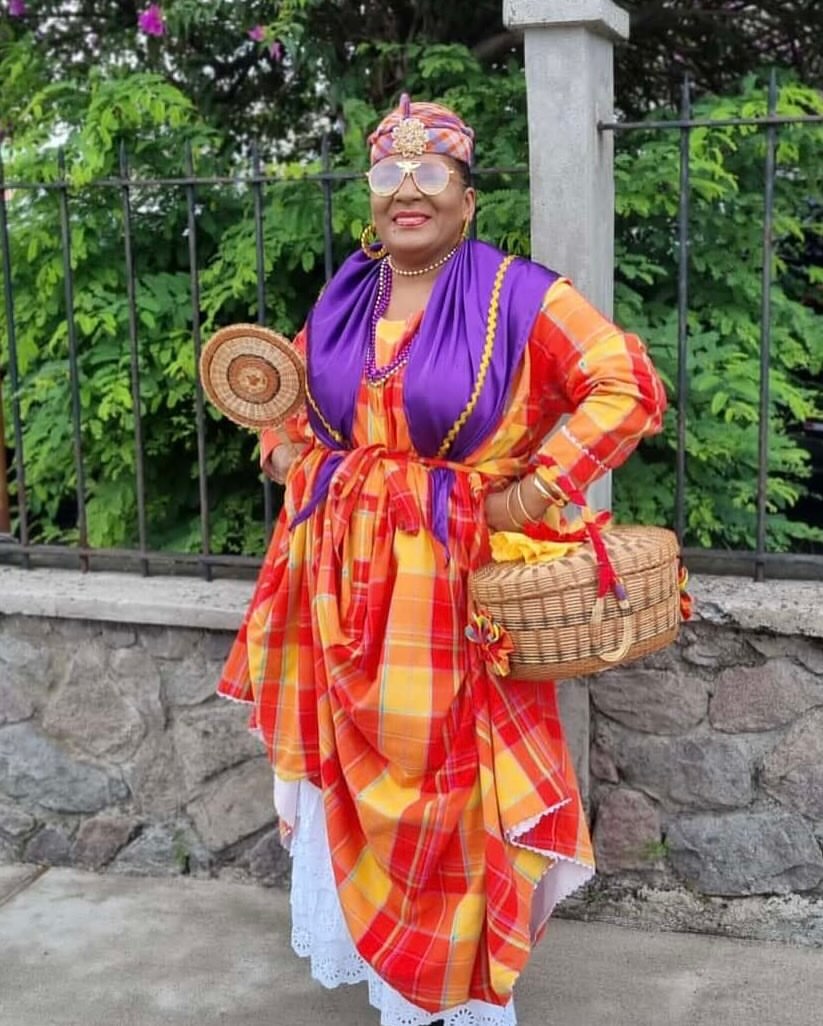
The transformation of madras from European-imported trade cloth into a Creole cultural system was not a gradual softening of colonial origin. It was, in significant part, an active political response to laws designed to control Black women’s dress and self-presentation in the French Caribbean colonies.
Colonial legislation in Martinique and Guadeloupe, intended to enforce visible distinctions between enslaved, free Black and white women through dress restrictions, created exactly the conditions in which the madras headwrap became a site of resistance. The response is now well documented: Caribbean women kept the headwrap and made it magnificent, working bright madras in reds, yellows and blues into elaborate wrapping techniques so individual and skilled that, as historian Carolyn Long noted, they enhanced the beauty of their wearers rather than diminishing them. The law intended a badge of dishonour. It received a fashion statement in return.
The maré tèt, which translates from Antillean Creole as “to tie the head,” became not just permitted dress but a site of active self-authorship. What developed across Martinique and the wider French Antilles was a precise communication system built into the wrapping technique itself. The number of points on the madras headwrap conveyed specific social information to anyone who understood the code: marital status, romantic availability, and social position. The specific fold, which edge faced outward, how many points were raised and how they were arranged: each element was legible within the community that had built the code and illegible to the colonial authorities who had tried to reduce the headwrap to a sign of subordination.
Patrick Chamoiseau’s novel Texaco (1998) captures the cultural weight of this practice, depicting vibrantly painted madras scarves in pre-abolition-era Martinique and describing how women’s hair and head coverings carried layers of meaning that external observers could not read. The novel is not a fashion document, but it reflects the depth of cultural knowledge embedded in what colonial observers saw as a piece of cloth.
The National Dress System: Saint Lucia, Dominica and the French Antilles
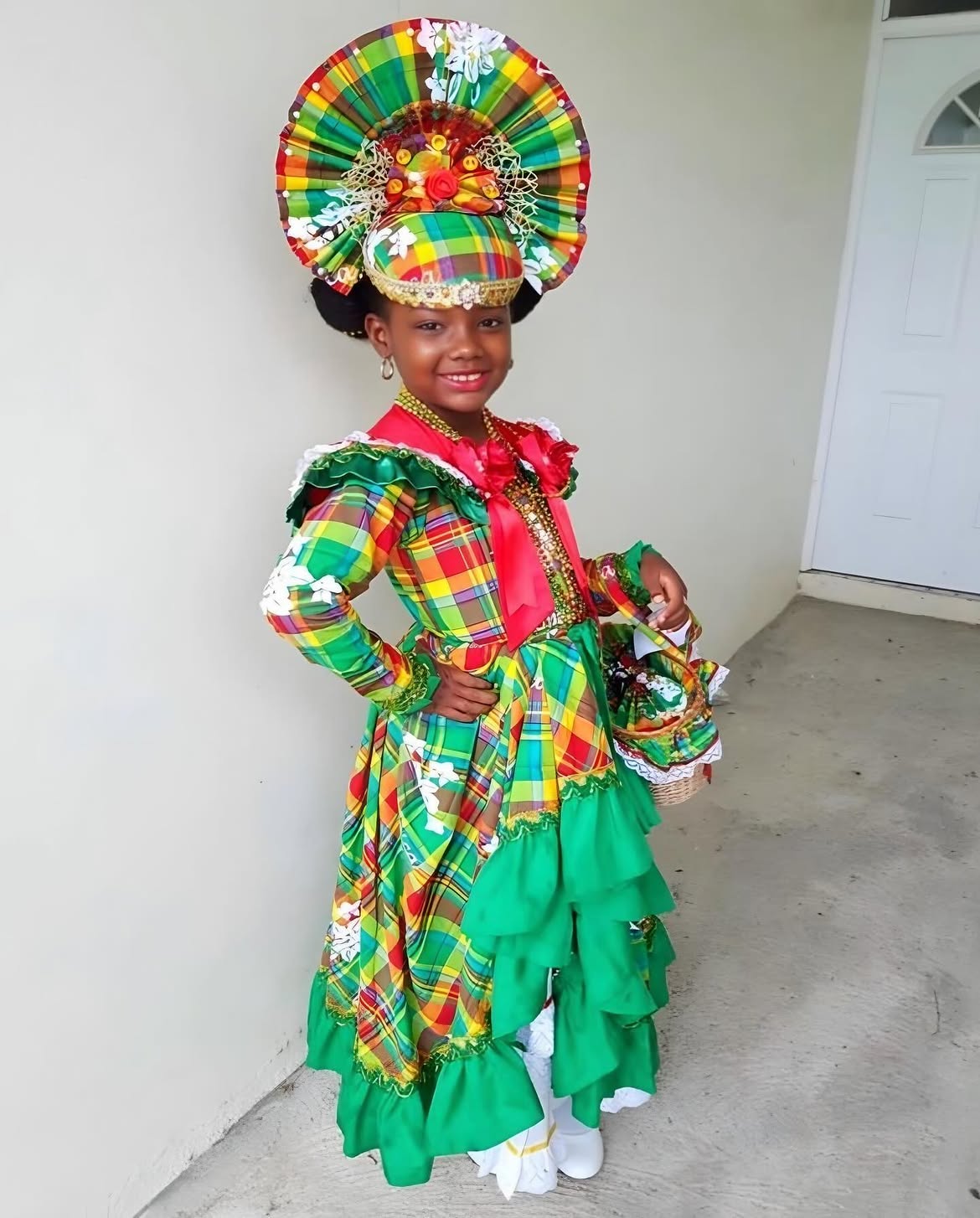
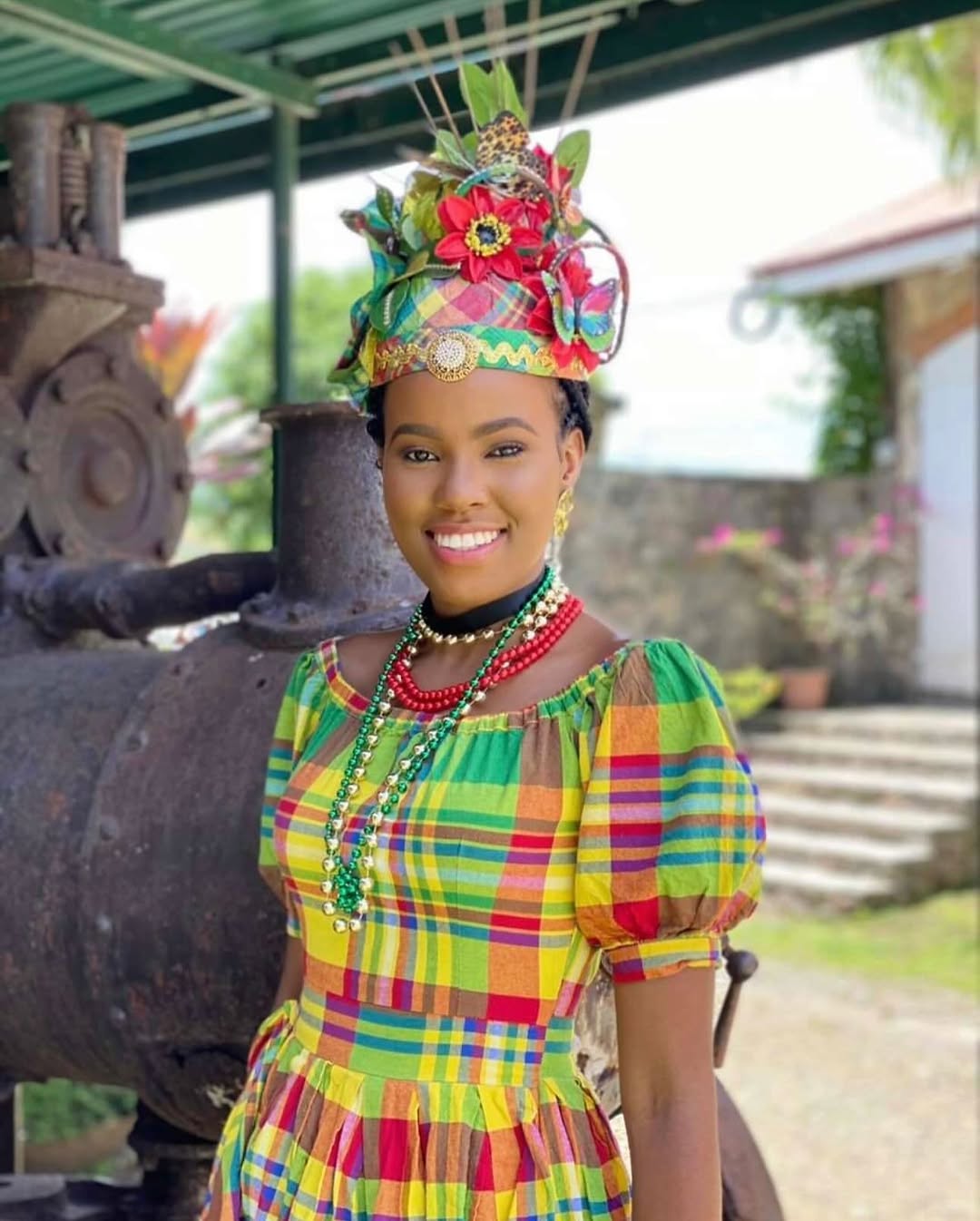
Madras does not appear at Caribbean ceremonial occasions as a decorative reference. In Saint Lucia, Dominica, Martinique and Guadeloupe, it is the substance of formal national dress, with specific garment structures, construction requirements, and occasions of use that constitute a complete dress system.
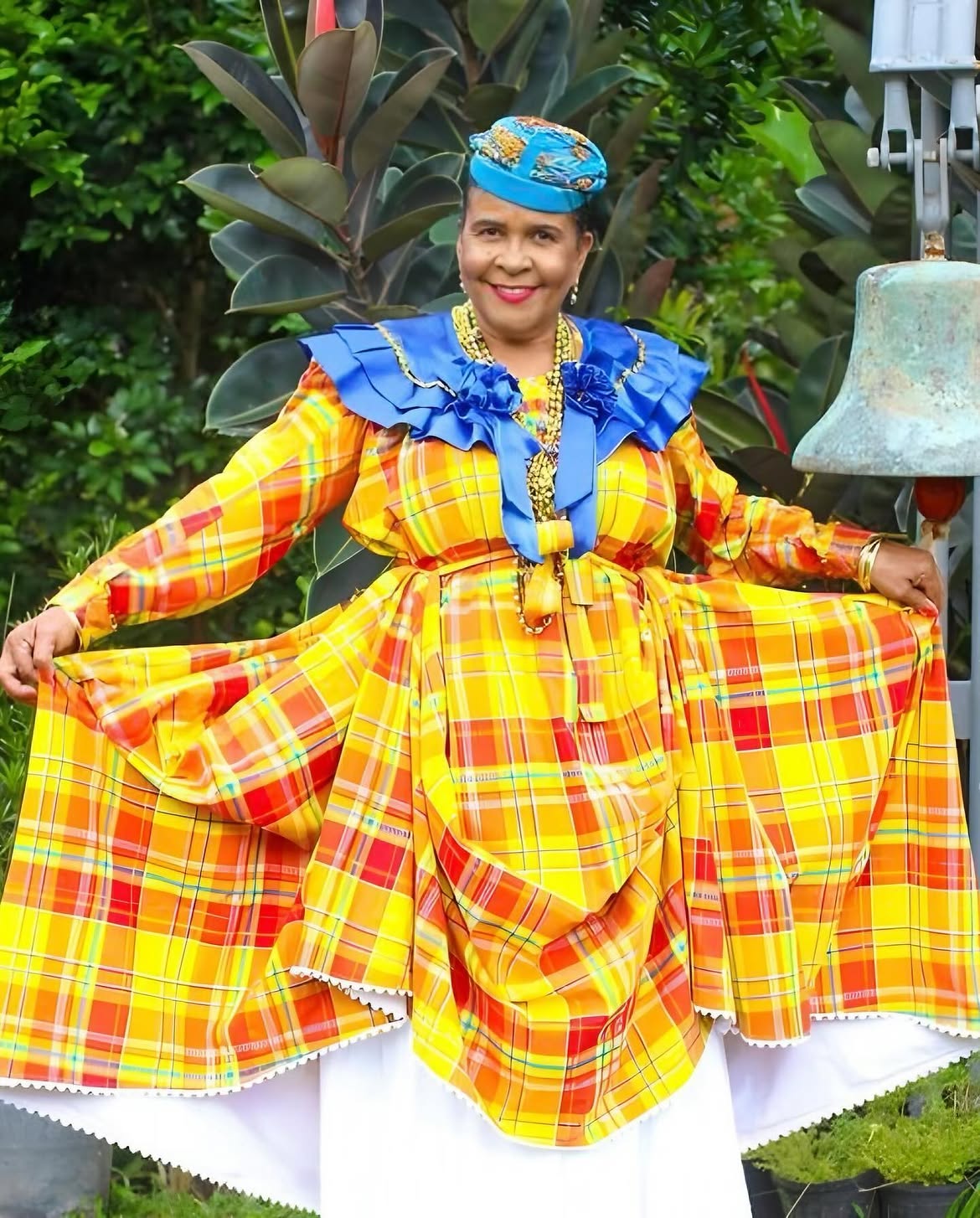
In Saint Lucia, as Caribbean Beat documented in its September/October 2026 issue, the national dress for women is a five-piece ensemble known as the jip or wob dwiyet in Kwéyòl. The ensemble consists of a white cotton or poplin short-sleeved blouse finished in Broderie Anglaise and red ribbons, a long skirt trimmed in lace and ribbons, a headdress of folded madras, and matching accessories. The form traces to the grande robe worn by early French women settlers, adapted to a tropical climate and to the specific conditions of life in a colony that changed hands between France and Britain twelve times in the 18th century. The result is not French dress or British dress. It is Saint Lucian Creole dress, assembled from colonial materials and transformed into something that belongs to the island.
In Dominica, the wob dwiyet is the national costume and symbol of the country, worn at independence celebrations, pageants and Creole Day events. In Guadeloupe, women wear madras at the Fêtes des Cuisinières, the annual celebration of women who cook the island’s traditional cuisine, where the dress itself signals membership in a community of practice that is both cultural and culinary. In Martinique, madras dress appears at Carnival and formal cultural events, in forms that continue to evolve while maintaining madras as the central material reference.
The US Virgin Islands established an official madras dress by law in 2021, after the St. Croix Heritage Dancers received a grant to create a specific madras for its quadrille dancers. The legislation formalises what the practice had already established through use: the madras as an official cultural and ceremonial material with a specific, protected form. The quadrille whose dancers now wear it traces its own origin to 18th-century France, another colonial form transformed by Caribbean practice into something Creole.
Suriname: The Pangi, the Koto Misi and the Maroon Tradition
Suriname presents the most complex case of Madras use in the Caribbean, because the textile operates within not one but two distinct cultural systems: the Maroon communities of the interior and the Creole communities of the coastal cities.
Among Maroon women, madras appears most prominently as the pangi, the iconic wrap skirt whose construction and use are specific to particular communities, ceremonies, and social contexts. The pangi is present at Winti ceremonies, the Afro-Surinamese religious practice whose material culture draws on the specific aesthetic traditions of the West African communities from which the Maroon peoples are descended. The madras pangi in a Winti ceremony is not a heritage costume. It is ceremonial dress with a specific spiritual function within a living religious practice.
In Paramaribo, the capital, Creole women fashion madras into the koto misi, a dress form specific to Surinamese Creole culture, and its appearance at festivals, family events, and ceremonies constitutes a parallel dress system to the wob dwiyet of the French Antilles. The koto misi and the wob dwiyet share the madras textile as their primary material, but they are distinct garments within different dress systems, each carrying different cultural codes. Both are Creole. Neither is colonial. Both are actively worn in 2026.
Contemporary Designers: Continuing the Practice
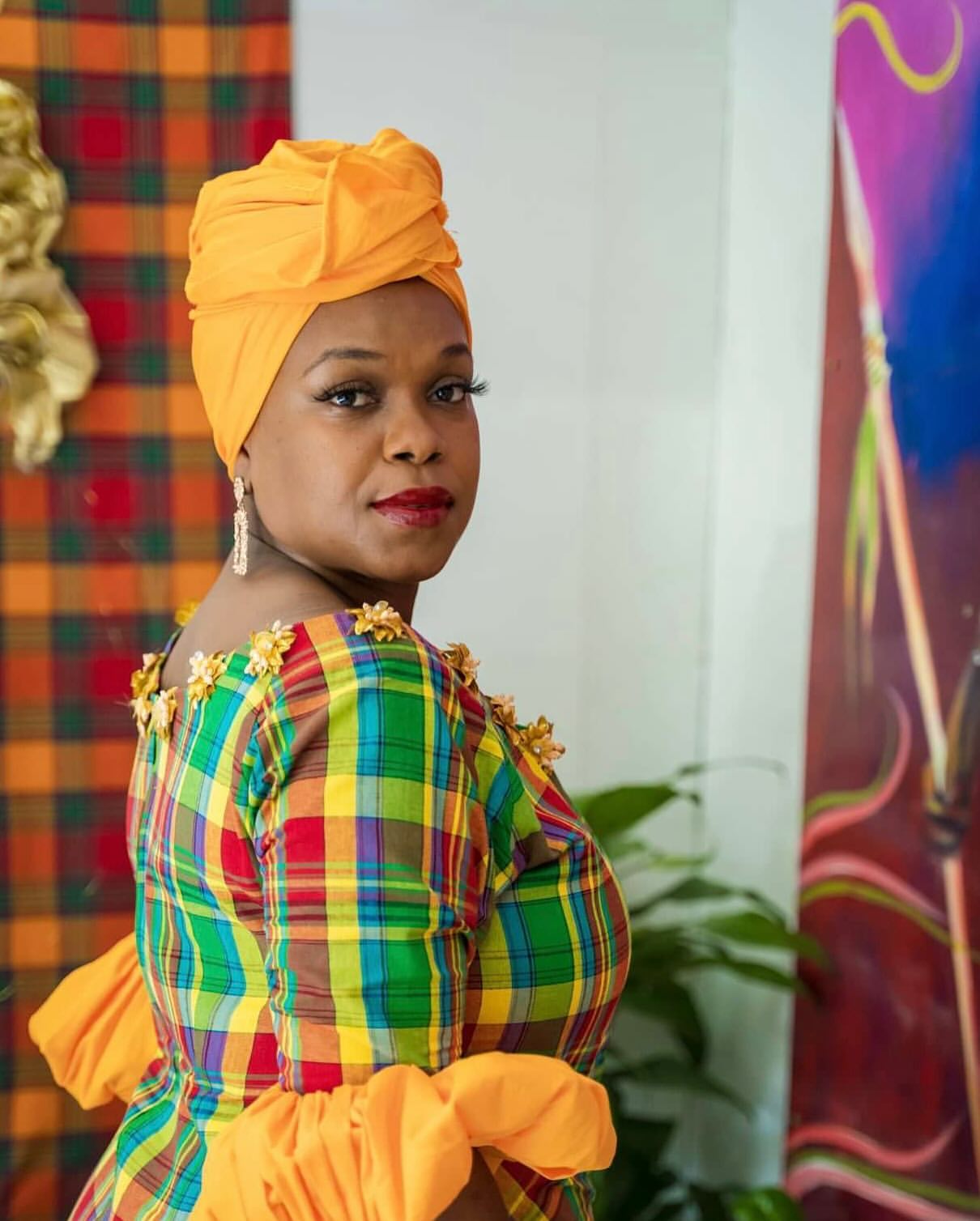
Contemporary fashion’s engagement with Caribbean Madras is not a revival. It is a continuation of a practice that did not stop, working through designers who understand the textile’s cultural specificity rather than treating it as an aesthetic reference.
Surinamese designer Jeranie Tam-Smit’s collection Kohesi x Icana, documented in Caribbean Beat’s September/October 2026 issue on Creole Heritage Month, demonstrates how contemporary Caribbean designers are working with madras within rather than around its cultural authority. The collection engages the fabric’s Surinamese Maroon and Creole associations while producing work that is recognisably contemporary in its silhouette and construction. The fabric’s history is present in the work. So is the designer’s own cultural position as a Surinamese practitioner who has the knowledge to work with that history accurately.
In the US Virgin Islands, Regal of Designs uses Caribbean Madras to express pride in Caribbean heritage through designs that reflect the specific cultural vocabulary of the USVI, including the quadrille dance tradition, for which the 2021 legislation established an official madras. The designer’s practice demonstrates the commercial and cultural dimension of contemporary madras work: a local market with specific ceremonial dress requirements, a designer whose work is embedded in that community, and a government institution whose legislative recognition of the textile creates conditions for sustained commercial practice.
The Connecting Threads project’s academic and institutional framework provides contemporary Caribbean designers with a research foundation that documents the textile’s full history across the Greater Caribbean region. The October 2024 V&A symposium brought together researchers, designers and artists to establish the historical record that allows contemporary engagement with madras to be grounded in documented cultural specificity rather than in generalised heritage aesthetics. That record is the precondition for work that engages the fabric seriously rather than decoratively.
As Omiren Styles has established in its analysis of Jamaican designers building a fashion identity on their own terms, Caribbean fashion design operates against the pressure of a global image that reduces island style to a narrow set of external expectations. The designers working with madras most seriously are those who refuse to reduce the fabric’s cultural authority to a visual reference available to anyone who finds the check pattern appealing. The madras worn at Jounen Kwéyòl in Saint Lucia is not a pattern. It is the wob dwiyet, a specific dress system assembled from specific garments for a specific ceremony, worn by people whose relationship to the textile’s history is lived rather than researched.
The Headwrap Code and What Fashion Has Not Read
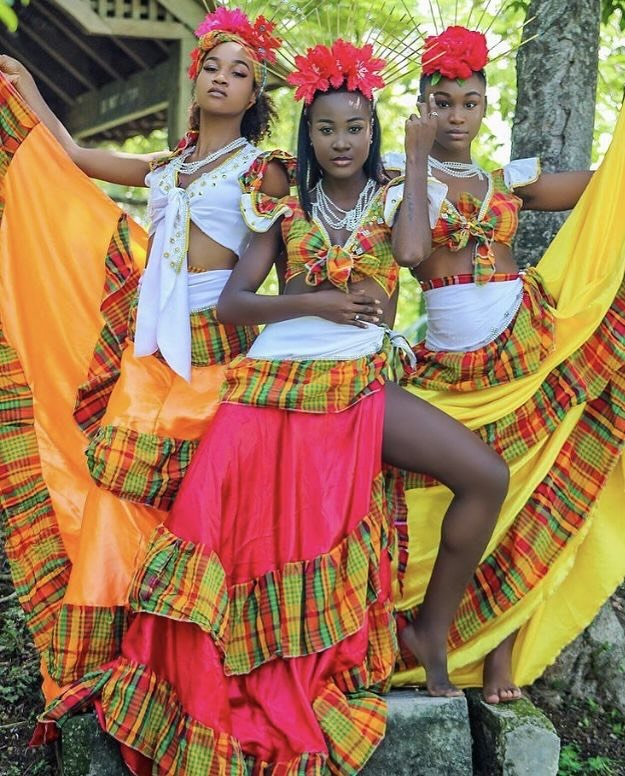
The maré tèt remains the element of Caribbean Madras dress that global fashion media has most thoroughly photographed and most completely failed to understand.
The image of a Caribbean woman in a madras headwrap is visually striking and globally recognised. It appears in tourism photography, cultural documentation, festival coverage, and increasingly in fashion editorial contexts, where Caribbean heritage dress is treated as a source of visual inspiration. What almost none of this coverage conveys is the communicative content of the headwrap: that the number of points, the specific folding technique, the arrangement of the fabric’s edges, and the colour combinations used were not aesthetic choices but social statements, readable by women who shared the code and meaningless to anyone who did not.
A one-point knot in the madras headwrap communicated one thing. A two-point knot communicated another. A four-point arrangement, sometimes described in Martinique as one point for each man in a woman’s life, conveyed something entirely different. The code was not written down. It was transmitted through community practice, observation, and the social occasions at which the wrapping was both performed and read. Fashion photography that presents the headwrap as a decorative element has extracted the image from this code without documenting it. The image travels. The meaning stays behind.
The parallel with the colour meanings in Zulu beadwork is precise. In both cases, a textile tradition that carries specific social codes within the community that developed it has been photographed and reproduced internationally in ways that capture the visual surface while discarding the communicative content. In both cases, the communities that built the code continue to use, teach, and maintain it, while the external representation reduces it to an aesthetic. Documentation at the level of cultural specificity that the practice deserves is the obligation of any publication that claims to cover Caribbean dress seriously.
The Omiren Argument
Caribbean Madras is not a colonial textile that Creole communities made their own. It is a Creole textile whose colonial origin was the raw material for one of the Caribbean’s most sophisticated acts of cultural self-authorship.
The women of Martinique and Guadeloupe who built the maré tèt code under legislation designed to reduce their self-expression built a social communication system precise enough to convey marital status, romantic availability and social position in the folds of a headwrap. The communities of Saint Lucia and Dominica, who built the wob dwiyet from French colonial dress forms, built a national dress system whose continued use at official state occasions is an assertion of Creole cultural authority rather than a colonial inheritance. The Maroon women of Suriname who wove madras into the pangi and into the Winti ceremony built a living religious dress practice that continues in 2026. The designers working with all these traditions in contemporary fashion are not creating something new from old material. They are continuing practices that were never interrupted.
The documentation that Caribbean Madras deserves names the specific dress systems, the specific communities, the specific ceremonial contexts and the specific designers who carry this practice forward. It does not treat the fabric as a visual reference available to any brand that finds the check pattern commercially appealing. It does not describe the headwrap code as a folk custom without explaining what the code communicates and who built it. And it does not describe contemporary designers working with madras as “drawing inspiration” from Caribbean heritage, because what those designers are doing is practising a tradition that belongs to their own communities and that fashion media has been looking at without reading for two hundred years.
As Omiren Styles has argued throughout this series, the Global South made fashion and never got credit. Caribbean Madras is one of the most complete available demonstrations of that argument: a textile whose transformation from colonial trade cloth to Creole cultural system was accomplished entirely by the communities that colonial trade brought it to, producing a dress culture of sophistication, durability and social depth that the colonial enterprise never created and could not have created. The credit belongs to the communities that built it. The documentation of what they built is overdue.
ALSO READ
- The Madras Headwrap: How Caribbean Women Turned a Colonial Textile into a Declaration
- Jamaican Designers Building a Fashion Identity on Their Own Terms
- Kingston Dresses for Work Every Day. Global Fashion Barely Sees It.
- Beadwork as Record: Why Zulu Colour Meanings Cannot Be Reduced to a Universal Code
- Caribbean Fashion Policy Is Growing. Its Results Need to Be Measured.
Frequently Asked Questions
What is Caribbean Madras, and where does it come from?
Caribbean Madras is a lightweight cotton or cotton-silk blend textile characterised by check and plaid patterns, typically featuring white, red and pink combinations. Its material originates in South India, where skilled artisans have hand-woven it using natural vegetable dyes for centuries. As the Connecting Threads research project documents, the textile was traded to the Caribbean in the 18th century by the French Compagnie des Indes and the British East India Company, where it initially gained popularity among European colonists before being transformed by enslaved and free Black communities into a Creole cultural system. It now forms part of the national dress of Saint Lucia, Dominica, Martinique, Guadeloupe, and is present in ceremonial dress across Jamaica, Grenada, Suriname and the US Virgin Islands.
What is the maré tèt, and what did the points of a madras headwrap communicate?
As Omiren Styles has documented in its analysis of the Madras headwrap as a declaration, the maré tèt, which translates from Antillean Creole as “to tie the head,” was a social communication system built into the folding and knotting techniques of the Madras headwrap. The number of points tied into the fabric conveyed specific information: one point, two points, four points each communicated something different about the wearer’s social position, marital status or romantic availability. The code was legible to women who shared the tradition and was created in direct response to colonial legislation that sought to reduce the headwrap to a mark of subordination. The women who built the code turned a colonial restriction into a communication system more sophisticated than the law that sought to constrain them.
What is the wob dwiyet and how does it relate to Madras?
The wob dwiyet is the Creole national dress of Saint Lucia and Dominica. In Saint Lucia, where it is also known as the jip, it is a five-piece ensemble consisting of a white cotton or poplin blouse finished in Broderie Anglaise and red ribbons, a long madras-trimmed skirt, a madras headdress, and matching accessories. The form traces to the grande robe of early French women settlers, adapted across centuries of Creole dress practice into a specifically Saint Lucian form. It is worn at Jounen Kwéyòl, Independence Day and significant cultural occasions. In Dominica, the wob dwiyet is the national costume worn at independence celebrations and pageants. In both cases, the dress is not a colonial inheritance preserved unchanged. It is a Creole dress system built from colonial materials over centuries of adaptation, use and community maintenance.
How is Madras used in Suriname?
In Suriname, Caribbean Madras operates within two distinct cultural systems. Among the Maroon communities of the interior, it appears as the pangi, the iconic wrap skirt worn at significant cultural and ceremonial occasions, including Winti religious ceremonies, where it functions as ceremonial dress within a living spiritual practice. Among the Creole communities of Paramaribo, women fashion it into the koto misi, a specific dress form associated with festive occasions and celebrations, including Keti Koti, the Slavery Abolition Day. Both systems are specific to their communities, carry their own rules about construction, occasion and meaning, and are actively maintained in 2026. Both demonstrate that Caribbean Madras has been transformed into distinct material practices by the different communities that have shaped it.
Who are the contemporary Caribbean designers working with Madras?
As Caribbean Beat documented in its September/October 2026 issue, Surinamese designer Jeranie Tam-Smit’s collection Kohesi x Icana engages madras within its Surinamese Maroon and Creole cultural context, producing contemporary work grounded in specific community knowledge rather than generalised heritage aesthetics. In the US Virgin Islands, Regal of Designs uses Caribbean Madras to express cultural heritage within the specific ceremonial context of the USVI, including the quadrille tradition for which the US Virgin Islands established an official madras dress by law in 2021. Guyanese designer Sonia Noel has described madras as one of the fabrics that is deeply woven into the cultural identity of the Caribbean. Contemporary designers working with madras most seriously are those who engage the fabric’s specific cultural authority rather than treating its check pattern as available aesthetic material.
EXPLORE MORE
Read the full Heritage and Culture sections at Omiren Styles for ongoing documentation of Caribbean dress traditions, Creole material culture and the communities that sustain them. Discover travel and heritage insights across Martinique, Guadeloupe, Saint Lucia, Dominica, Suriname, and the wider Caribbean with Rex Clarke Adventures.
