Abiola Olusola grew up in Ibadan in the 1990s, a city she describes as quiet, family-oriented, and idyllic in a way that no longer exists. She moved to Lagos at fourteen when her father relocated for work. She studied English Literature and Philosophy at university in Nigeria, then, in 2012, moved to Paris to pursue a second degree, a BFA in Fashion Design at Istituto Marangoni. She interned at Givenchy menswear and worked at the Lanvin showroom. She worked backstage at Paris Fashion Week for different brands. In 2016, she moved back to Nigeria, got married, and in 2017 launched her eponymous label in Lagos. Every piece the brand produces is made in Nigeria, in close collaboration with local artisans and textile specialists. The brand has been featured in Vogue, CNN, and Elle UK. It has been shown at Lagos Fashion Week, Portugal Fashion Week, and the Tranoi showroom in Paris. It has held pop-ups at Selfridges and Moda Operandi.
The trajectory that sentence describes is not complicated. A designer who had access to Paris, who worked at two of France’s most established fashion houses, who understood exactly what the European fashion industry looked like from the inside, came home and built from home. The brand that resulted from that decision has reached every platform the European fashion industry uses to validate emerging talent. It reached them from Lagos. That is the argument Abiola Olusola’s career makes, and it is a more significant argument than most of the press coverage has acknowledged.
Abiola Olusola studied in Paris, interned at Givenchy and Lanvin, and came home to Lagos to build a brand that reached Selfridges without leaving Nigeria. Here is how she did it.
Abiola Olusola’s Path and What the Ibadan Years Built
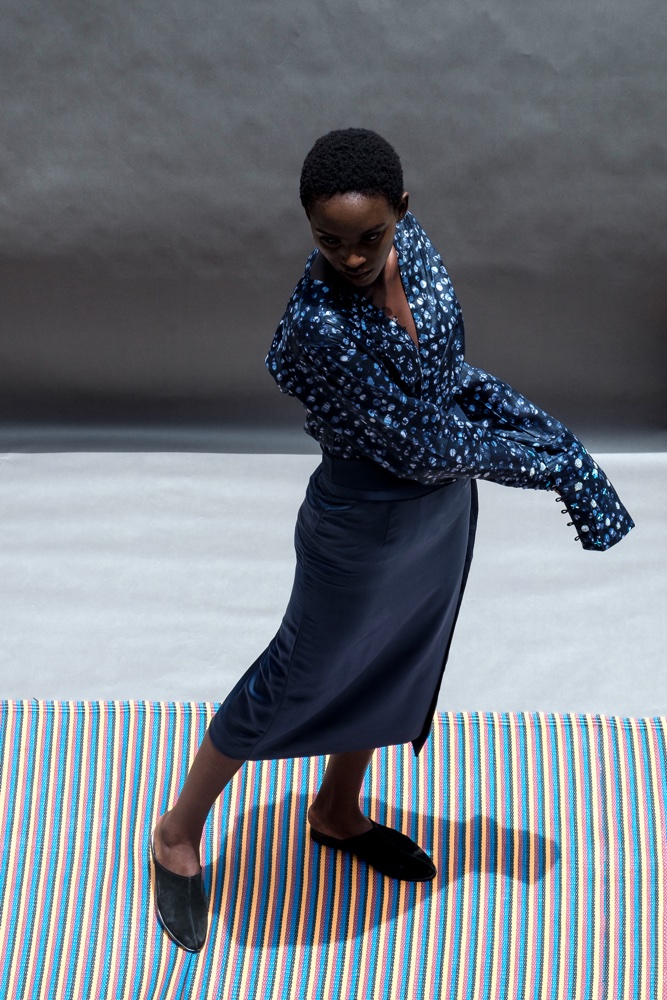
Olusola’s upbringing in Ibadan is not an incidental detail in the brand’s story. It is the source of the aesthetic in the Conservative Christian household. A strong sense of right and wrong was instilled early. A city whose pace, she has said, was completely different to today. The minimalism that defines her design language did not come from Paris. It was already present before Paris refined it. In her own account of the brand’s origin, the Istituto Marangoni BFA and the Paris internships gave her the technical vocabulary and the point of view to formalise something she already understood. When she chose a photographer for her debut collection, she looked for one with an aesthetic similar to what she liked. She found Kadara, more of an artist than a photographer, and the resulting shoot made the collection stand out. That early decision, to trust her own aesthetic register rather than default to a more internationally familiar visual language, runs through every decision the brand has made since.
Born and raised in Ibadan by Yoruba parents from Ibadan. English Literature and Philosophy as a first degree. These are not the credentials the international fashion press typically foregrounds in profiles of African designers. They are, however, the credentials that explain why the brand’s engagement with Yoruba cultural heritage is precise rather than decorative. The àṣà, the culture that Olusola builds into every collection, is not research conducted from outside the tradition. It is the tradition she grew up with, filtered through an architectural design sensibility developed at Istituto Marangoni and sharpened by exposure to how Lanvin and Givenchy thought about luxury.
The Design Practice: What Every Piece Is Built From
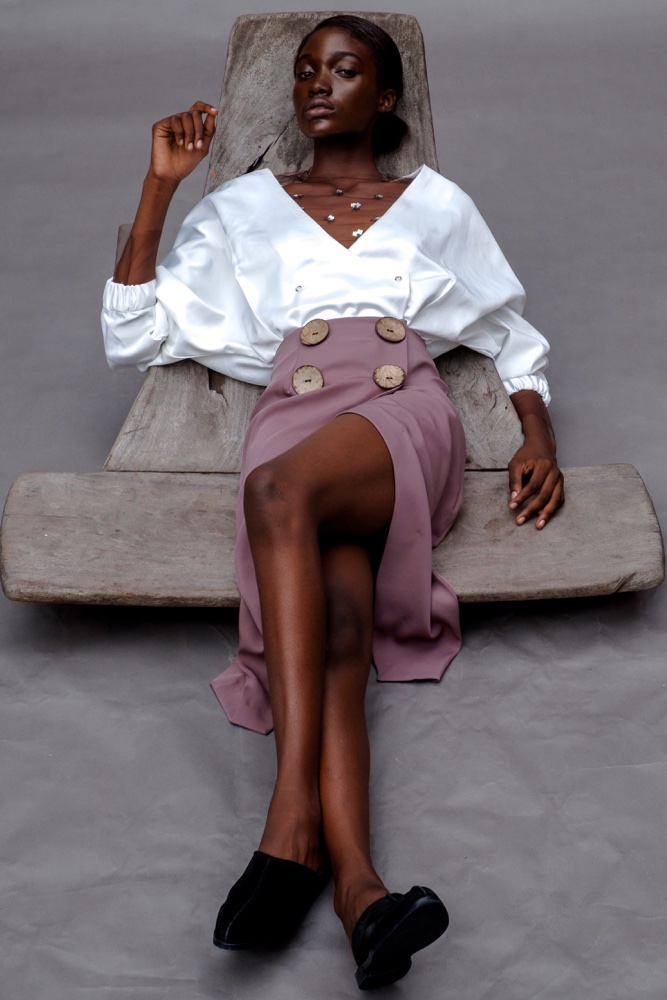
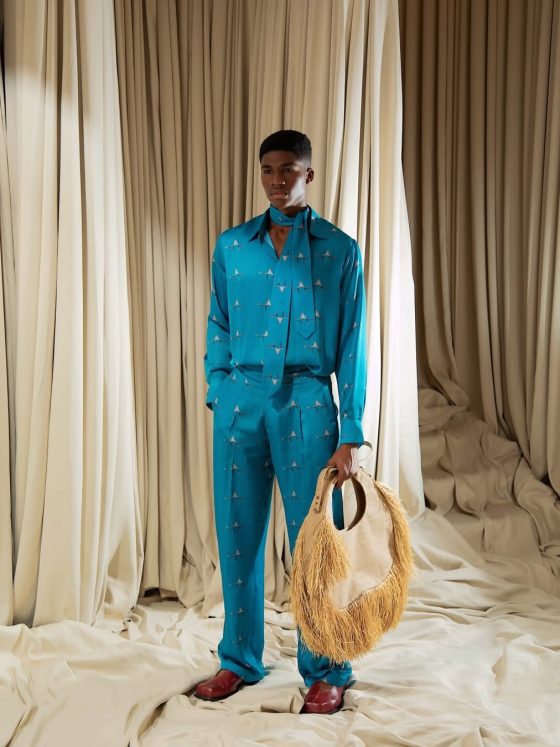
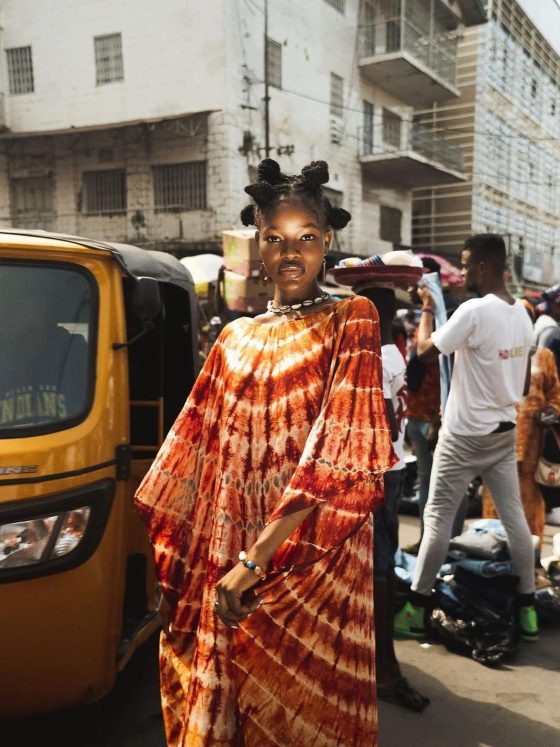
The brand’s aesthetic position is what Olusola calls elegant minimalism: clean silhouettes, architectural tailoring, natural materials such as cotton and linen, and subtle nods to Yoruba ceremonial dress codes and textile practices. The nods are not illustrative. They are structural. Tie-dye, batik, and stamping prints that reference specific Nigerian craft traditions appear in the collections as primary design elements rather than as surface decoration applied to an otherwise European silhouette. The Vlisco collaboration, the fabric giant whose printed wax cloths circulate through West African dress culture in complex ways that Omiren Styles has documented, placed Olusola’s hand alongside one of the most historically significant material relationships in Nigerian fashion. The Alara Emerge Fashion Fund finalist selection confirmed her position within the Lagos luxury retail ecosystem anchored by Alara.
Every garment is made in Nigeria. This is not a sustainability statement or a marketing claim. It is an operational commitment that shapes the entire supply chain: the artisans and textile specialists who produce each piece, the quality control process that runs from fabric to finished product, and the production volume that slow and deliberate handwork permits. Olusola has spoken honestly about the early years of the brand, including the operational difficulties: she had children while launching the label, took extended breaks, and managed inconsistent operations at the beginning. That candour is not a weakness in the brand’s story. It is what makes the subsequent international reach credible. This was not an overnight success. It was built through consistent output over eight years from a Lagos base that never moved.
From Lagos to Tranoi: The Pathway to International Buyers
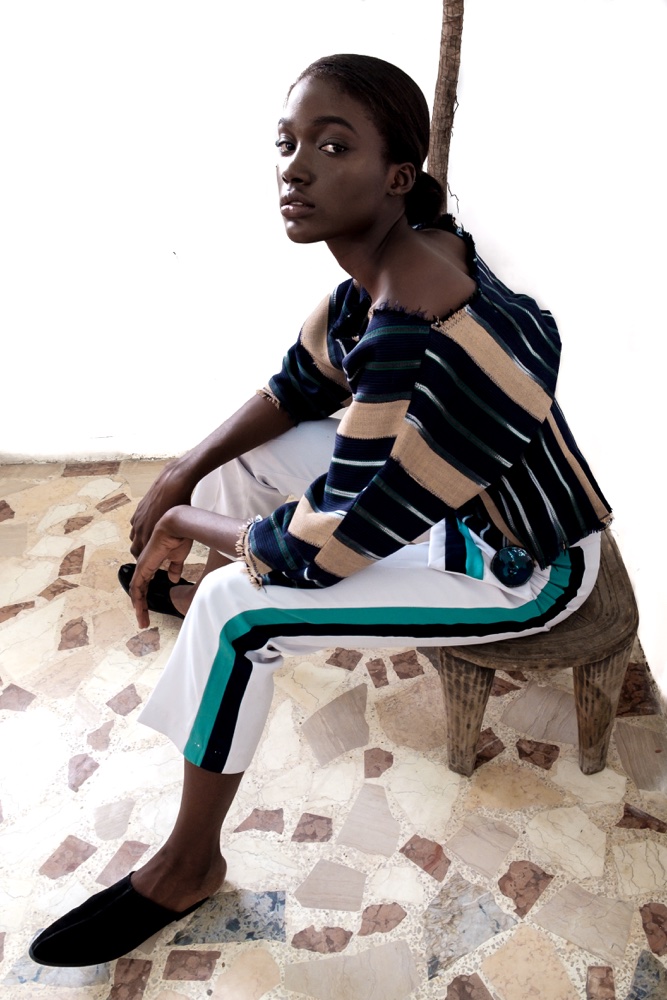
The Tranoi appearance in February 2024 at Palais Brongniart in Paris was the clearest single demonstration of where the brand had reached by the time it entered the international buyer circuit. FashionNetwork reported that 92% of exhibitors were from outside France, with Abiola Olusola specifically named as a Nigerian slow-fashion brand whose collections are produced in Lagos. The framing matters. Not a Lagos brand that had relocated to Paris. Not a Nigerian designer showing through a diaspora intermediary. A brand produced in Lagos, presented in Paris, received by international buyers on the terms on which it had always operated.
The Afreximbank CANEX programme, which has supported African designers at Tranoi, as documented in Omiren Styles’ Paris Fashion Week cost analysis, provided the institutional infrastructure that made the Tranoi appearance economically viable. The Portugal Fashion Week showing, which sits within Afreximbank’s Portugal Fashion Week partnership framework, was a second European platform reached without the brand incurring the full structural cost differential that European market access typically requires of African designers. The Selfridges pop-up and Moda Operandi presence followed from this accumulated international visibility. Neither of those retail relationships would have been available to the brand in 2017. They are available now because the brand spent eight years building the product and the identity that those retailers can stand behind.
The brand’s debut collection in 2017 was carried immediately by Temple Muse, the Lagos luxury retailer that anchors the city’s high-end fashion retail ecosystem. Guardian Life’s One to Watch designation in 2018 followed. The GTB Fashion Weekend SS19 show and the Fashion’s Finest Africa Designer of the Year nomination in 2019 came next. The international platforms arrived after domestic credibility had already been established. That sequence, domestic first, international second, is the strategic logic that Omiren Styles identified in its scaling analysis as the path most likely to produce durable commercial outcomes for African fashion brands.
The pressure to relocate to be taken seriously is the tax African designers pay for building in cities that the industry has yet to learn to respect. Olusola refused to pay it
Also Read:
- Kenneth Ize and the Aso-Oke Question: What It Means to Build a Luxury Brand on a Handwoven Cloth
- The Real Cost of Showing at Paris Fashion Week for an African Designer
- What African Fashion Brands Get Wrong About Scaling — and the Three That Got It Right
- Bubu Ogisi of IAMISIGO: The Designer Who Refuses to Make African Fashion Legible to the West
What Staying Rooted Actually Requires
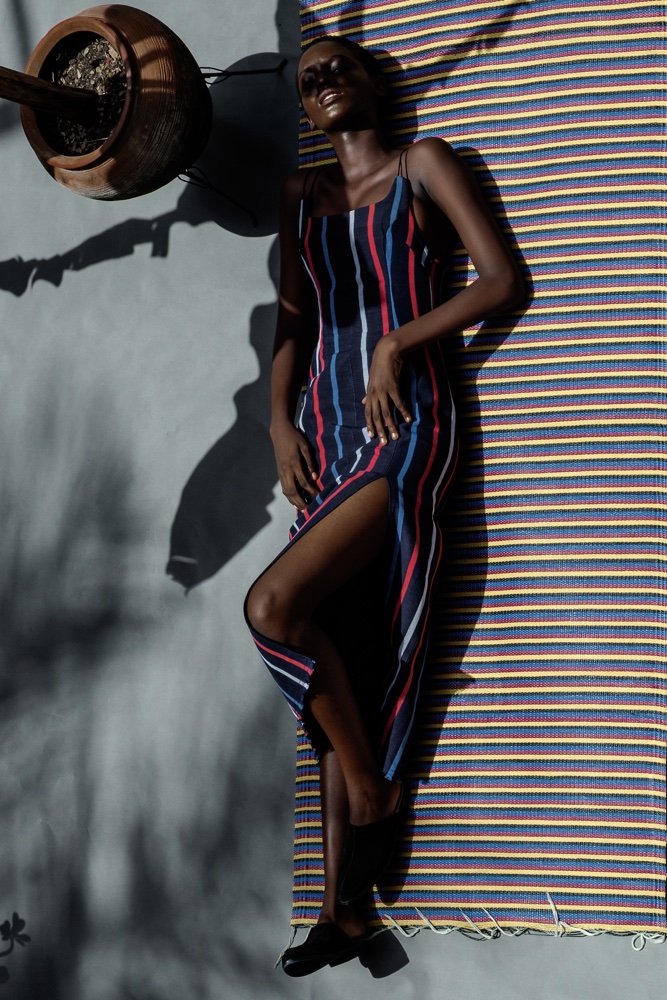
Staying in Lagos and building for an international market from there requires solving the same structural problems that affect every African brand reaching outward: logistics costs, limited access to institutional capital, press relationships that require physical presence in cities where the designer is not based, and buyer relationships that require a consistent supply of a product made by hand in limited volumes. Olusola solved each of these sequentially rather than simultaneously, which is the reason the brand is still here and operating at this level eight years later.
The slow production model is both a sustainability commitment and a practical response to working with artisan makers whose craft cannot be accelerated beyond a certain pace without compromising the quality that justifies luxury pricing. Olusola’s emphasis on waste management and conscious production is not performative. A brand operating at limited volume, using natural materials and handwork, has structural reasons to minimise waste that an industrially produced brand does not. The sustainability position emerged from the production model, not the other way around.
The personality Olusola describes for herself, calm, low energy, not the most visible entrepreneur, has shaped a brand identity that communicates through the garment rather than through the founder’s public presence. This is not common in Lagos’s fashion ecosystem, which tends to reward loud self-promotion. It is the correct approach for a brand whose value proposition is quite strong and whose architectural precision is central, and it is part of why the Selfridges pop-up and the Tranoi showing landed: the brand’s presentation matched its identity, and that identity had been consistent since 2017.
The Omiren Argument
Abiola Olusola’s career is the most direct available answer to the question of whether an African luxury womenswear brand can reach Selfridges, Tranoi, Moda Operandi, and Portugal Fashion Week without relocating from its home city. The answer is yes, under specific conditions: consistent production quality over multiple years, a domestic retail base that establishes credibility before international pursuit, institutional support that absorbs the structural cost of European market access, and a brand identity coherent enough that every platform the brand reaches confirms rather than dilutes what the brand is. Olusola has met all four conditions. The brand that resulted is one of the most precisely positioned in the Lagos fashion ecosystem, and it got there without asking Lagos to become something it is not.
The broader argument is about what the industry loses when it tells African designers that relevance requires relocation. It loses the cultural specificity that makes their work worth covering, buying, and wearing. A brand built in Ibadan and refined in Lagos carries something that a brand built in Paris cannot carry to reach Paris. The Yoruba heritage that runs through Olusola’s collections is not a design element sourced from outside the designer’s life. It is the designer’s life, made wearable with a precision that only comes from building in the place where the culture is from. The international market that has learned to recognise that is the market the brand now serves. The labels that reach it are those that did not compromise their origin in pursuit of the destination.
Frequently Asked Questions
Who is Abiola Olusola, and what is the brand known for?
Abiola Olusola is a Nigerian designer born and raised in Ibadan by Yoruba parents. She studied English Literature and Philosophy at university in Nigeria before completing a BFA in Fashion Design at Istituto Marangoni Paris in 2015, where she interned at Givenchy menswear and the Lanvin showroom. She returned to Nigeria in 2016 and launched her eponymous label in Lagos in 2017. The brand is known for elegant minimalism, architectural tailoring, natural materials, and Yoruba cultural heritage integrated through tie-dye, batik, and stamping prints. Every piece is made in Nigeria in collaboration with local artisans.
What international platforms has Abiola Olusola reached?
Abiola Olusola has shown at Lagos Fashion Week, Portugal Fashion Week, and the Tranoi showroom at Palais Brongniart in Paris during Fashion Week. The brand has held pop-ups at Selfridges in the UK and Moda Operandi. It has been featured in Vogue, CNN, and Elle UK. Earlier recognition includes Guardian Life’s One to Watch in 2018, Temple Muse carrying the debut collection, a Vlisco collaboration, a finalist selection for the Alara Emerge Fashion Fund, and a Fashion’s Finest Africa Designer of the Year nomination in 2019.
How did Abiola Olusola reach international buyers while remaining based in Lagos?
Olusola built domestic market credibility first, with Temple Muse in Lagos carrying the debut collection and Guardian Life recognition establishing the brand within the Lagos fashion ecosystem. International platforms, including Portugal Fashion Week and Trano, were reached in part through the Afreximbank CANEX programme, which provides institutional support to cover the structural cost differential of European market access for African designers: the Selfridges and Moda Operandi relationships followed from the accumulated international visibility built across those platforms. Domestic credibility before international pursuit is the sequence the brand followed.
What is the brand’s design philosophy, and how does it connect to Yoruba heritage?
The brand centres on elegant minimalism, refined femininity, and what Olusola calls cultural consciousness. The àṣà, the Yoruba word for culture, is embedded structurally in the collections through tie-dye, batik, and stamping prints that reference specific Nigerian craft traditions, and through subtle nods to Yoruba ceremonial dress codes. The heritage is not used as a surface decoration on European silhouettes. It is integrated into the garment’s construction and material logic. The connection to Yoruba culture comes from Olusola growing up inside that tradition in Ibadan, not from external research.
What does Abiola Olusola’s career demonstrate for African fashion brands building for international markets?
Olusola’s trajectory demonstrates that building domestic market credibility before pursuing international validation is the most durable sequencing for an African luxury brand. It demonstrates that institutional support, such as the Afreximbank CANEX programme, can make European market access economically viable without requiring the brand to bear the full structural cost differential on its own. It demonstrates that a brand identity built on specific cultural heritage, maintained consistently from launch to international recognition, is more commercially durable than one adapted to meet perceived Western market expectations. And it demonstrates that staying in Lagos is not a limitation on international reach.
Explore More
Read the full Designers archive for profiles of designers building African fashion’s next chapter from the inside, on foundations that the international industry is only beginning to account for properly.