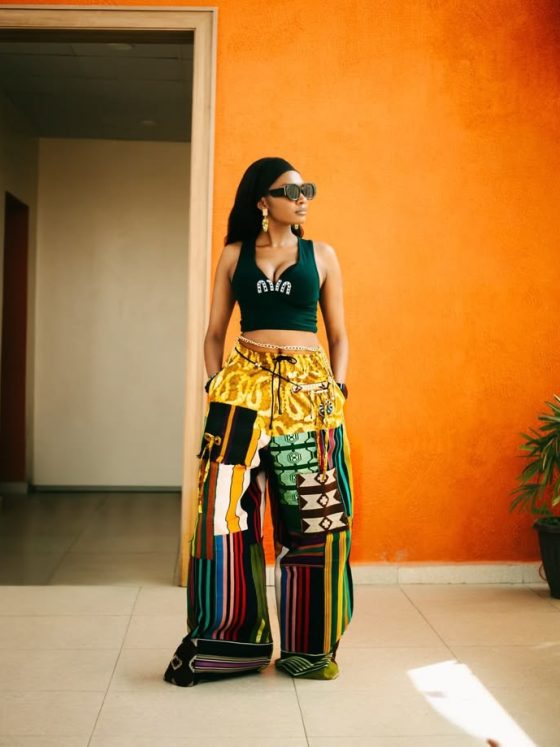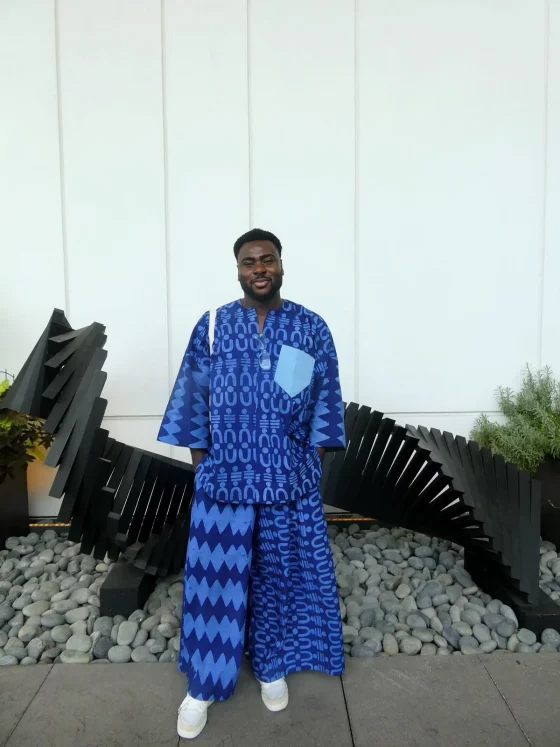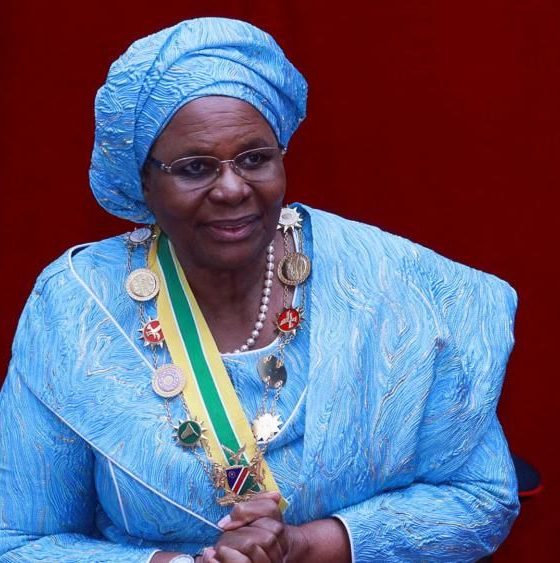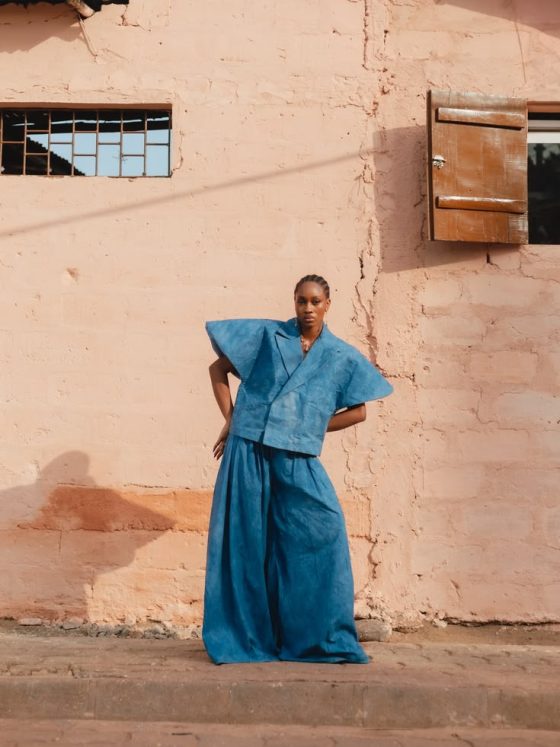
She walks into the room, and the fabric speaks before she does. The wax print she has chosen is not decoration. It is a position. It is lineage. Among the Baoulé women of Côte d’Ivoire, the way a woman drapes, wraps, or tailors her pagne carries the full weight of who she is, where she is from, and what she is walking into.
The Baoulé are an Akan people of central Côte d’Ivoire, constituting approximately 23 per cent of the country’s population. Their founding story centres on Queen Abla Pokou, who led her people westward from the Ashanti Kingdom in the 18th century, sacrificing her only son to the Comoé River to secure a safe crossing. The word ‘baoulé’, meaning ‘the little one dies’, honours that sacrifice and defines the culture’s governing principle: what is preserved must be earned. That ethic lives in how Baoulé women dress.
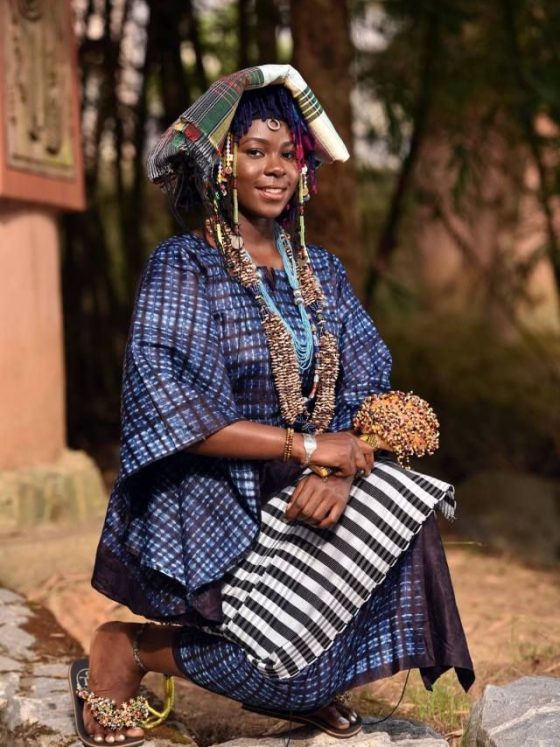
The pagne Baoulé is not a generic printed cloth. It is a textile tradition with specific ancestral roots: strip-woven cotton with geometric indigo-resist patterns, more than 20 named traditional designs, and colour systems that carry direct social meaning. Indigo blue communicates spirituality and calm. Earth tones declare a connection to the land. White signals purity. Red carries the authority of political power. When Baoulé women select a wax print in 2026, even a contemporary Uniwax print produced in Abidjan’s Yopougon industrial zone, they are working within a colour and pattern grammar that predates the industrial production of the cloth itself.
Explore the Omiren Selection: Some links in this article are affiliate links. Omiren Styles may earn a small commission at no extra cost to you.
Discover the top 5 wax print styles Baoulé women will be wearing in 2026, from the grand pagne wrapper to fitted kita blouse sets rooted in Ivorian cultural authority.
The Omiren Argument
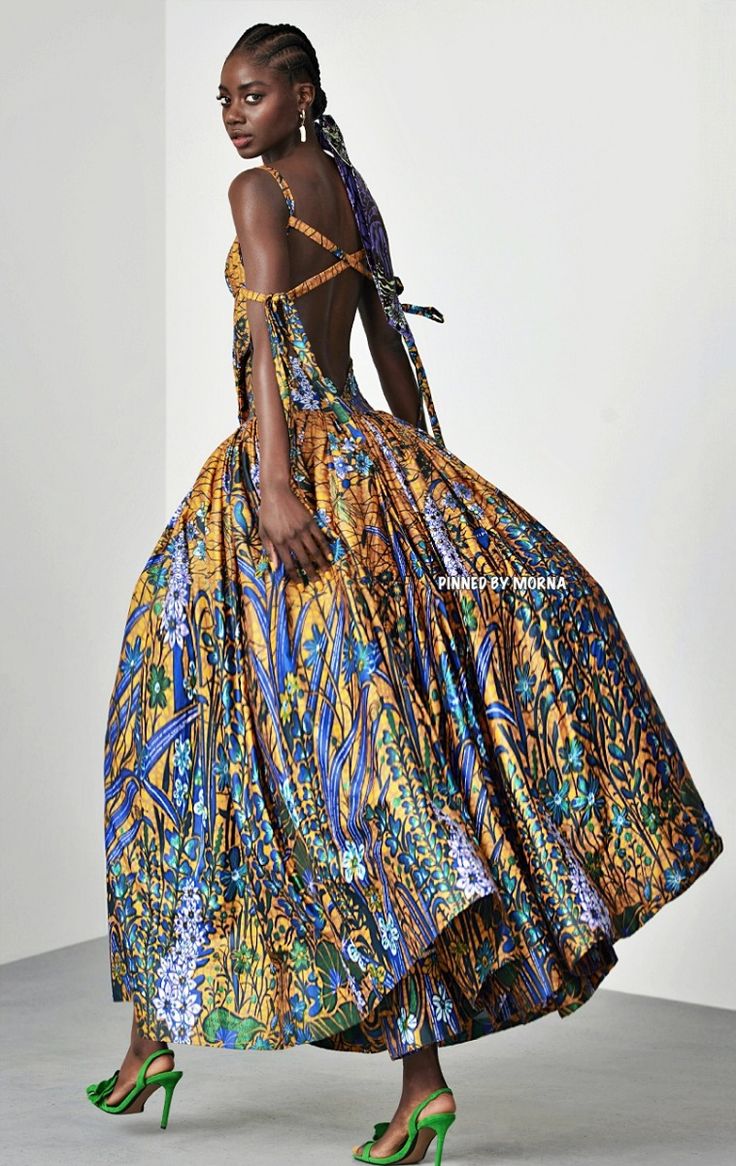
Wax print itself is not indigenous to Africa. The technique derives from Indonesian batik, industrialised by Dutch companies in the 19th century and introduced to West Africa via the Gold Coast. Ivorian manufacturer Uniwax, established in 1968 through a partnership with the Ivorian government, Unilever PLC, and Gamma Holding of Holland, became West Africa’s leading producer of the fabric, recently returning to majority Ivorian ownership after Compagnie Ivoirienne de Coton (COIC SA) acquired a controlling stake from the Vlisco Group in February 2026. In its 2025 financial results, Uniwax reported a 12 per cent revenue increase to 15.7 billion CFA francs (approximately USD 28 million), reflecting sustained demand across the region. That Ivorian women adopted the fabric and made it their own is not cultural confusion. It is cultural authority in practice.
In Abidjan’s Cocody and Plateau districts, at naming ceremonies in Bouaké, at the offices of Ivorian businesswomen and the homes of Baoulé grandmothers in Sakassou, the same five wax print styles govern how Baoulé women dress for every occasion that matters. These are not arbitrary trends. Each style has a function, a social context, and a set of rules. Here are the five wax print styles that define Baoulé women’s dress in 2026.
Baoulé women have not simply adopted wax print. They have transformed it into one of West Africa’s most legible dress systems, where every silhouette, fold, and colour signals cultural literacy, not fashion preference.
1. The Grand Pagne Wrapper: The Baoulé Woman’s Most Authoritative Silhouette
The grand wrapper is the foundation of the Baoulé women’s dress. A single length of wax print fabric, typically six yards, is folded at the waist, wrapped around the hips, and secured by tucking or knotting at the front. Worn with a complementary blouse and a matching headscarf tied in the flat Akan style, the grand wrapper communicates a woman who knows the codes. It is the dress of market women, matriarchs, and elders. It is the silhouette that Baoulé women reach for when they need to enter a room with full cultural presence.
In 2026, the dominant fabrics for grand wrappers are bold block prints in cobalt and terracotta, with large geometric patterns that reference the diamond and zigzag vocabulary of traditional Baoulé strip-weaving. The headscarf, tied flat and low at the forehead, is non-negotiable. Together, the wrapper and headscarf create the complete silhouette that every Baoulé community, from Sakassou to the diaspora communities of Paris, recognises immediately as a dressed woman, not a woman getting dressed. For readers exploring the visual language of wrapper styling, browse African wax-print fabrics and complementary headscarves on Etsy. Look for listings that clearly describe the fabric, print, measurements and place of production rather than assuming that every wax print is a traditional Baoulé textile.
Styling note: the wrapper sits at the natural waist. The blouse, either a structured peplum or a simple fitted top in a complementary solid, finishes at or just below the waistband. Gold jewellery, specifically gold hoop earrings and a single strand of gold beads at the wrist, completes the look.
The jewellery can be kept simple while allowing the fabric to remain the main statement. Explore gold-tone hoops and beaded African-inspired jewellery on Etsy for accessories that can complement a structured wrapper or fitted pagne look.
2. The Kita Two-Piece Set: Ceremony, Status, and the Geometry of Prestige
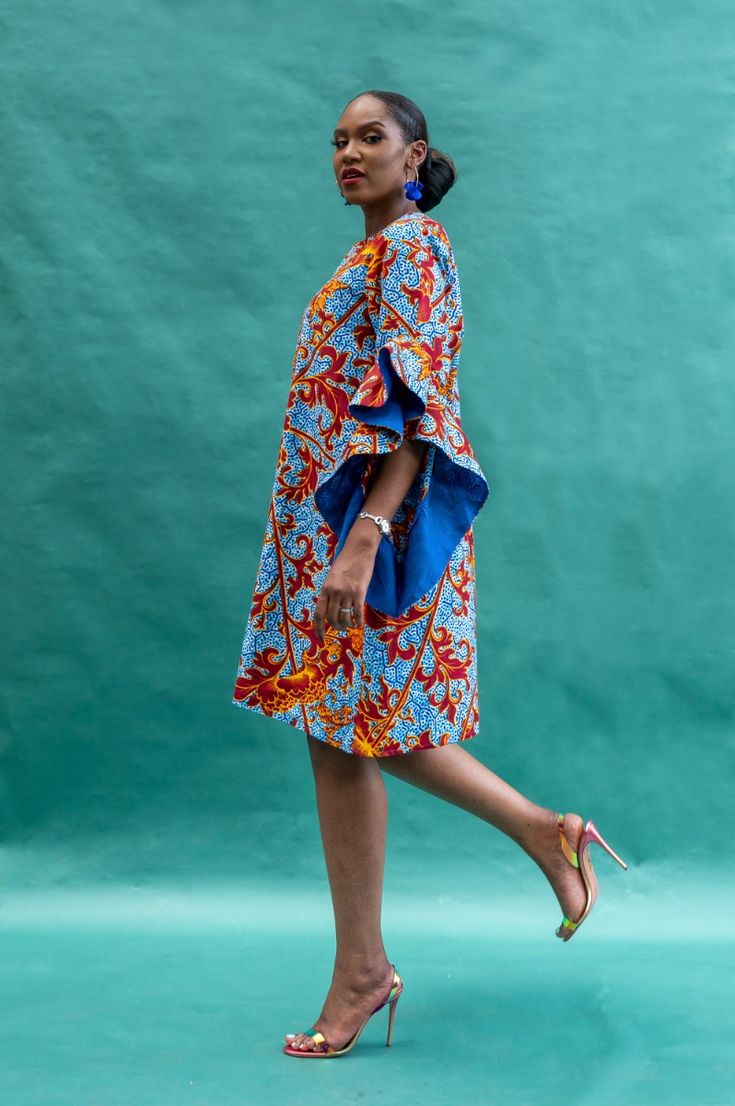
Kita, sometimes written as ‘Kente’ in the broader Akan tradition, is the handwoven strip cloth that the Baoulé and Agni people of Côte d’Ivoire regard as their prestige fabric. It is woven in narrow strips, typically four to eight inches wide, on narrow horizontal looms, then assembled into larger pieces. The patterns carry specific cultural meanings: yellow for wealth, green for life, blue for wisdom, and red for political authority. When a Baoulé woman commissions a kita two-piece set for a wedding, a funeral, or a ceremony of passage, she is not selecting a fabric because it is beautiful. She is selecting it because it is legible.
The Kita two-piece set pairs a structured top with a full wrapper or A-line skirt in matching fabric. Contemporary tailors in Abidjan’s Adjamé market district are cutting kita sets with deep V-necklines, balloon sleeves, and empire waists, silhouettes that bring the fabric into conversation with 2026 global luxury without compromising its cultural register. Gold thread embroidery at the neckline, wrists, and hem adds the dimensional weight that ceremony demands. Readers interested in the textile itself can explore handwoven Akan-inspired and African ceremonial fabrics on Etsy, paying attention to the difference between handwoven cloth, printed fabric and contemporary fabric inspired by traditional weaving
In 2026, the Kita two-piece is the dominant dress choice at Baoulé traditional weddings across Côte d’Ivoire. No designer intervention has changed that. The fabric continues to do what it was always meant to do: confirm the social standing and cultural seriousness of the woman wearing it.
3. The Fitted Pagne Dress: Urban Ivorian Power Dressing
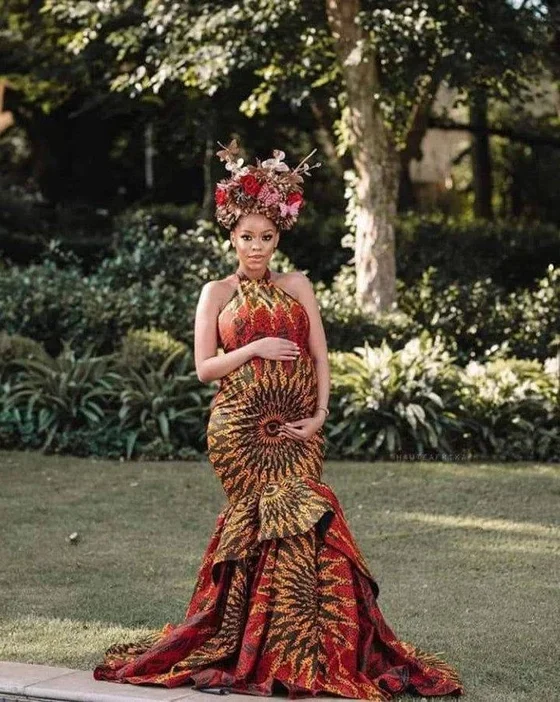
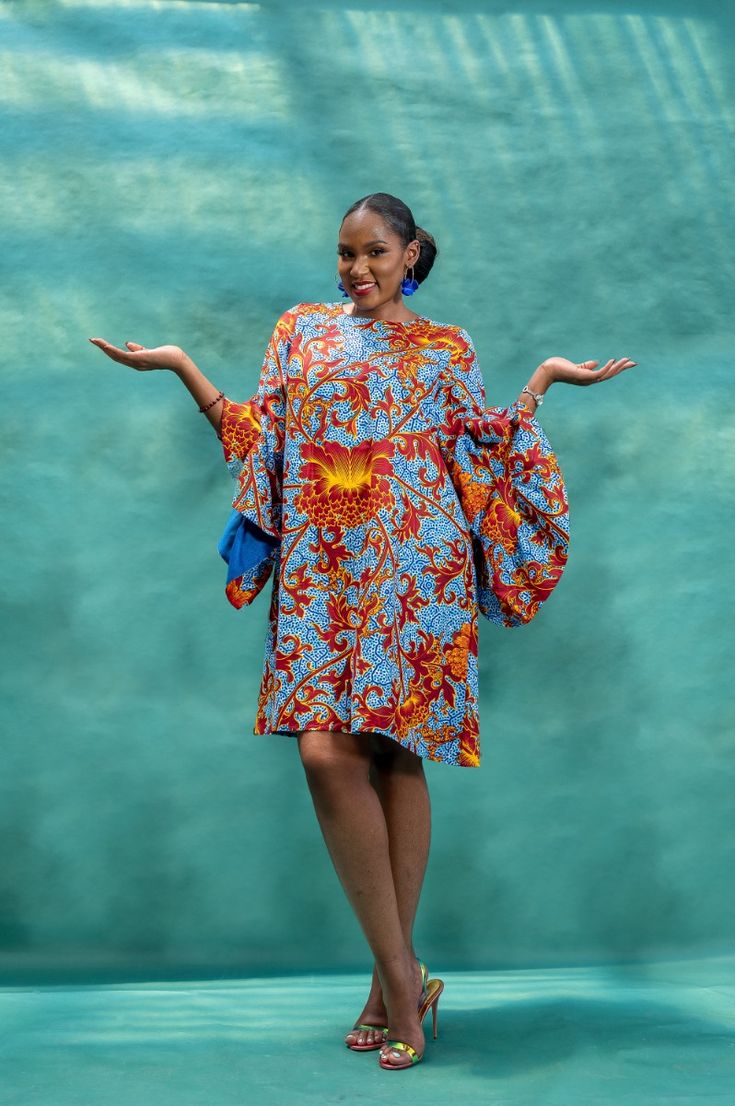
Abidjan has one of West Africa’s most sophisticated urban fashion cultures, and Baoulé women working in the city have developed a wax print silhouette that functions equally well in an Adjamé boardroom and at a Saturday afternoon naming ceremony: the fitted pagne dress. Cut from four to five yards of wax print, structured with a boned bodice or darted front panel, and finished at or just below the knee, the fitted pagne dress is the garment that Ivorian professional women have made into their signature.
The fabric of choice for fitted pagne dresses in 2026 is Uniwax block print in jewel tones: deep green, burgundy, and the rich indigo that connects the contemporary palette to the indigo-resist tradition of Baoulé weaving. Tailors at Treichville’s couture ateliers are adding structured pockets, asymmetric hem details, and subtle peplum flares that give the silhouette a modern architectural quality without departing from the cultural authority of the base fabric.
The matching headwrap, tied in a forward-facing knot or sculpted crown, elevates the fitted dress from professional dress to full Ivorian dressing. Worn without the headwrap, the fitted pagne dress reads as contemporary African fashion. With it, it reads as Baoulé.
4. The Pagne Boubou: The Ceremonial Robe of Complete Cultural Presence
Worn across West Africa but dressed differently by each culture, the boubou in the hands of a Baoulé woman becomes a specific Ivorian statement. A wide, floor-length outer robe cut from a single panel of wax print, worn over a matching inner wrapper with a coordinated headscarf, the pagne boubou is the garment that demands physical space and communicates, without ambiguity, that the woman wearing it is the most culturally serious person in the room.
According to the Fashion History Timeline at FIT New York, the boubou’s defining quality is its capacity for dynamic dialogue between tradition and modernity while keeping its core form constant: a single piece of fabric, folded and stitched, that drapes to the ankles and billows at the sleeves. Baoulé women wearing the pagne boubou to funerals, chieftaincy events, and the national ceremonies that mark the Ivorian calendar favour earth-toned wax prints in terracotta, ochre, and forest green, colours that connect the silhouette directly to the colour grammar of Baoulé textile tradition.
ALSO READ:
- Top 5 Traditional Styles for Fulani Women
- Mixing Prints Like a Pro: The 2026 Guide to Afrocentric Luxury Style
- Why Culture Is the Foundation of Style in African and Global Fashion
- The Art of Dressing Well Across Cultures: What Global Style Actually Teaches Us
In 2026, the pagne boubou worn by Baoulé women at major cultural events is increasingly appearing in Abidjan’s fashion content, photographed against the architecture of Grand-Bassam and the weaving demonstrations of National Pagne Day, Côte d’Ivoire’s government-supported celebration of traditional textiles. The garment is not trending. It is enduring.
5. The Pagne Skirt and Crop Top Set: The New Generation’s Claim on the Fabric
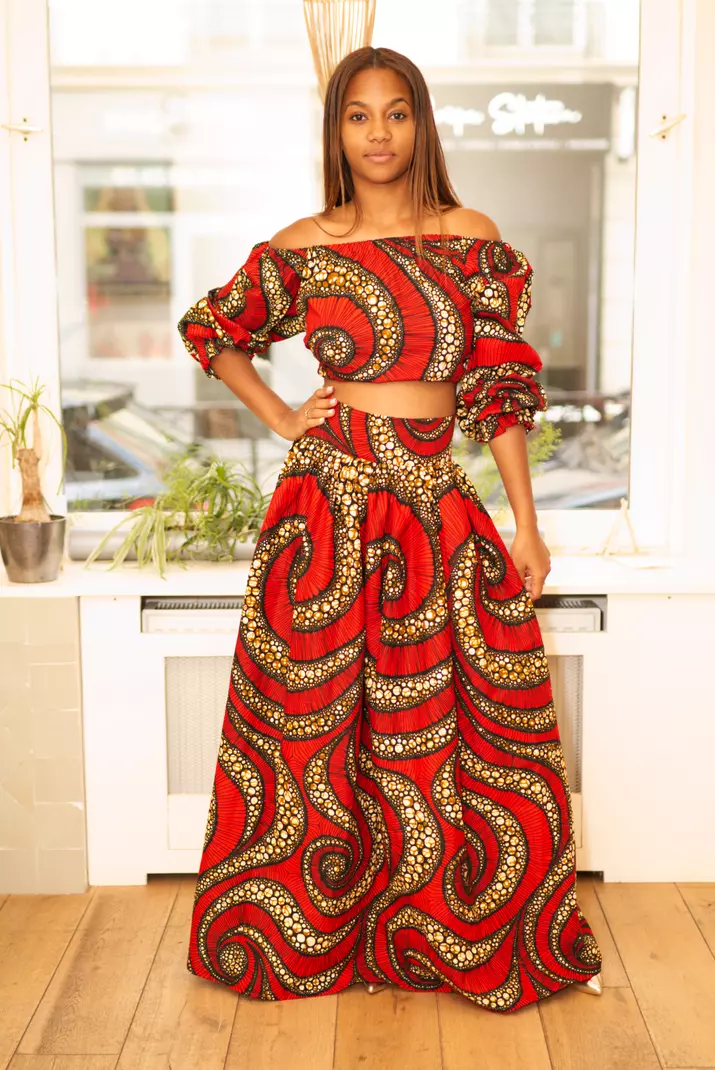
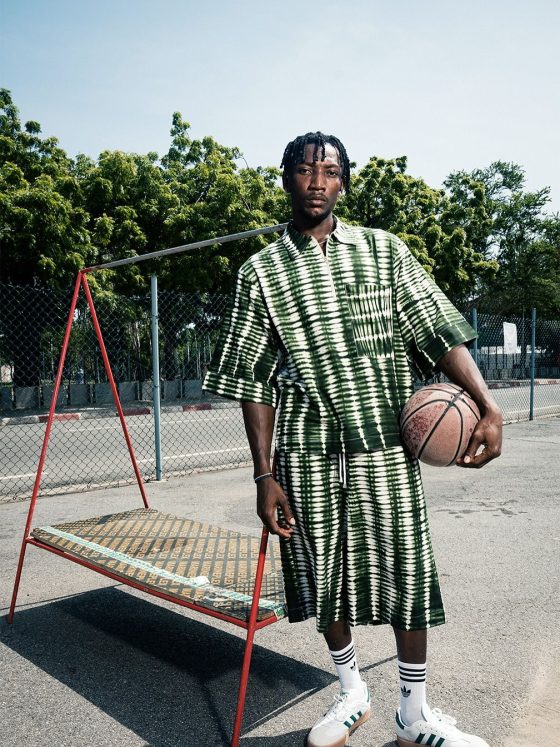
Baoulé women under thirty in Abidjan, San-Pédro, and Bouaké are not wearing their grandmothers’ wax print in their grandmothers’ silhouettes. They are cutting the same Inwax and Uniwax pagne into high-waisted midi skirts paired with structured crop tops that sit at the natural waist, a silhouette that makes the fabric contemporary without abandoning the cultural grammar that gives it meaning.
The pagne skirt and crop top set reads as African urban fashion in its international circulation, visible on the Instagram feeds of Ivorian designers and fashion influencers from Abidjan to Paris, but its construction is specific and deliberate. The skirt carries the fabric’s primary pattern. The crop top uses the fabric’s secondary motif or a complementary solid, establishing the visual hierarchy that mirrors the colour relationships in traditional Baoulé weaving. The headwrap, when worn, is styled in a simple turban fold that signals cultural awareness without the full ceremony of the grand wrapper. For readers interested in adapting the silhouette into a contemporary wardrobe, browse wax-print, crop tops and African-inspired two-piece sets on Etsy. The most useful pieces are those that explain the fabric type, sizing and construction clearly.
Massiamy Ouattara, a costume maker and ambassador of Ivorian crafts, observed that over the last 20 years, traditional pagne has come into its own and is now being used in skirts, trousers, jackets, and hats. The pagne crop top set is the generation that grew up in that transition. It is the proof that the fabric does not require a specific silhouette to carry its authority. The authority is in the cloth.
The Baoulé woman who chooses wax print in 2026 is not choosing a trend. She is choosing a language, one that Ivorian women have been fluent in since before the fabric itself was African.
Frequently Asked Questions
1. What is the traditional fabric of the Baoulé people of Côte d’Ivoire?
The Baoulé have two distinct textile traditions. The pagne Baoulé is a handwoven strip-cloth made from cotton thread on narrow home-made looms, assembled into larger pieces with geometric indigo-resist patterns. There are more than 20 named traditional patterns. Separately, kita (related to the broader Akan kente tradition) is a handwoven cotton or silk fabric characterised by vibrant colours and elaborate geometric designs, used primarily for ceremonies and celebrations. Contemporary Baoulé women also widely wear wax print fabric, industrially produced prints that have been fully adopted into Ivorian dress culture, tailored into styles that reflect their specific cultural codes.
2. What does wax print fabric mean to Baoulé women specifically?
For Baoulé women, wax print is not a generic African fabric. It is fabric that has been incorporated into a specific colour and pattern grammar rooted in Baoulé textile tradition. Colour choices carry inherited meaning: indigo blue for spirituality, earth tones for connection to the land, white for purity, red for political authority. The way a Baoulé woman selects, drapes, and combines her pagne communicates social standing, occasion, and cultural knowledge to everyone in her community who can read those signals.
3. Who produces wax print fabric in Côte d’Ivoire?
Uniwax, founded in 1968 in Abidjan’s Yopougon industrial zone, is the primary wax print manufacturer in Côte d’Ivoire and the leading producer in West Africa. In February 2026, Compagnie Ivoirienne de Coton (COIC SA) acquired a majority stake in Uniwax from the Dutch Vlisco Group, returning the company to Ivorian ownership. Uniwax reported revenue of 15.7 billion CFA Francs (approximately USD 28 million) in 2025, a 12 per cent increase on the prior year. The company manufactures wax block prints and fancy prints using 100 per cent African cotton.
4. What are the most important occasions for Baoulé women’s traditional dress?
Baoulé women dress formally in traditional wax print and kita for naming ceremonies, traditional weddings, funerals and burial ceremonies, chieftaincy and royal events, and Côte d’Ivoire’s national cultural celebrations, including National Pagne Day. At each occasion, the specific silhouette, fabric quality, and colour palette communicate the woman’s relationship to the event and to the people attending it.
Explore the Omiren Selection: Some links in this article are affiliate links. Omiren Styles may earn a small commission at no extra cost to you.