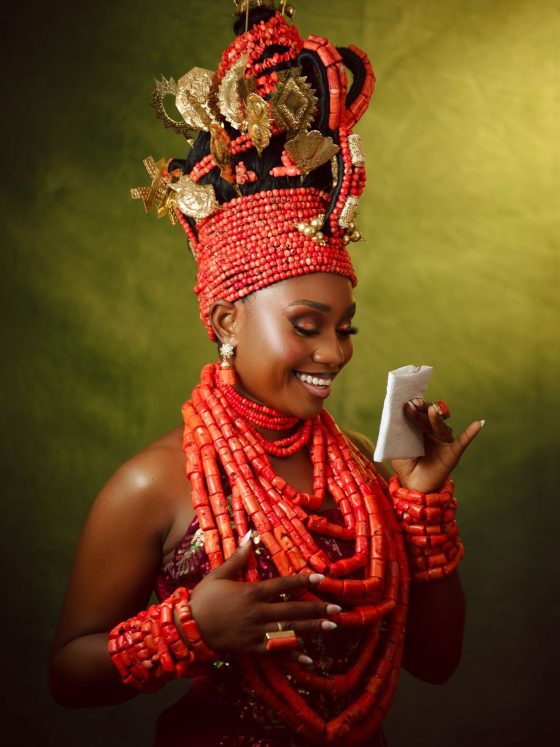
No ethnic group in Africa has moved more deliberately across the continent than the Fulani. With between 25 and 40 million people spread across at least 20 countries, from Senegal and Guinea in the west to Sudan and Cameroon in the east, the Fulani are the largest nomadic pastoral community in the world and one of the most culturally coherent. Their language, Fulfulde, spans thousands of kilometres. Their moral code, Pulaaku, governs conduct across all those communities: patience, dignity, modesty, and self-control are the defining markers of a person who belongs to this lineage.
That same Pulaaku shapes how Fulani women dress. Whether the setting is Sokoto, Futa Jallon, Adamawa, or a diaspora household in London, the Fulani woman’s relationship with cloth is governed by a code far older than any single garment. The fabrics she chooses, the Leppi woven by hand in strips, the luminous Bazin brocade of celebration, and the full sweep of the Grand Boubou at ceremonies are not fashion choices in the casual sense. They are declarations, made in thread, of who she is and where she comes from.
From the handwoven Leppi gown to the embroidered Bazin Boubou, discover the top 5 traditional styles for Fulani women in 2026. A cultural guide to Fulani dress, the Pulaaku code, the Zanne, Gyale, Kwottenai Kanye, and ceremonies from the Sharo to the Gerewol.
The People Who Carried a Culture Across a Continent
The Fulani trace their origins to the Senegambia region over a thousand years ago. Their eastward migrations across the Sahel carried cattle, Islamic scholarship, and a finely calibrated aesthetic sensibility that survived every crossing. By the time Usman dan Fodio launched his 1804 jihad against the Hausa kingdoms of northern Nigeria, the Fulani were already the primary agents of Islam’s expansion across West Africa. The Sokoto Caliphate that followed became one of the continent’s largest 19th-century empires. It’s settled: the urban Fulani ruling class absorbed the embroidered court-dress traditions of the Hausa emirates. Its pastoral communities, the Wodaabe of Niger and Chad in particular, maintained a completely distinct visual culture rooted in vivid colour, elaborate personal ornament, and the Gerewol beauty aesthetic. Both are Fulani dresses. Neither is the complete picture.
What unites them is Pulaaku. Historical Nigeria defines it as discipline, modesty, courage, hospitality, and self-control, values expressed not as abstractions but as daily practice, in posture, in speech, and in the quality and care of dress. A Fulani woman who arrives at a ceremony in careless or incomplete attire is not simply underdressed. Within the logic of her own cultural code, she is failing a test of character. The cloth is not decorative. It is moral.
The traditional dress vocabulary of Fulani women is specific and named. The Leppi is the oldest and most culturally distinct Fulani textile, a handwoven strip cloth woven by male artisans and worn exclusively by women. The Zanne is the full-length gown form of the northern Nigerian Fulani dress, always paired with its Gyale veil. The Bazin, a damask brocade that arrived through trans-Saharan trade networks and was adopted with particular enthusiasm by Fulani communities from Guinea to Senegal, is now the prestige fabric of Fulani ceremony across West Africa. The Kwottenai Kanye, the large golden earrings, are the most universally recognisable marker of Fulani women’s identity across communities from the Gambia to Sudan. Together, these elements form a dress tradition that is self-sufficient, historically grounded, and entirely its own.
For the Fulani woman, dressing is not a performance. It is a practice. Pulaaku demands that she bring discipline, care, and dignity to every cloth she chooses and to every occasion she enters.
The 5 Traditional Styles Defining Fulani Women’s Fashion in 2026
1. The Leppi Gown
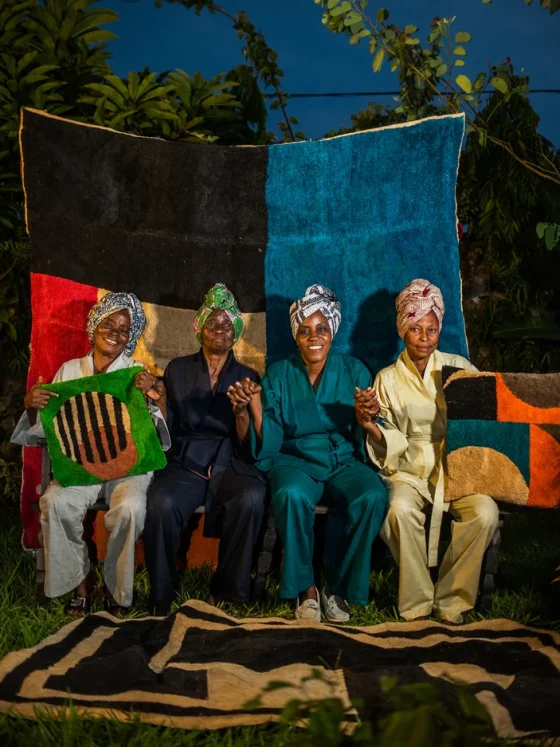
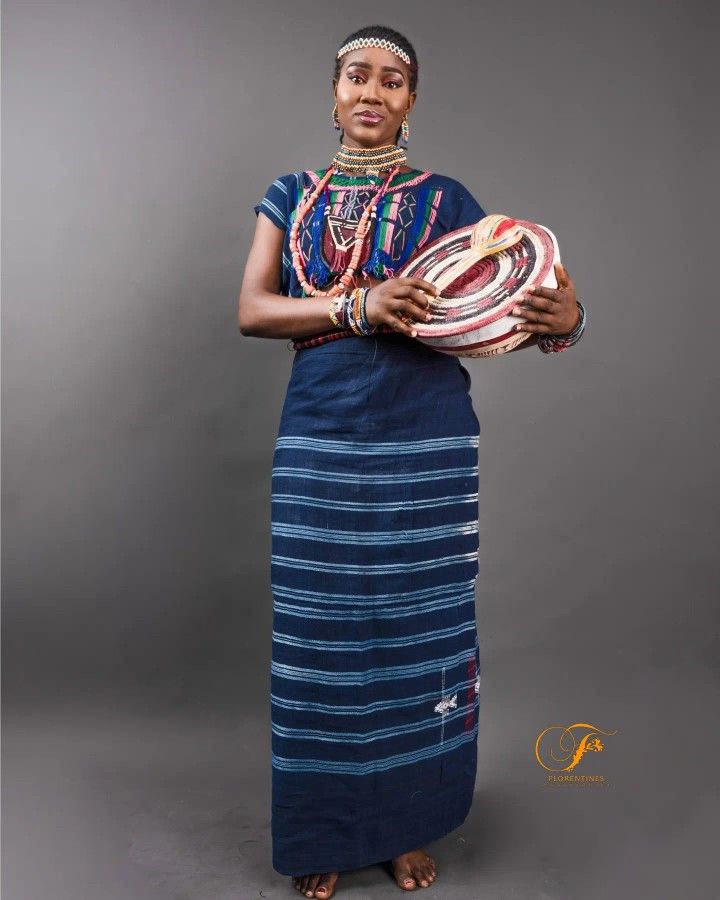
The Leppi is the oldest and most distinct Fulani textile in existence. It is a handwoven strip cloth produced by specialist male weavers known as CaNoowo, who spend between three and four weeks weaving a single complete unit of four strips, known as a Woodeere. The finished cloth is sold as a set and worn exclusively by women. As Petel Design documents, Leppi is used as a bride’s veil in Fuuta Toro, a blanket for newborns, and, in some communities, to cover a widow’s head. It is among the most expensive garments a Fulani woman can own, and its presence in her household simultaneously marks wealth, lineage, and cultural seriousness.
The Leppi gown in 2026 is the style that most directly asserts Fulani cultural specificity in a fashion conversation that too frequently collapses distinct textile traditions into generic West African dress. Among diaspora Fulani communities in London, New York, and Toronto, commissioning a Leppi gown for a wedding or naming ceremony is a deliberate act of cultural reaffirmation: a choice to be dressed in something that no other community produces, no other history owns, and no mass-market fabric can replicate. The handwoven geometry of Leppi cloth, its narrow strips in earthen ochres, indigo blues, and warm ivory tones, carries the signature of the weaver’s hands and the cultural memory of a pastoral people for whom ornament is never accidental.
For readers interested in traditional African handwoven textiles and heritage-inspired fabrics, several woven cloth collections and African textile books are available online.
For bridal occasions, the Leppi gown is frequently accompanied by the full jewellery vocabulary: the Kwottenai Kanye golden earrings, amber bead necklaces, and intricate henna patterns on the hands and feet, which together complete the ceremonial statement. Similar amber-style African bead necklaces and traditional statement earrings can be explored here.
2. The Bazin Boubou
Bazin is the fabric that Fulani women across Guinea, Senegal, Mali, and the wider diaspora wear for their most significant occasions. It is a damask brocade, typically made of cotton with a slight sheen, that arrived in West Africa via trans-Saharan trade routes and was so thoroughly absorbed into Fulani dress culture that it has become inseparable from Fulani celebrations. At Eid, at weddings, at naming ceremonies, the sight of a Fulani woman in a Bazin Boubou is a community-wide mark of an occasion, with the full weight of its cultural resources. Readers interested in ceremonial West African fabrics can browse modern bazin-inspired brocade fabrics and sewing materials available online.
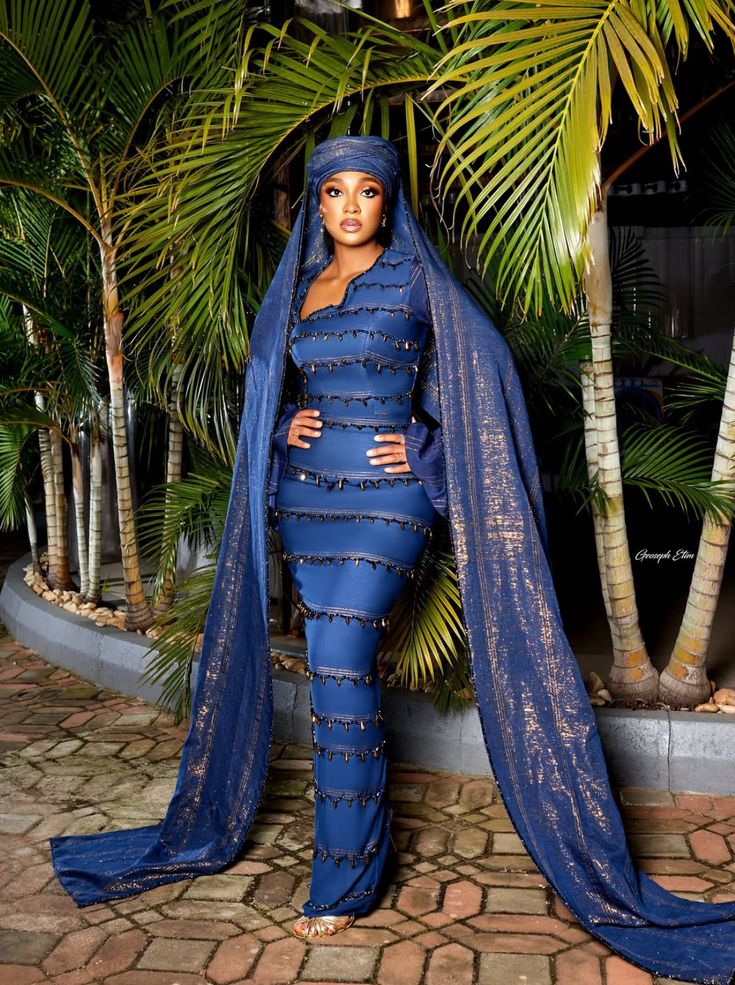
The Bazin Boubou is a wide, floor-length outer garment with lobng sleeves, worn over a matching wrapper and paired with a Gyale veil tied flat at the crown. The embroidery at the neckline and chest follows the same visual grammar as the embroidered court robes of the Sokoto Caliphate era, communicating social standing, piety, and the accumulated prestige of a family that takes dress seriously. In 2026, Bazin Boubous in rich jewel tones, deep sapphire, forest green, plum, and the warm golds of Fulani ceremonial tradition, is the dominant style at Fulani celebrations from Conakry to Kano to the diaspora cities of Western Europe and North America.
The Kwottenai Kanye earrings are the essential companion to the Bazin Boubou. Traditional Fulani-inspired statement earrings and gold-tone heritage jewellery pieces remain popular among African fashion enthusiasts today. Their weight at the ear, their presence at the jaw, and their reflection of the embroidery’s gold thread: together they create the complete Fulani ceremonial silhouette that every community from Guinea to northern Nigeria recognises immediately.
3. The Zanne With Gyale
The Zanne is the Fulani gown form specific to the settled Hausa-Fulani communities of northern Nigeria. It is a full-length dress worn always with its Gyale, a matching veil tied flat at the crown of the head. The two pieces are inseparable: a Zanne without its Gyale is an incomplete garment, and an incomplete garment is, in Fulani cultural terms, an incomplete woman on the occasion. Similar modest head wraps and ceremonial veils inspired by West African fashion traditions are widely available online. As Rexclarkeadventures.com’s guide to Hausa-Fulani fashion notes, women across Sokoto and Adamawa wear the Gyale tied in styles that indicate marital status, ceremonial participation, and tribal affiliation. The veil is not an accessory. It is a statement.
What distinguishes the Zanne from the broader boubou tradition is its specificity. The fabric choices, the embroidery placement, the precise way the Gyale is folded and tied: these are not matters of personal taste but of cultural literacy. A Fulani woman who wears her Zanne and Gyale correctly demonstrates both knowledge and elegance. In Sokoto, Kano, and Adamawa, the Zanne with Gyale in Bazin, Damask, or fine-embroidered cotton is the standard for mosque visits, naming ceremonies, Sallah dressing, and every gathering at which a Fulani woman’s cultural membership in the occasion must be visible.
4. The Grand Boubou With Embroidery
The Grand Boubou is the most architecturally imposing garment in Fulani women’s dress. A vast, flowing outer robe in a single fabric panel, worn over a matching inner wrapper with a coordinated headscarf or veil, it commands physical space in a way that communicates authority, completeness, and the full cultural seriousness of a woman who has dressed for the occasion she is entering. Among Fulani communities across Nigeria, Niger, Guinea, Senegal, and the diaspora, the Grand Boubou is the ceremonial standard for occasions that demand the highest register of dress: Eid prayers, weddings, the funerals of elders, and the public gatherings at which the community’s collective dignity is on display.
The embroidery on a Grand Boubou speaks its own language. Dense gold-thread work at the neckline and chest indicates wealth and social standing. The quality of the needlework, whether it was produced by a specialist embroiderer over days or weeks, is legible to a community that has been reading embroidery as a status marker for generations. In 2026, Fulani women commissioning Grand Boubous from tailors in Kano, Sokoto, Lagos, and diaspora fashion houses are specifying the depth and coverage of embroidery as carefully as they select the fabric. The two are not separate decisions. They are a single cultural argument made in cloth and thread.
5. The Leppi or Bazin Co-ord
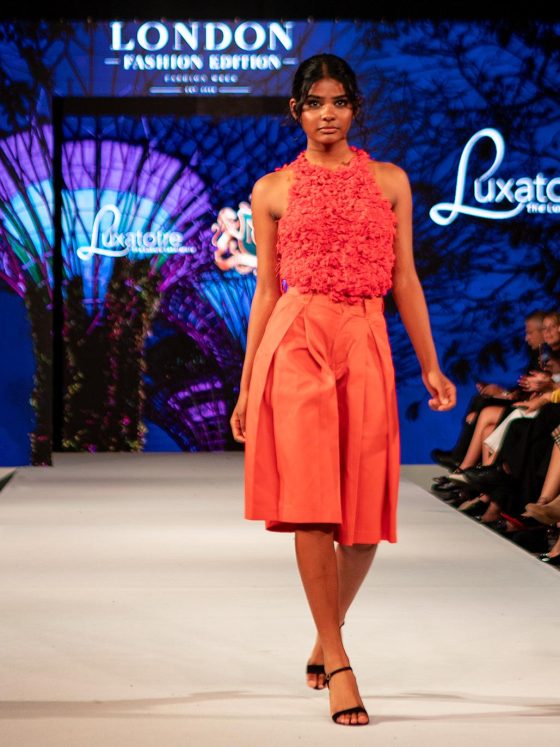
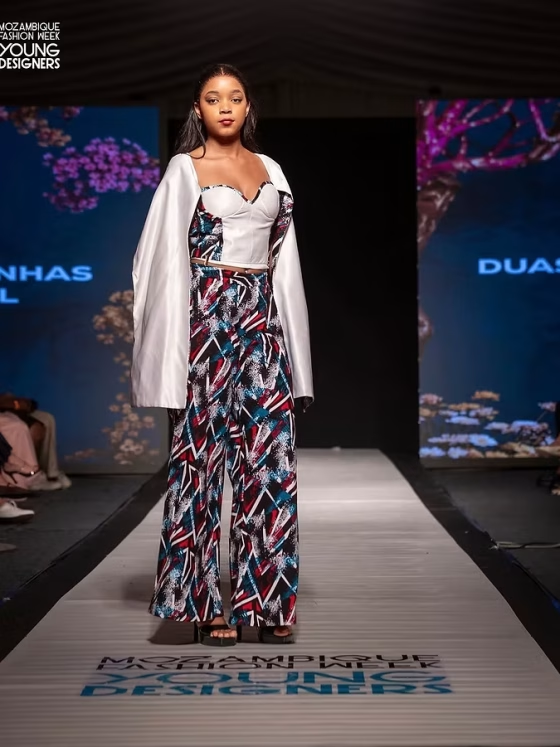
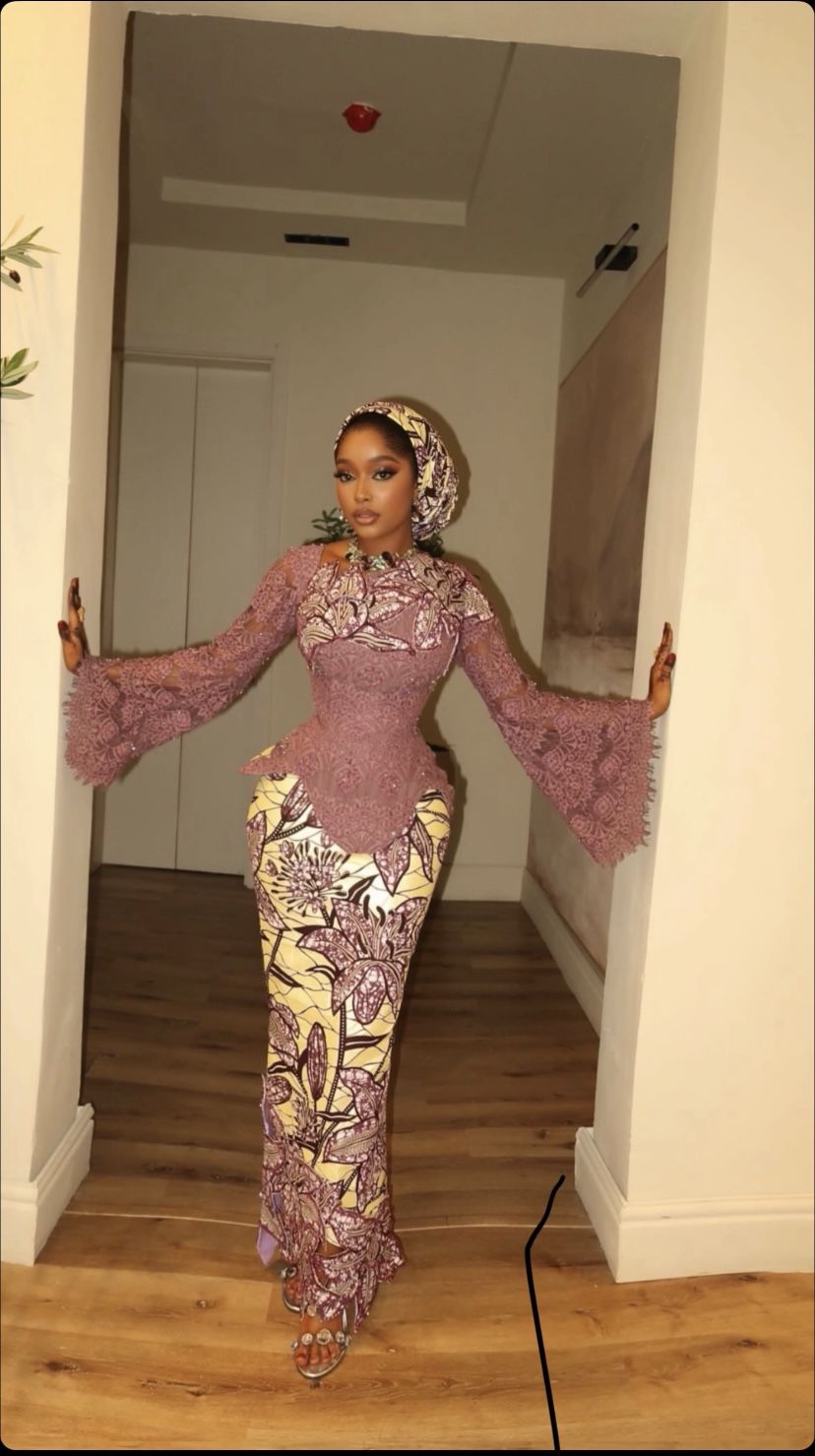
The two-piece co-ord, a structured top and wide-leg trousers or a midi skirt in matching Leppi strip cloth or Bazin brocade, is the style through which younger Fulani women carry their dress tradition into the settings of contemporary life without abandoning its foundations. Diaspora Fulani women in London, Toronto, and Houston are building wardrobes in which the co-ord functions as a garment of cultural declaration in professional and social settings that may not automatically read as the Grand Boubou or the Zanne. The handwoven geometry of Leppi cloth, or the shimmer of Bazin, in a tailored contemporary silhouette, means the garment is Fulani in its fabric and its cultural intent while being portable across the full range of occasions a modern Fulani woman occupies. This mirrors the same approach Ewe women have taken with the Kete co-ord documented in Top 5 Ewe Kente Styles for Ewe Women in 2026: the contemporary silhouette extends the room in which cultural authority operates, not by reducing it but by making it mobile.
A fitted Bazin crop top with wide-leg Bazin trousers in a deep sapphire, worn with a simple Gyale tied flat and the Kwottenai Kanye at the ears, is a complete Fulani cultural statement in a contemporary silhouette. The Pulaaku standard of modesty is met without compromise. The fabric is Fulani. The occasion can be anywhere.
When the Cloth Speaks: Fulani Dress Across Ceremonies
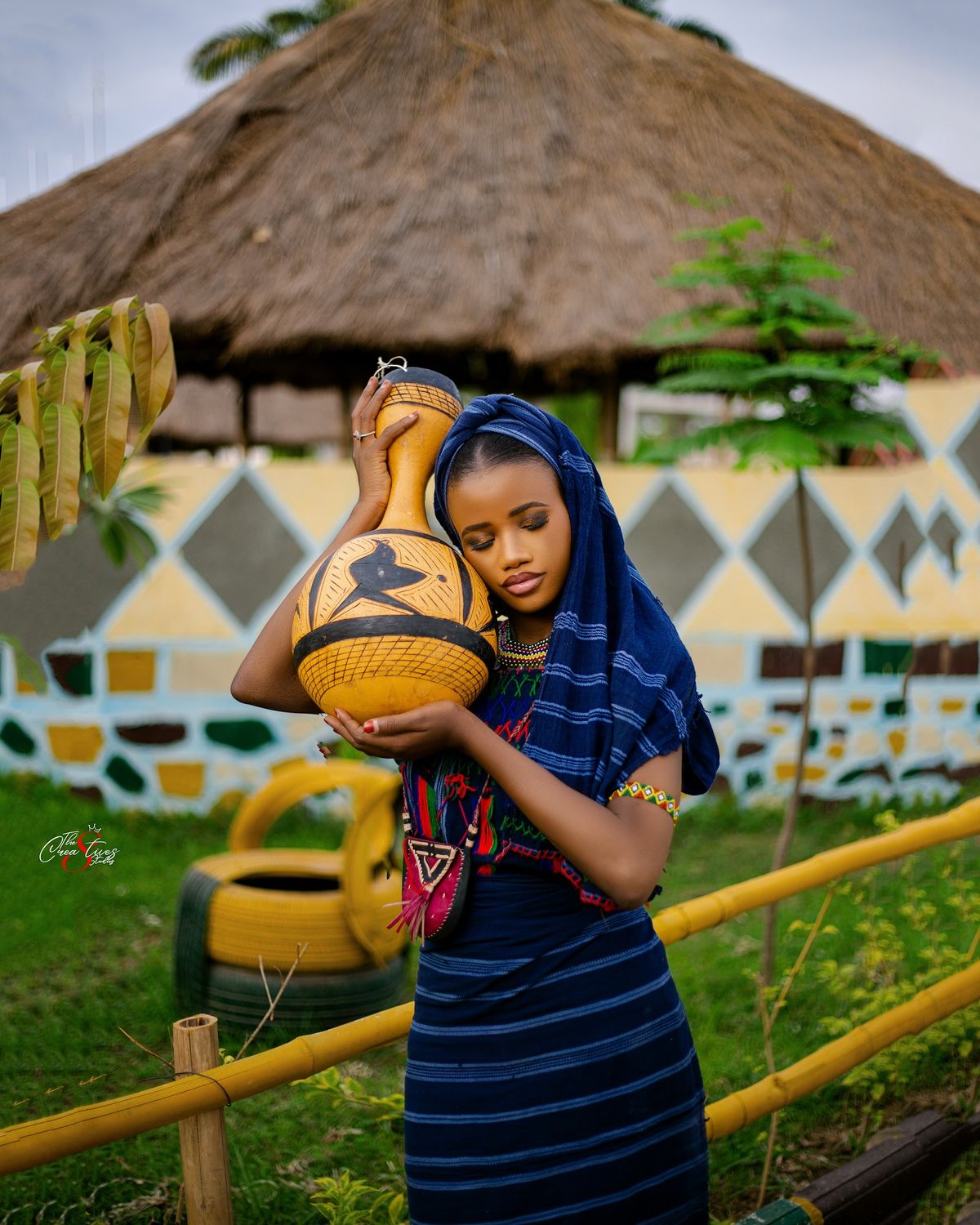
Fulani ceremonial life is shaped by both Islamic tradition and specifically Fulani cultural practice. The fabrics and garments women choose for each occasion are read by everyone present. There is no neutral dressing at a Fulani ceremony.
The Traditional Wedding and Nikkah
The Fulani traditional wedding is a structured process governed by Pulaaku and family negotiation. It begins with the Kalimah, the payment of a bride price, and proceeds through the Nikkah ceremony conducted by an imam before any celebration begins. The bride dresses in her finest garments: a Leppi gown or a Bazin Boubou at the highest level of ceremony, with the full jewellery vocabulary of amber bead necklaces, the Kwottenai Kanye earrings, and intricate henna patterns applied to the hands and feet in the days before the wedding. Female guests coordinate in matching Bazin or other prestige fabric, the shared cloth making the community’s collective belonging to the occasion visible. As My Gambia documents, the number and quality of a Fulani woman’s ceremonial pieces are a source of pride that begins with gifts from her parents at her wedding and accumulates over a lifetime.
Sallah: Eid al-Fitr and Eid al-Adha
The Sallah celebrations are the most significant occasions in the Fulani dressing calendar. The Fulani have observed Islam for over a thousand years, and Eid carries the full weight of that identity. New attire is not optional. Many families also complement ceremonial attire with matching prayer accessories and modest fashion pieces for Eid celebrations. The Bazin Boubou and the Grand Boubou with embroidery are both prominent at Sallah, worn with full Gyale arrangements to morning prayers at the mosque, then to family visits and community gatherings throughout the day. In Fulani communities across northern Nigeria, Guinea, Senegal, and the diaspora, dressing well for Sallah is one of the most visible public expressions of Pulaaku: the community can see exactly how seriously you hold your faith and your cultural belonging.
The Naming Ceremony
The naming ceremony marks a child’s formal entry into the Fulani community and is typically held seven days after birth. Women are the primary organisers and attendees. Coordinated Bazin fabric in the wrapper and blouse, or Zanne form, is the standard, making the shared cloth bonds of the aking community visible at the moment when new life is being welcomed. The mother receives gifts of fabric and jewellery from family members; the quality of those gifts reflects the community’s investment in her and in the child. Among pastoral Fulani communities, the naming ceremony is also the occasion when the child’s connection to cattle and the ancestral pastoral life is symbolically acknowledged.
The Sharo Festival
The Sharo is the Fulani coming-of-age ceremony in which young men undergo public flogging as a test of bravery and readiness for marriage. The women assembled as witnesses and judges are themselves being assessed. Fulani communal aesthetic standards, rooted in Pulaaku, apply to the women watching as much as to the men competing. Bazin or Leppi cloth in vivid prints, elaborate braided hairstyles decorated with amber beads and coins, and the full jewellery vocabulary of the Kwottenai Kanye earrings are all prominent at Sharo gatherings. Similar African-inspired beads and traditional accessory sets are popular among women recreating heritage looks for cultural events. A woman who arrives underdressed has misread the occasion. The Sharo is not a casual gathering.
The Gerewol Festival (Wodaabe)
The Gerewol is specific to the Wodaabe subgroup in Niger and Chad. During the Gerewol, men compete in beauty and dance before women who function as the judges of the contest. The women’s role is active, powerful, and public. For Wodaabe women attending the Gerewol, the occasion demands the full expression of dress and ornament: the complete Fulani jewellery vocabulary, vivid colour in traditional pastoral cloth, and elaborate head adornments. It is the occasion at which the pastoral Fulani aesthetic, distinct from the settled Hausa-Fulani style of northern Nigeria, is most fully and publicly on display, and where the connection between beauty, dignity, and power is most clearly visible in the dress of the women assembled.
Funerals and Mourning
Fulani mourning follows Islamic convention, with white and subdued tones replacing the ceremonial palette. The Zanne, or Grand Boubou, in white or pale fabric, is the appropriate garment for funerals, worn with a simply tied Gyale and without the full jewellery display of a celebratory occasion. The completeness of dress, even in mourning, remains a Pulaaku requirement. Arriving at a Fulani funeral in careless or casual attire is not a private failure. It is a public one.
Pulaaku does not have a different standard for difficult days. The discipline of dress is the discipline of character, and it is required at every occasion, not only the celebratory ones.
ALSO READ:
- Top 5 Ankara Styles for Kanuri Women in 2026
- Babbar Riga: The Garment That Connects Northern Nigerian Tribes
- The New Face of Modesty: Modern Abaya and Hijab Trends in Northern Nigeria
The Omiren Argument
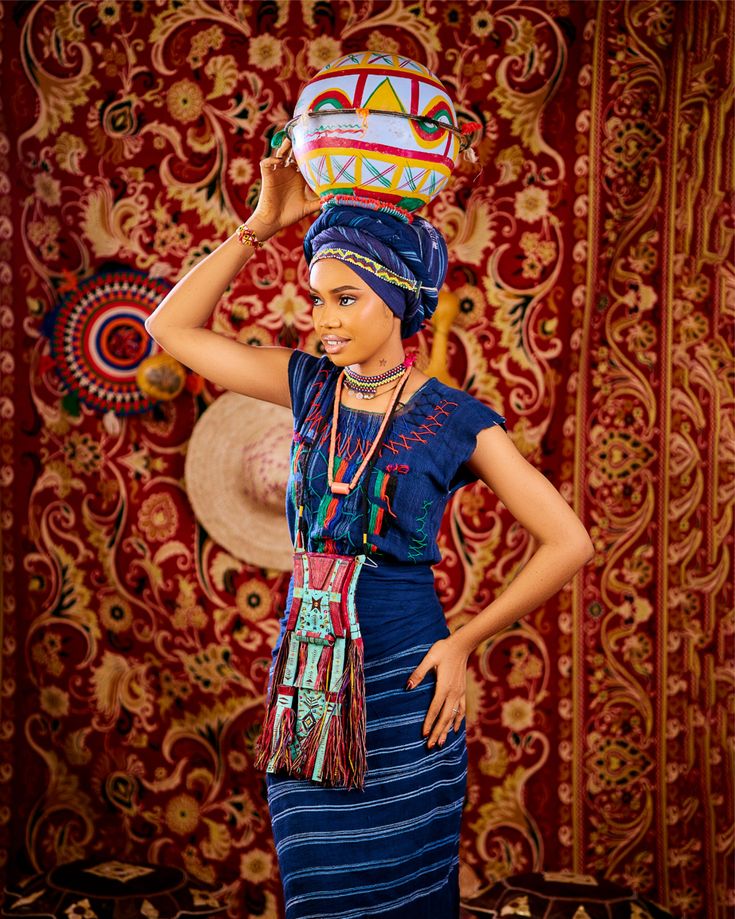
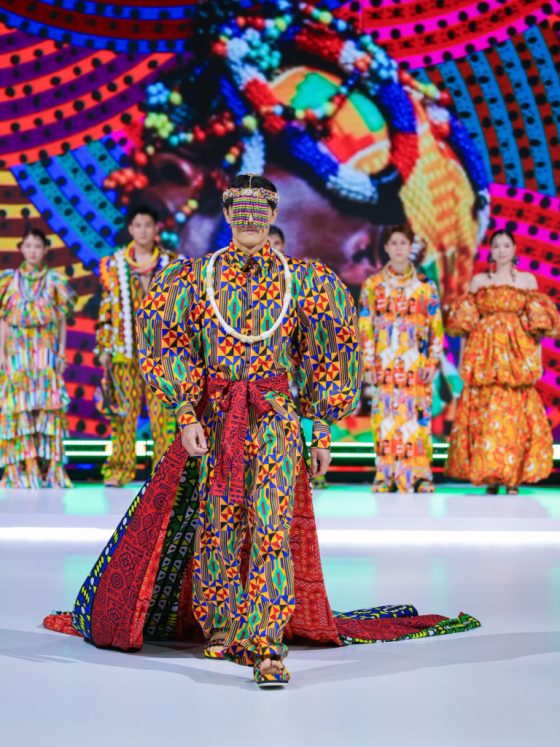
The Fulani dress tradition is the most geographically dispersed among the traditions in this series. There is no single Fulani silhouette because the Fulani are not a single settled community. The pastoral Wodaabe of Niger and the urban emirate families of Kano are both Fulani. The bride in Conakry, dressed in handwoven Leppi cloth, and the woman in Sokoto, in her embroidered Bazin Boubou, are both expressing Pulaaku through their dress. The code is consistent across all those contexts. What changes are the fabric, the embroidery tradition, and the specific garment forms shaped by centuries of local interaction?
This is precisely what makes the Fulani dress tradition irreducible. You cannot collapse it into a single fabric, a single silhouette, or a single regional aesthetic. It has to be understood as a mobile, living tradition that has been refining itself across 20 countries and a thousand years, always anchored by the same governing principle: dress with knowledge, dress with discipline, and dress in a way that makes your cultural belonging legible to everyone in the room.
Readers interested in learning more about African fashion history can explore some of the most respected books on Fulani culture, West African textiles, and traditional dress.
People who have carried their identity across a continent do not dress without knowing exactly what they are doing.
Browse the full African Style collection at Omiren Styles.
Frequently Asked Questions
1. What is the Leppi, and why is it significant in Fulani dress culture?
The Leppi is the oldest and most culturally specific handwoven strip cloth in Fulani women’s dress. It is produced by specialist male weavers called CaNoowo who take between three and four weeks to complete a single Woodeere, the unit of four woven strips sold as a set. The Leppi is worn exclusively by women and functions as a bride’s veil, a newborn’s blanket, and a widow’s head covering. It is among the most expensive garments a Fulani woman can own. A detailed account of Leppis’ production and cultural significance is available at Petel Design.
2. What is Bazin, and why do Fulani women wear it for ceremonies?
Bazin is a damask brocade fabric that arrived in West Africa through trans-Saharan trade networks and was adopted with particular enthusiasm by Fulani communities across Guinea, Senegal, Mali, and Nigeria. Its slight sheen, the depth of its colour, and its capacity for elaborate embroidery made it the prestige ceremonial fabric of Fulani celebration. A Bazin Boubou commissioned for Eid or a wedding represents a significant investment of both money and cultural intention. The fabric is not merely decorative: it communicates the social standing of the woman wearing it and her community’s collective investment in the occasion.
3. What are the Kwottenai Kanye, and what do they signify?
The Kwottenai Kanye are the large golden earrings worn by Fulani women across all communities and regions, from Gambia to Sudan. They are among the most universally recognisable markers of Fulani women’s cultural identity and function as symbols of wealth, prestige, and belonging. They are worn at ceremonies, at festivals, and whenever a Fulani woman wishes to declare her cultural identity in dress. The name varies by dialect, with ‘Kwottenai Karfe’ also used in some communities, but the reference is consistent: these are the earrings that mark a Fulani woman as such.
4. What is the Zanne, and how does it differ from the Grand Boubou?
The Zanne is the full-length gown form specific to the settled Hausa-Fulani communities of northern Nigeria, worn always with its Gyale veil. It is a fitted or semi-fitted garment that communicates cultural membership at mosque gatherings, naming ceremonies, and formal social occasions. The Grand Boubou is the most architecturally imposing style in Fulani women’s dress: a wide, floor-length outer robe worn over a matching wrapper, appropriate for the highest ceremonial occasions. Both garments are always worn with a veil arrangement, and both are read in Fulani communities as statements of cultural seriousness rather than mere clothing choices.
Affiliate disclosure: We may earn commissions from links on this page at no extra cost to you.