Every May, the city of Bluefields on Nicaragua’s Caribbean coast holds a festival whose local name is Palo de Mayo (May Pole) and whose cultural roots run through West African dance traditions, British Caribbean colonialism, Creole community identity, and the specific geography of Nicaragua’s Mosquito Coast. The festival is the most significant cultural event in the Afro-descendant communities of the South Caribbean Coast Autonomous Region (RACCS). Its costume tradition is simultaneously one of the most documented aspects of Afro-Nicaraguan cultural expression and one of the most difficult to describe with precision, because the existing documentation is uneven, community-held, and, in many cases, oral rather than archived.
Palo de Mayo is Bluefields, Nicaragua’s Afro-Caribbean festival. This is what is documented about the costume tradition, and where the archive runs out.
Bluefields and the Afro-Caribbean Coast
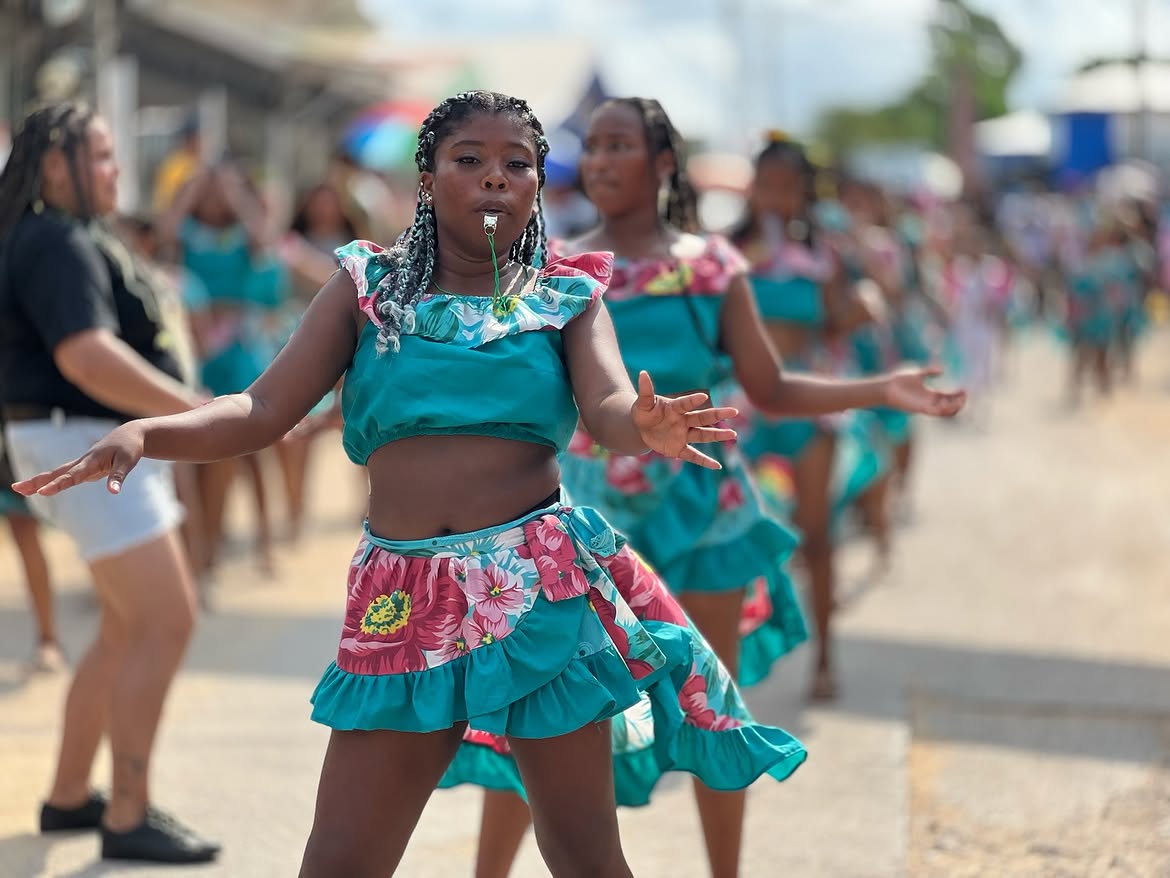
Bluefields is the capital of Nicaragua’s South Caribbean Coast Autonomous Region (RACCS), a coastal city of approximately 60,000 people that is distinct from Pacific Nicaragua in language, culture, and historical experience. The Caribbean Coast of Nicaragua was never incorporated into the Spanish colonial system in the same way as the Pacific interior. The Mosquito Coast, as it was historically known, operated under British protectorate influence from the seventeenth century through the nineteenth century, creating conditions under which Afro-Caribbean migration from Jamaica, Belize, and other British Caribbean territories established communities whose primary language was Creole English and whose cultural references were Caribbean rather than Spanish Latin American. As the Inter-American Commission on Human Rights has documented in its reporting on Afro-descendant communities in Nicaragua, the Caribbean Coast communities have maintained distinct cultural identities that predate Nicaraguan independence and that the country’s legal framework has recognised through the autonomy statute of 1987 and subsequent constitutional provisions.
The Garifuna presence in Bluefields and along the Caribbean coast adds a further dimension to this cultural geography. The Garifuna people, whose ancestors were escaped enslaved Africans and indigenous Amerindians who built an independent society on the Caribbean island of St Vincent before being exiled by the British to the island of Roatán off the Honduran coast in 1797, subsequently spread along the Caribbean coasts of Honduras, Belize, Guatemala, and Nicaragua. As Omiren Styles has documented in its profile of Garifuna model Deborah David, the Garifuna are among Central America’s most overlooked segments of the African diaspora, with cultural traditions that UNESCO’s 2001 inscription of the Garifuna language, dance, and music confirmed as a living heritage of humanity.
What Palo de Mayo Is and Where It Comes From
Palo de Mayo is the local name for the May festival celebrated across Bluefields and the surrounding communities of the South Caribbean Coast throughout May. The festival takes its name from the maypole tradition, a British folk practice in which dancers hold ribbons attached to a central pole and weave patterns around it through coordinated movement. The maypole arrived on the Nicaraguan Caribbean coast via the same British Caribbean cultural transmission that brought Creole English, Protestant church culture, and the musical traditions documented in the communities of Bluefields. What the Bluefields communities did with the maypole is the same as what is documented wherever African-descended communities encountered European folk traditions under conditions of cultural pressure: they absorbed it, transformed it, and produced something with its own specific character that cannot be described as simply European or simply African.
The dance that developed around the maypole in Bluefields has been documented by Nicaraguan ethnomusicologist Carlos Rigby and by researchers at the Universidad de las Regiones Autónomas de la Costa Caribe Nicaragüense (URACCAN), the university established specifically to serve the Caribbean Coast autonomous regions. Their documentation confirms that Palo de Mayo incorporates rhythmic and movement elements whose African origins are traceable in the call-and-response structure, the grounded footwork, and the communal participation form. As Omiren Styles has documented in its analysis of the African roots of Caribbean and Latin American dance, this pattern is consistent across the Caribbean: the maypole was a European vehicle; the movement vocabulary that the Bluefields community placed inside it was African-derived.
“Palo de Mayo is not a European folk dance with Caribbean characteristics. It is an Afro-Caribbean dance tradition that uses a European structural element as its visible frame.” — Carlos Rigby, Nicaraguan ethnomusicologist, documentation of Bluefields festival culture.
The Costume Tradition: What Is Documented
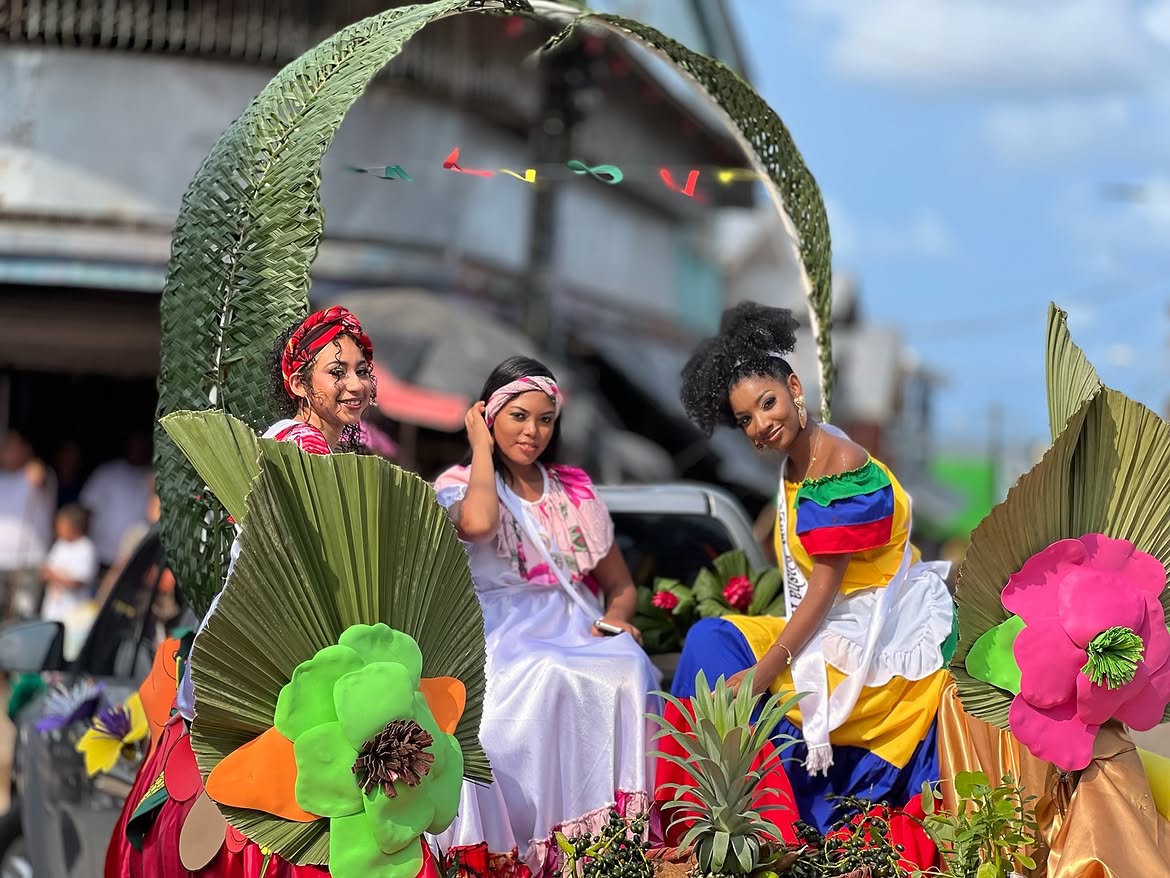
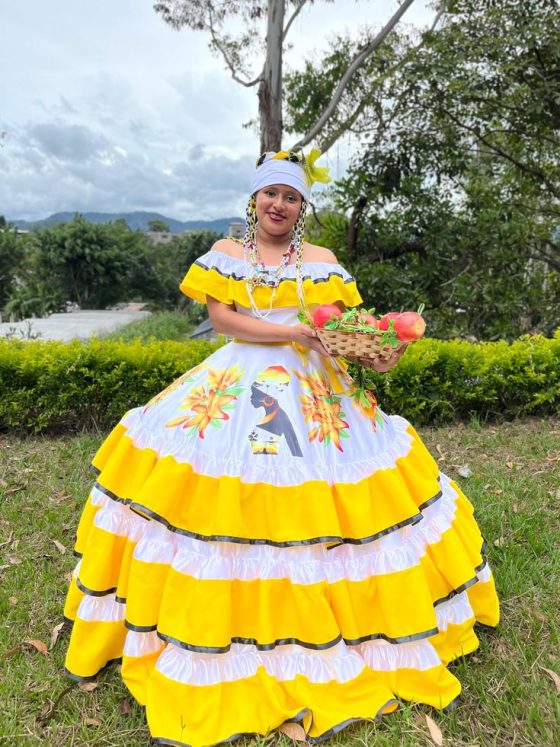
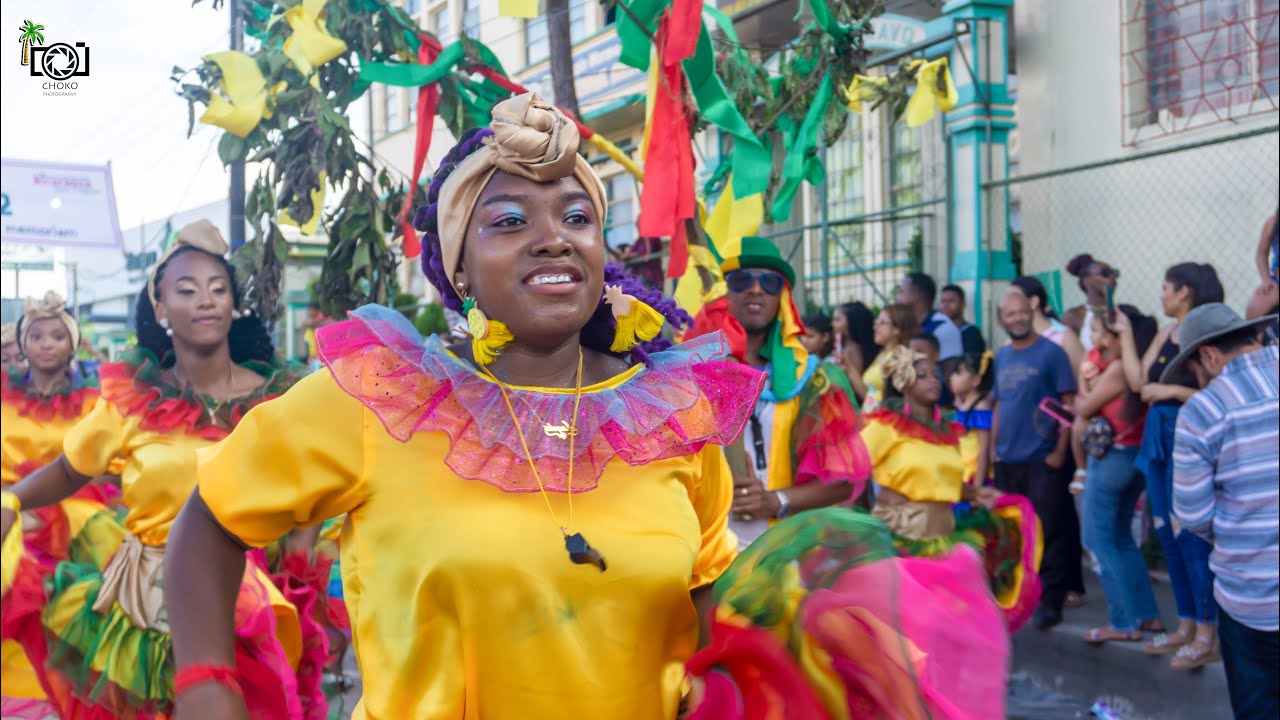
The costume worn for the Palo de Mayo performance is the aspect of the tradition where the documentation is most uneven, and this article is precise about that unevenness. What is confirmed across multiple sources, including URACCAN research, the Nicaraguan Ministry of Culture’s intangible heritage documentation, and community accounts collected by Bluefields-based cultural organisations, is the following: women dancers wear brightly coloured dresses, typically in full skirts that move with the dancer’s movements, in combinations of red, yellow, green, and white that are understood within the community as specific to the Palo de Mayo aesthetic rather than general occasion wear. The headwrap is a consistent element: tied in a style that echoes Caribbean headwrap traditions documented across the region, from Martinique’s tete en l’air to Colombia’s Palenquera wrap. The colour is as important as the form: specific combinations are preferred for specific performance contexts.
The men’s costume is less formally codified in the existing documentation, typically described as white trousers and a coloured shirt. Still, URACCAN research notes this as a simplified version of a more elaborate tradition that varied by community and decade. The documentation gap here is real: the women’s costume has received more sustained attention from researchers and from the community’s own cultural preservation efforts, while the men’s costume tradition is described in less specific terms across the available sources.
The Garifuna contribution to the Palo de Mayo costume is documented but requires careful separation from the broader Creole tradition. Garifuna women’s festival dress in Nicaragua, as across the Central American Caribbean coast, incorporates woven cotton skirts and embroidered blouses, as documented in other Garifuna community contexts. The URACCAN research explicitly notes that Bluefields’ festival brings together multiple Afro-descendant community dress traditions rather than representing a single unified costume vocabulary. A Creole Bluefields woman and a Garifuna woman from Pearl Lagoon may both be participating in Palo de Mayo. They may be dressed differently in ways that community members can read, but outside documentation has not always distinguished. As Omiren Styles has noted in its analysis of African festival dress and ritual, the specificity of dress within communities is often the first thing that generalising documentation erases.
Where the Archive Runs Out
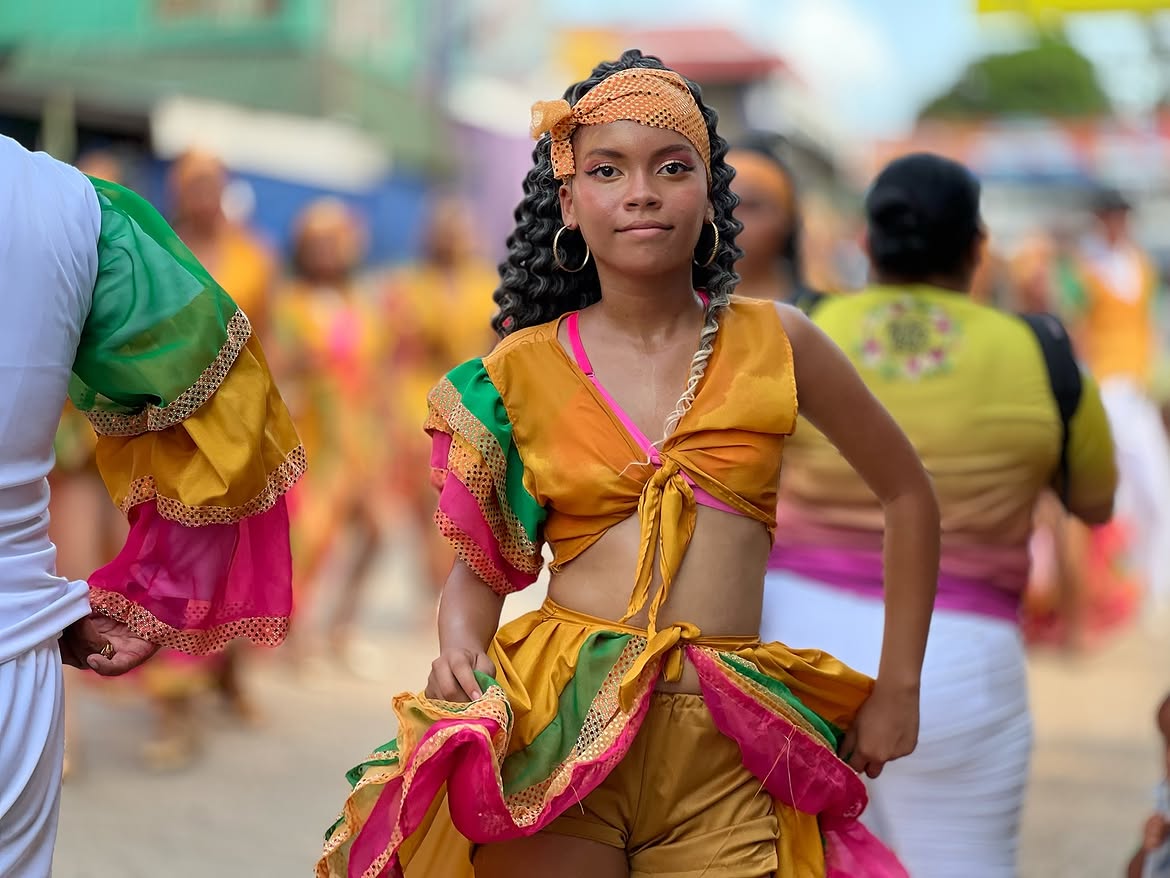
This section is explicit about the limits of what is documented because the QC standard for this article required that the documentation gaps be named rather than papered over with a confident description. The international fashion archive does not serve Palo de Mayo well. The festival has not received sustained ethnographic attention of the kind documented for, for example, Trinidad Carnival or Martinique’s Bèlè tradition. URACCAN research, Carlos Rigby’s work, and community-held oral documentation are the primary sources. The Nicaraguan Ministry of Culture’s intangible heritage materials are available but not fully digitised or accessible to researchers outside Nicaragua.
Specific claims that cannot be confirmed from available documentation include: the precise historical date of the festival’s current form, the specific regional variations in costume between Bluefields and Pearl Lagoon, the specific symbolic meanings attributed to individual colour combinations within the community, and the documented evolution of the costume across the Somoza era, the Sandinista period, and the post-1990 autonomy period. These gaps are noted not to diminish the tradition but to be honest about what this article can confirm and what requires primary fieldwork in Bluefields to establish. The responsible position, consistent with Omiren Styles’ approach to Amazigh facial tattoo documentation, is to document what is confirmed and name what is not confirmed, rather than to fill in gaps with a plausible description.
The Festival in Context
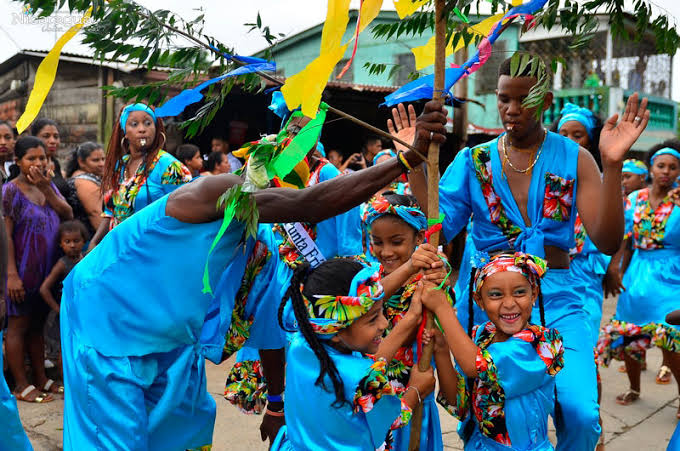
The autonomy statute of 1987, which established the North and South Caribbean Coast Autonomous Regions and gave them formal recognition as multi-ethnic territories with self-governance rights, created the political framework within which Palo de Mayo has developed its current form. The RACCS autonomous government’s cultural promotion programmes have supported the festival’s continuation and have been documented as key institutional actors in its preservation since the 1990s. The URACCAN University, established in 1992 specifically to serve Caribbean Coast communities, has contributed research capacity that the Pacific-facing Nicaraguan academic establishment had not previously provided for this region.
The festival’s relationship to the broader Garifuna cultural calendar adds a regional dimension. Garifuna communities across Honduras, Belize, Guatemala, and Nicaragua share festival and ceremony traditions that are simultaneously local and pan-Garifuna. The Garifuna Settlement Day in Belize on November 19, marking the anniversary of the 1802 arrival of the Garifuna on the Belizean coast, is the closest regional equivalent to Palo de Mayo in terms of its significance to community identity. The costume traditions of both events share the same Garifuna aesthetic vocabulary, though the specific garments and their local variations differ between countries and communities. As Omiren Styles has documented in its analysis of Garifuna cultural identity, the Garifuna’s documented maintenance of African-derived cultural practice across the diaspora is one of the most significant bodies of evidence for the continuity of African cultural memory in the Americas.
The Omiren Argument
Palo de Mayo is the festival through which Bluefields’ Afro-descendant communities make their cultural identity publicly visible on their own terms, using a European structural element as a vehicle for a movement and dress tradition with African-Caribbean roots. The unevenness of the archive is not evidence that the tradition lacks depth. The documentation priorities of Nicaraguan and international cultural institutions have not matched the importance of what is being practised on the Caribbean coast. The RACCS autonomous government and URACCAN have done more for this documentation than the national government or international cultural bodies, and their work represents the foundation on which any future serious study of Palo de Mayo costume will need to build.
The Bluefields case sits within a pattern that Omiren Styles has documented across the Caribbean and Latin America: African-derived festival traditions whose costume and performance vocabulary encode cultural memory are consistently underrepresented in the international archive relative to their cultural significance. Trinidad Carnival gets the fashion press. Martinique’s Bèlè gets the ethnomusicologists. Palo de Mayo in Bluefields gets neither, consistently, despite being the most significant cultural event in one of Central America’s most documented Afro-descendant communities. As Omiren Styles has argued in its analysis of the Bèlè dance tradition in Martinique, the dress of these traditions carries what the communities could not say out loud during periods of suppression. Bluefields’ Palo de Mayo is carrying the same argument, in the same brightly coloured skirts and headwraps, every May, whether the international archive shows up or not.
The festival does not need external documentation to validate itself. The documentation needs to catch up with the festival.
ALSO READ
- The African Roots of Caribbean and Latin American Dance: When the Drum Speaks, the Motherland Answers
- Bele Dance and the Dress That Carries What Martinique Could Not Say Out Loud
- Deborah David: The Garifuna Model Who Made Latin America Look
- Colombian Traditional Fashion: What the Mola, the Pollera, and Cartagena’s Dress Culture Actually Are
Frequently Asked Questions
What is Palo de Mayo, and where is it celebrated?
Palo de Mayo, meaning May Pole, is the Afro-Caribbean festival celebrated throughout May in Bluefields, the capital of Nicaragua’s South Caribbean Coast Autonomous Region (RACCS), and in surrounding Caribbean coast communities, including Pearl Lagoon. It is the most significant cultural event in the Afro-descendant communities of the region, combining the structural element of the British maypole tradition with movement and dress vocabulary documented as having African-Caribbean origins. As URACCAN research confirms, the festival brings together the Creole English-speaking communities of the Caribbean coast and the Garifuna communities present in the region, whose dress traditions overlap but are not identical.
What do women wear for Palo de Mayo?
Confirmed across multiple sources, including URACCAN documentation and community accounts: women performers wear brightly coloured full-skirted dresses in combinations of red, yellow, green, and white that are specific to the Palo de Mayo aesthetic. The headwrap is a consistent element, tied in a style that echoes the Caribbean headwrap traditions documented across the region. The specific symbolic meanings of individual colour combinations within the Bluefields community context require primary fieldwork to establish with the precision that community members hold. The men’s costume is less formally documented: white trousers and a coloured shirt are the consistent description. However, URACCAN research notes that this is a simplified version of a more elaborate tradition that varied by community and decade.
Who are the Garifuna, and what is their presence in Nicaragua?
The Garifuna are an Afro-descendant and indigenous people whose ancestors built an independent society on the Caribbean island of St Vincent from around 1635, combining escaped enslaved Africans with Amerindian communities. The British colonial government exiled the Garifuna to the island of Roatan off the Honduran coast in 1797. From Roatán, the Garifuna spread along the Caribbean coasts of Honduras, Belize, Guatemala, and Nicaragua. The UNESCO inscription of the Garifuna language, dance, and music in 2001 recognised their traditions as part of the Intangible Cultural Heritage of Humanity. In Nicaragua, Garifuna communities are present in the RACCS region and participate in Palo de Mayo alongside the English Creole communities of Bluefields. As Omiren Styles has documented, they are among the most overlooked segments of Central America’s African diaspora.
What is the difference between the Creole and Garifuna costume traditions in Palo de Mayo?
URACCAN research explicitly documents that Palo de Mayo brings together multiple Afro-descendant community dress traditions rather than representing a single unified costume vocabulary. Garifuna women’s festival dress in Nicaragua, as across the Central American Caribbean coast, incorporates woven cotton skirts and embroidered blouses documented in other Garifuna community contexts. Creole Bluefields women’s dress follows the brightly coloured full-skirted tradition described above. Community members can read these distinctions; the available external documentation has not consistently distinguished them, creating a documentation gap that this article explicitly names.
Why is the documentation of the Palo de Mayo costume uneven?
The international cultural documentation infrastructure, including academic ethnography, fashion press coverage, and UNESCO intangible heritage processes, has applied less sustained attention to the Caribbean Coast of Nicaragua than to comparable festival traditions in the Caribbean and Latin America. The RACCS autonomous government’s cultural programmes and URACCAN, established in 1992 to serve the Caribbean Coast communities, have done the most significant documentation work. That work is not fully digitised or accessible to researchers outside Nicaragua. Filling the remaining gaps requires primary fieldwork in Bluefields, oral history collection with community members who hold the knowledge, and a community-participatory documentation methodology, as advocated by Omiren Styles’ approach to cultural archive gaps, as the standard for traditions where the institutional record is incomplete.