The African Roots of Caribbean and Latin American Dance: When the Drum Speaks, the Motherland Answers
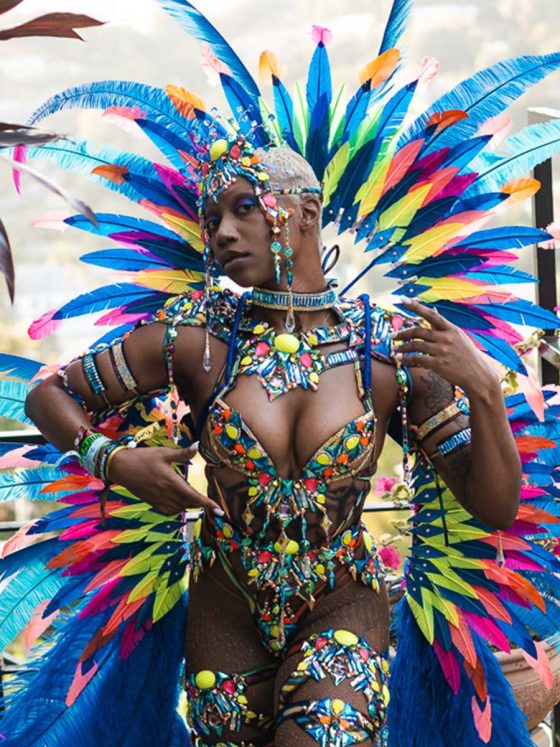
In 1789, colonial authorities in Saint-Domingue, present-day Haiti, banned the drum. They understood something that history has since confirmed: the drum was not entertainment. It was a telephone line between enslaved Africans and everything they had been forced to leave behind. Banning it did not silence it. It drove it underground, into ceremony, into code, into the very bodies of people who refused to forget. What came back up was Carnival. What came back up was Samba. What came back up were Bomba, Cumbia, Punta, and Tambú. What came back up was Africa.
The dances that define the cultural identity of nations from Puerto Rico to Brazil, from Honduras to Colombia, were not created in the Americas. They were carried there, in the muscle memory of an estimated twelve to fifteen million Africans forcibly transported across the Atlantic between the sixteenth and nineteenth centuries. They came primarily from West and Central Africa, from the Yoruba, Kongo, Dahomey, Igbo, and Mandé nations. Colonial powers tried to erase what they brought. They failed.
From Bomba in Puerto Rico to Samba in Brazil, discover how African dance traditions survived the transatlantic slave trade and continue to live in the rhythms of the Caribbean and Latin America. Omiren Styles traces the thread back to the motherland.
The Drum Was the First Target
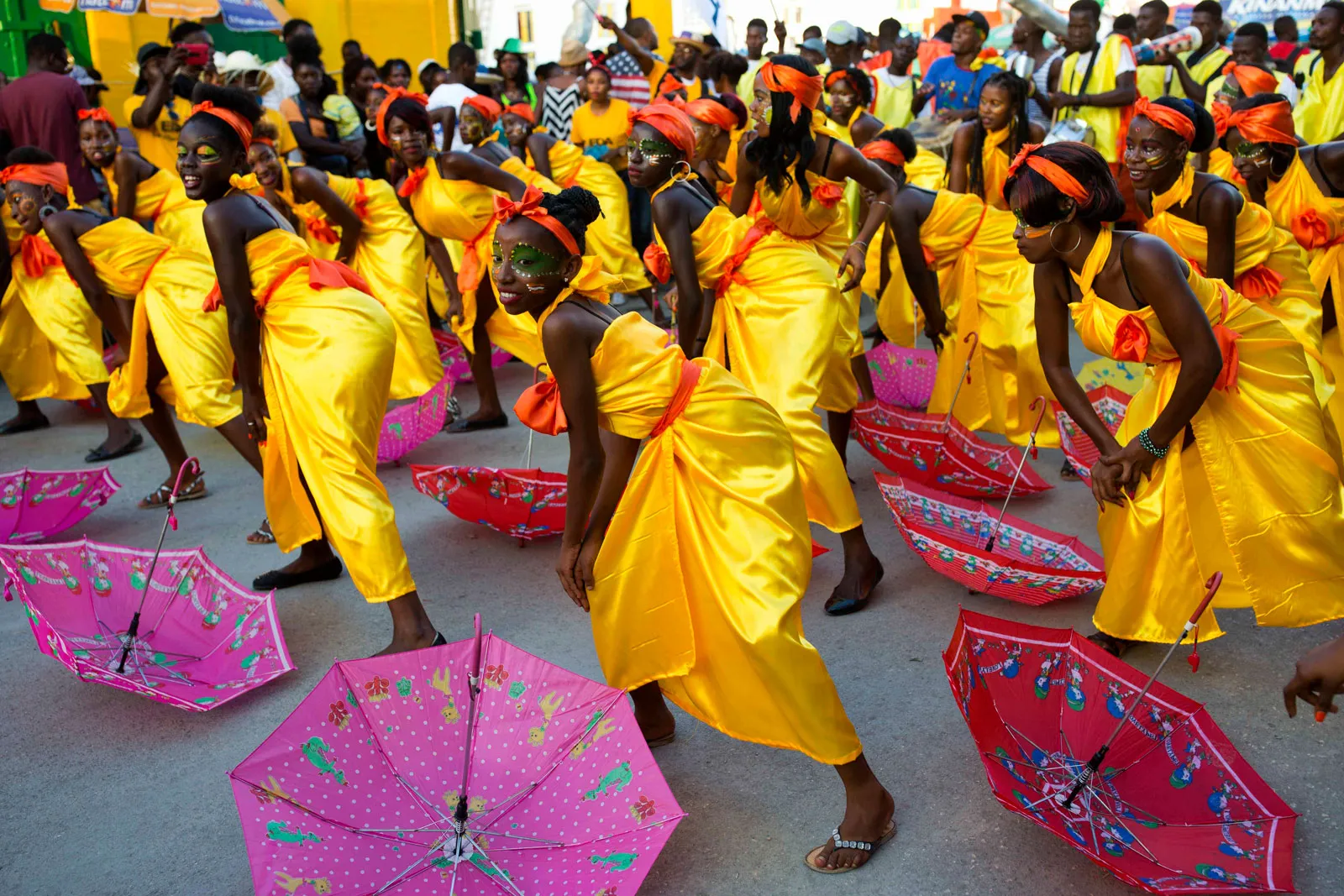
Across the Caribbean and Latin America, colonial administrations passed laws specifically targeting African musical instruments. In 1740, South Carolina’s Negro Act banned drums outright after the Stono Rebellion, in which enslaved Africans used drumbeats to coordinate resistance. Similar bans existed in Cuba, Jamaica, and Brazil. The logic was consistent: the drum held the community together, and community was dangerous.
What the bans produced was not silence but adaptation. Rhythms moved into the body when the instrument was taken away. Call-and-response, the structural backbone of West African communal music, survived in the voice. Circular formations, a feature of ceremonial dances from the Kongo spiritual tradition, appeared in dances across the diaspora. The form changed. The roots did not.
Bomba: Puerto Rico’s Debt to the Kongo Nation
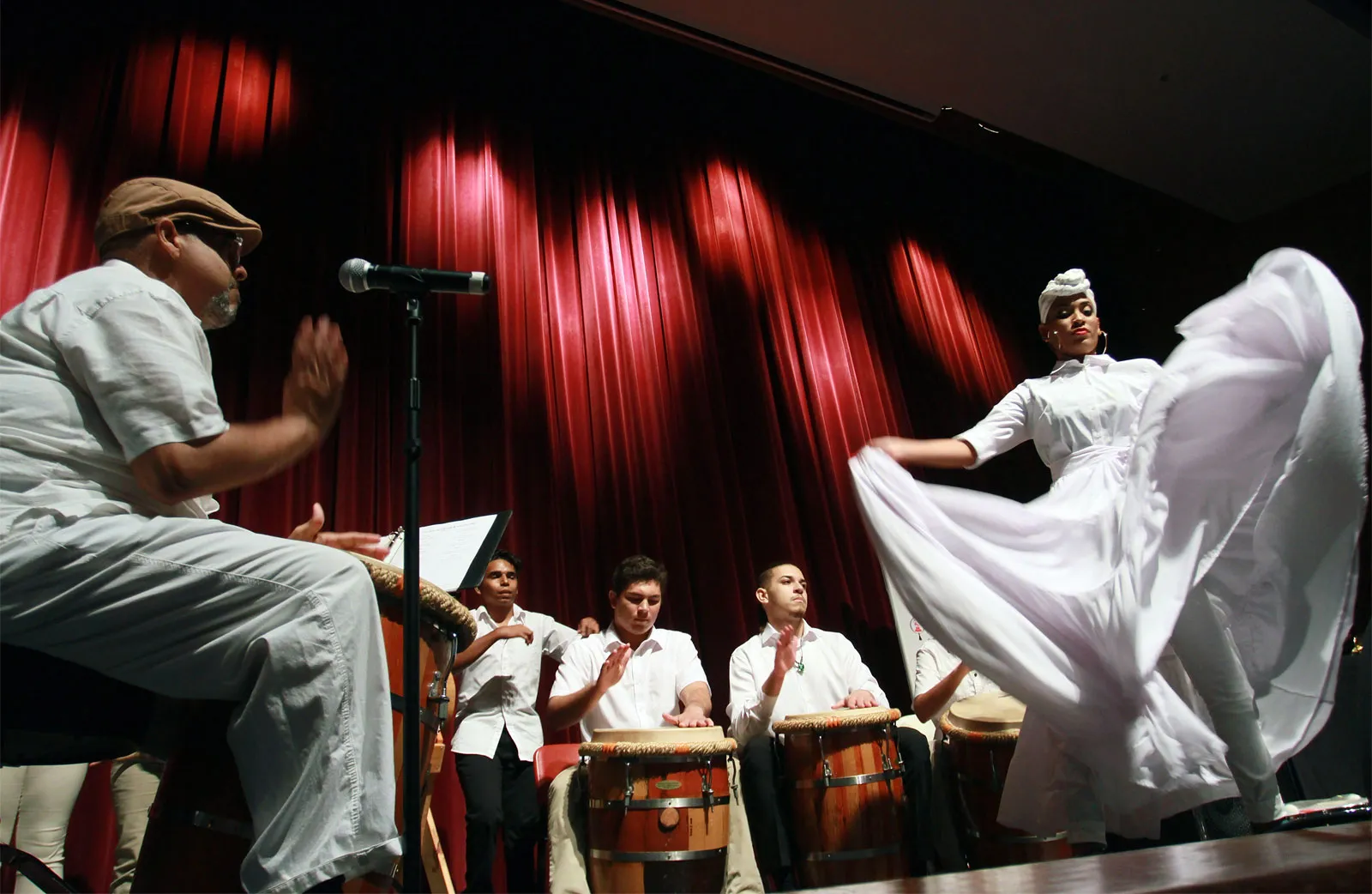
Bomba is one of Puerto Rico’s oldest musical and dance traditions, and its African origins are thoroughly documented. It developed among enslaved Africans brought primarily from the Kongo and Yoruba nations of West and Central Africa. Its defining feature is a live conversation between dancer and drummer: the dancer leads, and the drummer follows, a direct inversion of how Western music typically works and a precise reflection of how communal performance functioned in West African ceremony.
There are over a dozen recognised styles of Bomba, each tied to a specific African ethnic group. Sicá, Yubá, Cunyá, and Holandés each carry the fingerprint of a different part of Africa. This is not a single tradition fused into a single dance. There are many traditions, preserved together on one island.
Cumbia and Mapalé: Colombia’s African Pulse
Cumbia is widely taught in Colombian schools as a national treasure. What is taught less consistently is its origin. Ethnomusicologist Guillermo Abadía Morales documented in extensive detail that Cumbia’s foundational rhythms derive from the drum traditions of the Bantu-speaking peoples of Central Africa, carried to the Colombian coast by enslaved people from Angola and the Congo basin.
The mapalé, a faster and more physically demanding relative of cumbia, is the most directly African of the Colombian coastal dances. Its rapid, grounded movement and percussive energy mirror the ceremonial dances of Bantu communities in Angola. Over time, Cumbia absorbed indigenous and Spanish elements, and the blend became what Colombia now claims as its own. The African pulse at the centre, however, was never replaced. It was simply given new clothing.
Samba: Brazil, the Kongo, and the Word That Crossed the Ocean
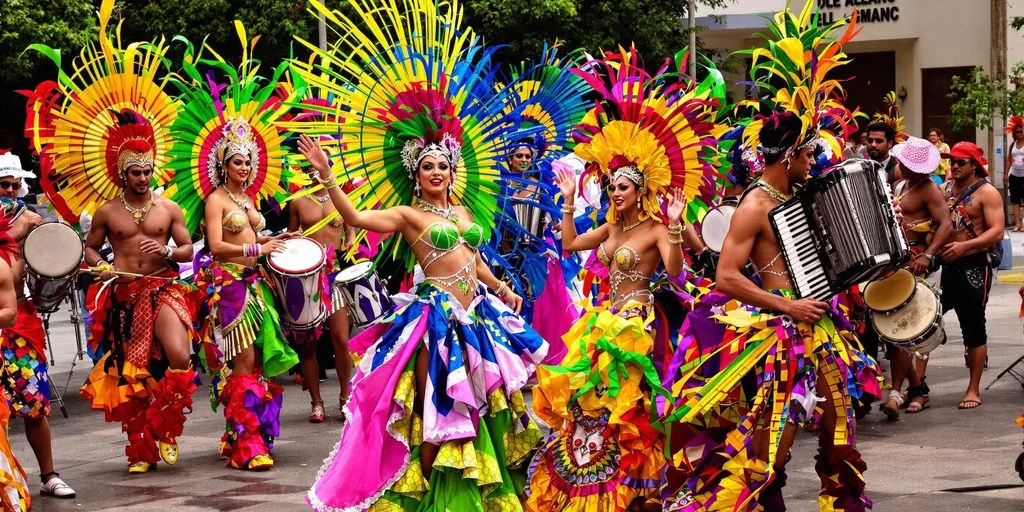
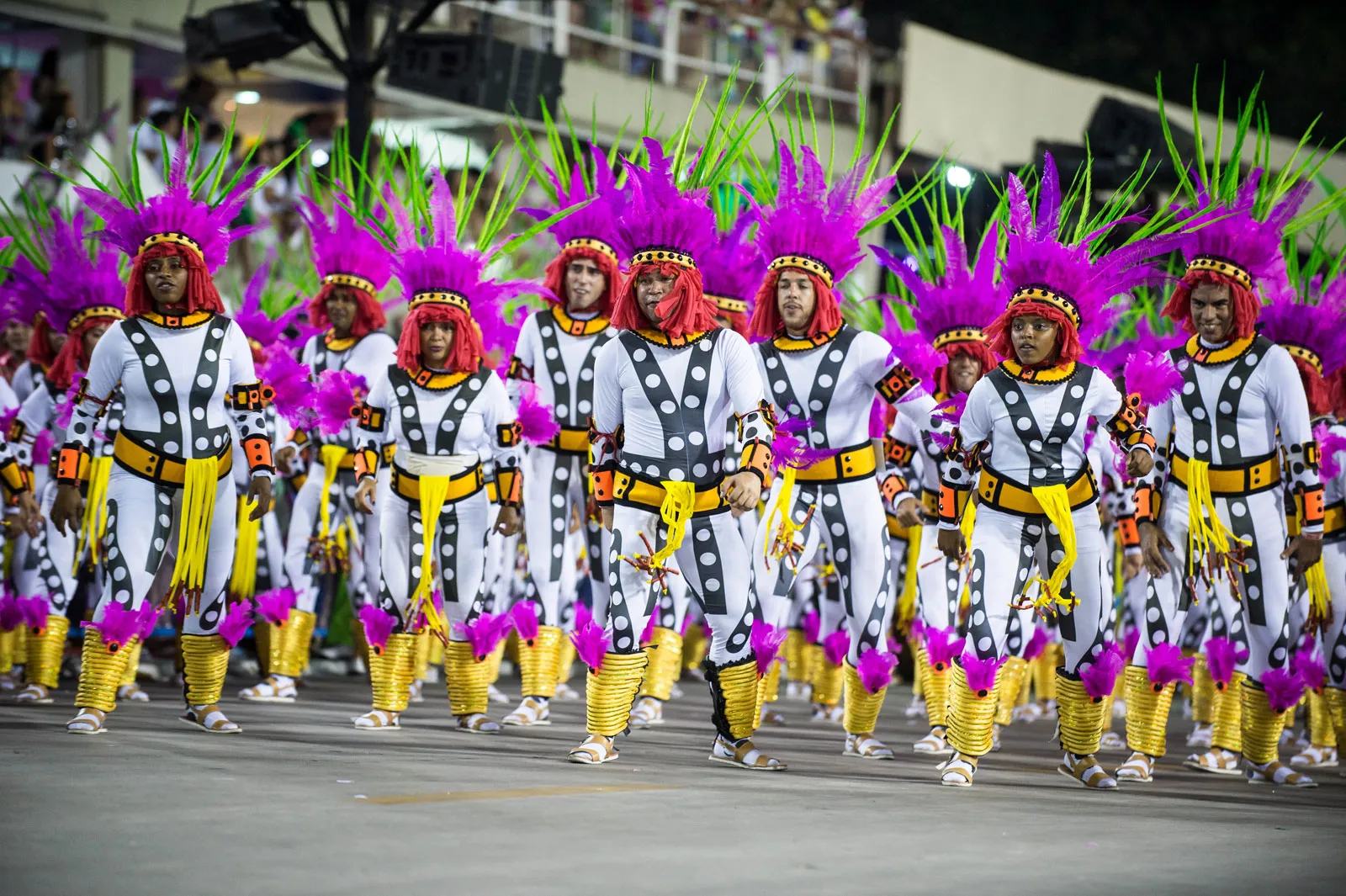
Brazil received more enslaved Africans than any other country in the Americas, an estimated 4.8 million people across three centuries of the trade. That fact is written into Brazilian culture in ways that no amount of rebranding can remove. Samba, now recognised globally as Brazil’s most iconic cultural export, traces directly to the semba, a partner dance from Angola and the Democratic Republic of Congo.
The word ‘samba’ is widely accepted by musicologists, including Brazilian researcher Nei Lopes, as deriving from the Kimbundu word ‘semba’, meaning an invitation to dance or a navel touch, which describes the signature movement of the form. The Candomblé spiritual tradition, rooted directly in the Yoruba religion and brought to Brazil by enslaved people from present-day Nigeria and Benin, also fed directly into the rhythmic and movement vocabulary of samba. In African tradition, there was no separation between the sacred and the social. Dance was always both. Samba carries that duality to this day.
Punta: The Garifuna and an Unbroken Line
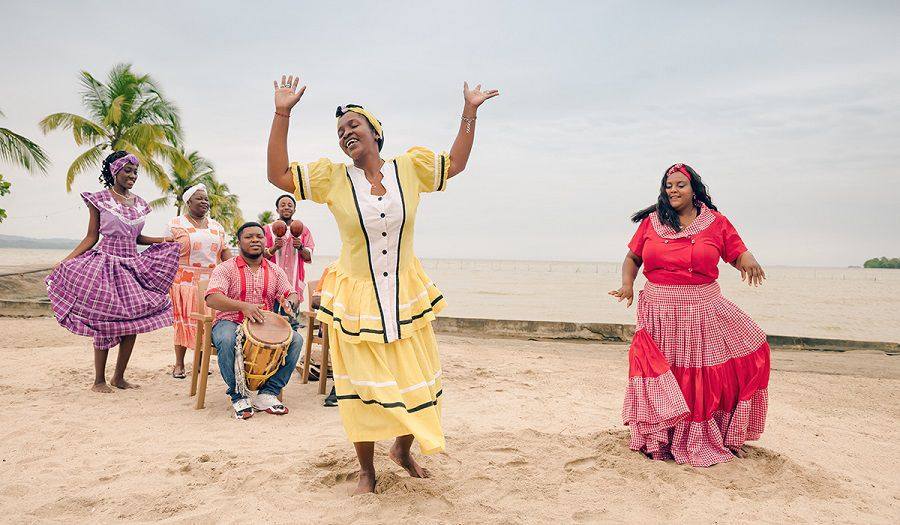
The Garifuna people of Honduras, Belize, Guatemala, and Nicaragua represent one of the most documented and direct examples of African cultural continuity in the entire diaspora. Descendants of West African, Arawak, and Carib peoples who intermingled on the island of St. Vincent before being exiled by the British in 1797, the Garifuna have maintained their traditions with a deliberateness that speaks to a community that understood what was at stake in forgetting.
Punta, their central dance tradition, is performed at funerals and festivals alike. Its rapid hip movements, grounded footwork, and call-and-response singing mirror West African ceremonial dance with a directness that is no accident. In 2001, UNESCO recognised the Garifuna language, dance, and music as part of the intangible cultural heritage of humanity, specifically acknowledging their African origins. That recognition was not a gesture. It was an official record of what the Garifuna community had always known.
Also Read:
- How Yoruba Fashion Tradition Became the Blueprint for Contemporary African Design
- Kente Cloth and the Politics of Cultural Identity
- The African Roots of Latin American Style: How the Diaspora Dressed
- Ijaw Wrapper Traditions and What They Tell Us About Delta State Fashion
Tambú, Batuke, and the Dances That Nearly Did Not Survive
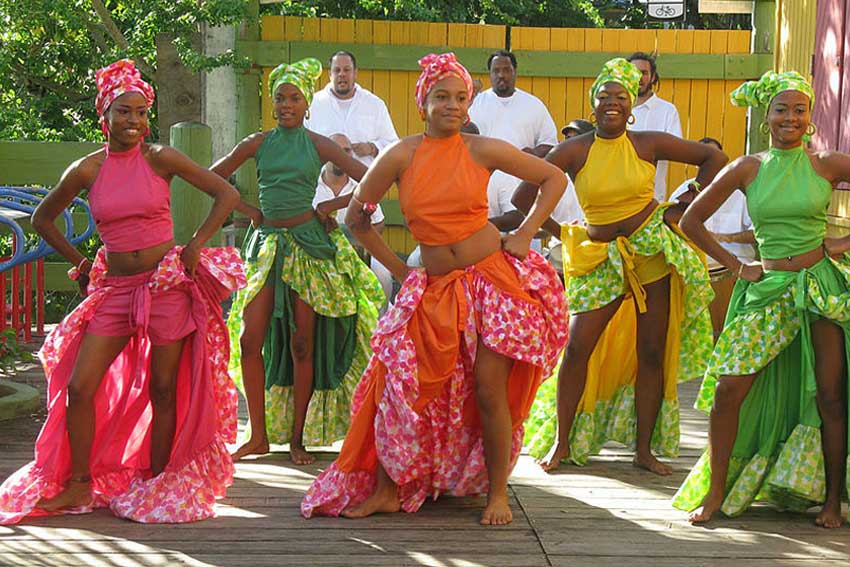
Tambú from Curaçao is descended directly from Kongo funeral and fertility rites. Colonial authorities repeatedly banned it throughout the nineteenth and twentieth centuries because of its explicitly African spiritual content. It survived because communities chose to protect it quietly, passing it between generations in spaces the authorities were not watching.
Batuke, practised in Cape Verde and carried to Brazil by the same currents of the transatlantic trade, is rooted in Bantu tradition. Its circular formation, communal participation structure, and percussive core are features recognisable to anyone familiar with traditional ceremony from Angola or the Congo Basin. These are not folk curiosities at the edge of the story. They are the story.
What the Research Confirms
The Smithsonian Institution’s Centre for Folklife and Cultural Heritage has published sustained research on African retentions in Caribbean and Latin American music. Cuban musicologist Fernando Ortiz, over decades of work in the early to mid-twentieth century, documented precisely how Yoruba, Kongo, and Dahomean traditions became the structural foundation of Cuban son, rumba, and religious music. His research remains a reference point for every serious scholar working in this field. The Journal of the Society for American Music and the Latin American Music Review have both published peer-reviewed work confirming that the rhythmic structures and communal performance styles of the region trace overwhelmingly to West and Central Africa.
The Omiren Argument
Western media have spent decades celebrating samba, cumbia, and bomba as the cultural achievements of the nations where they are now performed, without naming the continent that built them. That omission is not neutral. It is a continuation of the same logic that once banned the drum: the belief that African cultural production is a raw material, available for use by others, but not a civilisational contribution in its own right. Every time a travel magazine writes about the rhythms of Brazil without mentioning the Kongo, it repeats that erasure.
Omiren Styles exists because the African story does not need to be recovered. It is present on every dance floor from San Juan to Rio de Janeiro. It is in the hip movement, the drum pattern, the call-and-response, and the circle. What it needs is to be named, on its own terms, by a platform that understands that Afrocentric culture is not a niche. It is the origin.
These dances are not nostalgic. They are living. They dance at funerals and festivals, in street parades and spiritual ceremonies, by communities who may or may not know the full depth of what they are performing. The knowledge matters. Naming the source is not a political act. It is an accurate one.
Frequently Asked Questions
1. What African nations have had the most influence on Caribbean and Latin American dance traditions?
The Kongo, Yoruba, Dahomey, Igbo, and Mandé nations of West and Central Africa have had the greatest documented influence. Kongo traditions are particularly evident in Samba, Tambú, and Cumbia. Yoruba traditions shaped Cuban religious music, Candomblé in Brazil, and Bomba in Puerto Rico.
2. Why is the African origin of dances like Samba and Cumbia not widely taught?
Colonial historiography consistently attributed cultural production to European and indigenous influences while minimising or erasing African contributions. This pattern persists in mainstream education and media, despite substantial academic research confirming African origins across Caribbean and Latin American dance forms.
3. Which Caribbean or Latin American dance has the most directly documented African lineage?
Punta, practised by the Garifuna people of Honduras and Belize, has one of the most directly documented lineages. UNESCO formally recognised its African roots in 2001. Bomba in Puerto Rico is also extensively documented, with specific styles traced to individual African ethnic groups.
4. How does Afrocentric cultural advocacy connect to dance and fashion?
Dance, dress, and identity were never separate in African tradition. Ceremonial attire, textiles, and movement were part of the same cultural language. Platforms like Omiren Styles argue that recovering the African roots of diaspora dance is inseparable from recovering the full story of African fashion, aesthetics, and cultural authority on the global stage.