Yoruba queens wore the same piece of cloth to signal divine authority, mandated by Louisiana slave law to mark subjugation, banned under apartheid to enforce racial hierarchy, and worn today by Black women across five continents as an act of pride. No other textile in the African diaspora has been made to carry so many contradictory meanings simultaneously. No other garment has been so completely controlled by those with power over Black women’s bodies and so completely retained by the women whose power those sought to diminish. The headwrap is not a symbol. It is a record. And reading it honestly requires holding its entire history at once, the sacred and the violated, the royal and the coerced, the defiant and the grieving, without collapsing any of it into a single redemptive narrative.
The headwrap carries sacred African origins, was weaponised by colonial law, and was reclaimed by freedom movements. Its meaning is not singular. Here is the full history.
The Sacred Origins: What the Wrapped Head Meant Before the Diaspora
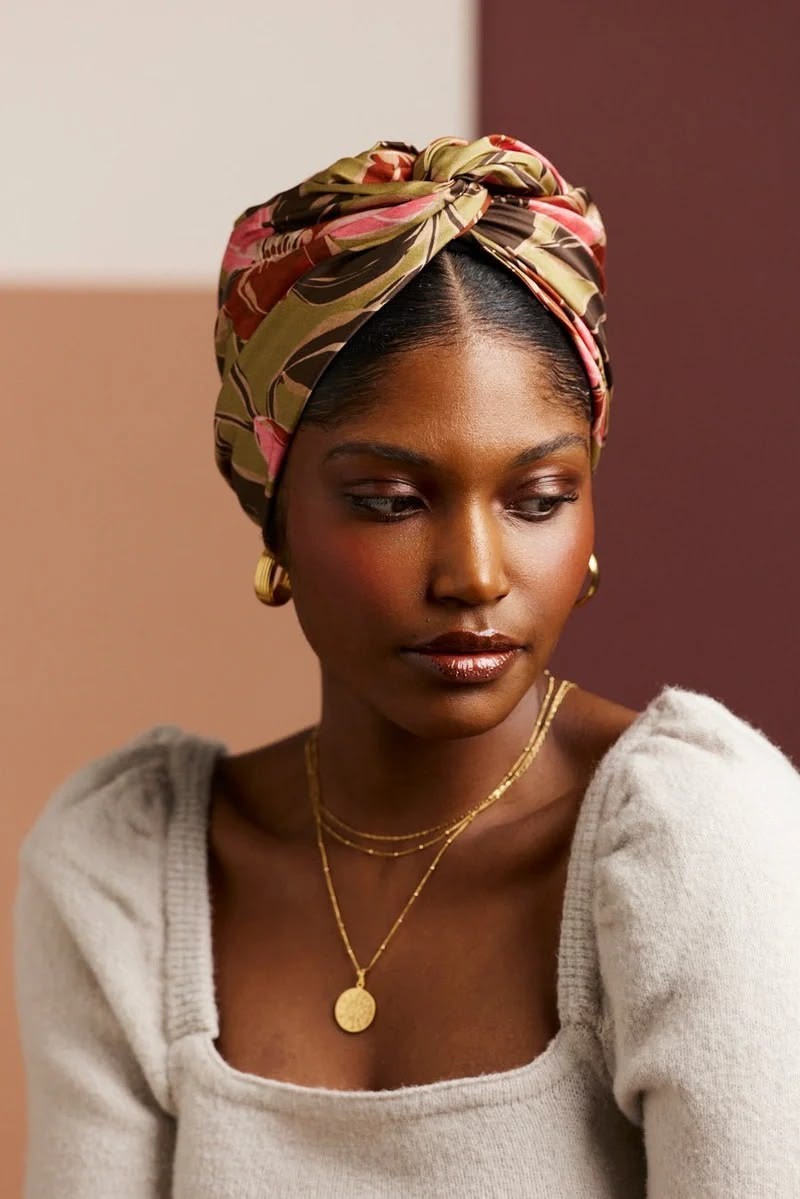
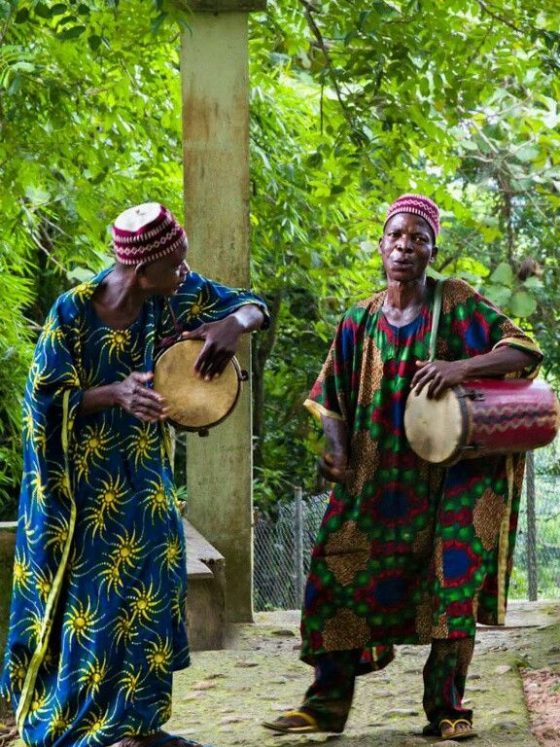
Across West and Central Africa, the covered or wrapped head carried spiritual and social authority that predated European contact by centuries. In Yoruba tradition, the ori, the spiritual essence housed in the head, is among the most sacred aspects of a person’s being. The ori is the personal deity that accompanies each individual, the part of the self chosen before birth that determines destiny. To cover the ori with cloth is to honour it, to protect it, and to acknowledge its divine standing. The gele, the elaborate Yoruba headwrap tied in structured folds at celebrations, naming ceremonies, and religious events, is not a decorative excess. It is a theological statement about the sanctity of the head that carries it.
In the Akan traditions of Ghana and Ivory Coast, the wrapped head similarly communicates status, role, and spiritual alignment. The clothes worn by Asante queen mothers at state occasions are tied in specific ways that announce their position within the political and spiritual hierarchy of the kingdom. Among the Wolof of Senegal and Gambia, head coverings for women are governed by social codes that distinguish marital status, age, religious standing, and occasion with precision. The Smithsonian National Museum of African Art’s documentation of African dress records that head adornment across sub-Saharan Africa consistently encodes social and spiritual information that is not available in any other part of the dressed body with the same density or authority. The head, as the seat of the self, receives the most communicatively loaded textile.
This is the foundation from which the headwrap entered the diaspora. It did not arrive as a neutral piece of cloth. It arrived carrying centuries of African metaphysical and social meaning. What happened to it in the diaspora is not the story of a garment acquiring significance it did not previously possess. It is the story of a garment whose existing significance was systematically attacked, weaponised, banned, and ultimately proved too durable to destroy.
The Tignon Laws: When the State Mandated the Headwrap
In 1786, Governor Esteban Miro of Spanish colonial Louisiana issued the tignon law, an ordinance requiring free women of colour in New Orleans to cover their hair in public with a tignon, a cloth headwrap, and to avoid elaborate hairstyles, jewellery, and dress that the colonial authorities considered inappropriate to their station. The law was explicit about its intent. Free women of colour in New Orleans were perceived as presenting themselves with a dignity and social confidence that disrupted the visual hierarchy the colonial order required. Their dress was not considered a personal choice. It was considered a political act. The tignon was mandated not to cover the head but to mark it.
The response of New Orleans’s free Black women has been documented and analysed by historians, including Virginia Meacham Gould, whose work on Louisiana Creole women is foundational to the scholarship of this period. Rather than submitting to the tignon as a mark of diminishment, the women of New Orleans transformed it. They tied it with elaborate artistry, in vivid colours, with jewels and feathers incorporated into the structure, making the mandated covering into the most visually commanding element of their appearance. The cloth the state intended as a symbol of racial subordination became, through the intelligence and aesthetic agency of the women wearing it, a demonstration of the precise social confidence the law had sought to suppress.
This transformation is one of the most documented examples of African diaspora aesthetic resistance, and it establishes a pattern that runs through the subsequent history of the headwrap: the imposition of the cloth by a power that means to humiliate, and the reclamation of the cloth by the women wearing it in ways that invert the intended meaning. The tignon law lasted in various forms into the American period of Louisiana’s governance. The tradition of elaborate tignon-tying, which accidentally outlasted the law entirely.
Enslavement, Domestic Service, and the Cloth as Racial Marker
Across the antebellum American South, the headwrap was ubiquitous on enslaved Black women and on Black women in domestic service after emancipation. It was so consistently associated with enslaved and servant status that it functioned as a visual racial marker in the economy of antebellum dress: the wrapped head identified the wearer’s social position to anyone passing on the street as reliably as a uniform. This association was not incidental. It was produced by the conditions of enslavement, which required enslaved women to cover their hair for both labour and social signalling purposes, and then reinforced by the domestic service industry that perpetuated the same dress conventions after legal emancipation.
The effect of this association on the headwrap’s cultural standing was profound and lasting. For Black women in the American North who had achieved social distance from enslavement and domestic service, the headwrap carried the stigma of the condition it had been made to mark. Wearing it in public in the late nineteenth and early twentieth centuries risked being read as belonging to a social position that Northern Black middle-class communities were actively working to move beyond. The headwrap’s journey from sacred Yoruba garment to antebellum racial marker had made it, for some communities, a garment to be avoided rather than worn with pride.
This history is documented in the scholarship of Tanisha Ford’s work on Black women’s dress politics in America, which traces how the politics of respectability shaped Black women’s dress choices across the twentieth century and how those politics intersected with the specific history of garments like the headwrap that had been weaponised by racial hierarchy. Ford’s analysis establishes that Black women’s dress decisions in America have never been purely personal. They have always been made in a landscape shaped by the history of how their appearance has been read, regulated, and used against them.
“The headwrap’s meaning cannot be reduced to pride or resistance. It is the most semantically dense textile in the African diaspora, worn by queens and mandated by slave codes, banned by apartheid and reclaimed by freedom movements. Its meaning is the entire history of Black womanhood compressed into cloth.”
The Doek Under Apartheid: Regulation, Resistance, and the South African Headwrap
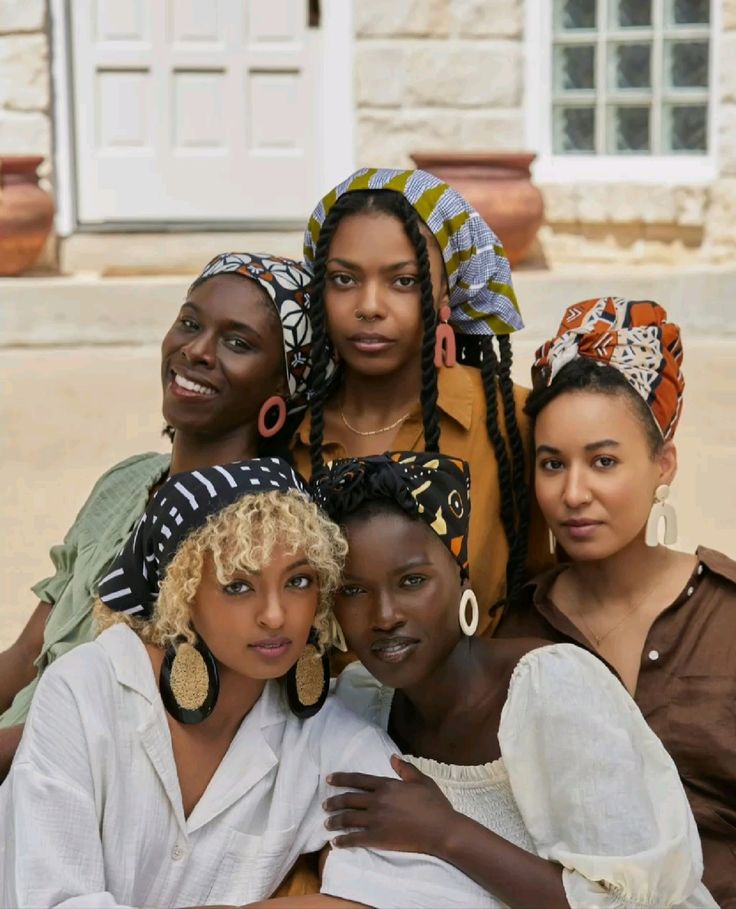
In apartheid South Africa, the doek, the cloth headwrap worn by Black African women, was read by the apartheid state as a racial marker with specific class and spatial implications. Domestic workers, who formed one of the largest categories of Black female labour in apartheid South Africa, were required to wear uniforms that typically included a white doek as part of their working dress. The doek thus became associated with the conditions of Black female domestic labour in the same way the antebellum headwrap had been associated with enslaved and servant status in the American South.
The apartheid government’s broader programme of racial classification and spatial segregation made visible markers of racial identity a matter of ongoing state interest. The doek, worn by Black African women in a context where the apartheid state was classifying, spatially separating, and economically controlling Black South Africans, was inseparable from the conditions of that control. The South African History Archive’s documentation of apartheid dress regulation records that clothing and appearance formed part of the pass law system’s broader architecture of racial surveillance and control, in which the appearance of Black South Africans in public spaces was subject to institutional scrutiny that did not apply to white South Africans.
In this context, the doek also became a site of political assertion. Anti-apartheid women activists wore the doek as a statement of solidarity with Black working women and as a rejection of the white European dress norms that apartheid’s professional hierarchy rewarded. The African National Congress Women’s League incorporated the doek into its political visual identity. The same cloth that the apartheid domestic service industry used as a uniform of subordination became, in the hands of the liberation movement, a statement of Black African womanhood that refused to be subordinated. This dual operation of the headwrap in South Africa, simultaneously the mark of the domestic worker and the emblem of the freedom fighter, is the most concentrated expression of the contradiction that runs through the entire history of its diaspora.
The 1960s and 1970s: Reclamation and the Natural Hair Movement
The reclamation of the headwrap as an act of Black pride in the United States is inseparable from the Black Power and natural hair movements of the 1960s and 1970s. As Black American activists and artists rejected the politics of respectability that had shaped middle-class Black dress for generations, and as the afro emerged as the defining political hairstyle of the movement, the headwrap reappeared as a symbol of Afrocentric identity and African cultural continuity. The associations with enslavement and domestic service that had made it a garment to be avoided were deliberately challenged. The wrapped head was reframed as a connection to African ancestry, a refusal of European beauty standards, and a visible declaration of Black cultural pride.
This reframing was carried by figures including Nina Simone, Miriam Makeba, and Erykah Badu, whose consistent use of elaborate head coverings as part of their public artistic identity contributed to the headwrap’s rehabilitation as a garment of cultural authority rather than social subordination. Makeba’s specific contribution is significant: she wore the headwrap as a South African exile performing Afrocentric political identity on international stages, making it simultaneously a symbol of African cultural pride, anti-apartheid resistance, and diaspora solidarity. The Schomburg Center for Research in Black Culture’s archive of Black women’s fashion history documents how the headwrap’s cultural rehabilitation in this period was not a single event but an accumulated shift in how Black women across multiple communities and national contexts chose to relate to a garment with a violently contradictory history.
The shift was not universal, and it was not without internal debate. Black feminist writers in this period were actively analysing the politics of dress and the question of what it meant to reclaim a garment that had been used as an instrument of racial control. The reclamation was real. So was the complexity of reclaiming something that had been both sacred and coercive, both royal and domestic, and whose history could not be simplified into a narrative of victimhood overcome.
ALSO READ
→ How African Diaspora Communities Use Dress to Mourn, Celebrate, and Survive
→ Why Wearing African Cloth in the Diaspora Is an Act of Cultural Reclamation
→ Clothing as Cultural Identity: What African Dress Has Always Communicated
The Headwrap in Contemporary Diaspora Life
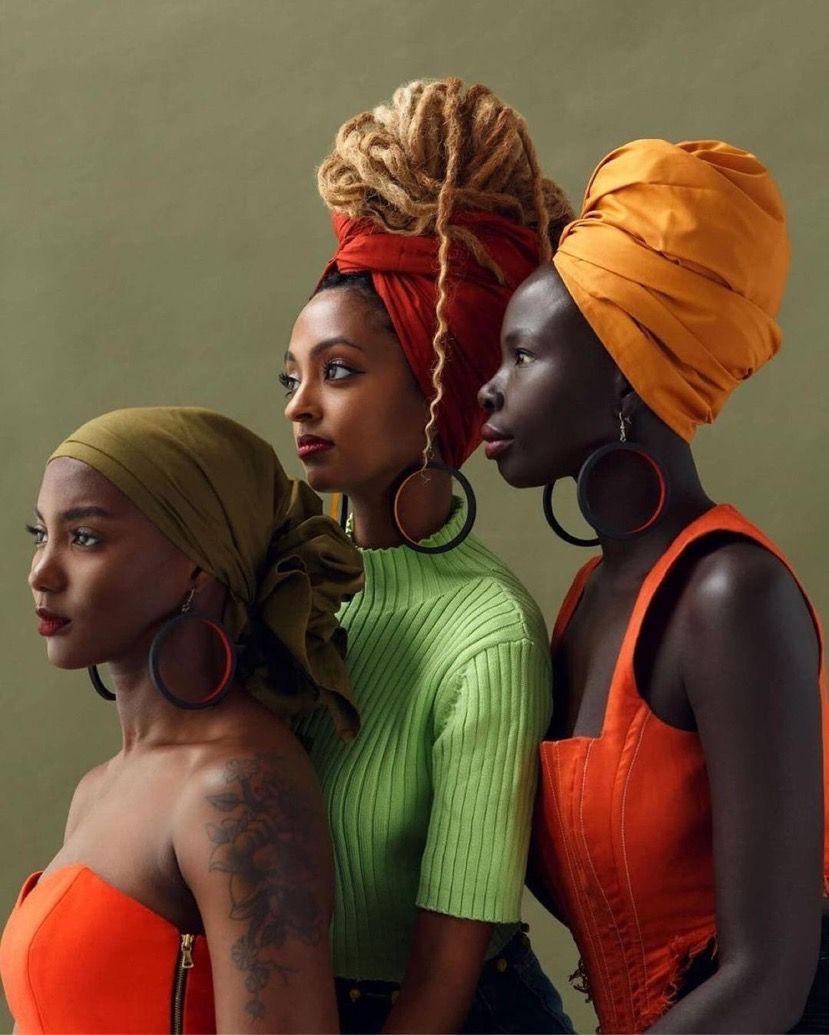
In the mid-2020s, the headwrap occupies a more varied cultural landscape than at any previous point in its diaspora history. In West African communities in Britain, France, and the United States, the gele and its regional equivalents continue to be worn at ceremonies with the full weight of their Yoruba, Igbo, Ghanaian, and Senegalese aesthetic codes intact. These are not reclamation acts. They are the ordinary continuation of a living tradition that was never fully interrupted within community spaces.
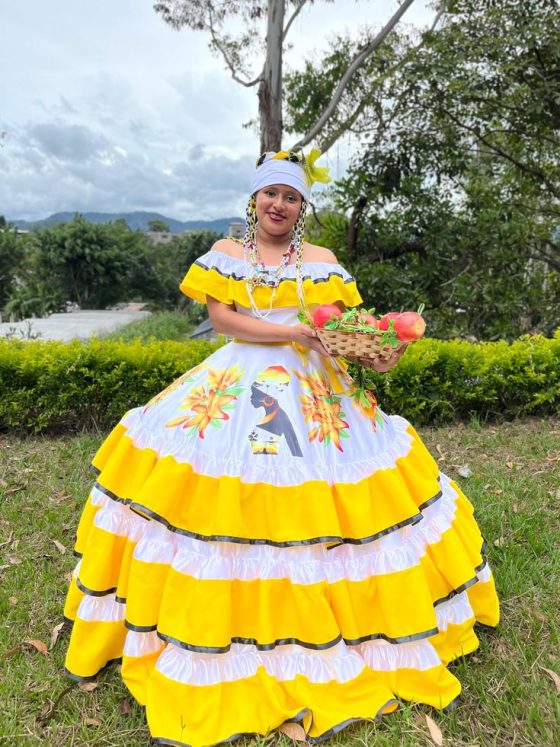
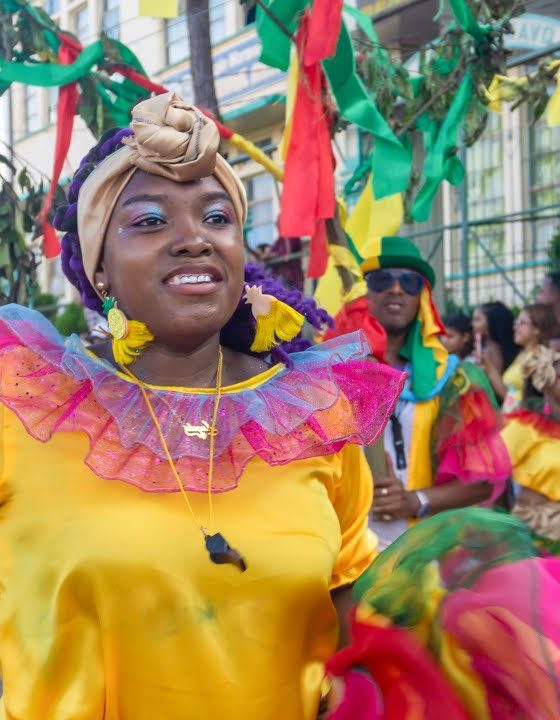
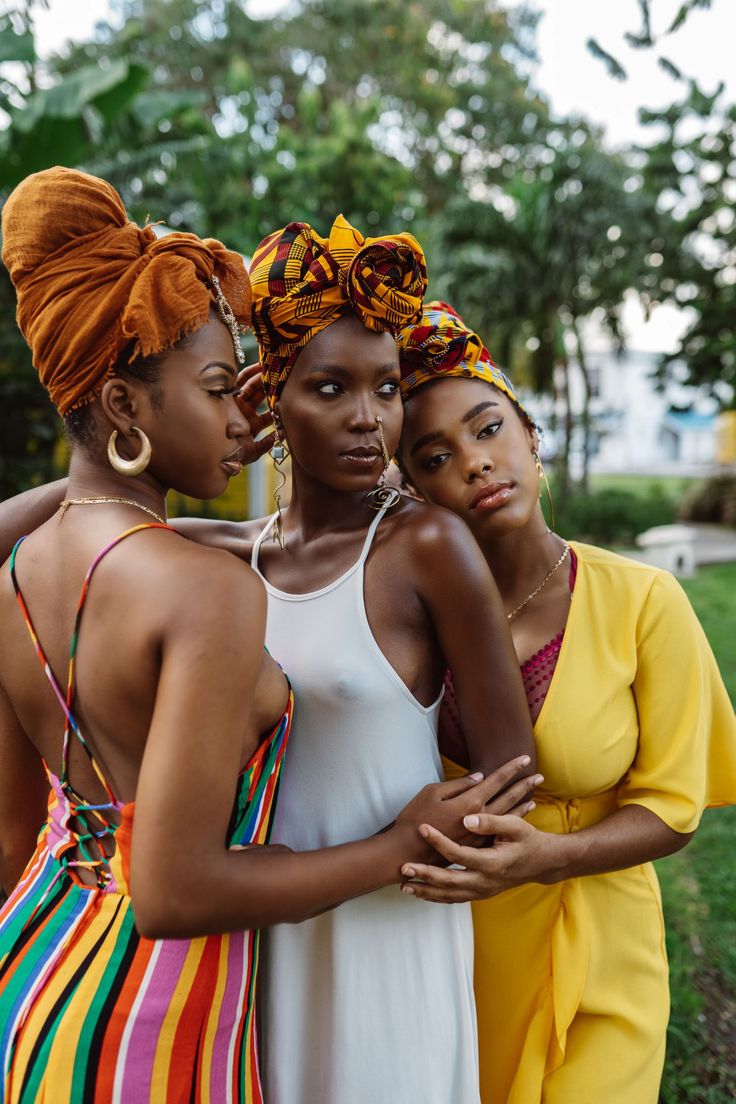
In the broader Black diaspora, the headwrap is worn across a spectrum of intentions: as spiritual practice by women in African traditional religion communities, as cultural pride by women asserting Afrocentric identity, as aesthetic choice by women who value it as a fashion object, and as protective covering by women managing natural hair. These motivations are not mutually exclusive, and the women wearing the headwrap are not required to resolve the contradictions in its history before they put it on. The history is present in the cloth, whether or not the wearer is consciously invoking it.
The political dimensions of the headwrap remain active. In France, the 2004 law prohibiting conspicuous religious symbols in public schools and the 2010 law banning face coverings in public spaces created a legal environment in which Muslim women’s head coverings, including those worn by Black French women of West African descent, became the subject of legislative and judicial action. The European Court of Human Rights has issued multiple rulings on cases brought by Muslim women in France and Belgium challenging these restrictions. The headwrap that Louisiana colonial law mandated as a racial marker is, in contemporary France, subject to legal prohibition as a religious one. The state’s interest in controlling what Black and Brown women put on their heads has not diminished. The mechanism has changed.
THE OMIREN ARGUMENT
The headwrap cannot be reduced to a symbol of pride or resistance, not because those meanings are wrong, but because they are radically incomplete. It is the most semantically dense textile in the African diaspora: sacred in Yoruba metaphysics as the covering of the ori, the divine essence of the self; mandated by Louisiana slave law as a mark of racial subordination in 1786; transformed by New Orleans free Black women into an act of aesthetic defiance within that same mandate; associated with enslaved and domestic service labour across the antebellum American South; regulated by apartheid South Africa as part of the architecture of racial surveillance; reclaimed by the liberation movement as an emblem of Black African womanhood; rehabilitated by the Black Power movement as a symbol of Afrocentric cultural identity; and subject today to legal restriction in France as a religious garment. The same cloth. The same act of covering the head. Entirely different meanings depending on who mandated it, who wore it, who watched it, and in what century. To wear it with full understanding is to wear all of that history simultaneously. No single narrative, not pride, not resistance, not reclamation, contains it.
What the headwrap’s history actually establishes is something more significant than any single meaning can carry: It establishes that Black women’s relationship to their own bodies has been a site of continuous political contest across five centuries and multiple continents and that the headwrap has been the specific textile on which that contest has been conducted most visibly. Every law that mandated it and every law that banned it understood this. Every woman who wore it in defiance of either kind of law understood it too. The pride that contemporary Black women express in the headwrap is real and earned. So is the grief that belongs to its history. Both belong in the story because both are in the cloth. What the headwrap demands of its wearer and its analyst is not simplification. It demands the capacity to hold contradiction without resolving it, which is, not coincidentally, one of the most consistent demands that African diaspora history makes of everyone who engages it honestly.
Frequently Asked Questions
What is the African spiritual significance of the headwrap?
In Yoruba tradition, the ori, the spiritual essence housed in the head, is among the most sacred aspects of a person’s being. It is the personal deity chosen before birth that governs individual destiny. Covering the ori with cloth honours and protects it. The gele worn at Yoruba ceremonies is a theological statement, not a decorative one. Similar principles govern head covering across Akan, Wolof, Igbo, and other West and Central African traditions, where the wrapped head communicates spiritual alignment, social status, and relational position to the community and the divine.
What were the Tignon laws, and why do they matter for understanding the headwrap?
The tignon laws, enacted in 1786 in Spanish colonial Louisiana, required free women of colour in New Orleans to cover their hair with a headwrap in public. The stated intent was to suppress the social confidence and visible dignity of free Black women, which the colonial authority perceived as a political threat to the racial hierarchy. The women of New Orleans responded by transforming the mandated cloth into an elaborate art form, incorporating vivid colours, jewels, and structural complexity that made the tignon into a demonstration of the very confidence the law sought to contain. The tignon laws are foundational to understanding the headwrap’s diaspora history because they establish the pattern of state imposition and community reclamation that runs through its entire subsequent history.
How did the headwrap become associated with Black pride in the 1960s and 1970s?
The rehabilitation of the headwrap as a symbol of Black cultural pride in the 1960s and 1970s was driven by the Black Power movement’s broader rejection of the politics of respectability that had shaped middle-class Black dress in America. As the afro emerged as the defining political hairstyle of the era, the headwrap reappeared as a symbol of Afrocentric identity and African cultural continuity. Artists and activists including Miriam Makeba, Nina Simone, and Erykah Badu wore elaborate head coverings as part of their public identities, contributing to the garment’s transformation from a marker of domestic service into a statement of African cultural authority.
What does wearing a headwrap mean for Black women in the diaspora today?
Contemporary Black women wear the headwrap across a full spectrum of intentions: as a spiritual practice within African traditional religion, as cultural pride asserting Afrocentric identity, as an aesthetic choice, and as a protective covering for natural hair. These motivations are not mutually exclusive. The history of the headwrap, its sacred African origins, and its weaponisation by colonial and apartheid law and its reclamation by freedom movements, remains present in the cloth regardless of whether the wearer is consciously invoking it. The contemporary political dimensions also remain active, particularly in France and Belgium, where legislation restricting religious head coverings has made the headwrap subject to legal restriction in a different register than any previous period of its history.
Omiren Styles covers African fashion, identity, and culture from inside the continent and its diaspora. Read more at omirenstyles.com.