In 1958, 57,000 BaTonga people were forcibly removed from their ancestral Zambezi homeland to make way for the Kariba Dam. They were told to leave. They were not told what to carry. They carried their beadwork.
Most fashion media discover a community when it is convenient: when a designer borrows from its visual language, when a photograph goes viral, when the aesthetic becomes useful to someone else’s narrative. The BaTonga people of Zimbabwe’s Zambezi Valley have never been convenient. They live in one of southern Africa’s most remote corridors, in districts like Binga and Nyaminyami, far from the trade routes of international coverage. Their story involves displacement, colonial engineering, and the kind of cultural survival that is too complex for a trend piece.
This is why nobody has properly written about their dress tradition. And this is precisely why Omiren Styles is starting here.
In 1958, 57,000 BaTonga people were forcibly removed from the Zambezi Valley to make way for the Kariba Dam. They carried their beadwork. Here is what that means.
The Basilwizi: People of the Great River
The BaTonga are a Bantu people who have occupied the Zambezi Valley for centuries. They call themselves the Basilwizi, which in Chitonga means the people of the great river. Their culture was built around the river: its flooding cycles, its fish, its seasonal rhythms, and Nyaminyami, the serpentine river god whose presence in the Zambezi gave the valley its spiritual architecture. Nyaminyami is described as having the head of a fish and the body of a serpent. The community’s belief that he would resist the dam’s construction proved prescient: in 1957 and again in 1958, during the dam’s construction, the Zambezi sent floods of historic proportions that destroyed access roads, coffer dams, and an access bridge, killing workers and delaying the project. BaTonga elders attributed these events to Nyaminyami’s anger. The colonial engineers attributed them to a meteorological anomaly.
When the British colonial administration of the Federation of Rhodesia and Nyasaland decided in the mid-1950s to dam the Kariba Gorge and flood the Gwembe Valley, it was not a project that consulted the people whose homes would disappear beneath the rising water. The dam was designed by French engineer Andre Coyne, built by the Italian company Impressit, and financed by an eighty million US dollar loan from what is now the World Bank. Its purpose was to generate hydroelectricity for the mining industries of Northern Rhodesia (now Zambia) and Southern Rhodesia (now Zimbabwe), and for the white urban settlements that benefited from them.
Between 1957 and 1962, approximately 57,000 BaTonga were forcibly relocated from the fertile Zambezi plains to higher, drier, less arable land. Approximately 23,000 were moved from the Zimbabwe side; 34,000 from the Zambia side. They were displaced from 193 villages. According to a World Commission on Dams report cited by the Basilwizi Trust, 57% of the land now sitting at the bottom of Lake Kariba was arable and owned by the BaTonga. Lake Kariba, now the world’s largest artificial reservoir by volume, sits on top of the land the BaTonga had inhabited for generations. What they carried out of the valley, what could not be submerged, was their dress.
The Architecture of BaTonga Dress
Before the Kariba displacement, and rooted in a tradition that predates colonial contact, BaTonga women wore a two-piece ensemble that is among the most precisely coded dress systems in southern Africa. Before glass-bead trade cloth arrived through 19th-century trade networks, BaTonga women wore black hide aprons. From the mid-to-late 19th century, they adopted dark blue indigo trade cloth for their aprons, but they rebuilt it on their own terms through beadwork of extraordinary specificity.
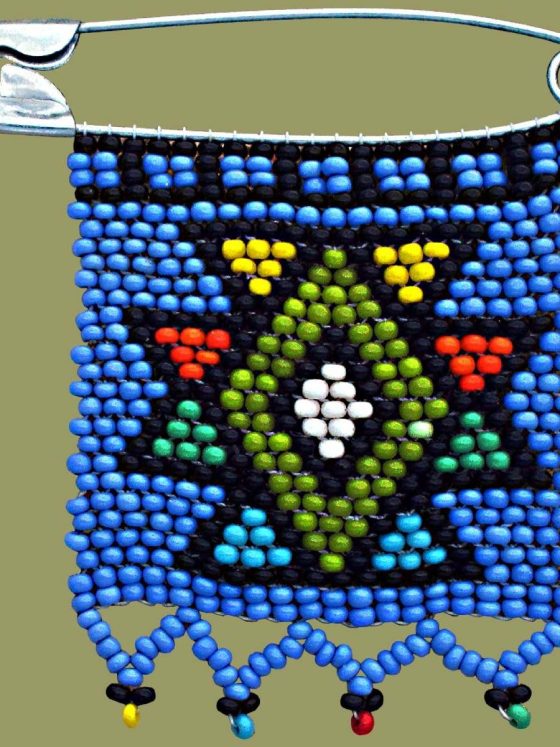
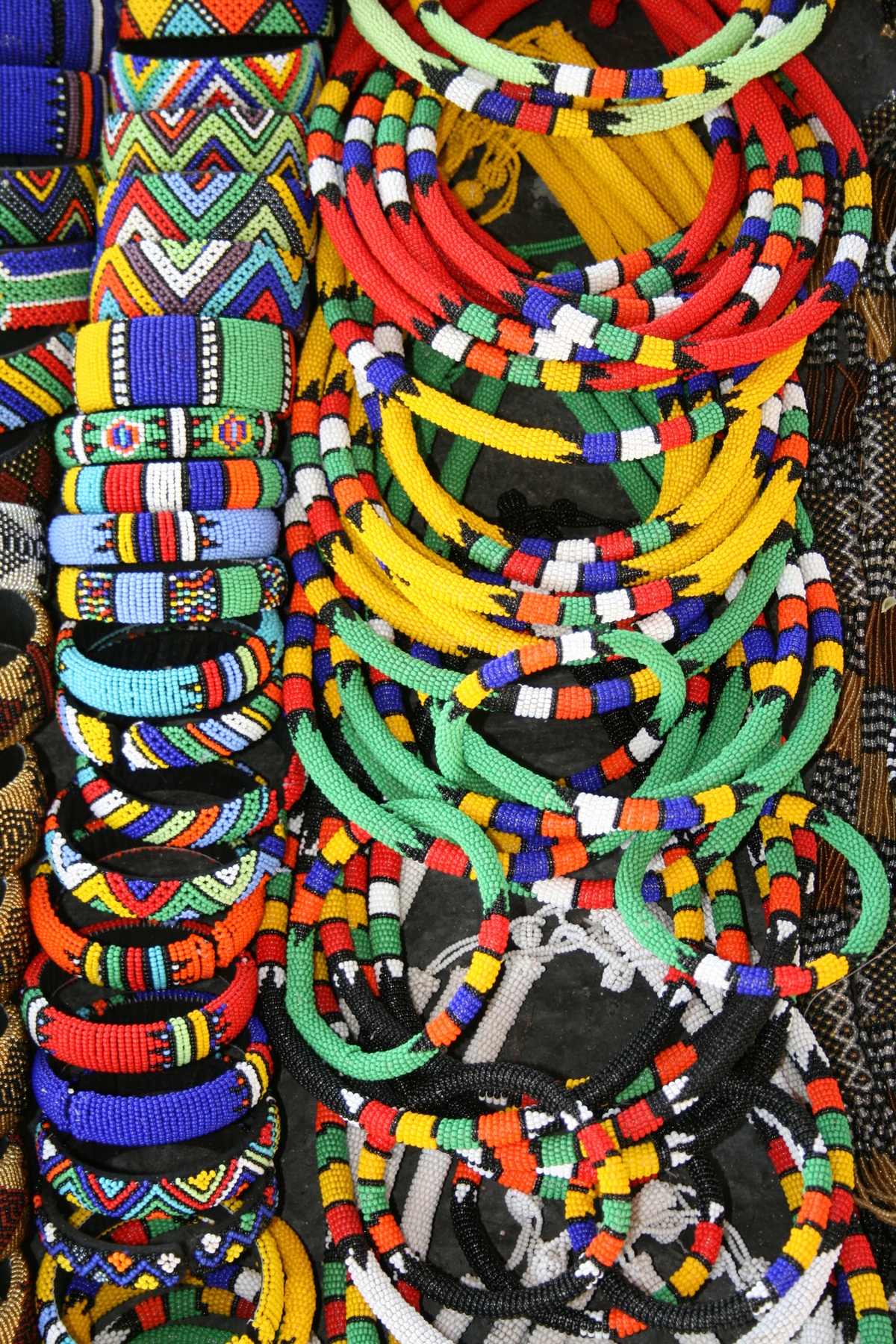
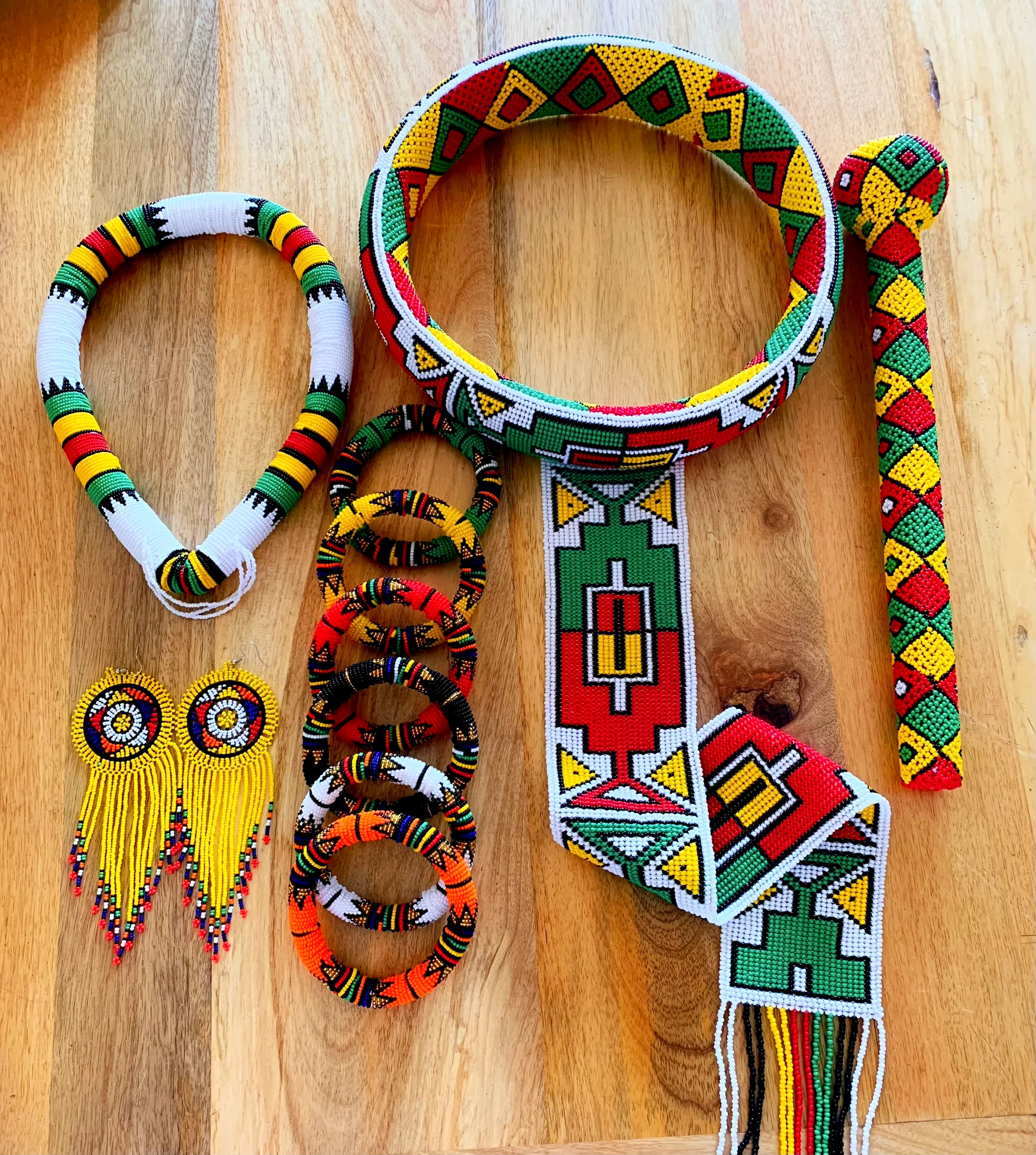
The front apron was typically decorated with small wavering checks or zigzag rows of red, black, and blue beads: tight, deliberate geometric patterning that carries the same mathematical discipline as Ndebele murals. As Omiren Styles has documented in Top 5 Traditional Styles for Ndebele Women in 2026, the most significant acts of cultural survival in Southern Africa have often been encoded in beadwork, made by women who understood that what they wore would outlast what they owned. BaTonga beadwork operated on exactly that principle. The back apron, larger and therefore capable of carrying more visual information, was worked with evenly spaced rows of fan-shaped lozenges in red, white, and blue. The size of a woman’s back apron was not accidental: larger aprons displayed more beadwork, and more beadwork indicated greater status, greater wealth, and the dedication of more hours to a craft inseparable from a woman’s identity as a maker and as a member of the community.
Men wore smaller beaded cloth panels as neck ornaments, matching the geometric vocabulary of the women’s aprons but scaled to the chest and back of the neck. BaTonga men also wore necklaces with the same decorative element worn over the chest. The visual grammar was consistent across genders: the BaTonga were dressed as a community whose members shared a single aesthetic language, differentiated by scale and role rather than by entirely separate traditions.
The BaTonga did not decorate their clothing. They encoded it. Every bead placed was a decision about identity, status, and memory, made by a woman who knew that what she wore would outlast what she owned.
One garment stood apart entirely. Married women and grandmothers, the matriarchs, wore beaded blankets, traditionally made from cowhide and worked over many years with beadwork that functioned as autobiography. Each blanket recorded events from its owner’s life. The beading was never finished in a single sitting; it accumulated, season by season, ceremony by ceremony, until the blanket became a wearable record of a woman’s history. To assess a BaTonga matriarch’s blanket was to read her life.
ALSO READ
- Top 5 Traditional Styles for Ndebele Women in 2026: History, Beadwork, and Ceremony
- Maasai Beadwork: Meaning, Symbolism, and the Language of Identity
What the Slave Trade Did to the Body
There is one dimension of BaTonga dress that requires confrontation rather than aesthetic softening.
BaTonga elders document that the practice of facial modification, the removal of two front teeth, the scarring of cheeks, and the piercing of the nose septum, began in the latter half of the 19th century as a deliberate strategy of self-protection against Arab slave traders whose raids terrorised Zambezi Valley communities. The logic was precise and desperate: by rendering themselves less physically attractive according to the standards slavers applied, BaTonga men and women hoped to reduce their value as human cargo and avoid capture.
This is not a footnote to the history of BaTonga dress. It is the centre of it. The decision to alter one’s own body, permanently and painfully, in order to survive, is the most extreme form of what dress and adornment have always done: communicate meaning in conditions where communication is a matter of life and death. The BaTonga encoded their refusal of enslavement onto their own faces. That these modifications later became markers of cultural identity, worn by elders as signs of their deepest connection to BaTonga heritage, is one of the more extraordinary transformations in the history of African adornment. The modifications are now becoming rarer, worn primarily by the oldest generation of elders, but their meaning has not diminished.
The Dam, the Division, and What Beadwork Carried
The construction of the Kariba Dam did not merely displace the BaTonga from their land. It divided them. Lake Kariba became an international border between Zimbabwe and Zambia, cutting through the middle of a community that had always understood the Zambezi River as the connective tissue of their world. Overnight, BaTonga families on different sides of the rising water found themselves in different nations, subject to different governments, separated from each other by the very lake that replaced their home.
The beadwork traditions diverged accordingly. BaTonga elders note that the row of beads that edges certain skirts is a style specific to one side of the lake only, a detail that would be invisible to any outsider but that the community itself reads as a precise indicator of which bank, which nation, which relocated population a garment came from. Lake Kariba changed BaTonga beadwork geography in ways that no political map captures and that no fashion archive has yet documented.
What the dam could not change was the commitment to the craft itself. The BaTonga took their beaded skirts with them to the higher ground. Academic researchers studying BaTonga artefacts after the resettlement found communities that had lost nearly everything material but had maintained their cultural objects with remarkable determination. The beadwork was not merely decorative. It was the proof that the BaTonga still existed as a coherent people with a specific identity in a world that had tried to submerge both them and their history beneath a reservoir.
The Living Tradition and Its Challenges
BaTonga beadwork aesthetics did not freeze after the displacement. BaTonga elders’ documentation indicates that from the 1940s onward, women began incorporating a wider range of colours and expanding their geometric and figurative motifs to include elements from everyday life. The visual world of the relocated community found its way into the bead vocabulary. This was not a dilution. It was exactly what living craft traditions do: they absorb the present while remaining rooted in the past. This is the same dynamic that Omiren Styles has documented in the transformation of Shweshwe fabric in South Africa: as The Geometry of Heritage: Why Shweshwe Still Defines South African Fashion documents, a cloth that enters a culture through trade and becomes the fabric of initiation, marriage, and public identity is not a commodity anymore. It is infrastructure. BaTonga beadwork had already completed that transition before the dam was built. The displacement test assessed whether the infrastructure could withstand being carried. It could.
The traditional two-piece ensemble, with its indigo cloth and geometric beadwork, is worn primarily by older women for ceremonies such as funerals, traditional rituals, and cultural festivals. The beaded skirts from the 19th century are increasingly rare, treated as heirlooms rather than everyday dress, handed from generation to generation as objects of such cultural weight that wearing them casually would be understood as a category error.
The geometric vocabulary of BaTonga beadwork has also migrated into a new medium. At the Binga Craft Centre, weavers, including Viola Mwembe and Barbara Mudimba, have documented how, as beads became increasingly scarce and unaffordable in the rural areas around Binga, women transferred the traditional bead patterns into their Ilala grass basket-weaving. The zigzag rows and fan-shaped lozenges that once appeared on the front and back aprons now appear in woven form in the baskets produced by women connected to ZUBO Trust and Basilwizi Trust in Binga. Abbigal Muleya, a founder member of ZUBO Trust and long-term collaborator of the Basilwizi Trust, has described this continuity as an expression of the spirit of unity among BaTonga women: the knowledge did not stop when one medium became unavailable. It moved to the next available material and kept working.
The community centred in Binga, the district that became the hub of BaTonga life after the resettlement, maintains active cultural institutions, including the Binga Museum, which holds photographs and artefacts from the pre-dam period. The museum represents a community that chose to archive itself precisely because the colonial and post-colonial state repeatedly failed to do so. As Omiren Styles has documented in African Textile Museums: Preserving Memory in an Age of Fast Fashion, the decision to preserve rather than simply adapt is itself a political act. For the BaTonga, the Binga Museum is not a heritage institution in the Western sense. It is a counter-archive: a community choosing to hold its own record when the official record has consistently failed it.
What BaTonga dress deserves, and has not yet received from the global fashion conversation, is the same serious attention given to beadwork traditions from communities with more international exposure. The geometric precision of a BaTonga front apron is no less technically sophisticated than the Ndebele beadwork that has influenced luxury fashion brands and contemporary design. The difference is not in the quality of the tradition. It is in whose land was flooded, and whose community ended up living in relative obscurity above a tourist lake while the rest of the world photographed its sunsets.
ALSO READ
- The Geometry of Heritage: Why Shweshwe Still Defines South African Fashion
- African Textile Museums: Preserving Memory in an Age of Fast Fashion
The Beadwork That Would Not Drown
There is a clarity to the BaTonga story that fashion media rarely confronts directly. A government decided that a dam was worth more than a community. The community was moved. The BaTonga were, in the words of a World Commission on Dams report, treated like animals or things rounded up and packed in lorries to be moved to their new destination. The Southern Rhodesian authorities set up no compensation scheme for the Zimbabwe-side BaTonga comparable to the Gwembe Special Fund established in Zambia.
Nyaminyami, the river god, is said by BaTonga communities to have sent the floods of 1957 and 1958 that damaged the dam during construction, and is believed to remain unsatisfied, waiting for the day the dam breaks and the water returns the BaTonga to their ancestors and their land. This is not the language that Lake Kariba’s tourism brochures use when they sell sunset cruises and tiger-fishing contests. But it is the language in which the BaTonga dress was made and continues to be worn.
Every beaded apron still produced in Binga or Nyaminyami exists within this context. The woman who makes it knows what her grandmothers carried out of the valley. The matriarch who wears a beaded cowhide blanket to a ceremony is wearing accumulated years of personal history on her back, years that include the displacement, the resettlement, the division of families by a border that is also a dam, and the daily act of maintaining a dress tradition in conditions specifically designed to make that maintenance difficult.
The BaTonga did not lose their visual language to the rising water. They carried it to higher ground and kept working. That is the only elaboration required.
THE OMIREN ARGUMENT
The BaTonga beadwork tradition is not a survival story in the sentimental sense. It is a proof of something precise: that cultural identity, when it is encoded in material practice rather than simply declared, is harder to destroy than land or livestock or legal rights. The colonial state took the Gwembe Valley floor. It could not take the knowledge of how to work a back apron with fan-shaped lozenges in red, white, and blue. That knowledge was carried in bodies and hands, passed between women in the relocated communities, and maintained with a commitment that the authorities who ordered the displacement would not have predicted and did not account for.
The Basilwizi Trust, established in 2002 to advocate for BaTonga rights and development in their post-displacement home, takes its name from the community’s own word for themselves: the people of the great river. The river is still there, technically, though it is now a reservoir owned by a binational authority that has acknowledged, in the words of its own chief executive, only a moral rather than a legal obligation to the community whose homeland it submerged. The beadwork is still there. The geometric vocabulary of the front apron, the autobiographical accumulation of the matriarch’s blanket, the row of beads whose slight variation tells a BaTonga elder which side of the lake a garment came from: all of it is still here. Omiren Styles documents it now, in part because the fashion conversation has waited too long to do so, and in part because a tradition this specific and this tenacious deserves an editorial record that matches its own precision.
Frequently Asked Questions (FAQs)
Who are the BaTonga people and where do they live?
The BaTonga are a Bantu people of Zimbabwe and Zambia who have occupied the Zambezi Valley for centuries. They call themselves the Basilwizi, which means the people of the great river in Chitonga. Today they are concentrated primarily in Zimbabwe’s Binga, Nyaminyami, Gokwe North, and Hwange districts, and in equivalent areas of southern Zambia, following their forced displacement from the Gwembe Valley during the construction of the Kariba Dam between 1957 and 1962.
What happened to the BaTonga when the Kariba Dam was built?
Between 1957 and 1962, approximately 57,000 BaTonga were forcibly relocated from their ancestral Zambezi Valley homeland to make way for the construction of the Kariba Dam. Approximately 23,000 were moved from the Zimbabwe side and 34,000 from the Zambia side, with 193 villages displaced. They lost their farming grounds, their fishing access, their ancestral burial sites, and the geographic home in which their culture had been built. According to a World Commission on Dams report, 57% of the land now under the lake was arable and owned by the BaTonga. The colonial authorities acknowledged only a moral, not a legal, obligation to the displaced community.
What does BaTonga beadwork look like, and what does it mean?
BaTonga beadwork is characterised by precise geometric patterning on indigo trade cloth aprons. The front apron carries small wavering checks or zigzag rows of red, black, and blue beads. The back apron carries evenly spaced rows of fan-shaped lozenges in red, white, and blue. A larger back apron displayed more beadwork and indicated higher status. Men wore matching geometric beaded neck ornaments. Married women and grandmothers wore beaded cowhide blankets, worked over many years, that functioned as autobiographical records of their owners’ lives.
How did the Kariba Dam affect BaTonga beadwork traditions?
The dam divided the BaTonga community between Zimbabwe and Zambia, and the beadwork diverged accordingly. BaTonga elders note that the row of beads edging certain skirts is specific to one side of the lake, a detail invisible to outsiders but readable to the community as an indicator of which bank and which displaced population a garment came from. The dam could not, however, stop the craft. The beaded skirts were carried to higher ground, maintained in relocated communities, and continued to evolve, with women from the 1940s onwards incorporating a wider range of colours and figurative motifs from everyday life.
What is Nyaminyami, and what role does the river god play in BaTonga culture?
Nyaminyami is the BaTonga river god, described as having the head of a fish and the body of a serpent, who governs the Zambezi River and the life around it. BaTonga communities believed the dam’s construction violated Nyaminyami’s domain, and attributed the historic floods of 1957 and 1958, which damaged the dam during construction, to his resistance. BaTonga communities maintain that Nyaminyami remains unsatisfied and will one day break the dam, returning the water to its natural course and the BaTonga to their ancestral land.
Where can I learn more about BaTonga cultural heritage?
The Binga Museum in Binga district, Zimbabwe, holds photographs and artefacts from the pre-dam Gwembe Valley period and represents a community-led effort to maintain an archival record that the colonial and post-colonial state consistently failed to provide. The Basilwizi Trust, established in 2002, advocates for BaTonga rights and community development and takes its name from the community’s own word for themselves. Academic research on BaTonga cultural heritage is available in the International Journal on Minority and Group Rights and in the Lancaster and Vickery-edited volume, The Tonga-Speaking Peoples of Zambia and Zimbabwe.