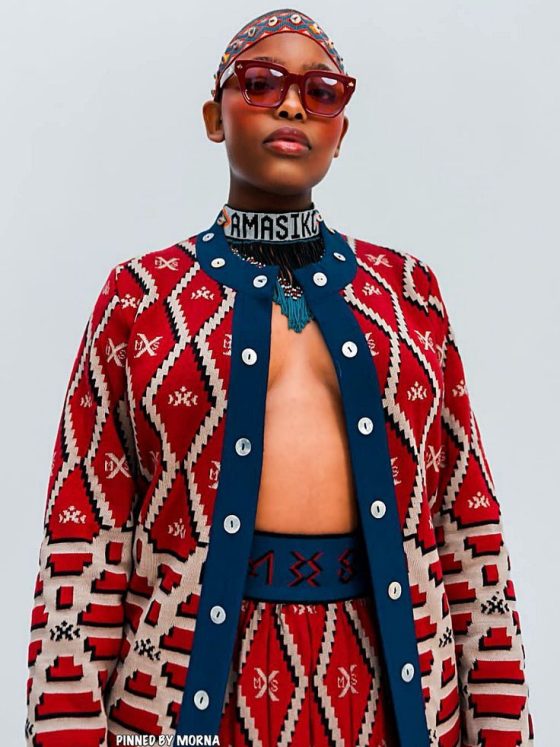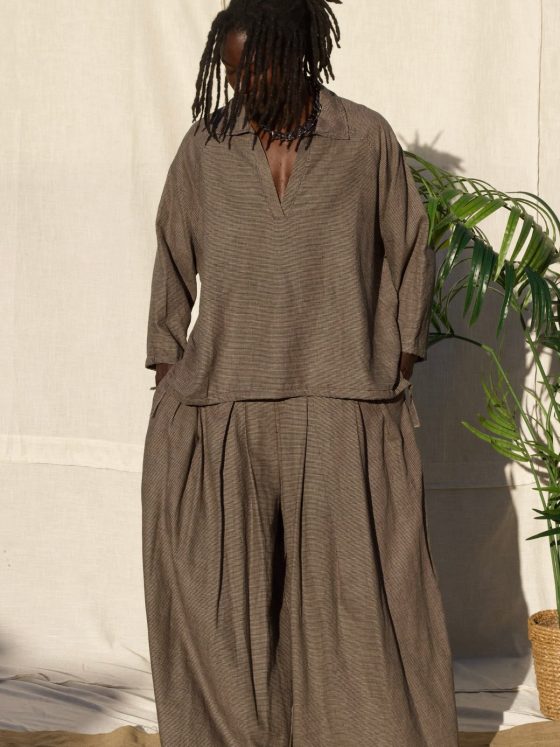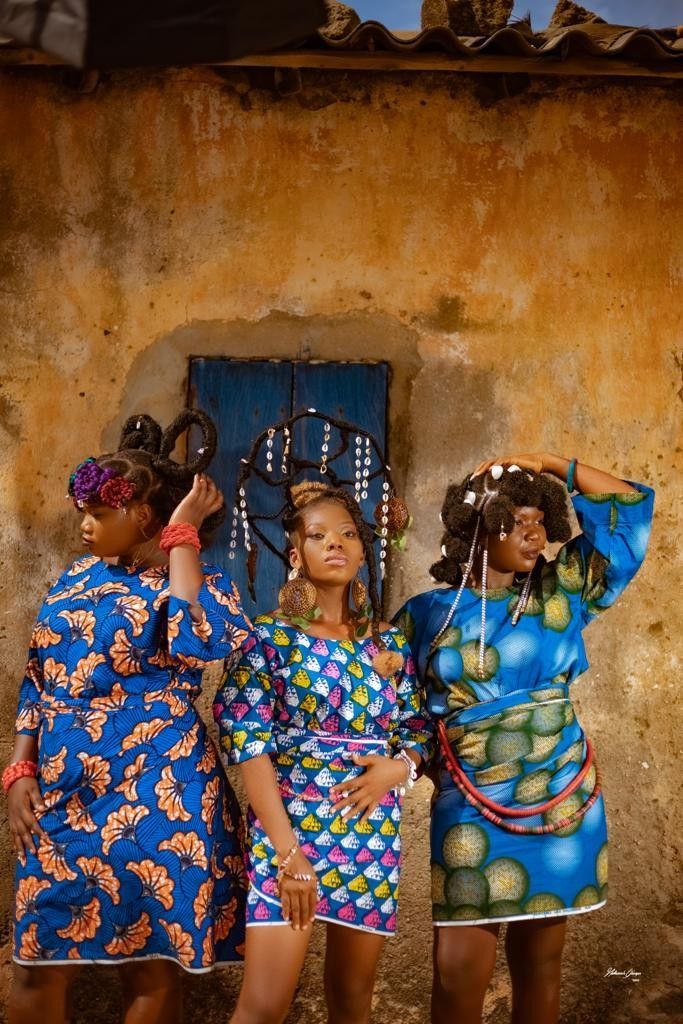
In December 2025, Wallpaper*, one of the world’s most authoritative design publications, covered an exhibition at the Palais de Lomé called Design in West Africa. The show brought together more than 20 designers, artists, and artisans from across the region and is on view until 15 March 2026. The fact that Wallpaper* sent its editors to Lomé to cover it is, itself, a statement about where Made in Togo stands in the international design conversation in 2026. The question is not whether the international press has noticed. The question is what it has noticed and whether that reflects what is actually being made.
Made in Togo 2026 is not a government programme. It is not a trade label. It is a description of a practice that the designers, makers, and cultural institutions documented across this series have been building for three decades. Desmo has been making clothes in Lomé from locally found materials since 1996. Fall Touré’s FAALT students wear batik made in Togo to class. Malaika Nabillah’s Capzules specialises in handmade batik fabric. Kimberly Anthony travelled back to Togo to produce her G.Y.D. Studio collection with local artisans, explaining her decision in plain terms: “Togo is a small country and if I make it, a young person from there is making it too.” This is the Made in Togo argument, stated by a Togolese designer in Paris who came home to make things. It is not a slogan. It is a position.
Made in Togo is not a label waiting to be printed. It is a practice already underway. Here is the full documented account of what that means in 2026.
The Omiren Argument:
Made in Togo is not a label waiting to be printed. It is a practice already underway. The question for 2026 is not whether it exists. It is whether the conditions for scaling it exist. The answer is: partially, and growing faster than at any previous point in Togo’s fashion history.
What Made in Togo Already Means: The Practitioners’ Evidence
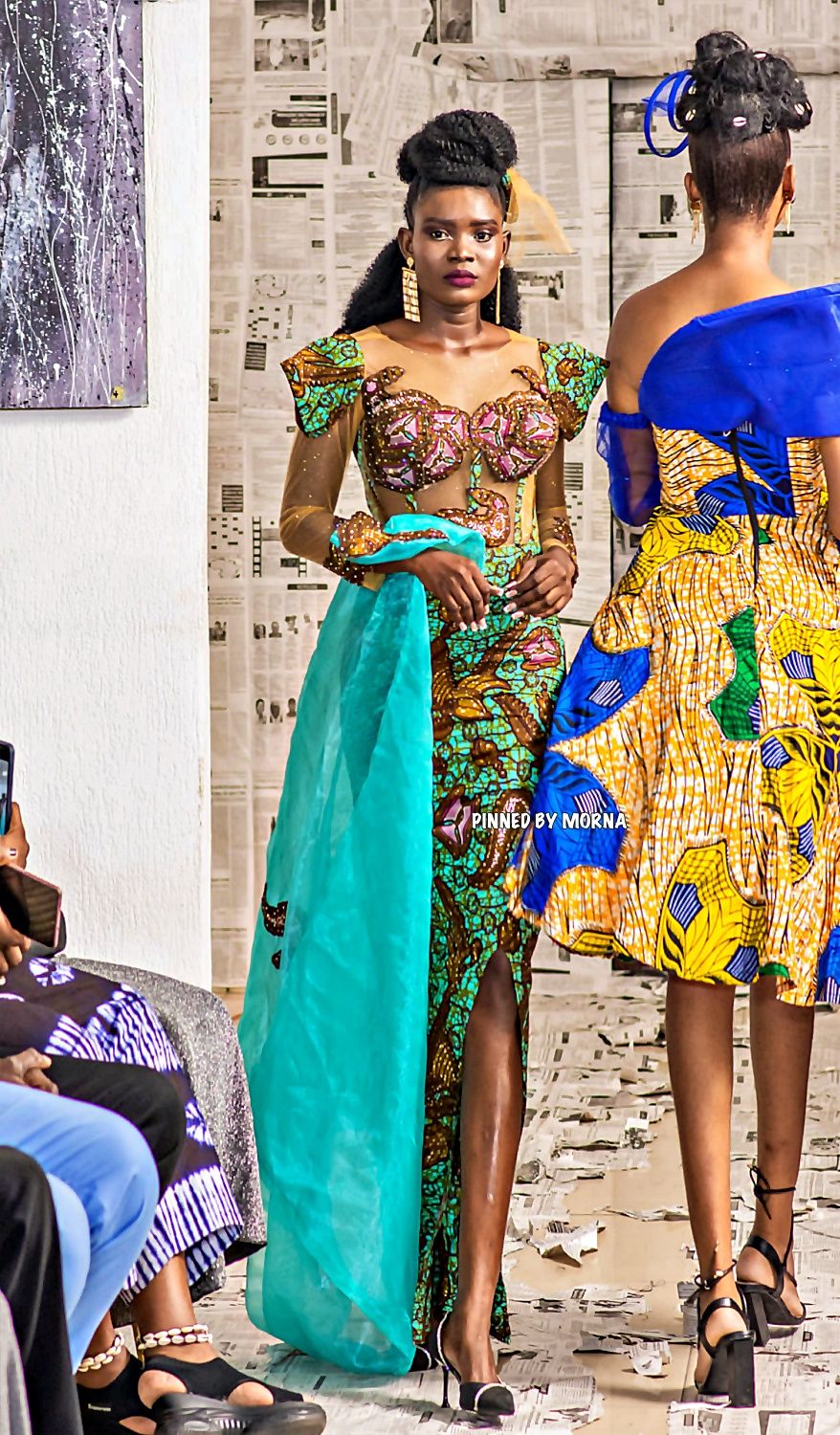
The practitioners documented in this series have each made specific, confirmed choices about where and how they produce. Desmo’s use of mattress foam, locally found wood, and materials sourced from Lomé’s built environment is a 30-year practice of making from what is present rather than importing what is standard. Fall Touré’s FAALT adopted batik as its student uniform for the 2023/2024 academic year – confirmed as the first school in Togo to do so – choosing locally produced African fabric as a pedagogical argument: if you are learning to make clothes in Togo, you wear Togolese fabric to school. Malaika Nabillah, co-founder of Togo Yeye, runs Capzules, a sustainable fabric company in Lomé specialising in handmade batik. She also founded Spicy TG, its ready-to-wear extension. The platform that documents Togolese creativity internationally is run by someone who also manufactures fabric locally. That is not a coincidence. It is a position.
Eugénie Guidi Ayawa’s La Vie en Couleur collection, shown at FIMO 2025, was built from pagne Kenté Gold – her direct phrase was “de chez nous,” from here, from us. Kimberly Anthony produced G.Y.D. Studio in Lomé with local artisans, specifically because she wanted her brand’s production to be rooted in the city where she was born, even though she is Paris-based. Amah Ayivi’s Marché Noir sources exclusively from Hédzranawoeé, describing the choice as a militant act: the clothing that Europe sent to Africa as surplus is selected in Lomé and returned to Europe as fashion. The material comes from Togo. The intelligence behind its selection is Togolese. The brand is Lomé-Paris.
The constraint that appears most consistently among these practitioners is a reliable electricity supply. Marlène Adanleté-Djondo’s Wina Wax is designed in Lomé and manufactured in China because domestic production at a competitive scale is not possible without reliable power. This is the one constraint that the practitioners’ creative choices alone cannot solve. It requires infrastructure investment. As documented in the Future of Fashion article in this series, the PIA’s captive solar power plant – potentially West Africa’s largest photovoltaic facility – is the infrastructure that could change this. If its power becomes available to independent designers alongside the industrial tenants it was built for, the Wina Wax constraint can be addressed within the same zone where Star Garments is currently producing for US export.
Made in Togo at the Palais de Lomé: Institutional Confirmation
The Palais de Lomé, the former colonial governor’s palace that has been renovated into one of West Africa’s most significant cultural centres, has become the institutional anchor of the Made in Togo argument. Under the directorship of Sonia Lawson – appointed founding director in 2015, a Sciences Po Paris and HEC Paris graduate who has been featured in Forbes Afrique – the Palais has pursued a systematic programme of presenting Togolese and West African creative practice to international audiences. In 2017 and 2019, Lawson organised exhibitions of Togolese design and crafts at the Révélations Biennale des Métiers d’art at the Grand Palais in Paris: Togo’s creative makers, in the most prestigious craft exhibition venue in France. The Palais also hosted Togo Yeye’s Racines de l’Imaginaire exhibition in 2022, placing the platform’s work about Togolese hair and identity inside one of Lomé’s most historically significant buildings. In December 2025, Wallpaper* covered the Palais’s Design in West Africa exhibition, on view until 15 March 2026, which brought together more than 20 designers, artists, and artisans from across the region.
The Palais de Lomé’s international programming strategy is the institutional equivalent of what FIMO 228 and Lomé Fashion Week do for fashion: it presents Togolese creative practice to audiences who would not otherwise know to look for it, and it does so in venues whose cultural authority is legible to those audiences. When Wallpaper* covers a design exhibition in Lomé, the international design press’s frame of reference for the city shifts. The Palais is not building a reputation for Togolese design. It is making the existing reputation legible to a different audience.
The Design in West Africa exhibition’s inclusion of internationally recognised designers such as Nifemi Marcus Bello from Nigeria alongside local Togolese figures reflects the same logic that makes FIMO 228 significant: the credibility of the international context elevates the visibility of the local context, and the local context gives the international context its specific character. Made in Togo is most legible when seen in relation to Made in West Africa, not in isolation from it. The Palais de Lomé has been practising that positioning since 2015.
Made in Togo 2026: What the Industrial Track Adds
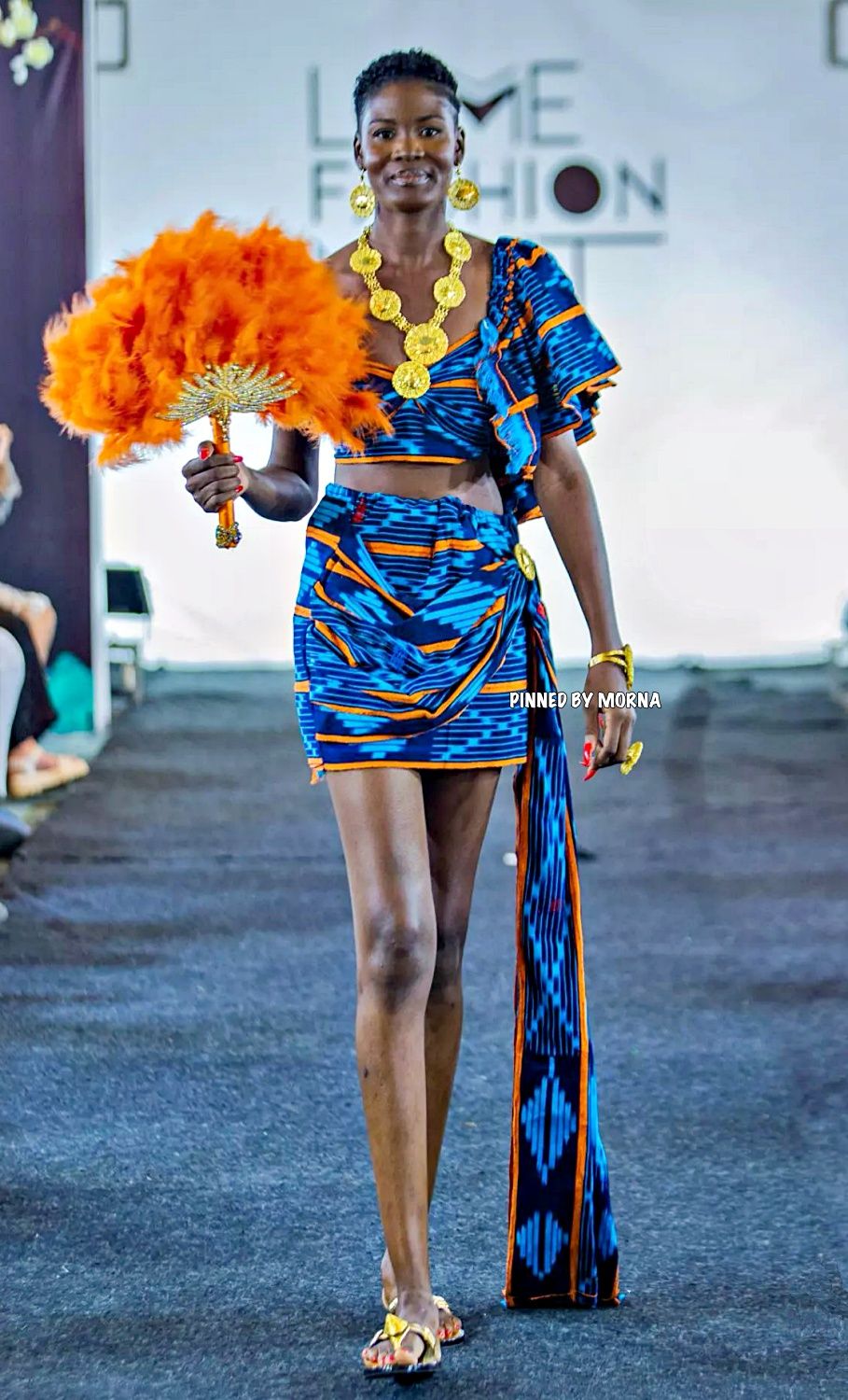
The Star Garments Renaissance Togo factory at the PIA produces garments labelled with the brands of its international clients, not with a Made in Togo label in the sense that Kimberly Anthony or Desmo uses. Its output is cut, make, and trim manufacturing for the US and EU export markets. This is an important distinction to hold. The factory creates jobs, transfers skills, builds manufacturing capacity, and positions Togo as a credible garment-production location within global supply chains. It does not build Togolese fashion brands. These are different contributions and both matter. When Charlie Komar, CEO of Charles Komar & Sons, described the Renaissance Togo factory as “the beginning of a new chapter of textile brilliance in West Africa,” he was describing a manufacturing milestone. The creative brilliance was already there.
What the industrial track does add to the Made in Togo argument is material infrastructure. Togo is one of Africa’s top ten cotton producers, with exports doubling from 19 million kg to 44 million kg over the past decade. The PIA’s vertically integrated textile value chain, from raw cotton to finished garment within a single zone, creates the possibility that Togolese designers could access locally produced fabric at competitive prices in the future. The government’s stated ambition to stop exporting unprocessed cotton and to multiply the value of textile exports is a policy framework that, if implemented fully, would address one of the material constraints that the creative track has identified as limiting local production.
The connection between the industrial track’s cotton-to-garment ambition and the creative track’s preference for local fabric is not yet formalised. Fall Touré’s FAALT uses batik made in Africa; Malaika Nabillah’s Capzules makes batik by hand in Lomé; Desmo uses found local materials. None of these practices currently plugs into the PIA’s industrial ecosystem. The infrastructure that would connect them does not yet exist. Building it is the specific policy and commercial challenge that distinguishes Made in Togo 2026 from Made in Togo 2036.
ALSO READ
- Why Lomé Should Be on Every African Fashion Investor’s Map
- The Future of Fashion in Togo
- African Cultural Economy: How Creativity Builds Economies
Made in Togo 2026: The Diaspora Dimension
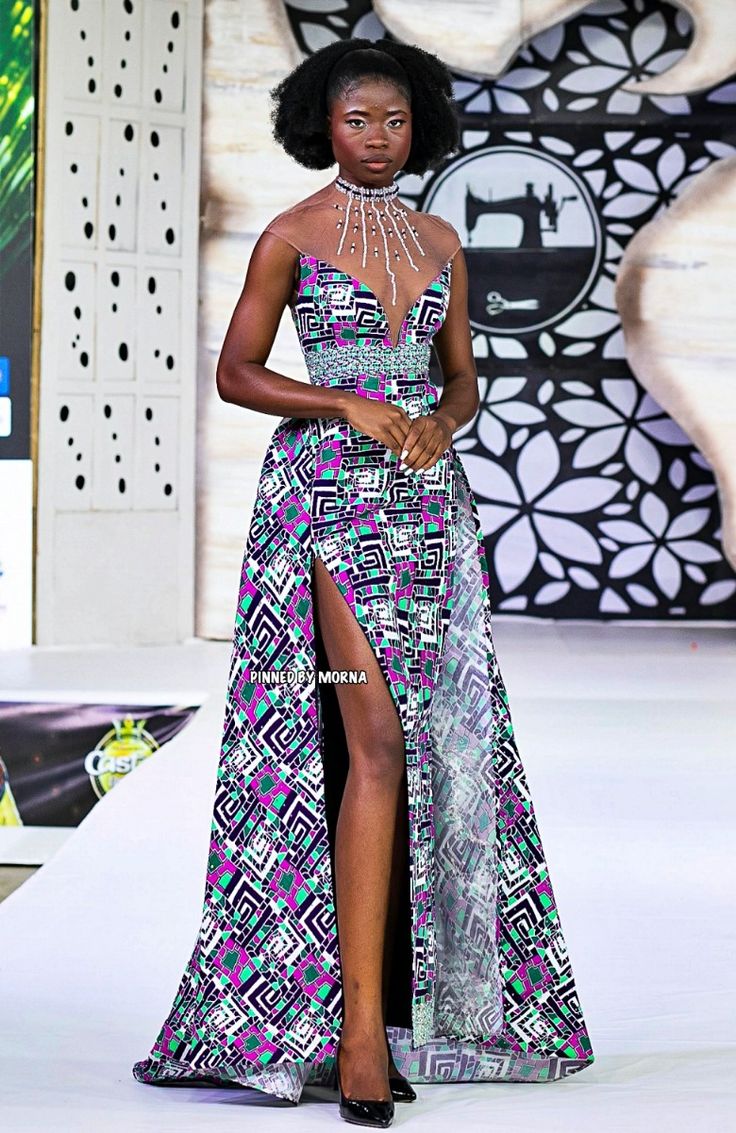
Kimberly Anthony’s G.Y.D. Studio is one of the clearest examples of the diaspora dimension of Made in Togo. A Paris-based Togolese creative, born in Lomé, went back to produce with local Lomé artisans because she understood that making in Togo was a statement about belonging, not just a production decision. Her goal, stated in an OkayAfrica direct interview, is to have her own atelier in Lomé with full-time staff. She described her ambition precisely: “There, they only see big brands like Gucci and Prada. Young people have expressed to me, directly, that they love what I’m doing because it’s different.” The diaspora designer returning to produce locally is a specific category of Made in Togo practice that combines the market access of a Paris presence with the production roots of a Lomé atelier.
This diaspora dimension runs through the entire series. Amah Ayivi is Paris-based, but his brand is Lomé-Paris; his production is in Lomé. Fall Touré trained in Ghent and had a Brussels boutique before returning to build FAALT and Lomé Fashion Week. Meli Bodombossou showed internationally before building her award-winning Lomé practice. In each case, the international presence is in service of a Lomé practice, not a replacement for it. Made in Togo, in the creative register, is not a compromise position. It is the intended position.
The contrast between the diaspora designers who return to produce in Lomé and those who produce in Europe or Asia while maintaining a Togolese identity is the specific fault line that Made in Togo 2026 runs along. Marlène Adanleté-Djondo designs in Lomé and manufactures in China, not by preference but by constraint. Kimberly Anthony designs and produces in Lomé despite having a presence in Paris. The constraint that separates these two positions is reliable electricity. Solving it is the single most direct policy intervention that would advance the Made in Togo creative argument from aspiration to consistent practice.
What Made in Togo Means in 2026: The Summary Record
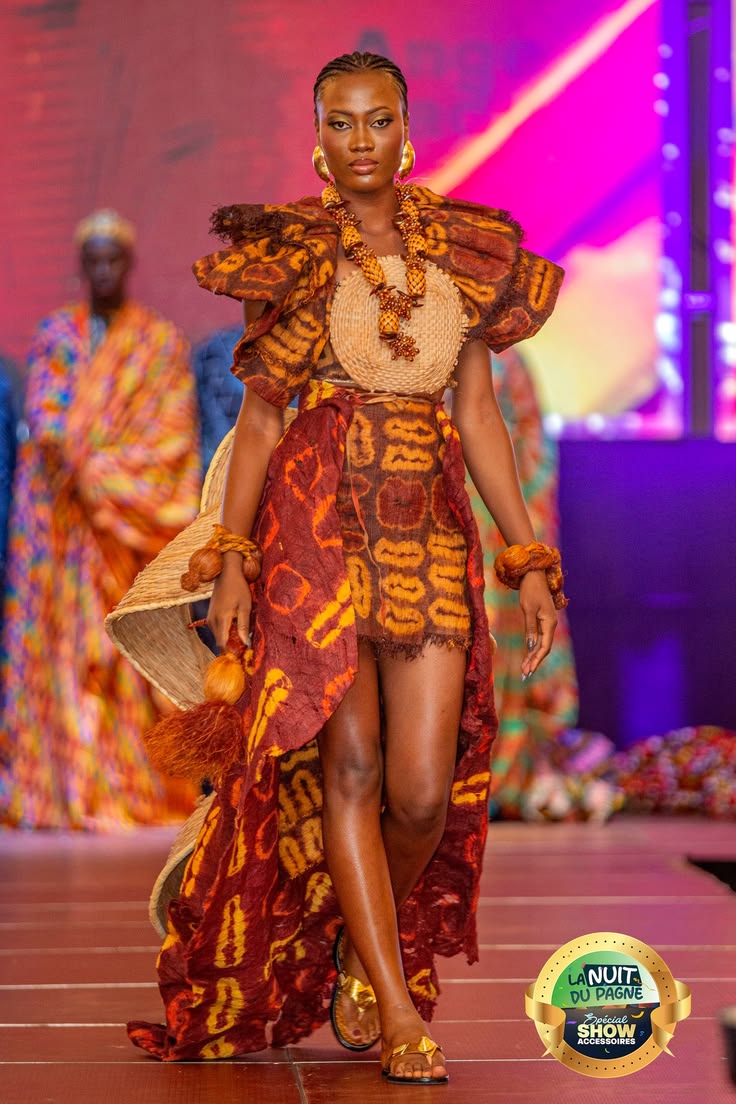
The documented record of Made in Togo in 2026 is richer than at any previous point. Wallpaper* covers a Palais de Lomé exhibition. The IFC backs a factory named Renaissance Togo. FIMO 228 stages its third Paris edition at Roland-Garros. A FAALT graduate shows at FIMO, making an argument about African women’s bodies that generates international press coverage. Malaika Nabillah’s Capzules produces handmade batik in Lomé. Kimberly Anthony builds a collection in Lomé with local artisans. Togo Yeye produces the Vlisco Blossoming Beauty campaign that runs on billboards across West Africa. Every one of these is a Made-in-Togo moment. Collectively, they constitute the most concentrated argument for Lomé as a creative capital that Togo has ever made.
What Made in Togo 2026 does not yet have is the infrastructure to scale the creative practice that these practitioners have demonstrated. Reliable electricity, intellectual property protection, domestic retail infrastructure, and buyer access: these are the four constraints that recur across the series’ practitioners’ accounts. Each is addressable. None has been fully addressed. The progress between the Made in Togo that Desmo was practising alone in 1996 and the Made in Togo that Wallpaper* is covering in 2025 is the measure of how much has already been built. The distance between the current position and the fully scaled version measures what remains.
That distance is not an argument against Made in Togo. It is the argument for investing in it. The creative intelligence is confirmed. The institutional infrastructure is being built. The diaspora is returning to produce. The international press is paying attention. The practitioners are training the next generation. The conditions are accumulating. Made in Togo 2026 is not the end of the story. It is the moment when the story becomes legible to everyone who was not already inside it.
“Made in Togo is not a label waiting to be printed. It is a practice already underway – confirmed across 30 years of practitioners who chose local materials, local production, and local audiences as the foundation of internationally significant work.”
Frequently Asked Questions
What does Made in Togo mean for fashion in 2026?
Made in Togo in 2026 describes a practice, not a label. It is the cumulative output of designers, makers, and cultural institutions that have chosen to source and produce locally and to build their creative identity around what Togo produces. Documented examples include Desmo’s 30-year practice of making from locally found materials, Fall Touré’s FAALT adopting Togolese batik as its student uniform, Malaika Nabillah’s Capzules producing handmade batik in Lomé, and Kimberly Anthony producing G.Y.D. Studio with Lomé artisans, Eugénie Guidi Ayawa using “pagne Kenté Gold de chez nous” for her FIMO 2025 collection, and Amah Ayivi’s Marché Noir sourcing entirely from Hédzranawoeé.
Who is Kimberly Anthony, and how does G.Y.D. Studio connect to Made in Togo?
Kimberly Anthony is a Paris-based Togolese creative, born in Lomé, who returned to Togo to produce her fashion brand G.Y.D. Studio with local artisans. OkayAfrica documented her collection of oversized garments in June 2023. She explained her decision directly: “Togo is a small country, and if I make it, a young person from there is making it too.” Her goal is to have her own atelier in Lomé with full-time staff. G.Y.D. Studio represents the diaspora dimension of Made in Togo: a Paris-based designer who deliberately chose local Lomé production as the foundation of her brand, because the production location is part of the brand’s argument.
What is the Palais de Lomé, and what is its role in Made in Togo?
The Palais de Lomé is a former colonial governor’s palace in Lomé that has been renovated into a cultural centre housing a museum, library, theatre, and auditorium. Under founding director Sonia Lawson, appointed in 2015, the Palais has pursued international programming to make Togolese and West African creative practice legible to global audiences. It organised exhibitions of Togolese design and crafts at the Révélations Biennale des Métiers d’art at the Grand Palais in Paris in 2017 and 2019. It hosted Togo Yeye’s Racines de l’Imaginaire exhibition in 2022. In December 2025, Wallpaper* covered its Design in West Africa exhibition, on view until 15 March 2026, bringing together more than 20 designers and artisans from across the region.
What are Capzules, and how do they connect to Made in Togo?
Capzules is a sustainable fabric company founded by Malaika Nabillah, co-founder of Togo Yeye, specialising in handmade batik fabric produced in Lomé. She also founded Spicy TG, the ready-to-wear extension of Capzules. The existence of Capzules is significant for the Made in Togo argument because it demonstrates that the Togo Yeye platform – which documents Togolese creativity for international audiences – is run by someone who also manufactures fabric locally. The documentation and production dimensions of Made in Togo are united in the same practice.
What are the main constraints on scaling Made in Togo?
The four main constraints on scaling Made in Togo identified by the practitioners documented in this series are: reliable electricity for domestic production at competitive scale, which forces designers like Marlène Adanleté-Djondo to manufacture in China despite designing in Lomé; intellectual property protection, identified by Desmo as the most painful unsolved problem; domestic retail infrastructure, which creates excessive dependence on international show circuits for business development; and buyer access, limiting connections to international buyers who could stock Togolese work in premium markets. The PIA’s captive solar plant is the most significant potential solution to the electricity constraint.
How does Made in Togo connect to the broader African fashion market?
Made in Togo connects to the broader African fashion market, worth an estimated $31 billion, through the channels that Togolese practitioners have built: FIMO 228’s three Paris editions and announced Atlanta expansion, Lomé Fashion Week’s Afrocentric positioning, the Palais de Lomé’s international exhibition programme, and the individual practitioners whose international show circuits (Meli Bodombossou, Grace Wallace) and Paris-based practices (Amah Ayivi, Fall Touré, Kimberly Anthony) give Made in Togo visibility in the markets that set the international agenda. The Vlisco Blossoming Beauty campaign, produced by Togo Yeye in 2025, running on billboards across West Africa, is the clearest single example of Made in Togo reaching the scale of the broader Afrocentric fashion conversation.
Explore the full Omiren Styles Togo series for the complete documented record of every practitioner building the Made in Togo argument.