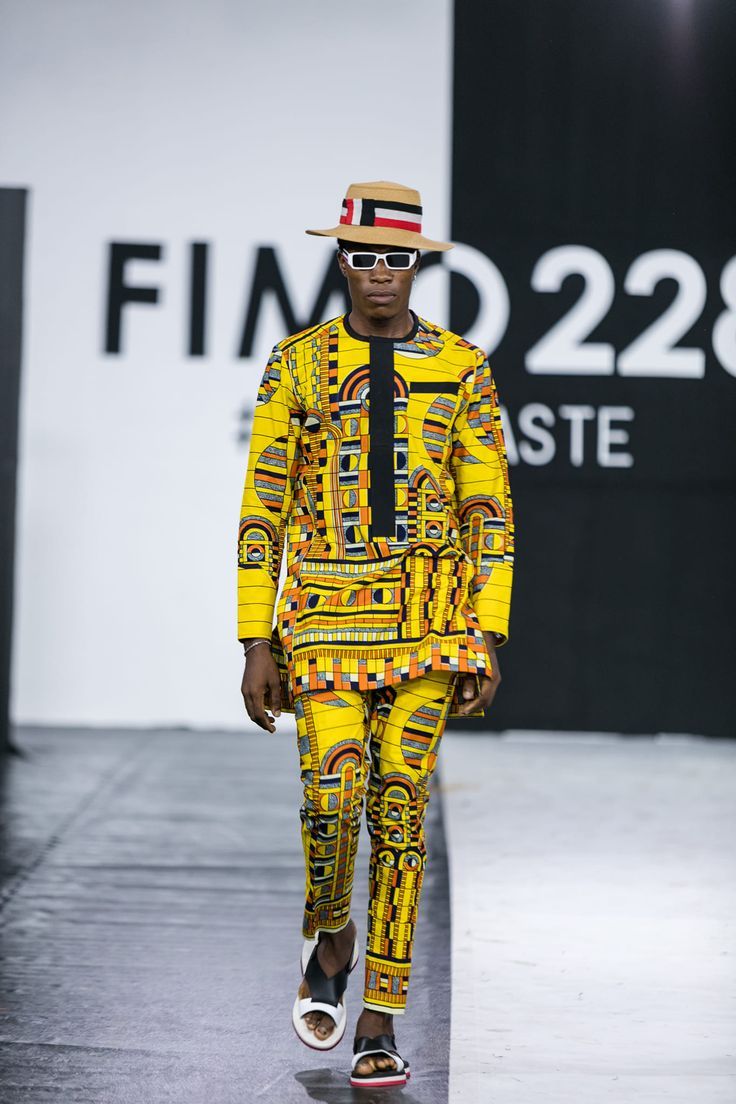
Two countries share a border. Benin lies west of Nigeria, and Togo lies west of Benin. The two nations are separated by a frontier that runs roughly north-to-south through the Gulf of Guinea region, and their capitals, Porto-Novo and Lomé, are approximately 70 kilometres apart. They share a colonial history, Afrocentric cultural connections, and, over the last decade, two of West Africa’s most active fashion event ecosystems. Benin Fashion Month and FIMO 228 are both annual fashion events. They are both held in coastal capitals. They have both developed international ambitions. And they represent two completely different answers to the question of how you build a fashion week in West Africa without the institutional infrastructure of Lagos or Dakar.
The comparison matters because the two models, government-backed versus independently built, are not merely organisational differences. They encode different assumptions about what fashion is for, who it serves, and how its value is measured. Understanding both in detail provides what looking at either alone cannot: a theory of how West African fashion infrastructure is built, and what the trade-offs of each approach look like when examined against a real comparative case. Neither is simply better than the other. Both are instructive.
Benin Fashion Month and FIMO 228 are neighbouring countries’ answers to the same question: how do you build a fashion week in West Africa? Their approaches could not be more different.
The Omiren Argument:
Benin Fashion Month and FIMO 228 are not competitors. Two experiments are running simultaneously on adjacent territory, each testing a different hypothesis about what a fashion week is for and who should build it. The region is large enough for both. The question is what each proves.
The Origin Stories: State Mandate vs Personal Vision
Benin Fashion Month was created as an instrument of state policy. Launched in 2018 by the Ministry of Tourism, Culture and Arts through ADAC, it was designed from the outset to make fashion a structured economic sector generating growth and employment. The runway show was the public-facing finale of a policy architecture that included GDIZ, ACMB, and the FLY incubator. The government did not back an existing fashion event. It created one from ministerial authority, with state resources, a dedicated agency, and a specific economic objective. Seven editions in, it has not deviated from that mandate.
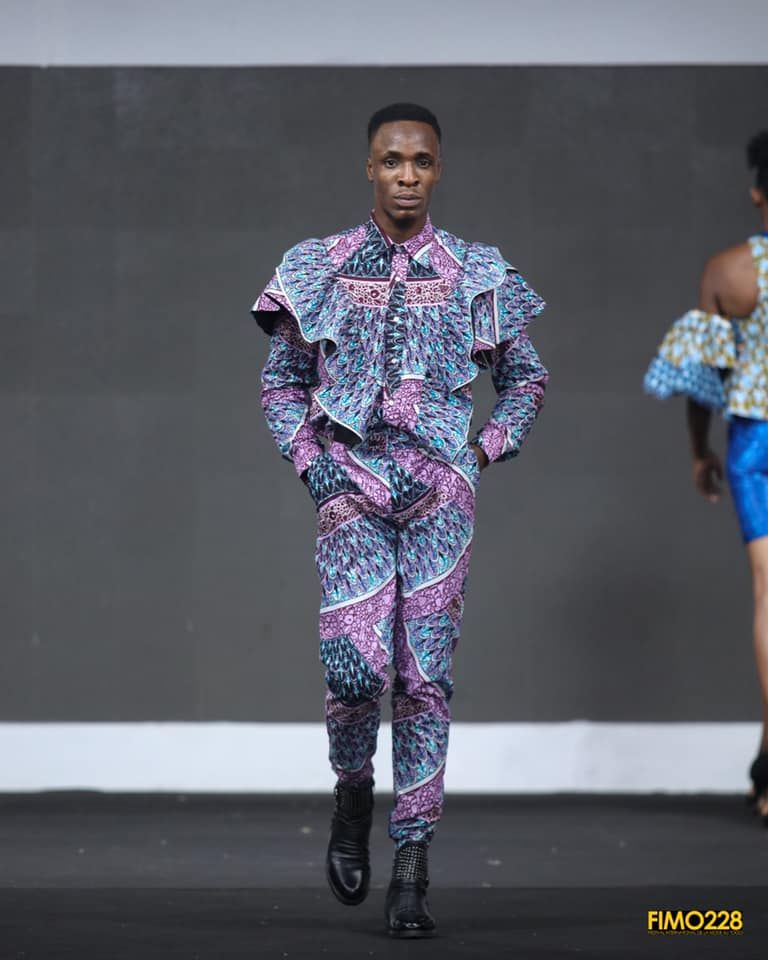
FIMO 228 was created from personal passion. In February 2013, Jacques Logoh, then 24 years old and working as a model in Lomé, organised the first edition of what he called Mode 228. He had founded Challenge Model Agency two years earlier, in 2011, to give his models a platform. The first fashion show was his answer to their absence. In 2016, three years after its creation, the festival went international and became FIMO 228, the Festival International de la Mode au Togo. By its 12th edition in April 2025, it was drawing designers from across Africa and beyond to Lomé, running a Paris edition alongside Paris Fashion Week, and planning a United States edition.
These two origin stories encode fundamentally different theories of fashion week. Benin Fashion Month says: a fashion event is a policy instrument, and the state is the appropriate body to build it, resource it, and direct its objectives. FIMO 228 says that a fashion event is a creative entrepreneur’s vision, and the appropriate model is a promoter who builds it year by year through personal commitment and evolving resources. Both are correct within their own logic. The question is which logic produces which outcomes.
The Programme Architecture: Development Event vs International Showcase
Benin Fashion Month’s programme, in its seventh edition in July 2025, included an immersion visit to GDIZ; panels on structuring the fashion-textile sector featuring SIPI-BENIN, GDIZ, ADAC, and APIEX; masterclasses on entrepreneurship and sustainability; the Trames et Talents textile exhibition; and the closing La Nuit de la Mode runway show. The runway was the finale of a week of industry development activity. The event’s closing show featured approximately 15 Beninese designers. The content was primarily Beninese.
FIMO 228’s 11th edition in February 2024 brought together 45 designers from approximately 20 countries in Lomé, including designers from Germany, France (including Guadeloupe), Ethiopia, Nigeria, the Ivory Coast, and Togo. There were no industrial panels or GDIZ visits. There were runway shows on multiple evenings across different venues: the Institut français, the Onomo Hotel, and the grand international runway show on the final evening. The event’s programme is primarily curatorial, selecting which international designers present their collections on a Togolese platform.
This difference in programme architecture reflects the two events’ different purposes. Benin Fashion Month is building an industry from within. Its panels, visits, and masterclasses are not supplementary to the runway; they are the reason the runway exists. FIMO 228 is building a platform for African fashion’s international visibility. Its international roster and multi-country participation are not supplementary to the runway; they are evidence that the platform is working. Both are legitimate purposes. They produce different kinds of value.
Who Shows: National Development vs International Curation
The designer rosters for the two events precisely reflect their different missions. La Nuit de la Mode at Benin Fashion Month features Beninese designers, established and emerging, on the same runway. In its seventh edition, FARE showed alongside LOLO ANDOCHE, COULEUR INDIGO, SENZALA, and other Beninese labels. The curatorial logic is national: the show is for Beninese designers, and its primary function is to give them a platform within Benin’s own ecosystem.
FIMO 228’s international editions, whether in Lomé, Paris, or planning for the United States, apply a different curatorial standard. Jacques Logoh has stated that brands selected to parade must offer a coherent, well-constructed universe to make the show. The 15 brands at the Paris edition, held at the Palais Gravelle in September 2024, were selected for their international readiness. The standard is not national origin but creative coherence and presentation quality. This is how FIMO functions as a launch platform: it gives African designers access to international audiences in contexts where the selection criteria signal quality.
The 12th FIMO edition in April 2025 featured the theme “La mode pour un monde sans cancer,” with multiple designers integrating cancer prevention into their collections. Ivorian designer Nina Bornier of G’NANTIN by NINI presented her collection “Panacée,” meaning universal remedy. This thematic structure, unusual for Benin Fashion Month, which does not require designers to work to an annual theme, gives FIMO a distinct editorial character, positioning it as more than a showcase. It is, in its own terms, a cultural argument.
The International Expansion: Two Routes to the Same Destination
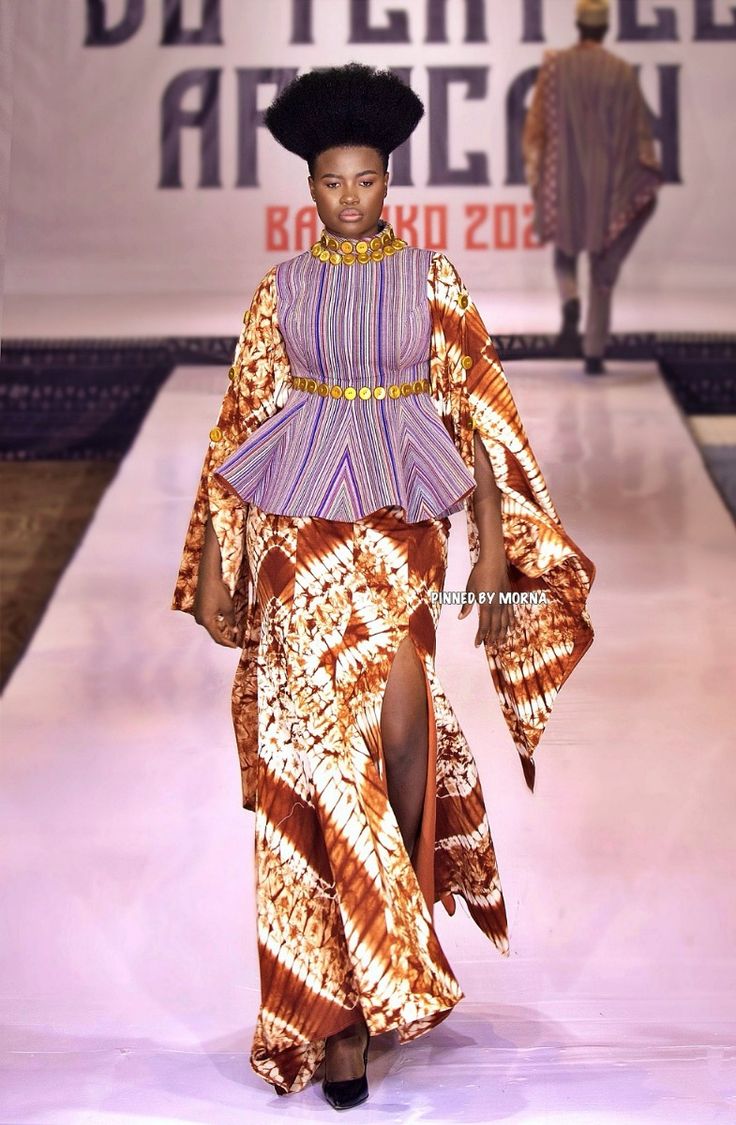
Both events have moved beyond their home cities toward international presence, through different mechanisms and at different timescales. Benin Fashion Month took part in New York Fashion Week in September 2025 via ADAC and ORUN, with a full Benin Day featuring a designer runway show, a Mastertalk, and a pop-up showroom. The government organised it, funded it, and framed it explicitly as Beninese creative diplomacy: four stated objectives, all oriented toward placing Made in Benin on an international platform. The New York appearance was organised top-down, with institutional backing that gave it a scale and credibility that an independent event would have struggled to achieve in its seventh year.
FIMO 228 went to Paris through Jacques Logoh’s own initiative. The first Paris edition took place at the Palais Gravelle on 28 September 2024. The second was at the Orangerie d’Auteuil on 27 September 2025, held in conjunction with Paris Fashion Week. The third French edition was described as growing in scale each year. A United States edition was planned for 2025. This is an independent international expansion built through the promoter’s personal network, professional relationships, and the credibility conferred by twelve editions in Lomé. It is slower than the government route, more personally dependent, and potentially more sustainable: the Paris editions exist because Logoh built them, not because a ministry allocated budget for them.
The two expansion models reflect the two origin stories. Government-backed events can move faster internationally because they have institutional resources, diplomatic relationships, and state credibility. Independently built events move on the founder’s timeline but are not dependent on political priorities or budget cycles. Both ADAC and Logoh are positioning their events for international visibility. The question is whose foundation is more durable over a ten-year horizon.
ALSO READ
- Benin Fashion Month: The Government-Backed Festival Quietly Reshaping West African Fashion
- GDIZ and the Made in Benin Dream
- FARE: The Cotonou Brand That Started in a Tech Hub and Ended Up in Paris
The Trade-Offs: Stability vs Agility
The strengths of government backing are visible in Benin Fashion Month’s record: seven consecutive editions without interruption, institutional links to GDIZ and the FLY incubator, a ministry behind every edition, and the diplomatic capacity to take Beninese designers to New York Fashion Week. No independently organised fashion event in West Africa has built this kind of institutional depth in seven years. The government’s investment is real, consistent, and structurally committed.
The weaknesses of government backing are equally visible: the event’s direction is ultimately determined by ministerial priorities, and its programme reflects state economic objectives rather than creative community interests. If the ministry’s priorities change or the political context shifts, the event’s resources can adapt accordingly. An event that owes its existence to ministerial authority can lose that authority. Benin’s own political turbulence in December 2025, when a group of soldiers briefly seized state television before the government reasserted control, is a reminder that political stability is not guaranteed even in a country regarded as one of Africa’s more stable democracies.
FIMO 228’s strength is its independence. It has survived because Jacques Logoh has kept building it. Its 12 editions represent 12 consecutive decisions by a founder to continue, find resources, attract designers, and expand. The festival’s longevity is a record of personal commitment rather than institutional mandate. Its weakness is the same thing: its existence depends on a single person’s energy, health, and continued enthusiasm. Independent fashion events built on a founder’s vision are as durable as the founder. Dakar Fashion Week, which FIMO 228’s own Africa Fashion Tour profile cites as a comparable example, has faced its own continuity challenges. FIMO’s independence from government is simultaneously its protection and its vulnerability.
What Each Proves and What the Region Needs
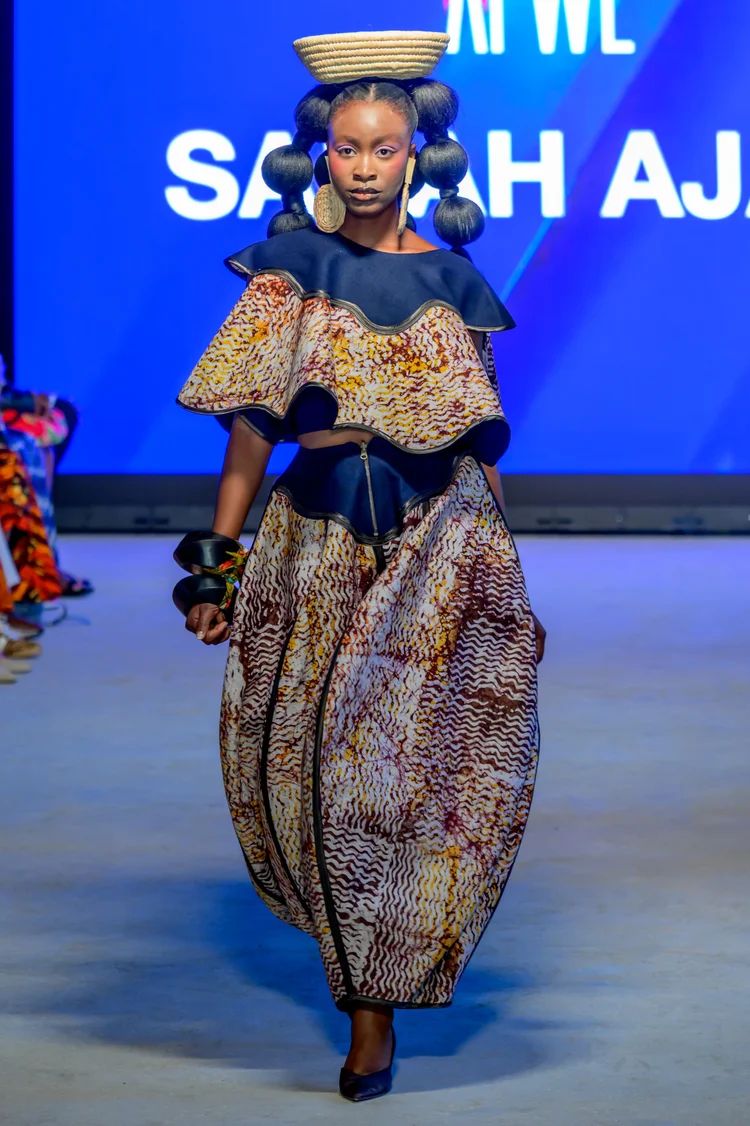
Benin Fashion Month proves that a government with a clear vision and consistent resources can build a fashion-event infrastructure from scratch within a decade. It proves that the runway and the supply chain can be part of the same national strategy. And it proves that a small West African country can take its designers to New York Fashion Week in its seventh year of operation.
FIMO 228 proves that an independent promoter with a clear creative vision and a personal network can build a fashion platform that attracts 45 designers from 20 countries by its eleventh year, stage editions in Paris alongside Paris Fashion Week, and develop international reach without state resources. It proves that African fashion’s international visibility does not require a ministry to organise it.
The region needs both proofs. West Africa is large enough, diverse enough, and culturally rich enough to sustain multiple fashion event models simultaneously. The question of whether government-backed or independently organised fashion weeks produce more durable, more creative, and more internationally credible outcomes remains unanswered. Benin and Togo, with two events running on adjacent territory under opposite organisational models, are experimenting in real time. The results will be known in another decade.
“Benin Fashion Month and FIMO 228 are not competitors. Two experiments are running simultaneously on adjacent territory, each testing a different hypothesis about what a fashion week is for and who should build it. The region is large enough for both. The question is what each proves.”
Frequently Asked Questions
What is FIMO 228?
FIMO 228 (Festival International de la Mode au Togo) is an annual international fashion event based in Lomé, Togo. Jacques Logoh founded it in February 2013 as Mode 228, an event to give models at his Challenge Model Agency a platform. It went international and was renamed FIMO 228 in 2016. By its 12th edition in April 2025, it was drawing 45 designers from approximately 20 countries. It has also run editions in Paris, held alongside Paris Fashion Week, and is planning a United States edition.
Who is Jacques Logoh?
Jacques Logoh is a Togolese cultural promoter and the founder of FIMO 228. He began as a model, founded Challenge Model Agency in 2011, and organised the first Mode 228 fashion event in February 2013. He also has his own clothing line, Jacques Logoh Couture. Africa Fashion Tour compares its ambition to that of Adama Paris (Dakar Fashion Week) and Omoyemi Akerele (Lagos Fashion Week) in building a recurring international fashion platform from a personal vision.
How do Benin Fashion Month and FIMO 228 differ in their approach?
The fundamental difference is organisational: Benin Fashion Month is government-backed, created by ministerial authority and funded by the state, with an explicit economic development mandate. FIMO 228 is independently built, created and sustained by founder Jacques Logoh through Challenge Model Agency. Benin Fashion Month’s programme combines industry development (panels, GDIZ visits, masterclasses) with a runway finale featuring primarily Beninese designers. FIMO 228’s programme is primarily a runway showcase for international and African designers selected on creative merit. Both have developed international ambitions, but through different routes.
How many editions has each event held?
Benin Fashion Month reached its seventh edition in July 2025, having run every year since its launch in 2018. FIMO 228 reached its 12th edition in April 2025. The first FIMO edition was in February 2013 (as Mode 228). The event became international in 2016 when it was renamed FIMO 228. Both events have run without skipping annual editions, though the 12th FIMO edition in 2025 was followed by a planned gap with the next edition confirmed for 2026.
Has either event expanded internationally?
Both have. Benin Fashion Month took Beninese designers to New York Fashion Week in September 2025 through a full Benin Day organised by ADAC and ORUN, featuring a runway show, a Mastertalk, and a pop-up showroom. FIMO 228 held its first Paris edition at the Palais Gravelle in September 2024 and its third French edition at the Orangerie d’Auteuil in September 2025, alongside Paris Fashion Week, with a planned United States edition in 2025. Benin Fashion Month’s expansion was government-organised and funded; Jacques Logoh built FIMO 228’s through his personal network and professional relationships.
Which model is more sustainable for West African fashion?
Both models have documented strengths and vulnerabilities. Government-backed events like Benin Fashion Month have institutional resources, diplomatic capacity, and structural continuity independent of any individual. Their risk is political dependency: ministerial priorities can shift, and budget allocations can change. Independently built events like FIMO 228 are not dependent on government priorities and can be more creatively agile. Their risk is personal dependency: the event’s continuity is tied to the founder’s continued commitment. West Africa’s fashion future likely benefits from both models running in parallel, with different strengths serving different parts of the ecosystem.
Explore more from our Industry section, where West African fashion infrastructure is reported with the analytical depth it deserves.