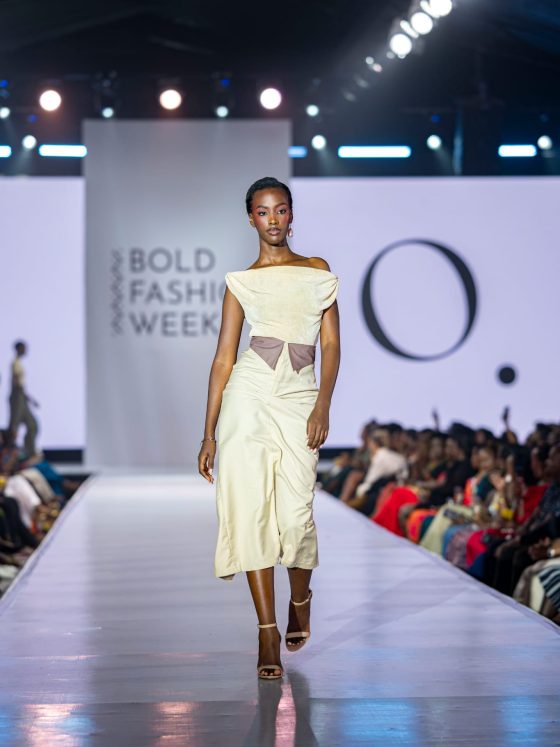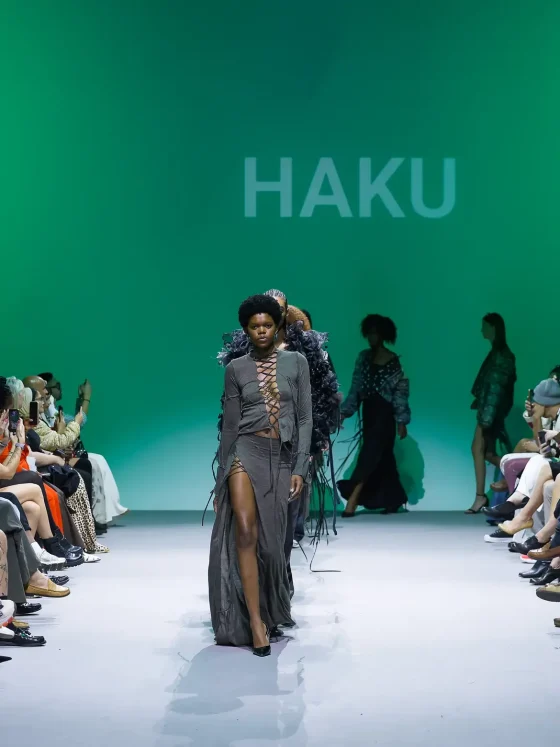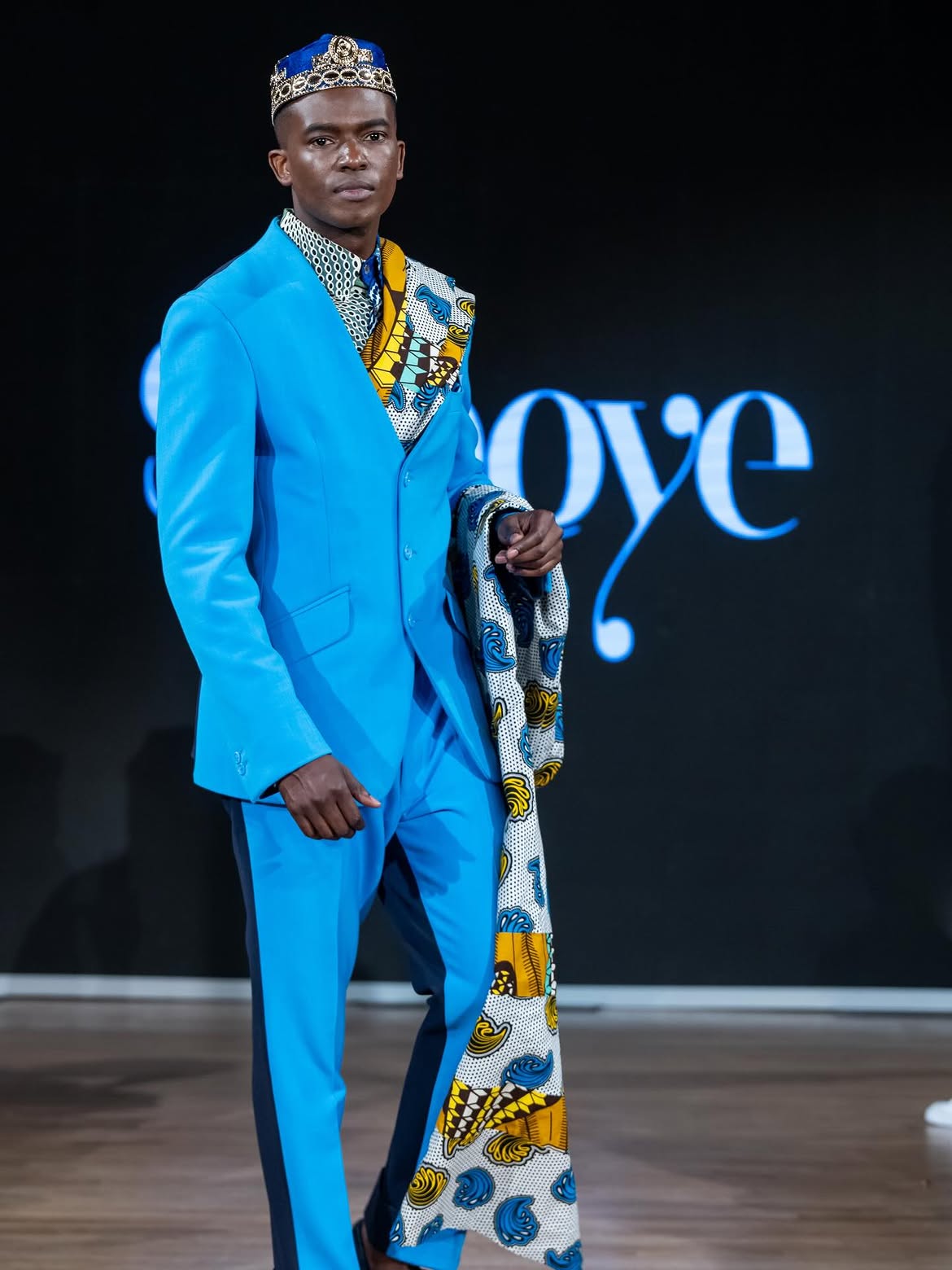
The AFWL 2026 runway trends are not assembled from a mood board. They are the result of designers working across two continents, inside specific textile traditions, making decisions about how to carry that knowledge into a catwalk context in London in 2026. This is Omiren’s breakdown of the best looks, fabrics, and silhouettes from across both catwalk days: what the collections said, how they were built, and why the construction decisions matter. For the broader context on what this edition of AFWL means, start with our Africa Fashion Week London 2026 coverage hub.
Omiren breaks down the AFWL 2026 runway trends: the silhouettes, fabrics, colours, and construction decisions that defined the best looks on the catwalk in London.
WHAT STOOD OUT
→ Structured volume dominated the runways — wide, held, disciplined.
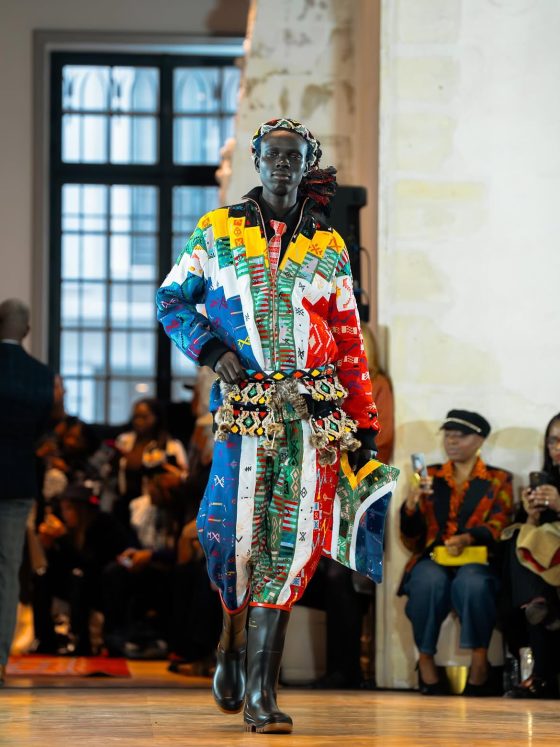
→ Heritage textiles shaped the strongest looks: Ankara tailored, Aso-oke structural, Adire fluid, Kente pushed beyond its gold-and-black shorthand, Bazin Riche communicative.
→ Jewel tones and white carried the clearest colour story — depth over brightness.
→ Styling was treated as part of the garment, not an afterthought: headwrap, jewellery, and footwear considered as a single design system.
Silhouette: Volume With Structure
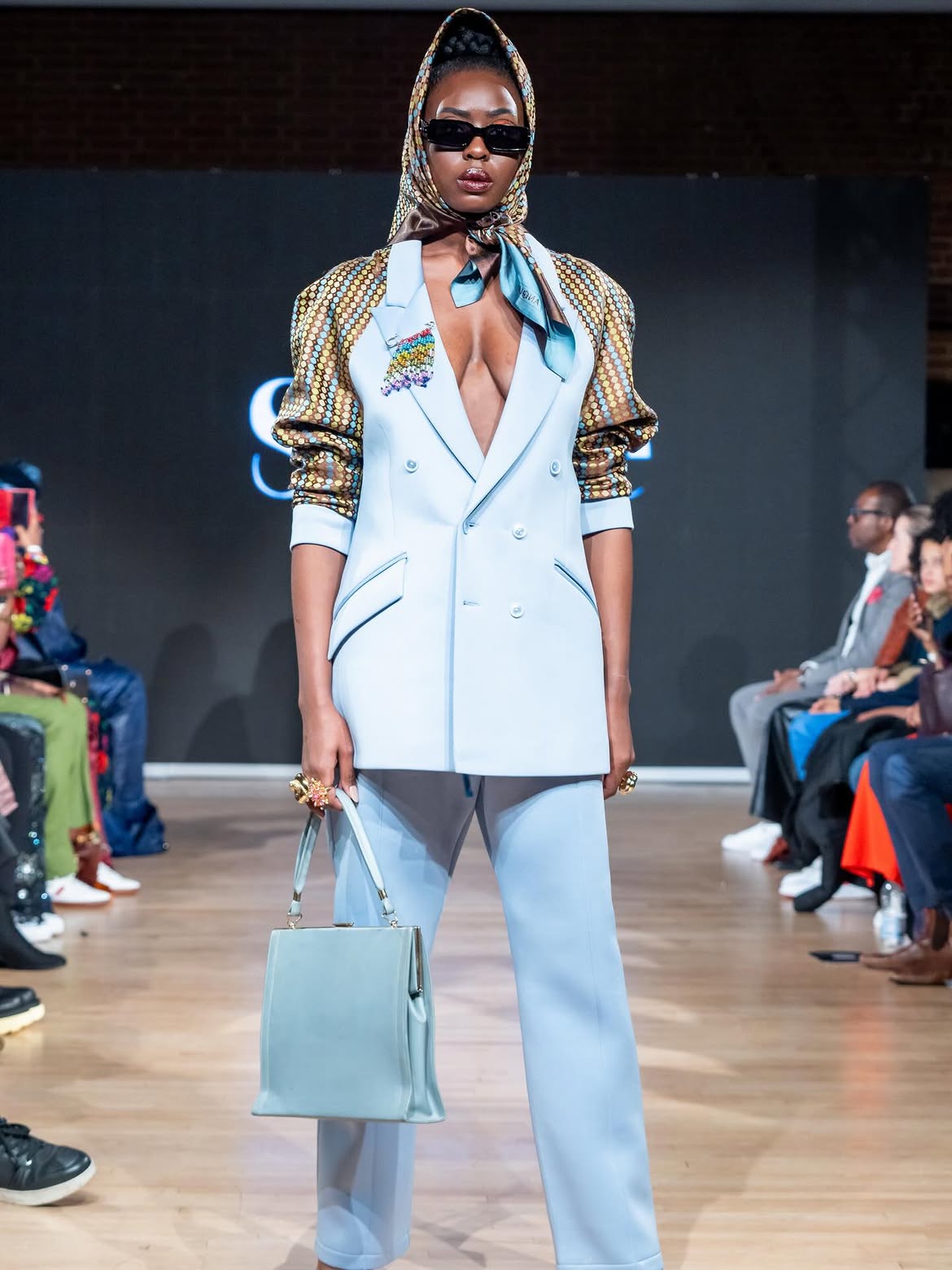
One of the clearest silhouette stories across the AFWL 2026 catwalk is structured volume, and the distinction between structured and soft volume matters more here than it does in a European fashion context.
Soft volume, as European fashion has deployed it across recent seasons, is about ease and informality. It removes rigidity to suggest relaxation. The structured volume moving through the AFWL 2026 runway trends does the opposite. Wide sleeves are cut with interior shaping that holds their position in space. Expanded shoulders are built to carry the visual weight of the garment rather than to drape away from it. Layered wrapping, the iro, the wrapper, the over-gown, is worn with the intention of a complete silhouette.
This is the formal vocabulary of West African tailoring in its contemporary register. As Omiren Styles has documented in its analysis of the agbada and boubou across West Africa, the agbada, the boubou, and the ceremonial gown have always used volume to communicate status and occasion. The best looks at AFWL 2026 carry that vocabulary forward without reducing it to costume. The shapes are large but disciplined. They claim space.
The secondary silhouette running beneath the volume story is the fitted column: elongated, high-necked or deeply collared, often in a single fabric that shows its weave or print without interruption. Where the structured volume pieces speak to ceremony, these speak to precision. Together they account for the dominant range of the AFWL 2026 runway silhouettes.
Fabrics on the Runway
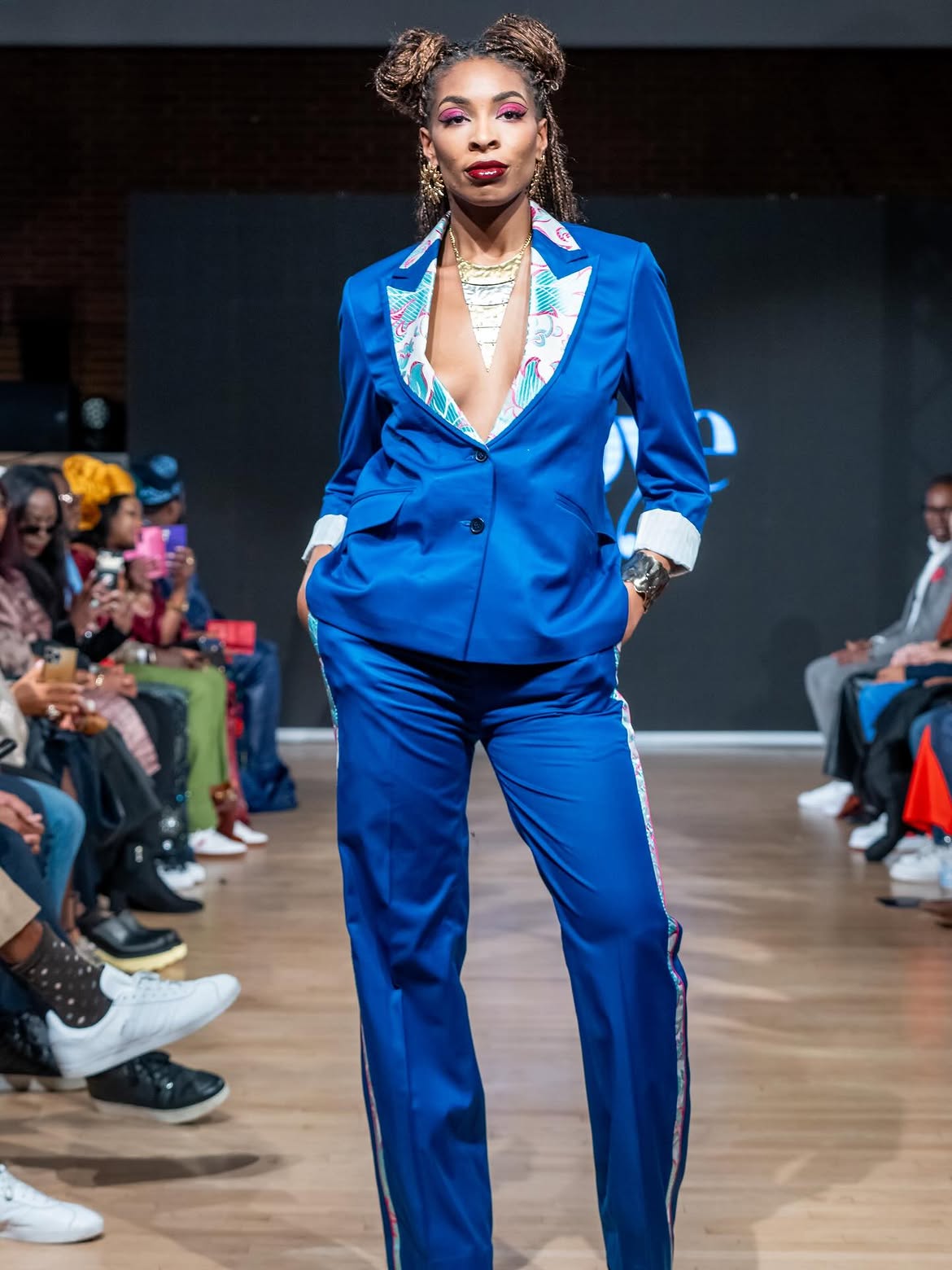
The fabric choices driving the best looks at AFWL 2026 are not interchangeable. Each textile carries a different body, a different cultural register, and a different relationship to the silhouette it enables.
Ankara
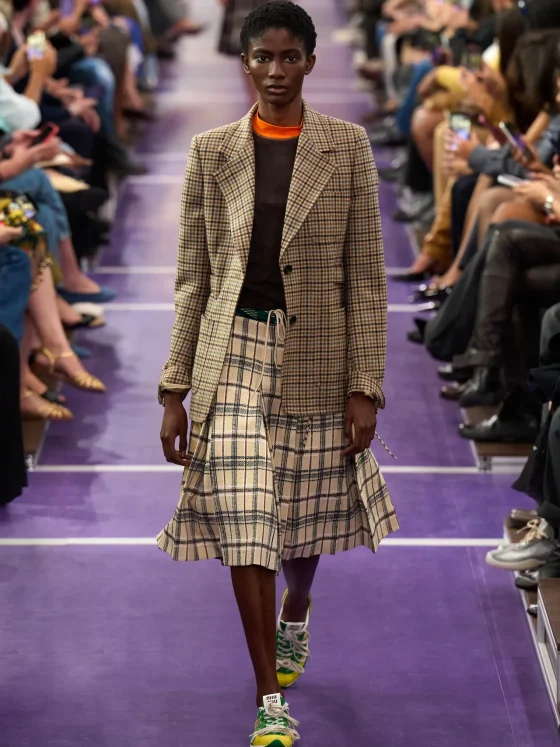
Ankara on the AFWL 2026 runway appears primarily in the tailored register. Blazers cut close across the shoulder with a strong front crease—Wide-leg trousers where the print runs vertically, elongating rather than interrupting the line. Two-piece sets where the print functions as a unified field rather than a decorative surface. The Ankara pieces that read strongest are the ones where the construction decision and the print decision have been made together, not separately. As Omiren Styles has documented in its analysis of the Ankara economy, Ankara is not a generic fabric. It is a design system. The runway confirms it.
Aso-oke
Aso-oke, the hand-woven strip fabric of Yoruba formal dress, is the most structurally demanding textile on the runway this year. It does not drape. It holds. Designers cutting aso-oke into structured gowns or tailored separates are working with a cloth that has strong lateral authority: the strip-weave creates a horizontal visual rhythm that reasserts itself regardless of what the pattern cutter does. The best looks using aso-oke work with that authority rather than against it: gowns that allow the horizontal register to read across the body, separates that use the woven edge as a deliberate design line.
Adire
Adire, the resist-dyed indigo fabric, shows differently to both. Where Ankara is precise, and aso-oke is structured, adire is painterly. The resist-dyeing process means no two pieces are identical: the wax or starch that creates the pattern leaves variations that are part of the textile’s character. On the AFWL 2026 catwalk, adire appears in silhouettes that are deliberately unencumbered: fluid column dresses, wide trousers with minimal construction, wraps that allow the fabric’s own surface to carry the visual weight. These are intelligent decisions. Adire does not need to be constructed into anything. It arrives already complete.
Kente
Kente on the runway this season moves past the gold-and-black register that has become its most recognised shorthand. The pieces making the strongest statement are using Kente’s broader colour vocabulary: deep blues, burgundies, the warm terracottas of certain Ewe-woven variations, in silhouettes that treat the cloth as the primary design decision rather than as embellishment. Kente structured into fitted bodices, Kente used as a panel within a larger garment, Kente meeting contemporary tailoring at the collar and cuff: these are the applications worth watching.
Bazin Riche
Bazin Riche, the embroidered damask that anchors Fulani formal dress, carries weight both literally and in terms of what it communicates. Jewel-toned, deep sapphire, forest green, plum, warm gold, it moves with a particular authority that lighter fabrics cannot replicate. The AFWL 2026 catwalk uses it primarily in the structured volume silhouettes, where its body supports the scale of the garment. The embroidery at neckline and chest is not decorative in the European sense. It is communicative: it signals the level of occasion and the prestige of the maker.
Colour: Depth Over Brightness
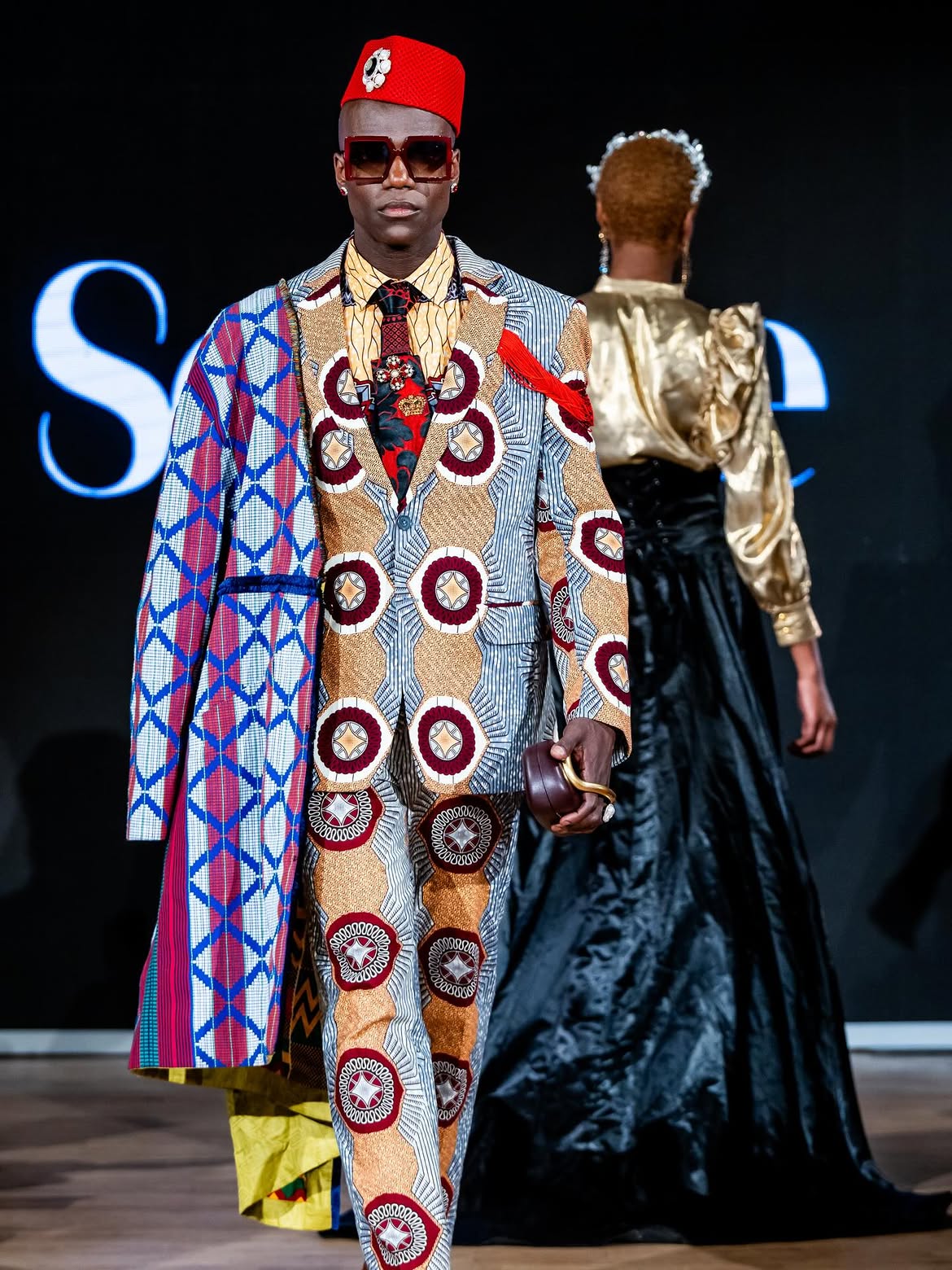
The AFWL 2026 runway trends in colour are consistent enough to read as a position rather than a collection of individual choices. Depth is the direction. Jewel tones in their richest registers: sapphire at full saturation, forest green without yellow contamination, plum rather than purple, the gold of Fulani ceremonial tradition rather than the gold of fashion-week metallics. That pattern is unlikely to be accidental.
The colours of ceremony across West, East, and Central African dress traditions are not pastel. They are not muted. As Omiren Styles has documented in its analysis of African women’s fashion archives, the colour vocabulary of African formal dress has been fully saturated, fully committed for generations. Bringing those colours to the AFWL catwalk is a decision about what sophistication looks like when it is not filtered through a European reference frame.
The exception worth noting is the use of white: not as a neutral or a base, but as its own formal register. In Oromo dress, white carries the weight of peace and moral clarity. In Fulani ceremonial tradition, it appears at moments of significant occasion. On the AFWL 2026 catwalk, white appears in column silhouettes and structured tailoring that understand it as a colour with its own cultural authority, not as an absence-of-colour decision.
The Dressed Body as a System
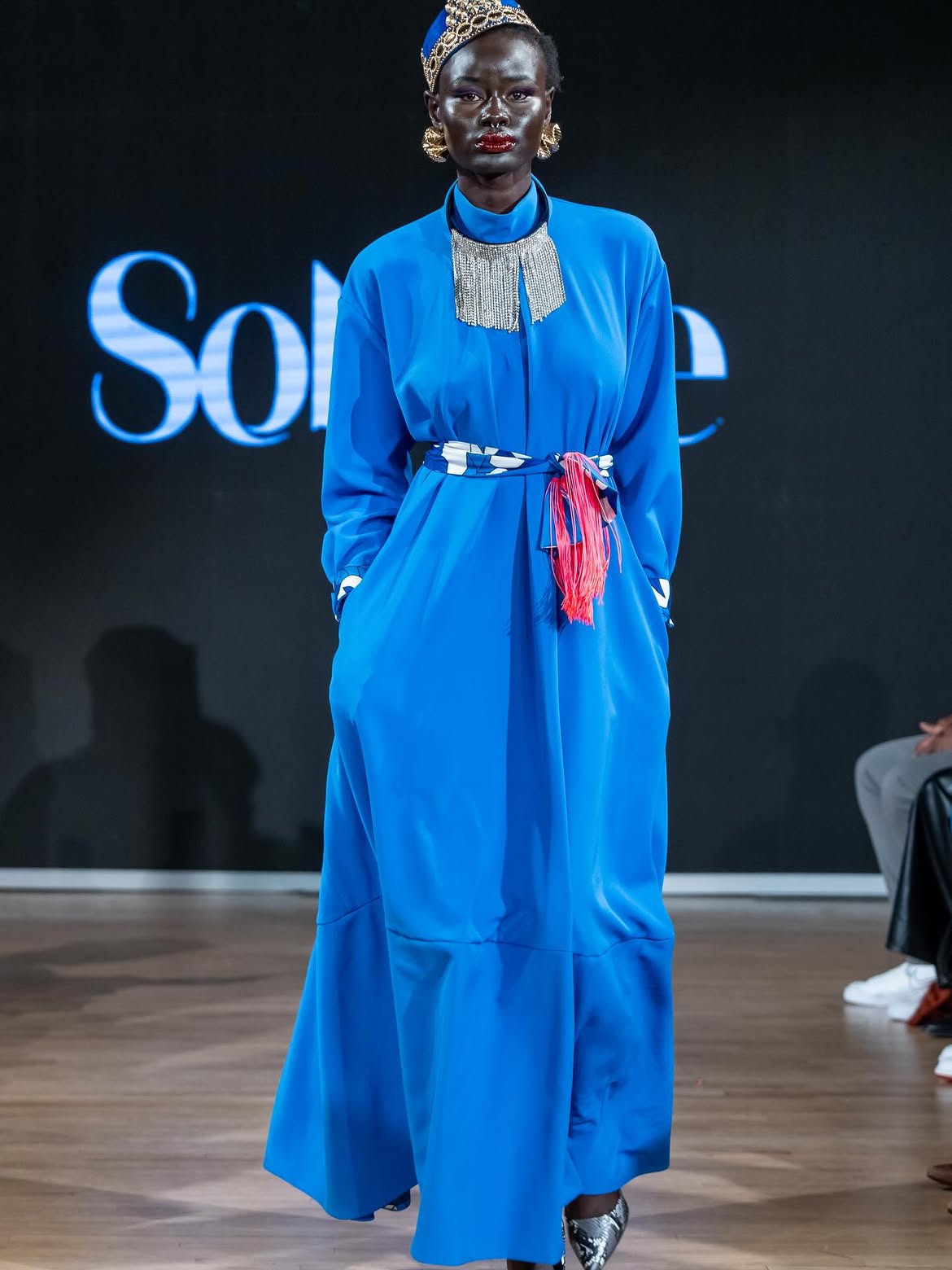
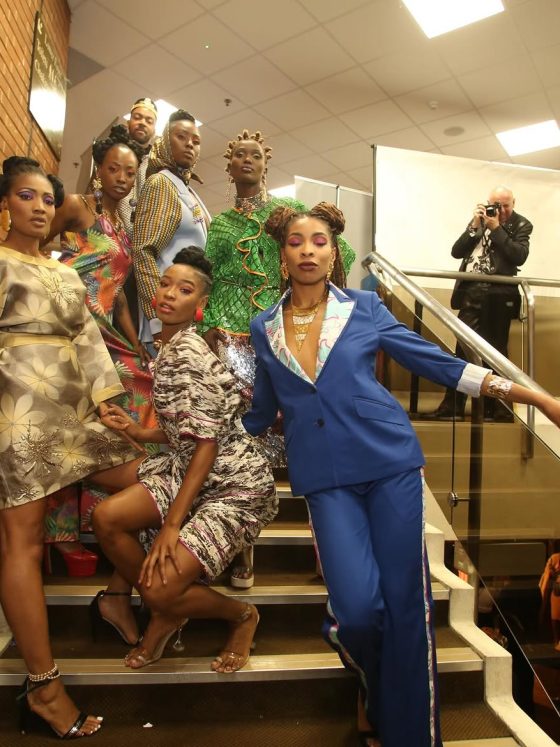
One of the clearest signals in the AFWL 2026 runway trends is the return to the dressed body as a complete system: headwrap, garment, jewellery, and footwear considered together as a single design decision rather than separately styled components.
This matters editorially because it is a different conception of the fashion object from the one that dominates European runway presentation. European fashion week tends to isolate the garment. At AFWL, the strongest presentations treat the headwrap as a design element with the same weight as the silhouette. The gele tied at formal volume, the gyale laid flat at the crown, the wrapped and pinned headscarf that signals a specific regional tradition: these are not styling choices added after the garment is finished. They are part of what the garment means. As Omiren Styles has documented in its analysis of UK diaspora dress codes, the dressed body in African and diaspora communities functions as a system of social communication, not as a background for an isolated product.
Gold-tone jewellery in the Fulani heritage tradition, the large statement earrings and layered neckpieces, appears alongside the bazin riche and aso-oke pieces as an expected component of the dressed body, not an optional addition. The designers presenting these complete systems are making an argument: that the full register of African formal dress is the appropriate unit of evaluation, not the isolated garment. That argument is what separates the strongest looks at AFWL 2026 from the rest.
What This Runway Report Means
The AFWL 2026 runway trends collectively make an argument that Omiren has been making editorially for longer than this event has been running: that African fashion is not trend-adjacent, not influence-borrowing, not emerging. It is a fully formed design language with its own grammar, its own materials, and its own standards of excellence. Reading these trends requires the vocabulary to say what aso-oke does differently to kente, why adire appears in certain silhouettes and not others, what bazin riche communicates that a lighter embroidered fabric cannot.
That vocabulary is what this runway report is built from. The silhouette analysis, the textile-by-textile breakdown, the colour position, and the dressed-body argument together form the editorial frame that Omiren brings to AFWL coverage: not fashion journalism about Africa, but fashion journalism from inside an understanding of what these design decisions actually mean. Readers who want to understand not just what appeared on the runway, but how and why those garments matter culturally and commercially, will find that understanding in this analysis and in the wider coverage it links to.
For the full editorial on the specific textiles that drove the best looks at AFWL 2026, their history, their production, and their cultural meaning, see our African textiles on the catwalk 2026 analysis. For the full picture of Africa Fashion Week London 2026 across all six editorial angles, return to the Africa Fashion Week London 2026 coverage hub.
ALSO READ
- Africa Fashion Week London 2026: Design Beyond Borders — Coverage Hub
- Africa Fashion Week London Recap: Standout Collections and Designer Highlights (2025)
- Agbada, Boubou, Grand Boubou: One Silhouette, Four Countries, Four Arguments About Power
- The Ankara Economy: Who Is Actually Capturing the Value?
Frequently Asked Questions
What were the dominant silhouettes at AFWL 2026?
Two silhouette stories dominated. The primary is structured volume: wide sleeves with interior shaping, expanded shoulders built to carry visual weight, and layered wrapping worn as a complete intentional silhouette. This draws on the formal vocabulary of West African tailoring in its contemporary register, the agbada, the boubou, the ceremonial gown, as documented in Omiren Styles’ analysis of these garments’ power symbolism. The secondary silhouette is the fitted column: elongated, high-necked or deeply collared, in a single fabric that shows its character without interruption. Together these two forms account for the dominant range of AFWL 2026 catwalk looks.
Which fabrics were most prominent on the AFWL 2026 runway?
Five fabrics drove the strongest looks. Ankara appeared in the tailored register: blazers, wide-leg trousers, matched two-piece sets. Aso-oke, the hand-woven Yoruba strip fabric, appeared in structured gowns and separates that work with rather than against its strong lateral rhythm. Adire, the resist-dyed indigo cloth, appeared in fluid silhouettes that allow the textile’s surface variation to carry the visual weight. Kente moved beyond its gold-and-black shorthand into deeper blues, burgundies, and terracottas. Bazin Riche, the embroidered damask of Fulani formal tradition, appeared in jewel tones in the structured volume silhouettes, where its body supports the garment’s scale. As Omiren Styles has documented in its analysis of the Ankara economy, these fabrics are not interchangeable. Each carries a different cultural register and a different relationship to construction.
What was the colour direction at AFWL 2026?
Depth over brightness. The consistent direction is jewel tones at full saturation: sapphire, forest green, plum, and the warm gold of Fulani ceremonial tradition. These are not softened or muted. They carry the cultural weight of what they have been worn for across generations of African formal dress. The secondary colour story is white, not as a neutral but as its own formal register: present in column silhouettes and structured tailoring that understand its cultural authority in Oromo and Fulani ceremonial traditions.
How does AFWL 2026 runway styling differ from European fashion week?
The most significant difference is that AFWL’s strongest presentations treat the dressed body as a complete system rather than isolating the garment. The headwrap, the jewellery, and the footwear are considered alongside the silhouette as elements of the same design decision, not separately styled additions. The gele, the gyale, and the wrapped and pinned headscarf each carry cultural meaning that is part of what the garment communicates. As Omiren Styles has documented in its analysis of UK diaspora dress codes, the dressed body in African and diaspora communities functions as a system of social communication. The AFWL 2026 runway makes that system visible.