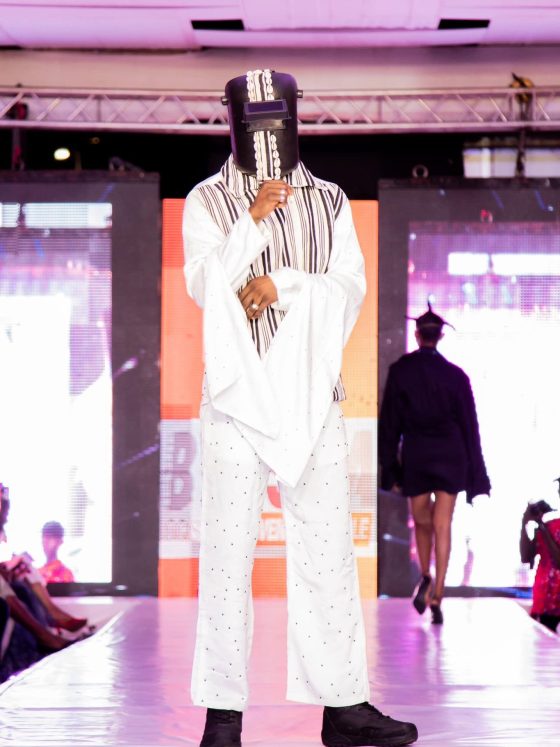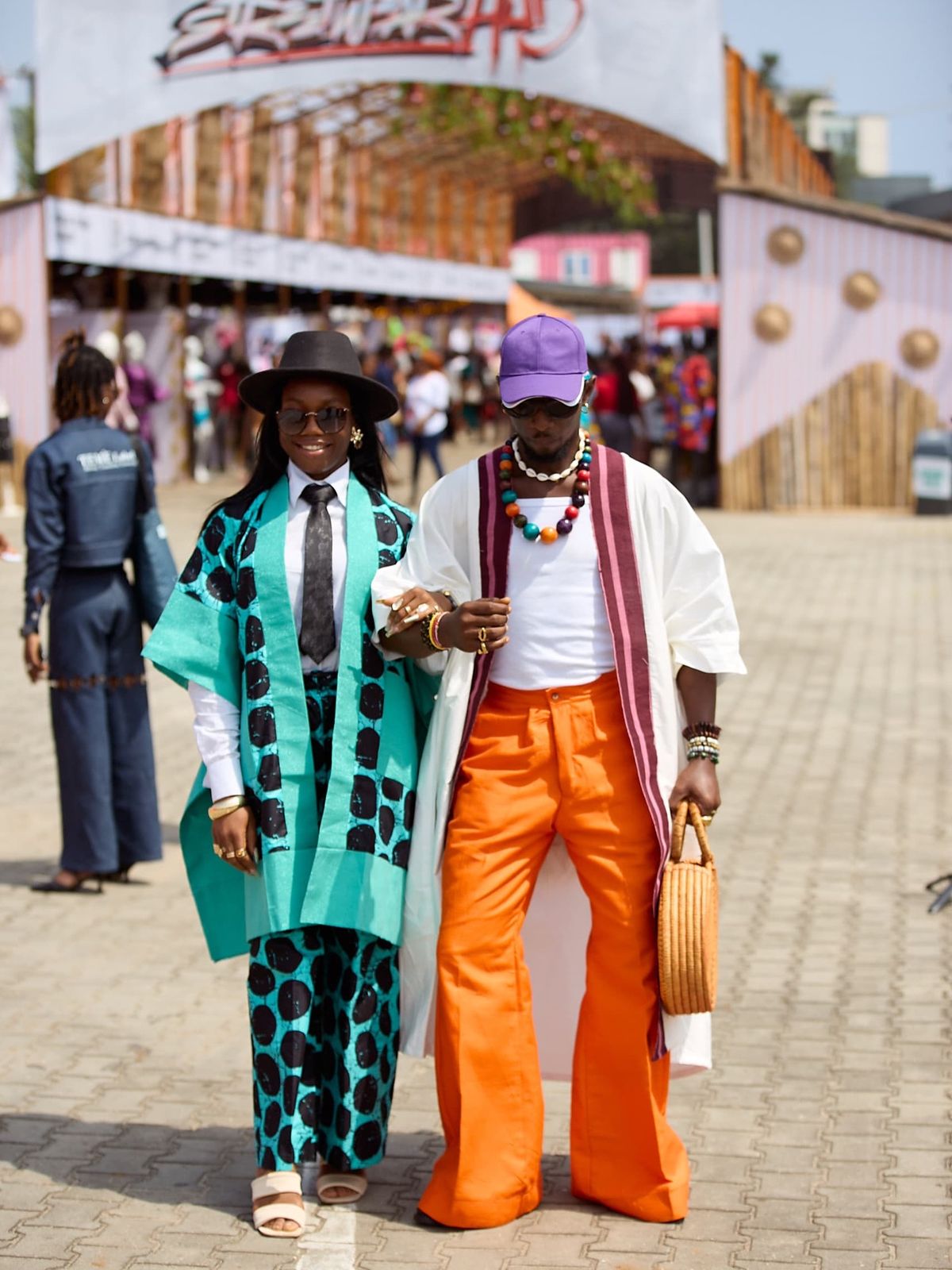
Cotonou is not the kind of city that fashion media covers. It is not Lagos, which has a runway ecosystem that generates consistent international press. It is not Accra, which has cultivated a digital fashion audience large enough to reach international brands. It is not Dakar, which has a fashion week that has been running since the 1990s and a founding designer whose name is internationally known. Cotonou is the economic capital of a country with a population of approximately 14 million, sitting between Lagos and Lomé on the Gulf of Guinea, and its fashion scene has been building itself with very little coverage from anyone outside it. What that scene looks like depends enormously on which part of Cotonou you are in, what time of day or night it is, and what kind of occasion you are being dressed for. But it is there, and it has been there.
The Omiren Argument: Cotonou’s street style is not undeveloped. It is undercovered. The difference matters. An undeveloped fashion scene lacks the creative intelligence, practitioners, events, and material culture to produce a distinct visual identity. Cotonou has all four. What it lacks is the editorial record that would make that visible to anyone not already inside the city.
From Dantokpa to Haïe Vive, Cotonou’s street style blends tailoring, streetwear, and Afrobeat energy. Here is how West Africa’s underrated capital dresses.
The Zémidjan: Where Urban Identity Starts
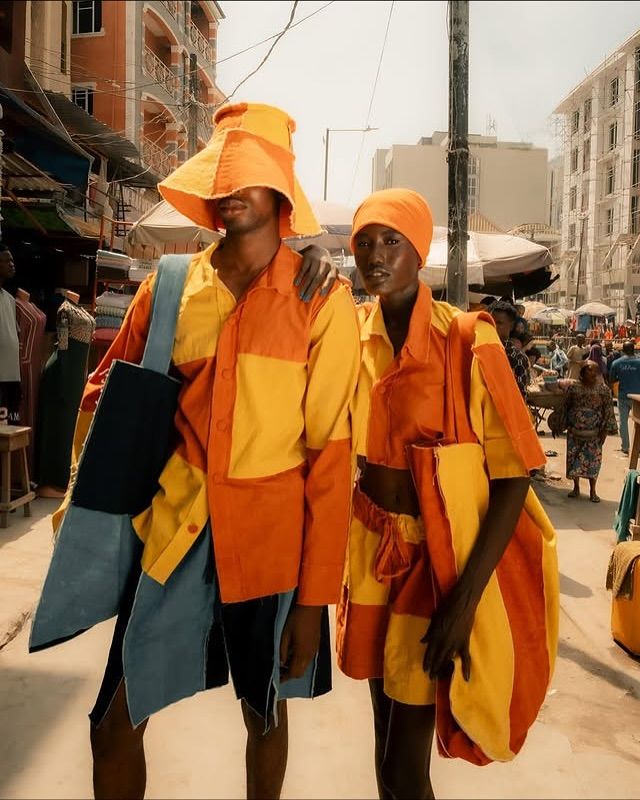
The most visible item of dress in Cotonou is not a designer garment or a fashion statement in the conventional sense. It is a yellow shirt worn by the zémidjan, the motorcycle taxi drivers who are the primary means of transport across the city. Zémidjan derives from the Fon language and means “get me there fast.” There are an estimated 72,000 to 80,000 of them in Cotonou alone. Drivers wear yellow shirts colour-coded by city with registration numbers on the back, a uniform that is simultaneously a professional identifier, a safety marker, and a visual signature that defines the city’s street-level aesthetic as much as any fashion trend.
The zémidjan is not peripheral to Cotonou’s visual culture. It is central to it. The sound of motorcycles, the flash of yellow shirts at intersections, the practised negotiation of a fare before mounting: these are the textures of daily Cotonou life that every local navigates, and every visitor immediately registers. The dress culture of the zémidjan, functional and uniform by design, provides the baseline visual field against which the city’s more deliberate fashion choices are read. Understanding Cotonou’s street style requires starting here, with the city’s most ubiquitous dressed body.
The zémidjan emerged in the 1980s during Benin’s economic crisis, when educated young men who could not find formal employment began providing motorcycle transport as a livelihood. Decades later, the sector remains an entry point for the city’s young workforce. The yellow shirt is the uniform of economic necessity and urban mobility simultaneously. It is also, as uniforms in any city tend to be, a piece of Cotonou’s visual identity that the city’s designers and artists reference rather than ignore.
Dantokpa: The Fabric Infrastructure of Street Style
Dantokpa Market has been the material foundation of Cotonou’s dress culture for decades. Spanning 25 hectares adjacent to Lake Nokoué and home to over 35,000 vendors, it is one of the largest markets in West Africa. Its fabric section stocks wax-print cloth in stacks described by every traveller who has visited as overwhelming: indigo Yoruba patterns beside neon Dutch wax, imported silks beside locally produced pagne. For a Cotonou dresser at any income level, Dantokpa has been the place where fabric is bought, where trends are read in what is ordered and stocked, and where the season’s visual vocabulary is set.
That infrastructure is changing. President Patrice Talon announced Dantokpa’s planned closure in 2018, and by late 2024 and early 2025, the government had opened 35 new markets across Cotonou to absorb its vendor base. Ganhi Market and Midombo Market opened in December 2024 and November 2024, respectively. The wholesale market in Abomey-Calavi was under construction with a 2025 completion target. Vendors and shopkeepers worry that dispersing Dantokpa’s consolidated commercial energy across smaller locations will disrupt the market’s role as a single point of access for all product types.
For Cotonou’s street style ecosystem, the Dantokpa transition matters because the market was not only a place to buy fabric. It was a meeting point where buyers, sellers, tailors, and style practitioners encountered one another and negotiated the visual culture of dress through commercial interaction. Dispersing that encounter across 35 locations changes the social infrastructure of fabric commerce in ways that will take years to understand. The street style that emerges from Cotonou over the next decade will be shaped in part by how the city reconstructs its infrastructure.
The Neighbourhoods: Haïe Vive, Akpakpa, and the Geographic Register of Dress
Cotonou’s dress culture is geographically layered. Haïe Vive, the upmarket neighbourhood that serves as the city’s international corridor, has a different visual vocabulary from Akpakpa, where budget accommodation sits above Chinese-owned shops, or from Cadjèhoun. This residential quarter hosted the first edition of SOB Fashion Week. The Fondation Zinsou, the city’s primary contemporary art institution, is located in Haïe Vive. Its presence shapes the neighbourhood’s visual culture: the kind of person who attends a gallery opening in Cotonou dresses differently from the person navigating a Dantokpa fabric stall at midday, and both dress differently from the young professional working in a Haïe Vive office who wants to wear a kanvô-blend shirt to the office without it reading as purely ceremonial.
Indoor clubs in Cotonou operate a smart-casual dress code as standard, and most do not fill up until after 11 pm. The evening and nightlife dress code is the register in which Cotonou’s fashion consciousness is most visibly expressed. Tailored trousers and dress shirts, well-cut pagne-fabric ensembles, and the occasional kanvô or wax-based contemporary piece all appear in the same venue. The dress code is not rigid, but it is read. Cotonou’s social spaces distinguish between someone dressed for the occasion and someone dressed well for the occasion.
The city’s geographic position between Lagos and Lomé produces a specific cultural pressure on its dress culture. Lagos fashion has a documented global influence: it moves through music, social media, and the Nigerian diaspora. Lomé has its own textile culture, including the FIMO fashion week and the Togolese wax tradition. Cotonou absorbs both, reprocesses them through its own material culture, including kanvô and Beninese wax, and produces a street style that is neither Lagos nor Lomé but specifically Cotonouais.
SOB Fashion Week: Straight Out of Benin
In December 2016, four Beninese women organised the first fashion week ever held in Benin. They called it Straight Out of Benin, shortened to SOB. The first edition ran from 27 to 30 December at Le Majestic in the Cadjèhoun neighbourhood, with runway shows on the evenings of the 27th, 28th, and 29th and an expo-vente on the 30th. The event was sponsored by Lolo Andoche, one of Benin’s most established designers, and by Maureen Ayité of NanaWax. Its stated objective was to promote local Beninese fashion and create connections between the country’s designers.
SOB Fashion Week is a bottom-up event: founded by four women from within the fashion community, not by a ministry or an agency. Its existence since 2016 confirms that Cotonou’s fashion practitioners had enough shared identity, enough peer network, and enough collective ambition to build a runway platform independently, before the government’s Benin Fashion Month had reached its current scale and before the FLY incubator existed. The event is a marker of the scene’s self-organising capacity.
Early-edition SOB designers included Eldior Sodeck Design, BeeWax, Woen Ilga, Danhômè, Orisha, Luxious Colours, and Shadaf Création. These are not names that appear in international fashion press. They are the practitioners who were building Cotonou’s runway culture from within for a Beninese audience, with the skills and materials available to them at the time. The editorial record for these designers is thin. Their contribution to the ecosystem that produced FARE, Isabelle Egin, and Rolande Houvo, is not.
ALSO READ
- Porto-Novo After Hours: Fashion at the Edge of History
- What People Actually Wear in Benin: A Complete Style Guide
- Benin Fashion Month: The Government-Backed Festival Quietly Reshaping West African Fashion
The Fashion Photographers Documenting It
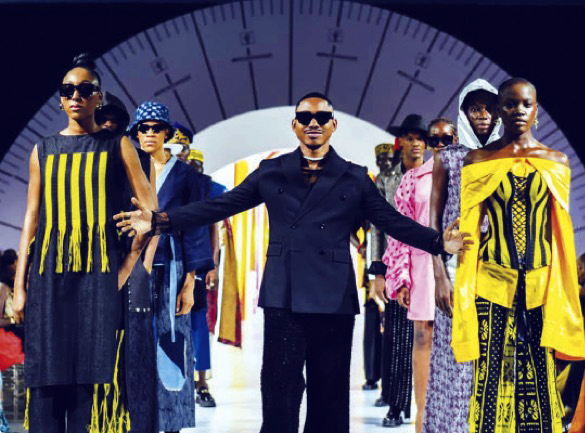
Cotonou’s street style has its own photographers. Oronce Hounkponou has shot for Vogue, Amina, and Brune magazines and won Best Photographer at the Oscars de la Mode Béninoise in 2018. Marc Arthur Kidjo is the official photographer of Bénin Fashion Week. Aïsha (known as Goldie Shot It), Blackwinner Photography, and Mr Dyreck are among the practitioners documenting the city’s visual culture across social media and editorial platforms.
These photographers matter to the street style ecosystem because documentation is how street style becomes visible beyond the immediate moment. A look worn at a Cotonou nightclub in 2022, photographed by Oronce Hounkponou and published in Vogue, is now part of a permanent record. A look worn at the same club that was not photographed is part of nobody’s record. The photographers who are documenting Cotonou’s visual culture are not just recording it. They are determining which of them enters the historical record.
The documentation gap between Cotonou and Lagos or Accra is not a gap in the quality or quantity of style on the streets. There is a gap in the number of practitioners with access to international publication platforms. Hounkponou’s Vogue credits are evidence that Cotonou’s fashion photography can operate at that level. The gap is structural, not creative, and structural gaps close as the ecosystem develops the connections and relationships that publication access requires.
What Cotonou Wears After Dark
The evening register of Cotonou’s dress culture is where the city’s fashion intelligence is most concentrated. The indoor venues of Haïe Vive and the open-air events of the wider city attract a cross-section of Cotonouais social life in which the office professional, the creative practitioner, the visiting diaspora member, and the internationally mobile Beninese return together. The dress that results from this convergence is not uniform but specific: smart-casual in the Western sense, increasingly inflected by Beninese material culture through kanvô fabric inserts, wax-print accessories, and the embroidered boubou worn as a formal statement at important occasions.
The influence of music on evening dress is significant. Afrobeat, hip-hop, amapiano, trap, and Francophone urban music all shape the visual vocabulary of Cotonou’s nightlife-adjacent dress. The specific combination of Nigerian Afrobeats influence filtered through a Beninese cultural lens produces a sound and visual culture that is recognisably West African but not reducible to Lagos. Cotonou is close enough to Lagos to absorb its musical output and distinct enough from it to produce its own response.
The city’s street art contributes to the visual context. Near the cathedral and the commercial port, murals comment on the transition from tradition to modernity, staging the same negotiation between heritage and contemporary life that the city’s dress culture performs every evening. Cotonou is a city that understands itself as both modern and historically rooted. Its street style performs that understanding in fabric and cut.
“Cotonou’s street style is not undeveloped. It is undercovered. The difference matters. An undeveloped fashion scene lacks the creative intelligence, practitioners, events, and material culture to produce a distinct visual identity. Cotonou has all four.”
Frequently Asked Questions
What is Cotonou’s street style like?
Cotonou’s street style varies by neighbourhood, time of day, and occasion. Daily urban dress is predominantly Western: trousers, shirts, jeans, and office wear. Traditional dress and wax-print pagne appear more prominently at ceremonies and in markets. Evening and nightlife dress is smart casual, increasingly inflected with Beninese material culture: kanvô fabric pieces, embroidered boubous for formal occasions, and wax-print accessories. The city’s fashion scene is shaped by its position between Lagos and Lomé, absorbing influences from both while maintaining a specifically Beninese visual vocabulary.
What is a zémidjan, and why does it matter to Cotonou’s visual culture?
A zémidjan (also spelt zemidjan) is a motorcycle taxi, the primary means of transport in Cotonou. The name comes from the Fon language and means ‘get me there fast.’ There are an estimated 72,000 to 80,000 zémidjans in Cotonou. Drivers wear yellow shirts colour-coded by city with registration numbers on the back. The yellow shirt is the most visible item of dress in the city and defines the street-level visual environment against which all other dress is read. The zémidjan emerged in the 1980s during Benin’s economic crisis and remains a central figure in Cotonou’s urban identity.
What is Dantokpa Market, and what is happening to it?
Dantokpa is one of West Africa’s largest markets, spanning 25 hectares adjacent to Lake Nokoué in central Cotonou with over 35,000 vendors. It has been the material foundation of Cotonou’s dress culture for decades, with a large fabric section stocking wax-print, indigo patterns, and Dutch wax. President Patrice Talon announced the planned closure in 2018. By late 2024 and early 2025, the government had opened 35 new markets across Cotonou to absorb its vendor base. The transition from Dantokpa’s consolidated commercial environment to dispersed new markets will reshape how the city’s dress culture sources its material.
What is SOB Fashion Week?
SOB (Straight Out of Benin) Fashion Week is an independent fashion event founded in December 2016 by four Beninese women. Its first edition ran from 27 to 30 December 2016 at Le Majestic in the Cadjèhoun neighbourhood of Cotonou. Sponsored by Lolo Andoche and Maureen Ayité of NanaWax, it was the first fashion week held in Benin. It promotes local Beninese consumption and provides a runway platform for Beninese designers across High Fashion, High Street, and Streetwear categories.
Who are the fashion photographers documenting Cotonou’s scene?
Documented Cotonou fashion photographers include Oronce Hounkponou, who has shot for Vogue, Amina, and Brune magazines and won Best Photographer at the Oscars de la Mode Béninoise in 2018; Marc Arthur Kidjo, official photographer of Bénin Fashion Week; and Aïsha (Goldie Shot It), Blackwinner Photography, and Mr Dyreck, who document the city’s visual culture across social media and editorial platforms.
How does Cotonou’s location between Lagos and Lomé influence its fashion?
Cotonou sits geographically and culturally between Lagos, which has a dominant West African fashion influence operating through Afrobeats music and a large diaspora, and Lomé, which has its own textile culture and the FIMO fashion week. Cotonou absorbs musical and aesthetic influences from both cities, filters them through its own material culture, including kanvô and Beninese wax, and produces a street style that is specifically Cotonouais. The city is not derivative of either Lagos or Lomé but is actively in dialogue with both.
Explore more from our Culture section, where African cities are documented as fashion geographies with their own specific visual intelligence.