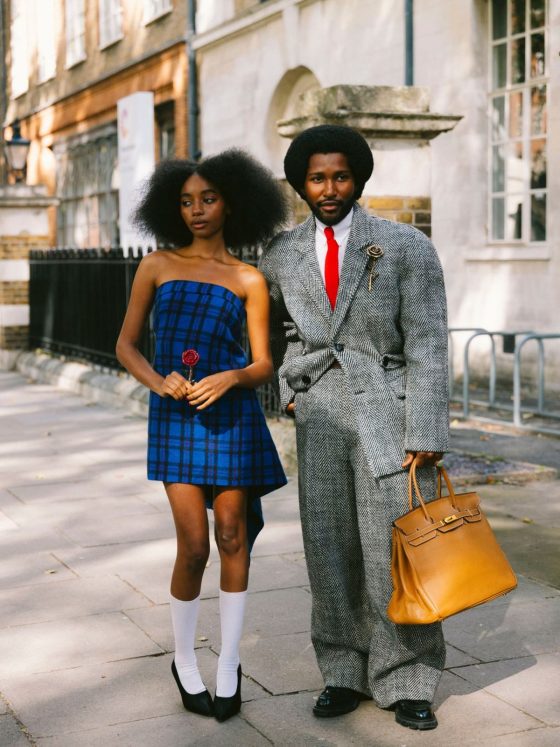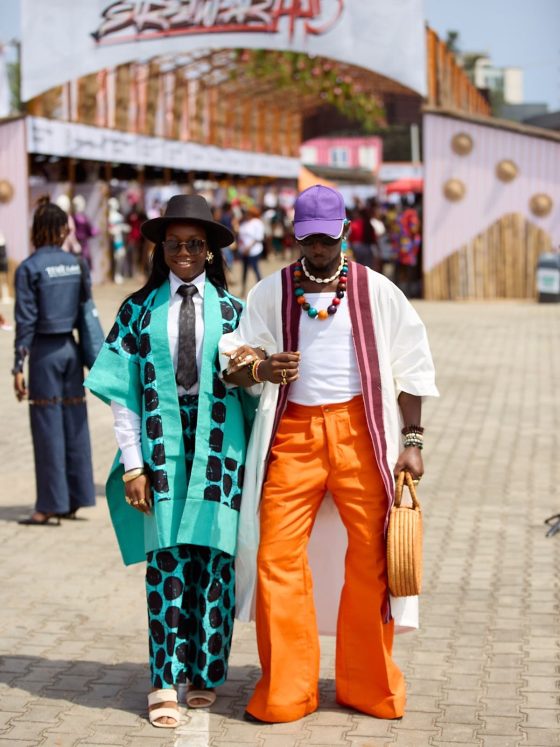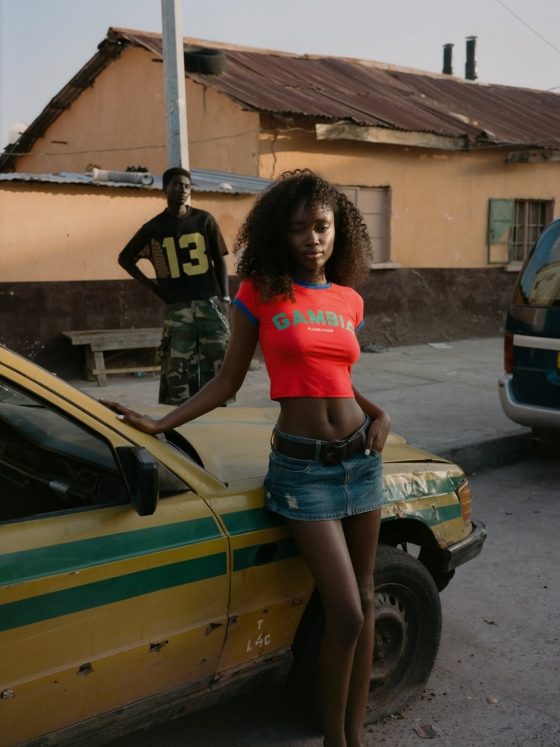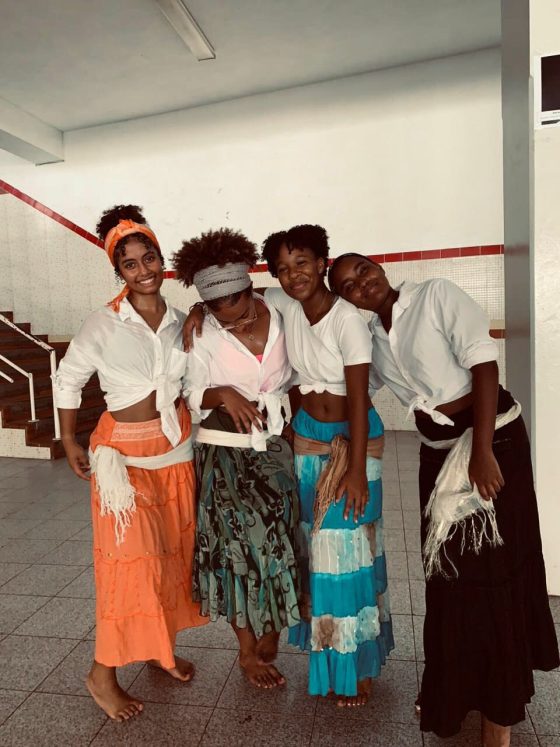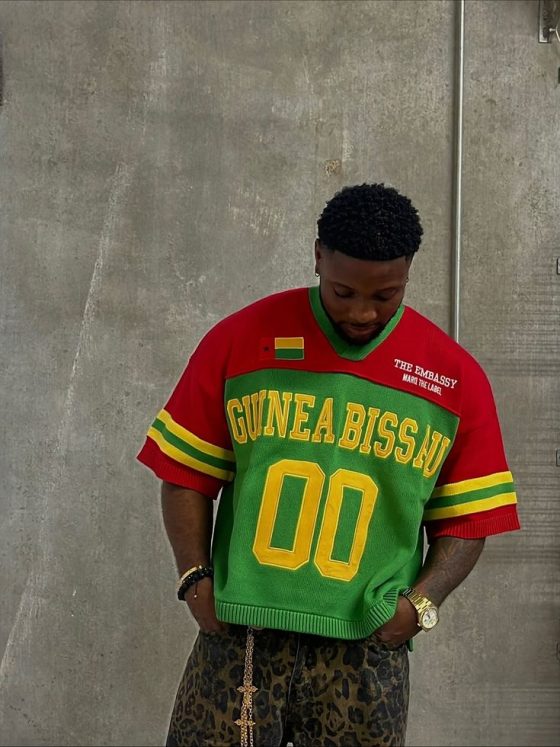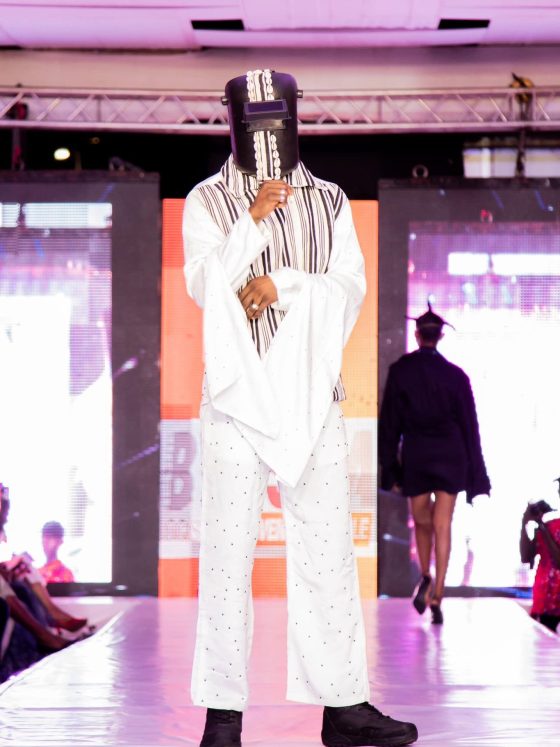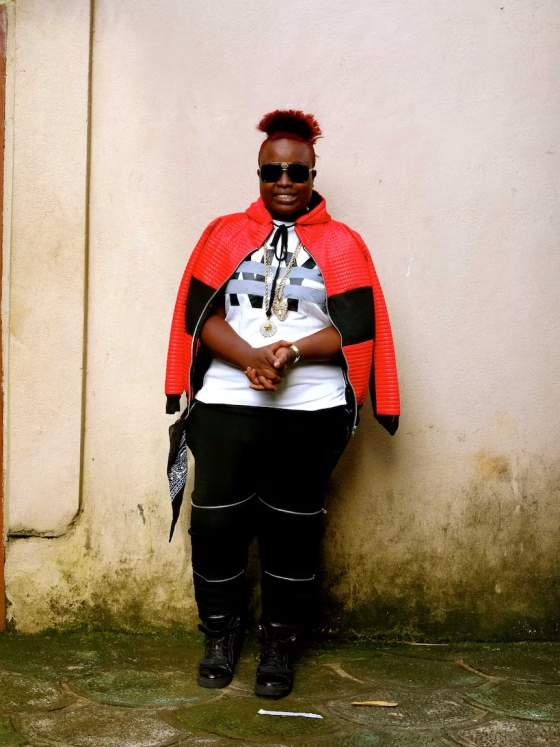
Street fashion in Niamey is not imported from Lagos or Accra. It emerges from a specific Sahelian negotiation: students around Abdou Moumouni University mixing indigo-dyed accents with oversized Nike graphic tees. When Niamey youth walk through the city’s central communes wearing baggy jeans alongside hoodies carrying West African iconography, they are not simply copying a foreign look. They are positioning themselves inside a wider Afro-diasporic streetwear conversation while keeping something of Niger’s own layered identity, Zarma, Hausa, Tuareg, and Songhai, visible in how they dress.
Niamey’s urban youth represent a growing share of one of the world’s youngest national populations. Niger’s roughly 27 million people skew heavily young, with more than half the country under twenty-five. That demographic weight is shaping fashion innovation as young people in the capital negotiate identity through clothing that sits between global streetwear and Sahelian heritage. Niamey’s communes, the city’s five administrative districts, become informal viewing platforms where young people pair indigo accents with Nike sneakers, embroidered shirts with hoodies, and looser traditional cuts with baggy denim. This is not accidental. It functions as a quiet cultural argument: that Niamey’s youth belong to a wider Afrocentric conversation while rejecting the idea that African fashion must be either traditional or modern, since, for many young people here, it is clearly both at once.
This article looks at how Niamey’s street fashion blends hip-hop influences with Sahelian textile references, which specific garments define youth style in the capital, and why this style remains current, as young people continue to choose it in 2026. You will find how indigo and geometric patterning enter streetwear, which sneakers are most sought after on Niamey’s streets, and why this style shows that Niamey’s youth culture can evolve without losing what makes it specific to this city.
Discover street fashion in Niamey, how Niger youth blend Sahelian heritage with modern streetwear, and what defines youth style trends in Niger’s capital in 2026.
Hip-Hop and Baggy Jeans: How Afro-Diasporic Streetwear Reached Niamey Youth Fashion
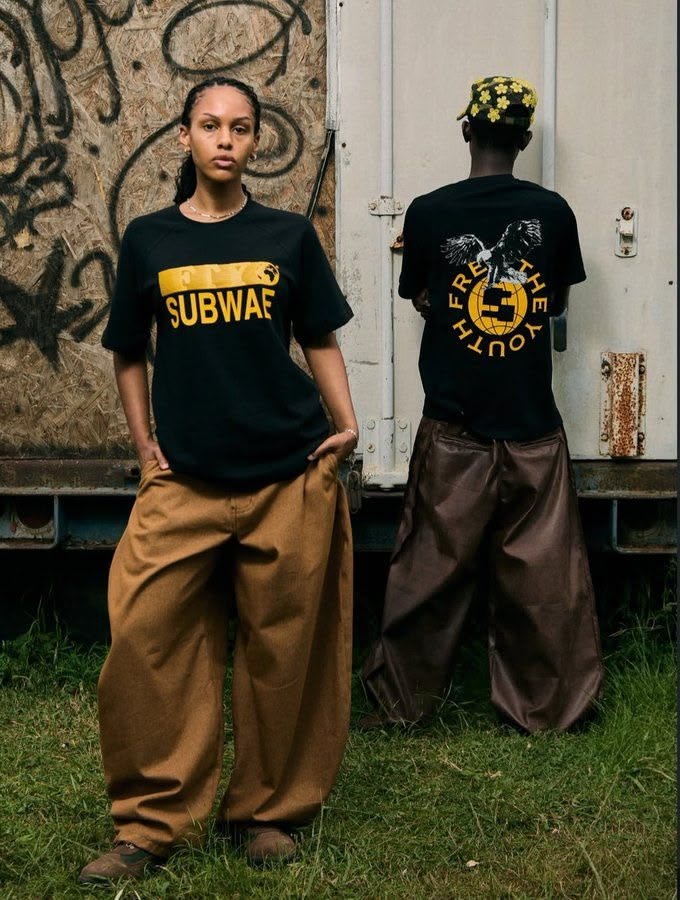
Hip-hop culture shows that Niamey’s youth adopted American-style baggy jeans and oversized tees not through simple imitation but by adapting them to incorporate references to Sahelian textile traditions and the city’s layered identity.
Who wears hip-hop streetwear in Niamey?
Young students aged roughly sixteen to twenty-five make up a large part of Niamey’s street fashion scene, concentrated in the city’s five communes, especially around Abdou Moumouni University, where the capital’s youth population is most visible. Niamey itself is largely a Zarma-Songhai city; the Zarma form the majority population in and around the capital, while Hausa communities dominate further east, and Tuareg communities, though a smaller share of Niger’s population overall, maintain a longstanding northern Saharan presence and trade history that reaches the capital through commerce, family ties, and migration rather than through residence in Niamey itself. This layered, rather than uniform, ethnic geography is what gives Niamey’s street fashion scene its specific texture.
Young men tend to wear baggy jeans somewhat more often than women, while young women more often favour oversized graphic tees, sometimes paired with wrapped skirts in patterned fabric. Local DJs and performers at cultural events often act as informal trendsetters, and their clothing choices can filter down to students and local tailors who adapt what they see.
What does hip-hop streetwear look like in Niamey?
Niamey street fashion commonly features loose-fitting, American-style baggy jeans paired with oversized graphic tees, often two to three sizes larger than the body. The tees frequently display Pan-African flag colours of red, yellow, green, and black, alongside Afrocentric artist portraits and, in some cases, broader West African iconography drawn from across the region rather than from any single local tradition.
Local tailors sometimes add embroidery referencing Sahelian geometric motifs to imported jeans, creating a fusion style. Patterns echoing Tuareg and wider Saharan visual traditions, commonly read locally as carrying meanings tied to themes such as protection or lineage, depending on the specific design, sometimes appear on jean pockets and cuffs in indigo-toned thread against denim. Where this technique is used, it folds Sahelian textile references into imported American clothing rather than simply layering them on top of one another.
Sneakers dominate footwear choices. Nike Air Force 1s, various Adidas trainers, including Air Max models, and Puma sneakers are among the most coveted pairs on Niamey’s streets, generally in white or black. Many young people prioritise a recognisable branded sneaker over older leather sandals or French-style formal shoes, a preference that signals both economic aspiration and a sense of belonging to a wider international youth culture.
Why does hip-hop streetwear matter culturally?
Hip-hop streetwear signals belonging to an Afro-diasporic youth culture with visible threads running through Lagos, Dakar, Cairo, and Niamey alike. When young Nigeriens wear baggy jeans carrying Sahelian textile references, they are claiming membership in that wider conversation while keeping something of Niger’s own layered identity visible. This dual belonging challenges the assumption that African fashion must be either traditional or modern. It shows that Sahelian youth can build both at once.
The style also marks a quiet distancing from two older reference points: formal French colonial dress on one side, and the more conservative dress codes some young people associate with village life or older generational expectations on the other, whether that means specific religious modesty norms, gendered dress rules, or simply more reserved silhouettes. Choosing streetwear becomes its own kind of statement, one that claims neither the colonial past nor an unchanging version of village tradition, but a contemporary identity that spans the capital and its diaspora connections.
Performers and DJs carry real influence here. Their clothing choices often filter down to students through informal copying, with local tailors recreating baggy jeans and oversized tee combinations they have seen worn at concerts or cultural events. This kind of transmission, from stage to street to tailor’s workshop, is part of what keeps streetwear functioning as genuine cultural currency rather than a passing trend. Scholarship on Tuareg beauty and adornment in urban Niger and Mali has documented a related, longer-running pattern under the term ishumar, describing younger generations who left a strictly nomadic life for city employment and, in the process, built new, modified traditions rather than abandoning Sahelian identity altogether. Niamey’s streetwear scene sits inside that same longer history of young people adapting inherited identity to urban life rather than simply discarding it.
What does hip-hop streetwear mean today?
Many young Nigeriens wear hip-hop-influenced streetwear as everyday clothing, not only at concerts or festivals. Students commonly attend university in baggy jeans and graphic tees, market vendors in Niamey’s commune markets sell streetwear alongside other goods, and some local tailors customise imported clothing with Sahelian-pattern embroidery on request. This everyday use is part of what gives the style its staying power: it survives by serving present-day needs while still carrying cultural reference.
A related kind of adaptation is visible elsewhere in West Africa. Christie Brown, the Ghanaian label led by designer Aisha Ayensu, folds traditional kente into contemporary ready-to-wear, ensuring a heritage fabric continues to serve modern purposes rather than being confined to ceremonial use alone.
Sahelian Textile and Streetwear Fusion: How Indigo and Pattern Enter Modern Niamey Fashion
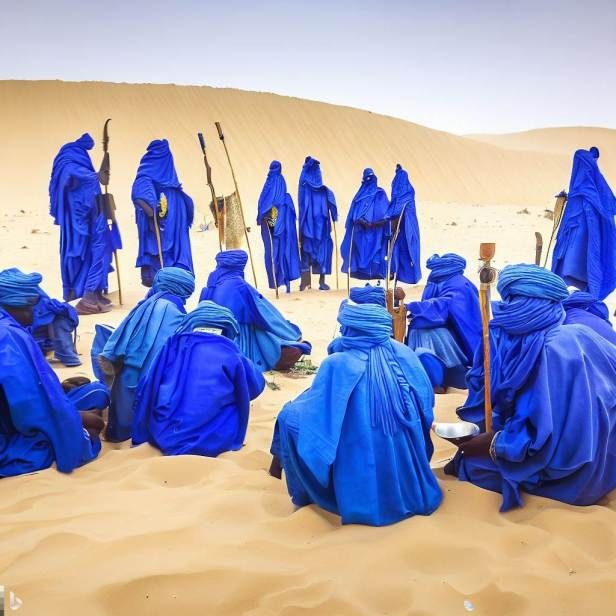
The fusion of Sahelian textile reference with streetwear shows that Niger’s indigo-dyeing and geometric-pattern traditions, most closely associated with Tuareg communities and their iconic tagelmust, the indigo-dyed turban and veil traditionally worn by Tuareg men after reaching adulthood, can find new forms in everyday clothing that young people across the capital choose to wear, without necessarily wearing the tagelmust itself, which carries specific gendered and ceremonial meaning within Tuareg communities that streetwear does not attempt to replicate.
What Sahelian-streetwear fusion is common in Niamey?
Sahelian textile reference enters streetwear through a few recurring approaches. Some tailors add geometric pattern detailing, often in indigo-toned thread, to hoodies at the cuffs, collar, or hemline, echoing motifs commonly associated with Tuareg textile and leatherwork traditions, including the diamond and zigzag shapes long used in that visual vocabulary, often interpreted locally as carrying meanings tied to themes such as protection, family lineage, or the natural world. However, the precise reading can vary by community and craftsperson. Other pieces use a similar geometric patterning as a central graphic on a tee rather than a border detail. A third common form is the crossbody bag, carrying comparable patterning, which some young people choose over imported branded bags as a visible nod to Sahelian visual identity alongside everyday function.
How does this textile reference enter streetwear?
These geometric patterns, read by some communities as carrying meanings tied to protection, lineage, or nature, depending on the specific design and the craftsperson’s own tradition, appear as border details on streetwear sleeves, collars, and hemlines via screen printing or embroidery. The colour pairing, typically indigo blue alongside white or natural cotton tones, echoes the long-documented indigo-dyeing tradition associated with Tuareg dress, in which indigo pigment historically served as a marker of value and status across the Sahara. This is one way that visual reference travels: not by reproducing a ceremonial garment exactly, but by letting its colours and patterns move into a new kind of clothing while keeping some of their original association intact.
Why does this fusion matter for Niamey’s youth?
This kind of fusion connects to a wider movement visible across the Sahel and the Arab-influenced regions that border it. Omiren Styles has documented this pattern in The Afro-Arab Street Fashion Movement Reshaping Global Style, which describes a generation across the Sahel and the Sahara who choose fashion that respects heritage and faith while still feeling contemporary and globally connected, rather than treating modern style and inherited identity as opposites. Niamey’s streetwear fits squarely within that wider pattern: young people are not discarding Sahelian visual reference to appear modern. They are folding it into modern clothing on their own terms.
For some local tailors, this fusion work also creates a genuine economic incentive to keep certain textile and pattern-making skills in circulation, even in commercial, non-ceremonial form. When a tailor teaches an apprentice pattern embroidery for use on streetwear, that knowledge continues to be practised through commercial production, which may help sustain at least some familiarity with these visual traditions even as direct ceremonial garment-making itself becomes less common among younger generations.
A comparable pattern is visible elsewhere in West Africa. Tongoro, the Senegalese label founded by designer Sarah Diouf, translates traditional African silhouettes into contemporary ready-to-wear, making heritage-inspired form accessible to a generation that might otherwise have limited everyday exposure to it.
What pressures does this fusion face today?
Cheap imported clothing, much of it manufactured in Asia, has become widely available in Niamey’s markets and competes directly with locally tailored, pattern-fused streetwear on price. Pre-printed graphic tees often cost considerably less than custom tailoring, which has led some young people to opt for imported pieces rather than commissioning local work. At the same time, more young Nigeriens are moving into technology and telecommunications rather than tailoring, which means fewer apprentices are learning the embroidery and pattern-making techniques some tailors currently apply to streetwear. Together, these pressures put real strain on the fusion’s continuity, even as streetwear itself remains widely worn across the city.
The fusion does not weaken identity. It produces something new that still carries the old colours.
ALSO READ
- The Afro-Arab Street Fashion Movement Reshaping Global Style
- The Meaning of White: How Faith and Climate Shape Cultural Dress
- Beauty and Adornment in the Sahara: Tuareg and Wodaabe (Spurlock Museum, University of Illinois)
- Youth as Actors and Mediators in Tuareg Theatre and Social Life, Urban Niger and Mali (Ateliers d’Anthropologie)
Sneakers and Saharan Footwear: How Branded Shoes Signal Aspiration in Niamey
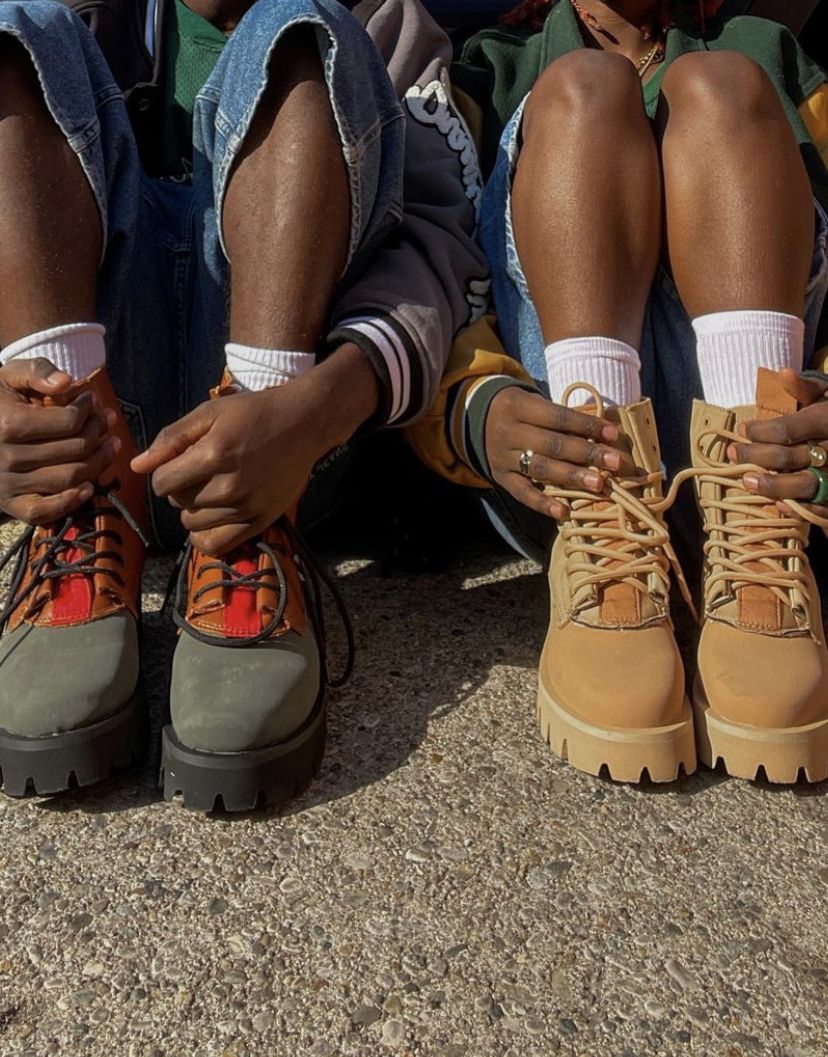
Nike and Adidas sneakers show that Niamey’s youth use branded footwear not to set aside Sahelian identity, but to claim a place inside a wider youth culture where sneakers function as a kind of shared currency from Lagos to Dakar to Niamey.
Which sneakers are most sought after in Niamey?
Nike Air Force 1 in white or black leather remains especially popular among young men involved in the hip-hop scene, often paired with baggy jeans or pattern-fused pieces. Various Adidas models, including Air Max lines, draw a wider mix of male and female students, often worn with oversized tees or pattern-bordered hoodies. Puma white leather sneakers offer a more affordable entry point for students on limited budgets. Across these options, many young people prioritise a recognisable branded sneaker over traditional leather sandals or formal French-style shoes, treating the choice as a marker of both aspiration and belonging. A pair of authentic branded sneakers can cost considerably more than a typical student’s disposable income allows for casually, which turns ownership into something closer to an achievement than a routine purchase.
Why do sneakers matter culturally?
Sneakers function as a kind of shared currency within Afro-diasporic streetwear more broadly. When Niamey youth wear a pair of Nike Air Force 1, they are signalling a connection to a sneaker culture that runs through Lagos, Dakar, Cairo, and beyond, into diaspora cities further afield. That sense of belonging to something wider pushes back against the assumption that African fashion must stay local to be meaningful; it shows that Sahelian youth are already part of a global conversation.
Sneaker choice can also carry gender signalling: young men more often pair baggy jeans with higher-top Nike styles, while young women more often choose oversized tees with wrapped skirts and lower-top Adidas styles. This kind of variation gives the broader sneaker culture a more specific, locally inflected texture rather than flattening everyone into one uniform look.
What pressures does sneaker culture face today?
Counterfeit sneakers, often manufactured cheaply abroad, circulate widely in Niamey’s markets at a fraction of the price of authentic pairs. For young people unable to afford genuine Nike or Adidas, counterfeits offer the visual style without the cost, which complicates sneakers’ role as a marker of aspiration when fakes become common enough to blur the distinction. Currency pressures and import costs, tied to the CFA franc’s fixed peg to the euro, also keep authentic sneakers relatively expensive for many households in Niamey, leaving young people to weigh genuine branded pairs against cheaper counterfeit alternatives. This tension shapes how sneaker culture is experienced, with experiences differing depending on a household’s means, even as the underlying style remains widely shared across the city.
What does sneaker culture mean today?
Many Niamey youth wear sneakers as part of daily life, not only at concerts or special events. Students commonly attend university in trainers, market vendors sell sneakers in commune markets, and informal sneaker-cleaning services have emerged on the streets of Niamey. This everyday use is part of what gives sneaker culture its staying power, surviving because it continues to serve present-day needs while carrying cultural meaning.
Sneaker culture shows that Niamey’s youth negotiate identity through footwear choices that balance a wider Afro-diasporic culture with Niger’s own layered Sahelian heritage. The sneakers do not replace that heritage. They extend it into a broader, shared conversation that spans the capital and the diaspora beyond it.
THE OMIREN ARGUMENT
Street fashion in Niamey shows that Sahelian youth culture can evolve without losing its significance by embracing a broader Afro-diasporic belonging alongside its own layered regional identity, rather than treating the two as opposites.
Context
Critics sometimes assume Niamey’s street fashion has lost authenticity by adopting American baggy jeans and Nike sneakers, treating this adoption as cultural dilution and assuming that true Sahelian identity requires sticking to traditional dress or formal French-style clothing instead.
Disruption
Niamey’s streetwear suggests the opposite. Indigo and geometric pattern references leave the ceremonial wardrobe and appear on a hoodie cuff or a tee. Sneakers, imported and aspirational, do not cancel Sahelian identity; they allow young people to claim a place in a wider Afro-diasporic conversation while still carrying elements of their own visual language. The fusion does not weaken identity. It produces something new that still carries the old colours.
Cultural Insight
Cultural identity tends to endure through its capacity to adapt rather than through staying still. Many young people wear streetwear daily, at university and in the market, across Niamey’s communes. Some local tailors profit from pattern-fusion work, which in turn helps keep certain textile skills in commercial circulation. Sneaker culture signals aspiration while still connecting wearers to a wider Afro-diasporic conversation. Streetwear persists because it continues to serve present needs while carrying older references forward.
Conclusion
Rejecting Afro-diasporic fashion does not create authenticity on its own. Niamey’s street fashion remains significant because young people continue to choose it in 2026. The more useful question is not whether streetwear weakens Sahelian identity, but whether cultural traditions can evolve without losing what made them meaningful in the first place, and why continuity, rather than an imagined purity, might be the better measure of whether a tradition is actually alive.
FREQUENTLY ASKED QUESTIONS
What do young people wear in Niamey?
Many young people in Niamey wear hip-hop-influenced streetwear, including baggy jeans and oversized graphic tees, sometimes customised by local tailors with embroidery referencing Sahelian geometric patterns. Young women frequently pair oversized tees with wrapped skirts, and Nike, Adidas, and Puma sneakers are among the most common footwear choices around the city’s communes and university areas.
How does hip-hop influence street fashion in Niamey?
Hip-hop culture introduced baggy jeans and oversized graphic tees to Niamey’s youth, with performers and DJs often serving as informal trendsetters whose looks are adopted by students and tailors. This connects Niamey’s streetwear to a wider Afro-diasporic hip-hop and sneaker culture. At the same time, young Nigeriens continue to fold in their own regional textile references rather than adopting the style unchanged.
What is street fashion in Niamey, Niger?
Street fashion in Niamey generally combines American-style baggy jeans and oversized graphic tees with Sahelian geometric patterns, added through embroidery or screen printing, alongside Nike, Adidas, and Puma sneakers. The style sits apart from both formal French dress and more conservative traditional dress codes, forming its own contemporary identity specific to the capital.
How does the Tuareg textile tradition relate to streetwear in Niamey?
Some Niamey tailors reference geometric patterns and the indigo-dyeing tradition long associated with Tuareg dress, including the tagelmust, the indigo-dyed turban and veil traditionally worn by Tuareg men, in their streetwear embroidery and prints. However, this borrows visual elements and colour rather than the ceremonial garment itself, which carries specific gendered and cultural meaning that streetwear does not attempt to replicate.
Why does street fashion matter for Niamey’s youth culture?
Street fashion connects Niamey’s youth to a wider Afro-diasporic culture while keeping some of Niger’s own regional visual references present through patterns and embroidery. Sneakers function as a kind of shared currency, with ownership often representing real aspiration, given the cost relative to a typical student’s income. The style shows that youth are actively balancing global and regional influences rather than choosing one over the other, which is part of why it continues to be worn daily rather than fading into a passing trend.
Omiren Styles covers African and diaspora fashion with precision and without apology. Explore more cultural intelligence across all 54 African nations, the Caribbean, and Latin America at omirenstyles.com. African fashion and culture are not emerging. They are foundational.