Scaling a collection is not doing more of what already works. It is a structural change that breaks the systems a label has been relying on, because those systems were never systems at all. They were relationships, habits, and personal oversight that worked at low volume but failed as volume increased.
The labels that scale successfully identify which of their current practices are genuinely scalable and which are not, before the scale begins. The labels that do not make this assessment deliver their largest collection at their lowest quality, at the worst possible commercial moment.
What African fashion labels need to assess and build before scaling a collection: the production audit, infrastructure requirements, and first-run management that prevent quality failure at scale.
What Changes When You Scale
At small production volumes, a founder or lead designer can personally hold most of the production intelligence. They know the atelier’s strengths and limitations. They are present for fittings and can make corrections in real time. They inspect finished units before delivery because the volume is small enough to make this practical. The quality control system is personal oversight.
When volume increases, personal oversight stops scaling. The founder cannot be present for every fitting throughout a run of 200 units. The atelier’s informal understanding of what the label requires, held in the relationship rather than in written specifications, breaks down when the run is large enough for multiple people to work on it simultaneously. The verbal corrections that worked for twenty units do not reach every tailor working on two hundred.
The things that change when a label scales are not the things most founders expect. The design does not change. The fabrics do not change. What changes is the production infrastructure: the documentation, the communication, the oversight mechanisms, and the atelier or manufacturer capacity. If these have not been built before scaling begins, the scale reveals their absence at the worst possible moment.
At a small volume, personal oversight is a production system. At a larger volume, it is not enough. The gap is where quality fails.
What a scaling failure looks like in practice
A Lagos label has been producing twenty to thirty units of each style, across three styles per season, for three years. Quality is consistently strong. Orders grow. The brand secures a wholesale account that requires two hundred units of a single style.
The atelier cannot produce two hundred units at the same quality as thirty, because the quality at thirty was maintained by the founder’s direct oversight on a small production table. At two hundred units, three tailors are working simultaneously. Nobody has a written finishing specification. The founder cannot check every unit. The delivery contains forty units with finishing quality below the brand’s standard.
The wholesale account returns the forty units and reduces its reorder. The label has not scaled. It has strained its most important commercial relationship at the moment of its greatest opportunity.
This is not a talent failure. The atelier is as skilled as it has always been. It is a production infrastructure failure: the quality system that worked at thirty units was not built to work at two hundred.
The Scaling Audit: What to Assess Before You Begin
Before committing to a scaled production run, a label needs honest answers to five questions. These constitute a scaling audit.
- Atelier or manufacturer capacity: can the production partner maintain quality across the required volume, or does the quality level depend on conditions that do not hold at larger runs?
- Specification documentation: Are the technical specifications, material confirmations, and quality standards for the collection written down, or are they held informally in relationships and memory?
- Size grading: has the size run been tested across the full range on representative bodies, or has fit been approved only on the base size?
- Material supply: Can the required materials be sourced in the required quantities without substitution, and what is the lead time for the full materials order?
- Timeline: Does the production timeline have explicit dependencies mapped and contingency built in, or is it based on an optimistic assumption about what can be achieved without disruption?
No answer to any of these questions identifies a specific risk that needs to be addressed before the scaled run begins. A label that proceeds with two or more “no” answers is proceeding on hope rather than on infrastructure.
Auditing atelier capacity honestly
The atelier capacity question is the most difficult to answer honestly because it requires acknowledging that the quality the label currently delivers may depend on personal rather than systemic conditions.
The honest test is this: if the lead tailor were absent for three days during the production run, would the quality hold? If the answer is no, the label is not ready to scale with the current atelier structure. Not because the lead tailor is not skilled, but because the quality that depends on one person is not a production system. It is a person.
For labels considering a first significant scale, it is worth discussing capacity explicitly with the atelier before committing: what is the maximum run size they can produce at the label’s current quality standard, what additional resources would be needed for larger runs, and what would change about their process at the larger volume?
Production Infrastructure for Scale
The production infrastructure a label needs before scaling is not complex. It is the documentation of what the label currently does informally, made explicit enough to be applied consistently by people who do not share the founder’s informal knowledge.
Written specifications
A complete specification document for each style in the scaled collection: finished measurements at each size point, construction methods, thread specifications, trim specifications, finishing standards, and quality acceptance criteria.
Writing the specifications for existing style surfaces the informal decisions made about those styles across multiple production runs. A designer who has been producing the same jacket for two years may discover, when writing the specification, that they have never formally decided on the internal seam-finishing standard. It has been correct because the same tailor has made every unit and knows what the label requires. The specification makes that knowledge transferable.
Material sourcing confirmed before production
At larger volumes, material availability becomes a production risk in a way that it is not at smaller volumes. A fabric that has always been available in the quantities a label needs may not be available in the quantities a scaled run requires, or may require an order lead time that the production timeline does not accommodate.
The material sourcing confirmation for a scaled run should happen before the production schedule is set, not concurrently. The production schedule depends on when materials will be available. A schedule built before material availability is confirmed is a schedule built on an assumption.
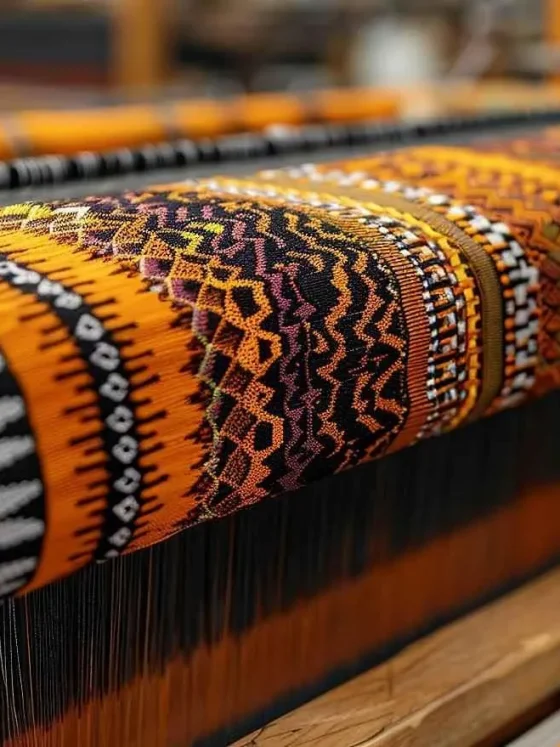
For labels working with African textiles, this is particularly significant. The supply constraints facing Aso-oke weavers, for example, mean that a label producing with handwoven Aso-oke at twenty units per season may face genuine availability limitations when scaling to larger volumes. Confirming availability at scale before committing to orders is not optional. It is how a label avoids the choice between substituting a different textile or missing a delivery commitment.
Atelier agreements for scaled production
The informal understanding that governs small-run production between a label and its atelier needs to be formalised into a written agreement for scaled production. Not a legal contract in the formal sense, but a documented agreement that covers: the production volume, the timeline, the quality standard, the unit rate, the payment schedule, the inline quality check process, and the procedure for addressing quality issues identified during or after production.
Labels that have been producing informally with the same atelier for years sometimes resist formalising the relationship, because formality feels like a change to a relationship that has worked well. The formalisation is not a change to the relationship. It is the mechanism that allows the relationship to handle a change in production scale without the quality and timeline assumptions that worked at small volume being silently abandoned at large volume.
ALSO READ
- From Sample to Shelf: What Happens Between First Sample and Final Garment Delivery
- How Fashion Production Teams Prevent Timeline, Fit, and Quality Failures
- Why African Fashion Brands Fail After Year Three
- The Aso-Oke Weaver Crisis: What Happens When Nigeria’s Most Important Cloth Can No Longer Be Made
Managing the First Scaled Run
The first scaled production run is the highest-risk run a label will do. It is the run where the gap between the label’s current production infrastructure and the infrastructure required for the new scale becomes visible. Managing that gap proactively, rather than discovering it at delivery, is the production manager’s primary job during the first scaled run.
Start smaller than the order requires
For a label scaling from thirty to two hundred units, producing a trial run of fifty to seventy-five units before committing the full run is not cautious. It is intelligence. The trial run reveals which elements of the specification the atelier needs clarification on, whether the quality standards hold at higher volume, and whether the timeline assumptions were realistic.
The cost of a trial run is a fraction of the cost of discovering the same information at delivery on the full run. If the trial run passes quality and timeline standards, the remaining units can be produced with confidence. If it does not, the problem is limited to 50 units rather than 200.
Inline checks at a higher frequency
The inline check frequency appropriate for a small run, first five units or ten per cent of completion, needs to be adjusted for the first scaled run. The first scaled run warrants inline checks at 5%, 15%, and 30% of completion. The additional checkpoints are not overhead. They are the early warning system for infrastructure failures most likely to occur during the first scaled run.
Communication structure with the atelier
The communication structure that worked for small runs, a message or a site visit when something came up, is not sufficient for a scaled run. Scheduled daily or every-other-day production updates, in writing, covering units completed, any quality issues identified, any material issues arising, and the current projection against the delivery timeline, are the minimum communication structure for a first scaled run.
This is not micromanagement. It is the mechanism by which a production manager knows whether the run is on track before the delivery date reveals that it is not.
The first scaled run is not the time to discover what your production infrastructure cannot handle. The scaling audit is. The audit costs almost nothing. The discovery at delivery costs significantly more.
Post-delivery review
After the first scaled run is delivered and inspected, a structured review of what worked and what did not is the most valuable single investment a label can make before the next scaled run. Which quality standards were held? Which did not, and why? Which timeline assumptions proved realistic? Where did communication break down?
The answers become the basis for improving the specification documents, the atelier agreement, and the production timeline for subsequent runs. The first scaled run is time- and attention-intensive. The learning from it is the return on that investment, if the label takes the time to capture it.
What Building Scaling Infrastructure Before Scaling Produces
A label that conducts a scaling audit, builds the required production infrastructure, and manages the first scaled run with appropriate oversight produces something that most labels only achieve after two or three expensive failures: a production system that can deliver at scale without sacrificing the quality that built the brand.
For African fashion labels building commercial operations in competitive markets, this matters more than it might elsewhere. The reputation for quality and reliability that converts wholesale accounts and press attention into sustained commercial growth is built on consistent product, not on occasional excellence. The brands that fail after early success almost invariably fail at the production stage: not because the design stops being good, but because the production infrastructure was not built to deliver the design consistently at the volume required for commercial success.
Building the production infrastructure before the scale begins is not a delay to commercial ambition. It is the condition that allows commercial ambition to be realised without the quality failure that undermines it.
Scaling without infrastructure does not scale your business. It scales your problems.
FAQs
When is a fashion label ready to scale a collection?
When it can answer yes to five questions: the atelier or manufacturer can maintain quality at the required volume; the technical specifications and quality standards are written down rather than held informally; the size run has been tested across the full range; the required materials can be sourced in the required quantities without substitution; and the production timeline has explicit dependencies and contingency built in. No answer to any of these questions identifies a specific risk that needs to be addressed before the scaled run begins.
What is the most common reason scaled production runs fail for African fashion labels?
The quality system at a small volume relied on personal oversight rather than a documented infrastructure. When volume increases beyond what one person can oversee directly, the quality system does not fail because the atelier is less skilled. It fails because the atelier no longer has the informal guidance that made small-run quality possible, and no written specification exists to replace it. The fix is writing the specification before scaling begins, not after the first scaled run reveals it was missing.
How do you formalise a production relationship with a local atelier before scaling?
By documenting what the informal relationship already covers: production volume, timeline, quality standard, unit rate, payment schedule, inline quality check process, and the procedure for addressing quality issues. The formalisation does not need to be a legal contract. It needs to be a written record that both parties have agreed to, specific enough that a dispute about quality or timing can be assessed against it rather than resolved through memory and personal loyalty. Labels that have strong informal relationships with their ateliers often find the formalisation straightforward, because the relationship is already doing what the document describes.
Should a label do a trial run before its first scaled production run?
Yes. A trial run of fifty to seventy-five per cent of the first scaled volume reveals which elements of the specification the atelier needs clarification on, whether the quality standards hold at higher volume, and whether the timeline assumptions were realistic. The cost of a trial run is a fraction of the cost of discovering the same information at delivery on the full run. If the trial run passes quality and timeline standards, the remaining units can be produced with confidence.
How should a label assess its atelier’s capacity for scaling?
By asking honestly whether the current quality level depends on conditions that do not scale. The most reliable test is to ask: if the lead tailor was absent for three days during the production run, would the quality hold? If no, the label is not yet ready to scale with the current atelier structure. Not because the atelier is not skilled, but because the quality that depends on one person’s continuous presence is not a production system. A conversation with the atelier about their maximum comfortable volume, additional resource requirements, and process changes at larger runs provides the information needed to plan the scale realistically.
CONTINUE READING