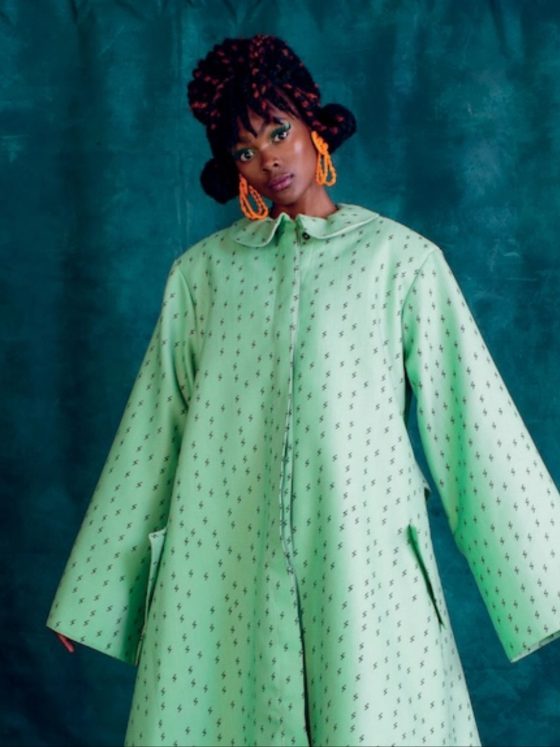
The brand launched in Lagos with a sold-out debut collection, a waiting list, and every marker of a business that was going somewhere. Two years later, the founder was fielding enquiries from international stockists. By the end of year three, the brand was gone. Not because the designs had stopped working. Because the invoices had not been paid, the fabric supplier required payment up front. The shipping cost had doubled. The Instagram audience was growing; the bank account was not. This is not one story. It is the architecture of how Afrocentric fashion brands collapse, and it happens so consistently at such a recognisable point in the business cycle that the industry has begun to treat it as inevitable. It is not.
Most African fashion brands collapse not because the designs fail but because the infrastructure never existed to sustain them. Omiren examines the real reasons.
The Myth That Talent Is Enough

Every major analysis of Afrocentric fashion opens with the same acknowledgement: the creative output is exceptional. Lagos Fashion Week draws international buyers. Designers from Ghana, Senegal, and Nigeria are stocked at Nordstrom, Dover Street Market, and Selfridges. Tyla wore Tolu Coker to the 2025 pre-Met Gala event. The visibility is real and growing.
But visibility and viability are different measurements, and the industry has spent a decade conflating them. A brand can appear on the right runways, receive the right press, and still collapse under the weight of a cash flow gap that no amount of cultural coverage can close. The failure rate confirms it:
approximately 80% of new fashion brands fail within the first five years, a figure that runs higher in markets where infrastructure costs eat into margins before the brand reaches scale. The creative quality of Afrocentric fashion is not the variable under pressure. The business conditions surrounding it are.
Year three is where this distinction becomes visible. The first two years run on momentum, a tight production circle, a known supplier, and a manageable order volume. Growth breaks that circle. A larger collection requires more fabric, which requires more capital, which requires either investor funding that rarely arrives or cash reserves that were never built. The brand that looked successful at year two is, by year three, operating at the outer edge of what its informal production network can support.
What Actually Kills the Business

The African Development Bank has documented that 70% of African fashion designers struggle with funding. That statistic is cited often. Less often cited is what the funding gap produces in practice: a compounding chain of operational failures, each one manageable in isolation, collectively fatal.
The first failure point is production infrastructure. Most Afrocentric fashion brands at the early growth stage rely on a network of small, informal tailors and workshops rather than a factory with consistent capacity and quality control. This works at low volume. At scale, it breaks. Delivery timelines become unpredictable. Quality varies between units. A buyer who placed a first order does not place a second. The brand loses the retail relationship it spent two years building, and the reputational cost is immediate.
The second failure point is the cost of operating on the continent.
Energy in sub-Saharan Africa is roughly three times as expensive as in Asia, and logistics inefficiencies increase production costs by 15-30 per cent. A designer who cannot access reliable power sources uses a generator. The generator is an operating cost that does not appear on any international competitor’s balance sheet. This cost does not shrink as the brand grows. It compounds.
The third failure point is fabric sourcing.
Local apparel producers across the continent source more than 90% of their yarn and fabric from outside Africa, primarily from Asia and Europe. This means every collection carries international shipping costs, foreign currency exposure, and lead times that make responsive production nearly impossible. A trend window that opens and closes in six weeks cannot be served by a supply chain with a twelve-week lead time.
The fourth failure point is governance. Investors who engage with Afrocentric fashion brands consistently identify the same issue: founders who are genuinely creative and deeply committed, operating without audited financials, formalised management structures, or documented business models.
A growing gap exists between African investors seeking meaningful returns and African designers who seek funding without a compelling business model. This is not a critique of the founders. It is a structural consequence of an industry that celebrates creative achievement without building the business literacy infrastructure to support it.
The Woolmark Prize Problem
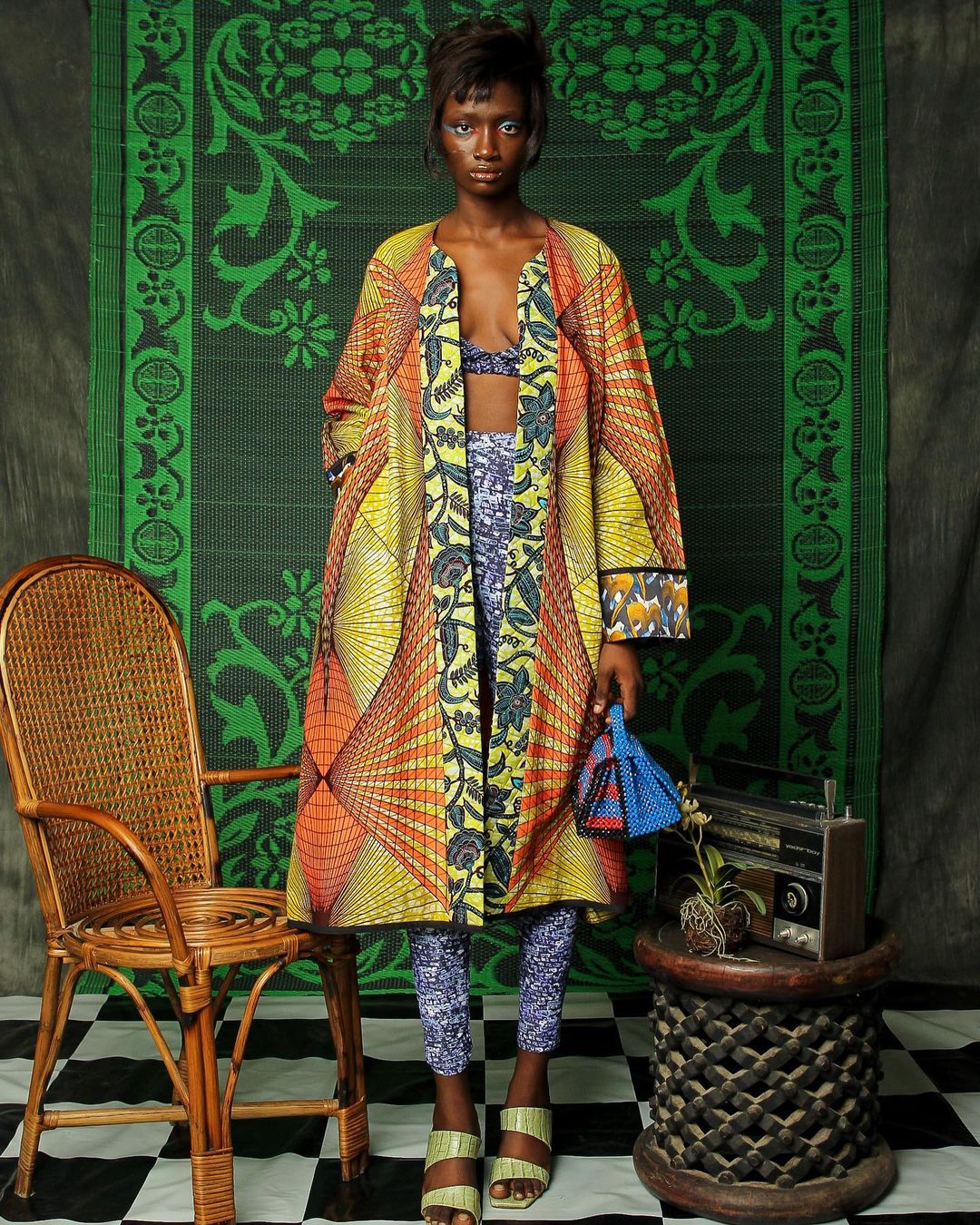
In 2023, Lagos Space Programme, founded by Adeju Thompson, won the Woolmark Prize, one of the most significant awards in global fashion. The prize brought visibility, credibility, and a direct line into international industry conversations. It did not solve the production problem.
Following the brand’s withdrawal from Paris Fashion Week, Thompson was candid: even substantial awards struggle to address the fundamental challenges of maintaining consistent production standards and managing relationships with international buyers when the operational infrastructure behind the collection is not built to match the ambition of the work.
This is the Woolmark Prize problem, and it applies far beyond that single award. Afrocentric fashion has accumulated cultural capital in genuinely unprecedented ways. The shows are better. The press is wider. The celebrity endorsements are real. None of that capital converts to operational stability without the business infrastructure to receive it. A brand that wins a prize and cannot fulfil the orders that follow is not helped. It has been exposed.
The platform side of this equation has also demonstrated its limits.
Industrie Africa, the leading multi-brand digital platform for African fashion, announced its closure in April 2026, citing the breakdown of the traditional wholesale and business-to-business model that had anchored its operation. The platforms built to solve the distribution problem are themselves subject to the same structural pressures as the brands they were designed to support.
ALSO READ
- Lemlem: Weaving African Heritage into Global Fashion
- How Diaspora Cuisine Became a Tool of Cultural Diplomacy
- The New Gentleman: Redefining Masculinity Through Conscious, Considered Dressing
- From Ancestral Beauty to Modern Self-Image: The Psychology Explained
What Year Three Actually Requires

The brands that survive year three share a specific set of characteristics that have nothing to do with creative quality and everything to do with operational decisions made in year one.
They formalise production early. Not necessarily through a full factory relationship, but through documented supplier agreements, consistent quality control processes, and a production timeline that accounts for infrastructure uncertainty. Studio 189, the Ghana and US-based brand co-founded by Rosario Dawson and Abrima Erwiah, built its production infrastructure in-house from the start, sourcing fabric from Burkina Faso cooperatives and processing it at its own Accra facility. The model is not scalable for every brand. The principle is: control the supply chain before it controls you.
They build financial transparency from the start. Not because investors are circling, but because the discipline of audited accounts, clearly separated personal and business finances, and documented revenue and cost structures makes the difference between a brand that can access capital when it needs it and one that cannot.
Birimian Ventures, one of the few investment vehicles specifically targeting African luxury fashion brands, consistently identifies governance readiness as the first filter applied to potential investees. Financial transparency is not a prerequisite for creativity. It is a prerequisite for growth.
They think about distribution before they need it. The brands that reach international stockists and sustain those relationships are not simply better designers. They are operationally prepared for what a stockist relationship requires: consistent lead times, quality documentation, returns processes, and the logistics infrastructure to fulfil international orders without the cost eating into the margin.
Many local designers struggle to ship products internationally because shipping fees alone can exceed production costs. A brand that has not solved this equation before it scales has not solved it at all.
The Afrocentric fashion brand does not fail in year three because the work becomes worse. It fails because the infrastructure required to professionalise was never there to begin with.
THE OMIREN ARGUMENT
The global fashion industry has decided, largely without examination, that Afrocentric fashion brands fail because Africa is a difficult place to build a business. This is true but incomplete, and the incompleteness is doing damage. The difficulty is not random. It is structural, manufactured through decades of underinvestment in textile manufacturing, logistics infrastructure, and financial systems that treat fashion as a cultural activity rather than an industrial one. A brand operating in Lagos pays three times its competitor’s energy costs in Hanoi, sources fabric from the same continent that exports 90 per cent of its raw cotton unprocessed, and operates in a capital market where venture investment goes almost entirely to fintech.
These are not individual misfortunes. They are the conditions of the industry as it currently exists. Omiren argues that the year-three failure is not a talent failure or even a business failure in the conventional sense. It is a system failure, and it will continue to produce the same outcomes until the system changes. The designers who succeed do so despite the infrastructure, not because of it. The industry that celebrates its success while ignoring the infrastructure that threatens it is not solving the problem. It is decorating it.
FREQUENTLY ASKED QUESTIONS
1. Why do most African fashion brands fail after three years?
The failure is structural rather than creative. Most Afrocentric fashion brands collapse at the growth stage because the operational infrastructure required to scale, including reliable production capacity, formal financial governance, distribution access, and affordable logistics, was never built in the early years. When order volumes exceed what an informal production network can support, the business breaks down under its own momentum.
2. What is the fashion brand failure rate in Africa?
General fashion industry data indicates that approximately 80 per cent of new fashion brands fail within the first five years. In the Afrocentric fashion context, the African Development Bank has documented that 70 per cent of African fashion designers struggle to access funding, which accelerates business failure by preventing brands from investing in the infrastructure needed to sustain growth.
3. What role does the supply chain play in the failure of African fashion brands?
Supply chain is one of the primary structural failure points. African apparel producers source more than 90 per cent of their yarn and fabric from outside the continent, according to research by Botho Group. This creates foreign currency exposure, extended lead times, and import costs that suppress margins, particularly as order volumes grow and the production network struggles to scale.
4. Can African fashion brands attract investment to survive year three?
Investment is available but difficult to access. Organisations such as Birimian Ventures, the African Fashion Development Initiative (AFDI), and the HEVA Fund specifically target African fashion brands. However, venture capital in Africa overwhelmingly flows to fintech, and fashion brands that cannot demonstrate audited financials, governance structures, and a credible business model are unlikely to succeed in investor conversations regardless of their creative output.
5. What do Afrocentric fashion brands that survive year three do differently?
Surviving brands formalise production and supply chain relationships early, maintain financial transparency and separation of personal and business finances from the start, plan for distribution infrastructure before international orders arrive, and build operational capacity in parallel with creative output rather than after it. The decisions that determine year-three survival are made in year one.
6. How does the cost of operating in Africa affect fashion brand survival?
Significantly. Energy costs in sub-Saharan Africa are approximately three times higher than in Asia, and logistics inefficiencies increase production costs by 15-30 per cent, according to analysis by Botho Group. These structural cost disadvantages are not absorbed by branding or cultural authority. They compress margins at every stage of growth and, if left unplanned for, become the direct cause of brand collapse.
CONTINUE READING
Omiren Styles covers the business of Afrocentric fashion with the rigour it deserves. Explore the Industry section for analysis of capital flows, supply chain realities, and the market forces shaping the future of fashion from Africa and its diaspora.