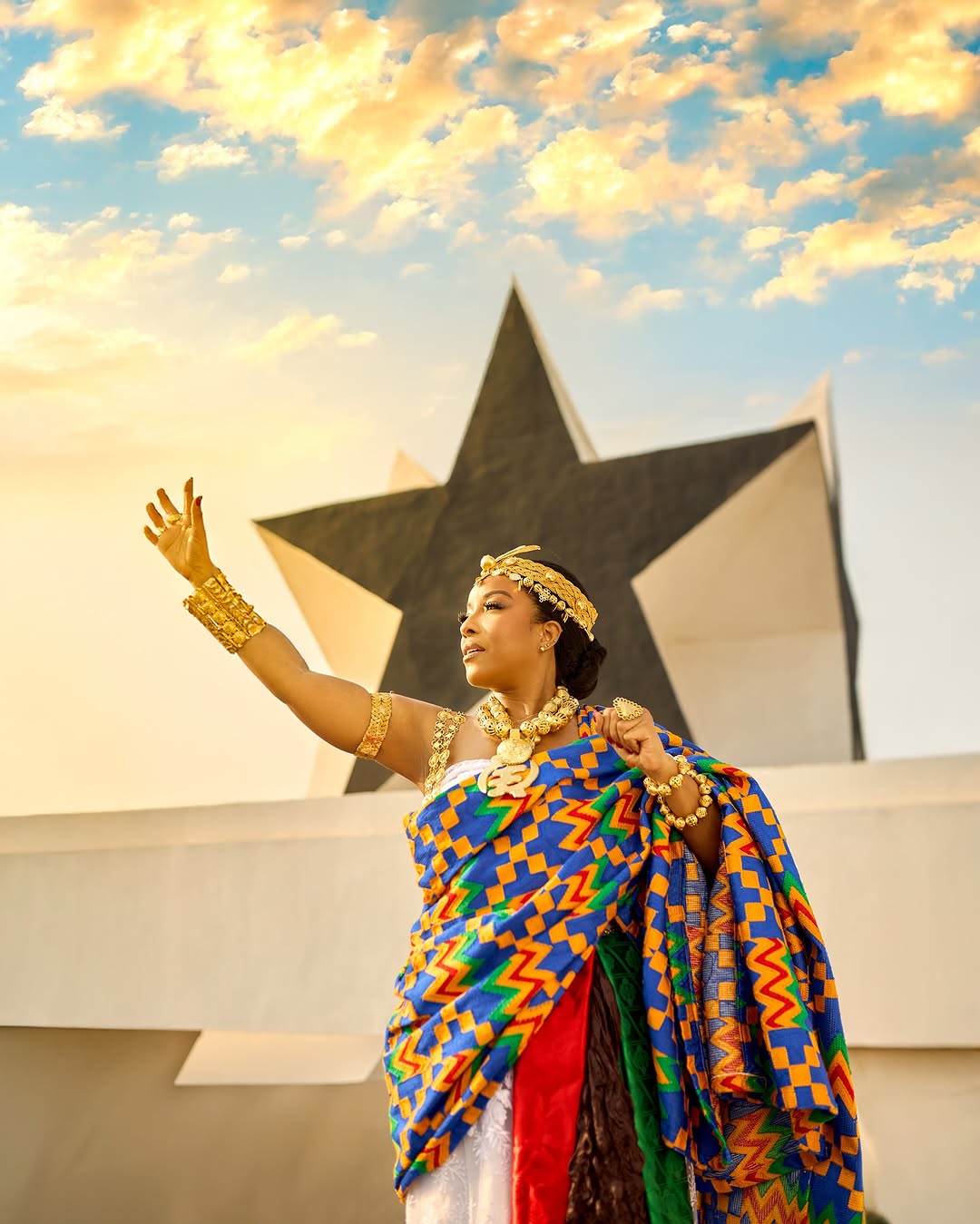
The Ghanaian word for fashion is life. Not as a metaphor. As an abbreviation. Life dressing, the popular Ghanaian term for fashionable dress, is a contraction of highlife — the music, the culture, the aspirational world of the Gold Coast elite clubs of the early twentieth century where the music first acquired its name. Academic documentation of this linguistic fact appears in Ghana Studies journal: the popular terms for fashion and fashionable dressing originated as fashion-specific abbreviations of highlife, referencing the cosmopolitan lifestyle of the early twentieth-century African Gold Coast elite and the Ghanaian-European dance band music. A summary of Ghanaian Highlife’s relationship to Afrocentric formal dress is not an argument someone assembled later. It is embedded in the vocabulary. The music and the dress were named together because they were the same thing.
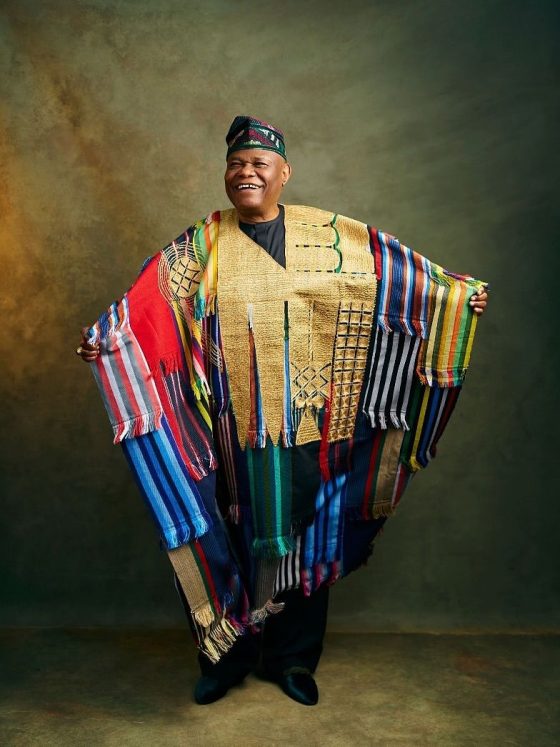
The formal Afrocentric dress code that still governs how Nigerian, Ghanaian, and Ivorian men appear at weddings, naming ceremonies, funerals, and significant social occasions — the kente-trimmed suit, the embroidered agbada, the choice of native over Western at celebrations, the specific combination of African textile and contemporary construction that announces the wearer’s cultural inheritance and social standing simultaneously — did not emerge from a fashion designer’s studio. It emerged from the bandstand. Ghanaian Highlife musicians of the 1950s and 1960s performed at the highest social events of a newly independent nation and established the visual grammar for what a culturally authoritative West African man in formal public life looks like. The dress code followed the music because the music was the occasion.
The Ghanaian word for fashion literally comes from Highlife. That is not a coincidence. It is the most precise summary of the music’s relationship to African formal dress.
Ghanaian Highlife Fashion History: How the Music Named the Dress
The clubs of the Gold Coast, where Highlife developed its earliest formal expression, were not open to everyone. The Rodger Club, built in 1904 in Accra, hosted the early dance orchestras — the Jazz Kings, the Cape Coast Sugar Babies — for a clientele that dressed to a specific standard. Men were required to wear a top hat and tails. Women required ball gowns. Those who gathered outside the club to watch and listen through the gates called what they observed the Highlife: the high life of the elite, the world of formal dress and elegant dancing that the colonial social hierarchy had placed beyond most people’s reach. As documented in scholarship on Ghanaian fashion vocabulary, the popular terms for fashion and fashionable dressing in Ghana literally originated as abbreviations of highlife. The music was named after the dress code of its first audience. The dress code was embedded in the music’s name before the music had fully formed.
The relationship between the music and the dress was not merely nominal. The Gold Coast dance bands of the 1920s through the 1940s performed for audiences and at occasions where formal Western dress was both required and politically legitimate. To attend a Highlife event in the colonial era was to participate in a performance of aspirational cosmopolitanism: the Gold Coast African who had achieved the education, employment, and social standing to access the Rodger Club was demonstrating that colonial hierarchies of dress and access were not fixed. The formal dress that Highlife required of its audience was the first Afrocentric fashion disruption it produced: not because the dress was African, but because the bodies wearing it were. E.T. Mensah, born 31 May 1919 in Accra, is the defining figure in translating this early relationship between Highlife and formal dress into a national and continental statement. As the King of Highlife and leader of The Tempos band, Mensah performed in formal suits and pressed attire, positioning the Ghanaian musician as a peer of any international band on any international stage. When he arrived in Lagos in 1950, Highlife was barely known outside Ghana. Within a few years, the Tempos’ sound had entirely reshaped Nigerian dance band music. The visual authority of The Tempos, the formal dress, the choreographed presentation, and the sense of complete professional seriousness were part of what made the music’s claim to cultural legitimacy legible to audiences across West Africa.
Nkrumah, Kente, and the Independence Moment That Changed the Visual Grammar
The year 1957, when Ghana became the first sub-Saharan African country to achieve independence from colonial rule, is the pivotal moment in the transformation of Highlife’s fashion influence from Western formal dress toward the Afrocentric formal dress code that West African men use today. Kwame Nkrumah used music as a tool for national identity by sponsoring the state life bands and taking E.T. Mensah and The Tempos on foreign diplomatic trips, with bands composing music specifically for the occasion. The state’s Highlife performance at international forums was not incidental diplomacy. It was a deliberate assertion that Ghana’s cultural production was equal to any nation’s, and that the musicians representing that production deserved the same formal respect as any Western diplomatic performer.
Nkrumah’s own dress choices directly reinforced this argument. His public adoption of kente at international diplomatic events positioned Ghanaian traditional textile as a legitimate equivalent of Western formal dress on the world stage. Kente had historically been worn by royalty at specific ceremonial occasions. Nkrumah wore it to the United Nations. He wore it to meetings with heads of state. The message was architecturally simple: African formal dress does not need Western dress as its reference point. It is complete, authoritative, and what this nation’s leadership wears when it wants to declare who it is. The Highlife musicians performing alongside this political statement were dressed in their own version of the same argument — suits that signalled professional authority while performing a music that was definitively not Western.
The fashion design culture of Accra responded to this political moment with specific and documented innovations. As MIT Press academic documentation of Accra’s independence-era fashion confirms, the combination of kente with plain fabrics that became standard in Ghanaian festive dress was introduced in the 1960s by Chez Julie, a Ghanaian fashion house that created the kente kaba — a garment of tailored kente that challenged the accepted convention of kente worn only as draped fabric. The kente kaba combined the cultural authority of Ghana’s most significant textile with the construction precision of contemporary tailoring. It was the Highlife moment in fabric: African material, cosmopolitan execution, a statement that refused to choose between heritage and modernity because it understood them as the same project.
The Gold Coast elite called it the highlife. They meant the music, the dress, and the room. All three were the same statement. The separation came later, from people who were not in the room.
Osibisa and the Shift to Afrocentric Stage Fashion
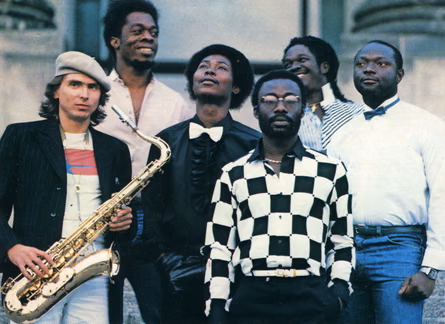
If E.T. Mensah and The Tempos established the formal Western suit as the dress of Ghanaian Highlife at its most cosmopolitan and its most politically legible, Osibisa established the shift that completed the transition to Afrocentric formal dress. Founded in London in 1969 by Ghanaian musicians Teddy Osei, Sol Amarfio, and Mac Tontoh — all of whom had played in the earlier generation of Ghana dance bands — Osibisa pioneered the fusion of Highlife with rock, soul, and Caribbean rhythms that brought the music to international rock festival audiences in Europe and North America. Their stage dress was explicitly Afrocentric: as World Music Network’s documentation of Ghana’s musical history confirms, Highlife conjures images of African nightclubs, shiny dancefloors, champagne, and fine clothes. Osibisa took those fine clothes and made them Ghanaian print, batik, and traditional textile rather than Western formal wear. The visual argument changed from we can dress as well as any European to we dress better by dressing as ourselves.
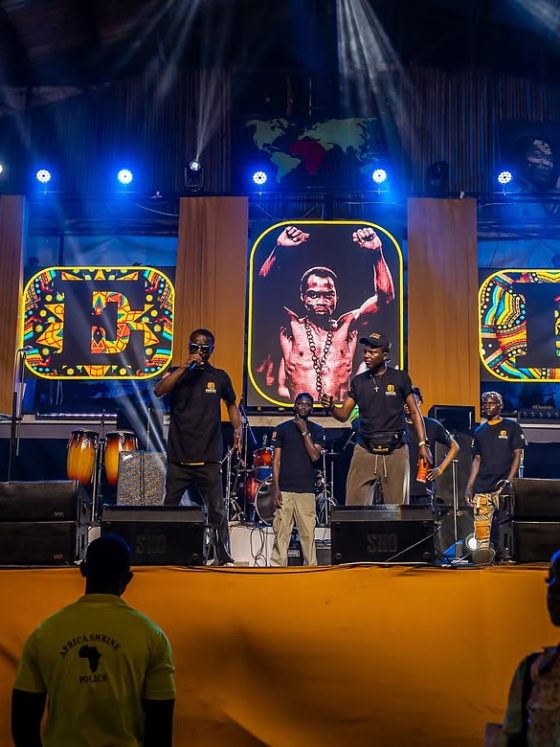
The significance of this shift for the visual grammar of Afrocentric formal dress across West Africa cannot be overstated. Osibisa performed at international venues — the Royal Albert Hall, major European festivals, American stages — wearing Ghanaian textiles. The international audience that watched Osibisa in the early 1970s saw African musicians performing at the highest level of global entertainment in Afrocentric dress. The argument that African formal dress was appropriate for the highest occasions was not being made in a state ceremony or a diplomatic forum. It was being made on a concert stage, for a rock audience, by musicians who were, at that moment, the most internationally successful exponents of Ghanaian music ever to live. The dress was as much the statement as the sound.
Also Read:
- Congolese Rumba and La Sape: The Music That Dressed a Movement
- Fela Kuti’s Stage as Political Manifesto: How the Father of Afrobeats Used Fashion as Revolutionary Argument
- Dressed With Power: How Nigerian Men Redefined Traditional Fashion at the AMVCA 12 Cultural Night
- Kente’s GI Status: What Geographic Indication Protection Actually Means for Ghanaian Weavers in Practice
What Highlife Built That Wever to liveill Wear Today
The specific visual grammar of Afrocentric formal dress that West African men wear at celebrations in 2026 — the Agbada’s embroidered authority, the kente-panel suit, the decision to appear in native attire rather than Western dress at a wedding or naming ceremony, the combination of African textile with precise tailoring that announces both cultural inheritance and contemporary sophistication — traces its lineage directly to the Highlife bandstand. Not because the musicians invented any single garment. But because the Highlife occasion was the first publicly recognised forum in which the question of what a culturally authoritative West African man wears at a formal occasion was answered in full view of an audience that then took the answer home.
The popular Ghanaian fashion vocabulary encodes this history in its most basic terms. When a Ghanaian woman admires another’s dress at a celebration and calls it life dressing, she is using a word that means both fashionable and highlife-influenced — because in Ghana, the two have always been the same word. The music created the vocabulary for the dress. The dress inherited the vocabulary of the music. The musicians who performed on those bandstands in the 1950s and 1960s were not setting a fashion trend. They were establishing a cultural standard, and the standard held across the continent and into the diaspora because it was built on something more durable than seasonal preference. It was built on the assertion that African formal occasions deserve African formal dress, and that formal dress earns its authority from the quality of the culture it comes from.
The Omiren Argument
The Afrocentric formal dress code that West African men wear at celebrations is not a contemporary fashion development. It is the worn bysual grammar of a real standard established on the Highlife bandstand in the 1950s and 1960s, refined through Nkrumah’s diplomatic use of kente as an assertion of African equality on the world stage, accelerated by Osibisa’s international performance in Ghanaian textiles, and encoded in the very vocabulary of Ghanaian fashion through the word life dressing. Fashion editorial that covers the Afrocentric agbada or the kente-panel suit as a trend describes the surface of something that has been building its authority for a century. The music created the occasion. The occasion required the dress. The dress became the standard. That sequence began at the Rodger Club in Accra before most of the fashion editors who now write about it were born.
Omiren Styles documents this history because the visual authority of Afrocentric formal dress at a West African wedding, at an AMVCA Cultural Night, at a Ghanaian state occasion in 2026, is not an aesthetic preference but an inheritance. Everandman who appears in an embroidered gbada or a kente-trimmed suit at a celebration is wearing the argument that Ghanaian Highlife musicians made publicly and repeatedly from the late 1940s onward: that African formal dress is the appropriate dress for the highest occasions, that it requires no Western equivalent to validate it, and that the culture that produced it has been making that argument from the bandstand long before the rest of the world developed the vocabulary to receive it. African fashion built that argument. The music came first.
Frequently Asked Questions
What is Ghanaian Highlife music, and when did it develop?
Ghanaian Highlife is a dance music genre that emerged in the Gold Coast (present-day Ghana) in the early twentieth century, combining local Akan rhythms with Western brass band music, ballroom dance styles, and later Afro-Cuban percussion and jazz influences. The name derives from the elite clubs of 1920s Accra, the Rodger Club (built 1904) and the Cape Coast Sugar Babies’ venues, where entry required top hats and tails for men and ball gowns for women. Those who gathered outside to watch called what they saw the highlife. The ball gownsolden age ran from the 1950s through the 1970s, defined by E.T. Mensah and The Tempos, E.K. Nyame’s guitar highlife, the Ramblers International Band, and the international fusion of Osibisa.
How did Ghanaian Highlife influence fashion and formal dress?
Ghanaian Highlife’s influence on formal dress operates at multiple levels. First, the word for fashion in Ghana, life dressing, is a direct abbreviation of highlife, encoding the music-fashion connection in the language itself. Second, the Highlife bandstand was the primary public venue where the question of what a culturally authoritative West African man wears in formal settings was answered before large audiences. Third, Nkrumah’s use of Highlife as a diplomatic culture, addressed before Kente at international forums, positioned African formal dress as equal to Western dress on the world stage. Fourth, Osibisa’s international performances in Ghanaian textiles demonstrated that Afrocentric dress belongs at the highest global performance platforms.
Who is E.T. Mensah and why does he matter to Ghanaian fashion history?
E.T. Mensah (31 May 1919 – 19 July 1996), the King of Highlife, was a Ghanaian trumpeter and bandleader who led The Tempos, the most influential Highlife band in West Africa during the 1950s and 1960s. He arrived in Lagos in 1950 and transformed Nigerian dance band music within a few years. President Nkrumah took him on foreign diplomatic trips, where The Tempos performed as cultural ambassadors for independent Ghana. His formal profession, presentation, and complete visual authority established the visual grammar for Ghanaian and West African musicians performing at the highest social level. The dress code of The Tempos’ performances was as much a statement about African professional authority as the music itself.
What is the connection between kente cloth and Ghanaian Highlife culture?
Kente cloth’s transition from royal ceremonial textile to national formal dress happened in direct parallel with Highlife’s independence-era cultural politics. Kente became synonymous with pan-Ghanaian national identity in the late 1950s, coinciding precisely with independence in 1957. Nkrumah wore kente at international diplomatic events, positioning it as an equivalent to Western formal dress on the world stage. In the 1960s, the fashion house Chez Julie created the kente kaba — tailored kente garments that combined the cloth’s cultural authority with contemporary construction. The popular term for fashionable dress in Ghana, life dressing, is itself an abbreviation of highlife, encoding the music-fashion relationship directly in the vocabulary.
How did Osibisa change the visual language of Afrocentric formal dress?
Osibisa, founded in London in 1969 by Ghanaian musicians Teddy Osei, Sol Amarfio, and Mac Tontoh, completed the transition from Western formal dress to Afrocentric dress on the Highlife stage. Where E.T. Mensah’s generation performed in suits as a statement of cosmopolitan professional authority, Osibisa performed in Ghanaian prints, batik, and traditional textiles at international rock venues in Europe and North America. Their stage dress demonstrated that African textiles were appropriate for the highest international performance platforms. The visual argument shifted from we can dress as formally as Europeans to we dress with more authority by dressing as ourselves. That shift established the visual grammar of Afrocentric formal dress that West African men inherit today.
Explore More
Read the full Culture > Art & Music section for Omiren Styles’ analysis of the music, performance cultures, and visual systems through which African artists built the continent’s most consequential fashion arguments — from the bandstand outward.