The shea butter supply chain is one of the most legible examples in global commerce of how value is created in one place and captured in another.
The women who collect shea nuts across the Sahel belt of West Africa, stretching from Senegal to Sudan across 21 countries, are the foundation of a supply chain that feeds a global beauty industry worth billions. Their labour, knowledge and physical endurance make every shea-containing product possible: the moisturisers, the hair butters, the lip balms, the body lotions, the cosmetic bases, the pharmaceutical emollients, the confectionery fats sold under different names in different markets. Without the women at the base of the shea chain, none of the commercial activity above them exists.
The EU-funded documentation of women farmers in the West African shea economy estimates that approximately 2.2 million Nigerian women work as shea nut collectors. Demand for shea nuts from West Africa has increased by 600% over the last 20 years. The typical shea nut collector earns around $75 a year for their labour.
The global beauty industry does not publish comparable figures for what it earns from shea-containing products. The asymmetry between those two data points is the subject of this article.
The shea butter supply chain demonstrates, with unusual precision, what the fashion and beauty industry’s relationship with African ingredients actually produces: a system in which value is created at the bottom, extracted at every stage upward, and retained at the top by the brands, processors, and distributors furthest from the source.
This is not a new argument in isolation. Scent Before the Ceremony established that West African fragrance knowledge, including the ceremonial and practical knowledge of shea butter’s uses, has been absorbed into global wellness markets without adequate compensation of the communities that built it. Credit Is Not Compensation established the principle that naming a source does not constitute an economic obligation. This article makes the argument specific: here is the supply chain, here is where the value goes, here is what the women who created it receive, and here is what a different commercial structure would require.
The global beauty industry earns billions from shea butter. The women who collect the nuts earn approximately $75 a year. Omiren traces where the value goes and what needs to change.
The Shea Value Chain From Tree to Shelf

Understanding where value is captured requires mapping the full chain from production to retail.
The shea tree, Vitellaria paradoxa, grows wild across the Sahel. It is not commercially cultivated at scale in the way that palm, coconut or other commodity oil crops are. The trees grow on public and communal land, take 20 to 40 years to mature and can produce nuts for up to 200 years. They cannot be owned in the conventional agricultural sense by the corporations that profit most from their product.
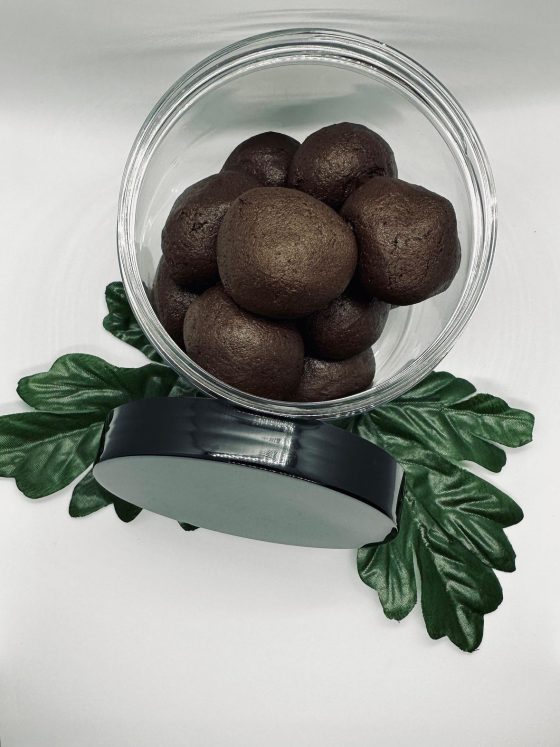
Women overwhelmingly perform Shea nut collection. It is seasonal, physically demanding work. Women gather fallen nuts from the ground during harvest season, crack them by hand, dry the kernels, then boil, roast or press them to extract the raw butter. In its unrefined form, shea butter is a fatty, aromatic substance used in cooking, skincare, haircare and ceremony across West African communities. The knowledge of how to produce it, and the labour required to do so, is held almost entirely by women.
A peer-reviewed 2023 study of Ghana’s shea global value chain confirms the gendered structure of the chain: women work as shea kernel producers and processors of crude shea butter using mainly traditional methods at the upstream base of the chain, while mid-stream aggregators are predominantly male, buying kernels across communities for export and industrial processing. Processing companies, using mechanised methods, export derivatives, including shea butter, stearin, and olein, to high-end markets in the EU and Asia.
The value chain therefore operates across several distinct stages, each with different actors, margins, and levels of commercial power.
Stage one is collection and primary processing: the woman in the field collects nuts, cracks them, dries the kernels, and produces crude butter. Her earnings are the $75-a-year figure cited by the EU documentation. Stage two is aggregation: buyers and traders who collect kernels from multiple communities, adding a margin for logistics and market access. Stage three is industrial processing: companies that receive raw kernels or crude butter and refine, deodorise, fractionate and package shea products for industrial sale. Stage four is formulation: beauty, personal care and food brands that purchase refined shea as an ingredient and incorporate it into their products. Stage five is retail: the finished product sold at global beauty retail prices that bear no relationship to the earnings of the woman at stage one.
The margin extracted at each stage above the collector is significant, and the collector has no negotiating power over any of it. She cannot withhold supply to raise her price the way a large agricultural producer can. She cannot access the processing and export infrastructure needed to capture stage-three value herself. She typically sells into a market where prices are set by aggregators whose interests do not align with hers.
Where the Global Beauty Industry Sits in This Chain

Global beauty brands sit at stages four and five of this chain. They purchase refined shea, formulate it into products, brand those products, build distribution networks, invest in marketing and retail infrastructure, and capture the full premium between the commodity price they pay and the retail price their customer pays.
That premium is substantial. A kilogram of refined shea butter traded as a commodity ingredient may sell to a formulator for a few dollars per kilogram. A premium beauty brand may retail a product containing ten grams of shea butter as its key ingredient at twenty to forty pounds. The arithmetic is not complicated: the value captured at stages four and five is orders of magnitude larger than the value captured at stage one.
The brand’s contribution to this difference in value is real. It has invested in formulation science, packaging design, brand building, distribution infrastructure, retail relationships, digital marketing and the considerable commercial expertise required to sell a product in a competitive global beauty market. Those contributions justify a significant portion of the premium.
What they do not justify is the complete absence of any economic mechanism through which value flows back down the chain to the women at stage one. A beauty brand that builds its positioning around shea’s African heritage, its traditional extraction methods, its ceremonial significance, and its historical depth is explicitly drawing on the cultural knowledge that the women at stage one hold and transmit. It is converting that knowledge into brand equity. It is selling the story. The question is whether the people whose story it is receive anything in return for telling it.
As Omiren Styles has established across its analysis of African oils and the global skincare value chain, African ingredients have historically moved to global markets through a value chain that divides production from profit. The ingredient is exported as a raw material, processed elsewhere, packaged, branded, and resold for a premium. The product becomes globally associated with African heritage while the African community that produced the raw material receives the smallest share of the resulting commercial value.
The Ceremonial Knowledge That Beauty Brands Do Not Pay For

Shea butter’s commercial value in global beauty markets is not based solely on its emollient properties, although those properties are genuinely excellent. It is based, in significant part, on the cultural and ceremonial significance that West African communities have ascribed to it over centuries of use.
The wellness and beauty industry sells the story of shea as an ancestral ingredient: ancient, natural, time-tested, connected to women’s knowledge, rooted in a specific African landscape. That story is not invented. Shea has a deep ceremonial role across West African communities, used in birth, marriage, and naming ceremonies, as well as in daily skin preparation. The knowledge of how to prepare, select, store, infuse and apply it is held by women in specific communities and transmitted through practice rather than written documentation.
As Omiren Styles documented in its analysis of West African fragrance and ceremonial practice, shea butter is often infused with fragrant herbs, flowers and spices to create scented ceremonial balms. The shea tree itself is considered sacred in most West African societies, with prohibitions against cutting living trees except under specific ritual circumstances. Those protections reflect a moral and spiritual framework that extends far beyond a cosmetics supply chain.
When a global beauty brand uses the ceremonial dimension of shea as a marketing claim, it is drawing on knowledge that women at stage one of the supply chain hold and have passed down through generations. That knowledge is not a fungible commodity that was included in the price per kilogram of refined shea butter. It is a separate intellectual contribution to the brand’s commercial proposition, and it is taken without payment.
This is the argument that After Attribution: Who Owns the Commercial Life of a Cultural Reference? established in its framework for understanding how cultural knowledge generates commercial value across a chain that the knowledge’s originators do not control. The commercial life of shea’s ceremonial heritage extends from the first brand that used it as a marketing story through to every subsequent brand that adopted the “ancestral African ingredient” framing. The women at stage one have occasionally been credited. They have not been compensated for the knowledge that gives those marketing claims their commercial power.
What Fair Chain Models Look Like
The shea supply chain is not structurally inevitable. Different commercial models produce different distributions of value. Some already exist.
The cooperative model builds producer organisations that aggregate supply collectively rather than individually, giving women traders collectively more market power than any individual collector holds alone. Cooperatives can negotiate better prices with aggregators, invest in shared processing equipment, achieve quality certifications that open higher-value markets, and retain more of the processing margin that would otherwise flow to intermediaries. The Global Shea Alliance has documented models in which organised cooperatives achieve meaningfully higher incomes per woman than individual collectors working outside any collective structure.
The direct-trade model bypasses some aggregator stages by creating sourcing relationships between beauty brands and producer organisations. A brand that commits to multi-year purchasing from a named cooperative, at a price that reflects fair labour compensation, can create a supply chain that is both more traceable and more equitable than commodity sourcing. It can also use that sourcing relationship as a genuine brand story rather than a vague “inspired by African tradition” claim. ORÍKÌ Group’s farm-to-skin sourcing approach, which builds direct relationships between ingredient sourcing and finished product, is one African-owned example of how that model operates within a luxury beauty context.
The processing investment model addresses the stage-three gap by helping communities access the equipment and expertise required to produce refined shea rather than only crude butter or raw kernels. When women’s cooperatives can produce refined shea internally, they capture stage-three processing margin themselves rather than selling it to an intermediary. The investment required is substantial, but it is the most structurally transformative form of supply-chain improvement: it changes who captures value at a structural level rather than at the margin.
The premium and certification model creates a price premium at the point of sale that is contractually committed to flow back to producer communities. Fair trade certification, premium sourcing schemes and specific community benefit-sharing agreements all operate on this logic. The challenge is that premium commitments are often absorbed at stage four or five rather than passing through to stage one, unless the contractual structure explicitly requires pass-through at each stage of the chain.
As the Omiren analysis of the artisan fashion economy has argued, recognising artisan origins ensures communities receive credit and economic benefit when their craft techniques influence global fashion. The same principle applies with equal force to ingredient supply chains: recognising the source of an ingredient’s cultural value is not sufficient unless commercial structures exist to ensure that the recognition translates into economic benefit for the people at the source.
The Brand’s Obligation Is Specific

A beauty brand that uses shea butter as a product ingredient has a different level of obligation than one that uses shea as a marketing theme. Both levels carry obligations. Neither is exempt from accountability.
A brand that sources refined shea as a commodity ingredient from an industrial processor has a minimum obligation: to know where in West Africa the raw material originated, what the working conditions and earnings of the producers were, and whether the sourcing relationship involves any mechanism for value to flow to the women at the base of the chain. These are not aspirational standards. They are the minimum requirements of a supply chain that claims to be ethical.
A brand that uses shea’s cultural and ceremonial heritage as a marketing claim has an additional obligation: to ensure that the knowledge it is selling was not simply extracted from the communities that hold it, reformatted as brand positioning and sold back to consumers without any relationship with those communities. That obligation cannot be discharged by a line in the marketing copy that mentions “traditional African methods.” It requires a sourcing relationship with named communities, documentation of what those communities received, and a commitment to continuity rather than a single campaign.
A brand that has built its entire product positioning around shea’s African heritage, that uses the word ancestral, that invokes African women’s wisdom, that photographs its products against landscapes and textures associated with West Africa, carries the heaviest obligation of all. That brand has extracted not just an ingredient but a cultural identity and a knowledge system. The return owed is proportionate to the value taken.
As Credit Is Not Compensation established using the scorecard framework, the seven categories of obligation are acknowledgement, documentation, consent, compensation, commissioning, continuity and accountability. For shea supply chains, these translate directly. Acknowledgement means naming the specific country, region and community from which the shea was sourced, not “West Africa.” Documentation means publishing the sourcing relationship and the economic terms. Consent means obtaining agreement from producer communities before using their cultural knowledge as a marketing claim. Compensation means ensuring that economic benefit flows to the women at stage one, not only to the intermediaries between them and the brand. Commissioning means hiring West African photographers, designers, and cultural practitioners to create brand content that draws on West African heritage. Continuity means sustaining the sourcing relationship across seasons. Accountability means publishing documentation that allows the claim to be independently verified.
The Omiren Argument
The shea supply chain is not an obscure technical problem. It is a precise demonstration of the argument this series has been making across every territory it has covered.
The Global South made fashion and beauty and never received credit commensurate with what it contributed. But as this series has argued since its first article, credit is the beginning of the accountability conversation, not its conclusion. The shea supply chain shows what happens when the conversation stops at credit. The women at stage one are acknowledged, sometimes. They are occasionally named as the holders of ancestral knowledge. They receive approximately $75 a year for the labour and knowledge that makes the entire commercial structure above them possible.
That figure is not a market failure in the sense markets use the term. The market is working exactly as it was designed to work: it extracts maximum value from the lowest-cost inputs, concentrates commercial power in the hands of those with the most capital, brand equity and distribution infrastructure, and returns the minimum possible to those with none of those assets.
Changing it requires structural intervention: cooperative organisation that gives collectors market power; direct-trade sourcing that bypasses extractive intermediaries; processing investment that moves stage-three value to stage one; binding contractual premium pass-through that cannot be absorbed before it reaches the woman in the field; legal frameworks for cultural knowledge that require consent and benefit-sharing; and brand accountability standards that measure and publish economic outcomes rather than marketing claims.
The global beauty industry has the financial resources, the institutional reach and the consumer communication channels to make this case clearly and act on it consistently. It has instead chosen to leverage the cultural capital of West African shea knowledge to build brand equity, while maintaining a supply chain that has not proportionately increased shea collectors’ earnings to the growth in demand for their product. Demand has increased 600% in 20 years. The collectors’ annual earnings figure cited in the literature is not 600% higher than it was 20 years ago. As Omiren Styles has documented in its analysis of African oils and the global skincare economy, African ingredients have historically moved to global markets through a value chain that divides production from profit. Control, not demand, determines who captures value. The industry knows this. The question is when it will decide to build a supply chain that distributes value more fairly.
The women at stage one are not asking for charity. They are asking for fair commercial terms for the knowledge, labour and ecological stewardship that make the global shea industry possible. Those are reasonable commercial demands. The industry has the resources to meet them. What it has lacked, so far, is the will.
ALSO READ
- Scent Before the Ceremony: The West African Fragrance Practices Fashion Still Fails to Document
- Credit Is Not Compensation: What Fashion Owes Beyond Naming a Cultural Source
- After Attribution: Who Owns the Commercial Life of a Cultural Reference?
- Moringa, Marula and Mongongo: The African Oils That No One Told You Were the Best in the World
- ORÍKÌ Group: The Nigerian Farm-to-Skin Beauty Brand Growing Into a Global Wellness House
- The Artisan Economy: Why Buying Handmade Is One of the Most Political Acts in Fashion
Frequently Asked Questions
How does the shea butter supply chain work and who benefits most?
The shea supply chain operates across five main stages. Stage one: women collectors harvest fallen nuts, crack them by hand, dry the kernels and produce crude butter. Approximately 2.2 million Nigerian women alone work as shea nut collectors, typically earning around $75 a year. Stage two: male-dominated aggregators buy kernels across communities for export and industrial processing, adding a margin for logistics and market access. Stage three: industrial processing companies refine, deodorise and fractionate shea into derivatives for export to EU and Asian markets. Stage four: beauty and personal care brands purchase refined shea and formulate products with it. Stage five: retail brands sell finished products at prices that bear no relationship to stage-one earnings. Value concentrates at stages three, four and five. The women who make the entire chain possible capture the smallest share.
Why do shea nut collectors earn so little despite global demand growing 600%?
Collectors earn so little because they have no structural power in the supply chain. They sell individually into a market where prices are set by aggregators whose interests do not align with theirs. They cannot withhold supply to raise their prices the way large agricultural producers can. They cannot access the processing infrastructure needed to capture stage-three value. They lack formal contracts, collective bargaining structures or legal protections that would give them negotiating leverage. The 600% increase in demand over 20 years has increased the volume of labour required from them without creating mechanisms to ensure that the resulting commercial value flows proportionately back to the base of the chain. In market terms, the collectors have no bargaining power, and the supply chain has not been redesigned to address that.
What is the cooperative model for shea and how does it improve outcomes for collectors?
Cooperative models build producer organisations that collectively aggregate shea supply, giving women traders more market power than any individual collector has alone. A cooperative can negotiate better prices with aggregators, invest in shared processing equipment that allows the community to capture stage-three refining margins, achieve quality certifications that open higher-value markets, and build direct relationships with international buyers that bypass extractive intermediary stages. The Global Shea Alliance documents models in which organised cooperatives achieve meaningfully higher incomes per woman than individual collectors working without collective structure. The cooperative approach does not eliminate the structural imbalance in the global chain, but it redistributes more value to the upstream stage, where labour and ecological knowledge are concentrated.
What obligation does a beauty brand have when it uses shea’s cultural heritage in its marketing?
A beauty brand that uses shea’s cultural and ceremonial heritage as a marketing claim has taken something beyond an ingredient: it has taken a knowledge system and cultural identity built by West African women across generations. That taking generates an obligation proportionate to the commercial value extracted. The obligation includes naming the specific country, region and community from which the shea was sourced; obtaining agreement from producer communities before using their cultural knowledge as a marketing claim; ensuring that economic benefit flows to collectors and producers rather than only to intermediaries; commissioning West African creative practitioners when producing content that draws on West African heritage; sustaining the sourcing relationship across multiple seasons; and publishing documentation that allows all of these claims to be independently verified. A vague reference to “traditional African methods” in the marketing copy does not discharge any of these obligations.
How does the shea supply chain argument connect to Omiren’s wider series on credit and compensation?
The shea supply chain is one of the clearest illustrations of the argument this series has built over its full run. As Credit Is Not Compensation established, the fashion and beauty industry has learned to acknowledge cultural sources without building the commercial structures that convert acknowledgement into economic obligation. The shea chain shows that dynamic at its most legible: demand for the product has grown 600%; the women who make it possible earn approximately $75 a year; brands built on shea’s African heritage have not produced supply chains that distribute value proportionately. Credit without compensation is the supply-chain version of the attribution problem. The collectors are acknowledged. They are not compensated. The industry knows how to build supply chains that work differently. It has chosen not to.
What does a fair shea supply chain look like in practice?
A fair shea supply chain has several specific characteristics. It sources from named producer cooperatives under multi-year agreements at prices that reflect fair labour compensation and are independently verified. It invests in processing infrastructure that allows upstream communities to capture refining margin rather than selling only raw kernels or crude butter. It structures premium commitments contractually so that value passes through to stage-one collectors rather than being absorbed at intermediate stages. It obtains free, prior and informed consent from producer communities before using their cultural knowledge as a marketing claim. It publishes sourcing documentation that enables the supply chain to be traced independently. It compensates women not only for their physical labour but for the knowledge system that makes the ingredient culturally valuable. It sustains these commitments across seasons rather than treating them as campaign-specific.
EXPLORE MORE
Read the full Industry and Supply Chain sections at Omiren Styles for ongoing analysis of African ingredient economics, beauty supply chains and the commercial structures that determine who captures value from West African raw materials. Discover travel and heritage intelligence across West Africa at Rex Clarke Adventures.