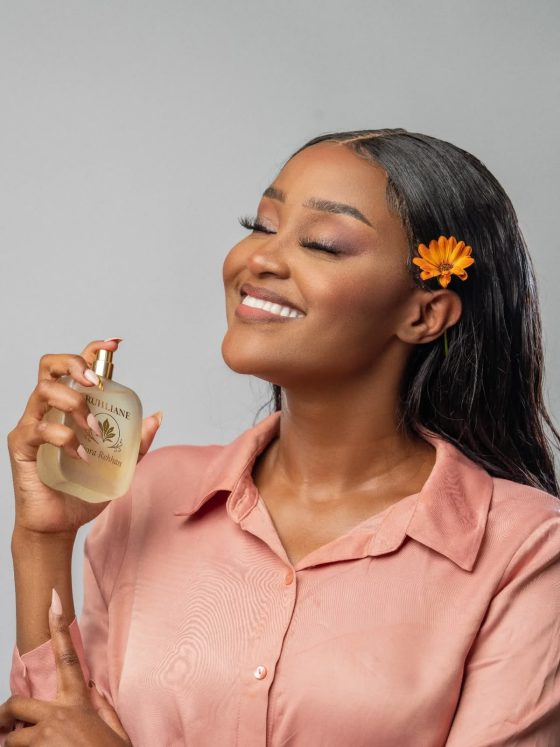
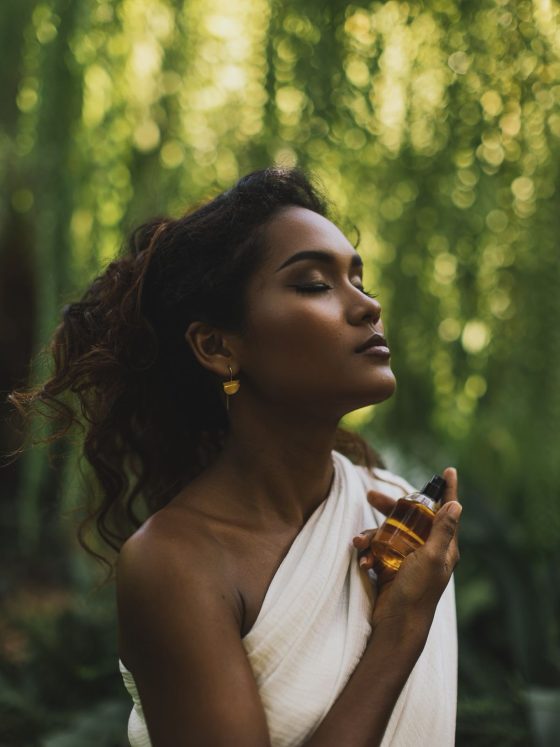
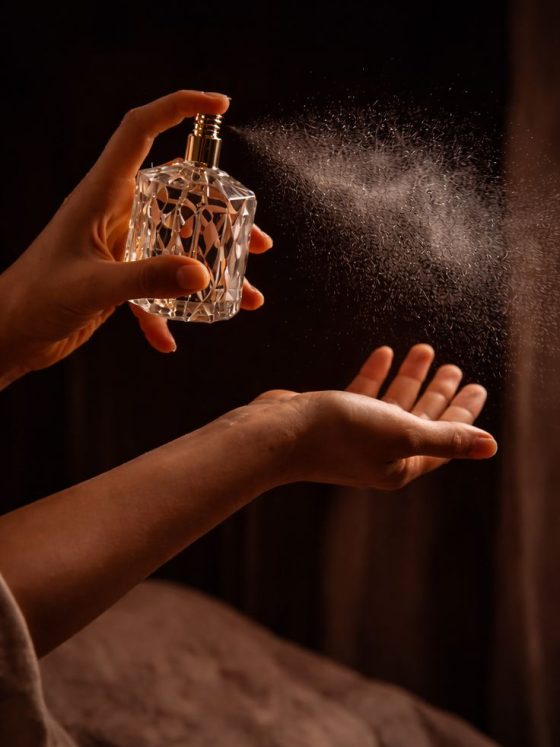
Before the outfit is chosen, the scent is prepared.
In many West African communities, fragrance is not the final touch of a getting-ready routine. It is part of the preparation itself. The oils applied to the skin, the resins burned in a room, the scented balm worked into hair or scalp, the specific blend pressed into fabric before it is worn: these are not ceremony accessories. They are part of the ceremony’s meaning.
Fashion and beauty media have had significant difficulty with this.
The global fashion and beauty industry has become more interested in African fragrance in recent years. That interest has produced a wave of coverage that, with impressive consistency, reaches for the same framing: ancient wisdom, exotic ingredients, holistic ritual, the new wellness frontier. The language is warm. The understanding is shallow.
West African fragrance practices are not a wellness category or a trend moment. They are knowledge systems: specific, differentiated, socially structured, and communally transmitted. Different communities across the region use scent to mark different stages of life, social transitions, spiritual relationships and daily practices in ways that cannot be adequately summarised by the phrase “African beauty ritual.” The knowledge behind them belongs to those communities. The commercial extraction of that knowledge into global beauty marketing has followed the same pattern this series has traced across fashion, textiles and music.
West African fragrance is not a single tradition. It is a group of distinct, living knowledge systems that the global beauty industry has learned to reference without understanding.
As Omiren Styles has established in its analysis of the cultural geography of smell, fragrance frequently operates where words fall short, serving as a bridge between the physical and spiritual worlds and, for diaspora communities, as a portable homeland. The smell of a familiar oil, incense blend, or traditional attar can steady identity in a foreign environment. That function is not decorative. It is structural. Recognising it requires more than a wellness headline.
West African fragrance traditions are not a wellness trend. They are structured, ceremonial and specific practices that fashion and beauty media have routinely flattened or ignored.
Scent as Social Architecture

In West African ceremony, scent marks transition.
A naming ceremony, a wedding preparation, an initiation, a funeral, a harvest celebration or a birth are not equivalent events. They involve different participants, responsibilities, prayers, and social meanings. They also often involve different scents, applied differently, at different moments by different people.
Shea butter, extracted from the nut of Vitellaria paradoxa across a belt of 21 countries from Senegal to Sudan, is one of the most widely used ceremonial and quotidian fragrance bases in West Africa. Its smell, when unrefined, carries a warm, slightly smoky, nutty character that is inseparable from the social context of its use. As documented in the history of shea butter’s ceremonial role, the butter plays a direct role in birth, marriage and funeral ceremonies. The shea tree is considered sacred in most West African societies and is protected by strict prohibitions passed down through generations, including a prohibition on cutting a living shea tree except under specific ritual circumstances. That is not simply a sustainability practice. It is evidence that the plant and its products exist within a moral and spiritual framework that extends far beyond a cosmetics supply chain.
Shea butter is often infused with fragrant herbs, flowers and spices to create scented balms and oils. In this form, it functions as both skin preparation and olfactory signal. The person who has been prepared with infused shea butter for a ceremony arrives not only dressed appropriately but scented appropriately: the body communicates readiness and respect through its smell as much as through its clothing.
This is the dimension of West African dress culture that fashion coverage almost entirely omits. The garment is documented. The textile is photographed. The tailoring is described. Omiren Styles has documented how clothing serves as a form of cultural identity across West African communities, where colour, fabric, silhouette, and styling convey social meaning. What is rarely documented alongside the garment is the scent that was selected to accompany it, the oils pressed into the fabric before it was worn, or the incense burned in the room where the dressing took place. The outfit begins earlier than the outfit.
The Ingredients and Their Specificity

A serious account of West African fragrance practices must resist the temptation to flatten them into a generic ingredient list. The ingredients are specific, the preparation methods are specific, and specific people in specific communities hold the knowledge required to use them correctly.
Frankincense, derived from Boswellia trees, has deep roots in West and East African spiritual practice, used in prayer, purification, and the marking of significant transitions. Its smoke has been understood across different cultural contexts as a medium that connects the human world to the spiritual one. In West African usage, frankincense-adjacent resins may be burned in a room before an important event, used to scent fabric, or worn on the body as a personal spiritual protection.
Omiren Styles has documented how frankincense and bakhoor are shaping contemporary wellness trends globally. The global wellness industry has recognised the commercial value of these materials and sold them into markets far from their origins, often using language that treats their ritual significance as a selling point while stripping away the specific community knowledge that gives that significance meaning. A frankincense candle sold in a London boutique is not carrying the same meaning as frankincense burned during a naming ceremony in Accra or Dakar. The ingredient is the same. The knowledge is not.
Palm kernel oil and coconut oil have distinct olfactory identities in West African fragrance practice, serving as carriers for other scents and as fragrance materials in their own right. Pressed moringa oil, baobab oil, and specific locally harvested flower oils each carry distinct aromatic profiles that have been used to prepare the body and to communicate social status, spiritual preparation, mourning, celebration, or readiness for transition.
In some communities, specific scents are associated with specific social roles. A bride may be prepared with a particular combination of oils that her mother and grandmothers know by experience rather than by recipe. A child being named may be presented with a specific blend that marks the beginning of their identity within the community. An elder preparing for a significant ceremony may use materials unavailable to younger participants. The scent is not incidental. It is socially load-bearing.
As Omiren Styles has explored in its analysis of African fragrance houses and their relationship to heritage, a new generation of African perfumers is preserving traditional extraction methods, including steam distillation, enfleurage and resin tapping, while pairing them with contemporary perfumery science. The cultural depth they are drawing on is not a marketing direction. It is a knowledge system with its own internal logic, its own history of transmission and its own relationship to the ceremonies and social practices that give scent its meaning.
The Market Does Not Reflect the Knowledge

The African fragrance market is significant and growing.
BeautyMatter’s analysis of Africa’s fragrance market reports that the market is estimated to reach $8.62 billion in 2024, with a projected compound annual growth rate of 5.11 per cent through 2028. Nigeria is the largest market in West Africa, with a fragrance sector valued at over $1 billion. This sits within the global fragrances and perfumes market, estimated at $67.53 billion in 2024 and expected to reach $97.76 billion by 2029. North African countries are major exporters: Egypt exported approximately $702 million worth of perfumes and essential oils in 2023.
These figures represent a significant global commercial reality. They do not, in themselves, answer the question of who captures the value from the cultural knowledge that gives African fragrance its distinctiveness.
The global beauty industry has learned to extract African fragrance ingredients while generating most of the commercial value from those ingredients outside the communities that developed and sustained the knowledge of how to use them. Shea butter is harvested primarily by women in West African communities under labour conditions that have frequently been criticised for inadequate compensation relative to the commercial value the ingredient generates in global beauty products. Frankincense resin is harvested from wild-grown Boswellia trees under ecological pressure from overextraction. Specific traditional blends and preparation methods are absorbed into beauty brand narratives without acknowledgement of the communities that held those methods across generations.
As After Attribution: Who Owns the Commercial Life of a Cultural Reference? established, attribution is not compensation. A brand can acknowledge that a fragrance ingredient has deep roots in West African ceremonial practice while capturing the vast majority of the commercial value generated from that knowledge through its processing, marketing, retail infrastructure and brand positioning. The artisan community that processed the raw material, the elder who transmitted the knowledge of its ceremonial use, the women who infused it according to traditional practice: none of these are necessarily part of the commercial structure that converts their knowledge into profit.
This is precisely the argument Omiren Styles has made in its analysis of why the artisan economy requires credit and economic benefit: recognising artisan origins is not a voluntary gesture of cultural sensitivity. It is a condition for equitable commerce.
Nigeria’s Fragrance Identity

Within West Africa, Nigeria’s relationship with fragrance is particularly significant and particularly under-reported in international fashion and beauty media.
As Omiren Styles has documented in its profile of Perfumeology and the new signature of Nigerian luxury, Nigerian culture has long associated fragrance with celebration, confidence and self-expression, encompassing a range from traditional scented oils to contemporary designer blends. In contemporary Nigerian fashion, scent completes the outfit. The invisible layer that lasts a lifetime. That phrase is not marketing copy. It describes an actual cultural practice in which selecting a fragrance for a social event is part of the preparation process, not an afterthought.
Nigerian aso ebi culture, in which extended family and friend groups coordinate their dress for weddings and celebrations, has an olfactory dimension that fashion coverage never addresses. The care with which a person selects their fragrance for an aso ebi occasion can be as deliberate and socially communicative as their selection of fabric, colour and tailor. The body presented at a wedding, a birthday, a church service, or a naming ceremony is understood holistically: what it wears, what it carries, how it moves, and how it smells.
The Nigerian fragrance market reflects the seriousness of this cultural relationship. Local fragrance brands have built audiences through social media by positioning scent not as a beauty accessory but as an expression of identity that rivals clothing in its communicative power. That cultural intelligence is part of what makes Nigerian fragrance entrepreneurship credible rather than simply commercially ambitious.
Yet international fashion coverage of Nigerian style still overwhelmingly focuses on clothing, textile, colour and silhouette. The olfactory dimension of how Nigerians dress for their most important social occasions is almost absent from fashion journalism, fashion weeks, styling coverage and retail conversations.
What Senegal, Ghana and the Broader Region Carry
West African fragrance practices are not uniform. Each country, region and community has its own specific relationship to scent, with its own materials, social contexts and knowledge systems.
In Senegal, thiouraye, a blend of fragrant wood chips and resins, is burned as incense in domestic and ceremonial contexts. It is burned before prayer, to prepare a space for guests, to mark the seriousness of an occasion and to create an olfactory boundary between ordinary and significant time. Senegalese brides are traditionally prepared with specific scented oils and incense as part of their wedding preparation process. The fragrance is not an aesthetic choice. It is part of how the transition between social states is marked.
In Ghana, the preparation of the body for celebration can involve layers of scent: a base oil that carries the skin’s own warmth, a scented balm applied to hair and scalp, a specific fragrance selected for the social context. Different occasions call for different selections, and the knowledge of which fragrance is appropriate for which ceremony is held within families and communities rather than in brand catalogues.
Across the region, frankincense, myrrh and locally sourced aromatic resins have been used in both quotidian and ceremonial contexts for as long as written and oral records exist. The olfactory history of West Africa predates the European perfume industry by centuries. The global beauty industry has approached that history as a raw-material source rather than as a knowledge system with its own authority.
As Omiren Styles has argued in its examination of fragrance, personal identity, climate, tradition, rituals, and local ingredients all shape how different communities use and understand scent. The failure of global fashion and beauty journalism to document these differences with the specificity they deserve is not simply an oversight. It reflects a structural assumption that olfactory knowledge from West African communities is background material for global product development rather than primary cultural intelligence that deserves to be documented on its own terms.
The Omiren Argument
The global beauty industry has learned to say the words: African heritage, ancestral ingredients, ritual, tradition, roots. It has not learned to do the work those words imply.
Properly documenting West African fragrance practices means naming the specific community, not just the continent. It means identifying the ceremony, not merely describing it as a ritual. It means acknowledging the knowledge holder, not just photographing the ingredient. It means reporting on the economics of extraction: who harvested the shea nut, who processed it, what they were paid, and what share of the commercial value reached the community that developed the knowledge of its use across generations.
The Global South made fashion and never got credit for it. The same pattern extends to fragrance, beauty and the olfactory dimension of ceremony and dress. The knowledge exists. The communities that hold it exist. The commercial interest in absorbing it exists. What is missing is the reporting that treats that knowledge as primary intelligence rather than as trend content.
Fashion and beauty journalism can correct this. Not through wellness features that invoke African ritual as an aesthetic mood, but through specific, sourced, accountable documentation of who knows what, how that knowledge was developed, how it is transmitted, what it means in its ceremonial context and how the commercial life of the ingredients it uses should relate to the communities that made those ingredients meaningful.
Scent is applied before the outfit is chosen. It belongs at the beginning of the documentation, not in a footnote about ingredient sourcing.
ALSO READ
- Africa’s New Luxury Scent Revolution: Fragrance Rooted in Heritage
- Perfumeology: The New Signature of Nigerian Luxury
- The Cultural Geography of Smell Through Fragrance
- After Attribution: Who Owns the Commercial Life of a Cultural Reference?
- The Global South Made Fashion. It Just Never Got Credit.
- How Bakhoor and Frankincense Are Defining New Wellness Trends in the World
Frequently Asked Questions
What are West African fragrance practices and why do they matter?
West African fragrance practices are structured, community-specific knowledge systems in which scent marks social transitions, spiritual relationships and daily life. They include preparing the body with infused shea butter before a ceremony, burning specific resins and incense to mark a space as significant, applying oils associated with particular life stages, and transmitting that knowledge across generations within families and communities. They matter because they represent a form of cultural intelligence that the global beauty industry has learned to extract commercially without adequately crediting, compensating or documenting the communities that hold it.
How is shea butter used in West African ceremony?
Historical documentation of shea butter’s ceremonial role records that it plays a direct role in birth, marriage and funeral ceremonies across the region. Shea butter is often infused with fragrant herbs, flowers and spices to create scented balms applied to the body as a form of preparation and social communication. The shea tree itself is considered sacred across most West African societies, with prohibitions against cutting living trees except under specific ritual circumstances. That protection reflects the depth of the tree’s integration into the moral and spiritual frameworks of the communities that depend on it, extending far beyond its role as a cosmetic ingredient.
What does the African fragrance market look like commercially?
BeautyMatter’s analysis of Africa’s fragrance sector estimates the African fragrance market at $8.62 billion in 2024, with a projected CAGR of 5.11 per cent through 2028. Nigeria leads West Africa with a fragrance market valued at over $1 billion. Egypt exported approximately $702 million worth of perfumes and essential oils in 2023. These figures sit within a global fragrances and perfumes market estimated at $67.53 billion in 2024. The commercial scale is significant. The question of who captures value from African fragrance knowledge within that market, and under what terms African ingredient suppliers and knowledge holders participate, is the more consequential question that market size data does not answer.
How does fashion journalism fail to document West African fragrance practices?
Fashion coverage of West African dress focuses overwhelmingly on visible elements: fabric, colour, tailoring, silhouette and accessories. The olfactory dimension of how people prepare for ceremony — the specific oils selected, the incense burned to mark a space, the fragrance chosen to complete the body’s presentation — is almost absent. Beauty coverage that engages with African fragrance tends to frame it as wellness content or ancestral wisdom, using language that invokes ritual without specifying which ritual, which community, which knowledge holder, or what the social function of a particular practice actually is. That level of generality treats West African fragrance knowledge as atmospheric content rather than as specific, documentable cultural intelligence.
What is Nigeria’s relationship with fragrance culture?
Nigeria has a deep and commercially active relationship with fragrance. Scent has long been understood within Nigerian cultural practice as an essential element of preparation for social occasions: a component of the body’s full presentation rather than an optional addition. The selection of a fragrance for an aso ebi event, a wedding, a church service or a naming ceremony can be as deliberate and socially communicative as the selection of fabric. Nigerian fragrance entrepreneurs have built significant local audiences by positioning scent as identity rather than luxury, connecting to this cultural understanding. The Nigerian fragrance market is valued at over $1 billion within a broader African market of $8.62 billion, reflecting the seriousness of that cultural relationship.
What would it mean to properly document West African fragrance practices?
Proper documentation would name the specific community rather than the continent; identify the specific ceremony rather than describe the generic category of ritual; acknowledge the knowledge holder rather than photograph only the ingredient; trace the economics of extraction to show what harvesters, processors and knowledge communities receive relative to the commercial value generated from their knowledge; and report the meaning of a specific practice within its social context rather than framing it as a wellness inspiration. That standard applies to fashion journalism, beauty journalism, travel journalism and the brand content that draws on West African fragrance traditions as a commercial reference point.
EXPLORE MORE
Read the full Culture and Beauty sections at Omiren Styles for ongoing documentation of West African fragrance traditions, beauty heritage and the cultural knowledge that global beauty media consistently fails to report with the specificity it deserves. Discover travel and heritage intelligence across West Africa at Rex Clarke Adventures.