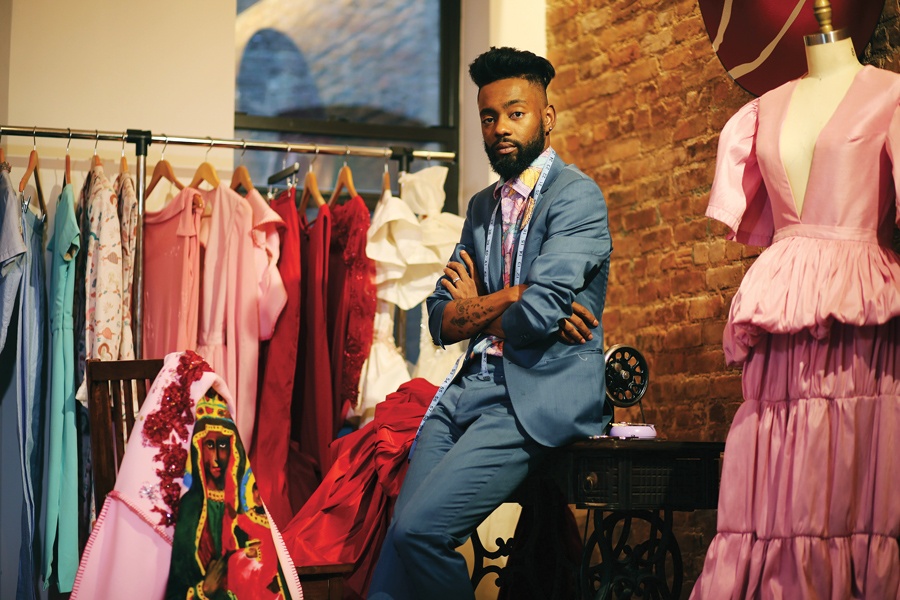
The African and Caribbean fashion market is worth $ 31 billion. That figure is not a projection. It is the current documented value of a creative economy built by communities whose craft intelligence is rooted in specific cultural traditions, specific material practices, and specific standards of making that the European fashion industry did not create and has never fully acknowledged. Prajjé Oscar Jean Baptiste is one of the clearest demonstrations of what that craft intelligence produces when it is given the space to fully develop. He left Haiti at thirteen. He trained in Boston. He now operates a couture studio to develop fully in Philadelphia and a production atelier in Haiti staffed by Haitian women artisans. His colour vocabulary comes from the names of Haitian Vodou spirits. His construction references the 1950s not because he is imitating the European houses of that decade but because he arrived at the same construction standards they demonstrated through a completely different cultural route. The seam and the spirit are the same argument, made in the same language, from the same place.
Prajjé Oscar Jean Baptiste was born in Haiti in 1983. His mother died when he was a toddler. His grandmother raised him in a country where fashion, as he has described it in mul. His grandmother raised him in an unstable government that had already been in turmoil before he left. At thirteen, he was adopted by a friend of his father and brought to Massachusetts, where he attended a class at the Massachusetts Institute of Technology, studied Design in high school, and understood immediately that this was what he was going to do. He studied at MassArt, graduated from his fashion house, Prajjé Oscar, in Boston in 2003 at nineteen years old, worked in New York for a decade, and moved to Philadelphia. He is now 19or at Jefferson University and the Creative Director of a brand whose reach extends from Philadelphia to Port-au-Prince to the National Gallery of Art.
Prajjé Oscar Jean Baptiste left Haiti at 13, built a couture practice with a Haitian atelier, and showed at the National Gallery of Art. Classic couture was never only European.
Haitian Fashion Designers and the Construction Standards the Industry Ignores
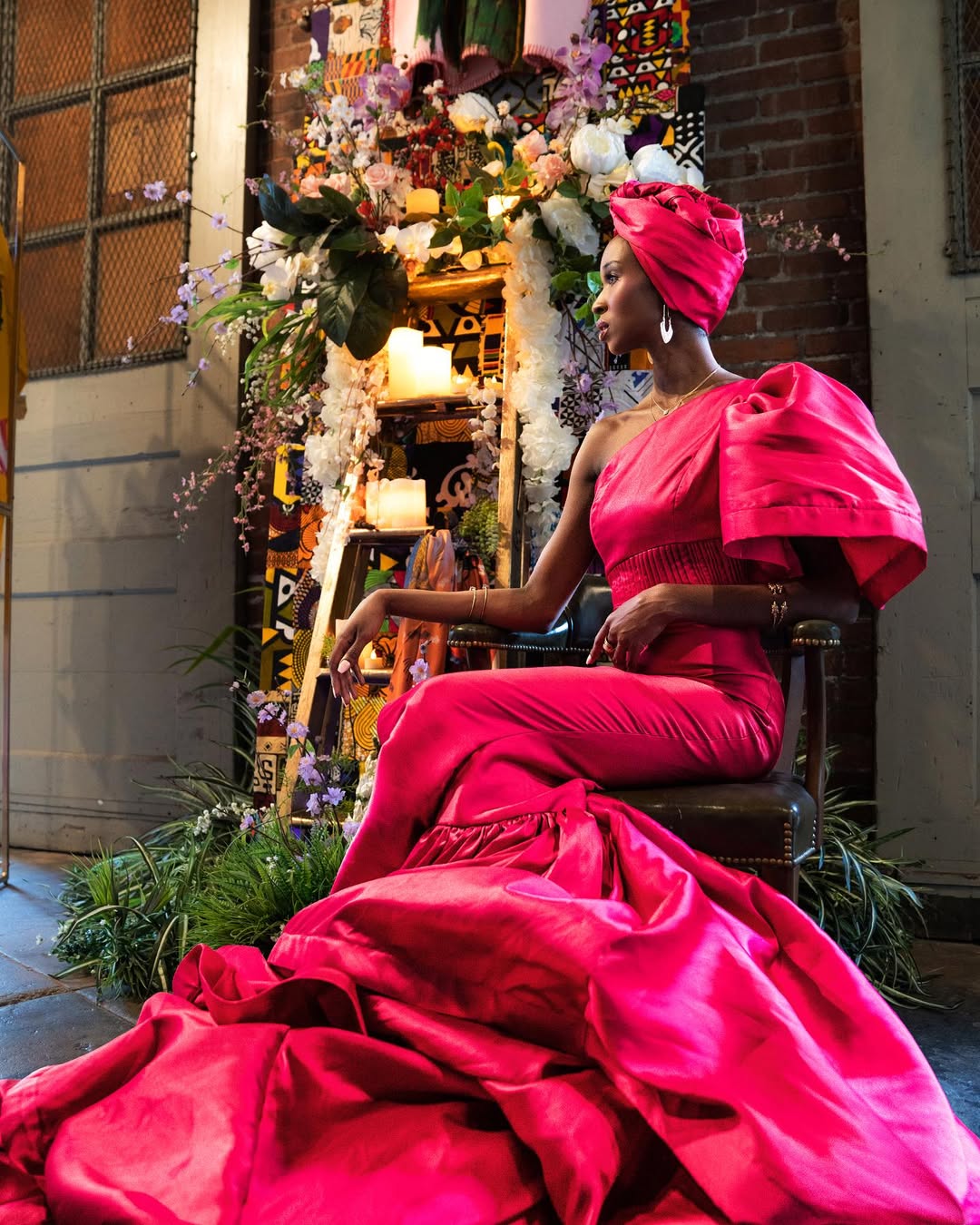
The association between couture and Paris is as much a commercial and political construction as a craft history. The Chambre Syndicale de la Haute Couture defines who is permitted to use the word couture in a specific institutional sense. That definition did not create the techniques it protects. Boning, underlining, the precise relationship between cut and body that a couture piece requires — these are craft solutions developed in multiple places over multiple centuries, wherever skilled makers had access to quality materials, skilled hands, and clients with the occasion to commission complex garments. As Prajjé Oscar’s documented practice confirms, his design philosophy is rooted in a commitment to tradition and savoir-faire through simplicity and understated elegance — not Paris’s tradition, but a specific Haitian formation that reaches the same standards through a different origin.
Haiti’s tradition of elaborate dress is traceable across the historical record. Port-au-Prince in the nineteenth and early twentieth centuries produced garments of considerable technical complexity for a society that understood occasion dressing as a form of cultural and political statement. The ceremonial clothing associated with Vodou practice was constructed over centuries without reference to the European atelier. Formal dressmaking traditions passed down through Haitian families across the diaspora produced tailored garments that met the same technical demands as their European counterparts. Prajjé Oscar Jean Baptiste’s practice does not approximate European couture. It proceeds from a parallel tradition whose roots are in Haiti and whose technical conclusions happen to match what the best European houses demonstrated in the 1950s.
The Erzulie collection, which the Embassy of Haiti has documented formally, makes this argument in material form. The collection comprises ready-to-wear, formal wear, and couture, and showcases original prints titled Maîtresse, embroidery, and beading — all made in Haiti by Haitian artisan women. Erzulie is the Haitian Vodou loa of love, beauty, and luxury. The collection’s name is not a stylistic gesture. It is a theological statement: this is what Haitian aesthetic authority looks like when it is applied to the highest standard of garment construction. The artisan women in the Haitian atelier are not producing approximations of European technique. They are expressing a craft tradition that has been developing on its own terms in Haiti for generations.
The Philadelphia Practice: What Prajjé Oscar Jean Baptiste Has Built
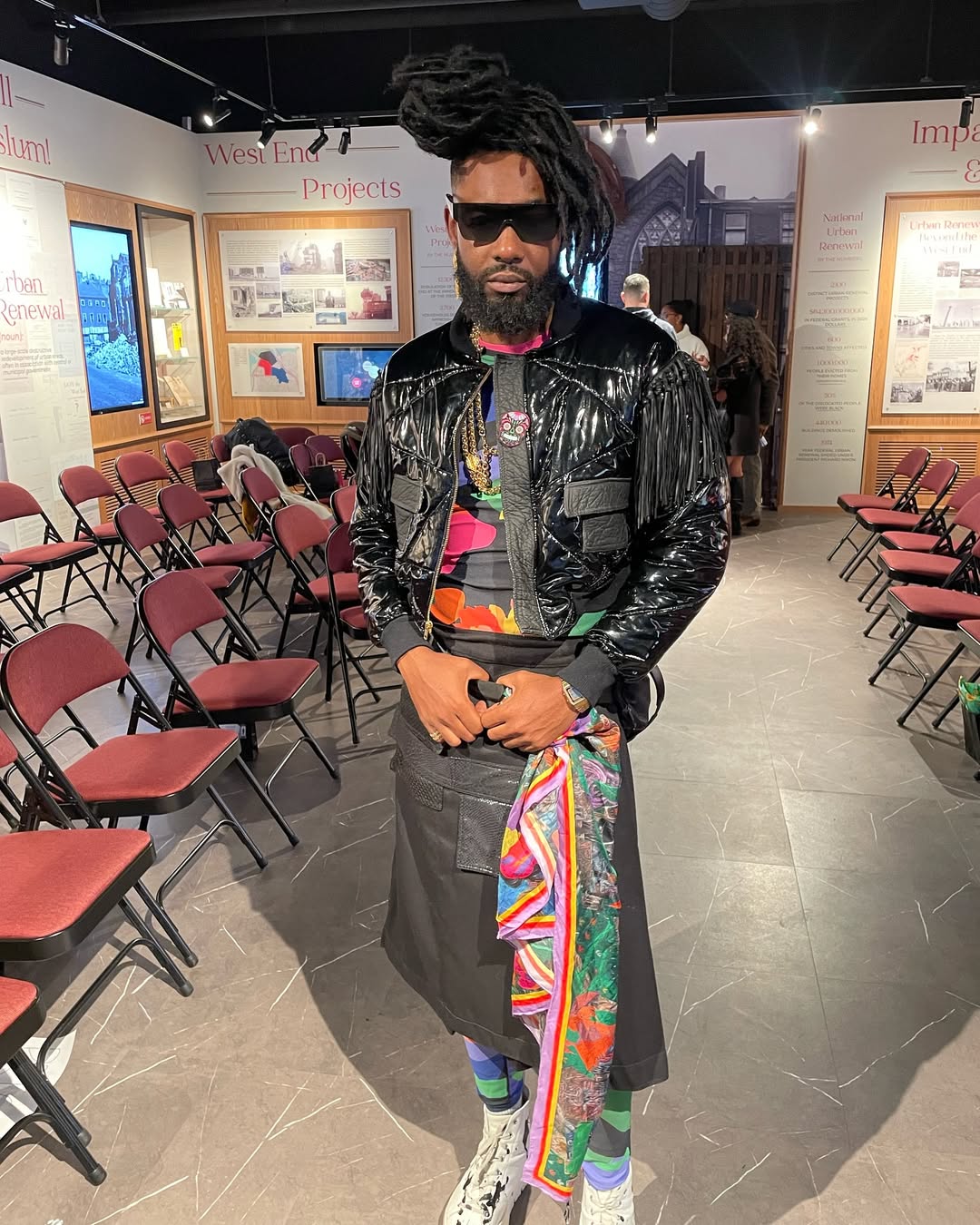
Baptiste opened his fashion house in Boston in 2003 at nineteen. He was still in high school when he produced his first solo show, working as an assistant to Boston designer Andrea Alexander and learning the industry from the production side before he had finished his formal education. As Philly Mag documented in their 2021 profile, he describes his childhood in Haiti with a directness that fashion press rarely captures: “Growing up in Haiti when the government was overthrown for the first time was rough. Fashion was my escape.” The escape became a vocation and the vocation became a practice whose rigour is apparent in every piece he produces.
H’s first major industry validation came in 2012 when Marcus Samuelsson selected him to present his Spring/Summer collection at New York Fashion Week. He appeared on Project Runway Season 19 in 2021 and returned for Project Runway All Stars. He received a Best of Philly 2022 Award for formal wear. His work has been documented in Essence, ELLE, Teen Vogue, Rolling Stone, Harper’s Bazaar Vietnam, the New York Times, the Washington Post, and the Philadelphia Inquirer. His clients include the First Lady of Haiti, Wyclef Jean, Alex Wek, and Lara Spencer of Good Morning America.
In March 2025, the National Gallery of Art hosted a Prajjé Oscar Fashion Showcase in connection with the exhibition Spirit and Strength: Modern Art from Haiti. The NGA’s documentation of the event confirms its significance: garments selected to connect to a major survey of Haitian modern art, pop-up talks by Baptiste on his work and inspirations, and an institutional framing that positioned his fashion practice as inseparable from the broader creative tradition that produced it. The National Gallery of Art did not host a fashion showcase about Caribbean couture in general. It hosted one about a specific Haitian designer whose work belongs in the company of Haitian modern art on the walls beside it.
Baptiste names his colours after Haitian Vodou spirits. The seam and the spirit are the same argument, made in the same language, from the same place.
Also Read:
- The Haitian Fashion Resurrection: What Port-au-Prince’s Designers Are Building in the Absence of International Attention
- Colombian Traditional Fashion: What the Mola, the Pollera, and Cartagena’s Dress Culture Actually Are
- Afro-Cuban Fashion: Abakuá Societies, Yoruba Heritage, and the Politics of Afrocentric Identity
The 1950s Reference and What It Actually Means
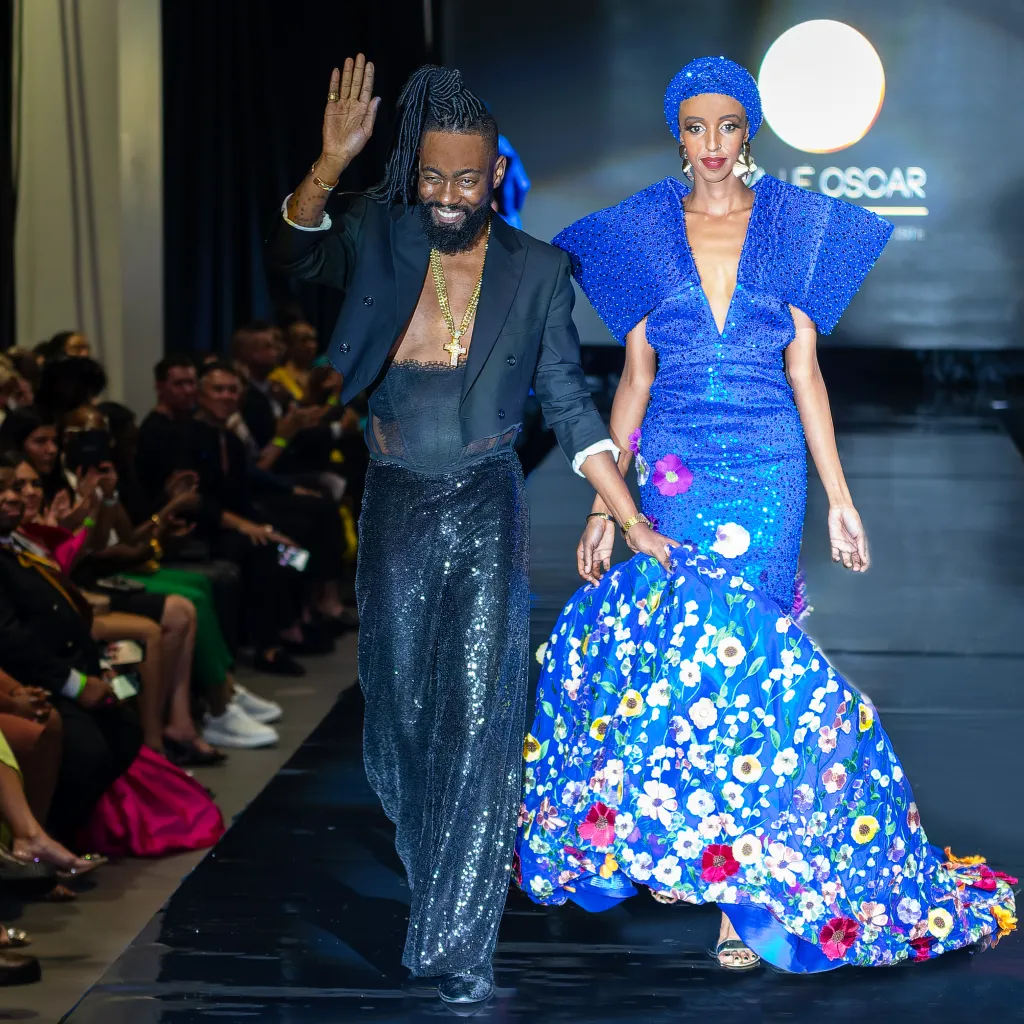
Prajjé Oscar Jean Baptiste’s stated reference point is the 1950s: the decade of Dior’s New Look, of Balenciaga’s architectural silhouettes, of Givenchy’s structured precision. It was the decade when the European atelier system most clearly demonstrated the principle that a garment should be built from the inside out, that construction should shape the body rather than drape over it, and that the relationship between cut and fabric is the argument a garment makes. Baptiste read and ches for that decade not as an act of imitation but as a recognition of aligned conclusions.
His colours are named after Haitian Vodou spirits. His production atelier is in Port-au-Prince and staffed by Haitian women artisans. His Nos Ginen collection, named for the Haitian spiritual concept of ancestral origin, was inspired by his childhood memory of escaping into his grandmother’s closet in Haiti and dressing up. The 1950s construction standards he applies are the technical vocabulary of his practice. The Haitian spiritual and cultural tradition is its content. The two are not in tension. They are the same garment.
The Haitian fashion ecosystem in which Baptiste operates is not a collection of isolated practitioners. It includes Stella Jean’s multicultural artisan tailoring in Rome, Azede Jean-Pierre’s advanced knitwear construction in New York, Waina Chancy’s structured womenswear at Harlem’s Fashion Row, where three Haitian designers were spotlighted in 2025, Jimmy Latouche’s architectural menswear drawn from Jacmel carnival, and Daveed Baptiste’s political denim mapping diaspora migration routes. The ecosystem reflects a creative tradition rooted in Haitian craft practices, maintained across generations and geographies, and consistently resistant to the pressure to strip its cultural formation for access to international markets.
The Omiren Argument
Classic coaway uture was never exclusively European. Haiti produced a tradition of technically precise garment construction rooted in African material culture, post-independence civic dress, and the ceremonial clothing of Vodou practice, developed independently of Paris and reaching equivalent construction standards through a different cultural route. Prajjé Oscar Jean Baptiste’s practice makes this argument not through a claim or a manifesto but through the finished piece: the cut, the seam, the Erzulie collection made in Haiti by Haitian artisan women, the colour names drawn from Vodou spirits, the Nos Ginen collection inspired by a grandmother’s closet in Port-au-Prince. The African and Caribbean fashion market is worth $ 31 billion. Haiti built part of that value. Baptiste’s couture is one of its most precise and least adequately documented expressions.
Omiren Styles covers Prajjé Oscar Jean Baptiste as a primary fashion subject — not as an example of Caribbean approximation of European standards, but as a designer whose practice demonstrates that the craft intelligence required to produce construction of the highest order is not geographically restricted to the ateliers of Paris. The National Gallery of Art understood this in March 2025. The Haitian artisan women producing their embroidery and beadwork in Port-au-Prince understood it long before that. The fashion editorial system that measures Caribbean designers against Paris as the universal standard is using the wrong instrument. The instrument Omiren Styles uses is calibrated for this.
Frequently Asked Questions
Who is Prajjé Oscar Jean Baptiste?
Prajjé Oscar Jean Baptiste is a Haitian-American couture and ready-to-wear designer. Born in Haiti in 1983, he was adopted at thirteen and brought to Massachusetts, where he studied at Massachusetts College of Art and Design in Boston. He launched his fashion house Prajjé Oscar in 2003 at nineteen and now operates from Philadelphia, with a couture atelier in Haiti, where Haitian women artisans produce embroidery, beading, and print work. He appeared on Project Runway S in 20artisans 21 and on Project Runway All Stars. His clients include the First Lady of Haiti, Wyclef Jean, Alex Wek, and Lara Spencer. In March 2025, the National Gallery of Art hosted a fashion showcase of his work in connection with the exhibition Spirit and Strength: Modern Art from Haiti.
What is Haitian couture?
Haitian couture refers to the tradition of technically precise garment construction that developed in Haiti rooted in African material culture, the formal dress practices of post-independence Haiti, civic life, and the ceremonial clothing associated with Vodou. This tradition developed independently of the European atelier system and reached comparable construction standards through a different cultural route. It includes skilled dressmaking passed through families across the Haitian diaspora and the work of designers like Prajjé Oscar Jean Baptiste, whose Erzulie collection is produced entirely in Haiti by Haitian artisan women using embroidery and beading traditions specific to Haitian craft practice.
What is the Erzulie collection by Prajjé Oscar?
The Erzulie collection comprises ready-to-wear, formal wear, and couture pieces. It showcases original prints titled Maîtresse, embroidery, and beading, all made in Haiti by Haitian artisan women. Erzulie is the Haitian Vodou loa of love, beauty, and luxury. The collection’s name is a theological statement about aesthetic authority: this is what Haitian craft tradition produces when it is applied to the highest standard of garment construction. Baptiste names his colour vocabulary throughout his work after Haitian Vodou spirits, making the spiritual and the sartorial inseparable in his practice.
Why does Prajjé Oscar reference 1950s couture construction?
Baptiste cites the 1950s as the moment when European couture demonstrated most clearly the principle he considers foundational: that a garment should be built from the inside out, with construction shaping the body rather than draping over it. He references Dior’s New Look, Balenciaga’s architectural silhouettes, and the general standard of that decade’s garment construction. He reaches for these standards not as an act of imitation but because he arrived at the same construction conclusions through his Haitian formation. The 1950s reference is the technical vocabulary of his practice. The Haitian spiritual and cultural tradition is its content.
Where does Prajjé Oscar produce his couture work?
Prajjé Oscar Jean Baptiste operates his brand from Philadelphia, where he is also an Adjunct Professor at Jefferson University. His design studio and couture atelier in Haiti is where artisan women produce the embroidery, beading, and print work for his collections, including the Erzulie collection. His Nos Ginen collection, named for the Haitian spiritual concept of ancestral origin, debuted at Fashion Week Columbus and is inspired by his childhood memories of his grandfather’s closet in Haiti. The Haiti atelier is not a production facility for a design practice based elsewhere. It is the cultural and craft anchor of the brand.
Explore More
Read the full Fashion > Caribbean section for Omiren Styles’ documentation of the designers, craft traditions, and fashion practices that the Caribbean has been building for centuries — on its own terms, from its own cultural foundations, without waiting for European institutions to provide the frame.