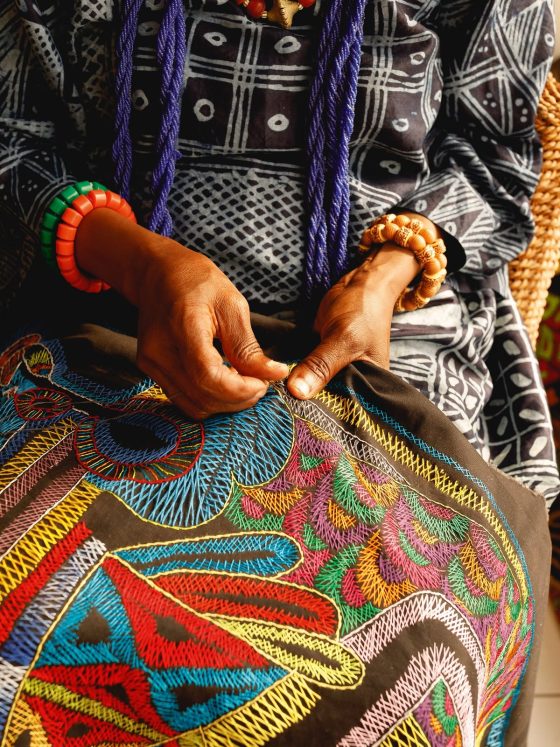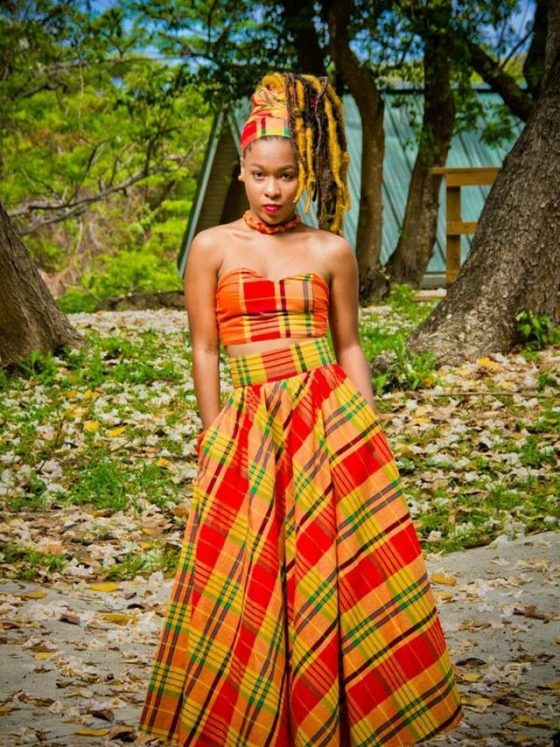
When Lodia Kpodzro of Bazara’Pagne describes pagne as ‘a heritage and more – a mirror, it is lives, personalities, the most wonderful thing on the African continent,’ she is not speaking about a fabric. She is speaking about a knowledge system.
The pagne is a material. But the knowledge of what it means, where it comes from, how it moves through communities, what it communicates when worn and what it costs to produce and import: that knowledge is not in the fabric itself. It lives in the people who have handled it, studied it, traded it and made things from it. It lives in the Nana Benz traders of Lomé who built commercial empires through their mastery of wax-print distribution. It lives in the weavers of Kente in Ghana, the Aso-oke artisans of Yorubaland, the bogolan practitioners of Mali, the adire dyers of Abeokuta and the raffia weavers of northern Ghana whose work AAKS built its brand around. It lives in the designers who have invested in understanding not only what a fabric looks like but what it costs, where it comes from, who made it, what it means and what happens to it after the garment is sold.
That body of knowledge is what this article calls material intelligence.
African fashion is currently experiencing a moment of significant international recognition. The textiles that carry its identity, kente, aso-oke, bogolan, adire, wax print, bark cloth, raffia and the growing range of local natural and artisan materials, are being described as defining trends in 2026. That recognition is welcome. It is also insufficient on its own. Recognition without material intelligence reproduces the same extraction dynamic this series has been documenting: the cultural surface travels, the knowledge behind it stays behind, and the communities that hold the knowledge do not capture the commercial value that recognition generates.
Material intelligence is the knowledge that converts a fabric from a visual reference into a production decision, a cultural relationship, an economic commitment and a sustainability position – all at once. A designer without it is choosing aesthetics. A designer with it is choosing futures.
Every fabric choice in African fashion is a cultural, economic, and environmental decision simultaneously. This is why material intelligence is essential to African fashion’s future.
What Material Intelligence Is
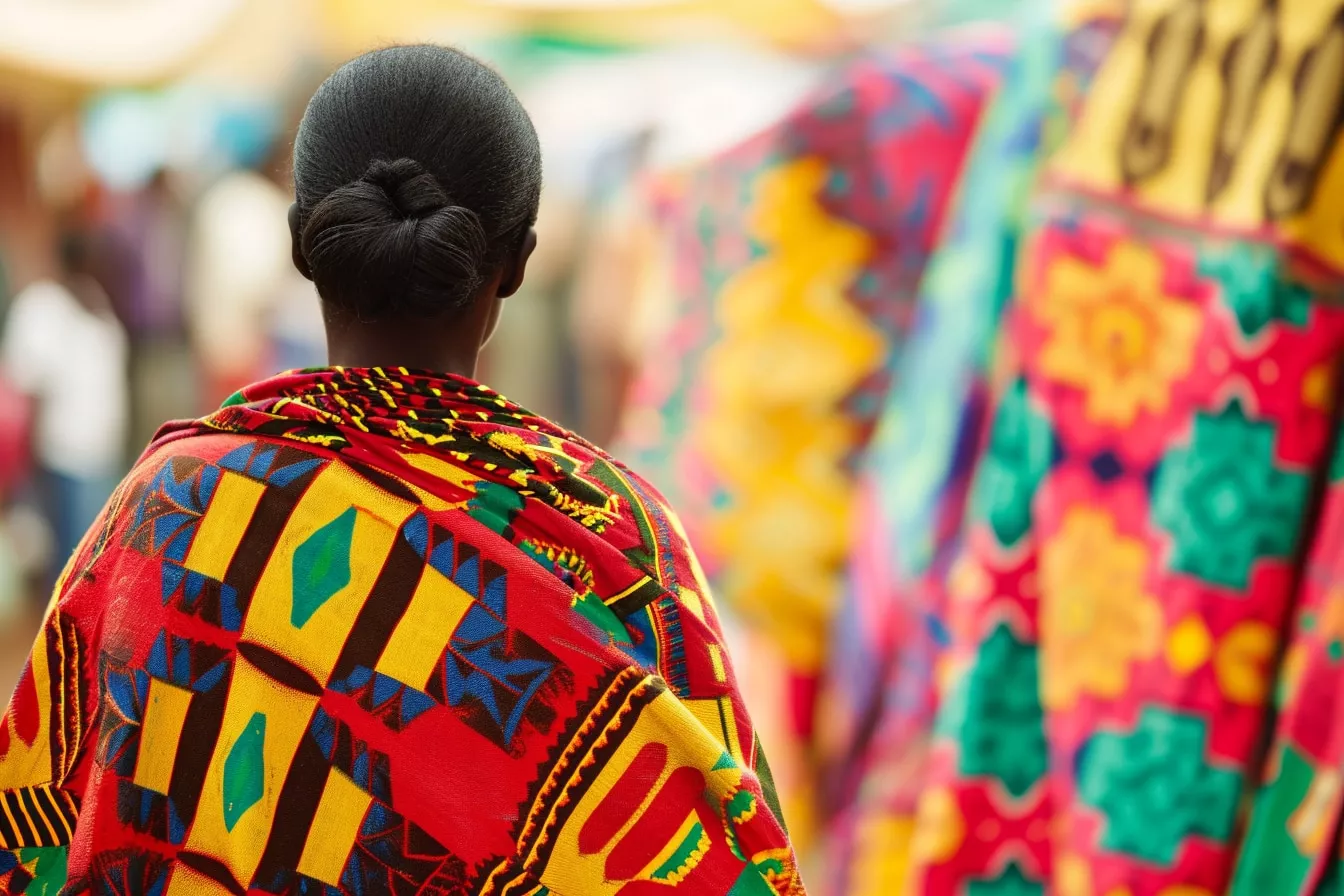
Material intelligence is not simply knowing what a fabric looks like. It is knowing the full set of conditions that surround it: its cultural origin and the knowledge tradition that produced it; its supply chain and the cost structure that determines whether a designer can afford it; its performance characteristics under cut, sew, wash, wear and care; its environmental footprint at production and end of life; its availability and the intermediary chain that determines access; and its meaning to the community that originally developed it.
These dimensions are not separate. They are entangled in the fabric itself.
A piece of aso-oke is simultaneously a woven textile produced by Yoruba artisans using strip-loom techniques developed over centuries; a commodity whose price reflects the labour of the weavers, the cost of the yarn, and the margin of any intermediary who sits between weaver and buyer; a cultural object whose colour combinations, weave density and surface texture carry specific social meanings; a production material whose behaviour under cutting, draping and finishing will determine whether the designer’s intended construction is achievable; and a supply chain relationship that may connect the Lagos-based designer directly to the weaver, or route through several layers of intermediary markup.
Understanding aso-oke as a material means understanding all of those things, not just the aesthetic surface. The same is true of every African textile that is currently described as a ‘defining trend.’ The trend coverage sees the surface. Material intelligence sees the system.
The Four Dimensions of Every Fabric Decision
Every material decision in African fashion operates across four dimensions simultaneously, each with its own implications.
The Cultural Dimension
As Fibre2Fashion documented in its analysis of African fashion innovation, Uganda’s bark cloth, made from the Mutuba tree, and Nigeria’s aso-oke fabric, woven from cotton and silk, are not only sustainable but also deeply rooted in cultural heritage. These materials offer a narrative of sustainability intertwined with tradition, providing fashion with a unique identity that is both eco-friendly and culturally significant.
That phrase ‘deeply rooted in cultural heritage’ is true and important. But it is also where material intelligence becomes most necessary, because cultural depth can be extracted just as easily as it can be honoured.
A textile’s cultural dimension includes the community that developed it and continues to maintain the knowledge tradition that makes it; the specific occasions, social positions and communications that the textile carries; the distinction between uses that the originating community would consider appropriate and uses that would be understood as misappropriation; the history of how the textile has moved through trade relationships, colonial systems and post-colonial fashion markets; and whether the designer working with the textile has a relationship with the community that produced it or is drawing on an aesthetic surface.
As FunTimes Magazine documented in its September 2026 analysis of traditional African craft in fashion, Mali’s bògòlanfini, commonly known as mud cloth, demonstrates how an indigenous textile language can serve as a contemporary design resource, with its distinctive geometric patterns and earthy appearance influencing fashion while retaining strong ties to Malian cultural traditions. That retention of connection is not automatic: it requires the designer who works with bogolan to know what the patterns mean, who holds the knowledge, whether that knowledge is being maintained and what responsibility comes with using it commercially.
The cultural dimension of a fabric decision is not a marketing consideration that can be added after the design is made. It shapes what the design can legitimately claim, who it can build relationships with, and what the designer’s responsibility to the originating community is.
The Supply Chain Dimension
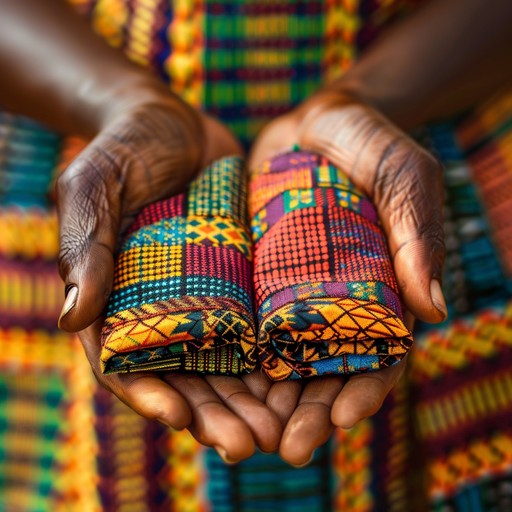
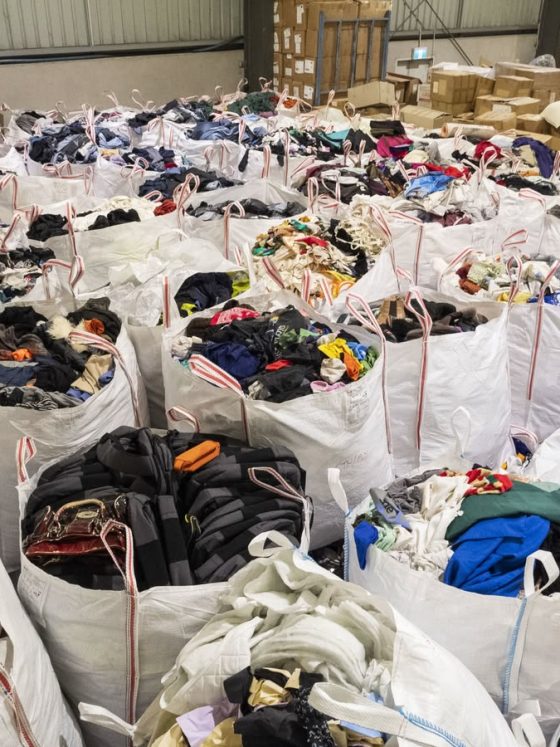
As Omiren Styles has established in its analysis of Africa’s cotton supply chain and the buy-back problem, Africa produces approximately 6% of the world’s cotton, exports 90% of it as raw fibre, and spends $50 billion annually on finished textiles imported back into the continent. A designer in Lagos buying imported fabric is paying not only the fabric cost but the entire intermediary chain that built value into the fibre after it left the continent: the mill that processed the raw cotton into yarn, the converter that dyed and printed the fabric, the distributor that carried it to market, each at their own markup.
As Omiren Styles has established, in its analysis of the fabric middleman and the fashion system, the standard fabric wholesale markup is 2.0 to 2.5 times the cost at each intermediary stage, and a designer who could access mill prices directly would pay substantially less per unit than one buying through the intermediary chain. The gap between the designer who sources fabric through an established direct relationship with an artisan producer and the designer who buys through multiple levels of intermediaries is not a skill gap. It is a knowledge gap: material intelligence about who produces the fabric, at what cost, through what channel, and how to build a direct relationship is the commercial knowledge that determines whether the fabric choice is economically viable for the brand.
The supply chain dimension of a fabric decision is also a question of access equity. A designer in London sourcing aso-oke for their collection may have easier access to West African artisan networks, through diaspora community connections, travel, and institutional relationships, than a designer in Lagos, for whom the intermediary chain between the artisan workshop and the commercial fabric market is just as opaque and expensive.
The Economic Dimension
The economic dimension of a fabric decision is not simply the purchase price per metre. It includes the cost at each stage of the supply chain, the designer’s ability to negotiate that cost based on their knowledge of available alternatives, the price the fabric enables the finished garment to command in the retail market, and the economic relationship the fabric choice establishes with the community that produced it.
As Omiren Styles has documented in its profile of Samson Feli’s Togolese fashion practice, the decision to source deadstock cotton and satin cotton from end-of-series runs of major brands, then upcycle them using the tie-and-dye technique within a 40km production circuit, is simultaneously an aesthetic, an environmental, and an economic decision. Dead-stock fabric is available at a lower cost than new fabric. The tie-and-dye transformation adds value within the local economy. The short production circuit eliminates the intermediary markup that would otherwise add to the per-unit cost. Material intelligence created the economic logic on which the label’s sustainability and aesthetic claims rest.
The economic dimension also includes the question of who benefits from the fabric choice. A designer who sources aso-oke directly from artisan producers in Yorubaland, at a fair price that reflects the labour and skill invested, is making a fabric decision whose economic consequences flow to the weaver. A designer who sources the same fabric through a Lagos wholesaler who imported it from a Chinese manufacturer producing aso-oke-inspired fabric at lower cost and lower quality has made an economically convenient decision whose consequences flow in a different direction.
Material intelligence makes that distinction visible. Aesthetic intelligence does not.
The Environmental Dimension
As Fibre2Fashion has documented, brands across Africa are turning to locally sourced materials such as organic cotton, bamboo, sisal, and raffia, which have a lower environmental footprint than conventional textiles. The environmental case for local materials in African fashion is well-established in principle, but it requires material intelligence to apply in practice: knowing which materials are locally available, at what quality and at what scale; understanding the specific environmental cost of the imported alternatives; and making production decisions that align material sourcing with the environmental position the brand is claiming.
The environmental dimension of a fabric decision extends to the garment’s full lifecycle. A fabric that cannot be repaired, recycled or composted at end of life has a different environmental profile from one that can. A fabric sourced from a community that has maintained its production for generations without industrial processing has a different carbon footprint from one that requires factory dyeing, chemical finishing and international freight. A dead-stock fabric, whose environmental cost was incurred when the original brand produced it and which is now being given a second life, has a different environmental profile from a new fabric produced to order.
These distinctions are not visible on the fabric’s surface. They require material intelligence: knowledge of provenance, production method, processing chemistry, transport logistics and end-of-life behaviour.
What Material Intelligence Looks Like in Practice
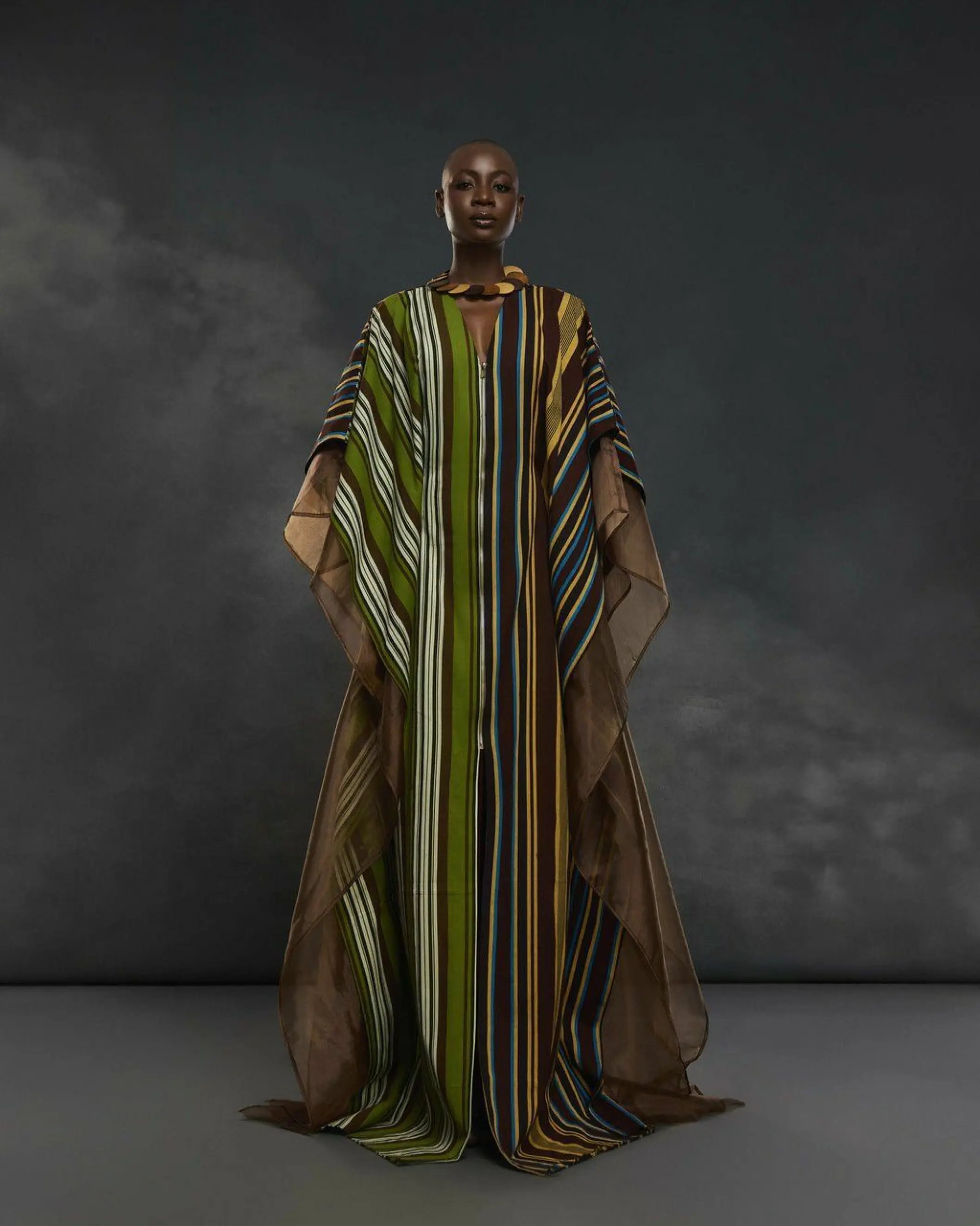
The African designers whose practice most clearly demonstrates material intelligence are those who have built production relationships, not just fabric relationships.
Kenneth Ize, who brought traditional Yoruba hand-woven aso-oke to international prominence, works directly with artisan communities in Nigeria: not only sourcing the textiles but collaborating on new colourways and patterns, thereby sustaining an ancient craft and providing economic empowerment. That practice is material intelligence at its most complete: the knowledge of where the fabric comes from, the relationship with the people who make it, the creative collaboration that generates new expressions of the tradition, and the commercial arrangement that ensures the artisans benefit from the fabric’s commercial value.
Lisa Folawiyo elevates traditional African textiles through intricate beadwork and embroidery, with each piece hand-finished by local artisans in Nigeria. The beadwork and embroidery are not decorative additions to the fabric; they are extensions of the material-knowledge tradition the fabric itself carries. Her 2026 collection, ‘Capturing A Life in Colour,’ represents two decades of sustained material practice whose cultural authority derives from the depth of the knowledge behind it, not only from the aesthetics of the surface.
Tongoro Studio, founded by Sarah Diouf in Dakar, builds its practice around 100% Made-in-Africa production and locally sourced materials. The commitment to local sourcing is not a sustainability marketing claim: it is a business model whose economic logic depends on the knowledge of what materials are available locally, at what cost, from which artisan producers, and how to manage a supply chain that keeps all value within the continent.
AAKS, founded by Akosua Afriyie-Kumi, built its brand around fair wages to raffia weavers in northern Ghana, a material intelligence decision: the knowledge that raffia weaving in northern Ghana was a specific, skilled, community-maintained practice whose practitioners were not receiving fair commercial returns for their work, and the decision to build a commercial model that changed that. The raffia is the material. The knowledge of the community that makes it, the wage standard that would make the practice economically sustainable for them, and the brand positioning that would make those wages financially viable: that is the material intelligence.
What Happens Without Material Intelligence
The absence of material intelligence in African fashion is not merely a missed opportunity. It is a specific kind of damage.
When a designer uses the term ‘African print’ to describe fabric, they have erased the distinction between wax print, Ankara, Dutch wax, Ghanaian factory print and the specific printed fabrics produced by Togolese, Ghanaian, Ivorian and Senegalese manufacturers, each with different cultural associations, different production histories, different price points and different community relationships. That erasure is a form of material ignorance that forecloses the cultural authority, the supply-chain accountability, and the community benefit that material intelligence would have enabled.
When a designer sources aso-oke-inspired fabric from an international manufacturer rather than from Yoruba weavers, they have made a cost decision that appears to be a material one. The garment appears to reference the tradition. It does not pay homage to the tradition. The aesthetic surface is present. The material intelligence is absent.
As Omiren Styles has established in its analysis of the documentation gap in fashion supply chains, the things the fashion supply chain fails to record are precisely the things whose documentation would make extraction harder to disguise. The documentation gap around African textile materials is one of the most specific and most consequential instances of that general failure: the fabric’s cultural origin, the artisan’s name, the community relationship, the wage paid, the knowledge tradition embodied in the technique – all of these are absent from the supply chain record precisely because their presence would make the accountability questions askable.
Material intelligence is what makes those questions not only askable but already answered.
The Wax-Print Question
No discussion of material intelligence in African fashion can avoid the question of wax print.
Wax-print fabric has a complex history: developed by Dutch manufacturers attempting to mechanically replicate Indonesian batik for Javanese markets, failing in that market, and finding its most enduring commercial success in West Africa through the trading networks of the Nana Benz and their predecessors, through decades of use as everyday, ceremonial and commercial dress, and through a process of cultural appropriation so thorough that the fabric has become genuinely embedded in West African fashion identity even as its production remains primarily industrial and largely non-African.
As Omiren Styles has documented in its analysis of the Nana Benz and the wax-print empire they built in Lomé, the commercial authority of the Nana Benz derived from their knowledge of the market, their control over distribution and their pattern expertise, not from the manufacture of the fabric. Their material intelligence was commercial and cultural: they knew which patterns would sell in which markets, how to manage exclusive access to premium designs, and how to build relationships with manufacturers that gave them the commercial advantage that their community retained for generations.
Material intelligence about wax print in 2026 means understanding all of this: the Dutch origins, the West African cultural appropriation that made it something genuinely different from its source, the ongoing debate about authenticity and cultural ownership, the presence of Chinese manufacturers who now produce significant volumes of the market, and the specific commercial and cultural role that wax print plays in different West African markets.
A designer who describes their use of wax print as ‘celebrating African heritage’ without understanding the fabric’s actual history is not exercising material intelligence. They are repeating a marketing narrative whose truth is more complicated and whose cultural accountability is more demanding than the narrative suggests.
Bazara’Pagne’s practice, as documented in the Made in Lomé series, is an example of material intelligence applied to the wax-print question: Lodia Kpodzro works with pagne as a material that she understands at depth, through a relationship with the fabric that is commercial, cultural and personal. Her description of pagne as a heritage and more, as a mirror, as lives and personalities, reflects decades of engagement with the material that goes well beyond its visual surface.
What the African Fashion Industry Needs to Build

Material intelligence is not a fixed body of knowledge. It is a practice that requires ongoing investment in research, relationships, documentation and the transmission of knowledge between generations of practitioners.
What the African fashion industry needs to build, at the institutional level, is the infrastructure that makes material intelligence accessible rather than privately held by a small number of practitioners who have invested years in building it individually.
A textile reference system that accurately documents African textile traditions, including their cultural contexts, production methods, geographic origins, current production status, and community relationships, would make material intelligence more widely available. The Omiren Index, in its commitment to documenting materials alongside people, places and institutions, is part of this infrastructure. So are the museum collections, academic publications, community archives and practitioner networks that hold knowledge about specific textile traditions.
A fabric sourcing network that connects African fashion designers directly to artisan producers, reducing the intermediary chain whose markup currently prices direct sourcing out of reach for many designers, would make material intelligence commercially actionable rather than theoretically desirable. The producers of kente, aso-oke, bogolan, adire, bark cloth and raffia are known. The designers who want to source from them are known. The connection between them is the knowledge gap that collective infrastructure could close.
A documentation practice that records, specifically and accurately, which community produced which fabric, at what cost, under what conditions and with what cultural significance, would make the accountability that material intelligence enables enforceable rather than aspirational. That documentation practice is what the Omiren Index methodology applies to production and manufacturing, and what this series has been arguing should be applied to cultural knowledge at every stage of the full fashion supply chain.
The Omiren Argument
A fabric is never just a fabric.
It is a knowledge tradition. It is a supply chain. It is an economic relationship. It is an environmental position. It is a community commitment. It is a documentation obligation. In African fashion, where the textile traditions that define the industry’s most internationally recognised aesthetic are also the traditions whose communities have been least commercially protected when those aesthetics enter the global market, material intelligence is not a professional advantage. It is a responsibility.
The designers, brands and institutions that build it will make better products. They will build more accountable supply chains. They will create stronger community relationships. They will make environmental claims that can be verified rather than only asserted. And they will produce fashion whose cultural authority rests on a foundation of knowledge rather than a surface of reference.
As Omiren Styles has argued throughout this series, the Global South made fashion and never got credit. In African fashion, material intelligence is the knowledge system that begins to change that: not by adding a credit line to a collection note, but by building the relationships, the documentation, the supply chain transparency and the community economic structures that allow the people who hold the knowledge to hold more of the commercial value it generates. A fabric is never just a fabric. That is where the argument begins. Material intelligence is where it becomes practice.
ALSO READ
- Africa Grows the Cotton. Its Designers Still Buy Back the Value.
- The Fabric Middleman Is Part of the Fashion System
- Samson Feli: The Togolese Designer Making Handmade Fashion a Story You Can Wear
- The Global South Made Fashion. It Just Never Got Credit.
Frequently Asked Questions
What is material intelligence in fashion?
Material intelligence is the knowledge system that surrounds a fabric or textile: its cultural origin and the community that developed it; its supply chain and the cost structure that determines access; its performance characteristics under cut, sew, wash, wear and care; its environmental footprint at production and end of life; its availability and the intermediary chain that shapes the price a designer pays; and its meaning to the community that holds its production tradition. Material intelligence converts a fabric from a visual reference into a production decision, a cultural relationship, an economic commitment and a sustainability position simultaneously.
Why is material intelligence especially important in African fashion?
As Omiren Styles has established in its analysis of Africa’s cotton supply chain, Africa produces approximately 6% of the world’s cotton but exports 90% as raw fibre and spends $50 billion annually importing finished textiles. I n this context, every material decision an African fashion designer makes is entangled with questions of supply chain access, cultural attribution, economic equity, and environmental consequences. The four dimensions of the fabric decision – cultural, supply chain, economic, environmental – are especially compressed in the African fashion context, making material intelligence not a professional advantage but a foundational practice.
What is the difference between using African textiles aesthetically and using them with material intelligence?
As documented in analysis of African textile influence on contemporary design, the distinction is between sourcing and relationship. Kenneth Ize does not only source aso-oke from Yoruba artisan communities. He collaborates on new colourways and patterns, sustaining an ancient craft and providing economic empowerment. Material intelligence means knowing where the fabric comes from, who makes it, what it means, what the appropriate commercial relationship is, and how the designer’s use affects the community that holds the tradition. Using African textiles aesthetically means incorporating the visual surface. Using them with material intelligence means building the knowledge, relationship, and accountability that the visual surface represents.
What is the wax-print material intelligence question?
Wax-print fabric has a specific and complex material history: developed by Dutch manufacturers, the fabric found its most enduring market in West Africa through decades of community appropriation, trading networks, and cultural embedding that made it genuinely part of West African fashion identity, even as its production remains primarily industrial and largely non-African. Material intelligence about wax print means understanding its full history, including its Dutch origins, its West African cultural transformation, the ongoing debate over authenticity and ownership, the presence of non-African manufacturers in the market, and the specific commercial and cultural roles the fabric plays in different markets. A designer who uses wax print without this knowledge is repeating a marketing narrative. A designer with material intelligence makes the knowledge visible in how they source, credit and build relationships around the fabric.
What institutional infrastructure does African fashion need to build material intelligence?
Three specific investments would make material intelligence more widely accessible: a textile reference system that accurately documents African textile traditions, their cultural contexts, production methods, geographic origins and community relationships; a fabric sourcing network that connects designers directly to artisan producers, reducing the intermediary chain whose markup currently prices direct sourcing out of reach; and a documentation practice that records specifically which community produced which fabric, at what cost, under what conditions and with what cultural significance. These investments address the knowledge gap, the access gap and the accountability gap that currently make material intelligence a privilege of individual practitioners who have invested years in building it, rather than a shared industry foundation.
EXPLORE MORE
Read the full Heritage, Textiles and Cultural Interpretation, and African Fashion sections at Omiren Styles for ongoing documentation of African textile traditions, material-sourcing intelligence, and the knowledge systems that would allow African fashion’s cultural authority to become commercial authority. Discover travel and heritage intelligence across Africa at Rex Clarke Adventures.