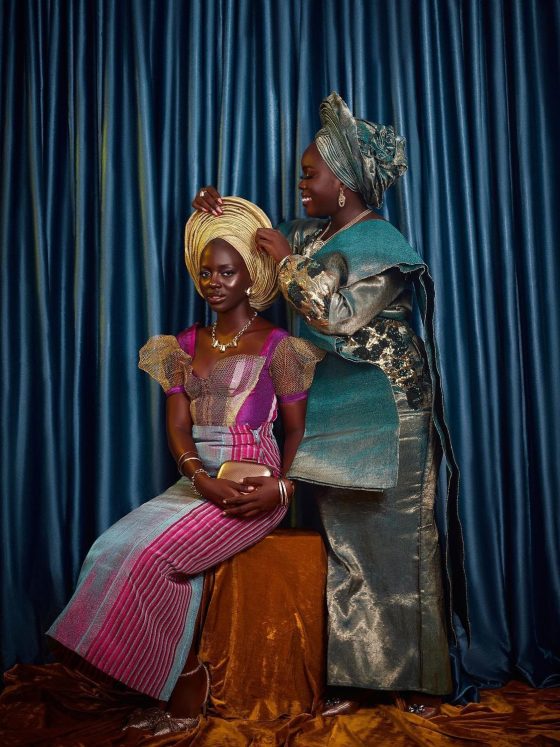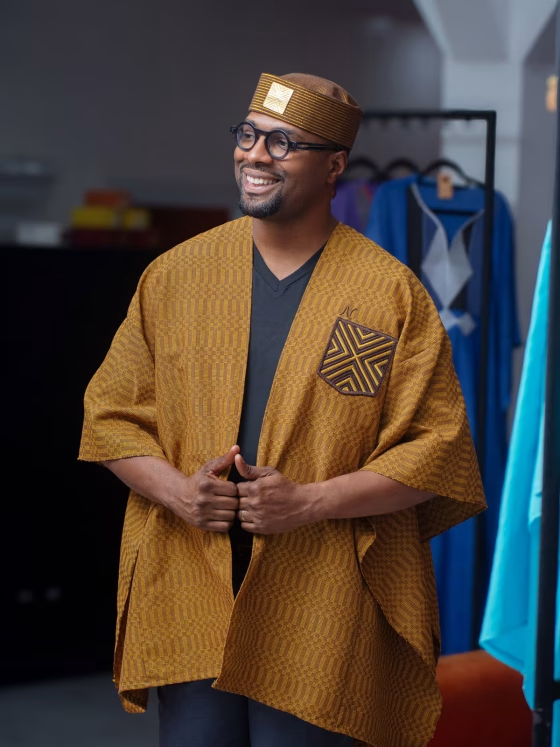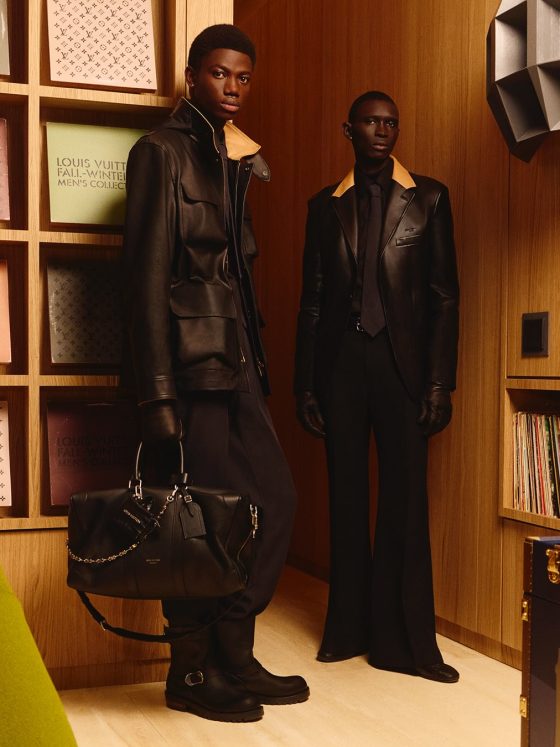
There is a version of sustainable fashion that is principally a marketing position: a brand that uses the language of ethics and ecology to communicate a set of values while the production system behind it remains largely unchanged. And then there is a version that begins with the material itself, with what fabric is available, where it comes from, how it is worked and how close all of that stays to the workshop that produces it.
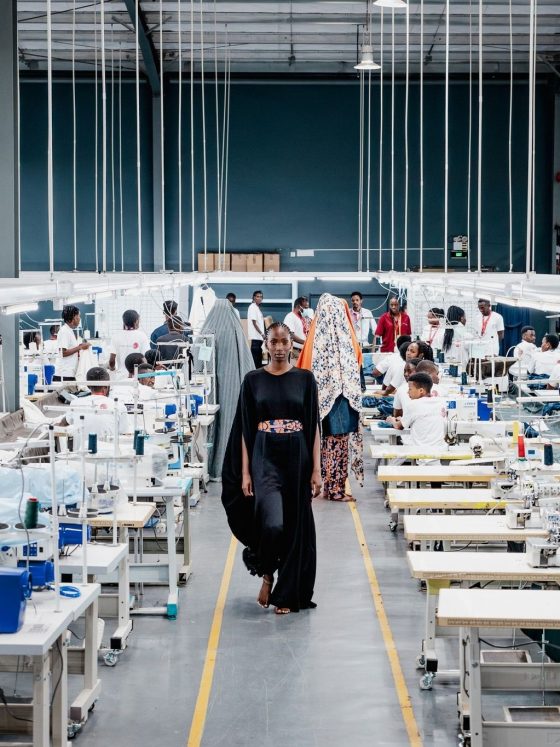
Samson Feli belongs to the second kind. The Togolese fashion brand describes itself simply: creations made by hand with traditional techniques, in a modern and urban style, from its workshop. That description is not a brand positioning statement assembled after the fact. It is an accurate account of a production practice whose every element is deliberate. The fabric is deadstock cotton and satin cotton sourced from the end-of-series runs of larger brands. The dyeing technique is tie-and-dye. The production radius is forty kilometres from Lomé. Everything is made in Togo, in a circuit court that keeps every stage of production within reach of the atelier that assembled it.
“Sustainable fashion, for me, is fashion that aims to extend the life of a garment and reduce its environmental impact. Beyond using upcycled materials, I act at every other level of the garment lifecycle: the cut, recyclability, the production method and the quantities produced. ” Samson Feli, brand founder
That statement, from the brand’s own documentation of its practice, frames the Samson Feli approach more precisely than any external description could. Sustainability in this context is not a certification or an aspiration. It is an operational commitment that runs from material sourcing through cutting method, through the dyeing process, through production quantity, to the recyclability of the finished garment. The commitment is total in scope and modest in scale, which is exactly the combination that makes it credible.
Samson Feli is a Togolese fashion brand built on dead-stock cotton, tie-and-dye technique and a 40 km production radius in Togo. This is what a handmade story looks like when it is made entirely at home.
What Deadstock and Tie-and-Dye Produce Together
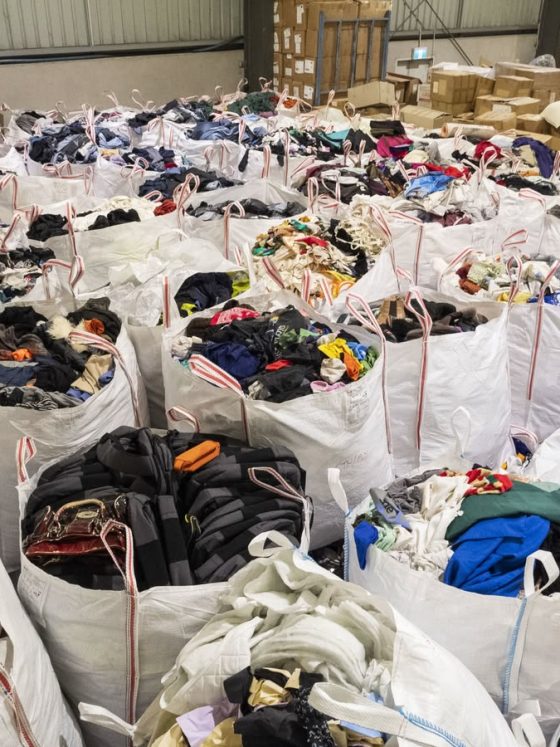
The decision to build a fashion brand on deadstock fabric is a production decision before it is an ethical one. Deadstock, the end-of-series and excess fabric from larger brands, is available in limited and unpredictable quantities. It determines the palette of what can be produced in a given season, the cut of what is possible and the finishing of what is made. A designer who works with dead-stock is not selecting from a limitless fabric catalogue. They are working with what exists, in the quantities it exists in, which requires both the flexibility to adapt and the technique to transform.
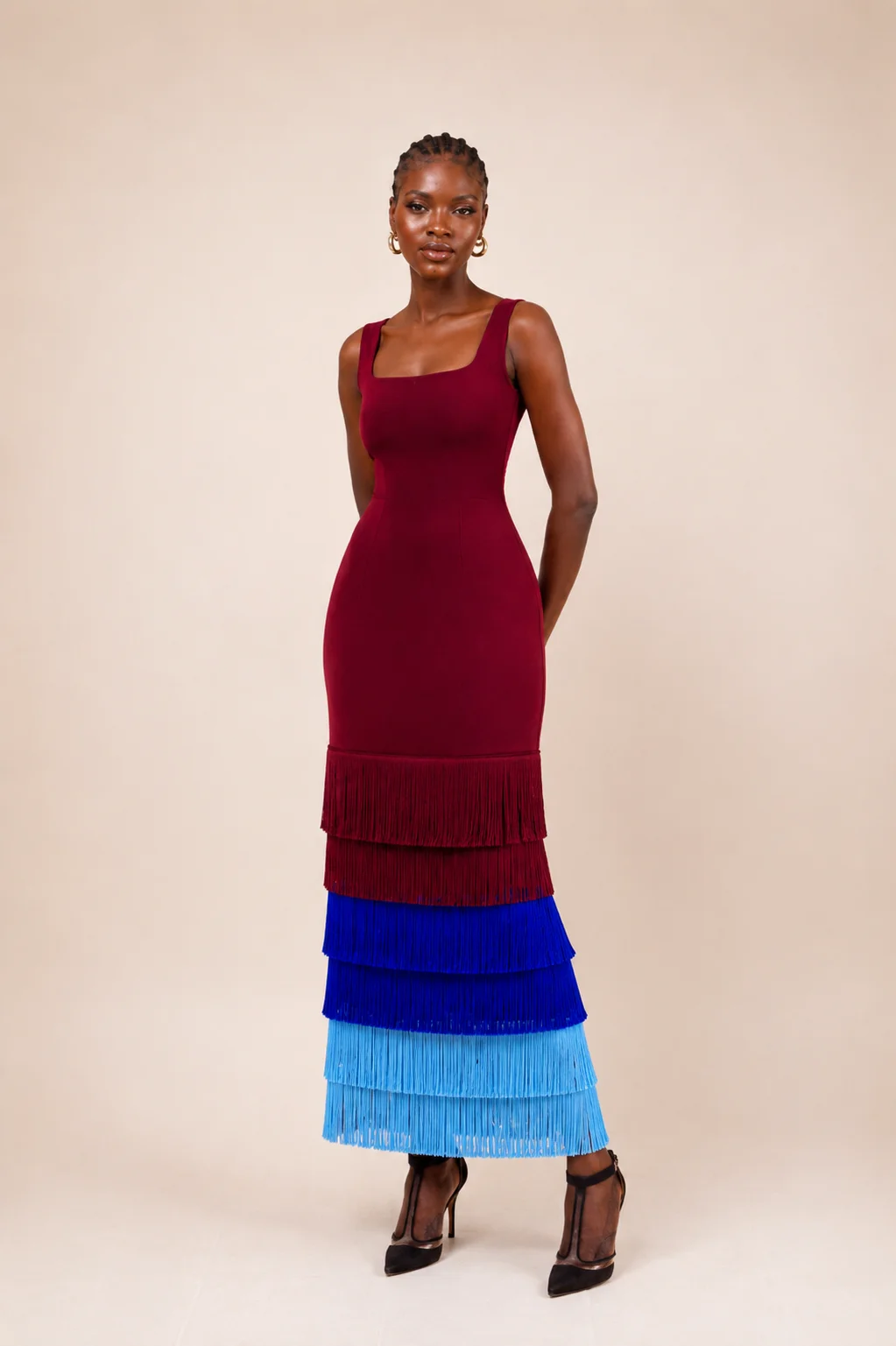
As Samson Feli documents on its brand page, the cotton and satin cotton the brand uses are sourced exclusively from end-of-series runs and quality dead stock from major brands, then upcycled using a tie-and-dye technique. The tie-and-dye process is the transformation that converts the sourced fabric into something that is distinctly Samson Feli rather than simply repurposed dead stock. Tie-and-dye, the technique of binding fabric before dyeing to produce a pattern through resist, is a craft with deep roots in West African textile practice, used across the region in various forms to produce the patterns that identify community, occasion and aesthetic position. In Samson Feli’s practice, it is the technique that gives dead-stock cotton a new visual identity, a new cultural reference and a new commercial life.
The combination of dead-stock sourcing and tie-and-dye transformation is not only a sustainability statement. It is a design methodology: the fabric comes with a history (the brand it was originally produced for, the season it was not used in, the quantity that exceeded demand), and the tie-and-dye process gives it a new history, one made in Togo, by hand, through a technique whose own history runs through West African textile practice. The garment the customer wears carries both histories in its fabric.
The price points that result reflect the production method accurately. At the 2023 summer collection level, Samson Feli garments ranged from ninety to one hundred and sixty euros, a range that reflects handmade production at fair cost without the luxury pricing that the handmade designation sometimes invites. The brand is not positioning itself as a luxury label that happens to use hand techniques. It is positioning itself as an ethical fashion brand that produces at the quality level and the price point that makes its practice commercially sustainable as well as materially sustainable.
The 40 km Production Circle
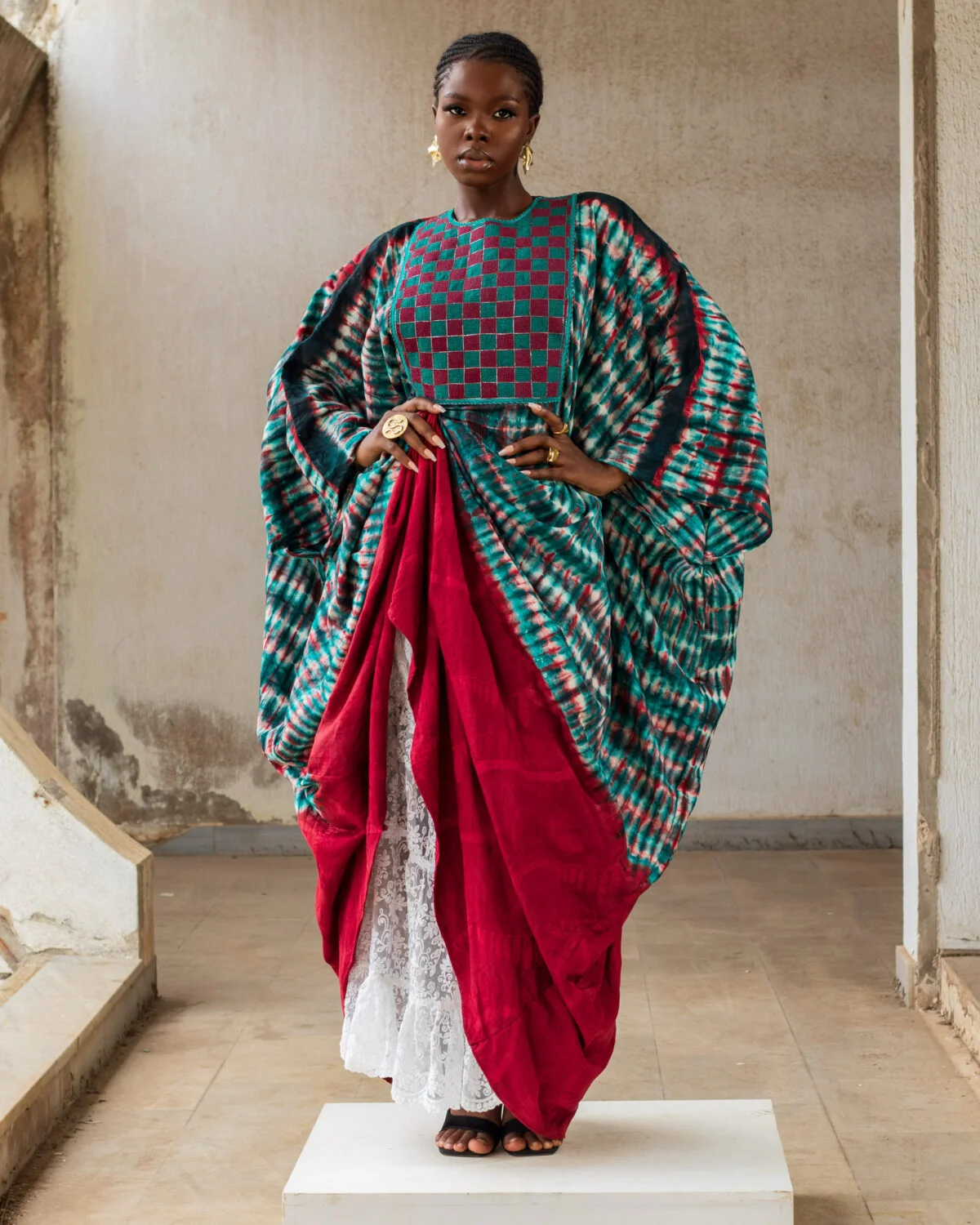
The commitment to producing everything within a forty-kilometre radius of Lomé is the most operationally specific of the Samson Feli principles and the one that most directly addresses the supply chain argument that this series has been building.
As Omiren Styles has documented, in its analysis of the fabric middleman and the fashion supply chain, the fashion supply chain between the mill and the designer contains multiple intermediary layers whose margins systematically disadvantage small designers in the Global South. The Samson Feli forty-kilometre commitment is a direct response to the same structural problem: by sourcing fabric locally or from dead-stock, dyeing it within the atelier or nearby, constructing it in the workshop, and selling it from the same geographic base, the brand eliminates the intermediary chain at every point where elimination is possible.
This is not a small thing commercially. A fashion brand that can produce and sell within a forty-kilometre radius has removed the shipping cost, the customs cost, the intermediary markup and the currency risk that most African fashion brands carry across every stage of production that occurs outside their domestic market. The circuit court model is not a constraint imposed on the brand by limited resources. It is a deliberate structural choice whose commercial and environmental logic are aligned: less distance means less cost, less carbon, less supply chain opacity and more direct accountability to the community in which the production occurs.
The circuit court principle also has a social dimension that the brand does not need to state explicitly because it is structural: a brand that produces within forty kilometres of its market employs people in the community that buys its products, pays wages into the economy that its customers participate in, and maintains the kind of direct accountability to its production workforce that longer supply chains make impossible. A customer who knows that the person who made their Samson Feli garment lives within the same city is in a different kind of commercial relationship with the brand than a customer who has no knowledge of where their garment was produced or by whom.
The Urban Afro Aesthetic

The Samson Feli design language is described consistently as urban, modern and distinctly Afro in its aesthetic reference. That combination is worth dwelling on because it is not the most common framing for a Togolese fashion brand working with traditional textile techniques.
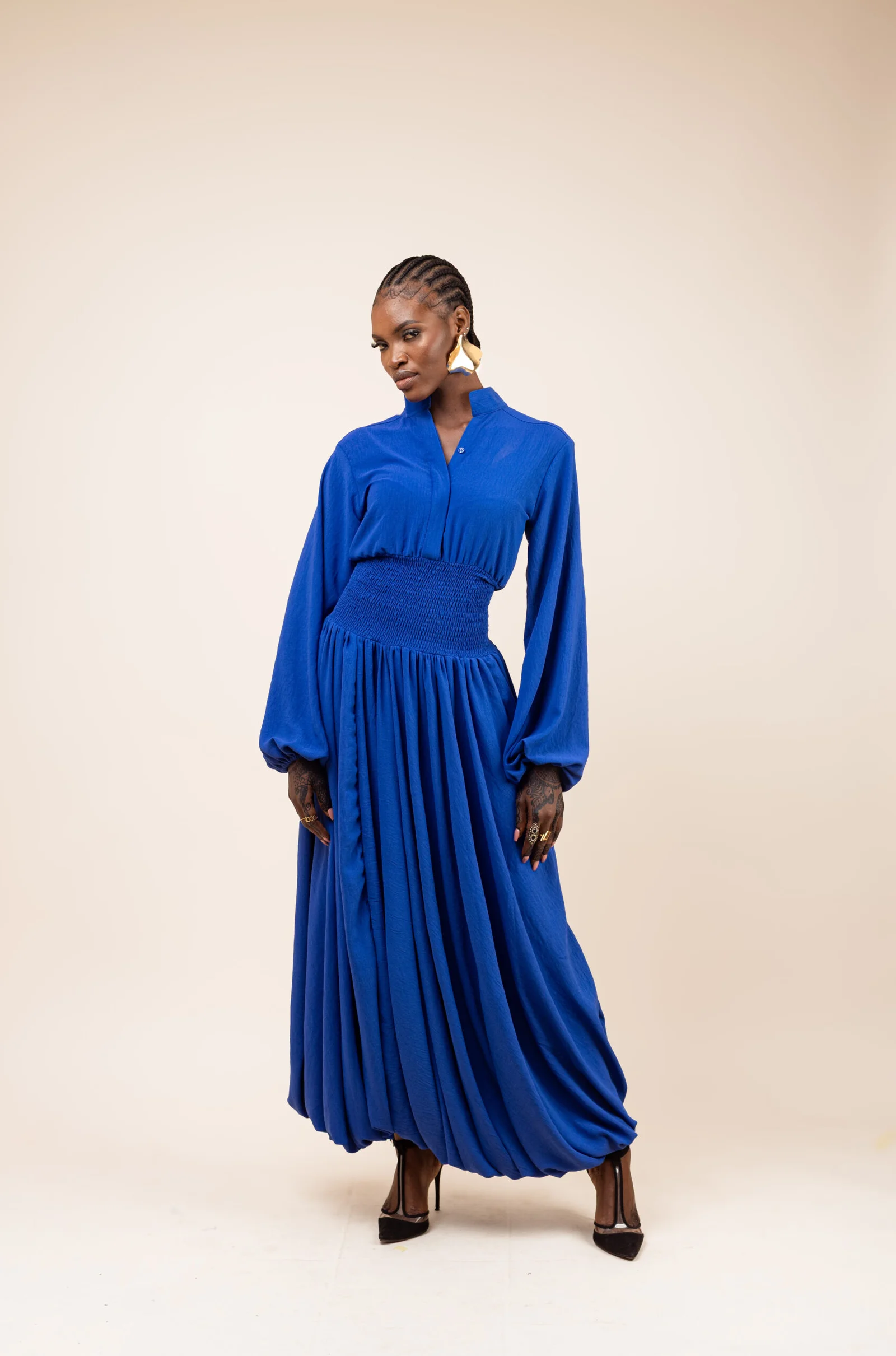
Urban and modern, in the Samson Feli context, means the brand is not producing ceremonial or traditionally orientated garments for festival and occasion wear, as much of the Togolese fashion scene organised around pagne and kente does. It is producing clothing for contemporary city life, for people who move through Lomé’s professional and social spaces and want garments that are wearable in that context rather than reserved for specific cultural occasions. The silhouettes, cuts and styling of the brand’s documented work reflect a contemporary international fashion sensibility: the kind of garment that would be recognised in Paris or London as fashion rather than as national costume, while carrying a visual and material identity that is rooted in Togolese and West African textile practice.
‘Distinctly Afro’, in this context, refers to the tie-and-dye surface treatment, to the fabric origins in West African dead-stock and to a general design sensibility that positions the brand within a broader Afrocentric visual culture rather than within European fashion’s aesthetic categories. The brand is not African in the sense of producing for a heritage market or for diaspora consumers seeking cultural connection. It is Afro in the sense that its founder has developed a design language from within a West African creative context, using West African craft techniques and Togolese production infrastructure to produce clothing for people who want contemporary fashion that carries that context visibly.
Omiren Styles has documented, in its coverage of what people wear in Togo, that younger Togolese designers and tailors are combining wax print with lace, brocade and Western-cut silhouettes to produce ensembles that sit between the traditional pagne register and the international fashion register. Samson Feli is operating in a related but distinct space: the tie-and-dye technique and dead-stock sourcing produce a different aesthetic signature from pagne-cut contemporary silhouettes, and the brand’s explicit urban positioning places it in conversation with the streetwear and contemporary fashion markets as much as with the Togolese ceremonial dress tradition.
Samson Feli and the Made in Lomé Series
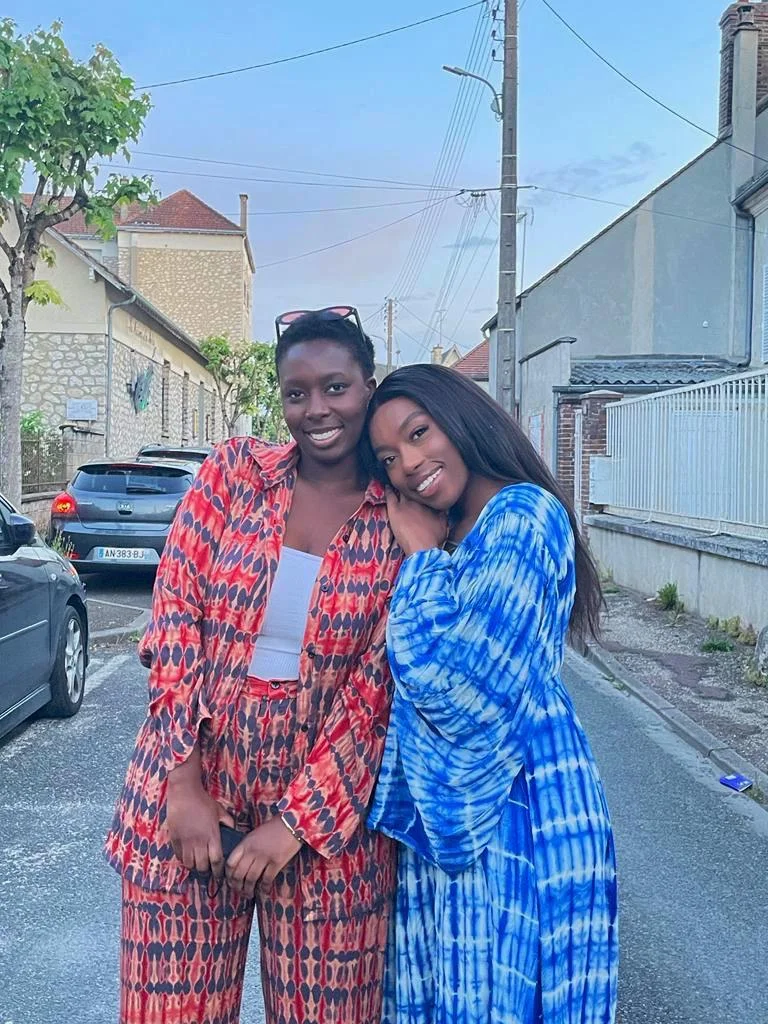
Samson Feli enters the Made in Lomé series as its third profile, after Nadiaka and Bazara’Pagne, and it represents a different point on the spectrum of how Togolese fashion labels build their practice.
Nadiaka, founded in 2003, is the longest-established label in the series, whose two decades of presence in Lomé constitute the kind of fashion legacy that survives not through international media attention but through sustained local practice: workshops, repeat customers, retail space and the ability to keep making clothes through every fashion cycle. Nadiaka’s practice is rooted in the broad fabric vocabulary of West African fashion: pagne, batik, silk, linen, and leather, assembled through tailoring and embroidery into a ready-to-wear and bespoke range.
Bazara’Pagne, founded in 2011, built its practice through the specific arc of Lomé and Paris: a brand launched simultaneously in two cities, tested in the international market, then returned to consolidate its production base in Togo after a decade of demonstrating that Togolese atelier production could compete commercially in the French fashion market. Bazara’Pagne’s practice is organised around pagne, kente and West African fabrics assembled by Togolese artisans into contemporary garments priced for European and diasporic markets.
Samson Feli adds a third model: a brand whose founding commitment is to circularity and short-circuit production rather than to a specific fabric tradition or a specific market geography. Where Nadiaka builds its identity from the range of its material vocabulary and the depth of its tailoring practice, and Bazara’Pagne builds its identity from the cultural authority of West African fabric in international fashion contexts, Samson Feli builds its identity from its production method. The story of the brand is the story of how it is made: the dead-stock cotton, the tie-and-dye transformation, the forty-kilometre circle, the handmade production, and the limited quantities. The method is the message, and the message is a story you can wear.
What Samson Feli Demonstrates
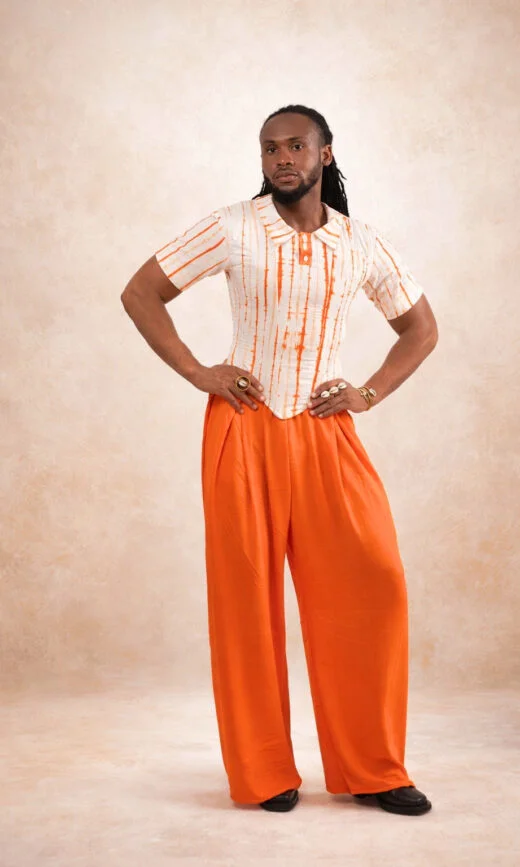
Samson Feli demonstrates something specific about the relationship between sustainable fashion claims and sustainable fashion practice that the global fashion industry’s sustainability discourse tends to obscure.
As Omiren Styles has established in its analysis of Africa’s repair economies and sustainability metrics, it cannot see a tailor, that the frameworks used to measure, certify and reward sustainability in fashion were not built to see craft production, and that the most sustainable fashion practices on earth are operating outside the certification systems whose metrics determine what counts as sustainable. Samson Feli is a precise illustration of this argument: a brand whose dead-stock sourcing, tie-and-dye upcycling, handmade production, short supply chain and limited quantities represent a more rigorous circular fashion practice than most certified brands, but whose scale, geography and lack of formal certification mean that it is invisible to the rankings and indexes that tell the global fashion industry which brands are doing sustainability correctly.
What the brand demonstrates, for this series and for the Togolese fashion ecosystem it is part of, is that sustainability in fashion is a design and production methodology before it is a marketing category. The Samson Feli practice is sustainable because of the decisions made at every stage of the production process, not because those decisions have been validated by an external standard. The garment is upcycled because the fabric was deadstock. It is dyed by hand because tie-and-dye is the technique. It is made locally because the circular economy is the principle. It is produced in limited quantities because the production model cannot sustain more. Each decision follows from the one before it, and the result is a garment whose story is traceable from the source fabric to the finished piece in a way that almost no fast fashion product and very few certified sustainable fashion products can match.
The Omiren Argument

Fashion legacies are not created only in Paris, Milan, London or Lagos. They are also made in workshops in Lomé, within forty kilometres of the customers who will wear the result.
Samson Feli is making handmade fashion a story you can wear in the most literal available sense: the story of the dead-stock cotton that was excess production from a brand that did not use it, transformed by tie-and-dye into something that is now distinctly Togolese, cut and assembled in a workshop within forty kilometres of the market it serves, at a price point that reflects the real cost of handmade production without the luxury premium that handmade sometimes commands when it travels further from its source. That story is embedded in the fabric of every garment the brand produces.
As Omiren Styles has argued throughout this series, the Global South made fashion and never got credit. Samson Feli is making fashion in Lomé, by hand, from reclaimed material, through a West African craft technique, within a production circle so tight that it is effectively a local economy in itself. The credit for that practice belongs to the brand, to the workshop, to the technique and to the city that made it possible. The documentation is the credit. The story you can wear is the argument.
ALSO READ
- Nadiaka: The Togolese Label That Built a 20-Year Fashion Legacy in Lomé
- Can Africa’s Repair Economies Become Formal Fashion Infrastructure?
- The Fabric Middleman Is Part of the Fashion System
- The Global South Made Fashion. It Just Never Got Credit.
EXPLORE MORE
Read the full Fashion and Designer Profiles sections at Omiren Styles for ongoing documentation of Togolese fashion, the Made in Lomé series and the designers building sustainable practices from within the Lomé ecosystem. Visit Samson Feli directly at samsonfeli.com and discover its available collection at the ANKA marketplace. Discover travel and heritage intelligence across Togo and West Africa at Rex Clarke Adventures.