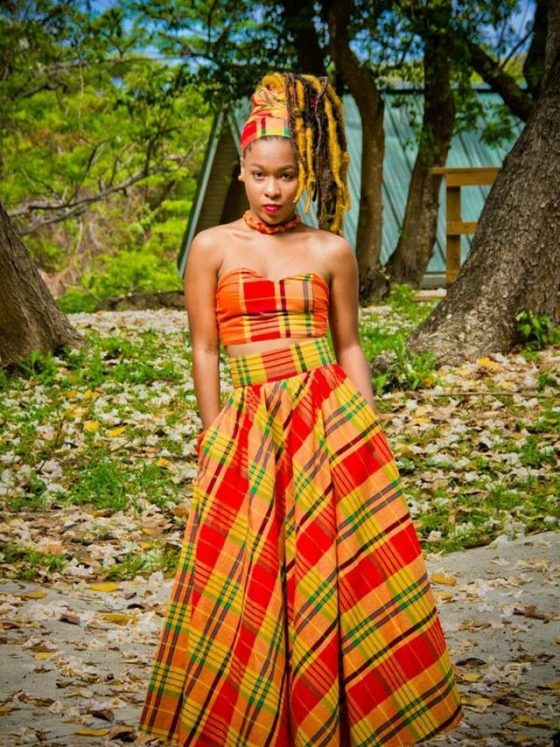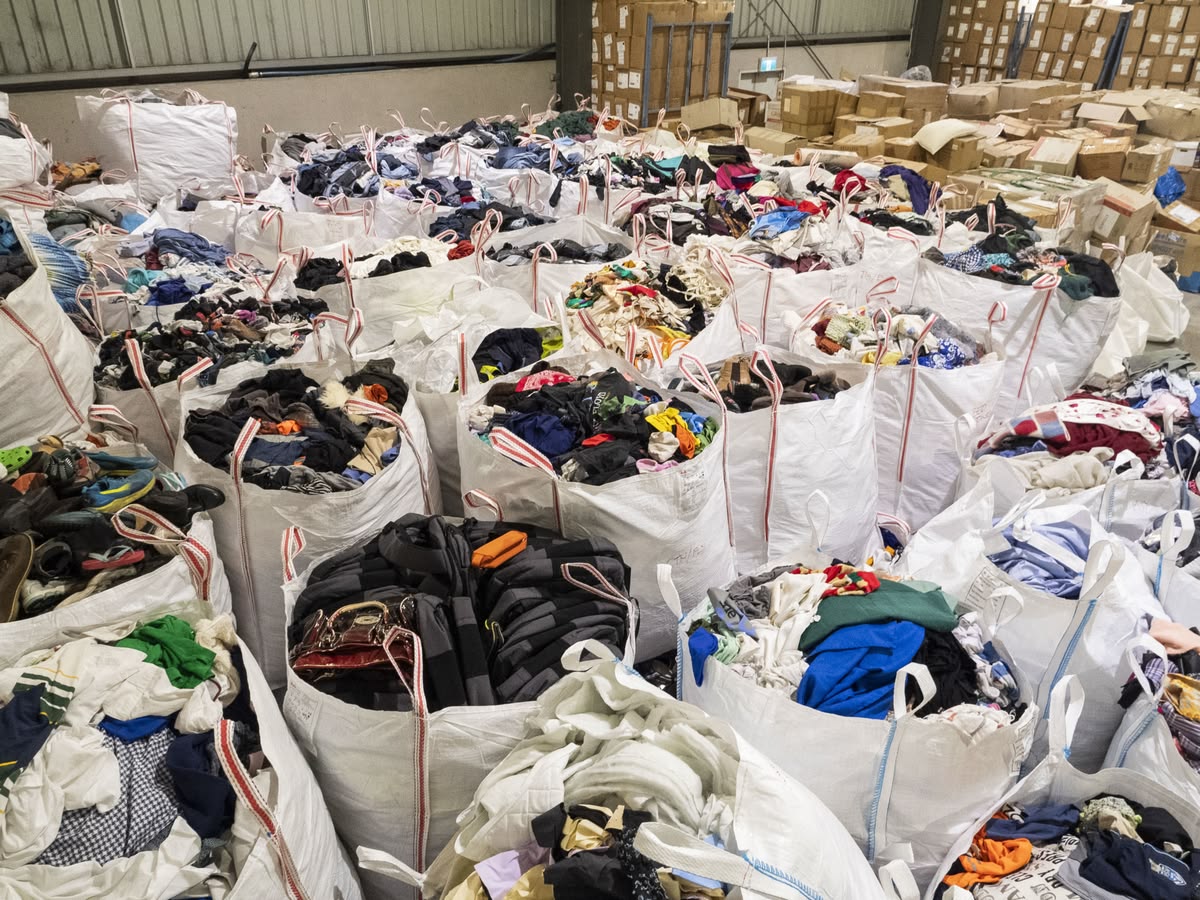
Before a Carnival costume reaches the road in Port of Spain, it has already passed through workshops crowded with wire frames, industrial glue, fabric rolls, rhinestones, feathers, mesh and skilled labour that rarely appears in photographs of the final parade.
Designers sketch sections months in advance. Wire benders shape structures by hand, working with steel and aluminium to create architectural forms that support the costume’s most dramatic elements. Sewists cut and reinforce fabric so costumes can survive heat, movement and long hours of performance. Feather workers assemble the back-pieces and headpieces that define the mas band’s visual signature. Beadworkers and rhinestone appliqué specialists finish the costume surfaces that will catch the light on the road. Section leaders coordinate the logistics between the designer’s vision and the masquerader collection. Mas camp administrators manage the deposit and payment timelines, the costume pickup schedules and the alteration queues that fill the final days before Carnival Monday.
None of these people is in the photographs that Carnival generates. The photographs show the masqueraders. The supply chain that produced what the masqueraders are wearing is invisible in the image, and largely invisible in the documentation.
Carnival cloth in Trinidad and Tobago is not simply a decorative material. It is part of a production system that combines artistry, engineering, ritual memory, and economic survival. The visibility of Carnival often hides the textile culture beneath it. Costumes appear briefly in public view, but the traditions behind them are built through year-round networks of makers, suppliers, and masquerade camps.
As Omiren Styles has established in its analysis of the textile and costume traditions behind Trinidad’s Carnival, before a Carnival costume reaches the road in Port of Spain, it has already passed through weeks of fittings, wire bending, fabric cutting, beadwork, and negotiation between designers, section leaders, and masquerade camps. The final costume may last for two days of Carnival, but the dress system behind it operates year-round. Understanding Trinidad’s Carnival dress culture means understanding how cloth is selected, altered, assembled and transformed into meaning.
Before a Carnival costume reaches the road in Port of Spain, it has passed through months of wire bending, fabric cutting, beadwork and skilled labour that rarely appears in photographs of the parade. This is the supply chain the spectacle hides.
The Economic Scale That Fashion Documentation Ignores
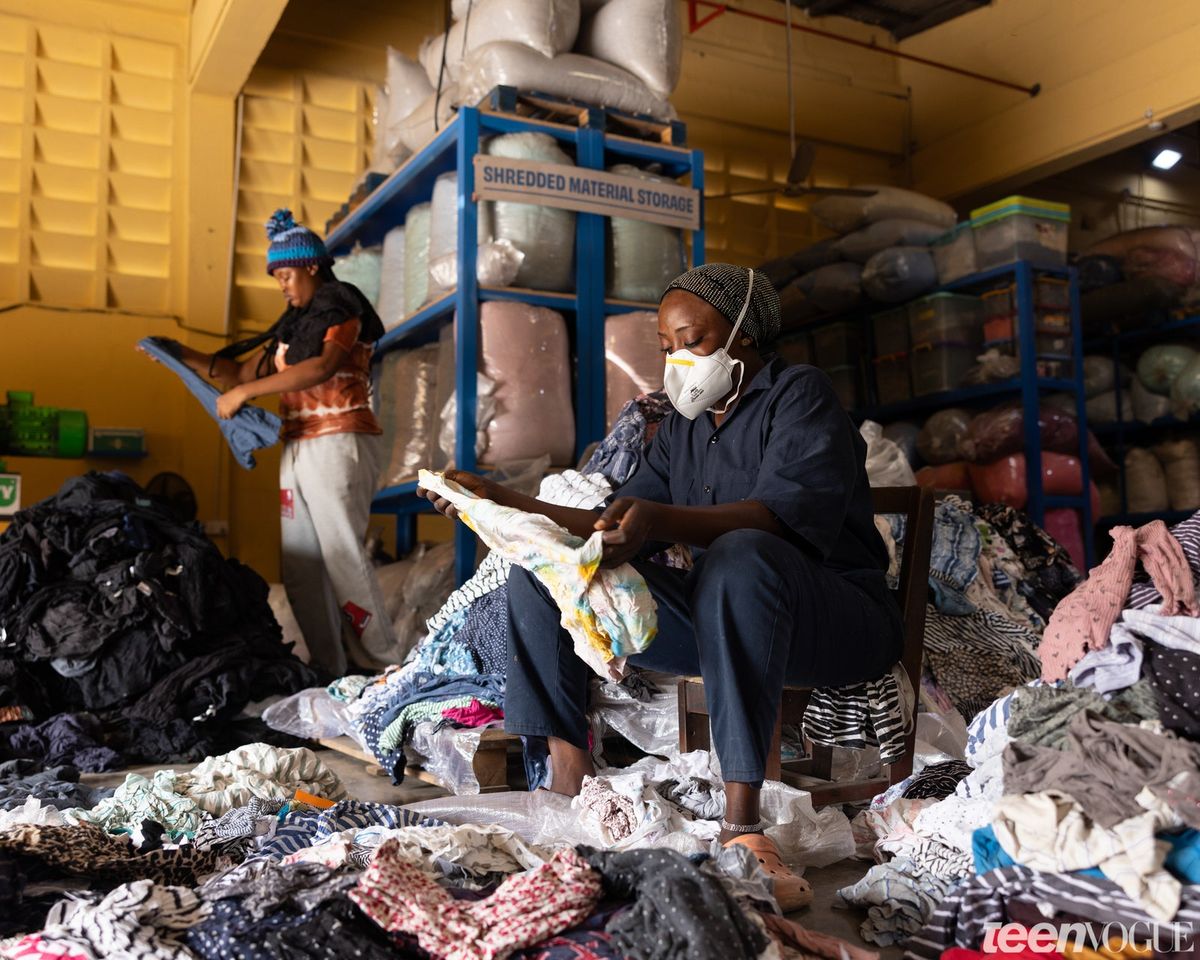
The Trinidad and Tobago government spent approximately TT$137 million in direct allocations for Carnival 2026, generating nearly 2,000 jobs and supporting vendors, regional communities and cultural workers across Trinidad and Tobago, according to figures from the Ministry of Culture and Community Development. Directly employed through government-supported Carnival operations were 1,447 individuals, including 400 road marshals, 200 ushers, 83 compliance officers and a range of custodians, labourers, electricians, carpenters, welders, administrators, creatives and event coordinators. When employment generated through mas bands, steelpan activity, costume production, logistics, security and the hospitality sector is taken into account, the total employment figure rises substantially above 2,000.
The costume production contribution to this figure is significant but rarely disaggregated in official reporting in a way that makes its specific economic weight visible. The wire bender who shapes a hundred back-piece frames in the weeks before Carnival, the seamstress who alters costumes for masqueraders at the mas camp pickup, the feather worker who assembles the headpieces section by section: each is an individual labour unit in a production system that generates income, skills and economic activity at a scale that the broader Carnival economy statistics acknowledge in aggregate but rarely document at the level of individual trade.
Costume packages can cost over USD 1,000 at premium mas bands. At that price point, across a significant masquerader population in Trinidad alone, plus the diaspora masqueraders who travel annually for the experience, the gross revenue of the mas costume production system is substantial. That revenue flows through a supply chain whose upstream ends in a designer’s sketch and whose downstream ends in a masquerader stepping onto the road. The middle of that chain, the workers who convert the sketch into the costume, is where most of the labour happens and where most of the economic documentation stops.
Who Makes the Mas: The Production Workers
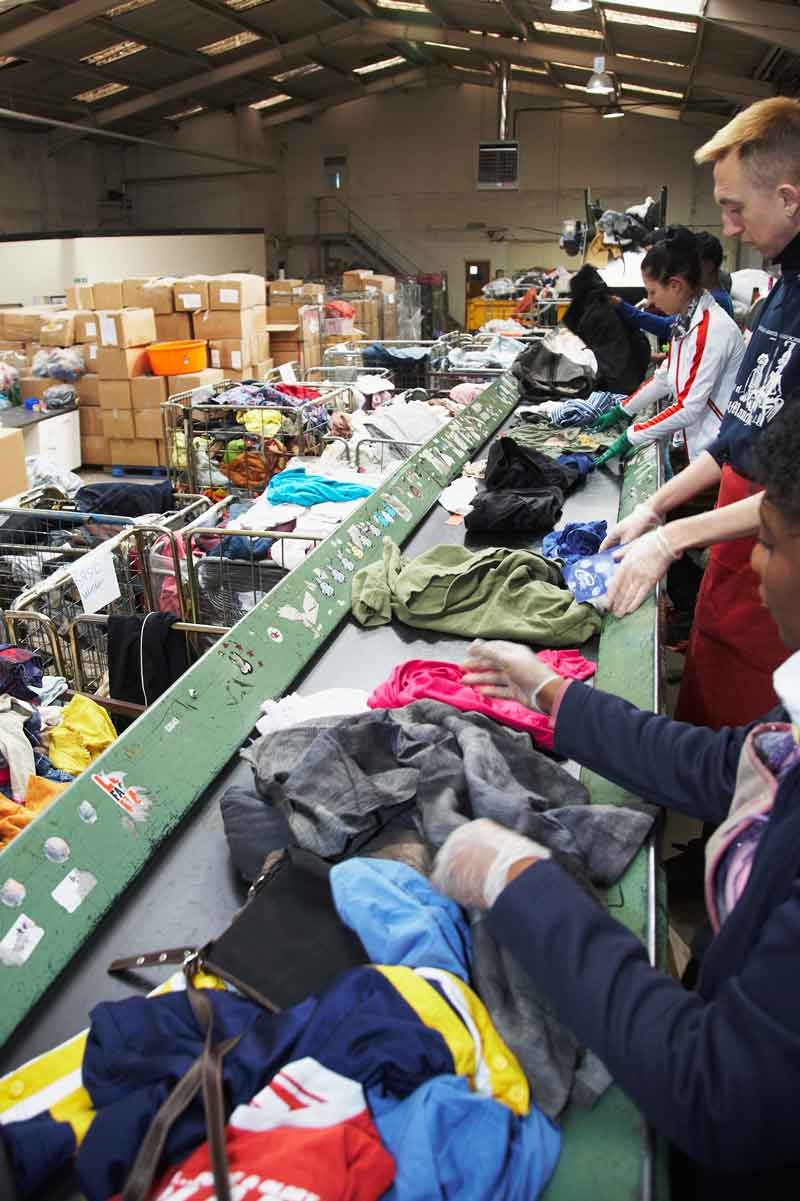
The Carnival costume supply chain involves a set of specific specialist trades whose skills are not interchangeable and whose value is not captured by any general measure of employment or fashion industry output.
Wire benders are the structural engineers of Carnival costume production. The frames that support the most architecturally ambitious Carnival costumes, the large back-pieces, the towering headpieces, the structured brassiere forms that must both support and decorate the masquerader’s body, are made by hand from steel and aluminium wire shaped to the designer’s specification. Wire bending is a physical trade whose practitioners develop speed and precision over years of practice. The wire bra, which must be bent and shaped to the individual masquerader’s body at the mas camp pickup, as a masquerader at Spirit Mas Carnival 2024 documented firsthand, requires hands-on adjustment by a skilled practitioner who can read the costume’s structural requirements and the wearer’s body simultaneously. A costume review from 2024 noted that the wire bra was bent and shaped on-site at pickup, with seamstresses providing free on-site alteration services to ensure proper fit.
Sewists and seamstresses are the production workers whose skills determine whether the costume survives the conditions of the road. A Carnival costume must withstand tropical heat, the physical intensity of hours of dancing, crowd density and sweat without losing structural integrity, surface finish or wearability. The fabric reinforcement, lining, closure systems and alteration work that make a Carnival costume performance-ready is skilled labour whose standards are determined by the demands of the event rather than by conventional fashion production requirements. The seamstress who alters a costume at the mas camp pickup is reading a garment’s construction, a masquerader’s body and the physical demands of the next two days simultaneously.
Feather workers assemble the most visually spectacular elements of the modern Carnival costume: the back-pieces and headpieces that, at their most ambitious, extend several feet above and behind the masquerader and must be light enough to wear for hours while remaining structurally stable. Feather work is both an assembly trade and an aesthetic practice: the selection, trimming, grading, and arrangement of feathers within a structured form require both technical skill and visual judgement, whose standards are set by the competitive aesthetic culture of the mas band circuit.
Beadworkers and rhinestone appliqué specialists finish the costume surfaces that will be seen up close by other masqueraders and from a distance by spectators and photographers. Rhinestone application to the scale required for a premium Carnival costume is labour-intensive, precision work: each stone placed individually, adhesion checked, and the pattern maintained across costume sections that must match across hundreds of individual masqueraders.
As Omiren Styles has documented in its analysis of Afro-Caribbean fashion in Trinidad and Tobago, mas bands are not temporary fashion projects. They are social systems involving designers, artisans, wire benders, sewists, feather workers and neighbourhood networks that sustain costume production every year. The costumes carry different aesthetic traditions: some sections prioritise large sculptural forms connected to traditional mas practices, while others focus on highly coordinated contemporary designs built around movement and visibility on the road. Colours, bead placement, fabric choice and silhouette are all shaped by the logic of performance. A costume is designed to move within music, heat, crowd density and long hours of procession.
The Mas Camp as Production Hub
The mas camp is the physical and organisational hub of Carnival costume production, and it is also the institution that the fashion industry’s standard documentation frameworks are least equipped to describe.
A mas camp is simultaneously a design studio, a manufacturing workshop, a distribution centre and a social space. In the months before Carnival, the mas camp operates as a production facility: sections are designed, materials are sourced, wire frames are assembled, fabric is cut, and costumes are constructed. As Carnival approaches, the mas camp shifts to a distribution and alteration function: masqueraders collect registered costumes, seamstresses perform on-site alterations, wire benders adjust structural components, and section leaders manage the logistics of costume handovers for potentially thousands of masqueraders per band.
The major contemporary mas bands, TRIBE, Yuma, Bliss, Fantasy, and others that attract thousands of masqueraders annually, operate production systems on a significant scale. TRIBE for Carnival 2027 has its mas camp at 20 Rosalino Street, Woodbrook, open from the second half of 2026 for costume viewing, with a minimum deposit of TT$2,500 required to secure a costume and final payments due by November 2026. The financial and logistical administration of a mas band at this scale is not a cultural event management function. It is a fashion retail and production management function, with inventory, payment terms, customer service, quality control and distribution logistics that would be recognised in any manufacturing context.
The smaller and medium bands, and the individual costume makers who produce entirely outside the major band system, operate at different scales with different production systems but carry the same fundamental supply chain structure: design intent converted into physical costume through a sequence of specialist trades, coordinated by a camp structure that manages both production and distribution.
The Material Supply Chain: What Comes From Where
As Omiren Styles has established in its analysis of Trinidad’s Carnival textile and costume traditions, despite Carnival’s strong cultural ownership in Trinidad and Tobago, much of the material infrastructure supporting costume production relies on imported supplies. Feathers, rhinestones, synthetic fabrics and decorative materials are often sourced internationally due to cost and manufacturing limitations within the local economy. This creates a layered relationship between local creativity and global supply chains. Trinidadian designers maintain creative control over costume aesthetics and production methods while relying heavily on imported materials to meet the scale and expectations of modern Carnival production.
The material-sourcing structure of Carnival costume production is itself a supply-chain argument. The feathers that cover the most elaborate Carnival back-pieces are imported, primarily from suppliers in the United States, Brazil, and China that serve the global costume and performance wear market. The rhinestones and crystal appliqué are imported, sourced through the same international decorative materials channels that serve ballet, theatrical costume, and performance fashion globally. The synthetic fabrics, mesh, spandex and lycra that form the base garments of most contemporary Carnival costumes are imported.
The local economy contributes design intelligence, skilled manual labour, the organisational infrastructure of the mas band system and the cultural knowledge that determines what a Carnival costume should communicate, feel and do on the road. The raw materials that those inputs are applied to arrive from outside Trinidad and Tobago. That structure is the same extractive pattern that this series has documented in African fashion manufacturing, in a different context and at a different scale: the creative and labour value is captured locally, and the material supply captures the commodity margin internationally.
The specific implication for Carnival costume production is that the cost structure is more exposed to international supply chain disruption and currency movement than it would be if the material supply were more regionally integrated. Rhinestone prices in US dollars represent a fixed cost to a Trinidadian costume producer working in TT dollars, whose movement against the US dollar is beyond the producer’s control. The supply chain disruptions that global costume material suppliers experienced in 2021 and 2022 created direct cost and availability pressures on Trinidadian Carnival production.
Traditional Mas and the Knowledge Holders
The contemporary bikini-and-beads mas that dominates the major band circuit is the most economically visible form of Trinidad Carnival costume production, but it is not the only one, nor the deepest in cultural knowledge.
Traditional mas characters, the Dame Lorraine, the Jab Molassie, the Midnight Robber, the Blue Devil, the Moko Jumbie and the other figures whose roots lie in the African and colonial history of Trinidad’s Carnival tradition, carry a different kind of costume knowledge. The construction of a Midnight Robber cape, with its elaborate embroidered lettering and symbolic imagery, is a specialised craft practice whose knowledge is held by specific practitioners and transmitted through apprenticeship and community tradition rather than through a production system organised around registered masqueraders. The dame lorraine padding and corsetry is a costuming knowledge whose physical requirements are specific to the character and whose practitioners have developed techniques that are not codified in any training programme.
These traditional mas practitioners are the holders of Carnival’s deepest costume knowledge, and they are also the most economically precarious. The large contemporary mas bands have registered customer bases, deposit payment systems, international masquerader clienteles and corporate sponsorship. The traditional mas practitioner operates through craft knowledge, community recognition, and the festival economy surrounding J’ouvert and the traditional bands that participate in Carnival alongside the major commercial operations.
The documentation gap around traditional mas costume knowledge is both a cultural heritage concern and an economic one. The wire bending techniques used to construct a Moko Jumbie’s stilt frame, the padding and structural construction of the Dame Lorraine costume, the embroidery and oratory traditions of the Midnight Robber: each is a form of craft knowledge that exists in practitioners’ hands and institutional memory rather than in any written or recorded form that would survive if the practitioner community ceased to maintain it.
What Fashion Documentation Owes Mas
The global fashion industry’s documentation frameworks have not been designed to see Carnival costume production as a fashion supply chain. They were designed around the seasonal collections, wholesale markets and retail distribution of the European and North American fashion industry. Carnival does not fit those frameworks: it is not seasonal in the conventional sense, it produces for performance rather than for retail, and its most important distribution mechanism is the body on the road rather than the garment on a rail.
That fit failure has consequences. The wire bender who shapes hundreds of Carnival costume frames annually is practising a skilled trade whose economic contribution to the Trinidadian fashion and cultural economy is real and measurable, yet appears in no standard fashion industry employment survey, no fashion school training catalogue, and no fashion industry investment framework. The beadworker who finishes the rhinestone surface of a thousand costume sections in the months before Carnival is demonstrating a level of manual precision that would be valued and documented in any European couture context, yet remains largely undocumented within the Caribbean creative economy framework.
As Omiren Styles has argued in its analysis of sustainability metrics, the frameworks used to measure and reward sustainability in fashion were not built to account for craft production. The same analytical failure applies to Carnival costume production: the production system is both more sophisticated and more economically significant than the frameworks available to document it suggest, and the people whose skill makes it function are invisible in the industry statistics whose absence gives the impression that no industry exists.
The Omiren Argument
Every Carnival photograph shows the masquerader. Almost none shows the wire bender who shaped the frame the masquerader is wearing, the seamstress who adjusted the fit at the mas camp pickup, the feather worker who assembled the back-piece, the beadworker who finished the surface or the section leader who coordinated the logistics that got the costume from the design sketch to the body on the road.
That invisibility is not accidental. It is the standard operating mode of fashion documentation when applied to craft supply chains whose workers are not organised into the institutions that fashion documentation was designed to cover. The absence of the mas supply chain workers from Carnival’s image record is the same absence that African tailors experience in sustainability metrics, that Chicana beadworkers experienced when the Chola aesthetic they built entered the luxury fashion market, that West African wax-print traders experienced when the fabric they distributed became a global fashion reference without their names attached.
What the mass supply chain workers produce is no less fashionable than what a Paris atelier produces. It is fashion produced under different constraints, for a different performance context, by workers whose skill and economic contribution deserve the same level of documentation, policy attention and commercial recognition that the event they make possible receives.
As Omiren Styles has argued throughout this series, the Global South made fashion and never got credit. The people behind Carnival are the most direct available illustration of that argument: they make the thing that the world photographs, and the photographs do not contain them. Documenting them is not a heritage exercise. It is a correction of the fashion record, an acknowledgement of the economic contribution that should follow recognition, and a foundation for the policy and investment frameworks that would allow the mas supply chain to develop as the sophisticated fashion industry it already is.
ALSO READ
- Mas, Cloth, and Meaning: The Textile and Costume Traditions Behind Trinidad’s Carnival
- Afro-Caribbean Fashion in Trinidad and Tobago: Carnival, Community, and Cultural Identity
- Caribbean Fashion Policy Is Growing. Its Results Need to Be Measured.
- The Sustainability Metrics That Cannot See a Tailor
- The Global South Made Fashion. It Just Never Got Credit.
Frequently Asked Questions
What is the economic scale of Carnival costume production in Trinidad and Tobago?
The Trinidad and Tobago government allocated approximately TT$137 million in direct spending for Carnival 2026, generating nearly 2,000 jobs across vendors, cultural workers and costume production. When employment through mas bands, steelpan activity, costume production, logistics, security and hospitality is included, the figure rises substantially. Individual premium Carnival costume packages can cost over USD 1,000, and the total revenue flowing through the mas costume production system across the masquerader population of Trinidad and the diaspora masqueraders who travel annually for the festival represents a significant figure in the creative economy. The specific contributions of costume production workers, wire benders, seamstresses, feather workers, and beadworkers are rarely disaggregated in official employment statistics.
Who are the specialist workers in the Carnival costume supply chain?
As Omiren Styles has documented, in its analysis of Afro-Caribbean fashion in Trinidad and Tobago, the mas costume production supply chain involves distinct specialist trades whose skills are not interchangeable. Wire benders shape steel and aluminium frames by hand to create the structural elements of back-pieces, headpieces and brassiere forms, adjusting these on individual masqueraders at the mas camp pickup. Sewists and seamstresses cut, reinforce and alter costumes so they survive the physical demands of hours of performance in tropical heat. Feather workers assemble the back-pieces and headpieces that define the mas band’s visual signature. Beadworkers and rhinestone appliqué specialists finish the costume surfaces with precision applied decoration. Section leaders and mas camp administrators coordinate production, payment, pickup and alteration logistics across potentially thousands of masqueraders per band.
What materials does Carnival costume production use and where do they come from?
As Omiren Styles has established, in its analysis of Trinidad’s Carnival costume traditions, despite Carnival’s strong cultural ownership in Trinidad and Tobago, much of the material infrastructure supporting costume production relies on imported supplies. Feathers are imported primarily from US, Brazilian and Chinese suppliers. Rhinestones and decorative crystal appliqué are sourced through international performance and costume material channels. Synthetic fabrics, mesh, spandex and lycra base garments are imported. Trinidadian designers and producers contribute the design intelligence, skilled manual labour, organisational infrastructure and cultural knowledge that determine what the imported materials become. The material sourcing structure creates the same extractive dynamic documented elsewhere in this series: the creative and labour value is locally held, while the material commodity margin accrues internationally.
What is a mas camp and what does it do?
A mas camp is the physical and organisational hub of Carnival costume production for a mas band. It functions simultaneously as a design studio, manufacturing workshop, distribution centre and social space. In the months before Carnival, the mas camp operates as a production facility where sections are designed, materials are sourced, wire frames are assembled, fabric is cut, and costumes are constructed. As Carnival approaches, the camp shifts to a distribution and alteration function: masqueraders collect registered costumes, seamstresses perform on-site alterations, wire benders adjust structural components, and section leaders manage the logistics of costume handover. Major contemporary mas bands in Port of Spain operate production systems of significant scale, with deposit payment systems, costume viewing periods, payment deadlines, and customer service operations that mirror those of any organised fashion production and retail business.
What is traditional mas and how does it differ from the major contemporary bands?
Traditional mas refers to the older Carnival character traditions whose roots lie in the African and colonial history of Trinidad’s festival: the Dame Lorraine, Jab Molassie, Midnight Robber, Blue Devil, Moko Jumbie and other figures whose costume construction requires specialised craft knowledge held by specific practitioners and transmitted through community tradition rather than commercial production systems. These traditional mas practitioners carry Carnival’s deepest costume knowledge and are among its most economically precarious participants: they operate through craft knowledge, community recognition and the smaller festival economy surrounding J’ouvert and traditional bands, without the registered masquerader bases, deposit systems, corporate sponsorship and international clienteles of the major contemporary commercial bands. Their costume knowledge, including wire techniques for stilts, padding and corsetry for character forms, and embroidery traditions for robber capes, is not formally codified and is at risk of being lost if the practitioner community shrinks.
EXPLORE MORE
Read the full Heritage and Culture sections at Omiren Styles for ongoing documentation of Caribbean craft traditions, Carnival culture and the production systems that sustain them. Discover travel and heritage intelligence across Trinidad and Tobago, Jamaica, Barbados and the wider Caribbean at Rex Clarke Adventures.