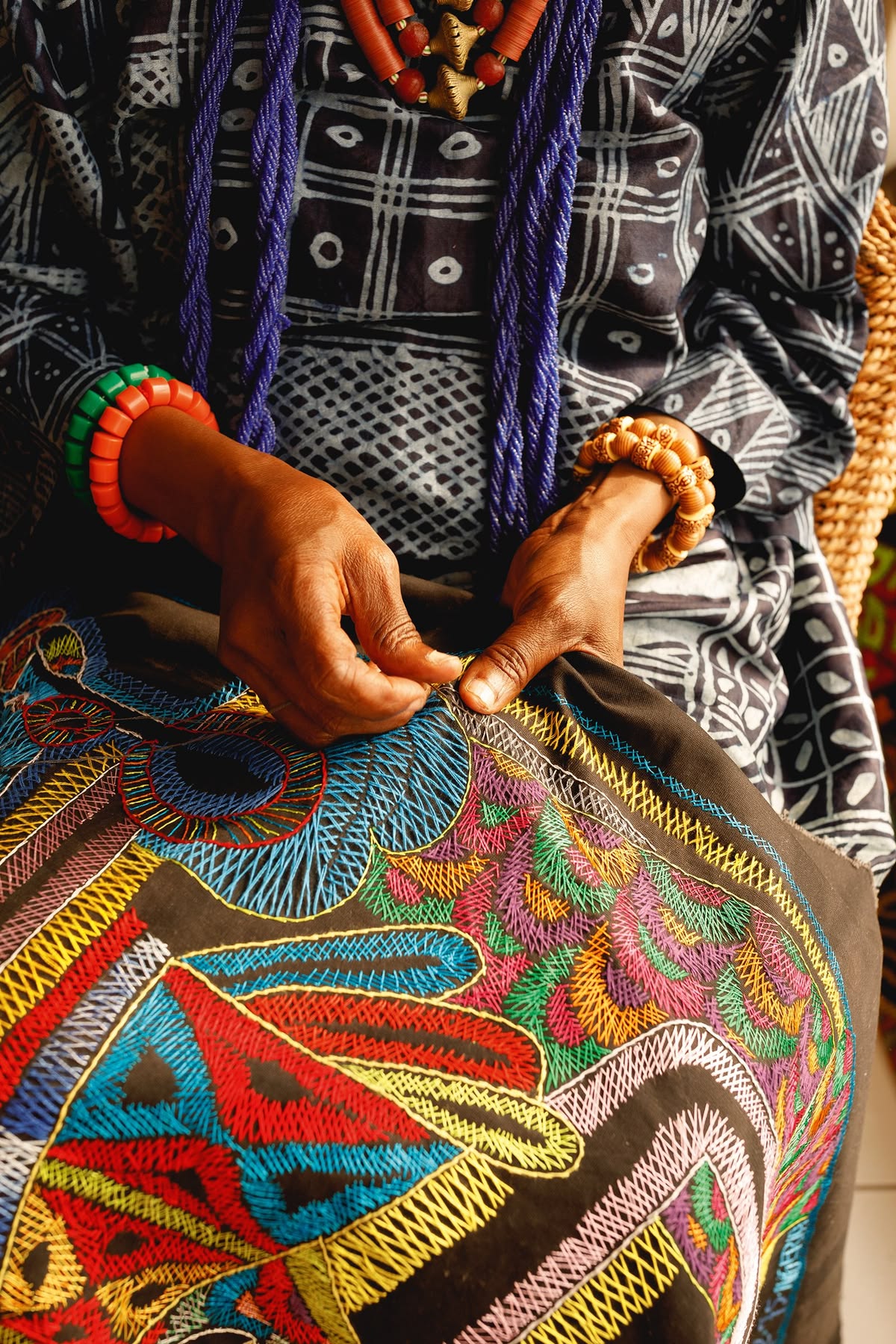
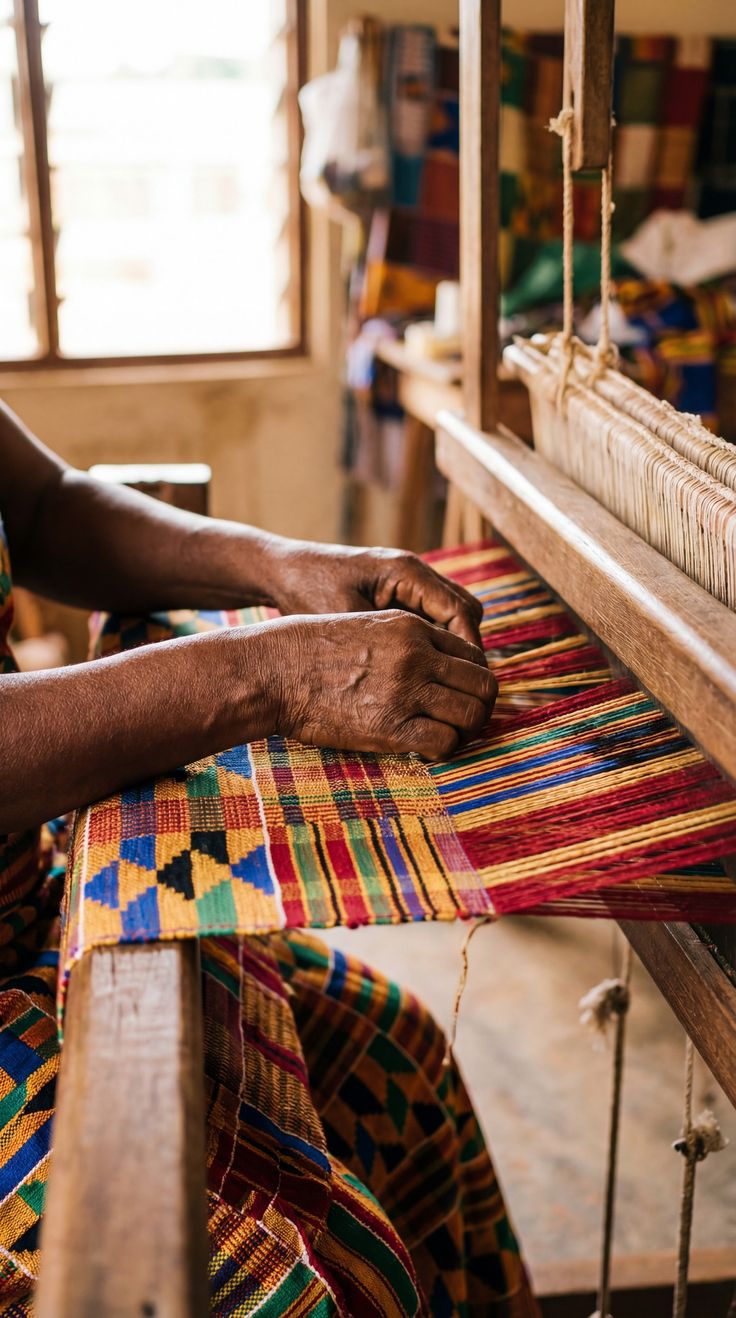
Every morning in Ziope, in the Agotime-Kpetoe District of Ghana’s Volta Region, Emmanuel Kofi Atsisey sweeps his work area, says a prayer, arranges his threads by colour and organises his tools. He settles onto a self-made folding stool attached to his loom and begins using both hands and feweaving with weave. He started the craft twenty-one years ago. The income it generates helps him support his family and pay his bills.
A piece of kente cloth takes weeks or months to complete.
That is the fact that sits at the centre of every conversation about scaling heritage textiles: the production of something genuinely handwoven, using techniques transmitted through generations, cannot be simply replicated by adding more workers or more hours. The constraint is not managerial. It is material. The skill is not a process that can be standardised into faster operations. It is knowledge that takes years to develop and is embedded in the body of the person who developed it.
Fashion, of course, wants more of it.
The global fashion industry has discovered heritage textiles at precisely the moment when authenticity and cultural specificity have become commercial differentiators. Kente appears on luxury runways. Aso-oke is reinterpreted by international-facing Nigerian designers. Bogolan’s geometric patterns and earthy palette influence collections from Lagos to London. The demand is genuine, the interest is real, and the commercial opportunity is significant.
The question this creates is the one this article addresses. Not: Can heritage textiles scale? But: what does scaling a heritage textile mean, and what does the fashion industry owe to the communities whose knowledge creates the thing it wants to scale?
The tension is not between tradition and modernity. Heritage textiles have always changed, adapted and moved through the world. The tension is between what a heritage textile means and what the market wants to do with it.
Fashion demand for heritage textiles continues to rise. The question is not whether kente, aso-oke or bogolan can be produced at greater volume. It is whether scaling changes what they are, and who decides.
What the GI Decision Means
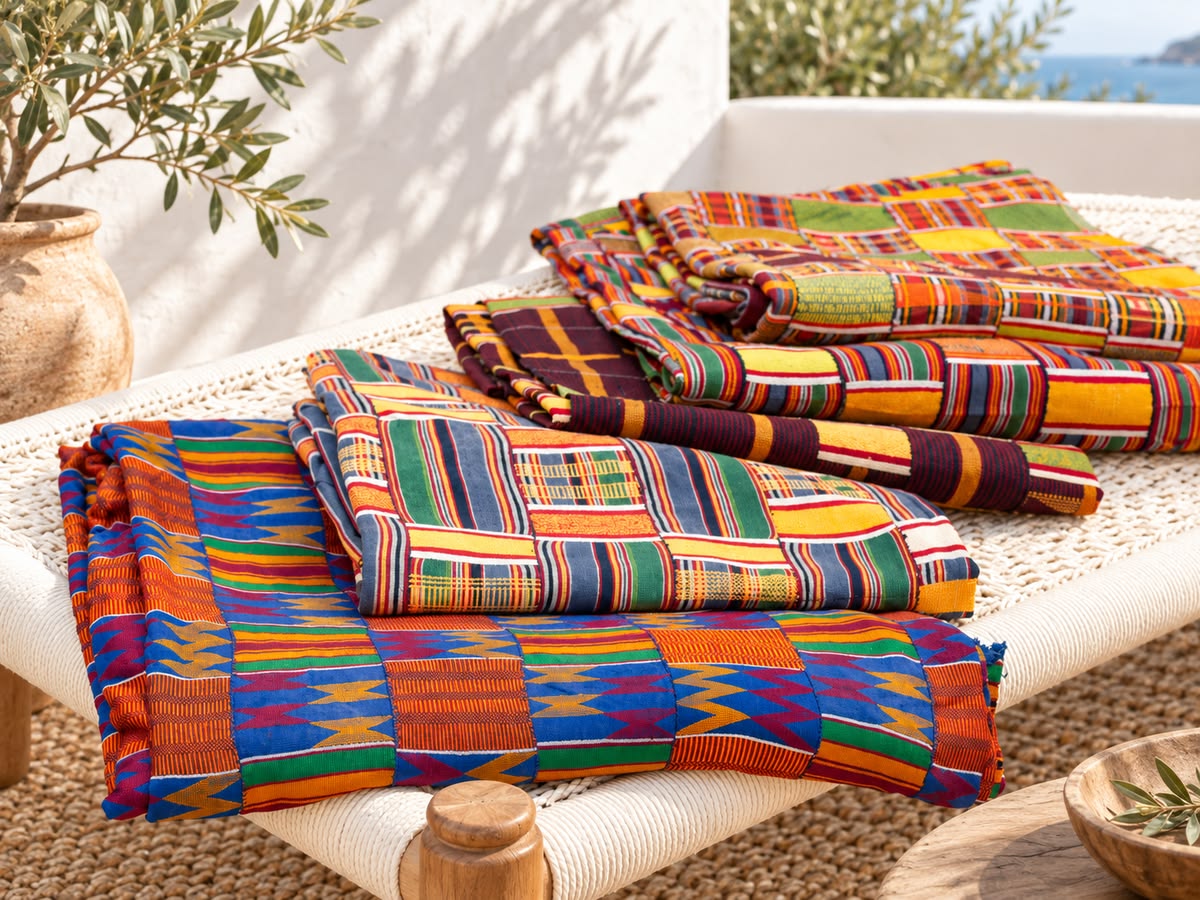
In August 2025, Ghana registered kente as the country’s first Geographical Indication, a legal designation that requires products bearing the name to have a specific geographic origin and verifiable qualities or characteristics. The GI registration followed the inscription of kente weaving in Ghana on UNESCO’s Representative List of the Intangible Cultural Heritage of Humanity in December 2024.
Both recognitions were responses to the same problem. For years, industry participants had raised concerns about labour-intensive, handwoven kente designs being copied and reproduced commercially on other fabrics, in Ghana and abroad, without adequate benefits reaching the original artisans. The machine-printed fabric sold as kente in tourist markets and fashion supply chains carries the name and something of the visual vocabulary of the handwoven original, but it does not carry the knowledge of Emmanuel Kofi Atsisey or any of the weavers of Bonwire and Agotime-Kpetoe. It carries the image of the thing, not the thing itself.
As Fibre2Fashion observed in its July 2026 analysis of the kente GI decision, the GI move curbs counterfeiting, strengthens artisan livelihoods, links authenticity to origin and offers a model for protecting traditional textiles across Africa in global markets. The analysis posed a set of questions that are fundamentally economic rather than cultural: what if Aso-oke carried the same legal protection that Champagne enjoys in France? What if Maasai Shuka generated royalties that flowed directly to Maasai communities? The framework in which these questions sit is the framework of intellectual property, origin certification, and controlled commercial access: the same mechanism that makes Champagne a region-specific premium product rather than a generic category available to anyone who makes sparkling wine.
The Geographical Indication does not answer the scaling question. It clarifies the terms on which it must be asked. Kente, once GI-protected, cannot be produced anywhere by anyone and called kente. It can be produced by Ghanaian weavers in the designated region, using patterns covered by the designation. It cannot be produced in a Chinese factory using mechanised looms and marketed to international buyers at competitive prices under the same name.
This is the commercial logic of the GI, and it is a positive development. What it does not resolve is what happens to the demand for ‘kente-inspired’ products that the global fashion market continues to generate, where that demand is met, how the weavers who hold the real knowledge are or are not connected to the commercial value that demand creates, and what the difference is between scaling the production of authentic kente and scaling the market for things that look like kente without being it.
The Three Ways a Heritage Textile Is Asked to Scale
Fashion’s demand for heritage textiles typically produces one of three responses, each of which has different implications for the textile, the artisan community and the cultural meaning the textile carries.
The first is authentic expansion: the artisan community produces more of the authentic textile at scale by training more weavers, expanding its production infrastructure, and developing the commercial relationships that allow it to access international markets directly. This is the only form of scaling that keeps the meaning intact, because the meaning is in the knowledge, the technique and the community relationship, and authentic expansion builds more of all three rather than substituting for them. It is also the hardest to achieve, because it requires sustained investment in training, infrastructure and market access that most artisan communities have not received.
The second is licensed reinterpretation: a fashion brand uses the aesthetic vocabulary of the heritage textile in a contemporary product that is honest about what it is, maintaining a documented relationship with the artisan community that generated the vocabulary, paying licensing or royalty fees, crediting the source and selling the product as a reinterpretation rather than as the authentic original. This form of scaling acknowledges that the fashion market’s demand for heritage aesthetics can be partially met by licensed contemporary products without the pretence that those products are the same as the handwoven originals. It requires the brand to be willing to maintain that honesty consistently, including when it is commercially inconvenient.
The third is unacknowledged substitution: a brand uses the visual language of a heritage textile in a product manufactured through industrial processes, describes the result using language that implies cultural authenticity without stating it explicitly, and prices the product at a premium that the heritage reference generates without creating any commercial return for the community that generated the reference. This is the form of scaling that the kente GI was designed to address and that the fashion industry has most commonly applied to African textiles. It is also the form that has generated the most value for fashion brands and the least for artisan communities.
As Omiren Styles has established in its analysis of material intelligence in African fashion, material intelligence distinguishes between using African textiles aesthetically and using them with knowledge, relationship, and accountability. The third form of scaling produces fashion that appears to have material intelligence but does not: the aesthetic is borrowed, the supply chain is disconnected from the community, and the meaning is carried in the image while the knowledge is left behind.
The Knowledge Question
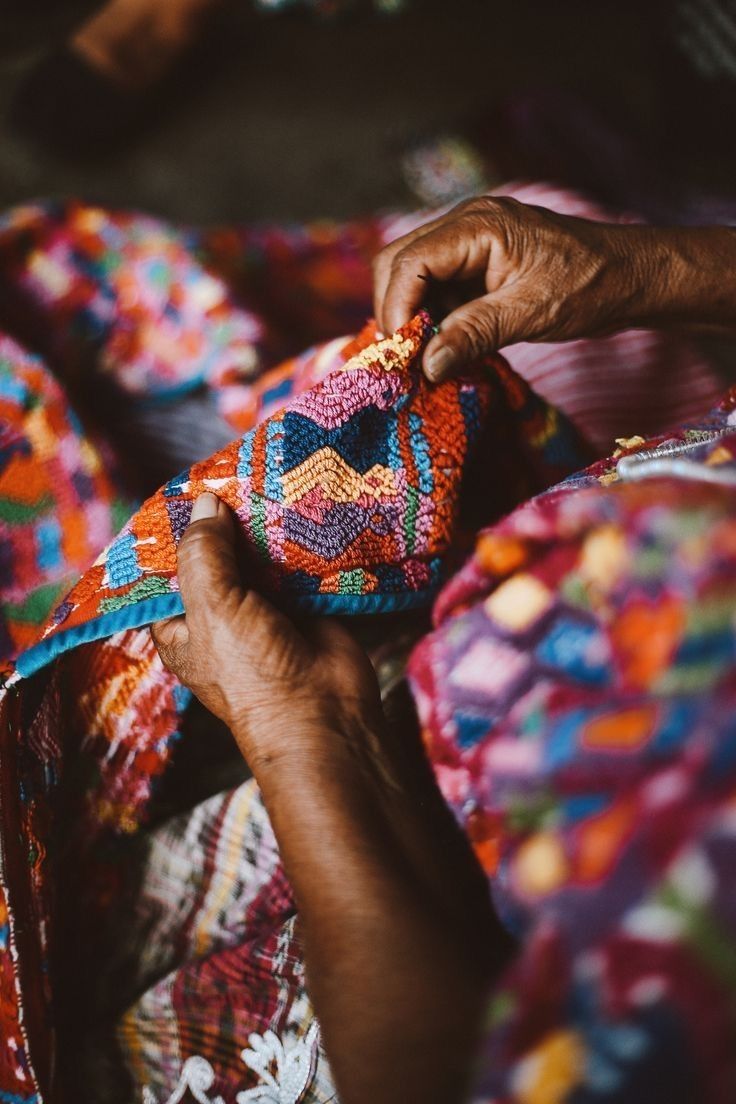
The deepest challenge in scaling a heritage textile is the one that no commercial framework fully resolves: the knowledge inside the textile is embedded in the inseparable threads.
Bogolan, the Malian mud cloth whose earthy geometric patterns have influenced fashion seasons from West Africa to Western Europe, is produced through a process that involves hand-painting cotton cloth with fermented mud, plant-based dyes and natural pigments. That process is not a formula. It is a practice, developed and refined through years of engagement with specific materials in a specific environment, whose results cannot be precisely replicated outside that environment by a practitioner who has not spent the same years developing the same knowledge. The pattern vocabulary carries symbolic meanings specific to Bamana cultural traditions. The dyeing process produces colour variations due to the properties of the mud used, which vary by location. A bow that looks identical to the original is not the same thing, because the original is not only what it looks like.
This is true of aso-oke, whose thick, durable, richly textured weave is produced on strip looms in Iseyin and other Yoruba weaving centres using cotton and silk, worked by artisans who have spent years developing the skill to manage both the loom and the pattern vocabulary. It is true of kente, whose double-weave technique produces intricately patterned cloth in which colour combinations carry specific cultural meanings, and each piece of which can take weeks or months to complete because the complexity of the pattern is embedded in the production time.
Scaling now required for production edge transfer means producing something that resembles the textile rather than the textile itself. The GI framework addresses this for legal purposes: a product that does not meet the origin and process criteria cannot be called kente. But the fashion market’s demand for ‘kente-inspired’ pieces, ‘aso-oke-influenced’ collections and ‘bogolan-print’ fabric does not disappear when GI protection removes the ability to use the name. It continues to be met by products that carry the visual reference without the knowledge, the community relationship or the commercial accountability.
The Artisan’s Position
What is frequently absent from the scaling conversation is the artisan’s own position on how their work should enter the fashion market.
The artisan who has spent twenty-one years developing the knowledge to weave kente in Ziope is not merely a production unit whose output can be increased, or whose technique can be replicated for chain efficiency. They are the holder of knowledge that took a generation to develop, that carries cultural significance within their community, and that the fashion industry wants to access because of the value that significance generates. Their position on what access looks like, what compensation it should produce and what uses of their work are appropriate or inappropriate is not a secondary consideration. It is the primary one.
The Harris Tweed model is instructive here not because it is a perfect analogy but because it demonstrates that a heritage textile can maintain production standards, geographic specificity and quality control at a meaningful commercial scale when the artisan community has both legal protection and sufficient institutional infrastructure. Harris Tweed must be woven by islanders in the Outer Hebrides. The Harris Tweed Authority verifies compliance. The label communicates authenticity. The premium the name commands returns, at least partially, to the weavers whose work makes the label meaningful.
Kente’s GI registration creates the legal architecture for a similar structure. The institutions that need to be built around it, including quality standards, verification systems, market access infrastructure, and the business support that allows individual weavers like Emmanuel Kofi Atsisey to participate in international commercial relationships, are the infrastructure investments that turn livelihoods.
What Scaling Can and Cannot Do
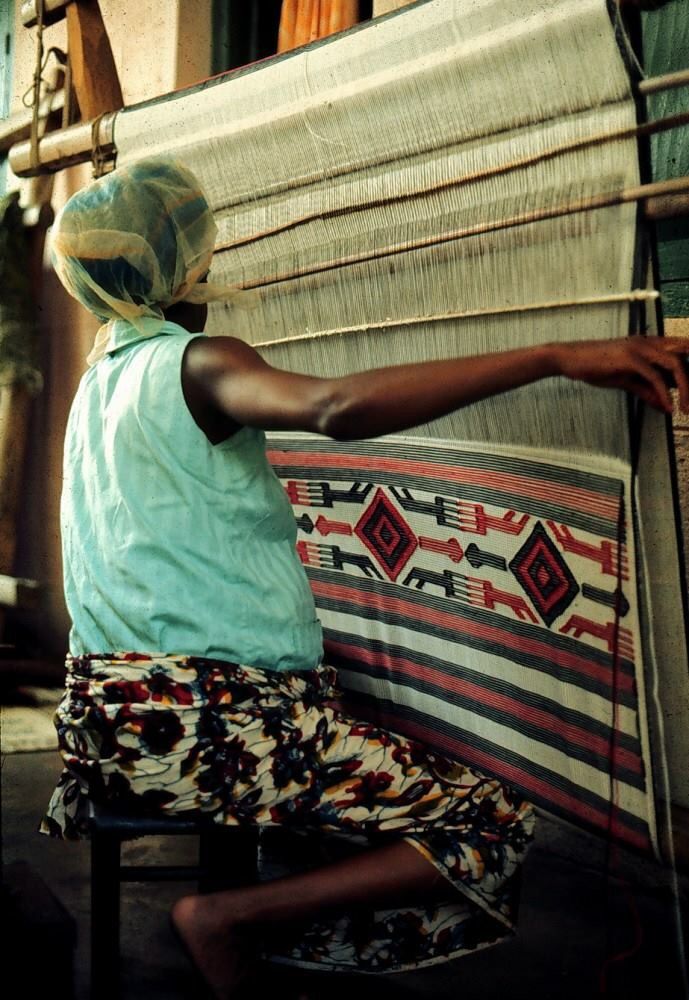
Heritage textiles can scale when the scaling is understood as expanding the community that holds the knowledge and the infrastructure that allows that knowledge to reach the market, rather than as finding cheaper or faster alternatives to the knowledge itself.
This kind of scaling is slow, expensive and dependent on sustained investment in training, institution-building and market access. It does not produce the quick supply increases that fashion’s seasonal calendar demands. It does not allow brands to respond to a trend by flooding the market with heritage-labelled product at competitive prices. What it does produce, over time, is a stronger artisan community, a more robust commercial infrastructure, and a more credible product whose premium the market can sustain because the premium reflects soil
Heritage textiles cannot scale without losing their meaning when scaling is understood as the industrial replication of aesthetic vocabulary, produced by people who have not inherited the knowledge, outside the communities that developed it, and sold without acknowledgement of the disconnect between the product and the source ot resembles. The market’s inability to make this distinction consistently is not a failure of values. It is a failure of the information infrastructure that would make the distinction visible. A buyer who cannot tell the difference between handwoven kente from Agotime-Kpetoe and a machine-printed kente-inspired fabric from a facility in another country is not necessarily indifferent to that difference. They simply do not have the information they need to act on it.
As Omiren Styles has established in its analysis of material traceability in fashion, a provenance claim is worth making when it can be proven, and building the documentary infrastructure that makes proof possible is not an administrative burden but the foundation on which accountable commercial relationships with artisan communities can rest. The GI for kente creates the legal framework. The traceability infrastructure is what would make individual weaver relationships documentable, verifiable and commercially meaningful rather than abstractly acknowledged.
The Omiren Argument
Heritage textiles can scale. They have always scaled, in the sense that knowledge traditions grow as more people are trained in them, as markets expand to reach communities that were previously inaccessible and as designs evolve through the creative engagement of practitioners with new materials, contexts and occasions.
What heritage textiles cannot do without losing their meaning is be replicated outside the knowledge system that produced them and sold as though the replication is the original. The kente GI is a useful mechanism precisely because it makes this distinction legally enforceable. The moment a product can be checked against a standard, the distinction between the thing and its imitation becomes visible in a way that marketing alone cannot achieve.
The question for fashion brands is not whether heritage textiles can scale to meet the demand they are generating. It is whether the brands generating that demand are prepared to invest in the authentic expansion model that is the only form ,ng consistent with the meaning they claim their products carry. Training more weavers in Ziope. Building the market access infrastructure allows weavers in Iseyin to reach international buyers directly. Supporting the GI systems that protect bogolan practitioners from unacknowledged substitution. Paying the licensing fees and royalties that allow artisan communities to benefit commercially from the aesthetic vocabulary that the fashion market finds irresistible.
The honest answer to the scaling question depends on who answers it. For a brand that wants kente-inspired product at scale, on fashion-industry timelines, at competitive prices: no, heritage textiles cannot scale to meet that demand without losing their meaning, because that demand has already removed the meaning from its specification.
For a brand that wants to build commercial relationships with the artisan communities whose knowledge makes heritage textiles what they are: yes, heritage textiles can scale. They just cannot be rushed, replicated or removed from the people who make them.
As Omiren Styles has argued throughout this series, the Global South made fashion and never got credit. The heritage textile question is the most specific and most urgent version of that argument. The communities that hold this knowledge have been sustaining it for generations, often without commercial recognition. The fashion industry that is now generating significant demand for what they know owes them more than tr, and itend coverage and inspiration credits. It owes them the institutional investment, the commercial relationships, the legal protection and the traceability infrastructure that would allow their knowledge to generate the same commercial value for them that it generates for tasranddoeserence it. That is not a request for charity. It is a description of what describes likes.
ALSO READ
- A Fabric Is Never Just a Fabric: Why Material Intelligence Matters to African Fashion’s Future
- Material Traceability in Fashion: What Brands Need to Know Before They Claim Provenance
- Who Owns the Pattern? Why Cultural Credit Still Rarely Becomes Licensing Revenue
- The Global South Made Fashion. It Just Never Got Credit.
Frequently Asked Questions
What is a Geographical Indication and how does it protect heritage textiles?
A Geographical Indication, or GI, is a legal designation applied to products produced in specific geographical areas, with verifiable quality and characteristics tied to that origin. For heritage textiles, it means the name can only be used for products made in the designated region, using the specified techniques. Ghana registered kente as its first GI in August 2025, following UNESCO’s inscription of kente weaving on its Intangible Cultural Heritage list in December 2024. The GI was designed to address the longstanding problem of kente designs being copied and reproduced commercially on other fabrics without adequate benefits reaching the original artisans. Comparable protections exist for Harris Tweed, which must be woven in the Outer Hebrides, and Champagne, which can only come from the Champagne region of France.
Can kente or aso-oke be produced at scale for international fashion markets?
They can scale in the sense that more artisans can be trained, production infrastructure can be developed and market access can be improved. What this kind of scaling requires is sustained investment in training, institution-building and direct market access, not the replication of the textile’s aesthetic vocabulary through industrial manufacturing. Kente, whose double-weave technique produces intricate patterns, each of which takes months to complete, cannot be replicated at speed by unskilled labour without becoming something fundamentally different from what the name describes. The kente GI now means that products produced outside the designated Ghanaian region using unspecified methods cannot carry the kente name, clarifying that this cannot happen.
What is the difference between authentic expansion and unacknowledged substitution in heritage textile fashion?
Authentic expansion means the artisan community produces more authentic textiles, expands infrastructure, and builds direct commercial relationships. The meaning is preserved because the knowledge, technique and community relationship that define the textile are being scaled rather than replaced. Unacknowledged substitution means a brand uses the visual language of a heritage textile in a product manufactured through industrial processes, implies cultural authenticity through marketing language, and prices at the premium the heritage reference generates without creating any commercial return for the community whose knowledge generated that reference. The kente GI addresses unacknowledged substitution legally, but demand for ‘kente-inspired’ products outside the GI protection continues to be met by substitutes that carry the visual reference without the cultural accountability.
What does the bogolan production process involve?
Bogolan, also known as bògòlanfini or mud cloth, is a Malian textile tradition whose distinctive earthy geometric patterns are produced by hand-painting cotton cloth with fermented mud, plant-based dyes and natural pigments. The production process is knowledge-dependent: the colour and pattern results are shaped by the specific chemical properties of the mud used, which varies by location, and the pattern vocabulary carries symbolic meanings from Bamana cultural traditions. The labour-intensive and knowledge-intensive nature of the process means that bogolan cannot be replicated outside its cultural context without producing something that visually resembles the original yet is fundamentally different in its production method, cultural embeddedness, and connection to the community that developed it.
What should a fashion brand do when it wants to use the aesthetic vocabulary of a heritage textile?
As Omiren Styles has established, in its analysis of why material intelligence matters to African fashion, the distinction is between using African textiles aesthetically and using them with knowledge, relationship and accountability. A brand that wants to use the aesthetic vocabulary of a heritage textile should: seek out and establish a direct relationship with the artisan community that holds the knowledge; pay licensing or royalty fees that create commercial returns for that community; use the product honestly as a licensed reinterpretation rather than implying it is the authentic original; maintain and publish the cultural attribution in all commercial communications; and invest in the market access and institutional infrastructure that allows the artisan community to sell the authentic textile alongside any licensed derivatives. The question ‘who benefits commercially from this reference?’ should be answerable before the collection note is written.
EXPLORE MORE
Read the full Heritage, Textiles and Cultural Interpretation and African Fashion sections at Omiren Styles for ongoing analysis of heritage textile traditions, the scaling question in African fashion and the commercial, legal and cultural frameworks that would allow artisan communities to benefit from the market’s growing interest in what they know. Discover travel and heritage intelligence across Africa at Rex Clarke Adventures.