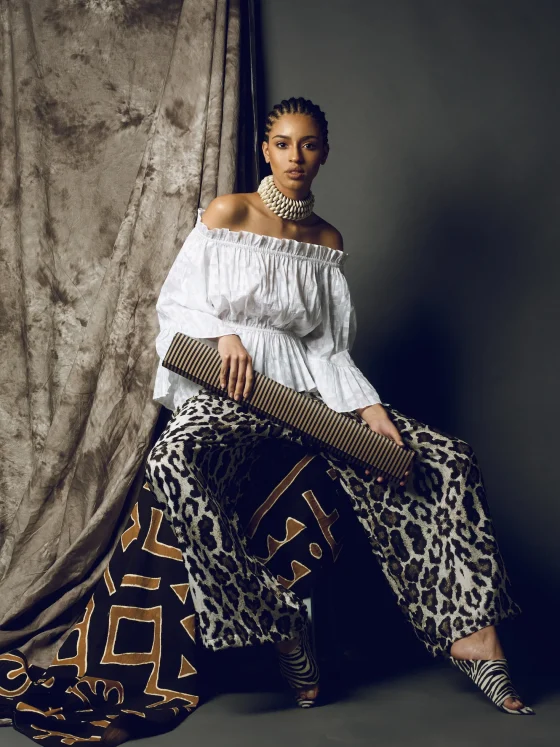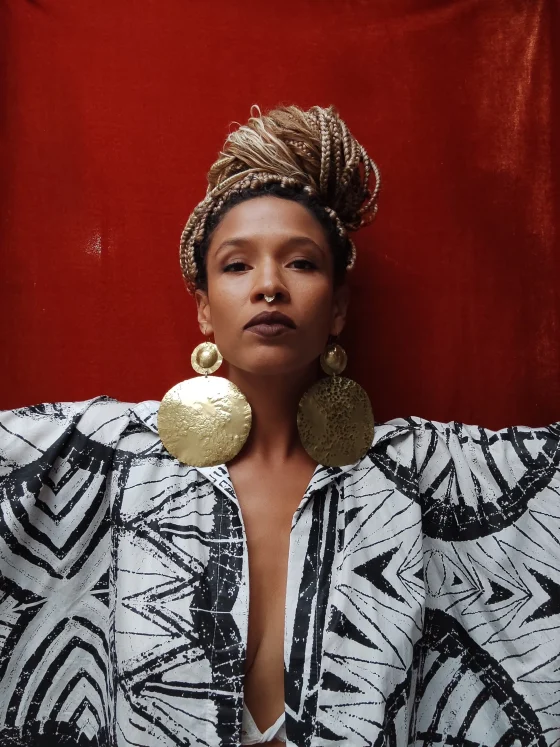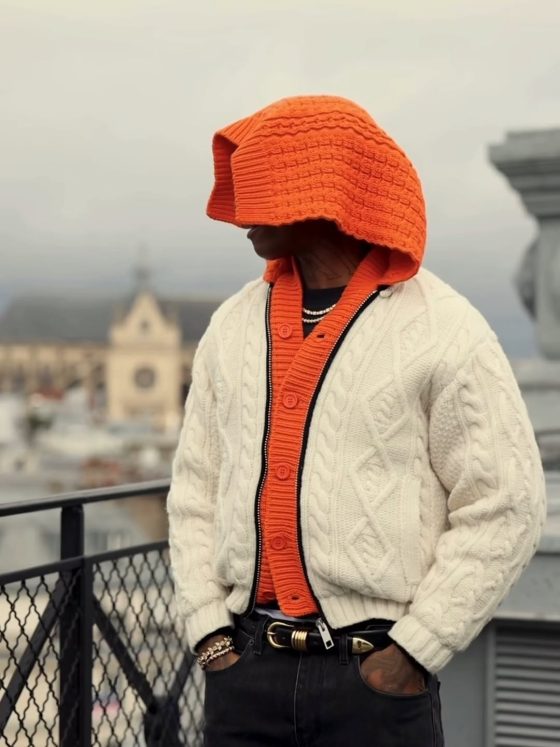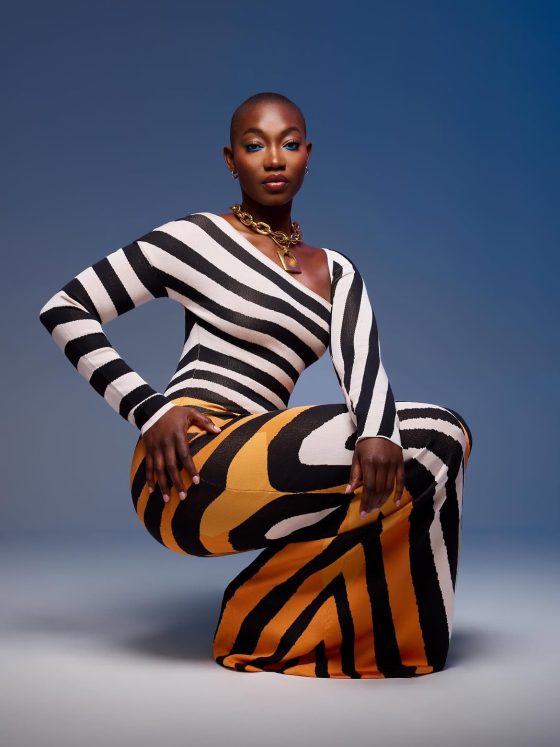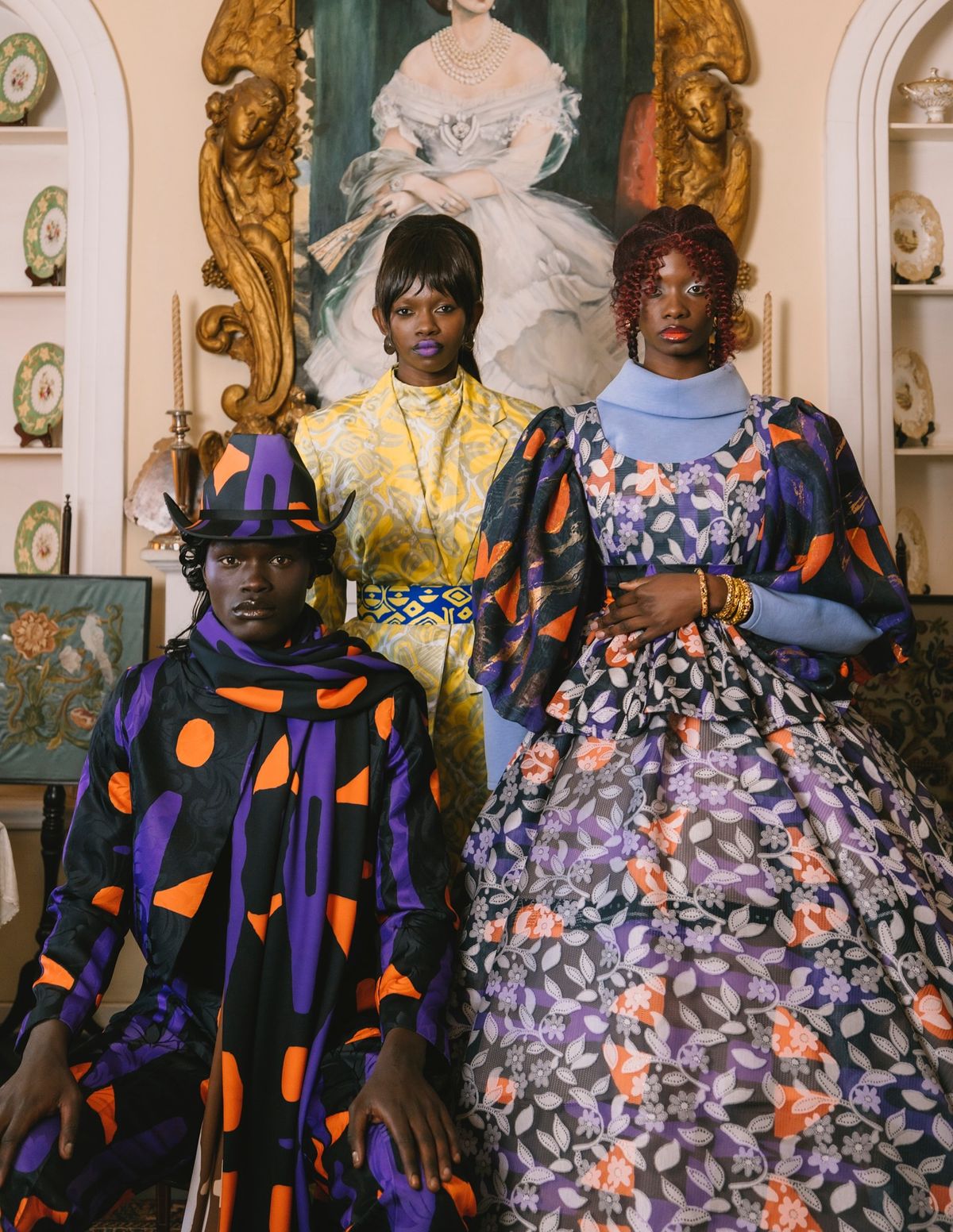
The African fashion market is worth 31 billion dollars. Its UK footprint is concentrated in London: the designers showing at London Fashion Week, the boutiques along the Brixton, Peckham, and Tottenham corridors, the Africa Fashion Week London platform that has operated since 2011. London is the default setting for discussions about African fashion in Britain. But default settings are not the whole story, and Manchester is starting to make that case with some force.
Manchester’s African fashion scene is not trying to replicate London’s. It is doing something that London’s scale and visibility make more difficult: building fashion infrastructure that is genuinely rooted in the specific communities that make up Manchester’s African diaspora, without orienting itself toward the editorial gaze of a national fashion capital. The Moss Side and Longsight corridor, the Rusholme stretch of Wilmslow Road, the communities that have planted Nigerian, Ghanaian, Somali, and Caribbean heritage in south Manchester over three generations: these are the foundation. The chapter they are writing is their own.
Manchester’s African fashion scene does not try to be London. That is its strength. Here is what is being built, who is building it, and why the chapter matters.
Manchester’s African Fashion Scene: The Community Geography
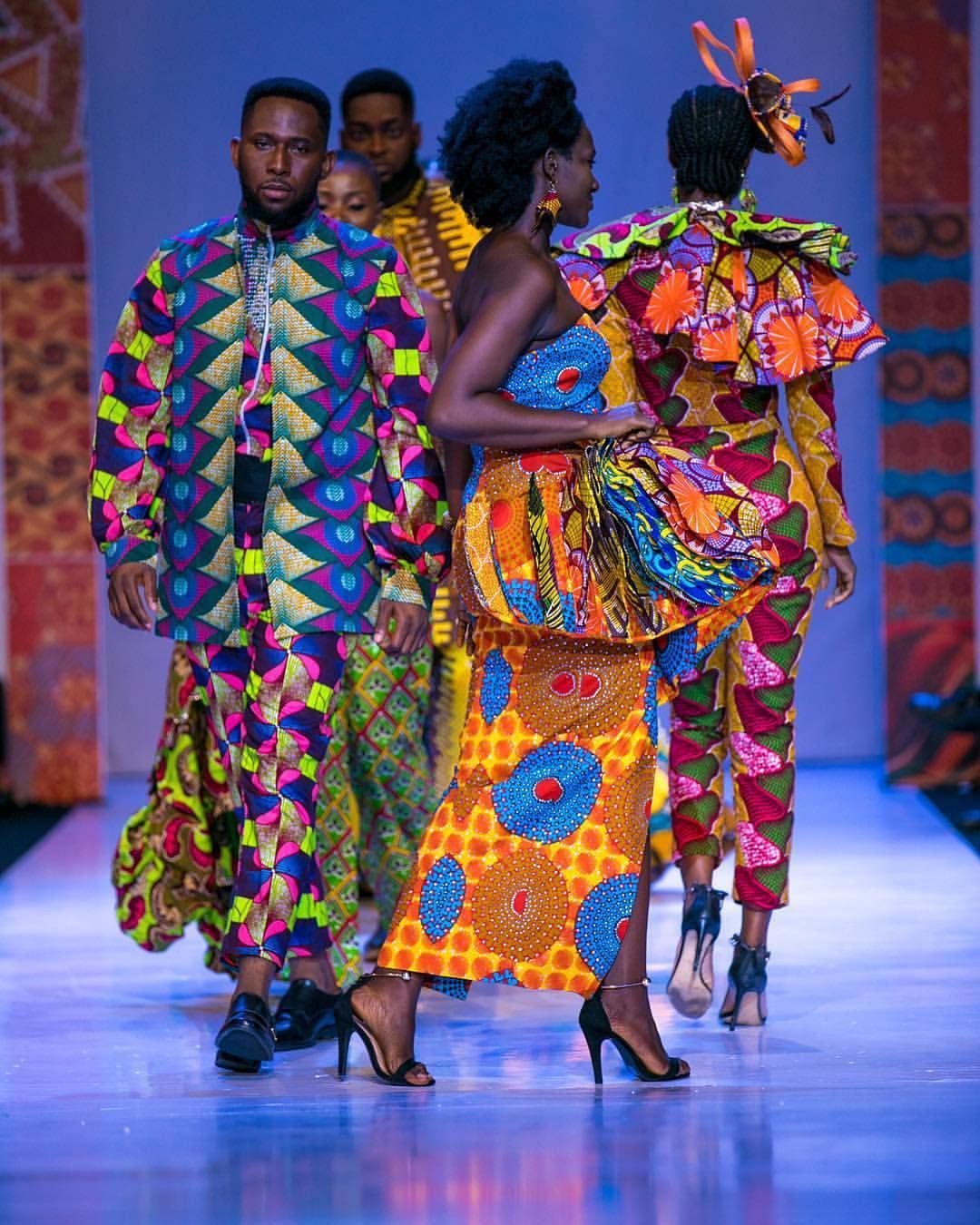
The 2021 census recorded 10,329 Nigerian-born residents in Manchester, representing 1.9% of the city’s population and making it one of the most significant Nigerian communities outside London in the North West. Manchester is also named as one of the UK’s significant Ghanaian community hubs, alongside London and Birmingham. Somali communities are established across south Manchester, particularly in Longsight, where the Stockport Road corridor houses community institutions, mosques, and independent retailers that serve a population with deep roots in the city. The black population in Manchester constitutes approximately 17% of the city’s overall population according to 2021 census data, with significant concentrations in Moss Side, Hulme, Longsight, and Whalley Range.
That community geography shapes everything about how African fashion operates in the city. The shops on Stockport Road in Longsight selling African fabrics, the tailors working from community spaces, the Ankara-wearing congregation arriving at church on a Sunday in Rusholme, the market stalls where fabric traders know their customers by name, the WhatsApp groups where designers share references and commission requests: these are not ancillary to the Manchester African fashion scene. They are the Manchester African fashion scene. The retail infrastructure that the diaspora has built across south Manchester is the primary market, and the designers operating within it understand their customer with a specificity that no fashion media outlet in the city has yet caught up with.
The Ronke Jane Adelakun story captures this dynamic precisely. As Manchester’s Finest documented in its coverage of the Manchester brand combining African culture with high fashion, Adelakun and her sister Adeola drew on their experiences to build a fashion identity rooted in their specific Manchester context rather than transposing a London model northward. That approach, design intelligence that is calibrated to where it actually is rather than to where it aspires to be seen, is the defining characteristic of what is being built in Manchester.
Manchester Metropolitan University’s collaboration with Africa Fashion Week London placed Adire on a Manchester runway in 2025. The fabric, originally hand-dyed in Yoruba communities in Nigeria, was being worn by students experimenting with how it performs as outerwear in a northern English climate. That is a specific conversation that London is not having.
The Institutional Partnership That Changed the Conversation
In January 2025, Project Fashion X launched as a joint initiative between Africa Fashion Week London, the Adire Oodua Textile Hub, and the Manchester Fashion Institute at Manchester Metropolitan University. As Africa Fashion Week London’s documentation of the project confirms, first-year BA Fashion and Textile Design students learned how Adire, a hand-dyed fabric with deep cultural roots in Yoruba communities in Nigeria, is made. They then used those fabrics to create outfits using the digital software CLO3D. The winning designs were showcased at Africa Fashion Week London 2025. Three further designs were developed in digital fashion technology, demonstrating the convergence of African textile heritage and contemporary fashion manufacturing tools.
What made the project editorially significant was not the runway outcome but the design process it generated. As Manchester Metropolitan University’s official documentation of the collaboration confirms, students explored complex questions around cultural appropriation, broadened their perspectives beyond a Western-centric approach to design, and experimented with how to adapt Adire for cold climates, producing padded and quilted versions suitable for puffer jackets, ski fashion, and outerwear. One student spoke directly with Queen Ronke Ademiluyi-Ogunwusi to research the musical motifs found in Adire patterns, then created a percussive outfit featuring custom hand-cast brass and silver beads that chimed with every movement. These are not London conversations about African fashion aesthetics for an international runway. They are Manchester conversations about how Nigerian textile heritage lives in a northern English city where the weather is a genuine design constraint.
The MMU partnership is significant not because it proves that African fashion is being taken seriously by an institution but because of what the institution brought to the partnership: a specific Manchester student body, a specific northern English climate, and a specific design brief that required students to think about African textiles as functional garments for the place where they actually live. The resulting work was culturally informed rather than culturally decorative. That distinction matters.
The Retail Ecosystem and Its Gaps
African fabric shops and tailoring businesses operate across the south Manchester corridor, clustered particularly around Stockport Road in Longsight and the Rusholme stretch of Wilmslow Road. D-Estyfashion Ltd at 531 Stockport Road represents the kind of retail presence that sustains the community market: a shop specialising in African fashion pieces that blend tradition with contemporary style, serving customers who are looking for cultural authenticity rather than mainstream retail access. This is the retail infrastructure through which the majority of African fashion transactions in Manchester actually occur, away from the fashion media’s attention and from the city’s creative district narratives.
The gap that Manchester’s African fashion scene is beginning to address is the space between this community retail tier and the designed, branded, editorially visible tier that London’s African fashion ecosystem has developed over the past decade. As Omiren Styles’ guide to shopping African fashion with cultural intelligence confirms, the best diaspora boutiques operate with the editorial clarity of a gallery: they can tell you the designer, the country of origin, the textile tradition, and the cultural context of what they sell. Manchester has community retail. It is building toward the editorial visibility layer.
Manchester Fashion Week and the Question of Inclusion
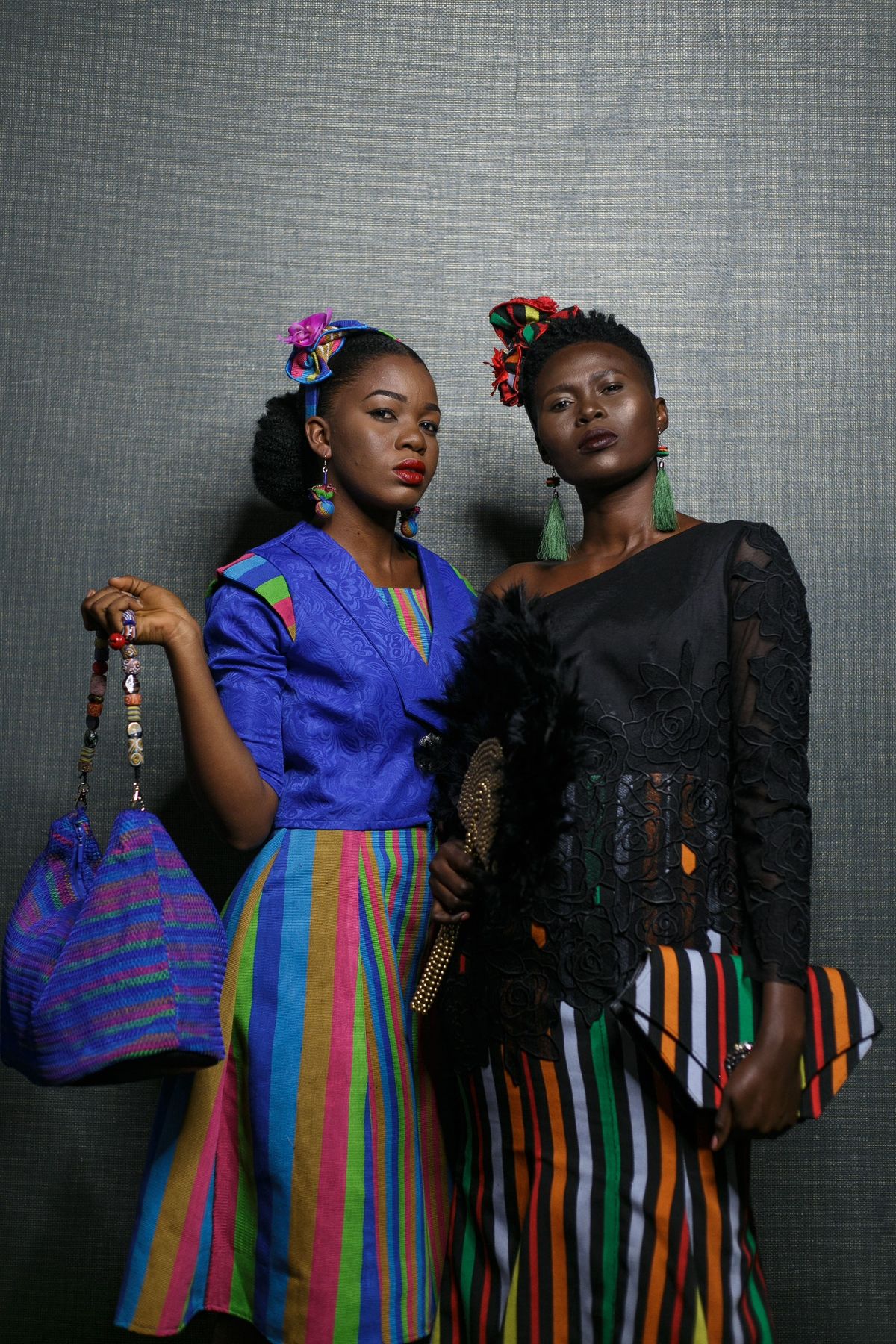
Manchester Fashion Week 2026 runs September 9-12 across St. John’s, the city’s creative district, with presentations at Campfield, VERSA Studios, and the ABC Buildings. As Manchester Fashion Week’s official programming confirms, the platform brings together fashion, culture, and innovation in one of the city’s most exciting neighbourhoods. The question for Manchester’s African fashion community is not whether the event is interesting but whether the designer community being built in Longsight and Moss Side is part of the conversation or simply adjacent to it.
The tension is structural rather than intentional. Manchester Fashion Week operates in St. John’s, a post-industrial creative district in the north of the city centre, precisely the kind of geography that regeneration investment activates and that community fashion ecosystems in south Manchester do not naturally occupy. The designers who serve the Nigerian, Ghanaian, and Somali communities of the Stockport Road corridor are not geographically or institutionally positioned to participate in a runway event in St. John’s without a deliberate bridging effort. That bridging is the next piece of infrastructure Manchester’s African fashion scene needs to build.
Second-Generation Fashion Identity in a Northern City
The second-generation dimension of Manchester’s African fashion scene is where the most interesting creative work is happening. Omiren Styles’ documentation of the diaspora fashion paradox confirms that second-generation Africans in Britain who came of age in the 2010s developed a documented shift toward wearing African dress without justification or explanation, a practical refusal of the exotic designation that the mainstream British fashion conversation has historically assigned to non-Western dress. In Manchester, that refusal has a specific character: the city’s distance from the London fashion industry means that second-generation Manchester Africans are not performing for an industry gaze in the way that London designers sometimes must.
What emerges from that freedom is more interesting than what gets produced under industry scrutiny. Second-generation African style is how you dress when you know a world only through family stories, short holidays, photos, and social media. In Manchester, that knowledge is assembled from specific community sources: the church on a Sunday morning, where the congregation arrives in aso-oke and kente; the family ceremonies where aunties commission Ankara from local tailors; the Manchester Met students who are now learning to translate Adire heritage into winter outerwear. These are the building blocks of a specific Manchester African fashion vernacular.
The generational dimension connects directly to how African fashion operates in UK cities more broadly. In cities like London, New York, and across the Caribbean, African identity operates differently from how it operates on the continent. Fabrics, headwraps, braids, and silhouettes become tools of recovery, used intentionally, sometimes symbolically, to rebuild a sense of belonging. The same elements that function as everyday wear on the continent take on heightened meaning in diaspora spaces. In Manchester, where the African community is large enough to sustain its own internal fashion market but not so large or visible that the mainstream has claimed it, that heightened meaning is operating with particular intensity.
What Manchester Offers That London Cannot
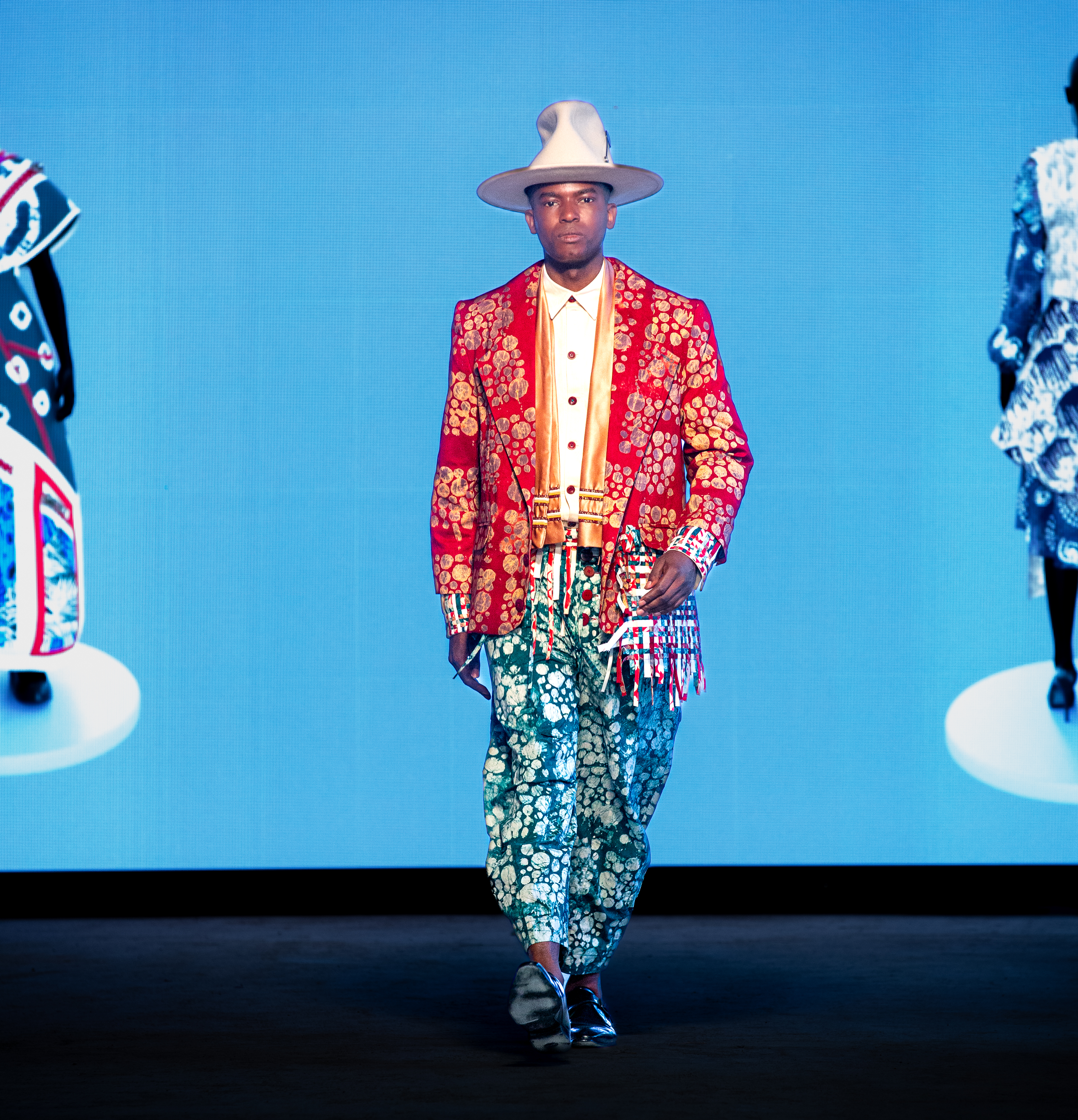
The argument for Manchester’s African fashion scene is not that it is better than London’s. It is that it is different in ways that matter. London’s African fashion ecosystem has scale, institutional recognition, editorial visibility, and the runway infrastructure that comes with being a global fashion capital. It also has the pressure that comes with all of those things: the pressure to be legible to an international industry, to be commercial in ways that satisfy investors and stockists, to represent African fashion to an audience that includes people with no prior knowledge of it. As Omiren Styles’ documentation of how Afrobeats became a global style language confirms, in London, diaspora communities reinterpret African aesthetics through layered identities, producing something hybrid yet rooted. By the time those ideas reach Manchester, they have already been filtered through the London lens.
Manchester does not have that pressure, and that is a creative advantage. The tailors working in Longsight are not trying to get stocked at Selfridges. The community boutiques on Stockport Road are not optimising for editorial coverage. The second-generation designers being trained at Manchester Met are learning how to make African textiles work in the specific conditions of a northern English city, not how to make them legible to an international buyer base. The resulting work is more specific, more grounded, and in many ways more honest than work produced under the weight of London’s industry expectations.
That specificity is precisely what the broader African fashion conversation needs. Within the African diaspora in cities such as London, Atlanta, and Toronto, second-generation Africans navigate layered identities through dress. Manchester adds its own layer to that map: a northern English city with a substantial African community, sufficient institutional infrastructure to produce trained designers, and enough distance from the London fashion industry to develop its own aesthetic logic without performing for it.
The Omiren Argument
Manchester’s African fashion scene is writing its own chapter because it has no choice and because that limitation is a creative gift. The African fashion market is worth 31 billion dollars. Manchester’s contribution to that figure is made through community retail, tailoring businesses, fabric shops, and the informal economy of ceremony dress that sustains south Manchester’s Nigerian, Ghanaian, and Somali communities. It is also being made through the institutional partnership between Manchester Metropolitan University and Africa Fashion Week London that placed Adire on a Manchester runway in 2025 and challenged students to ask how a hand-dyed Nigerian textile performs as a puffer jacket in northern England. It is being made by second-generation designers who wear African dress without apology and without explanation, because they are not performing for an industry that has decided to pay attention. Manchester is not the next London. It is the first Manchester. And the chapter it is writing is more interesting than a northern appendix to the capital’s story.
ALSO READ:
- Does Wearing Your Culture Make You Exotic? The Diaspora Fashion Paradox
- What It Actually Means to Dress Back Home When You’ve Never Lived There
- How African Identity Is Styled Differently Across Continents
- When Dressing Becomes Declaration: Clothing as Cultural Identity
Frequently Asked Questions
Is there an African fashion scene in Manchester?
Yes. Manchester has a substantial African diaspora community across Moss Side, Hulme, Longsight, and Whalley Range, with the 2021 census recording 10,329 Nigerian-born residents in the city alone, making it one of the most significant Nigerian communities in the North West. This community sustains an active informal fashion economy through fabric shops, tailors, community boutiques, and the ceremony dress market that serves weddings, naming ceremonies, and church events across south Manchester. The formal, editorially visible tier of the scene is earlier in development but growing, with institutional momentum from the Manchester Metropolitan University and Africa Fashion Week London partnership.
What is Project Fashion X and why does it matter for Manchester?
Project Fashion X launched in January 2025 as a joint initiative between Africa Fashion Week London, the Adire Oodua Textile Hub, and the Manchester Fashion Institute at Manchester Metropolitan University. First-year BA Fashion and Textile Design students learned how Adire, a hand-dyed Nigerian fabric, is made, and used it to create designs developed in CLO3D digital fashion software. Three designs were showcased on the catwalk at Africa Fashion Week London 2025. The project matters for Manchester because it established an institutional connection between Manchester-based fashion education and Africa Fashion Week London, and because it generated specifically Manchester design work: students asking how Adire fabric performs as outerwear in a northern English climate.
How does Manchester’s African fashion scene differ from London’s?
London’s African fashion ecosystem has scale, institutional recognition, editorial visibility, and established runway infrastructure. It also operates under the pressure of being legible to an international fashion industry. Manchester’s scene is building from the community up, with a retail and tailoring infrastructure rooted in the south Manchester African diaspora that is not oriented toward industry gatekeepers. The second-generation designers emerging from Manchester are working without the pressure to perform for a London audience, which produces more specific and grounded creative work. Manchester is not trying to be London. That is its creative advantage.
Where does African fashion operate in Manchester?
The primary geography of African fashion in Manchester is the south Manchester corridor: Moss Side, Hulme, Longsight, and Rusholme. The Stockport Road stretch in Longsight is home to fabric shops and tailoring businesses serving the African community. Rusholme’s Wilmslow Road hosts community institutions and informal retail. Manchester Metropolitan University, located near Hulme and Moss Side, is the institutional anchor for formal fashion education and the Africa Fashion Week London partnership. Manchester Fashion Week operates in St. John’s creative district in the north of the city centre, where the gap between the industry event and the south Manchester community scene represents the next piece of infrastructure to bridge.
What is Manchester Fashion Week 2026?
Manchester Fashion Week 2026 runs September 9-12 at venues across St. John’s, Manchester’s creative district, including Campfield, VERSA Studios, and the ABC Buildings. The platform brings together fashion, culture, and innovation. For Manchester’s African fashion community, the question is whether the designer community developing in Longsight and Moss Side has pathways into the event, or whether the geographical and institutional gap between south Manchester’s community fashion ecosystem and the city centre’s creative district platform remains to be bridged.
Explore More
Read the full Fashion > Diaspora section for Omiren Styles’ documentation of African diaspora fashion across the UK, North America, Europe, and beyond.