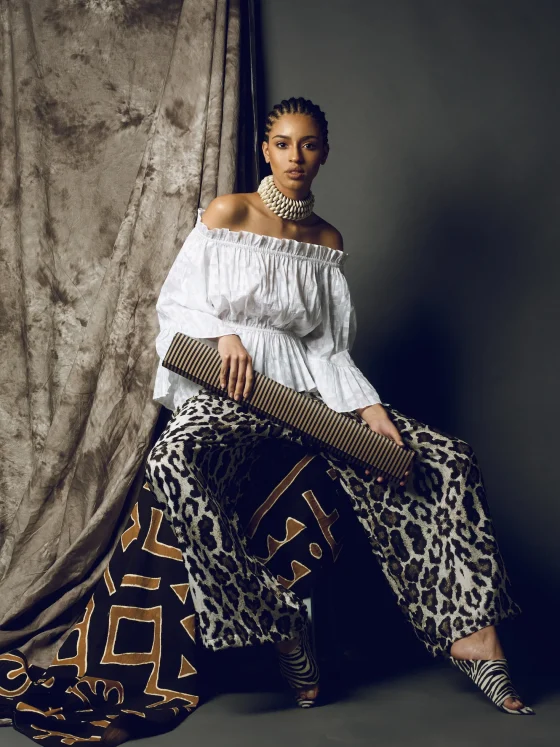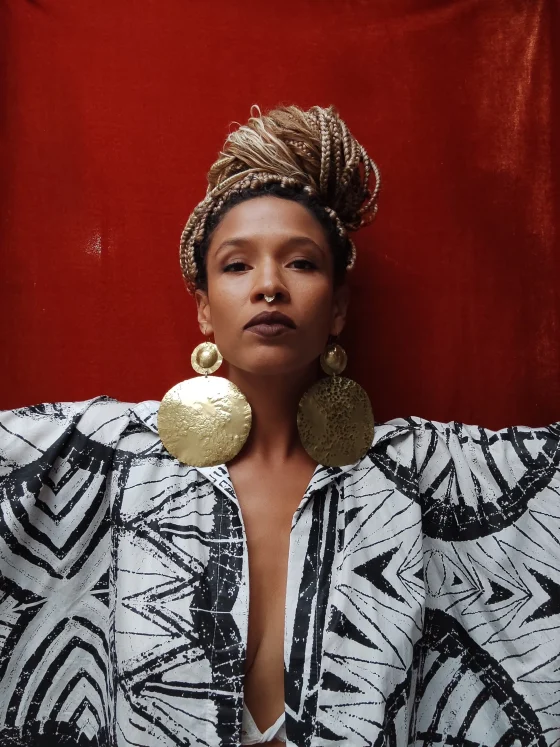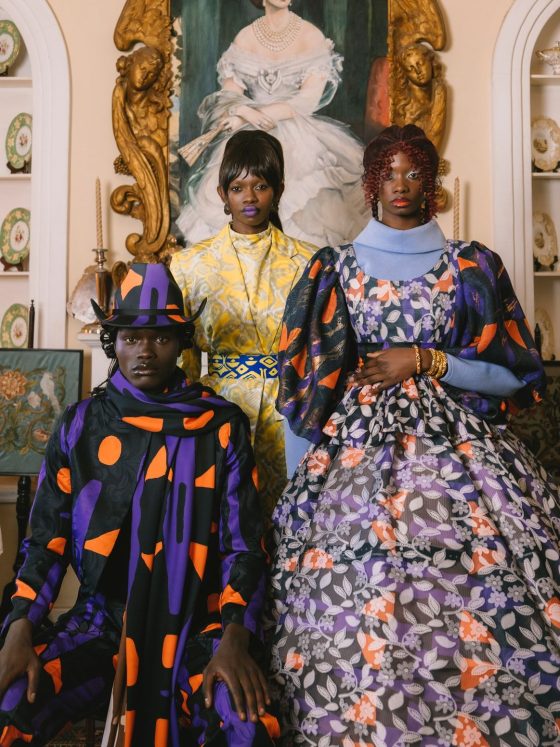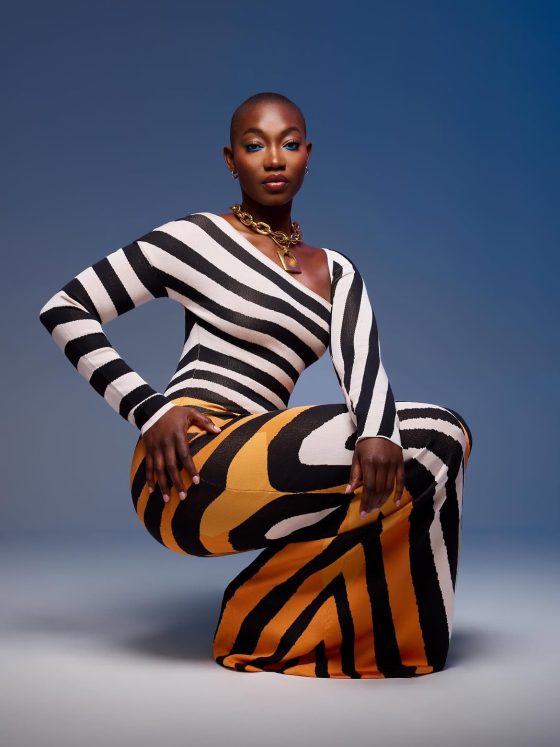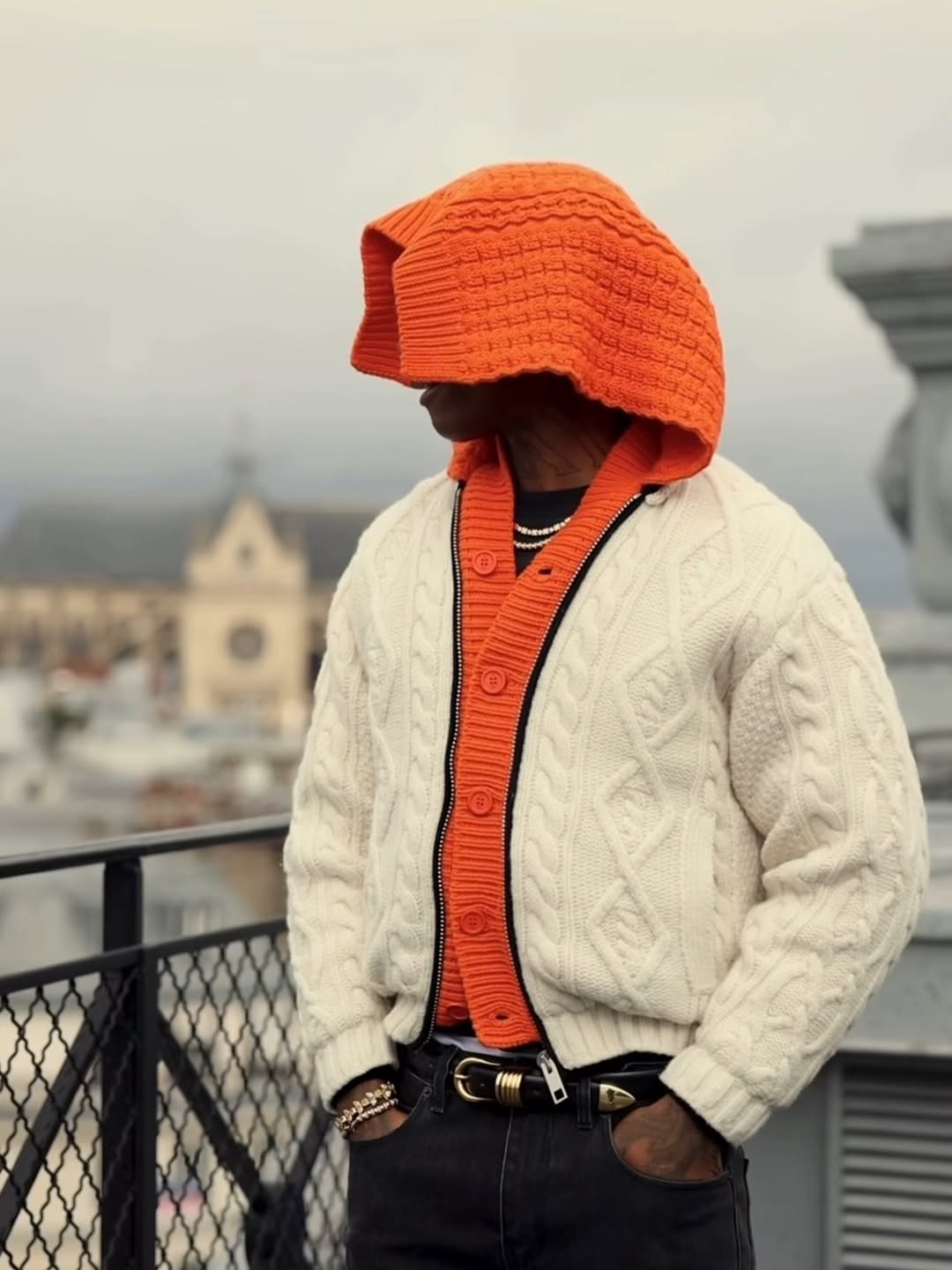
Mainstream fashion keeps describing African influence on Black American style as a discovery. Still, it is better understood as a homecoming: a century-long conversation between African and Black American communities that the industry repeatedly fails to name correctly. There is a recurring ceremony in mainstream fashion media. An African designer walks a major runway in New York or Paris. A Black American artist wears Ankara or an agbada-adjacent silhouette to a high-profile event. An Afrobeats musician’s visual identity bleeds into the aesthetic vocabulary of American streetwear. The coverage describes the moment as a breakthrough, a crossing, a new dialogue between two cultures that had previously been separate.
The framing is a structural misreading, built from the assumption that Africa and Black America have been in different rooms and have recently discovered a door. They have not. The door has been open for a century. What mainstream fashion media calls a discovery is something that communities on both sides of the Atlantic recognise as a homecoming: a return to a conversation that was never interrupted, only periodically made invisible to those who were not already part of it.
Mainstream fashion keeps describing African influence on Black American style as a discovery. It is better understood as a homecoming: a century-long conversation that the industry repeatedly fails to name correctly.
Movement One: Harlem Renaissance as the First Modern Black Aesthetic Declaration
The Harlem Renaissance not only launched an explosion of African American art, literature and politics; it enabled the community to develop what Encyclopedia.com’s documentation of Harlem Renaissance fashion calls “a collective identity through fashion for the first time.” The specific word to hold onto is collective: this was not individual expression but a community project of aesthetic self-definition, conducted against a backdrop of systematic denial that Black Americans had any culture worth expressing.
The intellectual architecture of that project was explicitly Pan-African. Alain Locke, the New Negro Movement’s philosophical anchor, drew on African art and cultural systems as evidence of the civilisational depth that white America was intent on denying. As The Advocate’s documentation of Harlem fashion history confirms, Locke believed it was essential to honour innovators who understood how their presentation in dress would drive them to claim liberation in their everyday lives. The Harlem Renaissance did not look toward Africa as a foreign reference. It looked toward Africa as an inheritance to be reclaimed.
What this produced in dress was a visual language built from bold colours, geometric patterning, jewellery, and headwraps that drew on West and Central African aesthetic traditions. The QC for this piece correctly flags that the evidence here supports Harlem as a moment of consciously Black aesthetic declaration that looked toward Africa, rather than as a moment where every garment is directly traceable to a single African source. That distinction matters. Harlem initiated the conversation. It did not simply reproduce African dress. It made a new declaration from African aesthetic inheritance, filtered through the specific political urgency of New York in the 1920s. As Atlanta History Center’s documentation of the evolution of Black women’s style documents, what Harlem wore was connected to a sense of independence and cultural rebirth, not to fashion in the narrow aesthetic sense.
The fashion industry’s relationship to Harlem followed the pattern it would repeat for the next century. Vogue magazine was among the tastemakers taking their cues from Black fashion trends during the Harlem Renaissance era. As documented by NPR’s history of Black American fashion influence, one Vogue editor of the era said all the top designers were going to Harlem to knock off what they found. The flapper dress and the zoot suit both originated in Black American community dress culture. The source was absorbed without being named. That too is a pattern that repeats.
“Vogue was among the tastemakers taking their cues from Black fashion trends during the Harlem Renaissance. Top designers went to Harlem to study what they found there.” — NPR, Charting Black America’s Fashion Savvy
Movement Two: Black Power as Explicit Pan-African Dress Politics
If the Harlem Renaissance established the first modern declaration of African aesthetic identity in Black American dress, the Black Power movement of the 1960s and 1970s made that declaration explicit, loud and confrontational. What is important to distinguish here, as the QC for this piece flags, is that these were moments of political and cultural citation, not simply style borrowing. The African references in Black Power dress were chosen because they made an argument, not because they were aesthetically fashionable. That distinction preserves the thesis without overstating the archive.
The dashiki is the clearest documented case. Its journey from West African garment to Black American political uniform is one of the most fully recorded moments in the long conversation between Africa and Black America. According to See Africa Today’s documentation of the dashiki’s history, the dashiki can be traced to West and East Africa, where it was worn as a light tunic offering sun protection, with iterations found in Dogon burial grounds in southern Mali dating to the 12th and 13th centuries. The word derives from dansiki in the Yoruba language. What the Black Power Movement did with this garment was not adopt it as fashion. As SKE Records’ documentation of the dashiki in the civil rights era confirms, the dashiki became a symbol of Black pride, identity, and empowerment worn by civil rights leaders, musicians, and artists to assert the beauty and value of African traditions in direct opposition to the dominant Western culture that denied them.
As BBC Culture’s documentation of how Black men have used bold fashion as resistance documents, the aesthetics of the civil rights movement spread the message of Black pride and resistance to the masses even more powerfully than pamphlets and speeches. Dress was the medium because dress is public, persistent, and undeniable. A man in a dashiki is making an argument about his identity and his heritage that cannot be unseen and cannot be talked over.
The mainstream absorption of the dashiki followed the familiar pattern. As University of Fashion’s documentation of the dashiki’s commercial trajectory records, the dashiki’s political vigour weakened towards the end of the 1960s when it became popular among white counterculture groups, whose adoption based primarily on aesthetic appeal undermined its status as a sign of Black identity. Retailers began to import dashikis made in India, Bangladesh, and Thailand in large numbers. The garment was separated from the argument that gave it meaning. It became costume rather than declaration. This too is a pattern that repeats.
Movement Three: Hip-Hop as the Globalisation of Black Diasporic Style Codes
The 1980s and 1990s produced the most globally influential Black American cultural movement of the twentieth century. Hip-hop built the aesthetic grammar that would define youth culture worldwide. Running through its visual language, from its earliest years, was an African thread that the mainstream narrative of hip-hop origins consistently obscures.
The Native Tongues collective, which brought together the Jungle Brothers, De La Soul, A Tribe Called Quest, and affiliated artists from the US and broader diaspora, was explicitly Pan-African in its aesthetic politics. As documented by fashion historians, including FashionBeans’ coverage of African influence on hip-hop, artists in this collective made a statement in bold patterns, bright colours, African prints, Kente cloth, and heavy jewellery, emphasising Black pride through positive lyrics and African clothing. The Pan-African flag created by Marcus Garvey in the 1920s and Kente cloth became motifs in the colour schemes and prints of T-shirts, jackets, hats, and accessories. The anti-apartheid movement of the 1980s further strengthened Africa’s influence, with Afrika Bambaataa explicitly naming the connection between the continent and the music being made in the South Bronx.
Afrika Bambaataa was not coincidentally named. The choice was deliberate. The Universal Zulu Nation that he founded to organise hip-hop’s community politics was making the same assertion that Alain Locke made in 1925 and that Stokely Carmichael made in a dashiki in 1967: that Black American identity has African roots that are a source of strength rather than a stigma to be overcome. Different decade, different medium, same conversation. As the Nibme Hub documentation of Black dandyism and diasporic styling confirms, these were moments of political and cultural citation, not simply aesthetic borrowing.
Dapper Dan, the Harlem haberdasher who defined luxury streetwear in the 1980s, embodies this conversation at its most productive. As Global Grind’s documentation of Dapper Dan’s cultural position records, his clothes embodied street culture and the needs of people who were young and rich but locked out of the things enjoyed by young, rich, white people. He drew on a long legacy of Black style as both a form of self-realisation and a statement of political-aesthetic resistance. The gold, the scale, the insistence on elaborate silhouette in his designs are not only American. They carry the aesthetic values of West African dress culture in their construction: the understanding that cloth carries social meaning, that elaboration signals dignity rather than excess, that dressing for your community is a political act as much as an aesthetic one.
Movement Four: The Present as a Visibility Problem, Not a New Relationship
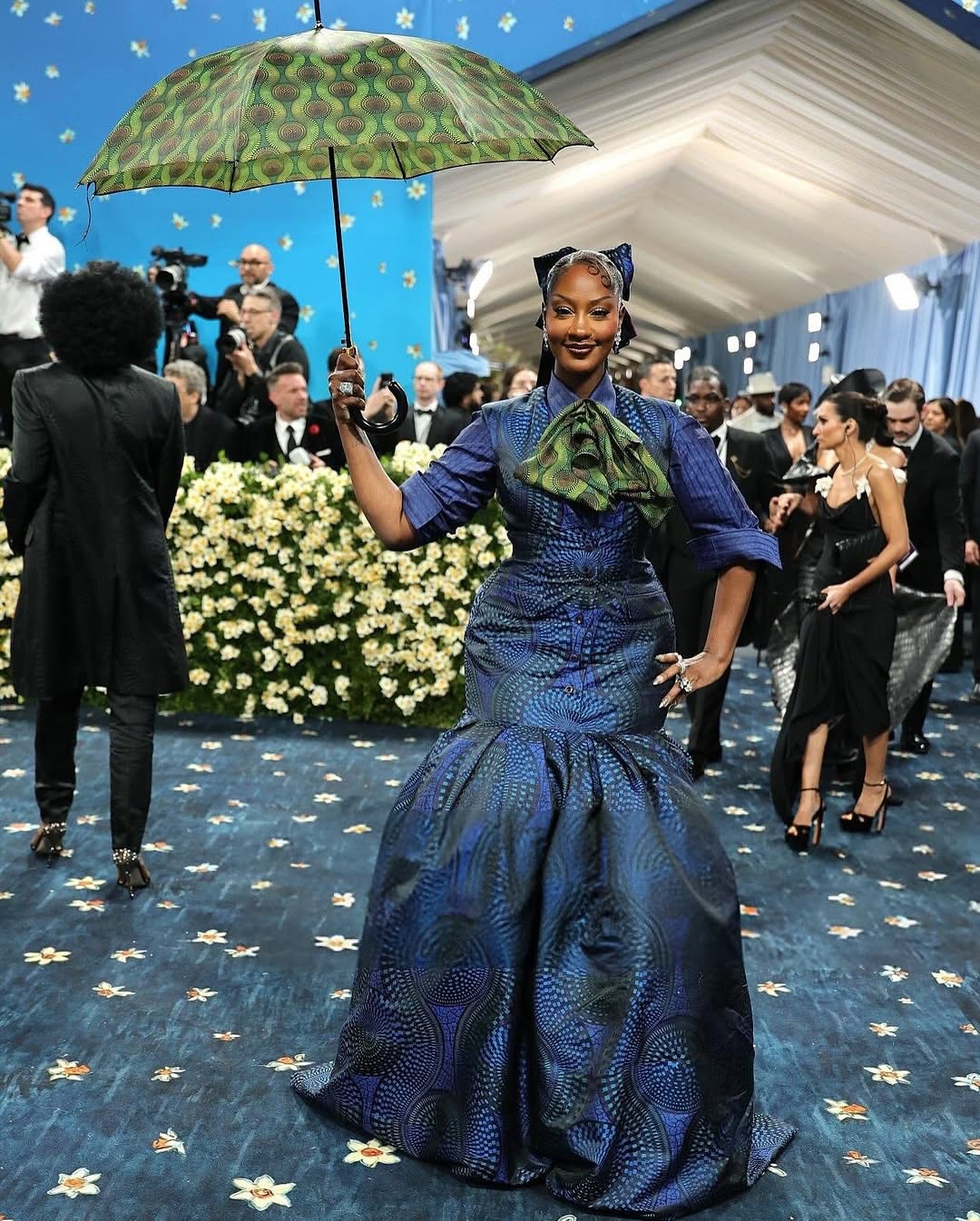
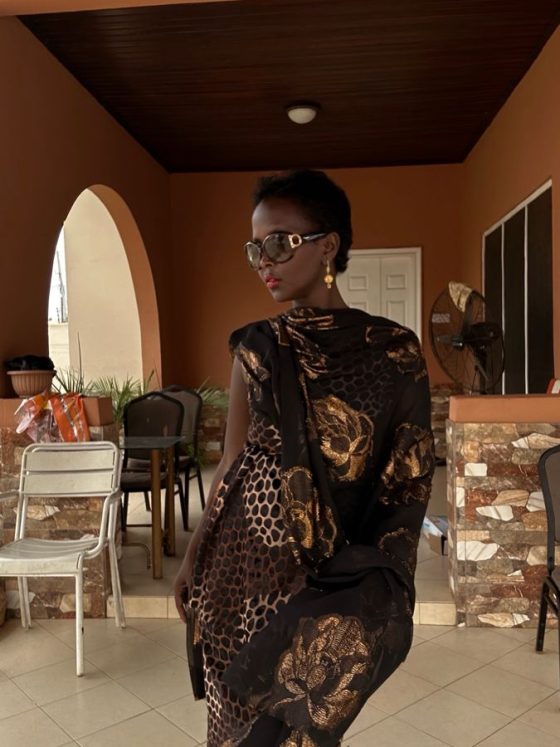
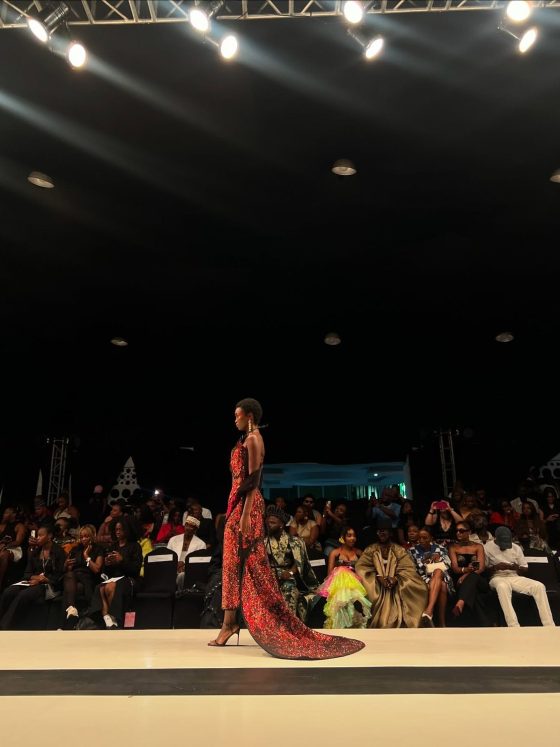
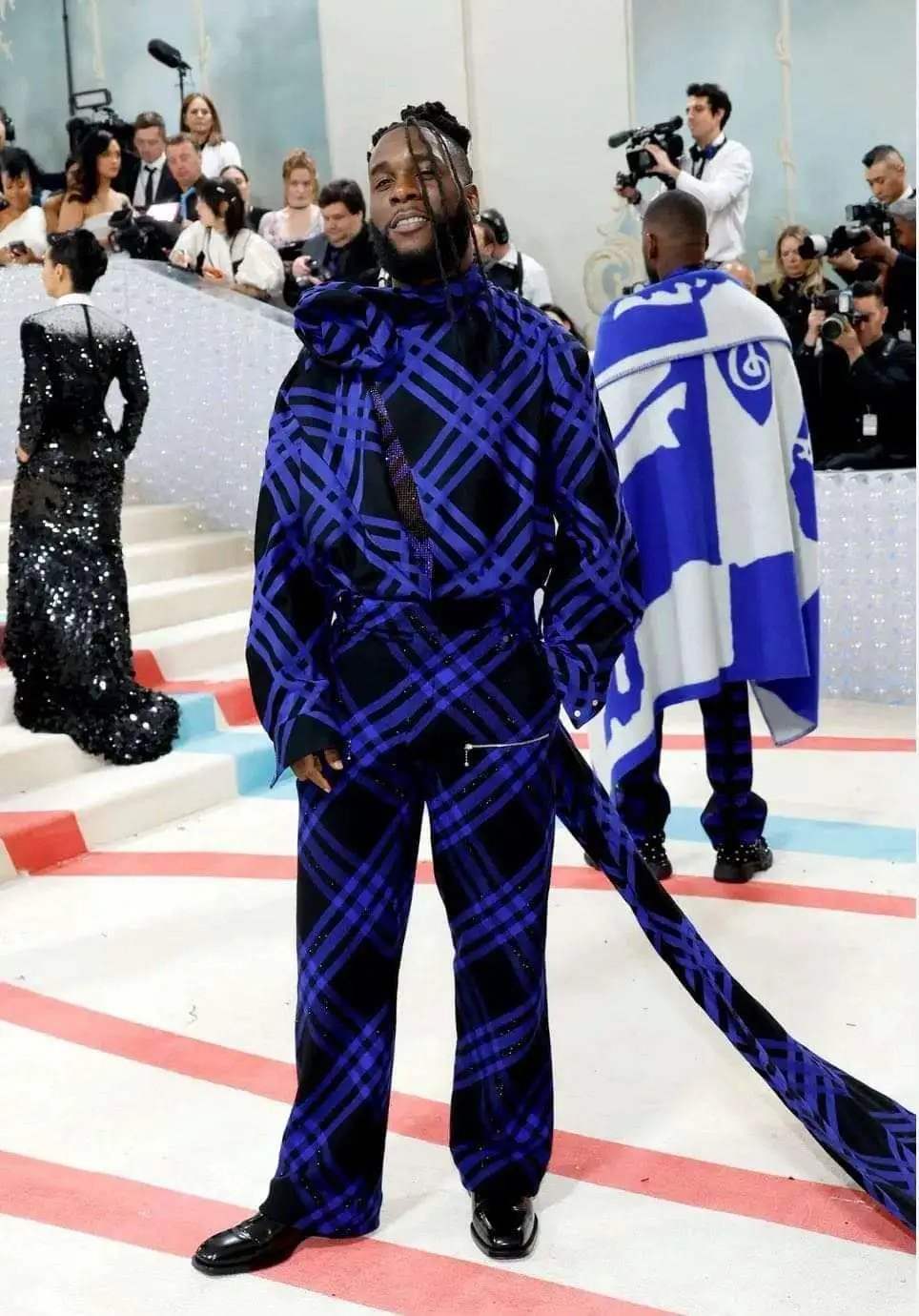
The current moment in African-American fashion collaboration is, in the mainstream telling, something new—Tems wearing a wax-print look by Ozwald Boateng at the 2025 Met Gala. Burna Boy stepping onto the 2023 Met Gala carpet in a custom Burberry look. Wizkid in Dior. African designers at New York and London Fashion Weeks receiving the institutional recognition that Omiren Styles has documented across its coverage of this generation’s trajectory. These moments are real and significant. Framing them as the beginning of a relationship is what is wrong.
As VCU’s documentation of how Black designers, models and musicians have influenced fashion confirms, the pattern of absorption without attribution has characterised the fashion industry’s relationship to Black and African aesthetic production for the entire century this piece has traced. The speed of transmission has changed. Instagram and TikTok have compressed what previously took years of community circulation into hours of global visibility. But the direction of travel is the same as it has always been: from African and diaspora communities to the mainstream, which then claims discovery of what it has been absorbing without attribution for decades.
The fashion week appearances that currently excite mainstream fashion media are not the relationship between Africa and Black America becoming fashionable. They are the relationship becoming loud enough that institutions which had previously ignored it can no longer do so. As NMAAHC’s documentation of Black fashion icons and cultural influence documents, Black culture has been driving mainstream American culture in music, fashion, beauty, food, language, and digital trends for the entire period this piece covers. The community was never the latecomer. The fashion industry was.
Why Homecoming, Not Discovery
The word homecoming is precise here, not rhetorical. For Black Americans, the turn toward African dress and aesthetic systems has never been a discovery of something foreign. It has been a return to something ancestral: to the pattern sensibility, the colour authority, the integration of cloth and identity and community that West and Central African dress cultures have maintained through centuries that included the violent erasure of that inheritance across the Atlantic. The Harlem Renaissance artists who incorporated African aesthetic references in the 1920s were not discovering Africa. They were, as the evidence supports, initiating a consciously Black aesthetic conversation that looked back toward an inheritance that had been systematically stripped. The Black Power activists of the 1960s who wore the dashiki were making a political citation, not adopting a foreign garment. The hip-hop artists who wore Kente and Ankara in the 1980s were referencing an ancestral aesthetic vocabulary, not appropriating from another culture.
For African designers and communities watching Black American style reach toward the continent’s aesthetic traditions, the recognition runs in the other direction. What Black America does with African aesthetic inheritance, the way it processes Yoruba colour authority through the streetwear vernacular, the way it takes the cultural weight of cloth as social signal and expresses it through logomania, the way it maintains the connection between music and dress that runs from jazz to hip-hop to Afrobeats, carries a family resemblance that communities on both sides of the Atlantic have always recognised. The grammar survived the crossing. What has not survived, in the mainstream fashion media’s account of it, is the acknowledgement that the grammar has a source. As Omiren Styles has argued, African fashion has always been making arguments that the mainstream fashion industry was not yet equipped to receive. The relationship between Africa and Black America in dress is one of those arguments. A century of evidence has been assembled. The industry is the latecomer to a conversation that never needed its attention to continue.
The return was never in question. The question was always when the room would be big enough, and noisy enough, that everyone would finally hear it.
ALSO READ
- The Black American Fashion Dollar Is Not Coming Home: Why African and Diaspora Brands Are Missing the Biggest Opportunity
- Rastafari Dress Codes: How Jamaica’s Colours, Hair, and Cloth Refused Colonial Uniform
- Dedan Kimathi’s Mau Mau-Era Dress and Kenya’s Visual Memory of Anti-Colonial Resistance
Frequently Asked Questions
What is the argument of this piece?
That mainstream fashion media’s framing of African influence on Black American style as a recent discovery misreads a century-long relationship. The argument, supported by documentation from the Harlem Renaissance, the Black Power movement, hip-hop culture, and the current moment of African fashion’s international visibility, is that Africa and Black America have been in aesthetic conversation continuously since the 1920s. What the fashion industry calls a new dialogue is better described as a homecoming: a return to a conversation that was always in progress, made newly visible by the commercial and institutional conditions of 2026. As NPR’s documentation of Black American fashion influence confirms, the fashion industry has been absorbing and reproducing Black American aesthetic production without attribution for the entire period this piece covers.
Is the piece arguing that all Black American fashion is African in origin?
No, and the distinction matters. The piece is careful to separate three different things in each historical era: what Black American communities produced as self-fashioning and political declaration, what was drawn from African heritage as conscious ancestral citation, and what was absorbed by the mainstream fashion industry without attribution. The Harlem Renaissance section, for example, presents Harlem as initiating a consciously Black aesthetic conversation that looked toward African inheritance, not as a moment where every garment is directly traceable to a single African source. The argument is that the relationship between Africa and Black America in dress is a documented, continuous, and deliberate cultural conversation, not that Black American style is simply African style transported across the Atlantic.
What is the role of the dashiki in this history?
The dashiki’s journey from West African garment to Black American political uniform is one of the most fully documented moments in the century-long conversation this piece traces. As See Africa Today’s documentation confirms, the dashiki originates in West and East African dress culture, with documented iterations in Dogon burial grounds in southern Mali dating to the 12th and 13th centuries, and its name deriving from the Yoruba word dansiki. Its adoption by the Black Power movement in the 1960s was a deliberate political citation: a choice of garment made because the garment made an argument about African heritage as a source of identity and dignity. Its subsequent mainstream adoption, driven by white counterculture and then by Asian-manufactured imports, separated the garment from the argument and turned it from political declaration into costume. That trajectory is a compressed version of the pattern this piece documents across the full century.
What does the piece mean by “homecoming”?
The homecoming framing is precise rather than rhetorical. For Black Americans, turning toward African dress and aesthetic systems has never been a discovery of something foreign. It has been a return to something ancestral: the pattern sensibility, the colour authority, and the integration of cloth, identity, and community that West and Central African dress cultures have maintained through centuries that included the violent erasure of that inheritance across the Atlantic. The Harlem Renaissance, the Black Power movement, and hip-hop culture are three documented moments of that return, each using the available aesthetic resources of its era to make the same argument: that Black American identity has African roots, and that dress is one of the most effective mediums through which that identity can be asserted and maintained.
How does this piece relate to the current moment in African fashion?
The current moment, in which African designers are receiving unprecedented institutional recognition at major fashion weeks, and African aesthetics are more globally visible than at any previous point in the fashion industry’s mainstream coverage, is the fourth movement of the argument this piece makes. But the piece specifically argues that the fashion industry is the latecomer: the community-level conversation between Africa and Black America has been documented continuously since the 1920s, and what is new in 2026 is not the relationship but its commercial and institutional visibility. As Omiren Styles has argued, African fashion has always been making arguments that the mainstream fashion industry was not yet equipped to receive. The current moment is the industry catching up with a conversation that never needed its attention to continue.