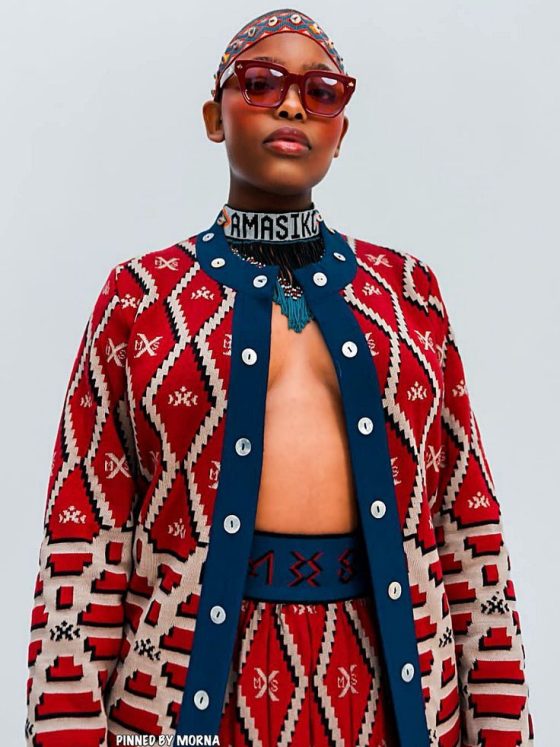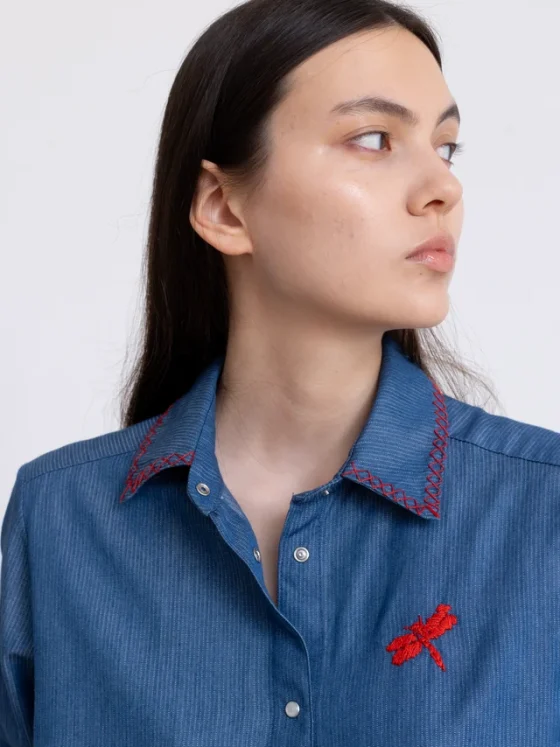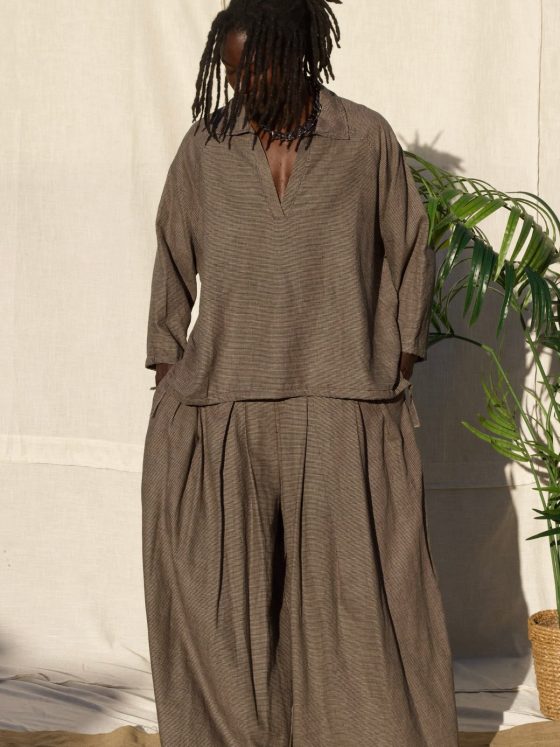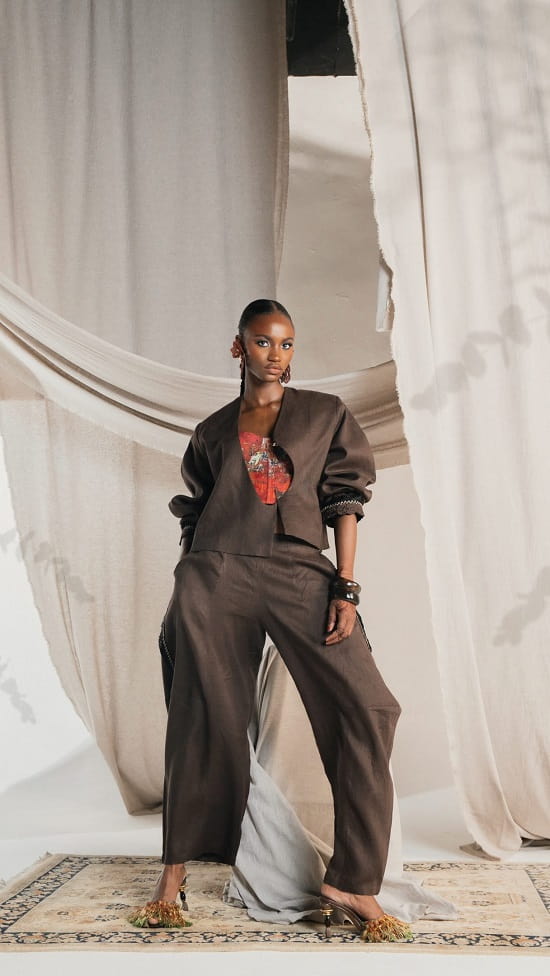
The African fashion market is worth 31 billion dollars. According to Statista’s Ghana apparel market data, 99% of Ghana’s apparel sales in 2025 fall within the non-luxury category, with the market generating USD 91.65 per person in annual revenue. That 1% at the top is not a niche. It is an argument. Ghana’s premium fashion tier, built by Christie Brown, Duaba Serwa, Pistis, and a growing number of younger brands, is not competing with fast fashion on its own terms. It is competing on terms that fast fashion cannot reach: cultural specificity, craft knowledge, and the irreplaceable authority of knowing exactly what you are making and why.
Fast fashion can replicate a silhouette. It can reproduce a colour. It can copy a print. What it cannot replicate is the knowledge embedded in the hands that constructed the garment, the cultural grammar encoded in the fabric choice, or the specific argument a Ghanaian designer makes when she places kente in a contemporary women’s blazer and sends it into a boardroom. That argument is worth more than a price comparison. It is the reason Ghana’s premium tier exists and the reason it is worth documenting precisely.
Ghana’s premium fashion tier occupies 1% of a market dominated by non-luxury imports. Christie Brown, Duaba Serwa, and Pistis are making that 1% mean something.
Ghana’s Premium Fashion Tier: What It Is and Who Built It
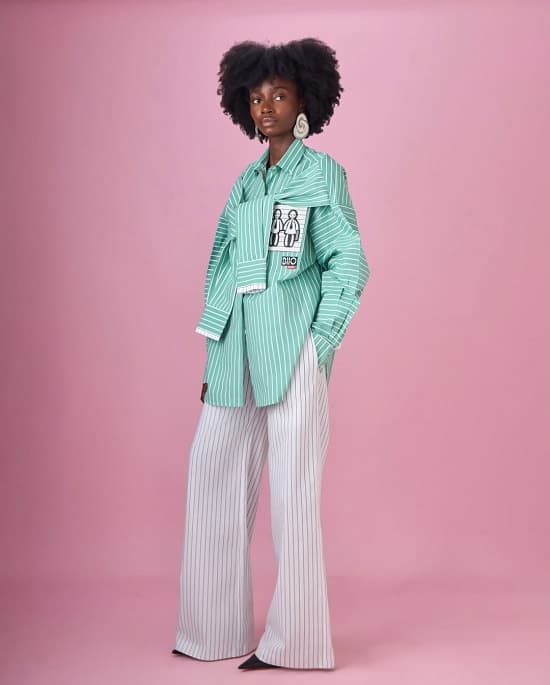
Ghana’s premium fashion market was not built in a single moment. It was constructed over two decades by designers who understood that cultural authority is a commercial asset. That building from the inside out produces more durable brands than building for external validation. While the world long assumed African designers needed Western validation to matter, Ghanaian creatives have built serious institutions. They have built production systems and distinct design languages since the post-independence era. Designers such as Aisha Ayensu, Duaba Serwa, and Pistis now treat global platforms as extensions of their practice rather than destinations for approval.
Christie Brown, founded by Aisha Ayensu in 2008 and named after her grandmother, a skilled seamstress, is the most internationally documented of these institutions. It integrates Ghanaian wax prints, kente, and handwoven textiles into sophisticated sculptural silhouettes. Its presentations at Paris Fashion Week and its dressing of Michelle Obama and Beyoncé do not make it internationally significant. They confirm that what was already being built in Accra was worth the world’s attention. The sequence matters: Accra first, international validation second.
Duaba Serwa, founded by Nelly Hagan Deegbe in 2011, built its premium position on a design signature, the triangular origami pleat, that is technically demanding, immediately recognisable, and impossible to replicate without the specific knowledge of how it is constructed. The brand works with artisans in Ghana and Burkina Faso, preserving and evolving traditional weaving techniques through luxurious fabrics. The supply chain is not an afterthought. It is the competitive argument: the artisan network produces a textile quality that industrial alternatives cannot match.
The Ghanaian fashion consumer who chooses Christie Brown over a Chinese-produced alternative is not paying for the garment alone. She is paying for the cultural knowledge embedded in the fabric selection, the pattern cutting, and the specific silhouette that emerged from decades of working with kente, wax print, and handwoven textiles. That knowledge is not available at any price from a fast fashion retailer.
What Specificity Means in Practice
Specificity in Ghanaian premium fashion operates at several simultaneous levels: material specificity, technical specificity, cultural specificity, and customer specificity. As Omiren Styles’ analysis of Accra fashion and how women in Ghana are redefining personal style confirms, a new generation of Ghanaian women is wearing kente in its Kente 2.0 form: re-engineered from ceremonial textile into daily high-end wear, treated by brands like Christie Brown and EKASA as a structural instrument for independence rather than a heritage marker for special occasions. Winifred Edjeani’s EKASA has redefined kente as useful and long-lasting luxury, taking it beyond the wedding aisle and into the business boardroom.
Material specificity means the fabric makes an argument that no substitute can replicate. Ghanaian kente is not generic handwoven fabric. It is a specific weaving tradition from specific Ashanti and Ewe communities, with specific colour grammars, specific strip widths, and specific pattern vocabularies. When a Christie Brown blazer uses kente as its primary fabric, the garment carries that entire knowledge system. A customer paying a premium for that blazer is not paying more for the same thing. She is paying for something categorically different from what any mass-market alternative provides.
Technical specificity means the making process itself produces qualities that cannot be standardised. The origami pleat at the centre of a Duaba Serwa garment is not a cut that can be fed into an automated production line. It requires hands with specific training, applied to specific fabrics, with specific finishing. The bespoke model that sustains many Ghanaian premium brands, production calibrated to individual customers rather than to volume runs, is not a constraint. It is the source of the product’s value.
Cultural specificity means the garment carries knowledge that only the culture that produced it can provide. A growing cohort of Ghanaian women designers educated abroad or based between two cultures are merging global minimalism with Ghanaian creative codes. Mimi Plange has stated plainly: Africa is not one story. My work speaks to the multiplicity. That multiplicity, the specific knowledge of which African stories are being told in which garment, is not available to designers who have not lived inside those stories.
The Market Structure and Where Premium Fits
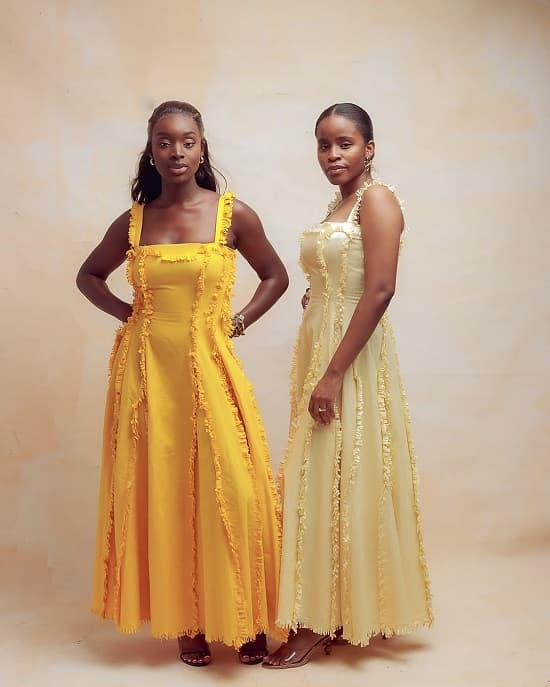
Ghana’s fashion market is dominated, as most African fashion markets are, by imported clothing. Second-hand bales, Chinese mass-produced textiles, and fast fashion e-commerce have claimed the volume end of the market. As FashionUnited’s global fashion industry statistics confirm, fast fashion has fundamentally restructured retail markets across the developing world by compressing the gap between trend and availability while cutting the cost of individual items to levels that locally produced clothing historically cannot match. Ghana’s premium tier does not contest that position. It occupies a different one: not cheaper than imports but categorically different from imports.
That distinction is commercially significant. A consumer choosing Christie Brown is not choosing between Christie Brown and Zara at the same price level. She is choosing between a garment that carries specific cultural knowledge, was made in Accra by designers who understand the social and ceremonial grammar of what she is buying, and will be worn in contexts where that knowledge is legible, and a garment that carries none of those properties. At the premium tier, the purchase is not primarily a transaction. It is a declaration of what the buyer knows and values.
The growing young professional class in Accra has been central to expanding this market. A generation of Ghanaian designers has rejected the export-only model, choosing to build value domestically first rather than seeking external validation first. That decision has produced brands with deeper roots and more durable commercial propositions. Complex Department produces luxury streetwear entirely sourced and made in Ghana, with collections built on cultural monograms and oversized tailoring that reads as both globally fluent and specifically Ghanaian.
The Next Generation and Kente 2.0
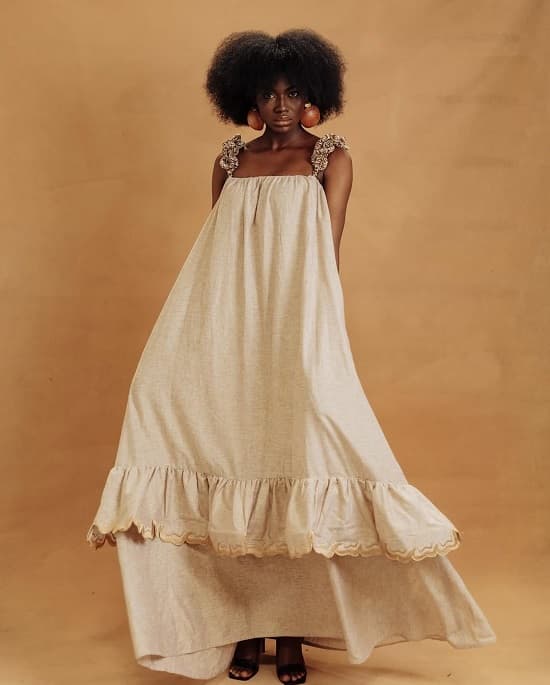
The designers taking Ghana’s premium tier into its next chapter are working from the same principle that Christie Brown and Duaba Serwa established: cultural specificity is the design advantage. As Omiren Styles’ documentation of Accra streetwear and Ghanaian youth fashion confirms, Aisha Ayensu stands out as one of the most internationally recognised Ghanaian fashion designers, combining African prints with modern elegant silhouettes. But the next generation around her is building on that foundation rather than repeating it: BIIO, EKASA, Chloe Asaam, and others are finding new structural arguments for what Ghanaian cultural materials can do in contemporary garments.
The Kente 2.0 concept, kente re-engineered for daily high-end wear rather than reserved for ceremony, is the clearest articulation of how Ghana’s premium tier evolves without abandoning what made it worth building. The ceremonial authority of kente does not disappear when the fabric appears in a blazer. It transfers. The boardroom becomes the context in which the Ashanti weaving tradition asserts its contemporary relevance. That is specificity doing its most sophisticated work: not preservation, but active recontextualisation.
The Omiren Argument
Ghana’s premium fashion tier is not trying to compete with fast fashion on volume, price, or trend velocity. It is building something that fast fashion cannot manufacture regardless of investment: the cultural knowledge embedded in specific fabrics, specific techniques, and specific design decisions that only emerge from deep engagement with Ghanaian material culture. The African fashion market is worth 31 billion dollars. Ghana’s apparel market generates USD 91.65 per person annually, with 99% of sales in the non-luxury category. The 1% in the premium tier is small in volume and large in argument. Christie Brown at Paris Fashion Week argues that Ghanaian wax print tailoring belongs in the same conversation as the world’s most significant fashion institutions. Duaba Serwa’s origami pleat argues that Ghanaian technical knowledge produces formal innovation that no European manufacturer anticipated. EKASA’s Kente 2.0 argues that the Ashanti weaving tradition belongs in boardrooms and that kente is a useful and long-lasting luxury rather than a ceremonial relic. Those arguments are what fast fashion cannot buy. Omiren Styles documents Ghana’s premium tier as what it is: the most coherent sustained argument that the Ghanaian fashion market is currently making about its own value.
Also Read:
- Christie Brown by Aisha Ayensu: Ghanaian Luxury Fashion Taking the World Stage
- Top Ghanaian Fashion Designers Shaping Africa’s Global Fashion Narrative
- The Ghanaian Women Redefining Fashion on Their Own Terms
- What Accra Street Style Is Actually Arguing in 2026
Frequently Asked Questions
What is Ghana’s premium fashion tier?
Ghana’s premium fashion tier is the segment of the Ghanaian fashion market occupied by locally designed and produced clothing that competes on cultural specificity, craft knowledge, and design authority rather than on price or volume. It is led by brands including Christie Brown, founded by Aisha Ayensu in 2008, Duaba Serwa, founded by Nelly Hagan Deegbe in 2011, and Pistis. These brands integrate Ghanaian kente, wax print, and handwoven textiles into contemporary silhouettes, producing garments that carry cultural knowledge that fast fashion alternatives cannot replicate.
How does Christie Brown compete with fast fashion?
Christie Brown does not compete with fast fashion on price or volume. It competes on cultural specificity: the brand integrates Ghanaian wax prints, kente, and handwoven textiles into sophisticated sculptural silhouettes built by designers with specific knowledge of those materials and the social contexts in which they are worn. A Christie Brown garment carries the knowledge of how kente functions as a cultural text, how wax print signals occasion and identity in Ghanaian social life, and how contemporary silhouettes can carry those traditions without freezing them. That knowledge is not available at any price from a fast fashion retailer.
What makes Duaba Serwa distinctive in Ghana’s premium tier?
Duaba Serwa, founded by Nelly Hagan Deegbe in 2011, is built around a signature technical innovation: the triangular origami pleat, which requires skilled hands with specific training applied to specific fabrics. The pleat is immediately recognisable and impossible to replicate at industrial scale without the craft knowledge required to construct it. The brand also works with artisans in Ghana and Burkina Faso, preserving and evolving traditional weaving techniques through luxurious fabrics. Its competitive position is built on technical specificity rather than trend responsiveness.
What is the Ghana apparel market worth?
According to Statista’s Ghana apparel market data, the market generated USD 91.65 per person in revenue in 2025, with 99% of sales in the non-luxury category. The market is projected to see 3.1% volume growth in 2026. Ghana’s fashion e-commerce market reached USD 194 million in 2025, growing 10-15% year-on-year. These figures confirm that the premium tier, while small in volume, is operating in a market whose overall growth creates expanding consumer purchasing capacity.
What is Kente 2.0 in Ghanaian fashion?
Kente 2.0 is the re-engineering of Ghana’s most recognised textile from a ceremonial fabric into daily high-end wear. Where traditional kente is often heavy and reserved for weddings and formal ceremonies, Kente 2.0 reinterprets the textile for use in blazers, structured blouses, and tailored separates worn to offices and professional events. Brands like Christie Brown and EKASA, founded by Winifred Edjeani, have led this movement, treating kente as a structural instrument for independence and long-lasting luxury rather than a cultural marker for special occasions.
Explore More
Read the full Fashion > Industry section for Omiren Styles’ documentation of African fashion markets, Ghanaian designers, and the cultural and commercial arguments being built across Accra, Lagos, Nairobi, and the diaspora.