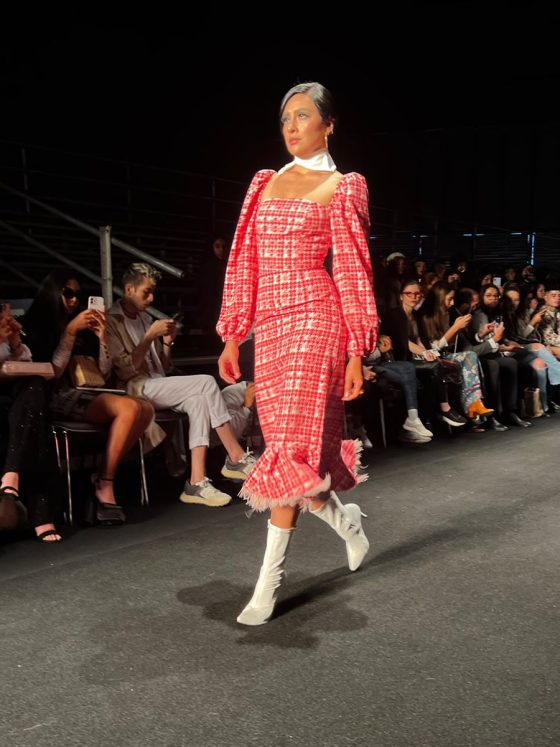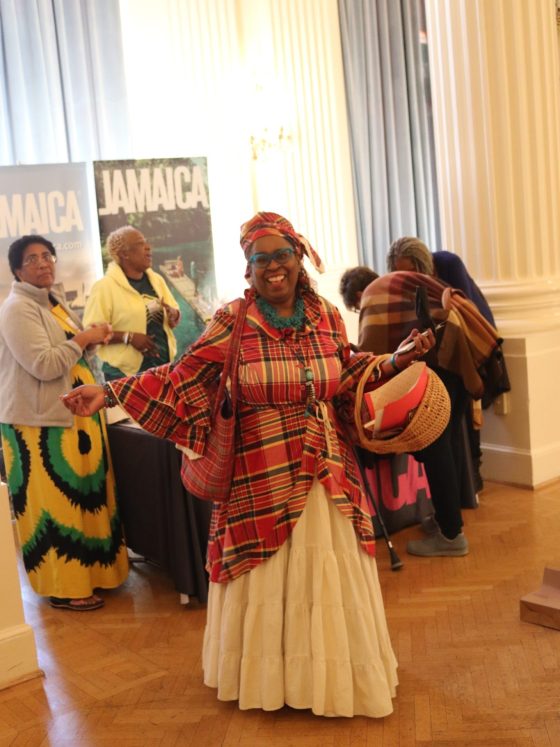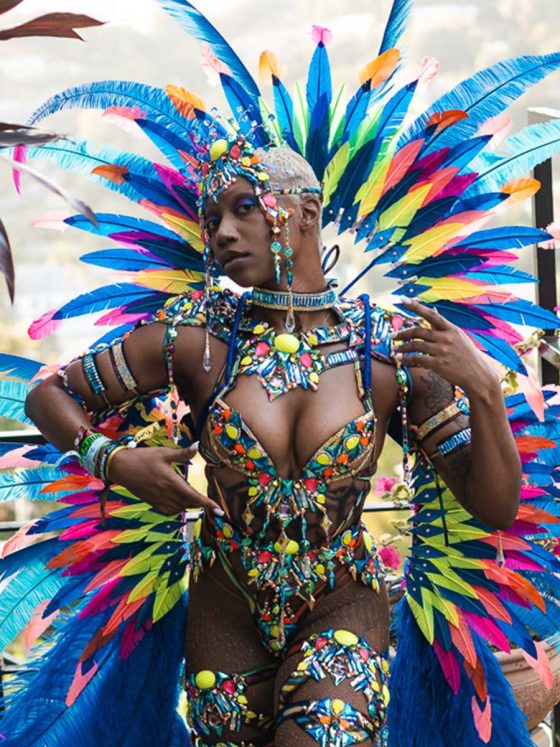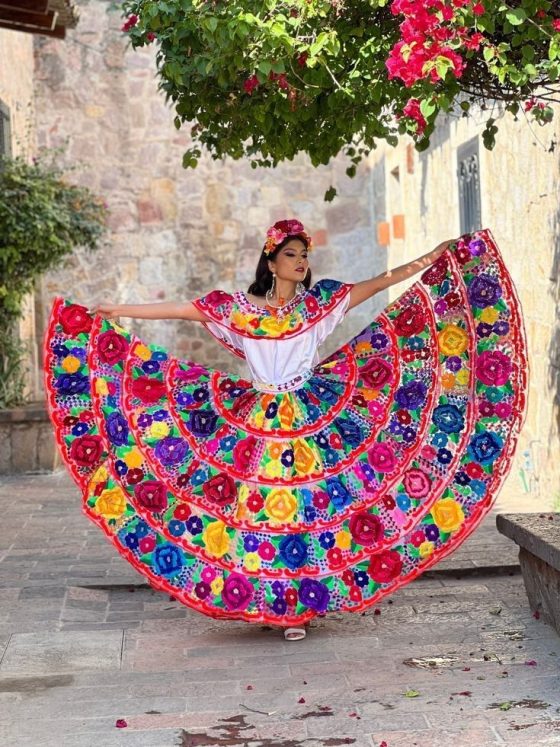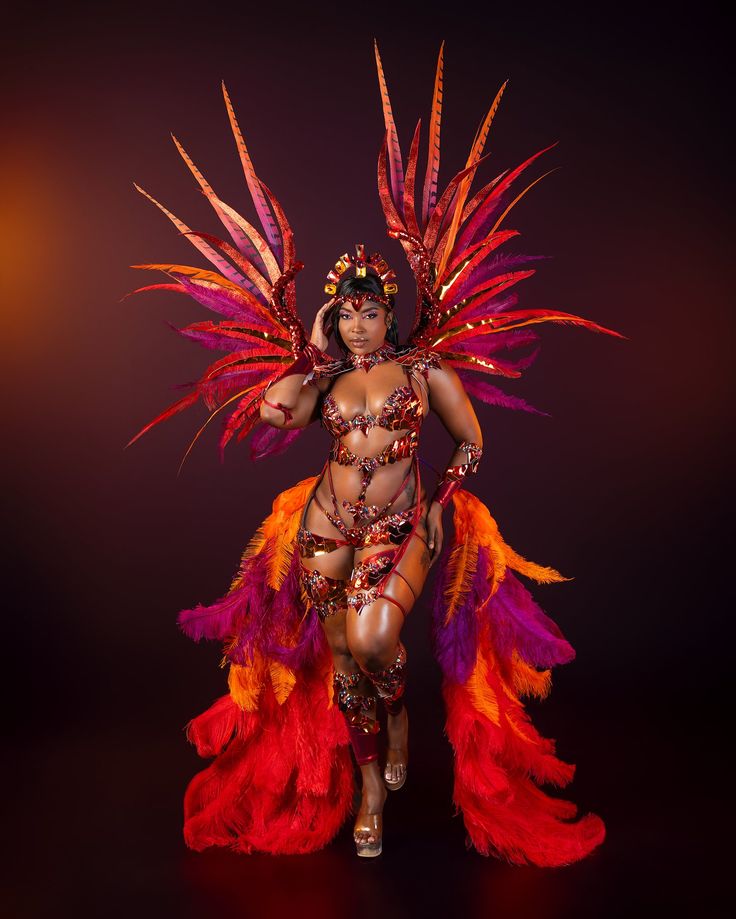
In Port of Spain, three weeks before Carnival Monday, the mas camps are working through the night. Peter Minshall, who has described mas as “living art that we make fresh every year,” understood this as the truest artistic expression of Trinidad: not a spectacle made for cameras, but a design system made for the street, built fresh each year, carried on the body, and dissolved in motion. His 1974 debut costume, “From the Land of the Hummingbird,” took five weeks, twelve people, and 104 feathers, each one constructed from 150 different pieces of fabric. No runway show in Paris produced anything of comparable technical ambition that year. None credited Carnival when it eventually did.
That gap, between the work and the credit, between the visual language and the attribution, is what this article closes. Caribbean carnival costume traditions are not decorative side notes to couture. They are living cultural forms with their own rules, politics, and performance intelligence, and the runway has been borrowing from them for decades.
Explore how Caribbean carnival costumes influence luxury fashion runways, from colour and silhouette to spectacle and storytelling, and why the credit rarely follows the aesthetic.
What Carnival Costume Is
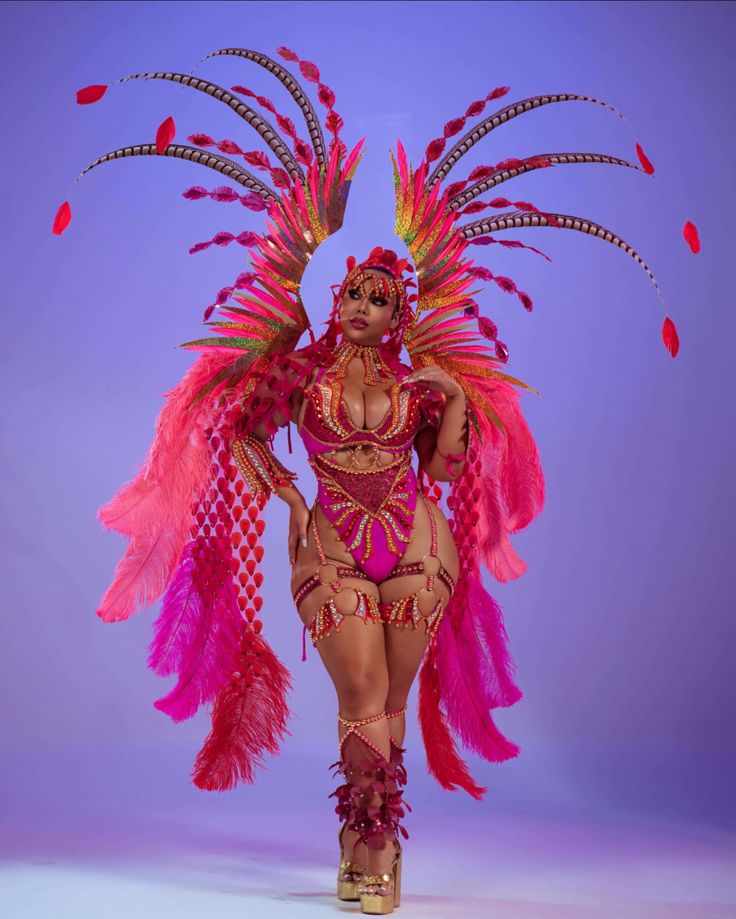
Caribbean carnival costumes are a performance tradition rooted in history, community expression, resistance, and collective imagination. In Trinidad, costume design has long carried cultural meaning that extends far beyond the festival itself. The visual language is unmistakable: feathers, beads, glitter, sculptural forms, bold colour, and body-conscious silhouettes. But those elements are not random. They are part of a ceremonial and social system in which costume transforms the wearer into a public performer of identity, joy, and cultural pride. As Omiren Styles has documented in Trinidadian Carnival Masquerade Is a Fashion System, the mas tradition in Trinidad is not an extension of fashion. It is fashion. It has its own design processes, its own production systems, and its own cultural significance, operating on a scale and with a level of creativity that challenges any conventional definition of what fashion can be.
The Caribbean carnival tradition is not a single aesthetic, and treating it as such is one way fashion coverage consistently misrepresents it. Trinidad’s mas tradition grew from the pre-Lenten masquerades of French colonial planters, which enslaved Africans reimagined as a defiant parallel celebration rooted in resistance and mockery of colonial power. Barbados’ Crop Over is a different form entirely: rooted in the island’s sugar-harvest traditions, revived in 1974 as a conscious act of cultural reclamation. Notting Hill Carnival in London represents a third inflexion: a diaspora expression, carried by Caribbean communities who built it as a cultural home inside a city that had not particularly welcomed them. These are different vocabularies built from different histories, all sharing a commitment to spectacular, body-centred, community-made costume as the medium through which identity is publicly performed.
That is why carnival costumes cannot be reduced to “excess.” It is a disciplined spectacle. It is built, carried, and read inside a specific cultural context, and that context gives the costume its authority. When the fashion press calls carnival-inspired work merely vibrant or eye-catching, it is describing the surface without explaining the structure. The structure is the story.
How Costume Became Visual Power
Carnival costumes became a visual power system because the tradition teaches the body to occupy space with intention. Volume, colour, movement, and ornament are used not to hide the wearer but to amplify presence. That is one reason the tradition travels so easily into couture: it already understands the body as a stage.
Luxury fashion has always been drawn to that logic. Runway spectacle relies on the same visual principles: scale, repetition, theatricality, and the ability to make an audience feel that something larger than clothing is taking place. Caribbean carnival mastered those effects long before global fashion houses made them part of seasonal presentations.
Mas is a living art that we make fresh every year. – Peter Minshall
This is not accidental influence. It is cultural borrowing from a tradition that already knows how to produce attention. Carnival costumes are not just dramatic: they are designed to create a collective event in which costume, music, body, and audience all operate together. That collective dimension is often what fashion translates poorly. Couture can reproduce feathers and shine, but it cannot always reproduce the social meaning that makes the carnival spectacle more than aesthetics.
Why Couture Keeps Returning to Carnival
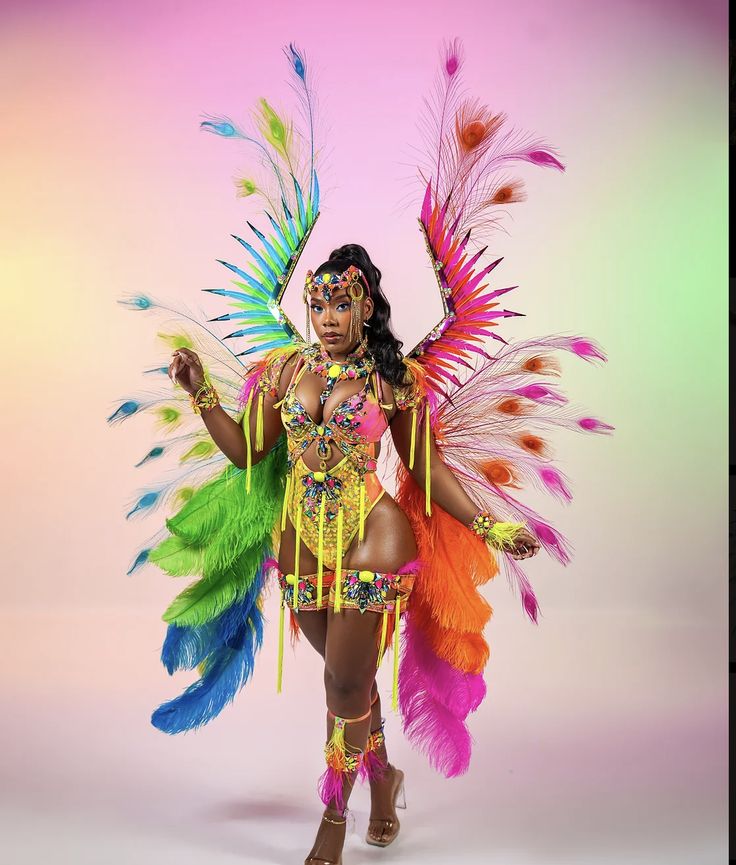
Couture keeps returning to carnival because carnival offers something fashion constantly wants: spectacle with a story. The costume traditions of the Caribbean are visually rich, emotionally charged, and immediately legible in photographs and moving images. Jean Paul Gaultier returned repeatedly to feathered silhouettes, corsetry as external structure, and theatrical runway presentation throughout the 1990s and 2000s. His shows functioned as street carnivals transposed to the catwalk: processional, communal in their energy, built around performers rather than mannequins. The debt was never named. Alexander McQueen’s theatrical staging, his use of scale, narrative arc, and visual shock as design elements, drew from the same vocabulary that Trinidadian mas camps had been developing for a century. When Rihanna built the Savage X Fenty shows into full-scale theatrical productions with procession, costume hierarchy, and mass spectacle, she was the Caribbean reclaiming the runway form that carnival had originated. That distinction matters. As Omiren Styles has documented in Crop Over Fashion: Barbados Built Its Own Aesthetic System, Rihanna did not create Crop Over’s aesthetic. She amplified it. The design logic was already in place, developed over decades by Barbadian designers, weavers, and costume-makers who understood their own festival’s visual language.
The attraction goes deeper than surface beauty. Carnival already understands how to combine fantasy and structure, excess and control, performance and identity. That makes it a powerful reference point for designers who want their work to feel alive rather than static. The problem is that couture often frames these references as homage while ignoring the underlying economy of borrowing.
What Gets Lost in Translation
What gets lost is usually the hardest part of the story to see: labour, community, and authorship. The Trinidad Carnival costume industry generates over TT$173.1 million in visitor spending annually, according to academic research at the University of the West Indies. Mas camps employ costume designers, pattern cutters, wire-benders, feather-workers, sewists, and fabric specialists for months at a time. Costume packages for individual masqueraders can cost over USD$1,000—the production infrastructure behind a single large carnival band rivals that of a mid-size fashion house. When couture borrows the visual language without naming that labour, it turns living cultural production into a sourcebook. As Omiren Styles has examined in How Cultural Resistance Shaped the World’s Most Powerful Style Movements, Caribbean Carnival’s political lineage, its origins in the resistance of enslaved Africans who created spaces for expression when their oppressors’ celebrations were closed to them, is what gives the extravagance its meaning. Extravagance as defiance. Presence as reclamation. That is not a visual reference. It is a position, and it cannot be lifted without the history it carries.
There is also a risk of simplification. A runway may take the feathers, the shine, or the silhouette, but not the deeper meanings tied to resistance, play, memory, or local identity. Once that happens, carnival becomes a style mood rather than a cultural system. The runway is the guest here, not the host.
Who Benefits From the Borrowings
If a global fashion house takes carnival’s visual language and uses it to create editorial success or commercial prestige, then the tradition has been monetised by someone else. Caribbean designers and makers have long understood that carnival is both a cultural expression and economic work. Costume design supports local labour, local business, and local visibility.
This is where the power imbalance becomes obvious. The global runway can transform carnival into high fashion content in one season. However, the people who built the language may still be fighting for broader recognition, better markets, and more sustained investment. The real question is not whether Caribbean carnival influences couture. It does. The question is whether couture will ever learn to credit the source with the same enthusiasm it shows for the aesthetic.
ALSO READ
- Crop Over Fashion: Barbados Built Its Own Aesthetic System, and It Has Nothing to Do With Trinidad
- Reclaiming the Narrative: How Cultural Resistance Shaped the World’s Most Powerful Style Movements
- Trinidadian Carnival Masquerade Is a Fashion System: It Is Time the World Called It That
- The African Origins of Carnival Costume: Feathers, Beads, and the Masquerade Tradition
What Caribbean Fashion Contributed
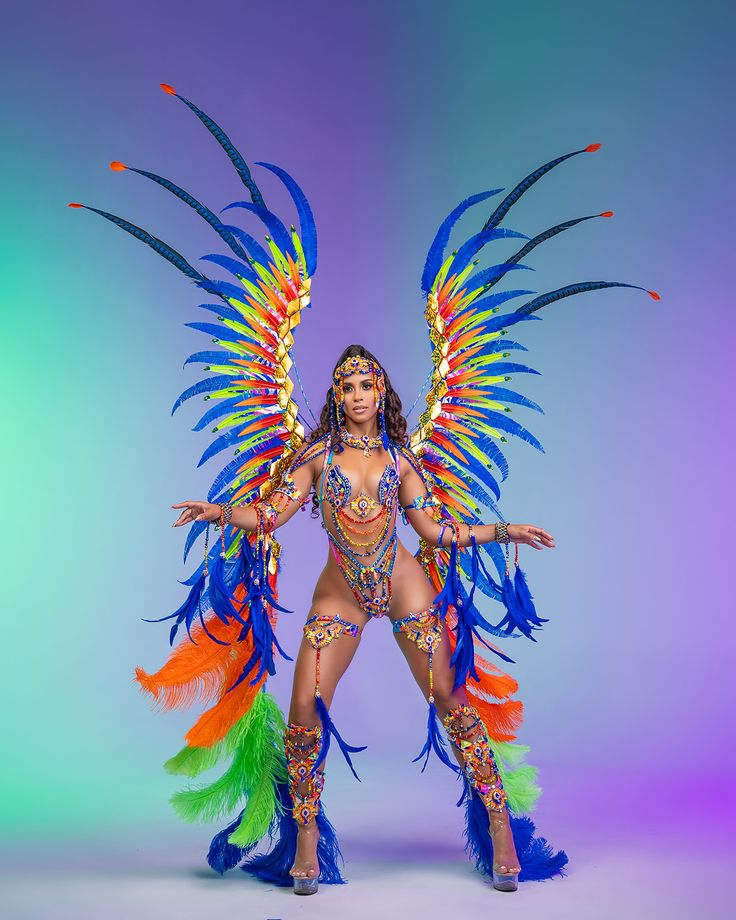
Caribbean carnival contributed more to global fashion than a palette or a feathered silhouette. It contributed a way of thinking about the body, the crowd, and the performance of identity. It showed that clothing can be theatrical without being frivolous, and that spectacle can be culturally serious.
Peter Minshall was asked to design the opening ceremonies of the Barcelona 1992 Olympics, the Atlanta 1996 Olympics, and the Salt Lake City 2002 Winter Olympics, specifically because, in his own words, he knew how “to deal with human energy in big open spaces and make what is small be seen big.” That knowledge came from carnival. The Olympic Games borrowed from Trinidad. They did not call it that.
If fashion culture is honest, it should admit that many of the visual strategies now called runway spectacle were learned from carnival systems that already knew how to command attention. The influence is not peripheral. It is structural.
THE CREDIT GAP
Caribbean carnival did not simply inspire runway spectacle. It taught global couture how to think about visual drama, body, colour, and performance as a unified system. But the fashion press too often treats that influence as a mood rather than a history. When carnival’s visual language enters the runway, the image is celebrated, and the source is simplified. Mas camps are not credited when feathers appear on a Paris runway. Trinidadian bandleaders are not thanked when theatrical staging becomes a season’s most discussed moment. Peter Minshall’s decades of kinetic design research, which the Olympic Games recognised as world-class spectacle-making, is not cited when fashion houses reproduce its logic.
Omiren Styles’ position is clear: carnival is not a decorative repository of references for luxury fashion. It is a living cultural system with authorship, labour, and meaning, and any honest account of couture’s spectacle must first credit the Caribbean traditions that helped build it. What changes if that credit is given properly? Caribbean designers gain standing to negotiate from a position of strength rather than petition for visibility. Luxury houses that want to collaborate must bring investment, not just inspiration. The fashion press must learn to cover Carnival Monday in Port of Spain, Grand Kadooment Day in Bridgetown, and Notting Hill Carnival in London as primary sources rather than colourful previews of what the runway will do next season. The language was built here. The credit should follow.
FAQs
What is Caribbean carnival fashion?
It is a costume tradition tied to Caribbean carnival celebrations, rooted in history, community expression, resistance, and collective imagination. In Trinidad, mas is the central expression. In Barbados, Crop Over produces a distinct aesthetic rooted in the island’s sugar-harvest traditions. In London, Notting Hill Carnival represents a diaspora expression built by Caribbean communities in the UK. These are distinct traditions, not a single Caribbean aesthetic.
Why does carnival influence couture?
Because carnival already mastered the visual language that couture wants: spectacle with a story, fantasy with structure, excess with control, performance with identity. Jean Paul Gaultier, Alexander McQueen, and others returned repeatedly to the same visual principles that Caribbean mas traditions had been developing for over a century. The influence is structural, not incidental.
Which fashion houses have been most influenced by Caribbean carnival?
Jean Paul Gaultier returned repeatedly to feathered silhouettes, theatrical staging, and procession-style runway presentation throughout the 1990s and 2000s. Alexander McQueen’s theatrical staging drew from the same vocabulary of spectacle, narrative, and costume-scale ornament. Rihanna’s Savage X Fenty shows represent a Caribbean-rooted counter-example: the designer using the runway form to reclaim the carnival tradition rather than borrow from it without credit.
What makes carnival costumes important?
They are not decorative. They carry history, labour, identity, and community meaning. The Trinidad Carnival costume industry generates over TT$173.1 million in visitor spending annually, employing designers, wire-benders, sewists, and feather-workers for months at a time. The production infrastructure rivals a mid-size fashion house. When couture borrows this visual language without naming that labour, it turns living cultural production into a sourcebook.
How can Caribbean designers protect their visual language from being borrowed without credit?
By insisting on the distinction between influence and collaboration. When a fashion house wants to draw on carnival vocabulary, it should be required to provide named credit, named collaboration, and named investment in the communities that produced the original work. Caribbean designers and cultural organisations can build this standard into any negotiation by treating the visual language as what it is: intellectual property produced by specific communities with documented authorship.