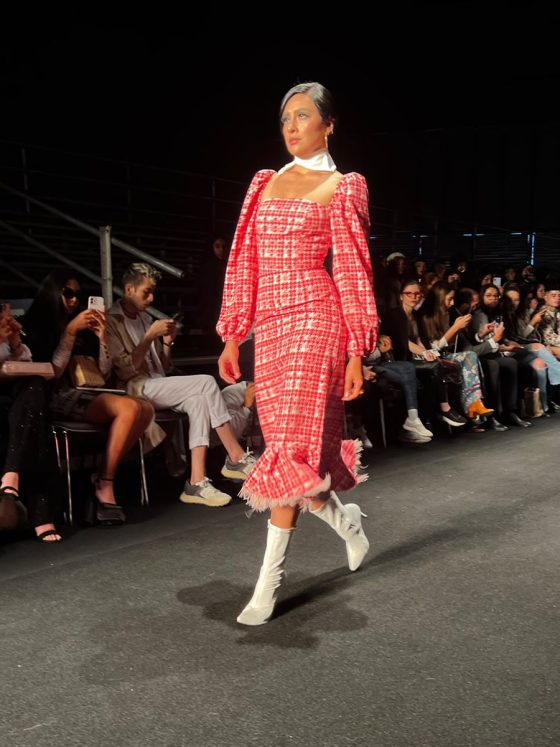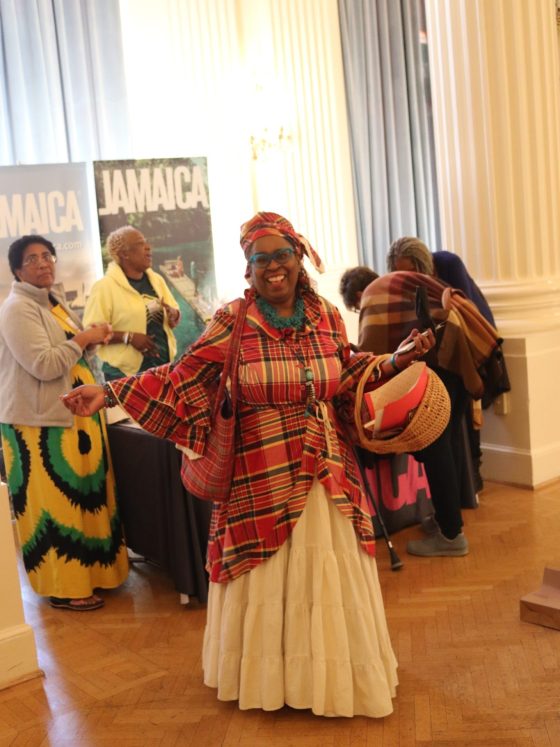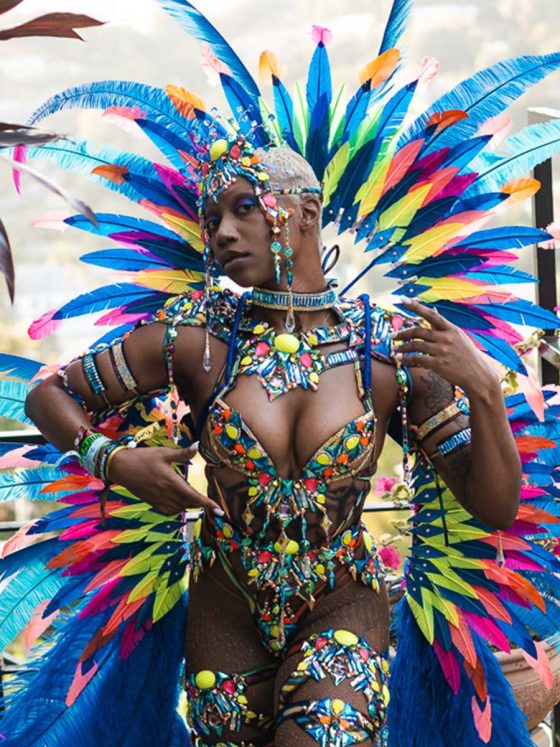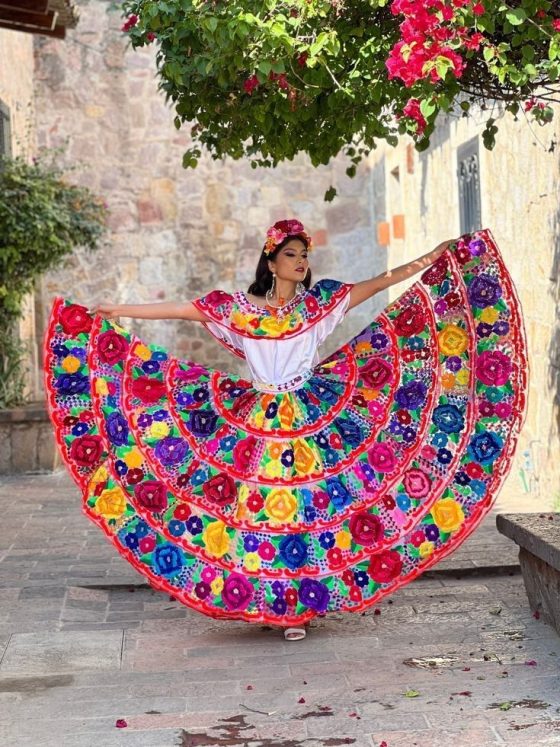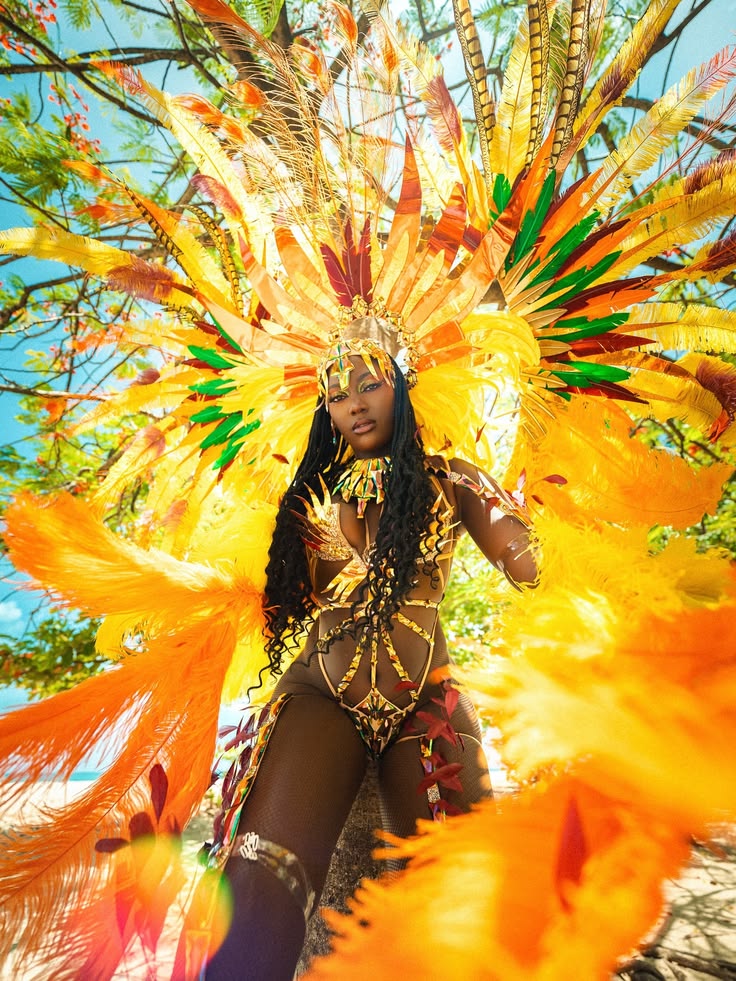
Every August, something extraordinary moves through the streets of Bridgetown. Sequins catch the sun. Feathers rise ten feet above the crowd. The bass from the music trucks shakes the ground before the procession even comes into view. This is Grand Kadooment Day, the climax of Barbados’ Crop Over festival, and it looks like nothing else in the Caribbean.
And yet, the conversation around it almost always starts the same way: “It’s like a smaller Trinidad Carnival.” That comparison is lazy, and it misses the point entirely. Crop Over did not emerge from Trinidad’s cultural history. It did not evolve from the same social tensions, the same religious calendar, or the same community of designers. It was built in Barbados, from Barbadian material, across centuries of specifically Bajan experience. The aesthetic it produced is its ow
Crop Over is not a smaller Carnival. Barbados built its own distinct festival aesthetic rooted in sugar, emancipation, and Bajan identity. Here is what makes it entirely its own.
It Started in a Sugar Field, Not at a Party
The origin story of Crop Over is inseparable from sugar. Barbados was once the largest sugar producer in the world, and from as early as 1687, the end of the sugarcane harvest was marked with celebration. Workers, enslaved and indentured, sang, danced, and played instruments made from whatever was at hand: bottles filled with water, shak-shak, banjo, bones, and triangle. These were not parties in the modern sense. They were communal releases, moments of breath in a brutal system, and they were rooted in the agricultural rhythm of the island.
Trinidad Carnival has a different engine entirely. It grew from the pre-Lenten masquerades of French colonial planters, which enslaved Africans were barred from attending and eventually reimagined in defiant parallel celebrations of their own. The spiritual calendar drove it. The mockery of colonial power shaped its costume vocabulary. These are not the same cultural impulses. One festival was born from the land and the harvest. The other is from religious tradition and resistance to a different kind of colonial structure. The fact that both involve sequins and soca music does not make them the same thing.
The Festival Almost Disappeared. Then Barbados Chose to Save It.
By the 1940s, as the global sugar industry collapsed and Barbadian plantations closed, Crop Over faded with them. The festival that had marked harvests for over two centuries simply stopped. It was revived formally in 1974 by the Barbados Tourist Board, and the decision to bring it back was a conscious act of cultural reclamation. Barbados was not borrowing someone else’s celebration. It was restoring itself.
That 1974 revival is significant for the fashion story because it meant that Crop Over’s modern aesthetic was deliberately built by Barbadian designers and community makers, who had to reconstruct what the festival should look like for a new era. They did not import a template. They built one. And the one they built reflects Bajan cultural priorities: community participation, joy as a political statement, and beauty as a form of assertion.
Grand Kadooment: The Fashion Event Nobody Talks About Correctly
The centrepiece of Crop Over is Grand Kadooment Day. The word kadooment comes from the Bajan dialect and means a large, raucous celebration. It is a costumed street parade that begins at the National Stadium in Bridgetown and proceeds through the city to a route ending at Spring Garden Highway. What makes it visually extraordinary is not just the costumes themselves, but the system behind them.
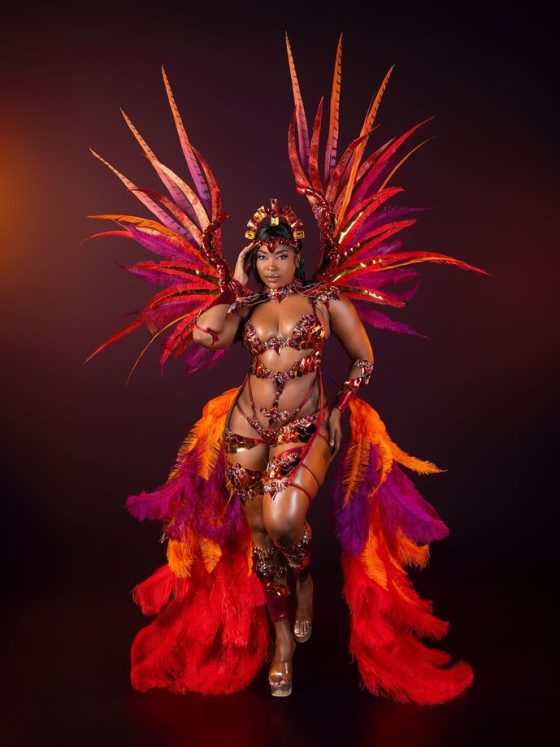
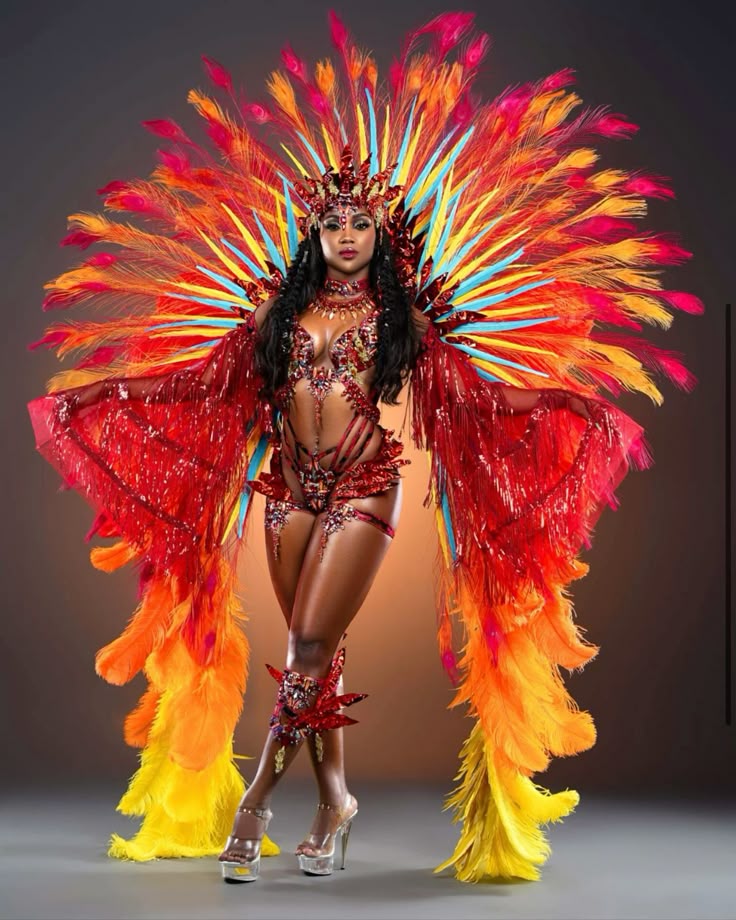
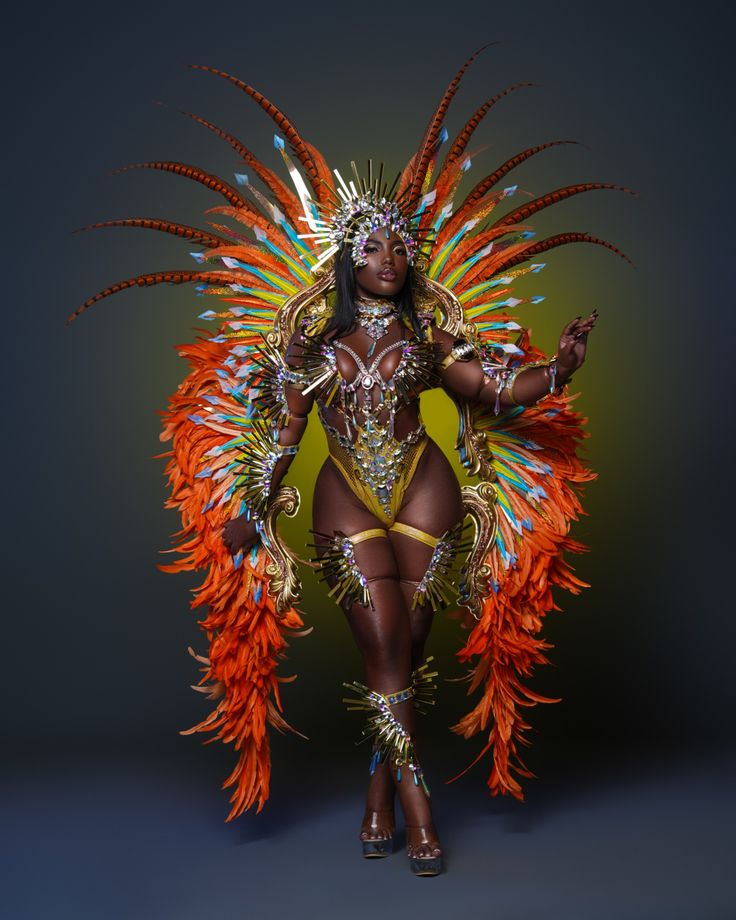
Masqueraders register with bands months in advance and choose from frontline, midline, or backline costume tiers. Frontline is the showstopper: the most elaborate constructions, the tallest feather backpacks, the most densely beaded bras and bodysuits, the pieces that stop photographers in their tracks. Midline balances spectacle with wearability. Backline is typically a T-shirt and shorts, which is its own kind of Bajan statement about inclusion. Not everyone needs to be in full plumage to belong.
Rihanna Changed the Global Conversation
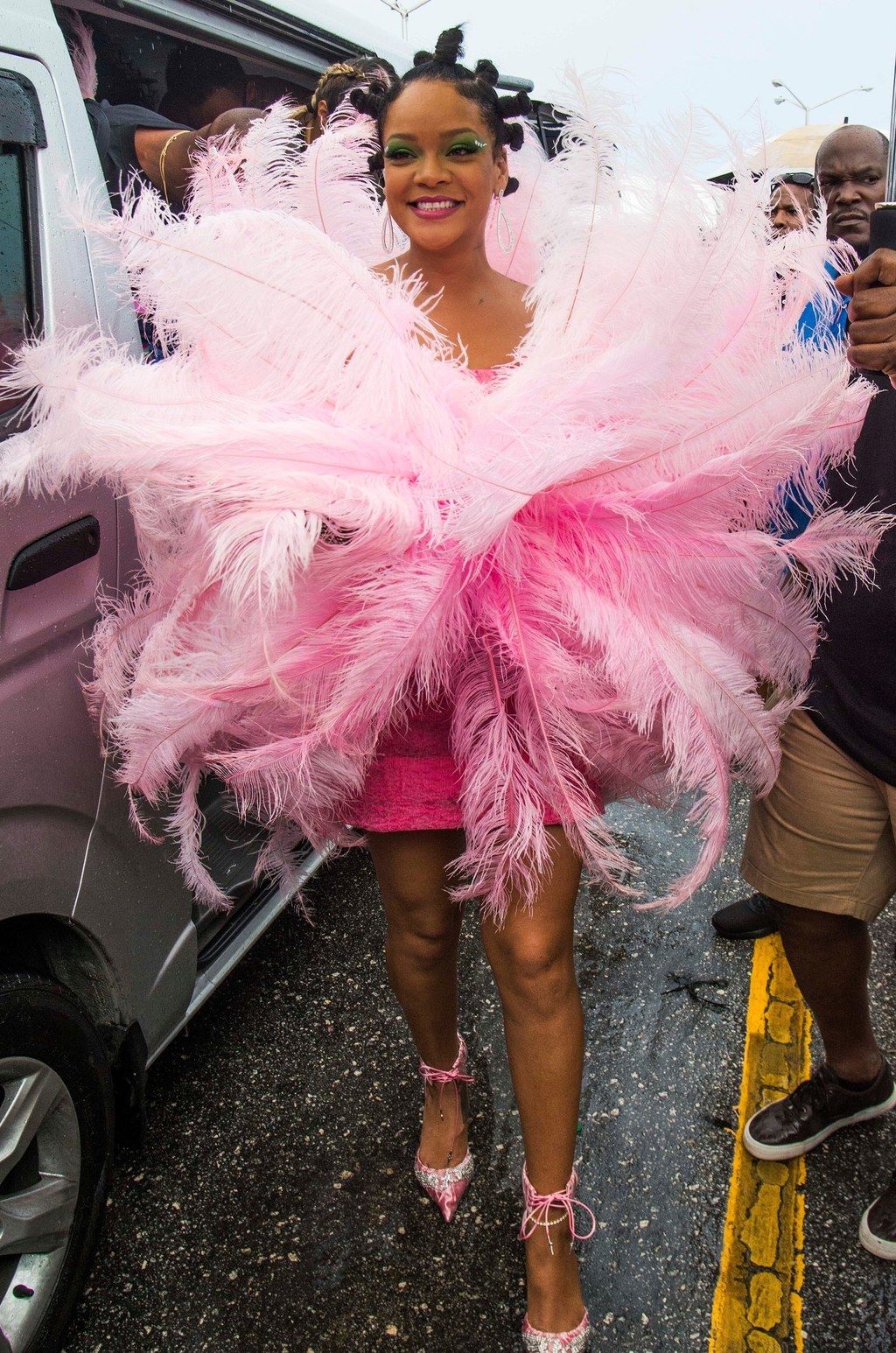
If one moment shifted global attention toward Crop Over fashion, it was Rihanna. Every appearance she has made at Grand Kadooment since 2013 has become an internationally covered event, each look designed by Lauren Austin of Aura Experience, the island’s most prominent mas band. The images are iconic: jewel-encrusted two-pieces, teal hair against turquoise feathers, colour combinations that look like they were engineered by someone who understood exactly how Caribbean light falls on skin.
But Rihanna did not create Crop Over’s aesthetic. She amplified it. The design logic was already in place, developed over decades by Barbadian designers, weavers, and costume-makers who understood their own festival’s visual language. What changed after Rihanna is that the world started paying attention. The work of artists like Lauren Austin, who moved to Barbados in 2000 and built her practice specifically around Crop Over, is the real story. The celebrity is the headline. The craftspeople are the substance.
The Colour Logic Is Different Here
One of the most distinctive features of Crop Over costume design, when you look closely, is how colour works. Trinidad Carnival’s large band aesthetic often organises sections around single dominant colour schemes, each section a coordinated wave of one hue moving down the road together. Crop Over costumes lean into maximalism at the individual level: multiple jewel tones, high-contrast combinations, and layered textures of sequins, feathers, and beads that do not necessarily coordinate across a whole section.
This reflects something about Bajan social culture. Crop Over is a community celebration first, a spectacle second. The emphasis is on the person wearing the costume and their joy within the band, not on the group’s visual uniformity from a distance. It produces a different kind of beauty: more chaotic, more personal, more alive in a way that can look overwhelming in a photograph and utterly intoxicating in person.
The African Roots Running Through Every Feather
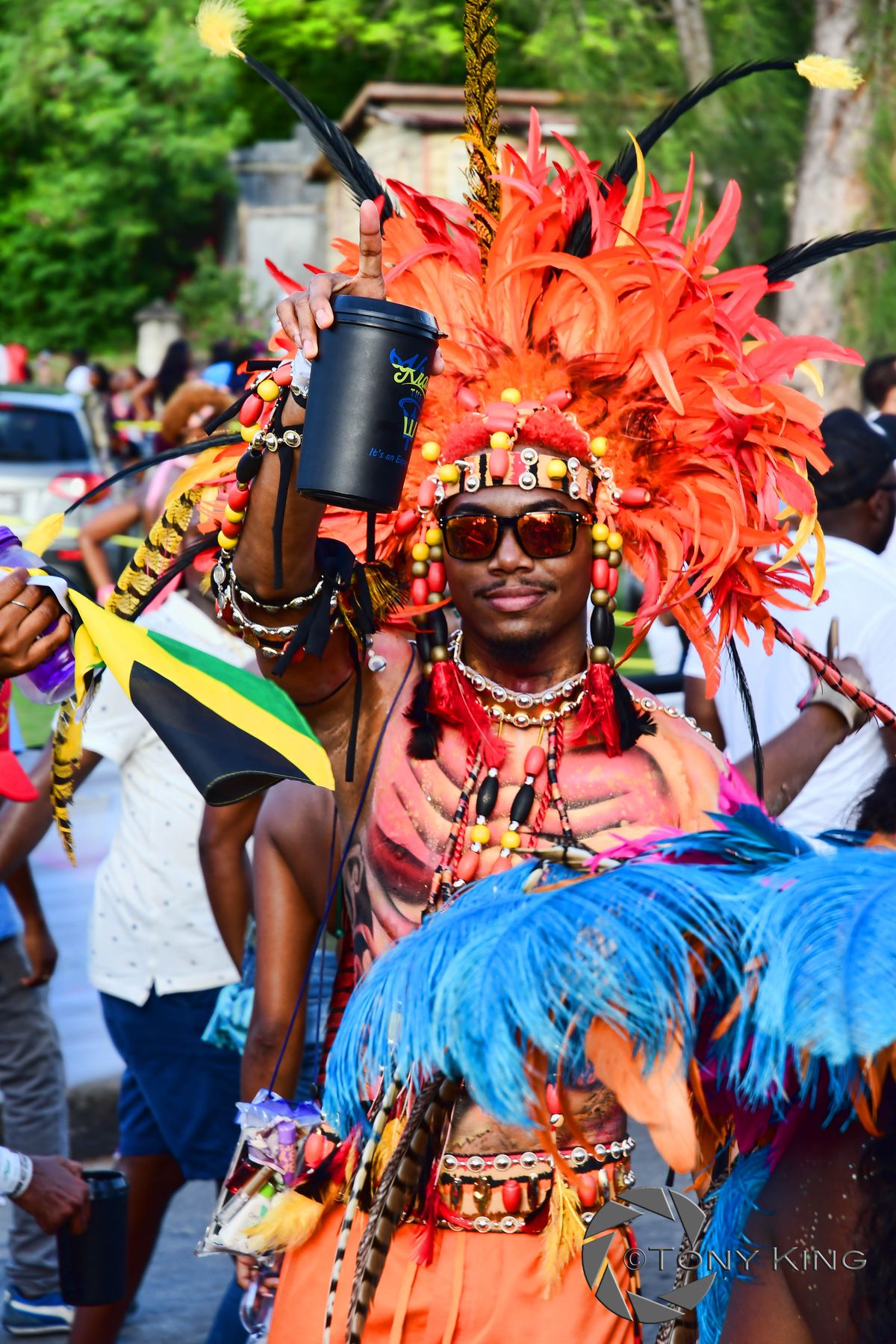
Before the modern bikini-and-bead format emerged, Crop Over costume traditions were rooted in something older. Historically, African captives wore masks, feathered headdresses, and shredded strips of cloth, and painted their faces and bodies as expressions of ancestral heritage and cultural pride in the face of oppression. The flag-carrying tradition that continues at Crop Over today, with masqueraders holding their countries’ flags as accessories, is a direct descendant of that practice.
The feathers that now reach extraordinary heights in frontline costumes are not merely decorative. They carry the memory of those earlier headdresses, transformed and elaborated across generations into something that is both celebration and continuation. When you watch Grand Kadooment, you are watching a visual tradition that has been evolving for over three hundred years, each generation adding its own language to what those before them built.
What Crop Over 2026 Looks Like
The 2026 edition of Crop Over runs from late July through August 4, with Grand Kadooment Day falling on Monday, August 3. Bands including Aura Experience and Zulu International have launched their themes and costume sections, with names like Zulu’s ‘New Dawn’ sections spanning Diamond, Kalinago, Flora, and Emerald, each with distinct colour palettes and design directions. Costume packages for 2026 range from approximately $250 for backline to over $1,000 for premium frontline with Aura, with prices reflecting the level of construction, embellishment, and band amenities included.
What is notable about this year’s design directions is a continued movement toward elaborate architectural backpieces. The frontline wings and feather structures have been growing in scale with each edition, and 2026 appears to push that further, with backpieces that frame the wearer’s silhouette in structures closer to wearable sculpture than to costume. The craft behind these pieces, much of it produced by Barbadian makers working year-round, is serious design work that deserves the same critical attention given to any other construction-intensive fashion tradition.
READ ALSO:
- Why Wearing African Cloth in the Diaspora Is an Act of Cultural Reclamation
- The Ankara Abroad: How West African Print Became a Global Style Language
Why the ‘Smaller Carnival’ Label Needs to End
The comparison to Trinidad is not just inaccurate. It is a category error. Trinidad Carnival is the largest carnival in the Caribbean and one of the largest in the world. Judging Crop Over by that standard is like judging a painting by how much it resembles a sculpture. They are different things, made for different purposes, with different histories.
Crop Over has its own timeline, running six weeks from July to August rather than the pre-Lenten February window. It has its own music competitions; its own calypso and soca monarchy contests, its own community events, food fairs, and craft markets. It culminates in a parade that ends at the beach, which is the most Barbadian possible conclusion to anything. It does not need Trinidad’s scale or timeline to justify its significance. It needs to be seen clearly, on its own terms, for what it actually is: a distinct and complete cultural and fashion system that Barbados built entirely for itself.
The Omiren argument
The ‘smaller Carnival’ label does something very specific: it makes Crop Over legible to audiences already familiar with Trinidad by positioning it as a reduced version of something they already understand. That framing is convenient for travel writers and tourism marketing. It is damaging to the cultural work itself. Crop Over’s design vocabulary, its colour logic, its community structure, its historical roots in sugar harvest and emancipation rather than in a pre-Lenten French colonial calendar — all of this gets flattened when Crop Over is understood as Trinidad with fewer people. Barbados did not build a smaller version of someone else’s festival. It built its own, from the ground up. The designers who make Grand Kadooment happen are working within a tradition that has three centuries of Bajan cultural history behind it. That tradition deserves to be described, understood, and written about on its own terms, not compared or diminished. Understood.
Frequently Asked Questions
- What is Crop Over, and when does it take place?
Crop Over is Barbados’ national festival, a six-week celebration that runs from late July through early August each year. It traces its origins to 1687, when workers marked the end of the sugarcane harvest with music and celebration. The festival was formally revived in 1974 and now encompasses calypso and soca music competitions, food fairs, community events, arts-and-crafts markets, and a series of parties and fetes. It culminates in Grand Kadooment Day, a costumed street parade through Bridgetown, which in 2026 falls on Monday, August.
- What is Grand Kadooment Day?
Grand Kadooment Day is the climax of Crop Over, a costumed street parade that starts at the National Stadium in Bridgetown and moves through the city streets to Spring Garden Highway. Masqueraders register in advance with mas bands and choose costume tiers ranging from backline (typically a T-shirt and shorts) to midline (bikini and shorts style) to frontline (the most elaborate costumes with beaded bodysuits, large feather backpacks, and architectural wing structures).
- How is Crop Over different from Trinidad Carnival?
Crop Over and Trinidad Carnival share a visual language of sequins, feathers, and soca music, but they emerged from entirely different cultural histories. Trinidad Carnival grew from the pre-Lenten masquerade traditions of French colonial planters, which enslaved Africans reimagined as acts of cultural defiance. Crop Over grew out of the sugarcane harvest celebrations of Barbados, rooted in the island’s agricultural and emancipation history. Crop Over is not a smaller or simpler version of Trinidad Carnival. It is a different festival with its own complete cultural logic.
- Who designs Crop Over costumes?
Crop Over costumes are designed by the creative directors and designers of Barbados’ mas bands, who often work year-round to produce the frontline pieces shown at Grand Kadooment. The most prominent current band is Aura Experience, co-founded by designer Lauren Austin, who has also designed Rihanna’s Crop Over looks since 2013. Austin moved to Barbados from Trinidad in 2000 and built her practice specifically around Crop Over, developing a design sensibility rooted in the Bajan festival’s own aesthetic traditions. Other active bands for 2026 include Zulu International and Krave Da Band.
- How much do Crop Over costumes cost?
Costume costs for Crop Over 2026 vary by band and tier. Backline costumes, which typically include a T-shirt and shorts, start around $250. Midline costumes in the bikini and shorts style range from approximately $400 to $700. Premium frontline costumes with full beaded bodysuits and feather backpieces can reach $1,000 or more with bands like Aura Experience. Costume packages generally include the costume itself, food and drinks on the road, security, and access to the parade route.
- Can visitors participate in Grand Kadooment?
Yes. Visitors can either spectate for free along the parade route or participate by registering with a masband and purchasing a costume package. Band registration and costume sales typically open between April and May and sell out well before the festival. For 2026, Grand Kadooment takes place on August 3. Visitors planning to jump with a band should register several months in advance and plan to arrive in Barbados before the parade day to collect their costumes and experience the pre-Kadooment events.