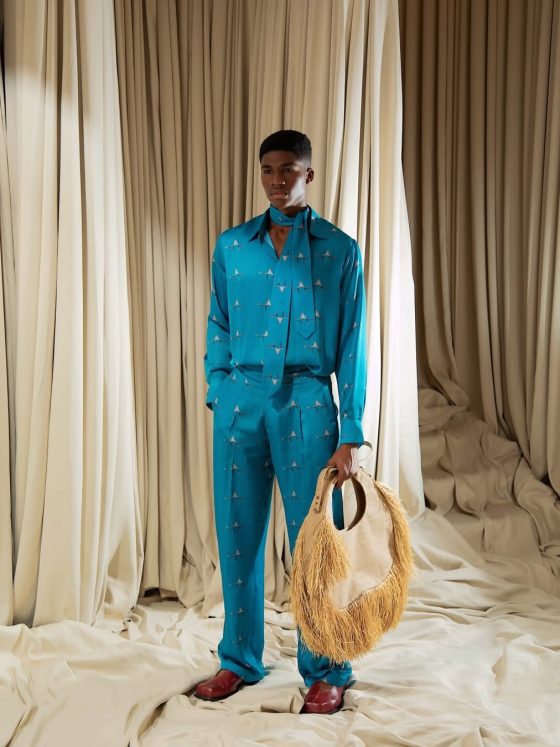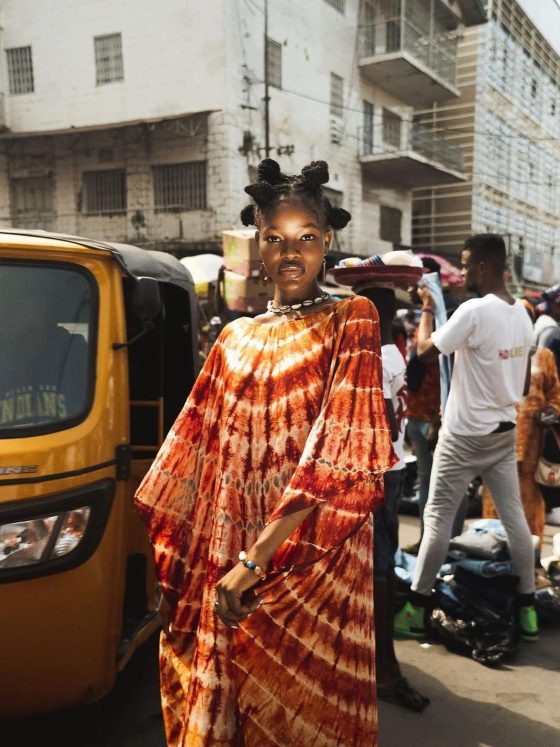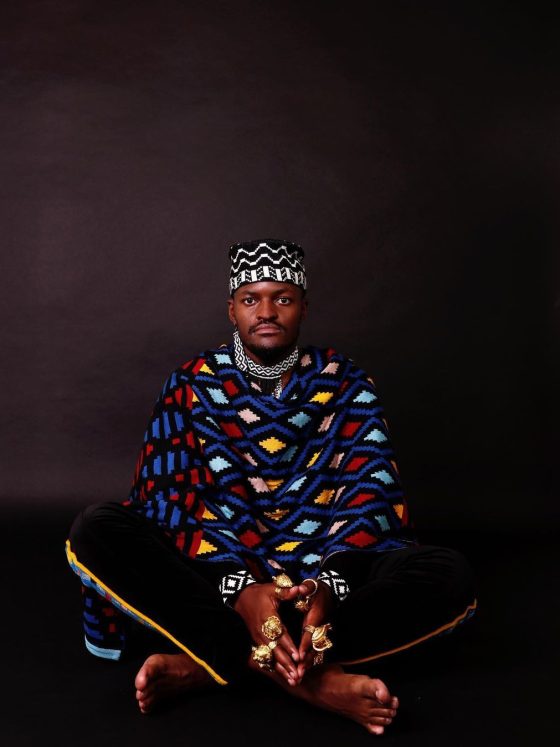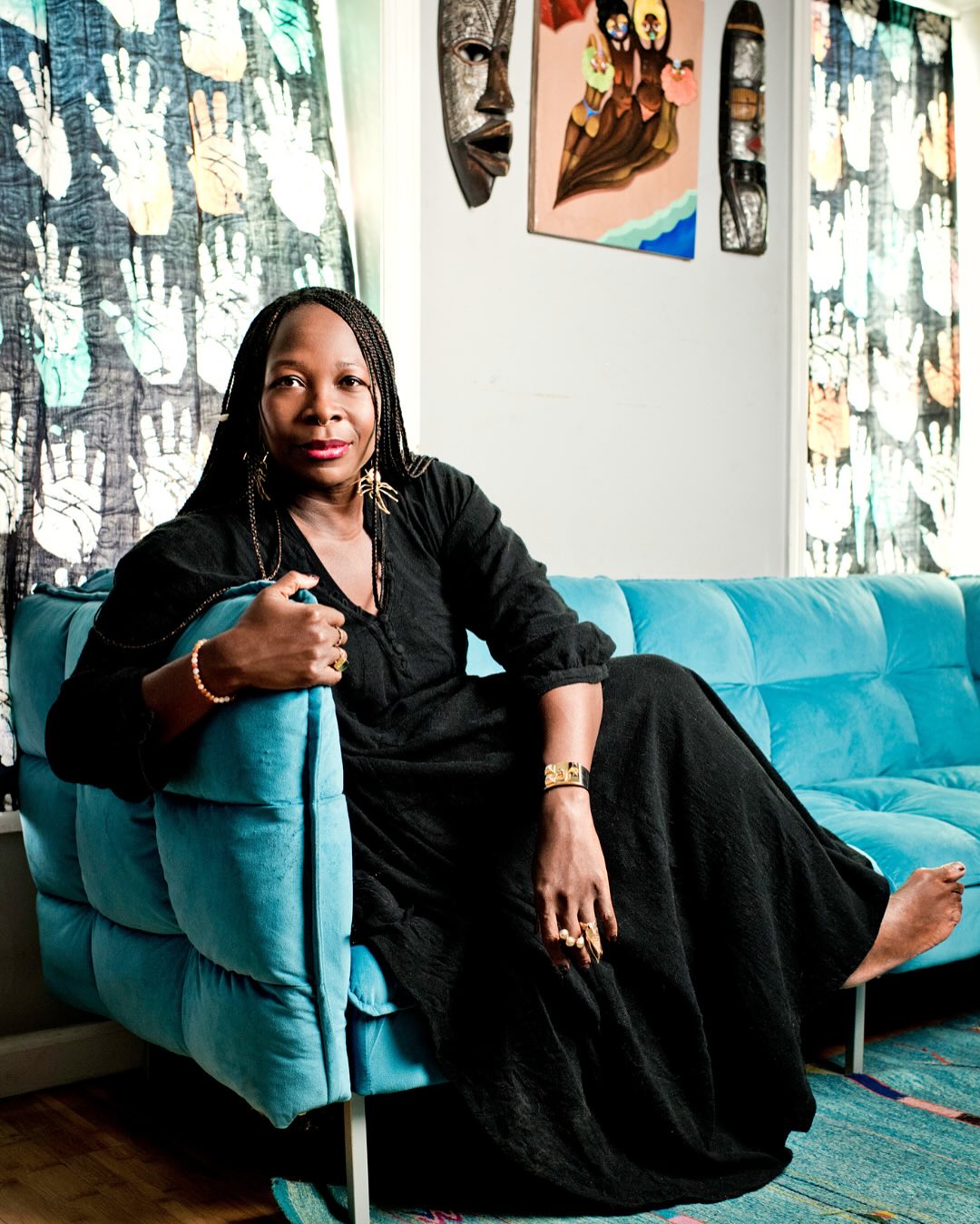
The first day Busayo Olupona showed up to her California middle school in a colourful, patterned Nigerian dress, her classmates mocked her relentlessly. The clothes, the hair, the way she spoke: all of it was target material for children who had decided that everything about where she came from was wrong. She adapted, wore what the school expected, and spent the next decade building a career in law unrelated to the fabrics she had grown up around. It was not until she was practising as a lawyer in New York, years later, that she found herself longing for the clothes that had been ridiculed out of her wardrobe in California, and unable to find anything in the New York market that came close. So she went back to Nigeria, worked with the artisans who had been making adire fabric for generations, and built the clothes herself.
That decision, made on the side of a law career she never fully abandoned, became Busayo NYC: a brand stocked at Saks Fifth Avenue, Shopbop, and Moda Operandi, worn by Madonna, Lupita Nyong’o, and Leslie Odom Jr., and covered by Vogue, Elle, and Fast Company. Busayo Olupona built it from Brooklyn and Lagos simultaneously, with the same team of Nigerian fabric makers and seamstresses she started with, who have since moved into proper production workshops and work entirely on her brand. She built it toward luxury rather than accessibility, and priced her garments between $135 and $465 from the start. She refused to position her adire fabrics as exotic or foreign. She positioned them as contemporary. The distinction is the whole argument.
Busayo Olupona was mocked for her Nigerian prints in a California classroom. She turned those prints into a Saks Fifth Avenue brand. This is how she did it and what it means.
From Ife to California to Brooklyn: The Formation
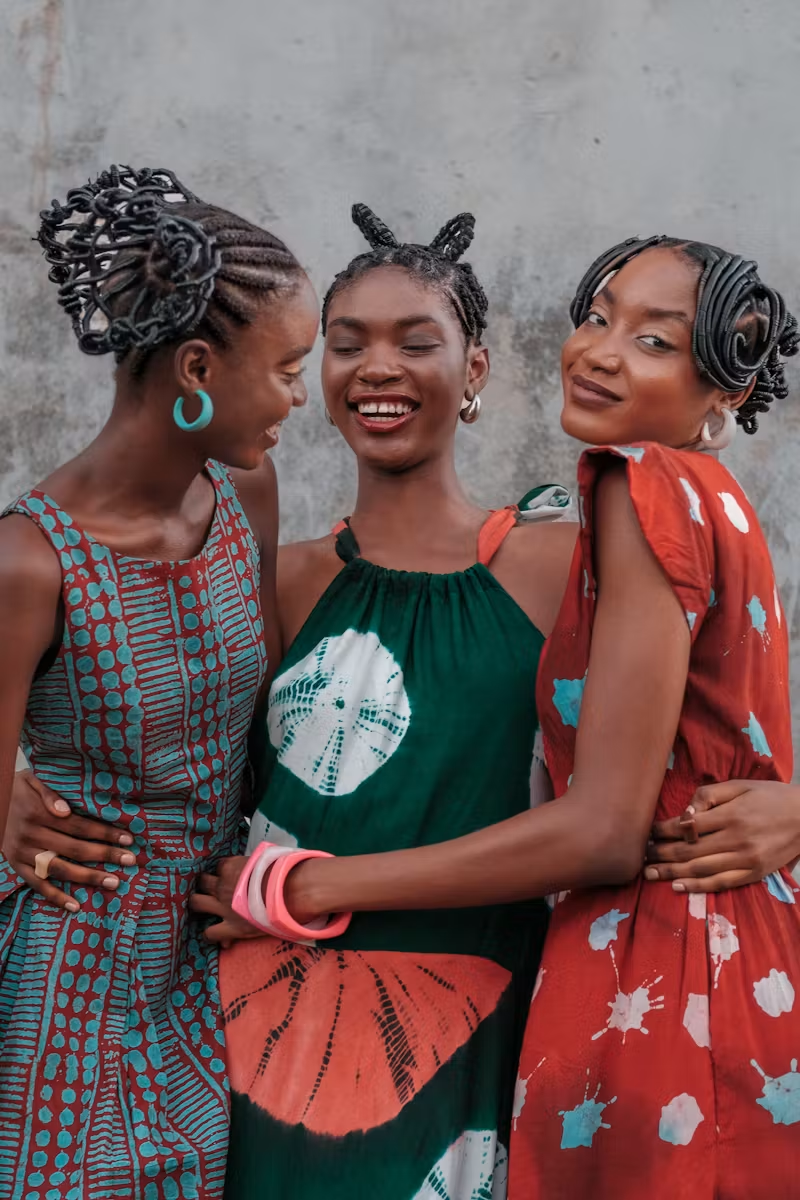
Busayo Olupona was born in the United States to Nigerian parents who returned to Nigeria when she was three years old. She grew up in Ife, the ancient Yoruba city in Osun State, surrounded by the textile and craft traditions of the Yoruba community from which her family comes. She returned to the United States at twelve, settling with her family in Davis, California. In this small university town, her Yoruba heritage, her dress, and her way of being in the world were consistently marked as others. She attended Davis Senior High School from 1994 to 1996, studied Business Administration with a minor in Theatre at the University of California, Berkeley from 1996 to 2000, and received her law degree from New York University School of Law in 2005.
She launched Busayo NYC in 2011 as a side project while practising law, beginning by making clothes for herself: garments that allowed her to wear the Nigerian prints and fabrics she could not find in the American market. The origin was personal rather than entrepreneurial, a designer making what she wanted to wear rather than what she calculated the market wanted to buy. That starting point matters for the brand’s character. Busayo NYC was not built on a market analysis of African fashion’s commercial potential. It was built on a woman’s refusal to continue wearing clothes that had nothing to do with who she was. The market that developed around that refusal came later, and it came because the refusal was genuine.
“She started making clothes because she could not find in New York what she had grown up wearing in Ife. The market came later. The refusal came first.”
What Adire Actually Is
Adire is a Yoruba resist-dyeing textile technique that originated in southwest Nigeria at the turn of the twentieth century. The word means “to tie and dye” in Yoruba, and the technique involves applying a resist, either cassava starch paste or a tie-and-fold pattern, to white fabric before immersing it in indigo or other plant-based dyes. The areas protected by the resist retain the original colour while the exposed fabric absorbs the dye, producing the characteristic pattern. Adire eleko uses starch paste applied through a stencil or freehand by skilled practitioners, producing the most complex and detailed designs. Adire oniko uses the tie-dye method, with fabric tied or bound to create circular and geometric patterns.
All of Busayo’s fabrics start as a blank white canvas. They are produced in Nigeria using the adire process, developed into the label’s signature kaleidoscopic patterns by her team of fabric makers. Olupona travels frequently to Nigeria to work directly with the artisans, and her involvement in the fabric development is foundational rather than supervisory: she is not sourcing existing adire fabric and building garments from it. She is developing original patterns through a collaborative process with Nigerian artisans, then constructing contemporary silhouettes from that custom fabric. The distinction between sourcing and collaborating is significant. Sourcing takes what already exists. Collaborating builds something new from tradition.
The Commercial Model: Luxury Without Apology
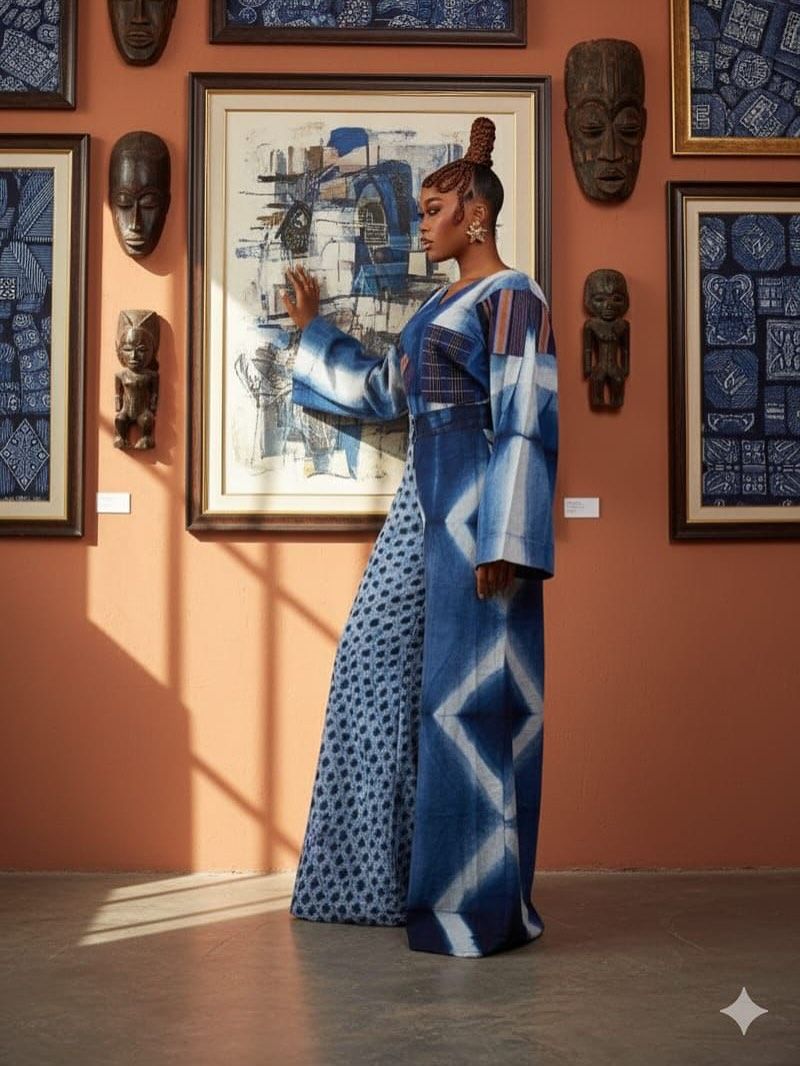
The pricing structure of Busayo NYC communicates its commercial positioning without ambiguity. Garments priced from $135 to $465, stocked at Saks Fifth Avenue, Shopbop, and Moda Operandi: these are luxury retail benchmarks, not accessible fashion price points. That positioning was a deliberate choice from the brand’s early years, and it reflects a specific argument about what Nigerian adire fabric is worth and where it belongs in the market hierarchy. Placing adire-print garments in the same retail context as European luxury brands is not a marketing strategy. It is a statement about the craft.
The brand’s trajectory from direct-to-consumer beginnings to department store and luxury online retail followed the same path that most fashion brands take: small boutiques first, then larger retailers as the brand’s recognition grew. What distinguished it from the standard African fashion brand trajectory was that Olupona did not compromise the brand’s material foundation to access those retail channels. The adire fabric, made by her Nigerian team, remained the central commercial product throughout. Saks Fifth Avenue stocking Busayo NYC is not a concession to the mainstream market. It is the mainstream market recognising what has been in Ife since the early twentieth century.
“Saks stocking Busayo NYC is not the brand moving toward the mainstream. It is the mainstream finally arriving at Ife.”
Madonna, Lupita, and What Celebrity Dressing Does and Does Not Do
The celebrity clients attached to Busayo NYC- Madonna, Lupita Nyong’o, and Leslie Odom Jr.- represent the visibility dimension of the brand’s development. Celebrity dressing in contemporary fashion serves a specific function: it provides imagery that positions a brand in the cultural and social context its target audience aspires to. When Lupita Nyong’o wears Busayo, the brand is visible within a frame that simultaneously communicates cultural sophistication, global relevance, and Black luxury. That is not incidental. It is precisely in the context in which adire fabric is seen that the associations the American market brings to African textile traditions shift.
What celebrity dressing does not do is build the commercial infrastructure that sustains a brand at scale. The customers who find Busayo NYC through its celebrity profile and make purchases at Saks or Shopbop are the commercial engine. The Vogue and Elle coverage that follows celebrity appearances provides awareness. Neither replaces the operational decisions Olupona makes every time she travels to Nigeria to develop new fabric patterns, every time she works with her production team to expand capacity, and every time she sets pricing that values the craft at the level it deserves rather than at the level a market trained on cheap African print would accept. The celebrity clients are the headline. The artisan team in Nigeria is the foundation.
Also Read:
- Ankara Is Not African Print: The Vlisco Problem and the Ownership Question
- What Kente’s New GI Status Actually Means for Who Gets to Use the Name
The Pipeline She Built Back to Nigeria
One of the most consistent themes in Olupona’s public statements about Busayo NYC is the economic dimension of the brand’s relationship with Nigeria. Nigeria has a significant poverty challenge, and the opportunity to collaborate with Nigerian artisans and provide consistent work through a growing international brand has been, in her words, such an important part of building the company. The team of fabric makers and seamstresses she started with has now moved into proper production workshops and works entirely on the Busayo brand: a trajectory from informal artisan work to formal production employment, driven by the growth of a single brand built in Brooklyn.
That pipeline, from Brooklyn retail to Lagos production, is not a development initiative or a corporate social responsibility programme. It is the commercial logic of a brand whose product is inseparable from the people who make it. Busayo NYC cannot source its fabric from a cheaper supplier and remain Busayo NYC. The adire tradition, the specific artisans, the collaborative pattern development: these are the brands. There is no version of the label that exists without the Nigerian production community at its centre. That structural inseparability is what distinguishes Busayo from fashion brands that describe African craft as inspiration and then produce in Bangladesh.
The Distinction That the Fashion Press Misses
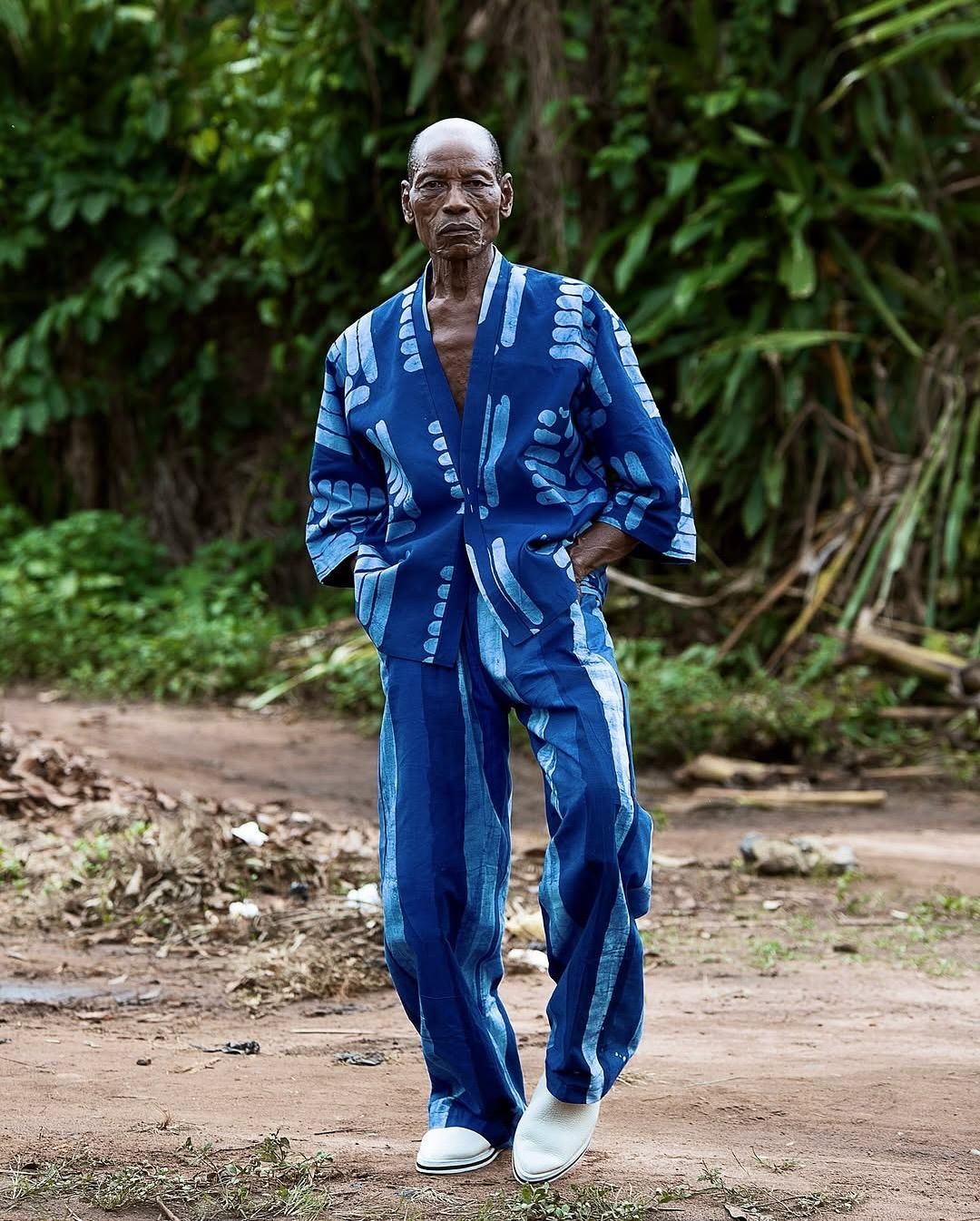
The fashion industry has two ways of engaging with African textile traditions. The first is to borrow the visual vocabulary, referencing kente stripes, adire patterns, or ankara prints as seasonal trend inputs, to produce collections that carry African visual references without the African craft knowledge that produces them. The second is to build the entire commercial and aesthetic logic of the brand from inside the tradition, to commission original work from artisan communities, to position that work at the price point the craft commands, and to take the commercial risk that comes with being a luxury brand in a market that has been trained to think of African textiles as cheap. Busayo NYC does the second.
The difference is not visible in a product image. Both approaches can produce beautiful garments that read as African-print luxury. The difference lies in where the value accrues: to the artisan community, to the brand that references it, to the tradition, or to the trend. When Busayo Olupona travels to Ife to develop new patterns with her fabric team, the value of that creative work stays in Nigeria. When a European fashion house releases an adire-inspired collection produced in Italy, the value of the adire reference stays in Europe. The fashion press covers both as fashion. Only one of them is a fashion language. The other is a loan that never gets repaid.
OMIREN ARGUMENT
The standard fashion-press story about Busayo NYC has two elements: the personal journey from a bullied immigrant child to Saks Fifth Avenue and the celebrity client list. Both are true, and both are insufficient. The story that matters is the one neither element captures: that Busayo Olupona built a luxury fashion brand by refusing to translate adire fabric into something the American market already had a category for, and the American market eventually came to the fabric rather than the other way round. That refusal is the brand’s argument. It has been made consistently since 2011, through the development of original fabric patterns with Nigerian artisans, through luxury pricing that communicates the craft’s value without apology, through retail placement that positions adire alongside European luxury rather than in an African fashion subcategory.
The fashion industry’s description of Busayo NYC as a brand that uses African print as a visual vocabulary is describing a completely different brand. The African print, as a visual vocabulary, is a borrowing. Busayo NYC is a practice. The visual vocabulary is not borrowed from a tradition elsewhere. It is being generated, in collaboration with that tradition’s living practitioners, as the brand’s primary creative output. The distinction is not academic. It is the difference between a designer who works with a craft and a designer who is of a craft. Busayo Olupona is of adire in the same way that Meiling is of minimalist Caribbean sensibility, and Edvin Thompson is of dancehall aesthetics. The craft is not the inspiration. It is the method. Everything the brand has built follows from that.
Frequently Asked Questions
- Who is Busayo Olupona, and what is Busayo NYC?
Busayo Olupona is a Nigerian-American lawyer and fashion designer, the founder and creative director of Busayo NYC, a luxury ready-to-wear brand launched in 2011 and based in Brooklyn, New York. She was born in the United States to Nigerian parents, grew up in Ife, Osun State, Nigeria, and returned to the US at age 12. She studied Business Administration at UC Berkeley and received her law degree from NYU School of Law in 2005. She launched Busayo NYC alongside her law practice, initially making clothes for herself using adire fabric made with Nigerian artisans. The brand is stocked at Saks Fifth Avenue, Shopbop, and Moda Operandi, and has been worn by Madonna, Lupita Nyong’o, and Leslie Odom Jr.
- What is adire fabric, and how does Busayo NYC use it?
Adire is a Yoruba resist-dyeing textile technique originating in southwest Nigeria at the turn of the twentieth century. The word means to tie and dye in Yoruba. The technique involves applying a resist substance, either cassava starch paste or by tying and folding the fabric, before immersing it in indigo or other plant-based dyes. Busayo NYC develops all of its fabrics from blank white canvas using the adire process, with original patterns created through a collaborative process between Olupona and her team of fabric makers in Nigeria, whom she visits regularly to develop new designs. The brand uses adire eleko, in which starch paste is applied through a stencil or freehand, to produce complex kaleidoscopic patterns specific to the label.
- Where is Busayo NYC stocked?
Busayo NYC is stocked at Saks Fifth Avenue, Shopbop, and Moda Operandi, placing it in the luxury retail tier alongside European and American premium brands. The brand also sells directly to consumers through its own website. Pricing ranges from approximately $135 for entry pieces to $465 for key collection items. The brand began as a direct-to-consumer business before expanding into small boutiques, then major department stores, and finally luxury online retail as its recognition and following grew.
- How does Busayo NYC support Nigerian artisans?
Busayo NYC’s production is entirely rooted in Nigeria. Olupona’s fabric makers and sewists, whom she has worked with since the brand’s founding in 2011, have since moved into dedicated production workshops and now work exclusively for the Busayo brand. Olupona travels regularly to Nigeria to develop new fabric patterns in direct collaboration with her artisan team. The brand’s commercial growth has created formal employment in the Nigerian production community as a direct structural consequence of its retail success. Olupona has cited the opportunity to collaborate with Nigerian artisans and provide consistent work as central to the brand’s mission from the beginning.
- What is the difference between using African print as a visual vocabulary and Busayo NYC’s approach?
Using African print as a visual vocabulary means borrowing the aesthetic of African textile traditions as a seasonal trend reference, producing collections that carry African visual references without the African craft knowledge behind them. Busayo NYC’s approach is to build the brand’s entire commercial and creative logic from inside the adire tradition: developing original fabric patterns in direct collaboration with Nigerian artisans, pricing that reflects the craft’s value at a luxury level, and maintaining the Nigerian production community as the brand’s structural foundation rather than as an inspiration source. The value generated by Busayo NYC’s creative work accrues to Nigeria because it occurs there, with practitioners of the tradition it draws on.