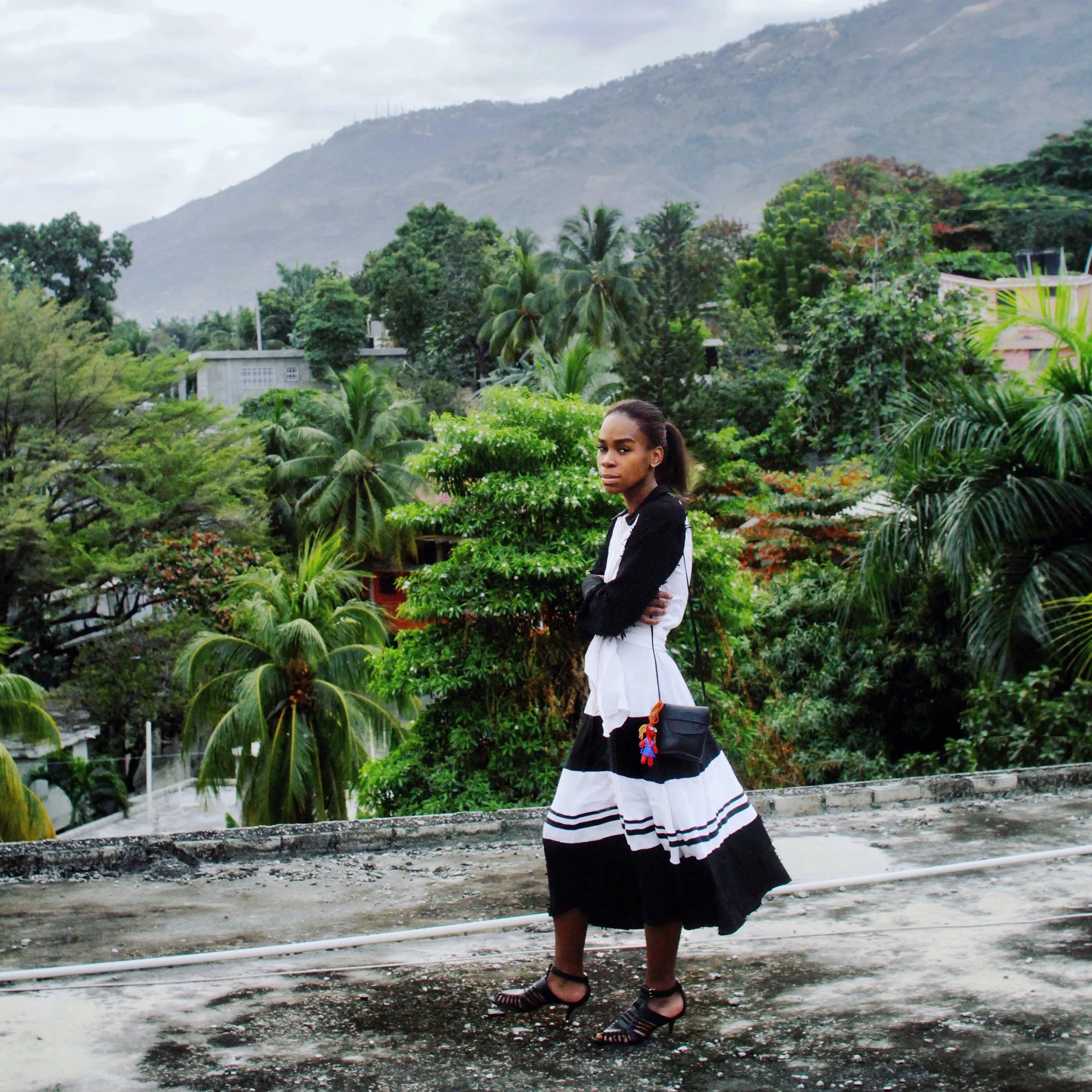
Azede Jean-Pierre was born in Pestel, Haiti, the fourth of eight children in a family she has described as rooted in creativity and resilience. She arrived in the United States as a refugee and was raised in Atlanta, Georgia. She attended the Savannah College of Art and Design on a scholarship from Atlanta Mayor Shirley Franklin. She then earned a Master of Arts in Knitwear from the Institut Francais de la Mode in Paris. In 2012, at twenty-four years old, she launched her label in New York. By 2016, Forbes had placed her on its 30 Under 30 list. By 2021, Gucci had named a collection after her. Throughout this period, the fashion press consistently described her as a New York designer. Pestel, the actual source of the work, was noted in passing.
Azede Jean-Pierre was born in Pestel, Haiti. She built one of New York’s most technically rigorous fashion labels and collaborated with Gucci. The industry called her a New York designer. She was always a Haitian one.
The Technical Foundation: What Knitwear Demands
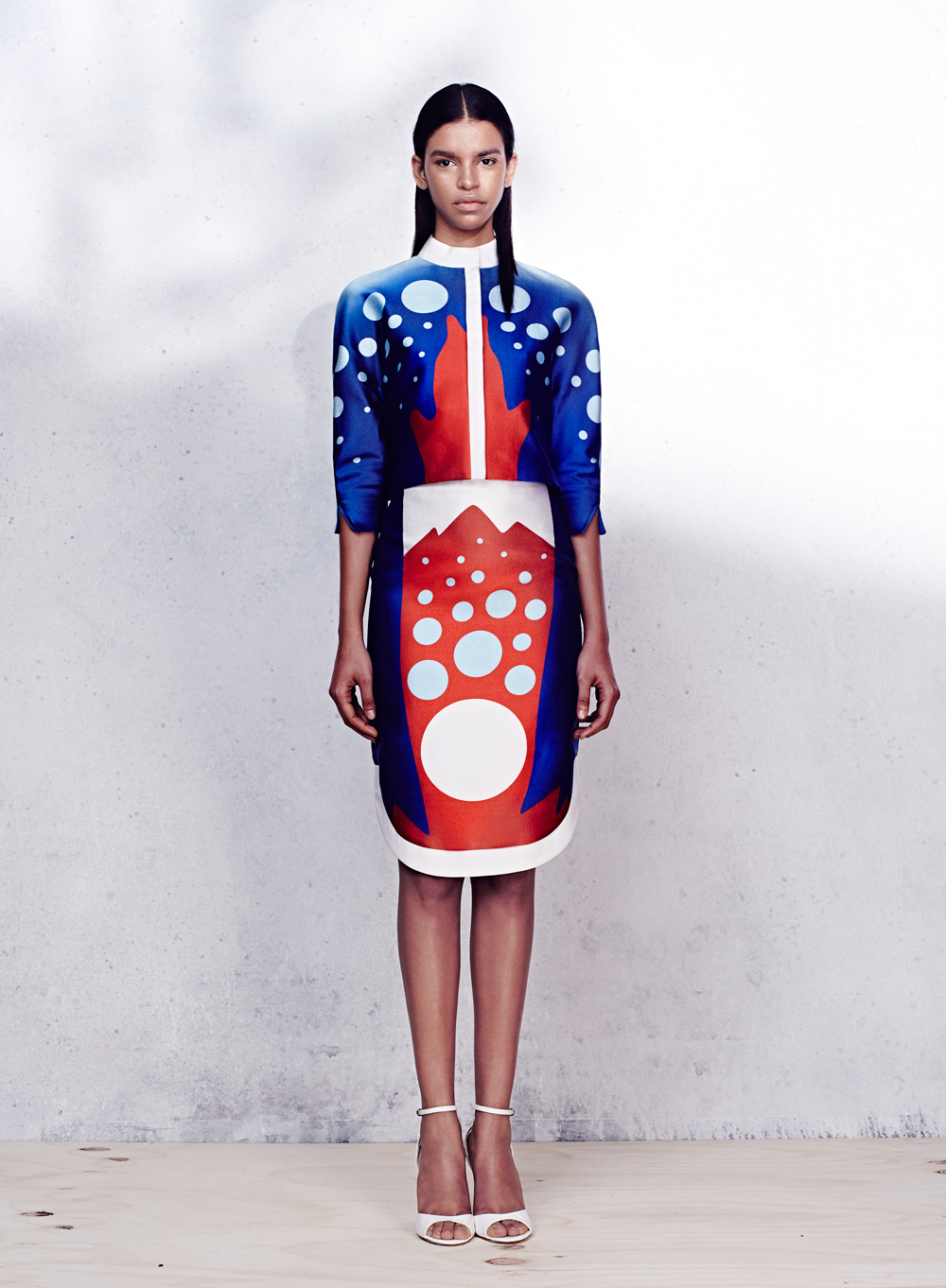
Jean-Pierre’s practice is built around knitwear, not as a commercial category but as a structural method of thinking about garment construction. A knit garment requires the designer to develop both the fabric and garment structures simultaneously. The two cannot be separated, the way woven construction allows them to be. Jean-Pierre trained specifically to master this at the Institut Francais de la Mode in Paris, one of the few institutions in the world offering specialist postgraduate training in knitwear design.
That technical foundation informs every decision she makes: the silhouettes she draws, the weight and behaviour of the fabrics she develops, the relationship between the garment and the body wearing it. Her collections are not draped or constructed in the conventional sense. They are engineered. The distinction is visible in the work.
From the SS16 collection, she integrated artisan partnerships with communities in developing countries, including Haiti, into her production model. Slow fashion was not a branding position. It was a structural commitment to building supply chains that her formation had taught her to value.
Michelle Obama, Solange, and the Label’s Client Record
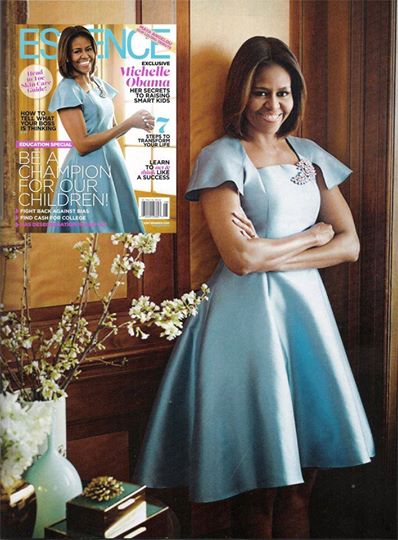
Michelle Obama wore Jean-Pierre’s designs in 2012, the year the label launched, and commissioned a custom dress for the cover of Essence magazine. Solange Knowles collaborated with Jean-Pierre on a playlist for her 2014 fashion show and wore the label at Coachella that year. Lady Gaga and Gabrielle Union followed. The label became a consistent choice for women described in the American press as culturally sophisticated and independently minded.
In 2016, Forbes included Jean-Pierre in its 30 Under 30 list in the art and style category. The same year, Glamour named her one of the women changing the fashion industry. She participated in Michelle Obama’s Reach Higher 2020 initiative at the White House, mentoring students in product development. From 2017 onward, she provided design and creative consulting services to Gucci, Billy Reid, Intermix, and Pyer Moss.
Azede Powered by Gucci: The 2021 Collaboration
In 2021, Gucci formalised its relationship with Jean-Pierre through a dedicated knitwear capsule: Azede Powered by Gucci, presented during New York Fashion Week. The collection produced five key styles: a bodysuit, a gender-neutral shirtdress, a coatigan, a skirt, and a sculpted knit pant engineered to carry the visual weight of denim without its construction constraints. Prices began at $1,900.
The campaign brought together director Ibra Ake, who had worked on the television series Atlanta, Wyclef Jean, and choreographer Fatima Robinson. The presentation took place at Gucci Wooster and Dover Street Market Los Angeles. Jean-Pierre directed the philanthropic component to CORE, the crisis response organisation operating in Haiti.
She told WWD: ‘I have been trying to support their mission as best I can through the years because I have witnessed firsthand the wonderful work they are doing in Haiti.’ The collaboration positioned her not as a beneficiary of Gucci’s platform but as a designer whose technical vocabulary and cultural intelligence were the basis of the work.
Pestel, Haiti: What the Fashion Press Consistently Missed
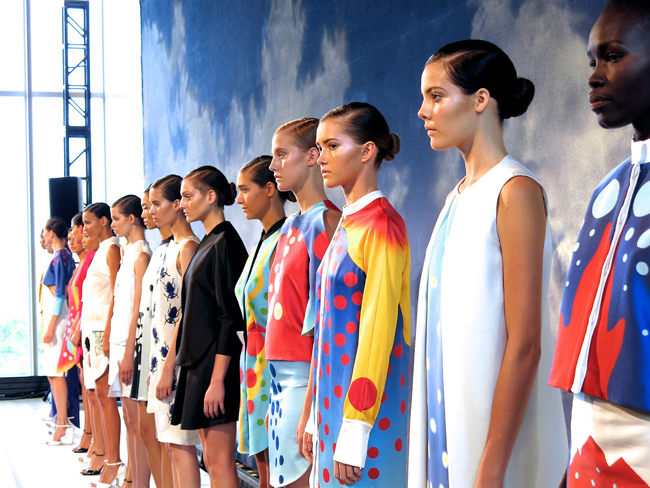
Jean-Pierre has described her design sensibility as rooted in the duality she carried growing up: the natural landscape of southern Haiti and the metropolitan energy of Atlanta, Georgia. That duality is the structural principle of her knitwear. Her garments are built to move between contexts, to hold formal authority and physical ease simultaneously, to work for a woman carrying two geographies inside her body at once.
The $31 billion African fashion market is built partly on this kind of practice: designers who carried the full weight of their cultural formation into international markets without stripping it to gain access. Jean-Pierre brought Pestel into every collection she produced in New York. The industry is named the city where she worked. It took longer to name the place where the work came from.
Also Read
- Haiti Fashion: The Designers Reshaping Global Style from the Inside Out
- Stella Jean: The First Black Italian Designer Who Forced Milan to Look
- Waina Chancy and Atelier Ndigo: Haitian Elegance on a Global Stage
The Label in 2025: Current Work and Continuing Practice
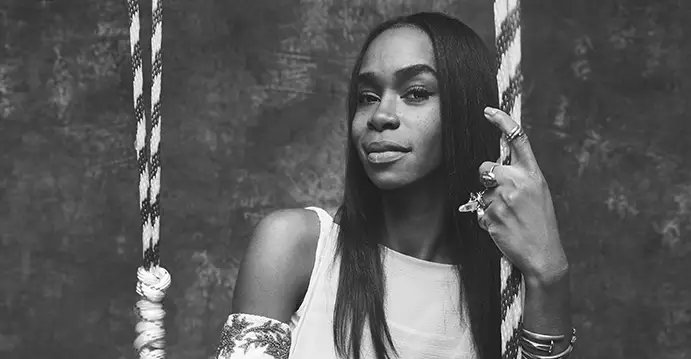
Jean-Pierre continues to work across her own label and design consulting, with active clients confirmed through her public profile in 2024 and 2025. Her label’s sustainable production model and its integration of artisan partnerships from Haiti and the wider diaspora remain foundational commitments. She is among the designers who represent the intersection of technical precision, cultural specificity, and commercial ambition that defines the strongest work coming from the Caribbean diaspora in New York.
Coverage of her work appears in Business of Fashion, WWD, and Vogue. Her collaboration with Gucci in 2021 remains one of the most significant co-branded projects between a luxury house and a Caribbean diaspora designer in recent years.
The Omiren Argument
Thesis: A refugee from Pestel, Haiti, built one of New York’s most technically rigorous fashion labels. The industry consistently described her by the city where she worked. That omission is a structural framing error with consequences for how Caribbean creative authority is understood.
Context: The fashion press locates diaspora designers through their adopted cities. Azede Jean-Pierre is described as a New York designer. Stella Jean is described as an Italian designer. The origin, the actual source of the design intelligence, is treated as a biography rather than as the primary reference.
Disruption: Jean-Pierre’s knitwear is built from a specific training, a specific material philosophy, and a specific duality that comes from growing up between Haiti and Atlanta. The garments that dressed Michelle Obama, Solange Knowles, and Lady Gaga were built from the outside in, not from New York’s fashion ecosystem inward. Gucci recognised this and named the collaboration after her. The fashion press still led with the city.
Cultural insight: Haiti’s artisan textile tradition, its culture of deliberate dressmaking, its specific relationship between body, cloth, and occasion: these are the foundations Jean-Pierre builds from. When she directed the philanthropic proceeds from the Gucci collaboration to CORE operations in Haiti, it was not a gesture. It was the work returning to its source.
Conclusion: Azede Jean-Pierre is a Haitian designer who built her practice in New York. The distinction is not cosmetic. It locates the source of the work correctly and places her inside the longer history of Haitian creative authority that the international fashion industry has spent years misdescribing.
Frequently Asked Questions
Who is Azede Jean-Pierre?
Azede Jean-Pierre is a Haitian-American fashion designer born in Pestel, Haiti and raised in Atlanta, Georgia. She is the founder of the Azede Jean-Pierre label, launched in New York in 2012. She holds a Master of Arts in Knitwear from the Institut Francais de la Mode in Paris, is a Forbes 30 Under 30 alumna, and collaborated with Gucci on the Azede Powered by Gucci knitwear capsule in 2021.
What is Azede Powered by Gucci?
Azede Powered by Gucci is a knitwear capsule collaboration between Azede Jean-Pierre and Gucci, presented during New York Fashion Week in 2021. The collection comprised five key styles priced from $1,900. The campaign featured director Ibra Ake, Wyclef Jean, and choreographer Fatima Robinson. Proceeds were directed to CORE, the crisis response organisation operating in Haiti.
What Haitian designer worked with Gucci?
Azede Jean-Pierre, a Haitian-American fashion designer born in Pestel, Haiti, collaborated with Gucci on the Azede Powered by Gucci knitwear capsule, presented during New York Fashion Week in 2021. Gucci described it as part of its continued support for independent creative talents.
Who has worn Azede Jean-Pierre designs?
Clients include Michelle Obama, who commissioned a custom dress for the cover of Essence magazine; Solange Knowles, who wore the label at Coachella and collaborated on a playlist for Jean-Pierre’s 2014 fashion show; Lady Gaga; and Gabrielle Union.
Is Azede Jean-Pierre still working as a designer?
Azede Jean-Pierre continues to work across her own label and design consulting, with active clients confirmed through her public profile in 2024 and 2025. She previously consulted for Gucci, Billy Reid, Intermix, and Pyer Moss.
What makes Azede Jean-Pierre’s knitwear different?
Jean-Pierre trained in specialist knitwear design at the Institut Francais de la Mode in Paris, one of the few institutions offering postgraduate knitwear training. Her practice develops fabric structure and garment structure simultaneously, producing collections that are engineered rather than draped or constructed in the conventional sense. Her slow-fashion production model integrates partnerships with artisans from Haiti and the wider diaspora.
Read the Full Series
Omiren Styles documents the designers building fashion from Africa, the Caribbean, and the diaspora. Read every profile in the Haiti fashion series.