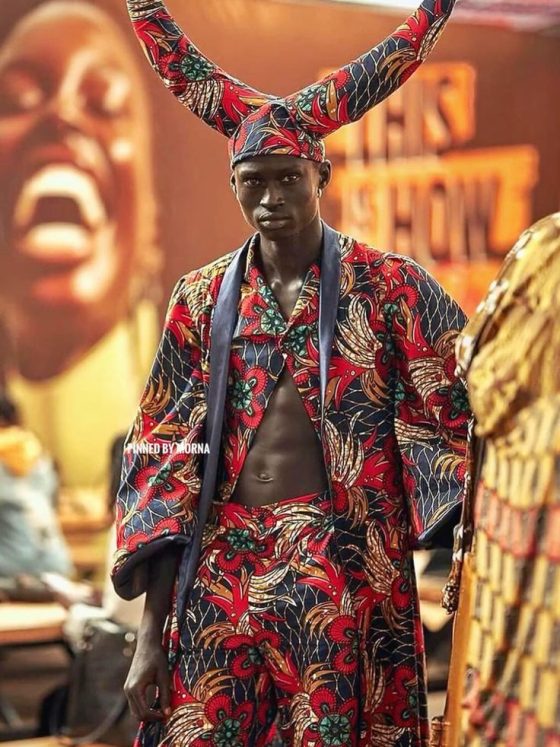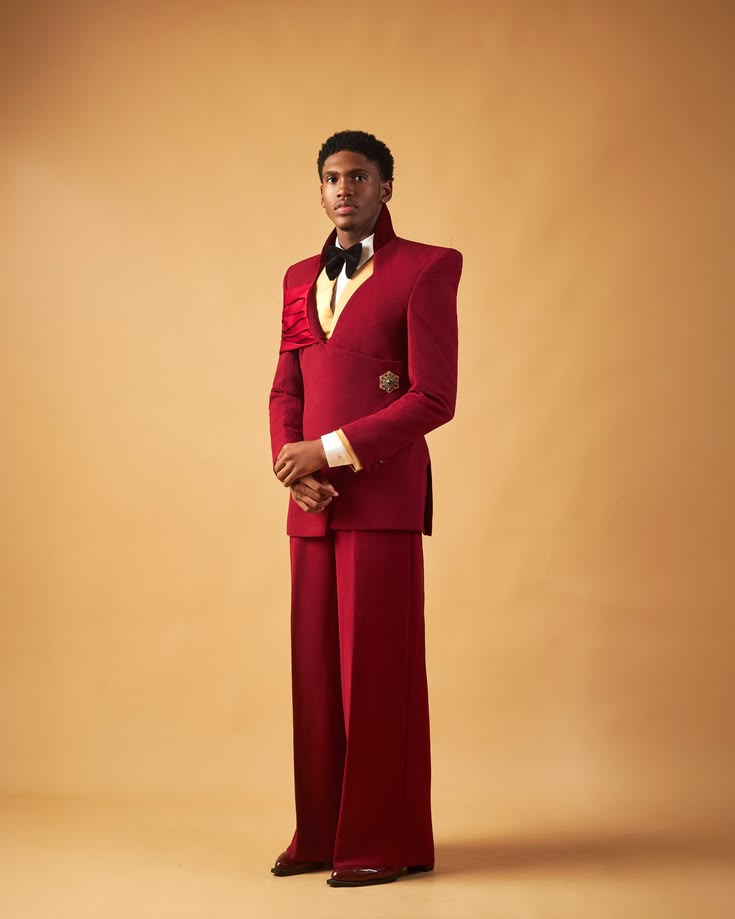
When South African designer Thebe Magugu begins developing a collection, he does not start by sketching jackets or choosing colours. He starts with research. Before fabric is cut or patterns are drafted, there are conversations, archives, interviews, photographs, and questions. For his Genealogy collection, Magugu turned to family albums and spoke with his mother and aunt to understand the stories that shaped his upbringing. In other collections, he has collaborated with traditional healers, academics, and historians, believing that the strongest garments emerge when they are rooted in lived experience rather than aesthetics alone. As he has explained, every collection begins with a narrative, and the clothing becomes the physical expression of that story.
In Lagos, Nigerian designer Kenneth Ize works the same way from the opposite direction. Before he sketches anything, he sits with Rekiya Momoh, the head weaver he affectionately calls Queen Bee, on the fabric itself. ‘We work on the fabric first before sketching anything out,’ Ize has said. ‘We sit down, I share what I am thinking, and then she says things like, Yeah, you know, we should add this and this together.’ The sketch, when it eventually appears, is a record of a conversation that has already happened between a designer and a weaver. It is not the starting point. It is closer to the meeting minutes.
Magugu’s and Ize’s approaches challenge one of fashion’s most enduring myths. Popular culture often presents fashion design as a moment of artistic inspiration, where a designer fills a sketchbook with ideas that are eventually transformed into garments. While sketches remain an essential part of the process, they are rarely where independent African menswear begins.
Across the continent, designers frequently build collections around memories, textile traditions, cultural questions, or relationships with artisan communities long before they think about silhouettes. The journey from concept to finished garment is rarely linear. It is shaped by research, craftsmanship, practical constraints, and constant collaboration with people whose expertise may never appear on a clothing label.
Understanding that journey changes the way we look at African menswear. Every jacket, tunic, or tailored suit carries traces of decisions made months earlier, many of them invisible to the customer who eventually wears it.
When Thebe Magugu begins a collection, he speaks to his mother first. When Kenneth Ize begins one, he sits with his head weaver before sketching a single line. African menswear does not start with inspiration. It starts with research, community, and collaboration.
Every Collection Begins With a Story, Not a Sketch
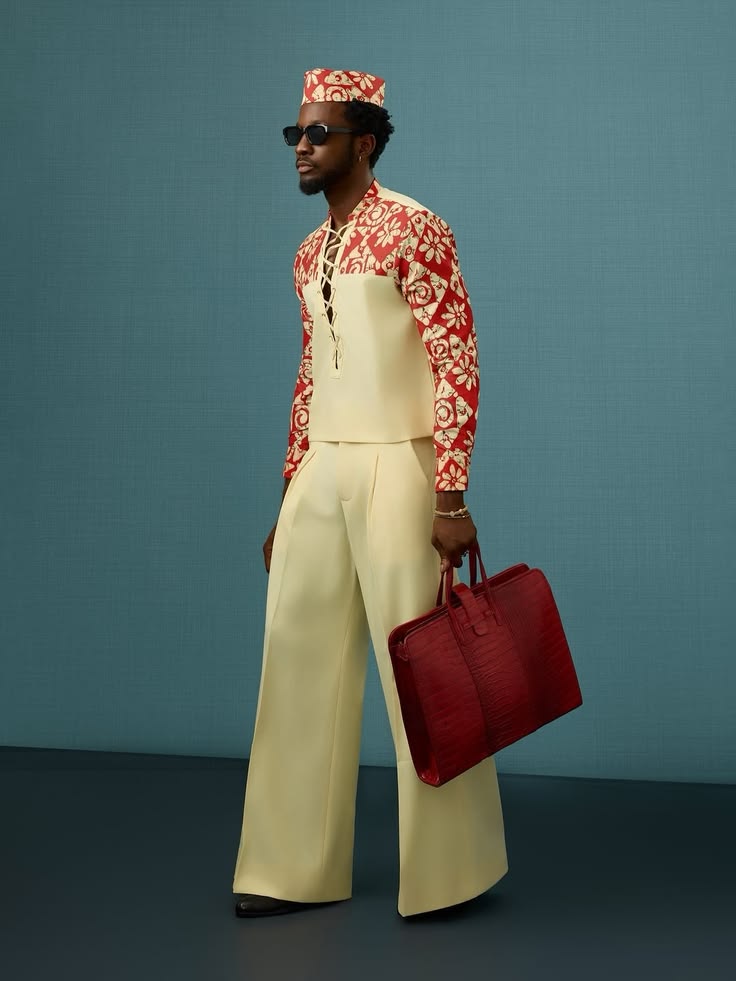
For many independent African designers, the creative process begins with answering a question rather than drawing a garment.
What forgotten tradition deserves another look? How can a family history be translated into clothing? What does masculinity look like in a rapidly changing city like Lagos, Johannesburg, or Nairobi? How can an old weaving technique speak to a younger generation?
These questions often shape the collection before a single line is drawn on paper.
Thebe Magugu has built his career around this philosophy. Each collection begins with extensive research into a particular subject, whether it is South African history, family memory, education, or cultural identity. Rather than treating clothing as decoration, he approaches fashion as a way of documenting ideas. As Omiren Styles has documented in the analysis of Lagos Fashion Week’s economic and cultural impact, this research-first approach is increasingly what distinguishes African designers competing on the global stage from designers working purely from seasonal trend forecasting. Every textile, colour, print, and construction detail Magugu selects supports the larger narrative.
This approach reflects a broader tradition within African fashion. Clothing has long communicated status, community, spirituality, occupation, and celebration across the continent. Designers working today inherit that understanding. Their challenge is not simply to produce beautiful garments but to continue telling meaningful stories through contemporary menswear.
Beginning with a story also creates something that trends cannot easily replace. While seasonal colours and silhouettes change quickly, narratives rooted in history and culture retain their relevance. A collection inspired by oral traditions or family memory speaks to ideas that extend far beyond a single fashion season.
Behind Every Collection Is a Community of Skilled Hands
Fashion often celebrates individual designers, yet a single person creates few independent collections.
Long before a garment reaches the sewing machine, numerous specialists contribute to its development. Weavers prepare the cloth. Dyeing experts achieve colours that cannot be replicated through industrial printing. Pattern cutters interpret ideas into precise templates. Tailors refine construction details that improve fit and movement. Embroiderers spend hours adding finishing touches that machines struggle to reproduce. Kenneth Ize’s relationship with Rekiya Momoh is the clearest documented example of this collaboration in contemporary African menswear, profiled by AnOther Magazine and SSENSE, among others. He found her through a family connection, after his cousin recommended the weaver who had made her wedding fabric. He calls the Aso Oke weaving tradition she practises, a heritage craft of Yoruba origin produced from cotton, silk, bark, and goat’s wool on a handloom, a dying craft, and has said directly: ‘It takes a person to create the fabric they are made from, and it takes days to make, within a community, weaving the cloth. It’s their life and DNA. That’s how much soul is being put into that fabric.’
These collaborations are especially important in African menswear because many traditional techniques still rely on skilled artisans whose knowledge has been passed down through generations. Ize now employs a dedicated team of artisans at his Lagos and Ilorin workshops, a direct economic outcome of treating the weaving relationship as central rather than supplementary to his design process. This pattern, where a designer’s commercial success creates sustained employment for the artisan community supplying them, is the same dynamic Omiren Styles has tracked in the Lagos Fashion Week ecosystem more broadly: designers who succeed internationally tend to expand local production capacity rather than relocate it.
Increasingly, designers speak about these artisans as creative collaborators rather than suppliers. Their technical understanding often shapes the final garment just as much as the designer’s original concept. Recognising this shared authorship changes the way we understand fashion. A successful collection is rarely the product of individual genius. It is the outcome of relationships built on trust, technical expertise, and a shared commitment to preserving craftsmanship while pushing it in new directions.
When customers admire a finished jacket in a showroom, they are usually seeing the work of an entire creative community rather than a single pair of hands.
Creativity Alone Does Not Build a Fashion Brand
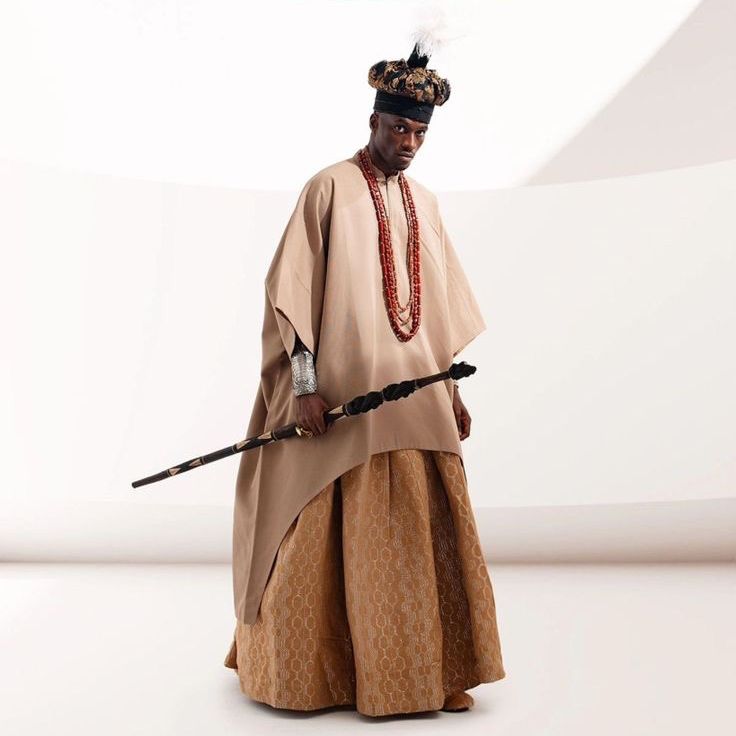
The public often sees the finished collection but rarely the business that supports it.
Independent designers spend a significant part of their working lives doing things that have little to do with sketching. They negotiate with fabric suppliers, manage production schedules, supervise fittings, photograph new collections, oversee social media, meet buyers, respond to customers, and handle the financial realities of running a small business.
Research by the World Intellectual Property Organisation on African fashion entrepreneurship has shown that many independent designers constantly move between creative and commercial responsibilities. They are designers, but they are also production managers, marketers, employers, creative directors, and entrepreneurs. As Omiren Styles has documented in the case for why staying and building locally is increasingly the stronger strategic decision for African designers, this business reality is precisely why proximity to artisan networks, suppliers, and buyers in cities like Lagos matters as much as the creative vision itself.
This balancing act influences every collection. A designer may have an ambitious creative idea, but fabric availability, production costs, delivery deadlines, or the capacity of artisan workshops can reshape the outcome. Creativity is not separated from business. The two develop side by side.
Understanding this reality makes the finished garment even more remarkable. Every successful collection represents not only artistic vision but also months of planning, coordination, problem-solving, and resilience.
What Bespoke Tailoring Reveals About the Whole Process
Bespoke tailoring is the clearest distillation of everything this piece has argued, compressed into a single client relationship. A customer sits for a consultation. Measurements are taken, but so are preferences, occasions, and the way the wearer intends to move through the world in the finished garment. Multiple fittings follow, each one a small negotiation between the tailor’s technical judgment and the client’s intention, much as Ize negotiates with Momoh over the length of cloth. The garment that emerges has been adjusted, argued over, and refined by at least two people before it is finished. That is not an exception to the African menswear process. It is the same process operating at the scale of one person rather than one collection.
ALSO READ
- How African Menswear Designers Are Challenging European Fashion Weeks on Their Own Terms
- Lagos Fashion Designers Who Stay Are Not Compromising. They Are Winning.
- How African Identity Is Styled Differently Across Continents
- The Cultural Codes of Dressing Well: What Every Society Understands About Style and Respect
The Work Behind the Work
The journey from sketchbook to storefront is often described as a designer’s creative process. In reality, it is something much larger.
It is the meeting point between history and innovation. Between artisan knowledge and contemporary design. Between creative ambition and commercial reality. Every collection reflects countless decisions made by people whose names may never appear on a label but whose work determines the quality and character of the finished garment.
Perhaps that is what makes independent African menswear distinctive.
Its greatest strength is not simply the originality of its designs. It is the depth of thought, craftsmanship, and human collaboration that shape every piece long before it reaches the customer.
The next time you admire a beautifully tailored jacket, a handwoven overshirt, or a carefully constructed kaftan, pause for a moment before asking who designed it.
A more interesting question might be: How many stories, skilled hands, and months of unseen work went into making this garment possible?
The answer reminds us that great menswear is never created by inspiration alone. It is built through people, process, and patience.
FAQs
How does an independent African menswear designer create a fashion collection?
An independent African menswear collection typically begins with research rather than sketching. Thebe Magugu starts with family albums and conversations with his mother and aunt; Kenneth Ize sits with his head weaver, Rekiya Momo,h and works directly on the fabric before sketching anything. Designers often draw inspiration from history, cultural traditions, personal experiences, or textile heritage before developing concepts, sourcing fabrics, collaborating with artisans, creating patterns, producing samples, conducting fittings, and refining the final garments before they reach customers.
Why do many African fashion designers start with research instead of sketches?
Many African fashion designers begin with research because they want their collections to tell meaningful stories. Thebe Magugu has used interviews, family archives, historical research, and cultural narratives to shape his Genealogy collection before deciding on silhouettes, colours, or fabrics. Kenneth Ize inverts the typical order entirely: he and his head weaver, Rekiya Momoh, develop the fabric itself in conversation first, and the sketch is produced afterwards as a record of what they decided together rather than as the starting instruction for what she should make.
What role do traditional textiles and artisans play in African menswear design?
Traditional textiles and the artisans who make them are often central to the creative process, not merely decorative additions. Designers work with fabrics such as Aso Oke, Adire, Kente, and Faso Dan Fani to influence the structure, texture, and identity of a collection. Kenneth Ize’s relationship with Aso Oke, a Yoruba handwoven fabric made from cotton, silk, bark, and goat’s wool, runs through his head weaver Rekiya Momoh and a now-established team of artisans in Lagos and Ilorin, whom he employs directly. Ize has described the result in his own words: ‘It takes a person to create the fabric they are made from… It’s their life and DNA.’
How do artisans contribute to the creation of African menswear?
Artisans play an essential role in African menswear by weaving fabrics, dyeing textiles, creating embroidery, cutting patterns, and tailoring garments. Many independent designers consider artisans to be creative collaborators rather than suppliers. Rekiya Momoh, known to Kenneth Ize as Queen Bee, is the most documented example: she and Ize work on a fabric design together at the loom before any sketch exists, with Momoh actively shaping the construction decisions rather than simply executing a predetermined design. Their technical expertise helps shape the final collection from the earliest stages of production, not just in manufacturing.
Why is bespoke tailoring still important in African menswear?
Bespoke tailoring remains important because it allows garments to be customised for each client through the same collaborative logic that governs collection design. Through consultations and multiple fittings, designers and tailors adjust the fit, proportions, and finishing details to suit the wearer’s body and lifestyle, creating clothing that offers a more personal experience than mass-produced fashion. It is, in effect, the African menswear creative process scaled down to a single garment and a single relationship between maker and wearer.
What challenges do independent African fashion designers face when building a clothing brand?
Independent African fashion designers often balance creative work with business responsibilities. Common challenges include sourcing quality fabrics, managing production costs, coordinating artisan networks, meeting delivery deadlines, marketing collections, building customer relationships, and growing sustainable businesses while maintaining high standards of craftsmanship. Kenneth Ize has spoken about the additional challenge of keeping a traditional weaving craft viable: the artisans he works with were, in his words, losing interest in the trade before his brand created direct, sustained employment for them.
What happens behind the scenes before an African menswear collection reaches the store?
Before an African menswear collection reaches a showroom or online store, designers spend months researching concepts, developing stories, sourcing textiles, collaborating with artisans, producing samples, refining patterns, conducting fittings, managing production, and preparing the final presentation. Thebe Magugu’s process runs through family interviews and archival research before a single textile decision is made. Kenneth Ize’s process runs through weeks of collaborative fabric-making with Rekiya Momoh before a garment shape exists. The finished garment in both cases represents the work of an entire creative community rather than a single designer.