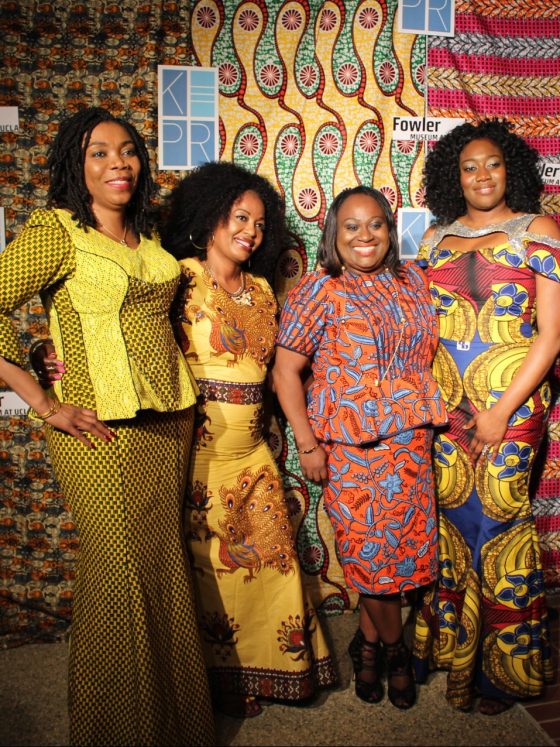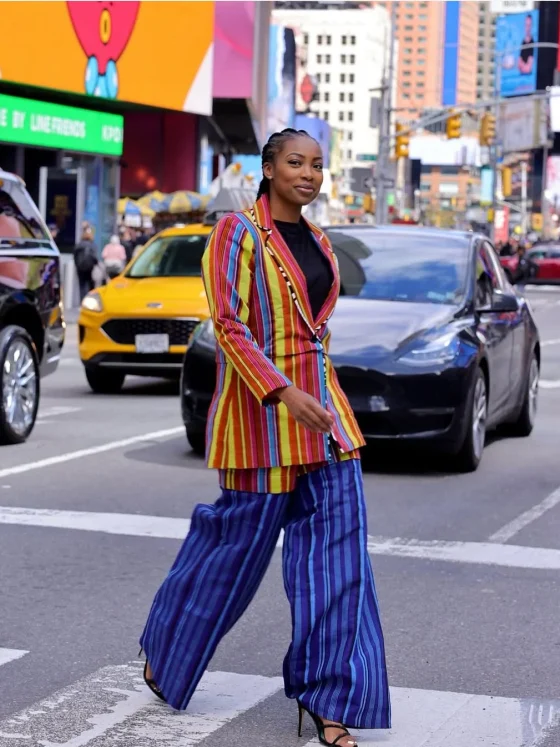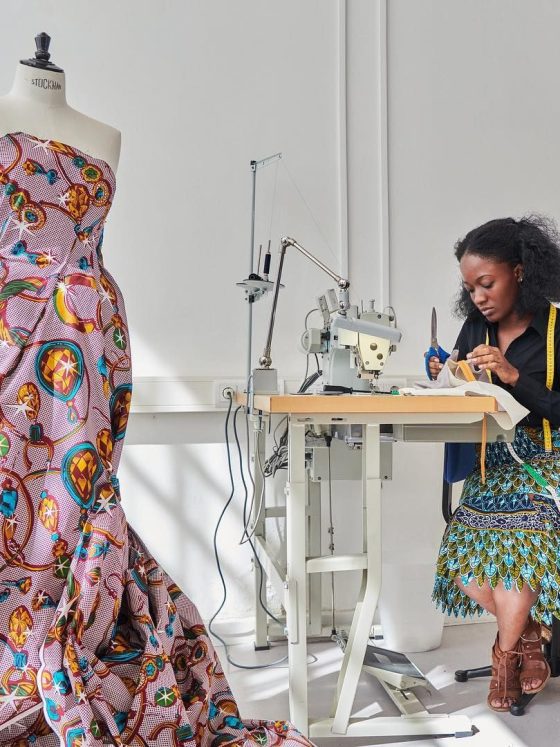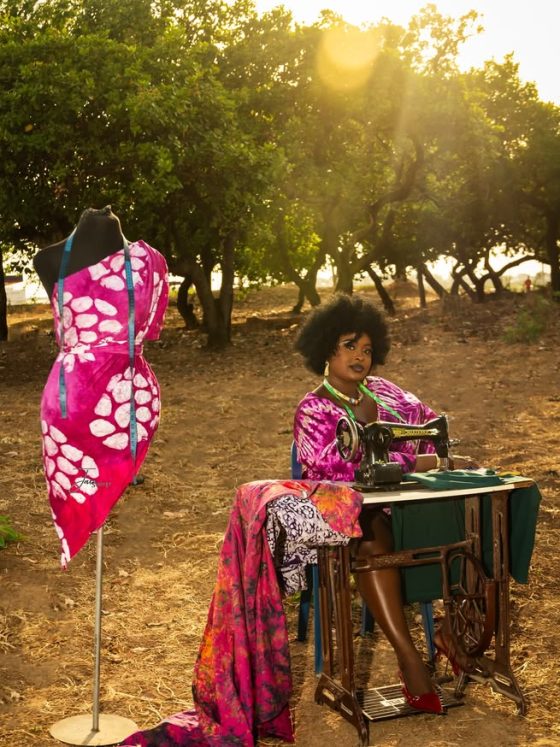
In 2026, African designers are more visible in London than at any previous point in the documented history of African fashion in Britain. A Gabonese designer wins an achievement award at the Paris Fashion Annual Show and receives AFP coverage on three continents. A Nigerian-British designer has King Charles III in her front row and sees the Princess of Wales wear her work for a state visit. A Ghanaian designer receives a Berlin Contemporary grant for the second consecutive season. Africa Fashion Week London celebrates its 16th edition with a direct retail mechanism for the first time, and the trade press describes the London-Lagos fashion corridor as more commercially developed than ever before.
The African fashion market is worth 31 billion dollars. Visibility is not infrastructure. Visibility gets you in the room. Infrastructure determines whether you can remain in the room after it empties. As Fashionista’s January 2026 analysis of the obstacles facing African fashion’s global expansion confirms, many local designers struggle to ship products internationally due to high additional expenses, with shipping fees often higher than production costs. A designer who cannot afford to ship products to the buyer who wants them does not have a market. They have an audience.
African designers are more visible in London than ever before. Visibility is not infrastructure. Here is what the infrastructure test actually requires.
The Visibility-Infrastructure Gap
The distinction between visibility and infrastructure is precise and consequential. A designer who appears on the London Fashion Week official schedule has visibility within the fashion media system. A designer who has a wholesale account with a London stockist that places repeat orders across three seasons has infrastructure. A designer photographed at Africa Fashion Week London in an editorial spread has visibility. A designer with the production capacity to fulfil a 200-unit wholesale order within the buyer’s required lead time, with the correct packaging standard, customs documentation, and at a price that works for both parties at the retailer’s standard margins has infrastructure.
The visibility-infrastructure gap is the difference between these two states and is currently the most important structural problem in African designers’ engagement with the London market. London’s African fashion infrastructure, through Africa Fashion Week London, the London-Lagos cultural corridor, the growing presence of Nigerian, Ghanaian, and wider African diaspora designers on LFW’s official and fringe programmes, has produced more visibility than at any previous point. The commercial infrastructure to convert that visibility into sustained revenue, retail presence, and market power is substantially less developed than the visibility suggests.
A designer who can sell out a pop-up at an African fashion week in London has visibility. A designer who has a wholesale account with a London stockist that places repeat orders across three seasons has infrastructure. Visibility gets you in the room. Infrastructure determines whether you can remain in the room after it empties.
The Logistics Problem
The most immediately practical barrier between African designers and the London market is not editorial coverage or runway access. It is logistics. As the October 2025 African Creative Industries Symposium, held in London and documented in the African Journal of Creative Economy, confirms, the potential of Africa’s fashion industry requires coordinated policy efforts to address infrastructure gaps, strengthen regional value chains, develop appropriate financing mechanisms, and support businesses to move beyond bespoke markets. That last phrase is the infrastructure test applied to design: the difference between a designer who makes one-off bespoke pieces for individual clients and a designer who has the production consistency, pricing architecture, and minimum order capacity to serve a wholesale account.
The logistics barrier operates at several levels simultaneously. Shipping costs from Lagos, Accra, Nairobi, or Dakar to London are not comparable to shipping costs within the European Union. A garment that costs its maker £40 in production might cost £35 to ship to a London buyer: a shipping fraction that makes it very difficult for the London retailer to achieve a viable wholesale margin. Customs classification of handmade garments, textile products, and accessories varies by material composition, and incorrect classification can result in additional duties or delays that a small producer cannot absorb. And the reliability of international shipping timelines, particularly from smaller African markets where logistics infrastructure is less developed, creates delivery risk that wholesale buyers cannot accommodate when they are building seasonal buying plans with specific delivery windows.
Platforms including Industrie Africa, The Folklore, and Raisefashion have addressed part of this problem by providing digital market access: a London buyer can discover and order from an African designer through a platform without the designer needing to physically ship samples to multiple showrooms or attend multiple trade events. But digital platform access is still not the same as having a London stockist relationship, because a platform sale is a direct-to-consumer transaction at retail margin. In contrast, a stockist relationship is a wholesale transaction that scales differently and reaches different customer segments.
The Finance Problem
The second major infrastructure barrier is finance. A designer who receives a wholesale order from a London retailer for delivery in 12 weeks faces a cash-flow problem that their retail peers in Europe and North America do not face in the same form. The materials to fulfil the order must be purchased now. The production labour must be paid now. The shipping must be booked and paid. But the retailer’s payment arrives after delivery, typically on 30-, 60-, or 90-day payment terms. A designer without a working capital facility, a credit line, or a factory that extends supplier credit cannot bridge that gap. This is not a failure of creative ambition. It is a structural condition that affects African designers disproportionately because the financial products designed to solve it, trade finance, invoice factoring, and short-term working capital loans, are significantly less accessible for small African fashion businesses than for comparable European businesses.
The symposium’s call for appropriate finance mechanisms to support businesses moving beyond bespoke markets is the most precise articulation of this problem in the available academic record. As Omiren Styles’ analysis of why European luxury houses invest in Afrobeats stars but not African fashion infrastructure confirms, no major European luxury house has publicly invested in African design schools, textile manufacturing facilities, or wholesale development programmes for African designers. The commercial interest in African cultural markets is real and growing. The infrastructure investment that would make African designers long-term participants in those markets, rather than short-term trend sources, has not materialised.
What Africa Fashion Week London’s Shop the Runway Represents

AFWL’s 2026 introduction of Shop the Runway, a direct retail mechanism at the event itself, is the most significant infrastructure innovation at a London African fashion platform in the current period. As Vanguard Nigeria’s July 2026 documentation of AFWL’s mission confirms, AFWL’s founder Olori Ronke Ademiluyi-Ogunwusi has described the future of African fashion as needing to honour where it comes from while creating pathways for where it can go. Shop The Runway is an attempt to create one such pathway: converting a fashion event’s visibility moment into a commercial transaction rather than leaving it as a cultural moment with no revenue attached.
The significance of Shop The Runway as infrastructure innovation is that it addresses the buyer conversion problem at the point of maximum visibility: the runway presentation, when editorial coverage, buyer attention, and public interest converge. As Omiren Styles’ analysis of African fashion events and buyer data gaps confirms, visitor numbers measure who came; buyer conversion data measures what happened commercially afterwards. Shop The Runway attempts to close that gap by making the commercial transaction available during the event itself, so that attention does not have to be converted into purchase over the slow-cooling days after the event.
The Institutional Gap: Who Controls the Platforms
The African Creative Industries Symposium’s panel on visual arts raised the question that applies equally to fashion: who controls the platforms, and who gets to be seen? The answer in the current London African fashion infrastructure is that platform control is primarily in the hands of diaspora-led organisations, African-led institutions, and a small number of sympathetic British fashion institutions. What it is not in the hands of is the major British fashion retail infrastructure, the large stockists, the department stores, and the premium independent retailers whose wholesale accounts create the sustained market access that constitutes fashion power rather than fashion visibility.
This platform control gap means that African designers can reach the audiences that African diaspora and culturally engaged platforms reach. They have more difficulty reaching the customer base that shops at Selfridges, Matches (while it existed), Browns, or the independent luxury boutiques of Marylebone and Notting Hill. The visibility that AFWL, London Fashion Week appearances, and editorial coverage generate can reach those stores’ buyers if those buyers choose to attend or if those platforms create the right intermediary connections. But the institutional machinery that connects LFW runway presentations to wholesale accounts for European designers,-the established showroom system, the buying appointments, the seasonal order cycles- does not operate at equivalent scale or accessibility for African designers in London.
The Infrastructure Test

The infrastructure test for African fashion power in London is not whether African designers can get coverage. They can. The test is whether they can answer yes to each of these questions: Can you fulfil a 200-unit wholesale order within a standard UK retailer’s lead time and at a price that sustains both parties’ margins? Can you maintain consistent sizing, construction quality, and packaging standards across a full production run? Do you have the working capital facility to bridge the gap between production cost and payment on delivery? Do you have a legal and accountancy structure in your production country that satisfies the compliance requirements of a major UK retailer? Can you handle returns, exchanges, and customer service for a UK retailer’s customer base? As the Omiren Index 2026 confirms, ten African labels have demonstrated verifiable international infrastructure across these dimensions. The number of African labels with London visibility in 2026 is substantially larger than ten.
The Omiren Argument
African designers in London need more than visibility because visibility is the beginning of the commercial conversation, not its conclusion. The African fashion market is worth 31 billion dollars. The designers who have achieved the most visibility in London in 2026, through royal front rows, LFW official schedule slots, Berlin Contemporary grants, and Africa Fashion Week London’s 16th edition, have achieved something significant and real. The infrastructure that would allow those visibility moments to compound into sustained market power, the wholesale accounts, the working capital, the logistics solutions, the compliance structures, the production consistency, and the platform control that makes repeat commercial access to the London market possible without having to restart from zero every season, is substantially more developed for European and North American designers than for African and diaspora designers operating from African production bases. That gap is not a creative quality gap. It is a structural one. The creativity is demonstrably present. The infrastructure question is whether the systemic conditions exist for that creativity to generate the commercial power implied by the 31-billion-dollar market. The answer in 2026 is: not yet, but the direction is correct, and the people building it know what they are building.
Also Read:
- Africa Fashion Week London 2026: Design Beyond Borders
- The Omiren Index 2026: 10 African Ready-to-Wear Labels Building International Fashion Infrastructure
- Who Should Define Cultural Authority in Fashion? Start With the Makers
Frequently Asked Questions
What infrastructure do African designers need in London?
African designers operating in the London market need several layers of commercial infrastructure beyond editorial visibility: wholesale account relationships with UK stockists that provide sustained, repeat-order revenue; working capital facilities or trade finance to bridge the gap between production costs and wholesale payment terms; logistics solutions that make shipping from African production bases to UK buyers cost-effective and reliably on-time; legal and compliance structures in their home country that satisfy UK retailers’ supplier requirements; production consistency that can fulfil wholesale orders at standard sizing, quality, and packaging specifications; and digital market infrastructure that connects them to buyers without requiring them to attend every trade event in person.
Why is visibility not enough for African fashion in London?
Visibility, specifically editorial coverage, runway appearances, social media reach, and platform presence, generates awareness and creates opportunities for commercial engagement. It does not by itself produce the conditions under which those opportunities can be converted into sustained revenue. A designer who appears in an editorial spread reaches readers. A designer who has a wholesale account converts that awareness into repeat commercial transactions. The infrastructure required to sustain wholesale relationships in the UK market- the production capacity, the logistics, the finance, the compliance, and the market access systems- is substantially less accessible for African designers than for their European counterparts. This structural gap means that visibility without infrastructure produces a pattern in which African designers attract commercial interest that they cannot consistently convert into sustained market presence.
What are the logistics challenges for African designers in London?
African designers face several specific logistics challenges in reaching the London market. Shipping costs from African cities to London are proportionally higher relative to production costs than intra-European shipping costs. In some cases, the shipping cost exceeds the per-unit production cost. Customs classification of handmade garments and textile products varies by material and can result in unexpected duties or delays. International shipping timelines from African markets are less reliably consistent than European logistics, creating delivery risk for wholesale buyers with fixed seasonal delivery windows. And the documentation requirements for cross-border commercial shipments, including certificates of origin, fabric composition declarations, and import compliance documentation, create administrative costs that small producers are less equipped to absorb.
How can African designers build wholesale accounts in London?
Building wholesale accounts with London retailers requires several conditions: production capacity that can fulfil minimum order quantities (typically 50-200 units per style for small independent retailers, higher for department stores); consistent quality and sizing across full production runs; competitive wholesale pricing that allows the retailer to build a standard margin while the designer maintains a viable production margin; reliable delivery against seasonal buying calendars; and a commercial and legal structure that satisfies the retailer’s supplier requirements. Platforms including Industrie Africa, The Folklore, and Raisefashion help connect African designers to international buyers digitally. Africa Fashion Week London’s Shop The Runway mechanism (introduced in 2026) creates direct commercial transactions at the event. The Mayor of London’s Africa trade mission in July 2025 positioned London as actively seeking to develop trade relationships with African cities, including Lagos.
What is the infrastructure gap in African fashion?
The infrastructure gap in African fashion refers to the disparity between the creative output and visibility African fashion has developed and the commercial and operational systems needed to enable that creativity to generate proportional economic power. The gap includes: manufacturing and production infrastructure (factory capacity, quality control systems, consistent material supply); logistics infrastructure (international shipping, customs compliance, reliable delivery); financial infrastructure (working capital, trade finance, currency risk management); digital market infrastructure (e-commerce, wholesale platforms, buyer connections); and institutional infrastructure (design schools, industry associations, legal and accountancy services oriented toward international fashion business). The African Creative Industries Symposium in London in October 2025 identified the need to address these infrastructure gaps as requiring coordinated policy efforts alongside individual business development.
Explore More
Read the full Fashion > Opinion section for Omiren Styles’ documented analysis of African fashion infrastructure, market access conditions, and the commercial gaps that separate African designer visibility from African fashion power.
Discover travel and heritage intelligence across Africa at Rex Clarke Adventures.