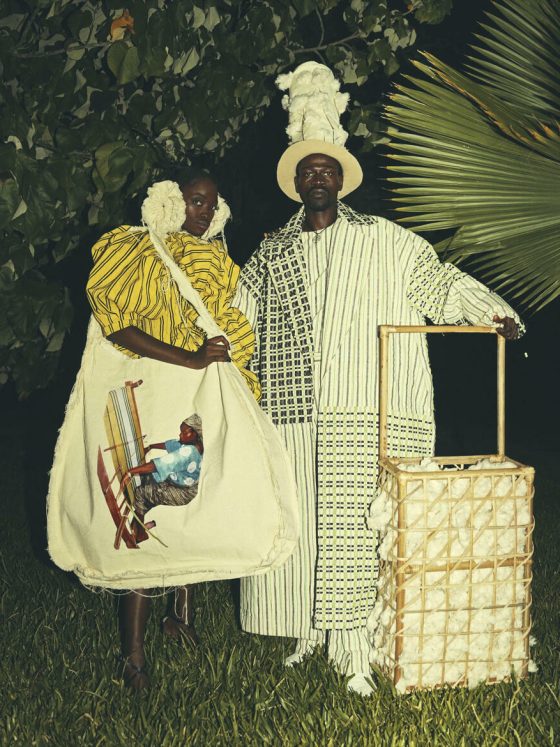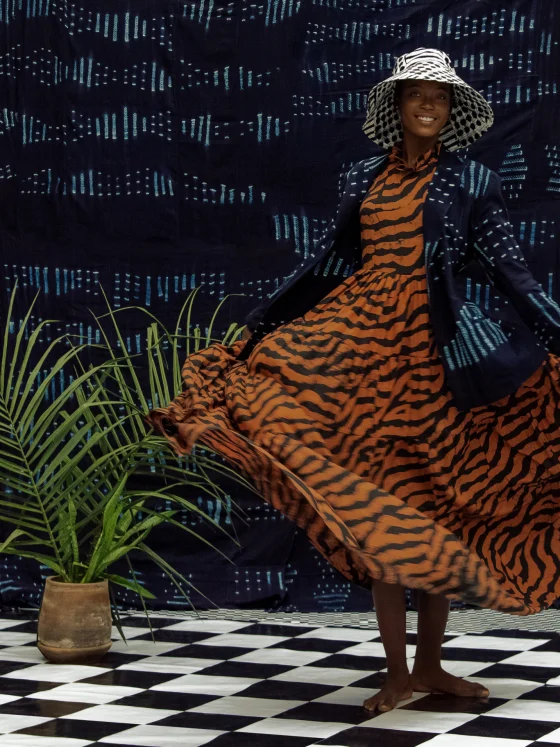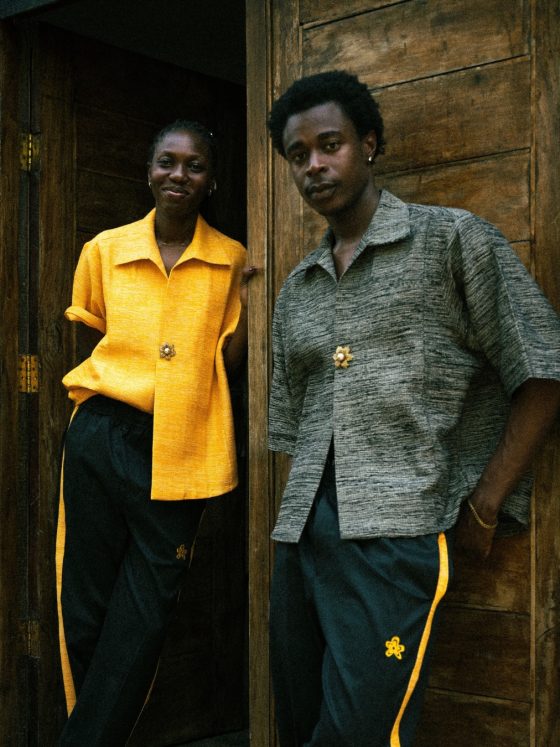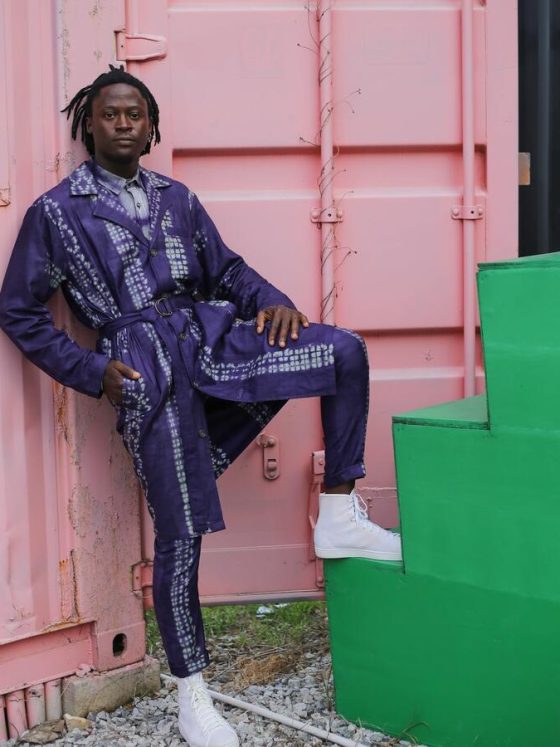

The most revealing detail in a regional cotton collaboration came after the clothes had been made. Nadia Adanlé of Couleur Indigo reported continuing to work with a weaver in northern Benin, sourcing raw woven fabric beyond the initial project. Her account highlighted something more enduring than a presentation of finished looks: a textile relationship that extended into subsequent work. The testimony appeared in a February 2025 report by the International Trade Centre, which had connected nine designers from Benin, Burkina Faso and Mali with weavers and material suppliers in the same countries. The initiative supplied handwoven cotton, established a design brief and organised exchanges between the people making the textiles and those turning them into clothing.
Its value as a case study lies in those connections. It offers a focused view of how designers and producers can work together, not a complete map of Benin’s fashion supply chain.
An ITC cotton project connected designers and weavers across three countries. Nadia Adanlé’s account shows one sourcing relationship continuing.
A Brief Built Around the Cloth
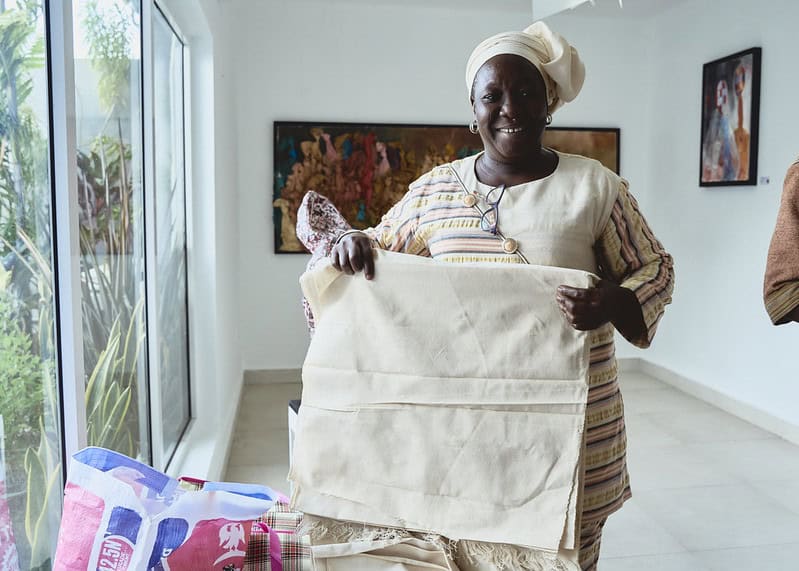
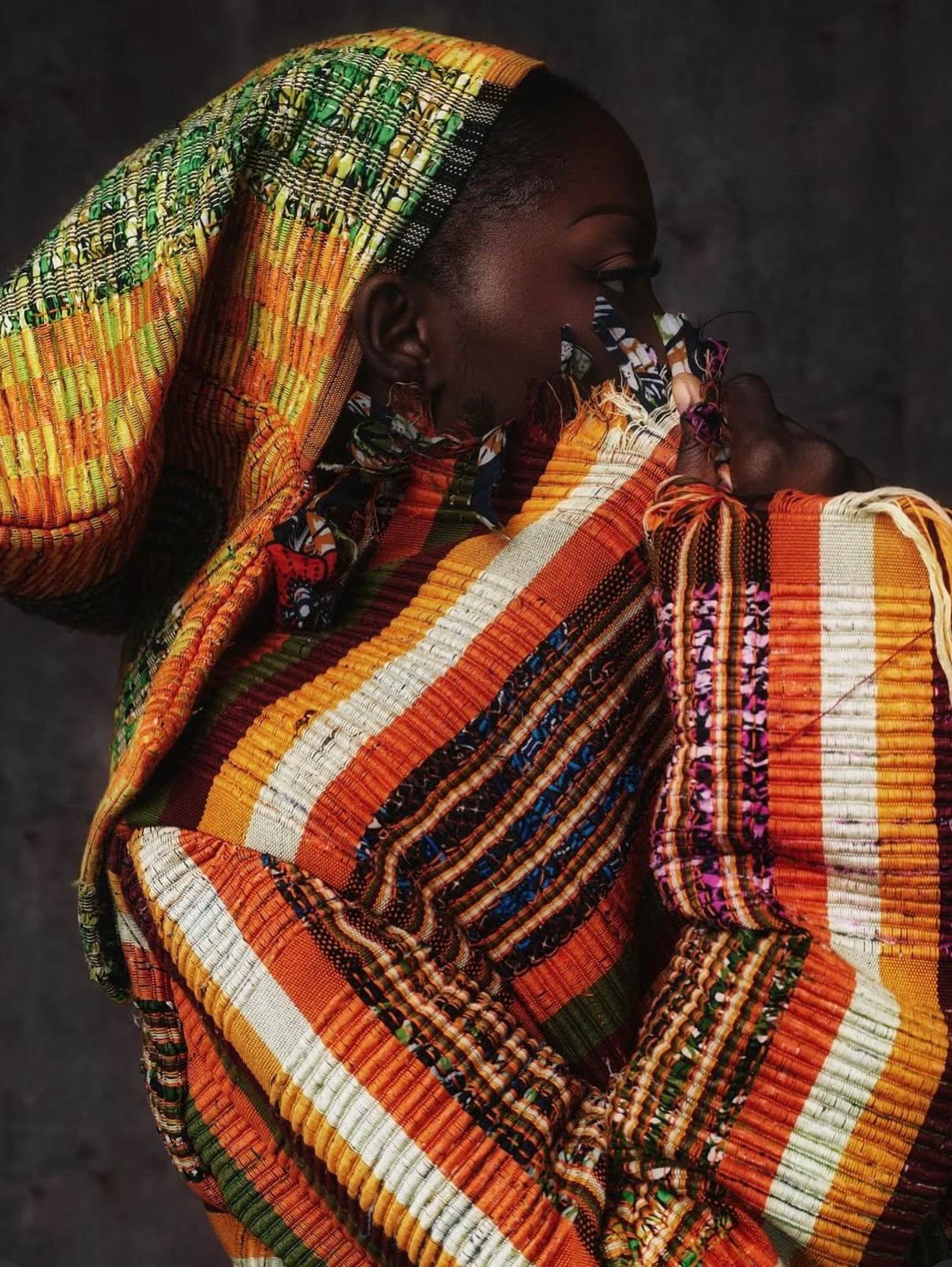
Each designer received 20–25 metres of handwoven cotton and was asked to produce two looks. The ITC also described a requirement that 90% of materials be “locally sourced,” although its published account did not define the geographical boundary or explain how it calculated that percentage. The initiative itself was regional. Participating designers, weavers and suppliers came from three countries, and the fabrics included Faso Danfani and Koko Dunda from Burkina Faso. Among the named producers were Martine Bougma and her team at the Tindaanyenma workshop. The starting point was therefore not an unrestricted garment concept followed by a search for suitable fabric. Designers were given a material allocation and asked to develop their work around it.
Regular feedback sessions brought designers, artisans and Ethical Fashion Initiative coordinators into the process. According to the ITC, those exchanges were intended to support further collaboration, not only deliver the initial looks. That structure gave textile producers a role within development. Their contribution went beyond supplying anonymous input to a designer’s finished idea.
What Adanlé Found in the Fabric
Adanlé’s comments provide the clearest account of how a participating designer responded to the cloth. She said the collaboration fitted Couleur Indigo’s existing use of local, all-cotton fabric. More specifically, she praised the patterns’ clarity and the material’s combination of flexibility and structure, despite the woven cloth’s weight. She explained that these qualities made it easy to handle. This is a useful material assessment. Weight alone did not determine whether the fabric worked for her; its behaviour during making also mattered. Structure and flexibility could coexist rather than cancel each other out.
The testimony brings the discussion closer to design practice than a broad celebration of cotton would. A textile has to be workable in the garment being developed, not merely carry an appealing origin story. The ITC’s article does not trace an individual Couleur Indigo look from a named weaver’s fabric to a finished silhouette. Adanlé’s account nevertheless identifies the properties she valued and explains why the collaboration aligned with her established process.
A Relationship Beyond the Initial Looks
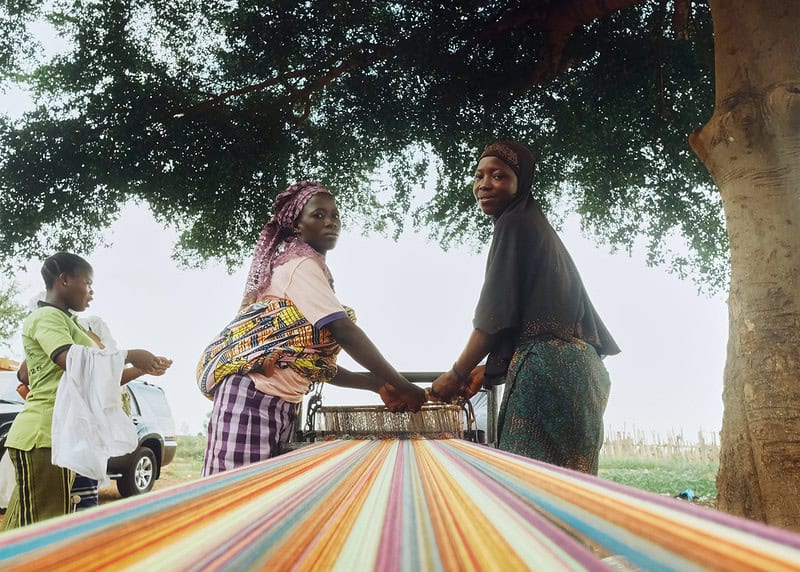
Adanlé then described continuing work with a weaver in northern Benin to source raw woven fabric. Her account referred to both manual and industrial spinning and identified the cotton as organic. She provided these details in the interview published by the ITC, rather than in a separate certification record. The combination of spinning methods is significant. “Handwoven” describes how the cloth is made; it does not automatically mean every earlier stage, including yarn production, was completed by hand. Her statement also provides the project’s most specific reported follow-on relationship. The article does not name the northern Benin supplier or give order volumes, frequency or duration. What it establishes is narrower: at the time of her testimony, Adanlé said the sourcing collaboration had continued.
That is enough to distinguish the relationship from a one-off fabric allocation. It also leaves an important question for subsequent reporting: what allows such an arrangement to become a reliable part of a designer’s production? Omiren’s examination of cotton and Beninese fashion identity supplies the wider cultural context. Here, the issue is procurement: the relationship through which cloth reaches the person designing with it.
Espace Tissage Djougou’s Contribution
The ITC account also includes testimony from Déhanatou Taïrou of Espace Tissage Djougou in Benin. She described the pleasure of seeing the workshop’s fabric transformed into designs and the recognition that brought to its craft. Her response gives the producer a distinct perspective. For the workshop, the finished clothing was not simply evidence of a designer’s creativity. It was another expression of the textile work that preceded it. The workshop also appears in a separate ITC report on the September 2024 Lineapelle fair in Milan. That account identifies its director as Dehanatou Tairou Issa and records her demonstration of cotton hand-spinning to trade-fair visitors.
The two reports document different activities: fabric entering a designer collaboration and spinning expertise being demonstrated publicly. The Milan demonstration should not be treated as proof that every textile supplied to the design project used handspun yarn. What connects the records is the visibility of textile knowledge. The workshop appears as a producer with skills to explain, not merely a location attached to a finished garment.
Regional Sourcing With Specific Origins
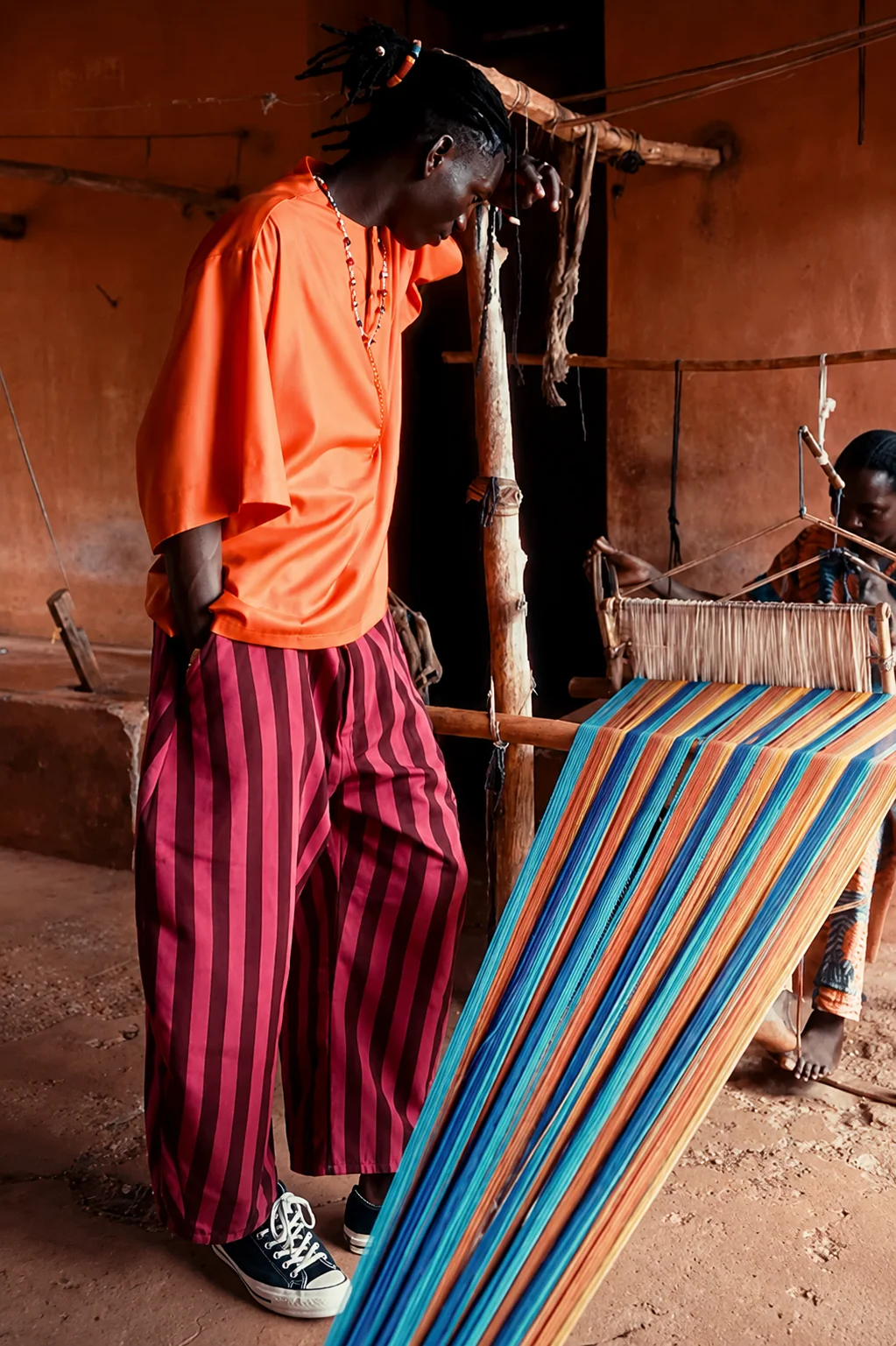
The project’s cross-border structure is central to its identity. A designer in one country could encounter cloth and expertise associated with another, while Beninese producers also participated in the network. Those relationships are more informative when their origins remain visible. Faso Danfani and Koko Dunda should not disappear into a generic category of “African fabric,” just as a named workshop should not disappear behind the designer using its cloth. The same precision applies to production claims. Where a garment is assembled, where its fabric is woven and where its fibre originates are related but separate questions.
This case makes some of those connections visible without tracing all of them. It focuses on the meeting between textile suppliers and designers, supported by a defined brief and feedback during development.
What the Project Reported, and What Followed
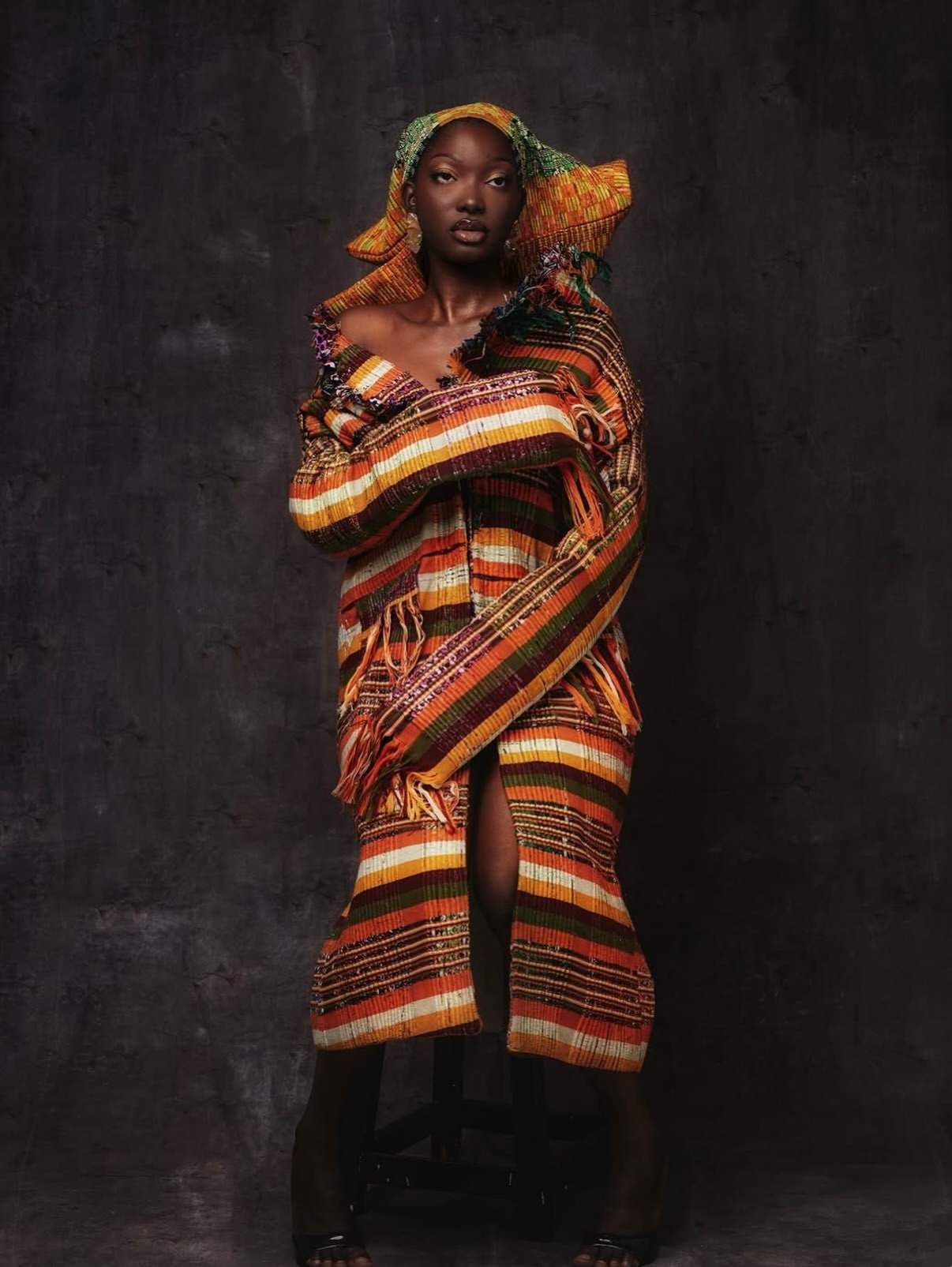
The ITC reported that the work culminated in a gala presentation of a 20-look collection to more than 300 industry stakeholders. It also reported increased inquiries and sales for designers, but supplied no breakdown of those commercial results. The account’s more detailed evidence concerns participants’ experiences: Adanlé’s assessment of the cloth, the workshop’s response to seeing its fabric used, and the reported continuation of sourcing. Elvis Sanya of Beninese label SEAN NOBAYO described the collaboration as the beginning of a wider ecosystem in which artisans and designers could develop together. Capsule collections and international exhibitions were presented as possible follow-ups, not completed outcomes.
The initiative sat within the ACP Business-Friendly Programme, funded by the European Union and the Organisation of African, Caribbean and Pacific States and jointly implemented by the ITC, World Bank and UNIDO. Its ambitions formed part of a broader institutional effort to strengthen agricultural value chains.
The Omiren Argument
This collaboration is most persuasive at the scale of a working relationship. Designers received cloth, producers took part in exchanges, and one designer said they continued to source after the initial brief.
Adanlé’s testimony is the important point of continuity. It suggests how a supported project can extend into ordinary design work, while leaving the scale and durability of that relationship open to further reporting.
For Beninese fashion, the useful question is not simply whether a collection celebrates local cotton. It is whether the people supplying its textiles have a place in the next collection, and how that relationship is sustained.
Also Read:
- Traditional Clothing in Burkina Faso: Culture and Identity Explained
- Awa Meité: The Malian Designer Defining Quiet Authority in African Fashion
- The Aso-Oke Weaver Crisis: What Happens When the Artisans Who Make Nigeria’s Most Important Cloth Can No Longer Afford to Weave It
- AfCFTA and African Fashion: What the World’s Largest Free Trade Area Actually Means for Designers and Retailers Right Now
Frequently Asked Questions
Which countries participated?
The collaboration connected designers, weavers and material suppliers from Benin, Burkina Faso and Mali. The International Trade Centre’s February 2025 report said it had connected nine designers with weavers and suppliers in the same countries, and the fabrics included Faso Danfani and Koko Dunda from Burkina Faso.
What were designers asked to make?
Each received 20–25 metres of handwoven cotton to develop two looks. The ITC also specified a local-sourcing target: it required that 90% of materials be “locally sourced”, without publishing a detailed calculation method or defining the geographical boundary.
What continued beyond the initial brief?
In the account published in February 2025, Nadia Adanlé reported continuing to source raw woven fabric from a weaver in northern Benin. The supplier was not named, and the article gives no order volumes, frequency or duration. She described the cotton as organic and referred to both manual and industrial spinning.
What did Nadia Adanlé say about the fabric?
Adanlé of Couleur Indigo said the collaboration fitted the label’s existing use of local, all-cotton fabric. She praised the clarity of the patterns and the material’s combination of flexibility and structure, despite the woven cloth’s weight, and said those qualities made it easy to handle.