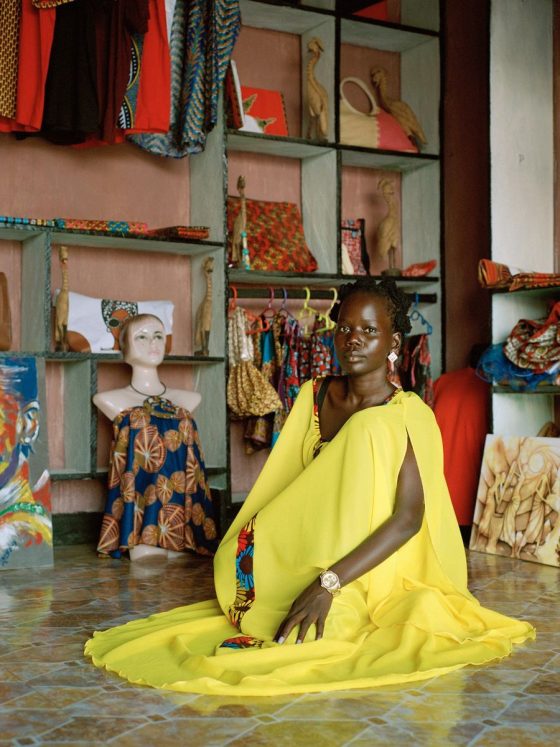
The African Continental Free Trade Area, AfCFTA, ratified by 47 of 54 African Union member states and covering a population of over 1.4 billion people across a combined GDP of $3.4 trillion, is the world’s largest free trade area by membership. Its stated objective is to eliminate tariffs on 90% of goods traded within Africa over a five-to-ten-year transition period, with a further 7% of goods considered sensitive receiving extended timelines and a 3% cap on full exclusions. In January 2024, South Africa and Nigeria, the two largest economies on the continent, completed the procedures required to begin preferential trading under the agreement. By October 2024, 37 state parties had published their tariff schedules and enabled their customs systems to receive goods under AfCFTA rules. By December 2025, 25 countries had fully gazetted those schedules into domestic law.
Intra-African trade rose 12.4% to $220.3 billion in 2024. The framework is real, it is expanding, and the institutional machinery being built around it is the most comprehensive Africa has attempted. For designers and retailers, however, the specific question is different from the general one. The general question is whether AfCFTA is working. The specific question is whether the AfCFTA is working for the fashion industry. The answer to the specific question is ‘not yet’, and the reason is precise. The rules of origin for textiles and clothing are the one category, alongside automotive, that the AfCFTA member states have not been able to agree on. Those rules are the mechanism that determines which garments qualify for preferential tariff treatment under the agreement. Without them, the agreement’s most direct potential benefit for African designers and apparel retailers remains theoretical.
AfCFTA is the world’s largest free trade area. It covers 54 African countries and 1.4 billion people. For African fashion specifically, the rules of origin for textiles and clothing are the one category still unresolved. This article maps what the agreement means for designers and retailers right now.
What AfCFTA Is, in Concrete Terms, the Industry Can Use

Before the AfCFTA, intra-African trade stood at 16% of the continent’s total trade, compared to 59% in Asia and 68% in Europe. The principal causes were structural: non-tariff barriers that were three times more restrictive than tariffs themselves; average customs dwell times of 126 hours at major borders; logistics costs that made road transport account for 29% of the price of goods traded within Africa compared to 7% for goods traded outside the continent; and the absence of a continental payment system that would allow transactions to be settled in African currencies without routing through the US dollar at a conversion cost of 8% to 30% per transaction corridor.
The AfCFTA agreement addresses multiple layers of this simultaneously. On tariffs: the progressive elimination of import duties on qualifying goods traded between state parties, phased over five to ten years, with 90% of tariff lines reaching zero by 2030 for most countries. On payments: the Pan-African Payment and Settlement System, PAPSS, was ratified by 44 countries by January 2024, which enables transactions in any of Africa’s 42 currencies without requiring conversion through a third-party currency. By 2025, PAPSS adoption was measurably reducing foreign-exchange friction for exporters settling intra-regional invoices, cutting intermediary costs that had historically made cross-border fashion commerce unviable at a small-business scale. On customs: the Guided Trade Initiative, GTI, which launched in October 2022 with seven pilot countries and expanded to cover 37 State Parties by October 2024, testing operational and legal systems for AfCFTA-preferential trade and generating real certificate-of-origin infrastructure. On digital trade: a protocol on digital trade, adopted at the AU Assembly in February 2024 with eight annexes finalised in February 2025, establishing a harmonised framework for e-commerce, cross-border data flows, digital payments, and electronic invoicing across the continent. This last instrument is particularly important for fashion retailers building digital-first distribution across African markets.
What the agreement has produced, in demonstrable trade terms, is a shift in who uses it. Egypt and South Africa, the two African countries with the largest and most vertically integrated industrial and agricultural capacity, are logging the highest numbers of certificates of origin for goods shipped under the AfCFTA. Rwanda exported packaged coffee and tea to Ghana under AfCFTA rules. Tanzania traded coffee with Algeria and sisal fibre to Nigeria, both in value-added rather than raw form. These are not fashion transactions. They are proof-of-concept shipments demonstrating that the GTI infrastructure functions and that the preferential tariff regime can produce commercially meaningful trade when the product-specific rules of origin are clear. In apparel and textiles, those rules are not clear. That is the problem.
The Rules of Origin Deadlock: Why Fashion Is Specifically Excluded
Rules of origin are the mechanism that determines whether a product qualifies as originating from an AfCFTA member state and, therefore, is eligible for preferential tariff treatment under the agreement. For fashion, the relevant rules govern chapters 61 and 62 of the Harmonised System, which cover knitted and woven garments respectively. As of September 2025, Financial Afrik reported that the AfCFTA aimed to finalise rules of origin across all sectors by October 2025 to achieve 97% tariff liberalisation, but that discussions remain stalled in two strategic sectors: textiles and automobiles. By early 2026, the overall rules of origin coverage stood at approximately 92.4% of all tariff lines, meaning that the textile and clothing chapters and the automotive chapters accounted for the remaining 7.6%, the unresolved fraction on which two of the continent’s most commercially significant sectors depend.
The deadlock reflects a structural economic divergence that no amount of goodwill in negotiation can easily resolve. West African cotton-producing countries, principally Benin, Burkina Faso, Mali, and Senegal, defend rules of origin that protect their position as raw material suppliers. Africa produces approximately 6% of the world’s cotton output but commands less than 2% of global processing capacity, accounting for between 1% and 2% of global textile and apparel exports. Cotton producers want rules of origin that allow garments assembled from African cotton, even if processed and woven elsewhere, to qualify for AfCFTA preferential treatment. On the other side of the negotiation sit the countries with established textile transformation and export industries: Egypt, Ethiopia, and Morocco. These nations have vertically integrated or substantially integrated textile industries that spin, weave, and finish fabric domestically. They want rules of origin that require significant local transformation, protecting their investment in processing capacity from being undercut by countries that import Asian-woven fabric, add minimal value, and claim AfCFTA origin status.
The ACET analysis of non-tariff barriers in the cotton, textile, and apparel sector, published in August 2025 and examining Benin, Burkina Faso, and Lesotho, found that non-tariff barriers remain at least three times more restrictive than tariffs in this sector, costing the continent an estimated $20 billion in annual GDP growth if not addressed. That figure puts the stakes of the rules-of-origin negotiation in economic terms. The AfCFTA Secretariat has attempted to break the textile deadlock by developing complementary strategies that mix trade policy elements with value chain development, and has proposed fast-tracking the conclusion of negotiations. As of early 2026, that process had not produced a final agreed text for the textile and clothing chapters. A rule has been adopted under the AfCFTA that prohibits preferential trade in second-hand clothes, addressing the Kantamanto-style used-garment problem at the continental level. Still, the substantive rules for newly manufactured apparel remain outstanding.
What This Means for a Designer in Lagos or a Retailer in Nairobi Today
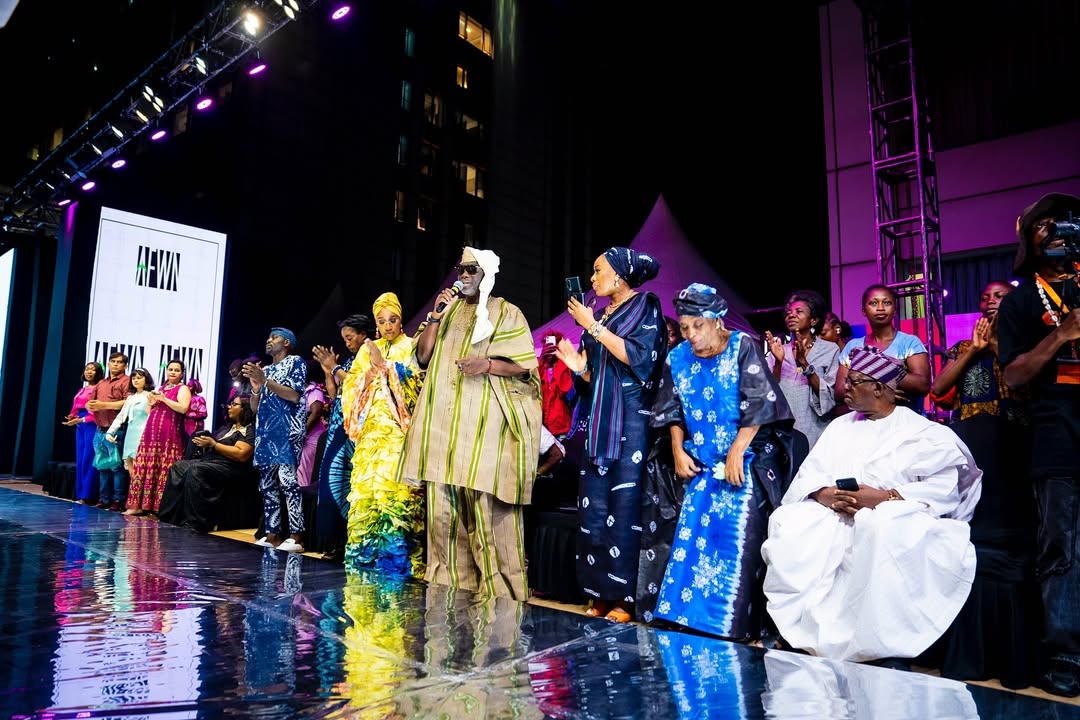
The honest position for an African designer or fashion retailer seeking to use AfCFTA in their business planning right now is as follows. If you are selling finished garments from one AfCFTA country to buyers in another, you cannot claim AfCFTA preferential tariff rates with certainty because the product-specific rules of origin for chapters 61 and 62 are not finalised. If you are sourcing fabric from another African country for your production, the same uncertainty applies. You may still benefit from any existing regional economic community preferences under frameworks like ECOWAS, EAC, SADC, or COMESA, and those frameworks continue to operate alongside AfCFTA rather than being superseded by it. But the specific tariff liberalisation that the AfCFTA promises for fashion is not yet in effect.
What is operative for designers and retailers right now is the payment infrastructure. PAPSS is live, with 44 countries ratified as of early 2024 and adoption growing through 2025. The ability to receive payment from a buyer in Accra, Ghana, in Ghanaian cedis or settle an invoice with a fabric supplier in Nairobi, Kenya, in Kenyan shillings without routing through a US dollar conversion that historically consumed 8% to 30% of the transaction value is a concrete operational benefit that exists independently of the rules of origin question. For the fashion sector’s typical transaction profile, involving small-to-medium orders, tight margins, and frequent cross-border supplier relationships, the payment cost reduction is commercially significant. Intra-African trade in textiles and apparel currently represents only 8% of the continent’s textile and apparel imports. The cross-border payment friction documented across the continent’s 277 mobile money wallets and 500-plus banking institutions is one of the principal reasons why.
The digital trade protocol is the second instrument with direct near-term relevance for fashion retail. A protocol that harmonises e-commerce rules, cross-border data flows, electronic invoicing, and digital payment standards across 54 African countries does not remove all obstacles to building a continental online fashion brand. But it provides the legal architecture to address those obstacles through national implementation rather than piecemeal negotiation for each cross-border transaction. For the growing cohort of African fashion retailers building direct-to-consumer digital businesses across multiple African markets, the digital trade protocol’s existence is more commercially meaningful than its current partial implementation suggests, because it signals the regulatory direction of travel against which investment and distribution decisions can be made.
The non-tariff barriers are the hardest problem and the one that AfCFTA alone cannot solve. The AfDB estimates that the continent needs to mobilise $130 billion annually to bridge its transport, energy, and connectivity deficit. Road transport, which accounts for 29% of goods prices in Africa, is not a tariff problem. It is a road problem. Average customs dwell times of 126 hours are not a tariff problem. They are a customs-digitisation and border-administration problem. The non-tariff barriers, which are three times more restrictive than tariffs, are not waiting for a rules-of-origin agreement. They are waiting for the corridor dashboards, digital certificate-of-origin systems, and border management upgrades that are being piloted in parts of the continent but are not yet continent-wide. In 2025, corridor dashboards began providing real-time performance metrics on dwell times and clearance delays in pilot regions, and some customs authorities began testing digital certificate-of-origin systems for textile consignments moving across regional blocs. These are promising developments at a stage far from systematic coverage.
Also Read:
- The State of African Fashion 2026: A Data Portrait Across Investment, Manufacturing, Retail, and Export
- UNESCO, AfDB, and UNDP in African Fashion: Mapping the Institutional Support Architecture and Its Gaps
- South-South Fashion Trade: Why Africa-Caribbean-Latin America Collaboration Is the Most Underbuilt Commercial Opportunity
- What the Numbers Say About Lagos, Accra, and Nairobi as Fashion Business Cities
The Medium Horizon: Where the Opportunity Is Being Constructed
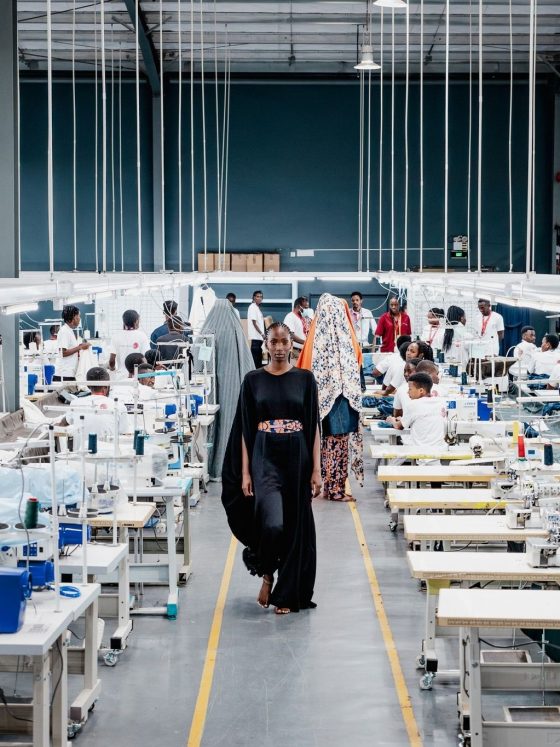
The AfCFTA’s potential for fashion is not hypothetical. It is structural, delayed by negotiation, and being built in specific geographies that provide visible early evidence of what the agreement can produce when conditions align. Benin’s Glo-Djigbe Industrial Zone, GDIZ, is the most frequently cited example of the cotton-to-garment integration that AfCFTA is designed to enable at scale. Benin produces annual seed cotton output that often exceeds 700,000 tonnes, with cotton contributing 12%-13% of GDP. The GDIZ is designed to take that cotton through spinning, weaving, and garment manufacturing domestically, creating a vertically integrated value chain that would unambiguously qualify finished garments for AfCFTA origin status regardless of how the rules of origin negotiations are resolved. Indian, UAE, and Saudi investors were financing textile industrial zones in Benin, Nigeria, and Ghana in 2025, motivated by the prospect of AfCFTA’s 1.4-billion-person market and the diversification logic of building outside Asia’s congested supply chains.
Nigeria’s apparel import bill, estimated at $4 billion to $5 billion annually against a domestic fashion market of $4.7 billion, is the commercial argument for AfCFTA stated in a single data point. Nigeria currently meets its apparel consumption largely through imports from China and other Asian countries. AfCFTA promises that an Egyptian cotton fabric manufacturer could supply a Nigerian garment factory duty-free, which could supply a Lagos fashion brand, which could sell to a Johannesburg retailer with a preferential tariff advantage over the Chinese or European competitor offering an equivalent product. That supply chain does not yet exist. Egypt’s textile market was valued at nearly $3.9 billion in 2024, with the country holding one of Africa’s most complete textile value chains. Morocco’s textile and clothing exports reached approximately MAD 32 billion, or $3.2 billion, in 2025. Both are positioned to be continental fabric suppliers to West African garment manufacturers and fashion brands under AfCFTA. The moment the rules of origin are finalised, this value chain becomes operable.
The UN Economic Commission for Africa projects that the AfCFTA could boost intra-continental trade by more than 50% by 2030, with textiles identified as a priority sector. Africa’s middle class is projected to grow to 390 million people. Digital trade within Africa is expected to surpass $180 billion, with fintech and e-logistics as major drivers. UNECA’s projection of a 35% increase in intra-African trade by 2045 following the full implementation of AfCFTA was published by Brookings in January 2025. These projections are contingent on the implementation that has not yet fully occurred. The timeline on which a Lagos designer, an Accra retailer, or a Nairobi fabric sourcer can actually act on AfCFTA preferences is a function of when the textile and clothing rules of origin are agreed, when non-tariff barriers are reduced, and when PAPSS and the digital trade protocol reach the operational density that makes continental commerce cheaper than importing from Asia.
The Omiren Argument
AfCFTA is not a gift. It is a negotiated architecture that has taken five years of partial implementation to reach the point where 25 African countries have gazetted tariff schedules, South Africa and Nigeria are formally trading under its framework, and the payment system designed to make cross-border settlements viable in African currencies is live. The fact that the rules of origin for textiles and clothing remain unresolved is not an indictment of the agreement. It is an accurate description of the negotiating difficulty that any framework encounters when it asks countries with genuinely divergent economic interests to agree on the definition of what qualifies as Made in Africa. The West African cotton producer and the North African textile manufacturer are not in bad faith with each other. They are in a negotiation where both are right about their own interests, and the agreement’s benefits to both require a compromise that neither has yet accepted.
The platform that serves African fashion with this analysis is not providing commentary on whether AfCFTA will eventually succeed. It is providing a specific, verified answer to a specific question from designers and retailers who want to know what the agreement means for their sourcing decisions, pricing models, expansion strategies, and investor conversations today. The answer is that AfCFTA has built the payment infrastructure that reduces cross-border transaction costs. It has developed the digital trade protocol that shapes the continental e-commerce landscape. It has brought Nigeria and South Africa into the Guided Trade Initiative’s operational scope. It has not yet resolved the product-specific rules of origin for apparel. Without those, the preferential tariff benefit that would directly change a designer’s fabric cost or a retailer’s duty bill when shipping across African borders remains inaccessible. The window is real. The capacity-building timeline is the variable. Designers and retailers who are building their supply chains, retail footprints, and investor cases are now incorporating the AfCFTA opportunity, even as one of its central instruments remains locked in a room in Addis Ababa. That is the accurate position from which to plan.
Frequently Asked Questions
1. What is the AfCFTA, and how large is it?
The African Continental Free Trade Area is the world’s largest free trade area by membership, ratified by 47 of 54 African Union member states, covering a population of over 1.4 billion people across a combined GDP of $3.4 trillion. It aims to eliminate tariffs on 90% of goods traded within Africa over a five-to-ten-year transition period, liberalise trade in services across five priority sectors, and establish continental frameworks for investment, competition, intellectual property, digital trade, and the specific interests of women and youth in trade. Before the AfCFTA, intra-African trade stood at only 16% of the continent’s total trade, compared to 59% in Asia and 68% in Europe, largely because of non-tariff barriers three times more restrictive than tariffs, average customs dwell times of 126 hours, and logistics costs that made road transport account for 29% of goods prices within Africa. AfCFTA formally launched trading through the Guided Trade Initiative in October 2022, with South Africa and Nigeria joining the operational framework in the first half of 2024. By October 2024, 37 State Parties had completed the required tariff-schedule procedures.
2. Why are the textile and clothing rules of origin not yet agreed upon under AfCFTA?
The rules-of-origin deadlock in textiles and clothing reflects a structural divergence between two groups of AfCFTA member states. West African cotton-producing countries, including Benin, Burkina Faso, Mali, and Senegal, want rules that allow garments made from African-grown cotton to qualify for AfCFTA preferential treatment even if the fabric was processed or woven outside Africa. These countries produce approximately 6% of the world’s cotton but have minimal processing capacity, and they see permissive rules of origin as the mechanism that allows their cotton to anchor a regional value chain. The opposing position comes from countries with established textile transformation industries: Egypt, with a textile sector valued at nearly $3.9 billion; Morocco, with $3.2 billion in textile and clothing exports in 2025; and Ethiopia, which has attracted more than $4 billion in textile and apparel investment over the past decade. These countries want rules that require meaningful local transformation to qualify, thereby protecting their manufacturing investment. As of early 2026, the overall AfCFTA rules of origin coverage stood at approximately 92.4% of tariff lines, with textiles, clothing, and automotive being the outstanding categories.
3. What parts of AfCFTA can African fashion designers and retailers actually use right now?
Two instruments are operational and directly relevant. First, the Pan-African Payment and Settlement System, PAPSS, ratified by 44 countries by January 2024, enables cross-border transactions in any of Africa’s 42 currencies without routing through the US dollar. This reduces the 8%-30% per-corridor payment fees that had made cross-border fashion commerce prohibitively expensive for small and medium businesses. By 2025, PAPSS adoption was measurably reducing foreign-exchange friction for exporters settling intra-regional invoices. Second, the Protocol on Digital Trade, adopted at the AU Assembly in February 2024 with eight annexes finalised in February 2025, establishes a harmonised framework for e-commerce, electronic invoicing, cross-border data flows, and digital payments across 54 African countries. For fashion retailers building digital-first continental distribution, this provides the legal architecture to align with regulatory requirements across markets. The Guided Trade Initiative’s expansion to 37 State Parties also means that designers and producers who export non-apparel goods, such as accessories, jewellery, or home textiles in categories with agreed rules of origin, can access preferential tariff treatment for those specific product lines.
4. What is the realistic timeline for AfCFTA to deliver full tariff benefits to African fashion?
The timeline depends on two linked but distinct processes. First, the finalisation of textile and clothing rules of origin, which the AfCFTA Secretariat has been attempting to conclude since at least 2022 and which remained unresolved as of early 2026. The Secretariat’s stated aim was to finalise all outstanding rules of origin, including textiles, by October 2025; that deadline was not met. Second, the reduction of non-tariff barriers, which include logistics infrastructure gaps, customs digitisation, border administration efficiency, and regulatory harmonisation across 54 national systems. The AfDB estimates the continent needs $130 billion annually to bridge its infrastructure deficit. The UNECA projects a 50% boost in intra-continental trade by 2030 if AfCFTA is implemented, and a 35% increase by 2045 under full implementation modelling from Brookings. For practical business planning, designers and retailers should monitor the textile rules of origin negotiations at each AU Assembly session, track PAPSS adoption levels in their specific target markets, and build supply chain and retail expansion decisions that work under existing regional economic community frameworks while remaining structured to convert to AfCFTA preferences once the apparel-specific rules are agreed.