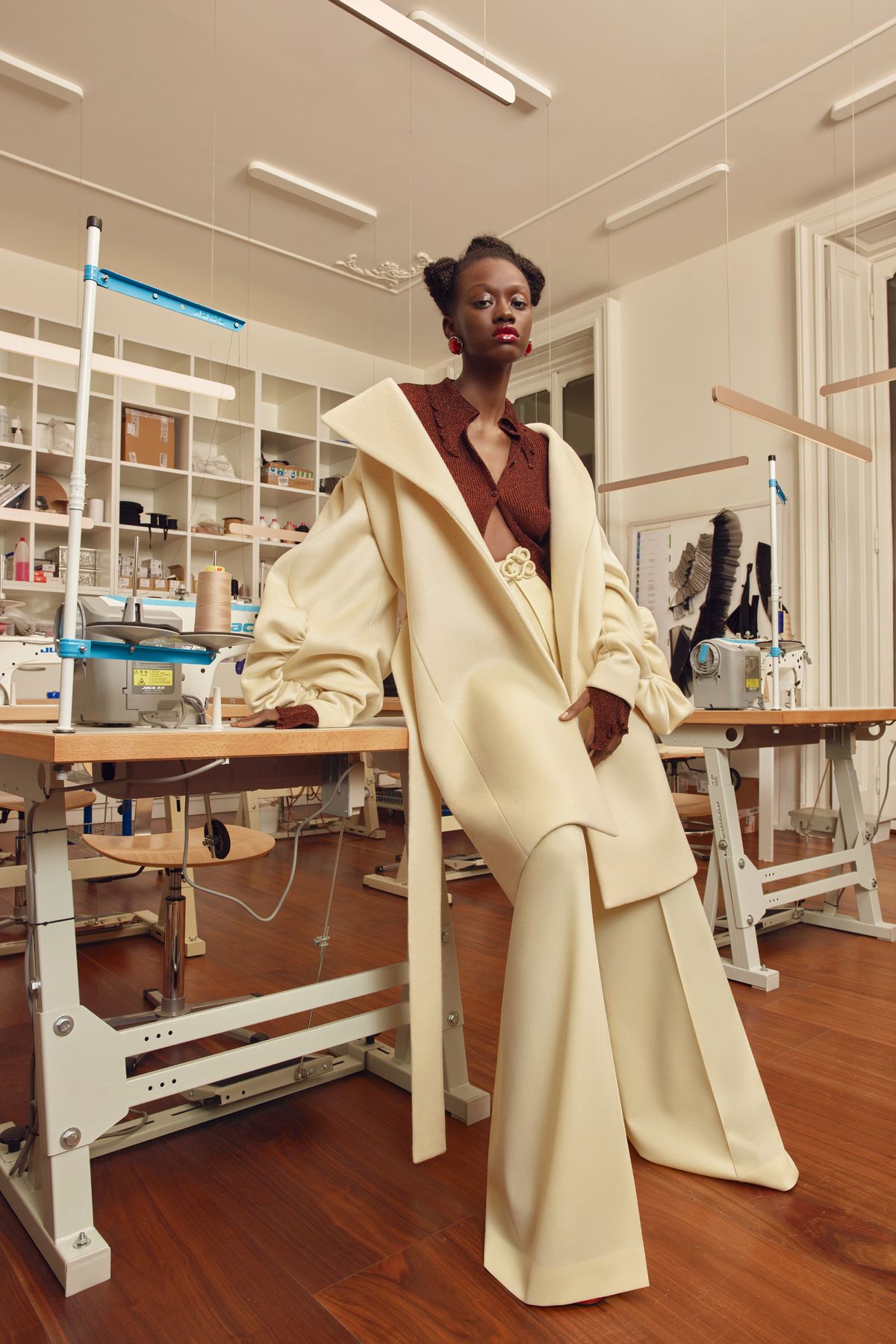
Harmony Perside Mobili’s argument begins before anyone steps onto a runway. In a March 2026 report about a student fashion presentation in Bangui, she challenges the notion that sewing is a profession for people who have failed in conventional education. Her response is pointed: the programme she describes requires at least a baccalauréat-level qualification. Fashion, in her account, is a deliberate course of study, not the place someone lands after other options disappear. The qualification matters, but it is not the whole argument. Mobili is asking for a different reading of the person doing the work. Someone who chooses sewing may be pursuing a vocation rather than accepting a consolation prize. The proposed runway presentation gives that claim a public setting. Work developed during training is worn by professional models, moving the students’ garments from an educational setting into a space where an audience can see them as fashion.
Harmony Perside Mobili challenges the idea that sewing is a fallback profession. A Bangui training programme puts that argument in front of a runway audience.
Three years behind the presentation
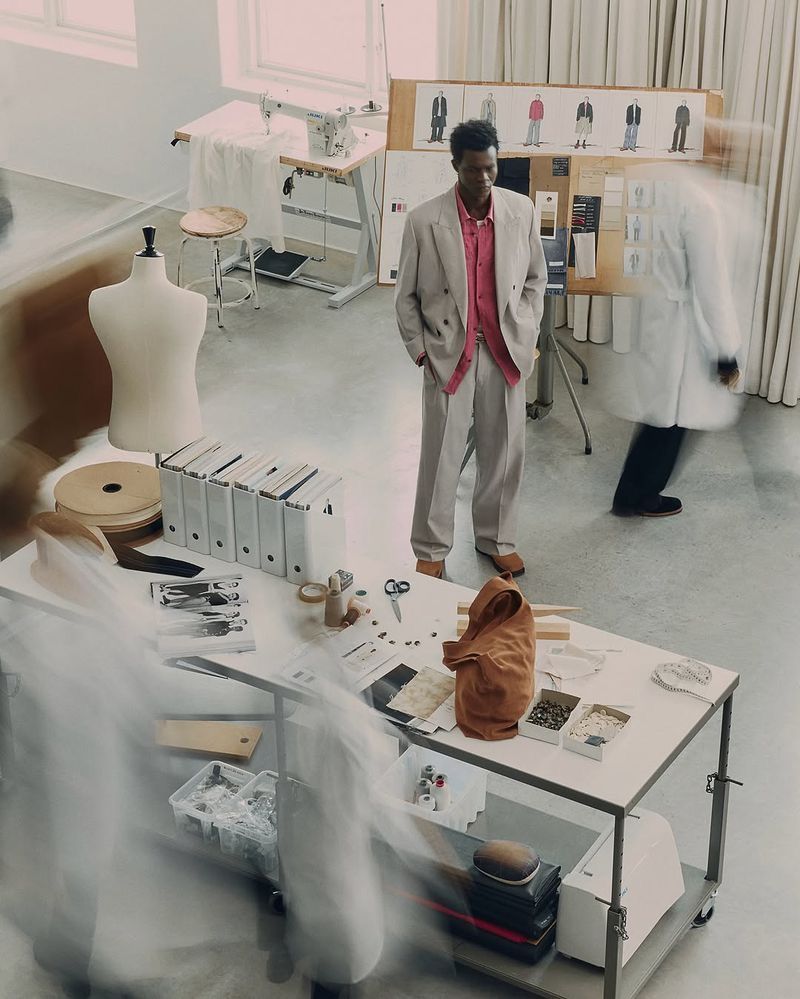
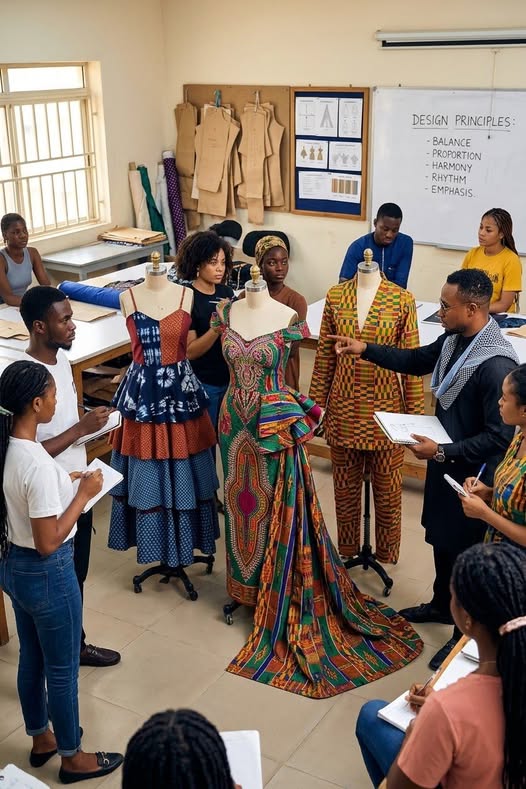
Étoile Infos identifies the programme as an École supérieure des stylistes modélistes operating under the supervision of Amici per il Centrafrica, in collaboration with Centre Don Bosco. Its report links the presentation to a three-year training cycle and describes the participants as the programme’s second cohort. Mobili is named as one of its prospective graduates. Those details set the scene for her remarks without providing a complete account of her education or an independently verified graduation record. The article dates the event to 28 March 2026 but moves between describing a show that took place and preparations for one still to come. That inconsistency limits what can be stated about the presentation’s final form. It is clearer about the intended purpose: students would present original work made during their course, and the event would demonstrate their technical ability and professionalism. That is a programme aim, not proof that every audience member recognised those qualities or that the show led to employment.
Even with that distinction, the three-year timeframe changes how the presentation should be approached. The garments are described as work developed during a course, not simply outfits assembled for an evening’s spectacle. The report asks its audience to see evidence of learning. It does not provide the syllabus, assessment criteria or making records needed to reconstruct that learning in detail. The duration gives context to the work; it cannot substitute for examining a particular garment.
What the runway is being asked to prove
Mobili describes the event as an opportunity for young designers to become known and demonstrate the vitality of fashion in Bangui. That makes visibility an explicit objective rather than an outcome an outside writer needs to invent. The distinction is important. Presenting work publicly can be the aim of a graduation event without establishing that it created a customer base, secured commissions or changed the standing of its participants. Those would be subsequent stories, requiring their own evidence. Professional models also have a defined role in the report’s account: they would wear garments made during the students’ training. For the audience, that format concentrates attention on the finished result. It does not necessarily reveal how a pattern was developed, which seam was revised or how much help a student received. A show can make a garment visible while making its making difficult to read. Recognising that gap is not a criticism of the students. It is a reason to ask better questions about their work.
For Mobili, whose remarks concern the status of the profession, this creates a useful tension. The runway offers a setting in which the clothes can be taken seriously as fashion. Yet the work she wants recognised is partly the work that precedes the appearance: the sustained training the report says the students undertook. The strongest coverage would connect the two. It would explain a decision in a garment rather than treating applause, presentation or the presence of models as sufficient evidence of technical accomplishment.
Challenging the fallback story
The idea Mobili rejects reduces sewing to an educational last resort. In the report, she counters this by pointing to the admission level and to students who chose fashion despite having other academic qualifications. The article mentions participants with university degrees, including licences and master’s degrees. It does not establish that Mobili holds either, and those credentials should not be transferred to her biography. What matters here is the reason the report brings them into the discussion: to challenge assumptions about why someone enters the profession. There is a limit to making that case through qualifications alone. Academic credentials can rebut the claim that students had no other path, but they do not demonstrate how well someone can design or construct clothes. Nor should respect for sewing depend on a practitioner having succeeded elsewhere first. Mobili’s intervention is most productive when it opens the conversation rather than closes it: what knowledge does this work require, how is that knowledge taught, and what would help an audience recognise it in a finished piece?
The same care applies to the report’s language about elite training. It signals ambition and the seriousness with which the programme presents itself. It does not establish accreditation, the standing of its qualification or graduates’ professional prospects. Those distinctions protect students as much as they protect the reader. A programme should not have to carry claims its available documentation cannot support, and its participants should not be turned into success stories before their work and subsequent careers have been examined.
Credit begins with knowing whose work we see
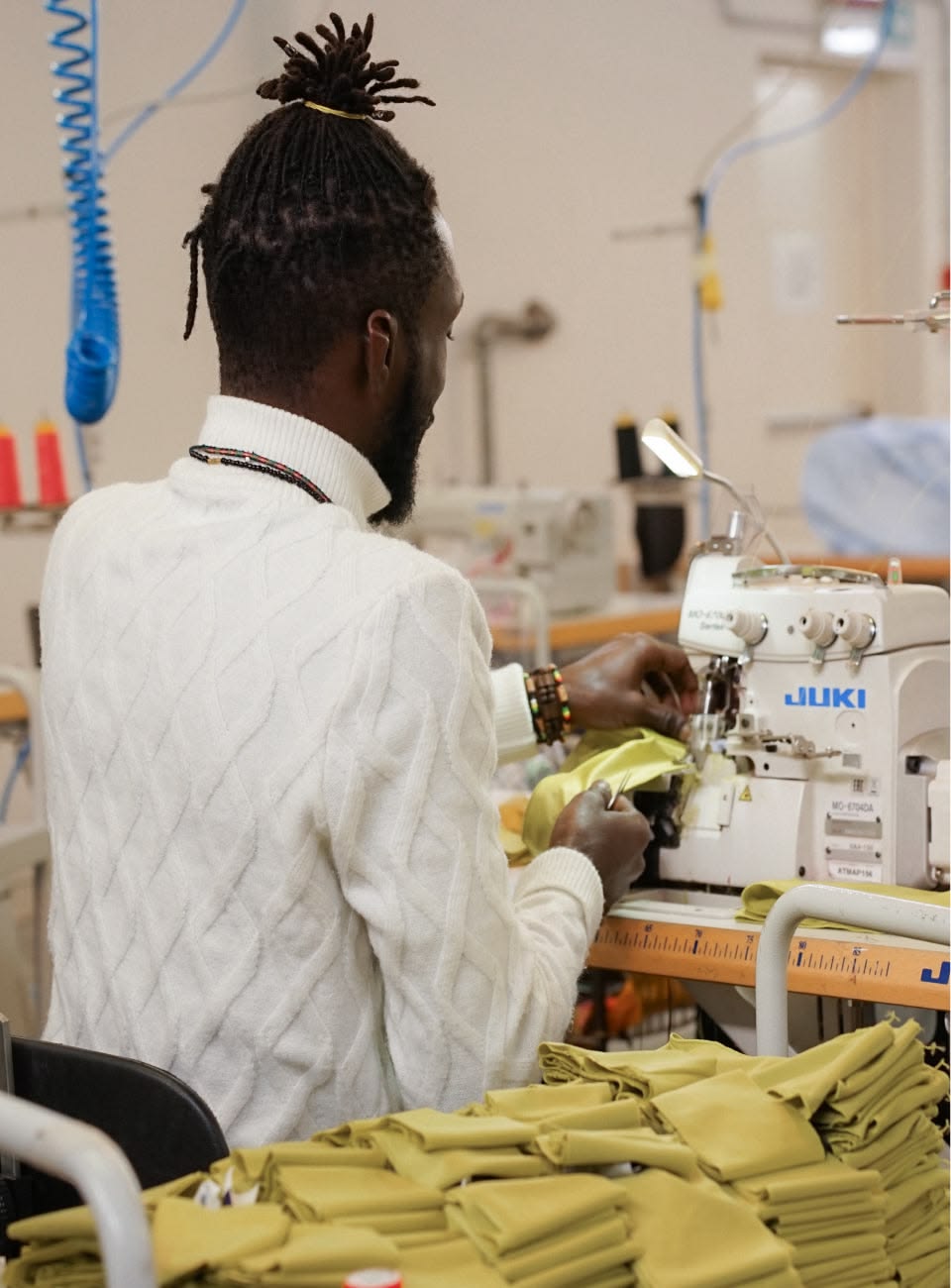
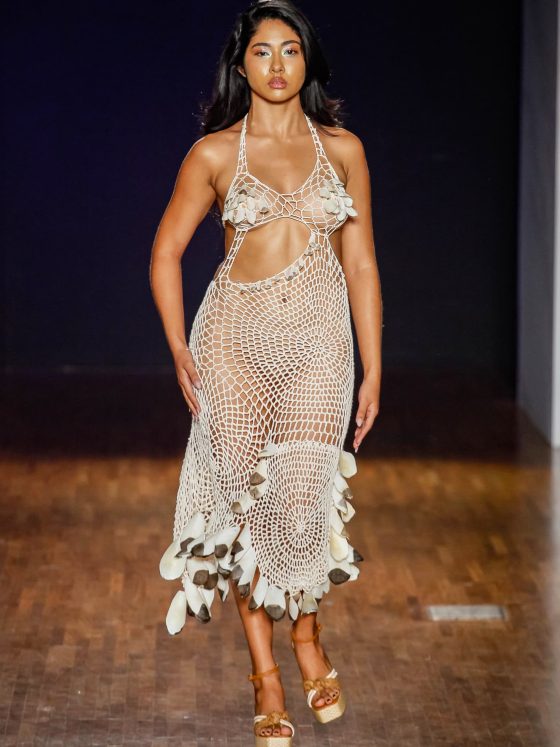
The report names Mobili but does not connect her unambiguously to a particular photographed garment. That prevents a responsible technical reading of her design work. We cannot describe a silhouette as her invention, assign a fabric choice to her or explain how she moved from sketch to pattern. Her published remarks support what she says about the profession. They do not authorise an imagined account of what happened at her cutting table. This is also a question of recognition. If the purpose is to take student designers seriously, correct garment attribution is not optional. The maker’s name, any collaborators and the relationship between the sketch and finished piece would let a reader follow the work rather than rely on the general promise of a school show. A photograph becomes more informative when its credit tells us not only who took it, but whose garment it records. The current report leaves that part of Mobili’s story unresolved.
The Omiren Argument
Mobili’s strongest contribution is not claiming the runway has already transformed her prospects. It is her rejection of the explanation that sewing is what people do when education fails them. The three-year programme and the planned presentation give that argument a setting. They do not settle it. The next step is to look closely enough at the clothes to show what was learned, who made each decision and how that knowledge appears in the finished work.
For fashion coverage, that changes the assignment. Calling students talented is easy; making their skill legible requires specific evidence. Mobili has supplied a reason to ask for it. The most useful continuation would be one garment, correctly credited, and an explanation from its maker of a choice that mattered. That would allow the audience to move beyond recognising ambition or admiring a presentation. It would give them something concrete through which to recognise the work Mobili says deserves to be taken seriously.
Also Read:
- One Runway at a Time: Milca Ketura Kimoto and the Business Case for CAR Fashion
- What Addis Ababa’s Street Style Owes to Its Fashion Week, and What It Doesn’t
- Top Ghanaian Fashion Designers Shaping Africa’s Global Fashion Narrative
- The Secondhand Market as a Design School: How Kantamanto Graduates Are Dressing Ghana’s Streets
Frequently Asked Questions
Who is Harmony Perside Mobili?
Étoile Infos identifies her as a prospective graduate associated with a three-year fashion-design and pattern-making programme in Bangui. The report records her remarks about professional recognition but does not provide a full biography. The report describes her as one of the programme’s prospective graduates and does not give an independently verified graduation record.
Which organisations are associated with the programme?
The report names Amici per il Centrafrica and Centre Don Bosco in connection with the École supérieure des stylistes modélistes, with the former as the supervising body and the latter as a collaborator. The exact institutional arrangements and qualifications require further confirmation. The report does not establish accreditation or the standing of the qualification.
Does the report identify a runway look made by Mobili?
It does not establish a sufficiently clear link between Mobili and a specific pictured garment to support a technical profile. This article therefore discusses her published remarks and the presentation’s stated purpose, not an attributed look. The report names her but does not unambiguously connect her to a photographed garment, so no silhouette, fabric choice, or pattern is described as hers.
Where can I read the original report?
Read Étoile Infos’ March 2026 report on the student fashion presentation in Bangui, linked in the opening paragraph of this article. Its descriptions of preparations and the event itself use different tenses, so the programme’s intentions should be distinguished from confirmed outcomes.